Last updated on August 25, 2026
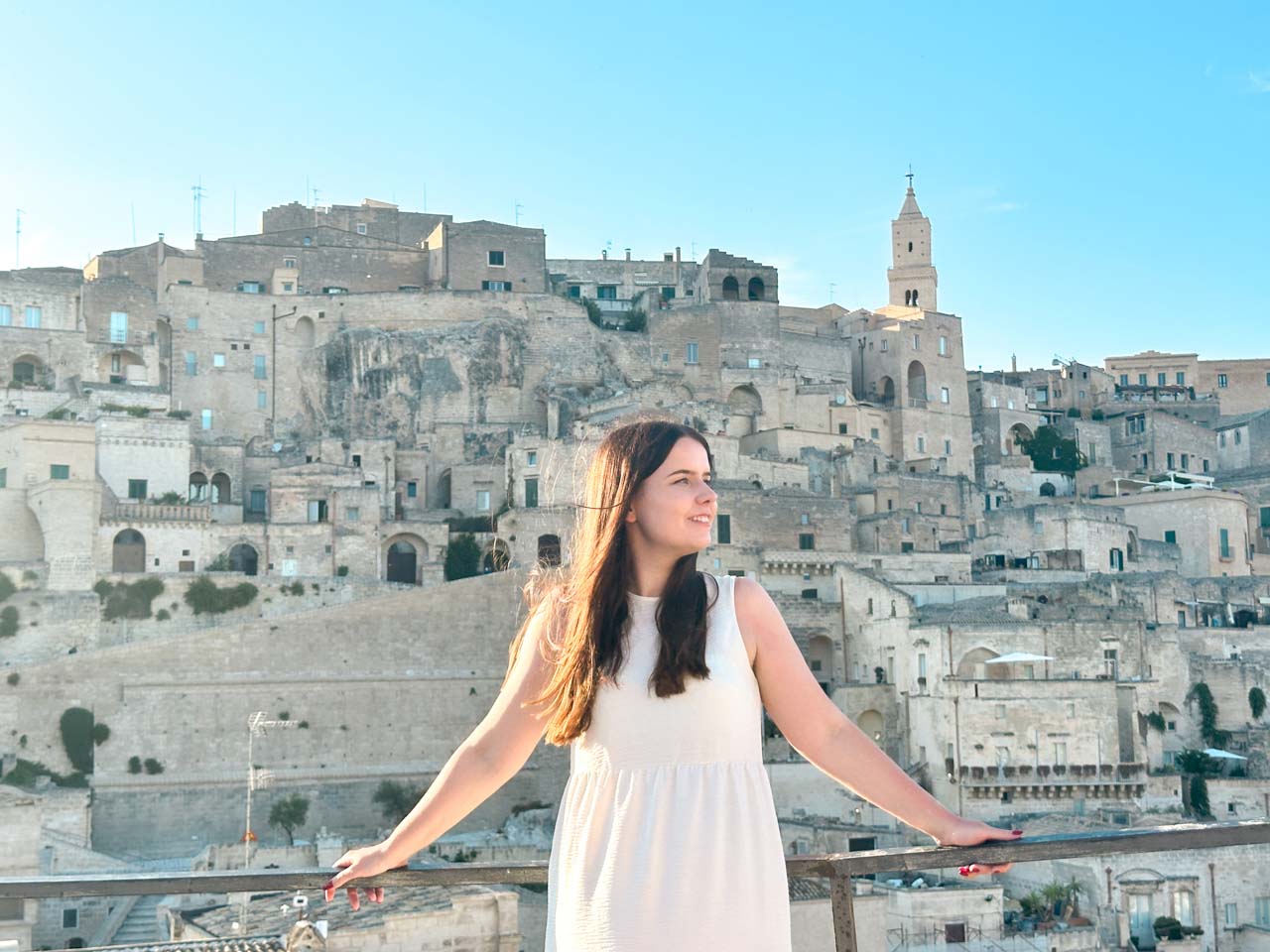
Looking at Matera today, it’s hard to believe that this was once considered Italy’s “national shame”. If someone showed you a photo of the city without any context, you’d probably assume it had always been one of Italy’s most popular tourist destinations.
With its cave hotels, beautiful stone buildings, and unique setting, it certainly looks that way. But the reality is very different, and that’s part of what makes Matera’s story so fascinating.
A lot of people visit Matera as a day trip from Puglia, even though it’s actually in neighbouring Basilicata. We decided to stay overnight instead, and I’m so glad we did. Once the day trippers leave, the city feels completely different, and having more time here meant we could experience much more than just the famous viewpoints.
In this guide, I’ll share all the best things to do in Matera, where and what to eat, and a few tips to help you make the most of your visit.

AD – This post contains affiliate links (marked with *) | Read my full disclaimer
Why was Matera known as Italy’s “national shame”?
As strange as it sounds today, Matera wasn’t always the beautiful destination you see all over Instagram. For much of the 20th century, it was known as la vergogna nazionale – Italy’s national shame.
Imagine a city where people lived in caves carved into the rock. And no, I don’t mean prehistoric people. I’m talking about ordinary families: parents, children, grandparents, and often animals too, all sharing the same spaces.
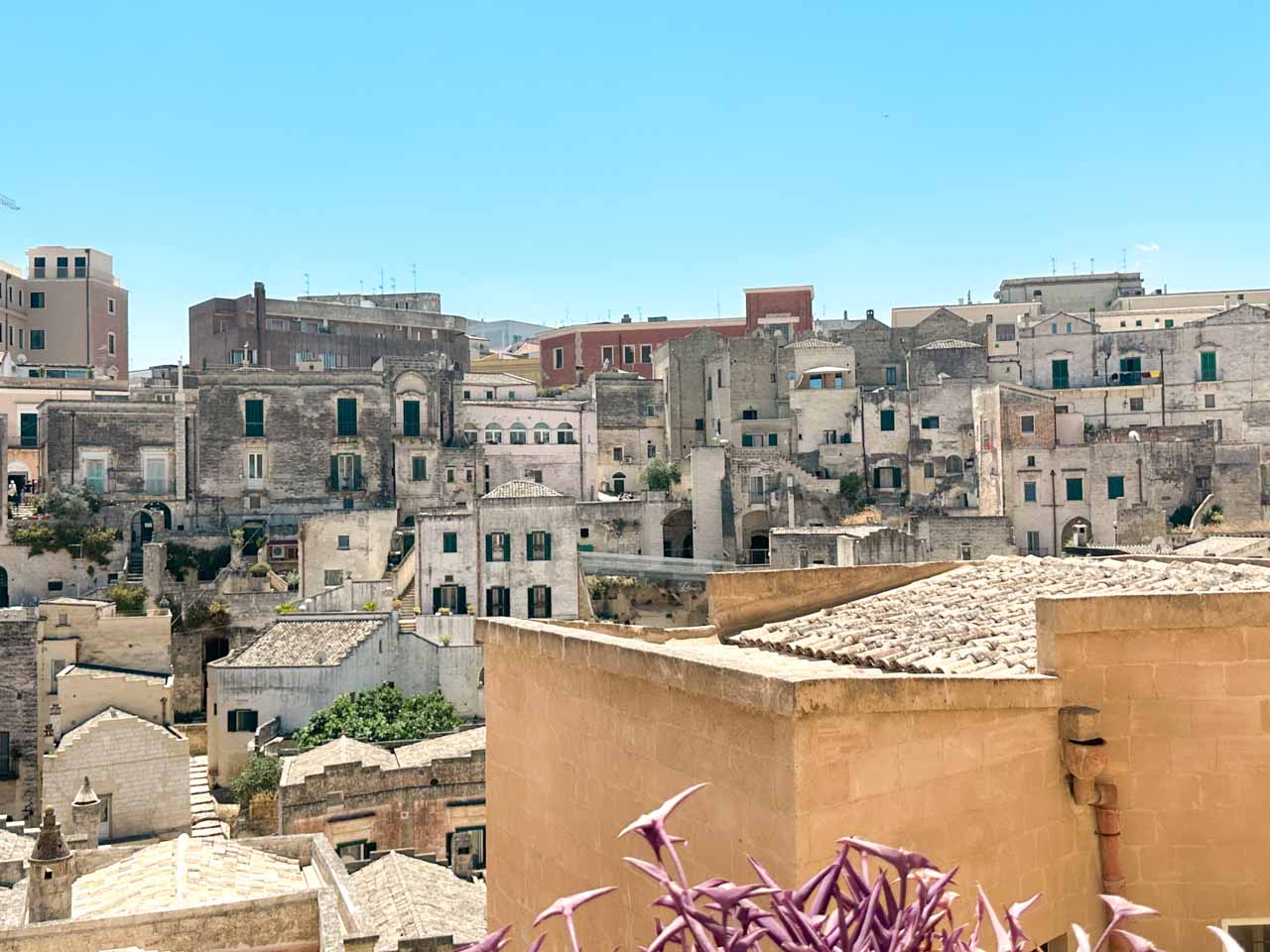
That’s exactly what life in the Sassi di Matera, the city’s ancient cave districts, looked like until surprisingly recently.
Many families lived without running water, electricity, sewage systems, or proper healthcare, often sharing a single cave with horses, donkeys, or other livestock.

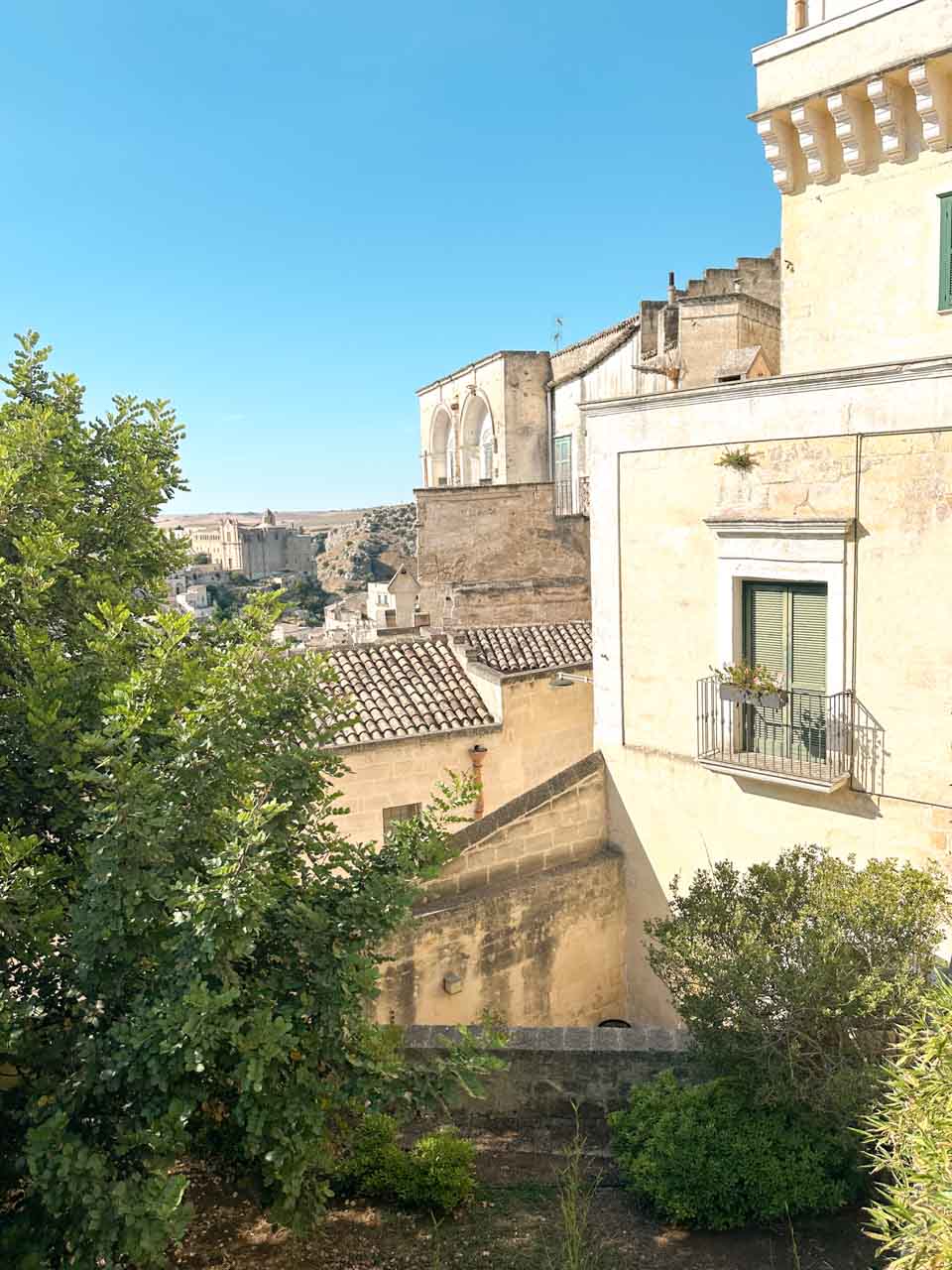
Things finally started changing in 1945, when Carlo Levi published Christ Stopped at Eboli. In the book, he described the poverty he had witnessed in southern Italy, including the conditions in Matera. It shocked Italy because much of the country had no idea people were still living this way.
In the 1950s, the government stepped in and relocated thousands of people into new neighbourhoods with modern homes and proper facilities.
The caves then sat empty for years, until people’s attitudes towards them started changing. Eventually, they began seeing them as something that simply didn’t exist anywhere else, and something worth preserving rather than being ashamed of. Slowly, they started turning them into hotels, restaurants, and museums.


In 1993, UNESCO made the Sassi a World Heritage site. Several years later, filmmakers started noticing them too, and Matera has since appeared in several major films, including The Passion of the Christ and No Time to Die.

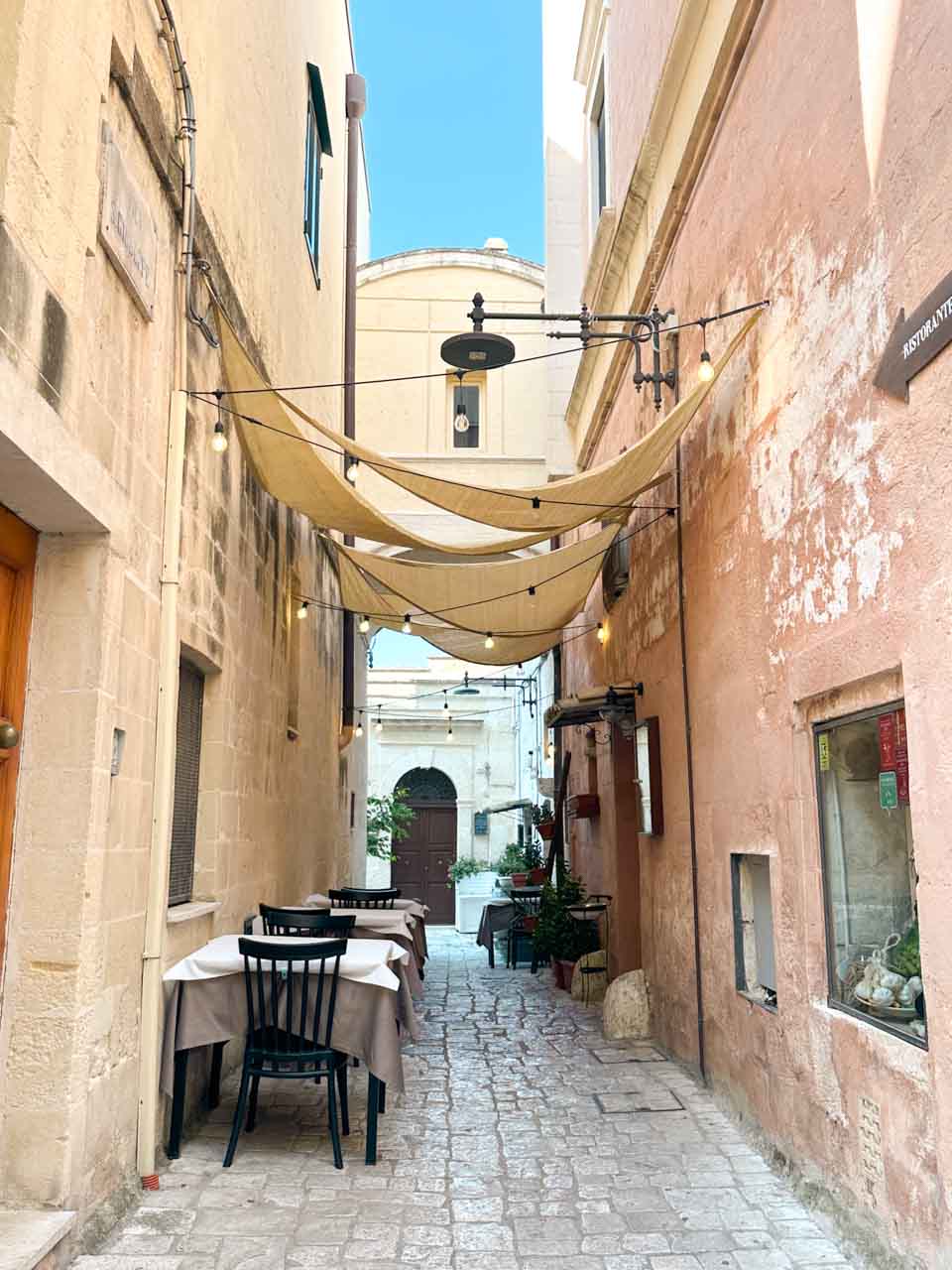
In 2019, Matera became the European Capital of Culture, and the very caves people once wanted to abandon and forget are now the reason visitors travel here from all over the world!
How to get to Matera
One of the slightly surprising things about Matera is that, despite becoming one of southern Italy’s most popular destinations, it’s still not the easiest place to get to.
The closest major city is Bari, around 60 km away. From there, you have three options for getting to Matera: car, train, or bus, or you can join a guided tour.
By car
Now, unless you’re doing a bigger road trip around Puglia and the neighbouring regions, I probably wouldn’t bother driving to Matera.
The historic cave districts are strict Limited Traffic Zones (ZTLs), which means non-residents can’t drive or park there. So even if you arrive by car, you’ll still need to leave it in one of the designated car parks outside the historic centre and explore the city on foot anyway.

By train
At first, it might seem like there’s no way to get to Matera by train, as you won’t find any connections on the Trenitalia website.
The reason is that trains to Matera are operated by a regional company called Ferrovie Appulo Lucane (FAL), rather than the national rail operator. If you’d like to buy tickets, you’ll need to do so through the FAL website instead. The journey takes around 1 hour and 30 minutes to 2 hours, depending on the service.
However, I’m not entirely sure why they’ve made it their tradition to suspend train services during the summer months.
When we visited last July, there were rail replacement buses instead, which I assumed was a one-off. Then, as I was writing this blog post, there were no announcements about any disruptions. A few days later, I checked the website again and discovered they’d suspended the trains until August this year too.
Because obviously the busiest tourist season of the year is the perfect time to carry out infrastructure works. 😉
If you’re one of the lucky people who actually gets to take this mythical train, there’s one more thing worth knowing. Trains to Matera don’t leave from Bari Centrale itself. Instead, as you leave the station towards Piazza Aldo Moro, you’ll see another station building immediately on your left.
The signs are very clear though, so finding the FAL station shouldn’t be a problem.

By bus
If you’d prefer more options than the rail replacement buses, several regular bus companies also operate between Bari and Matera.
If you’re arriving at Bari Airport, you’ll even find direct airport buses to Matera, which means you can often skip Bari city centre altogether.
From the centre of Bari, your main options are Flixbus, Itabus, and Miccolis. We travelled from Bari to Matera with Itabus, and then back to Bari with Flixbus. The journey takes around an hour and, depending on traffic and departure times, can actually be quicker than the train.
One thing I particularly liked was that you get a tracking link for your bus, so you’re not left standing at the stop wondering whether it’s actually coming or not.
I also have to give Miccolis some credit. We originally booked with them, but then the transaction was reversed, so I assumed our booking had been cancelled and made alternative plans with Flixbus instead.
Then, out of nowhere, Miccolis charged my card again. I contacted customer support expecting a bit of a battle, but they refunded us almost immediately, which was a very pleasant surprise.
The journey from Bari to Matera was a little more expensive than I’d normally expect for a route this short. We paid just under €13 per person because we booked seats in the Top area with extra leg room. On the way back, we paid around €7 each, which is closer to what you can expect to pay.
The only thing to keep in mind is that, because of the Limited Traffic Zones, the bus stop in Matera is around a 20-minute walk from the historic centre. Thankfully, it’s basically a straight-line walk, or you can grab a taxi to the edge of the old town and walk the final stretch.

On a guided tour
Even though I’d recommend staying overnight in Matera if you can, I understand you may have a packed itinerary or simply be short on time. Or maybe you’d rather leave the transport logistics to somebody else.
In that case, here are some guided tour options worth considering:
Where to stay in Matera
Just like with the famous trulli in Alberobello, if you’re coming to Matera, I really do think staying in one of the cave houses is part of the experience.
We chose Terrazze San Martino*, which had a more modern interior. You only get a room rather than an entire house, but what completely sold us on the place was the huge rooftop terrace that we had all to ourselves.

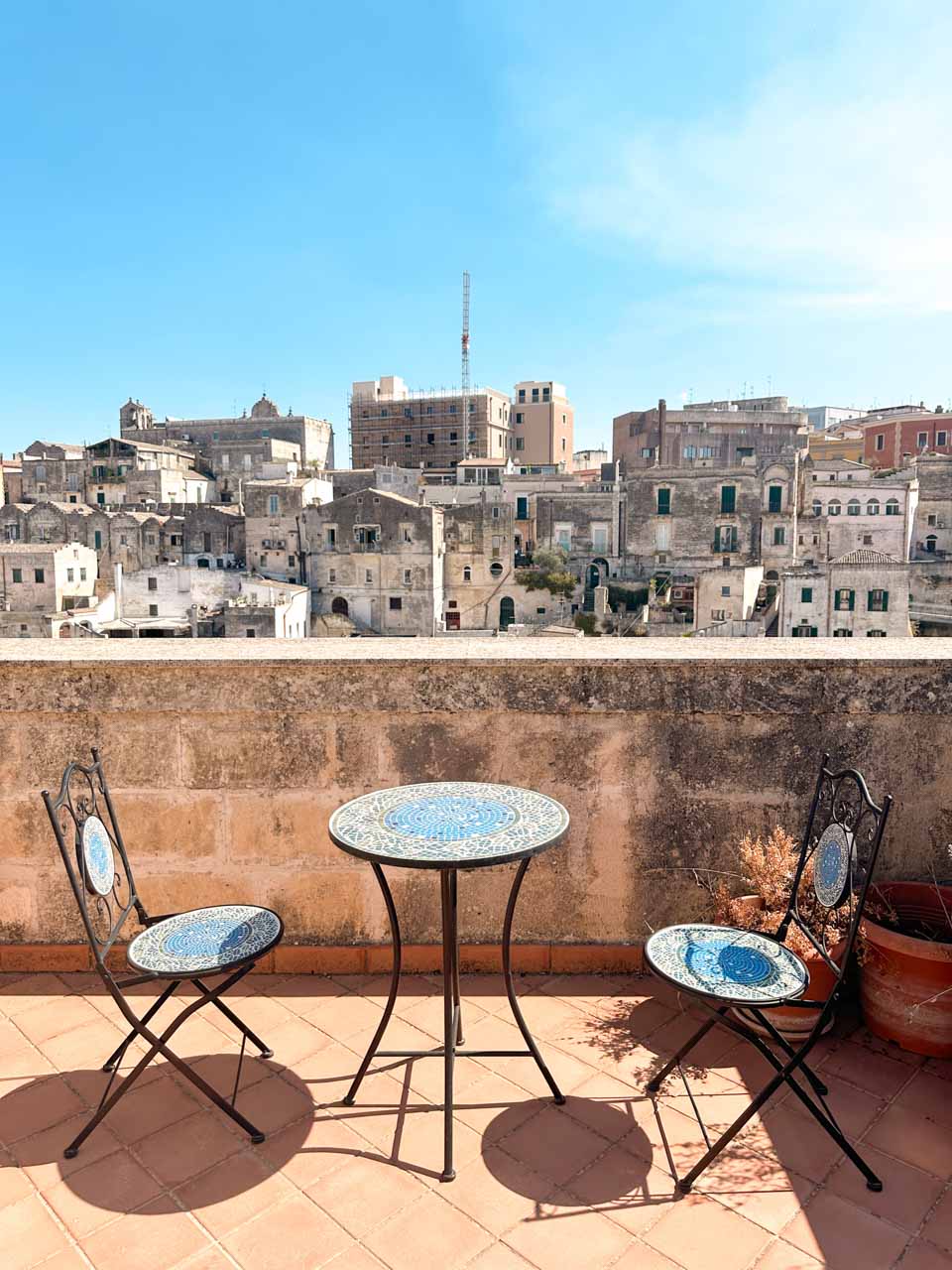
It was about a 15-minute walk from the main sights in Matera, but that also meant it was much quieter than staying somewhere right in the middle of the Sassi.
And the view from that rooftop terrace…

We had the Sassi spread out right in front of us, and it was incredible for morning coffee or evening drinks.
We paid €130 for one night, plus €4 in city tax, which felt pretty reasonable by Matera standards in the middle of summer.
You can also check the available options for your dates below:
Best things to do in Matera
Sasso Barisano and Sasso Caveoso
Before visiting Matera, you’ll probably come across the names Sasso Barisano and Sasso Caveoso and wonder what the difference is.
They’re simply the two districts that make up Matera’s historic centre.
Sasso Barisano is the northern side and the one you’ll usually arrive in first when walking down from the modern part of the city. It’s home to many of Matera’s hotels, restaurants, and shops, so it tends to feel a bit busier.
Sasso Caveoso sits on the southern side and is probably the area you’ve seen in all the photos. This is where you’ll find many of Matera’s most famous views, with rows of stone houses and cave dwellings climbing up the hillside.


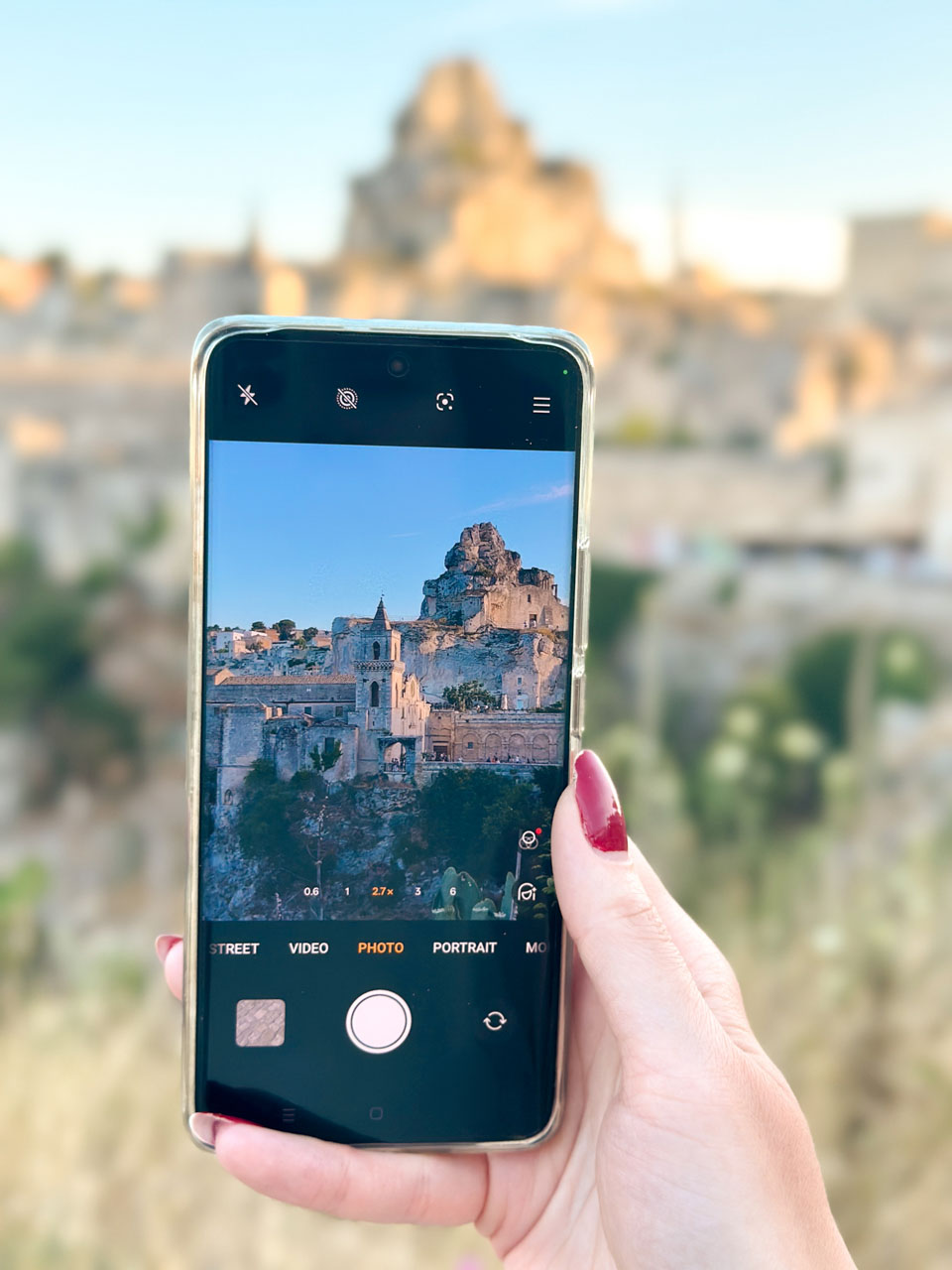

Some people consider the area around the cathedral to be the unofficial border between the two. In reality, though, there’s no clear dividing line, and you’ll probably move between them without even realising it.


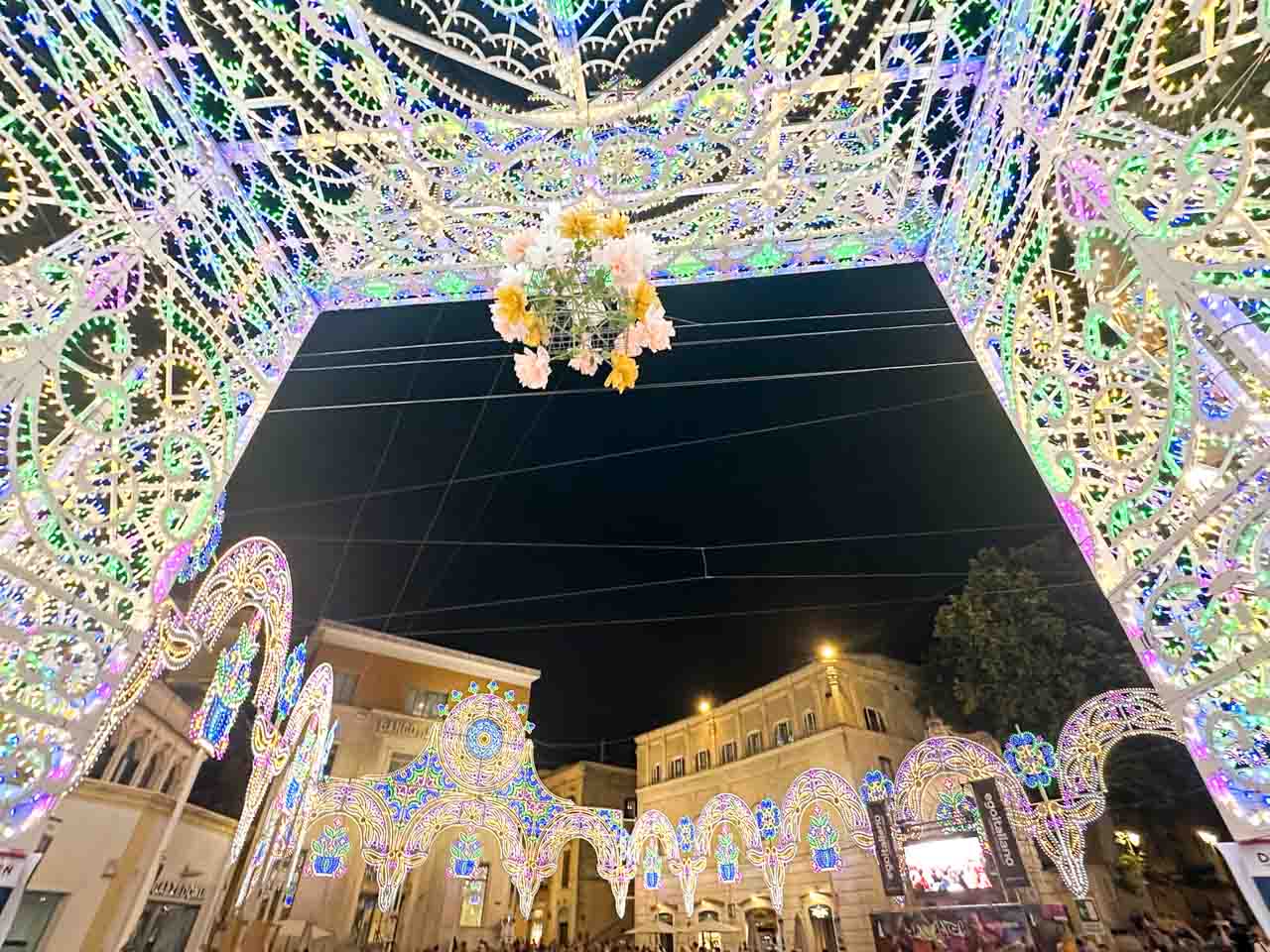
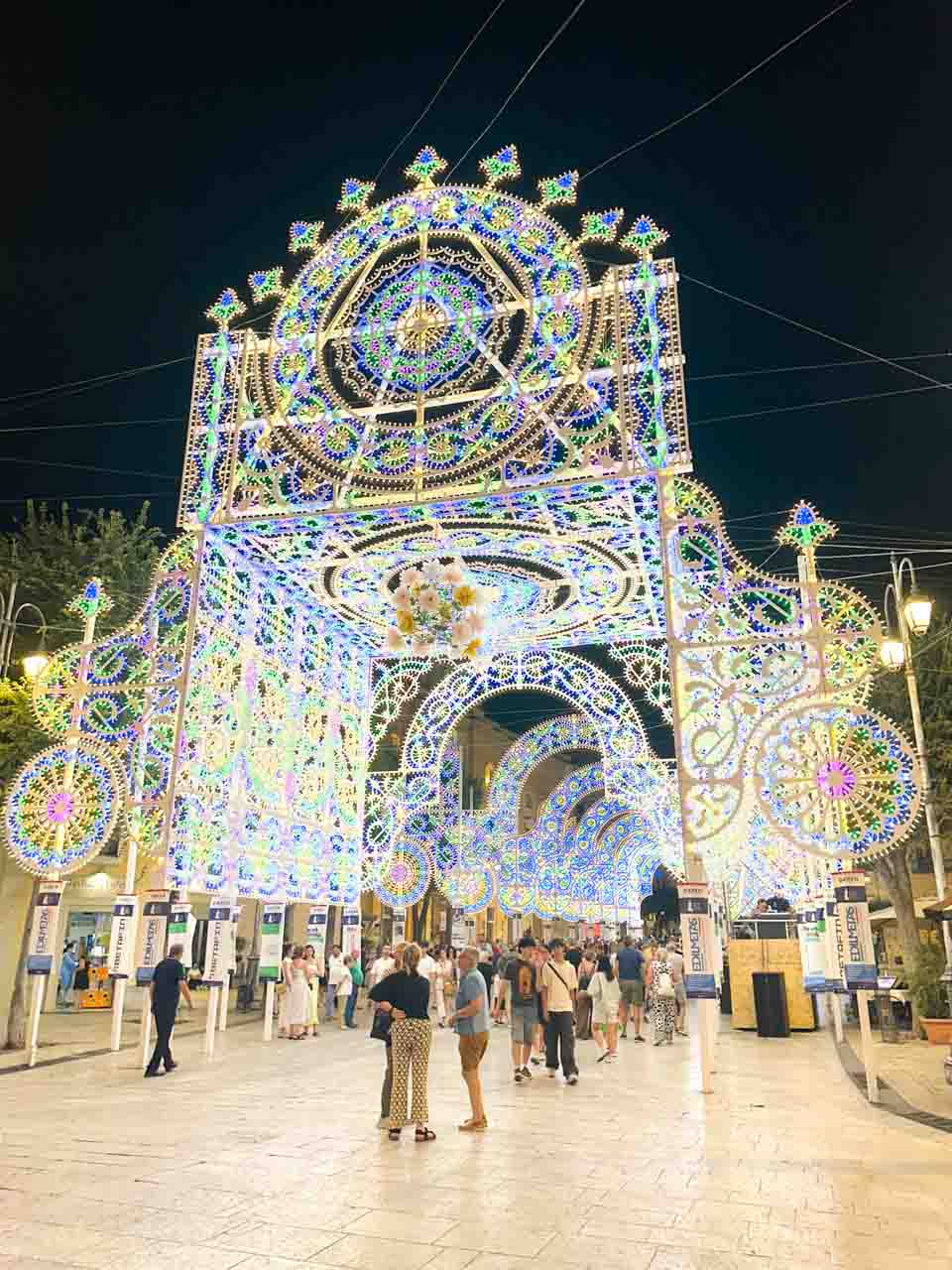
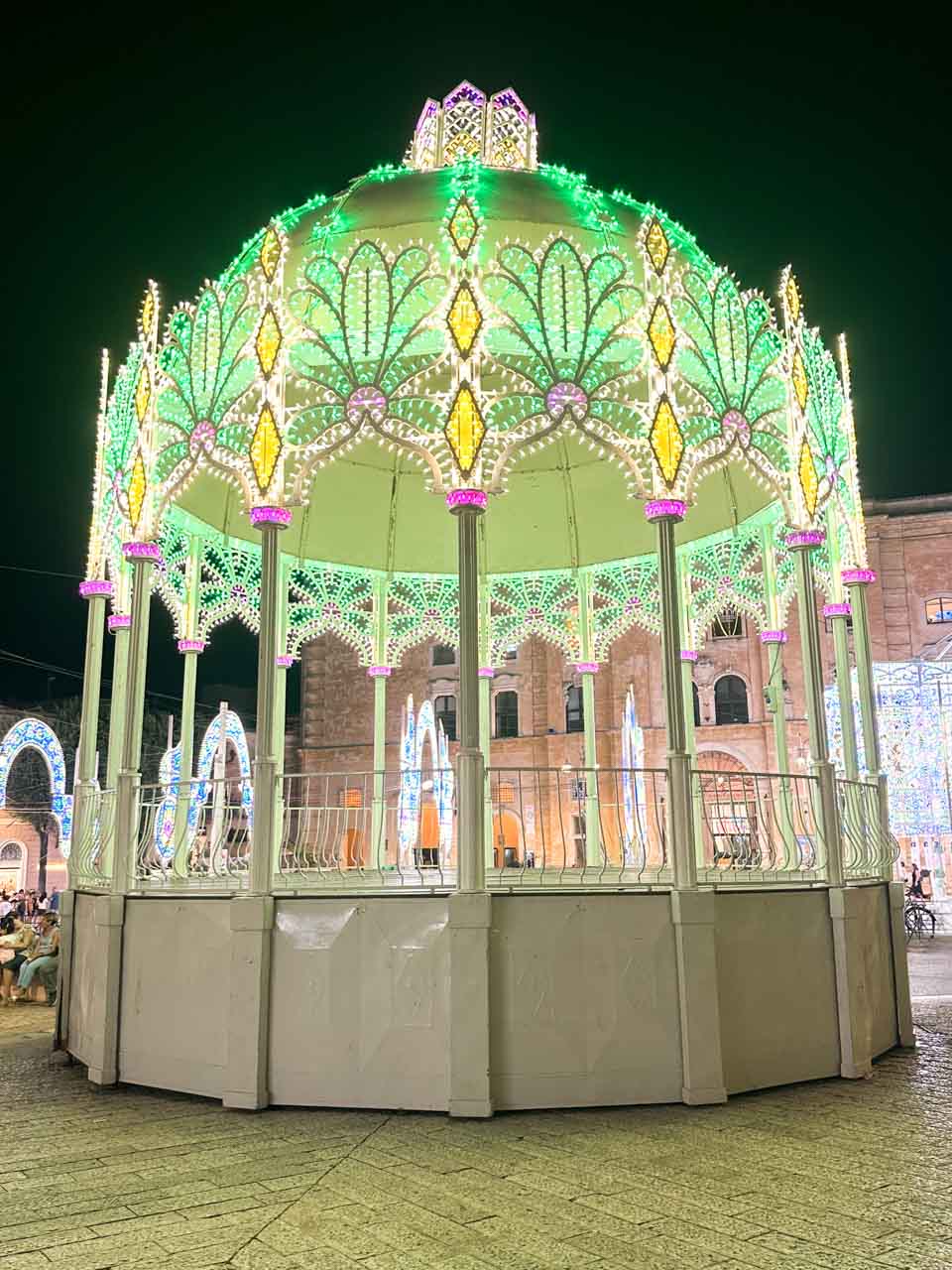
If you’re planning your trip for the beginning of July, it’s also worth knowing that on the 2nd of July, Matera celebrates the Festa della Bruna. It’s the biggest and most important festival dedicated to the city’s patron saint. There are processions through the streets, live music, and fireworks, but the most famous tradition involves a huge papier-mâché chariot being paraded through Matera before being handed over to the crowd, who quite literally tear it apart. Why? Because owning a piece of it is considered good luck. We sadly missed it by two days, but the lights were still up and the whole historic centre still felt really festive!
If you’d prefer to explore the Sassi with a local guide, here are some walking tours worth considering:
Church of Santa Lucia alla Malve
As I was planning our trip, one thing that really surprised me was just how many churches there are in Matera. Honestly, we could have spent an entire day visiting them. I’ll also admit it made planning a little chaotic, as it wasn’t always obvious what made each one different or which ones were worth prioritising.
However, if Matera is just one stop on your southern Italy itinerary and you’ve only got time for one, this is probably the church I’d recommend most.
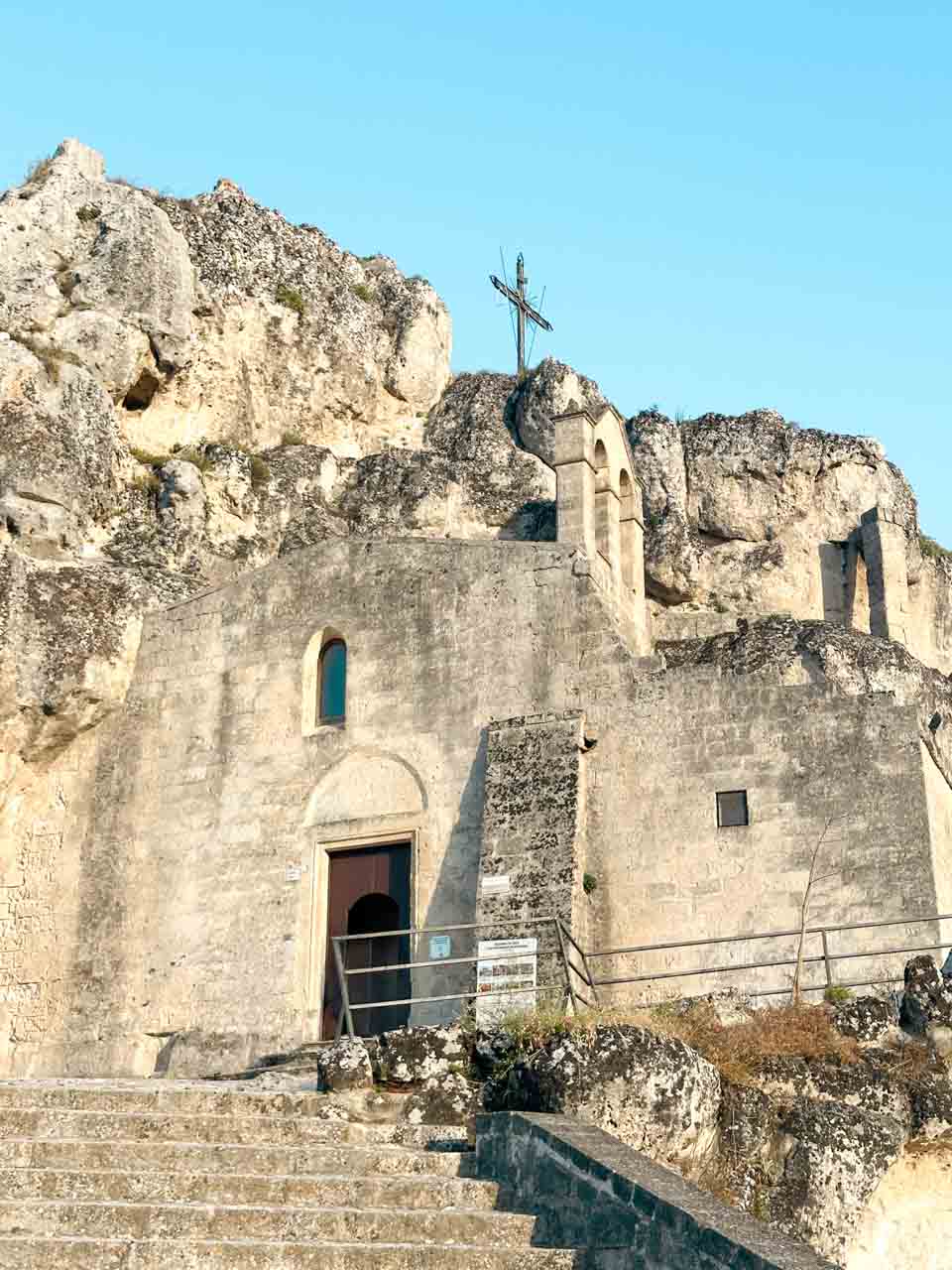
Like so much of Matera, the Church of Santa Lucia alla Malve is carved directly into the rock. Entry costs €4. Plus, if you know you’ll be visiting several churches in Matera, you can buy a multi-site pass, which usually works out slightly cheaper. We weren’t sure how many we’d manage to fit in before closing time, so we ended up buying separate tickets instead.
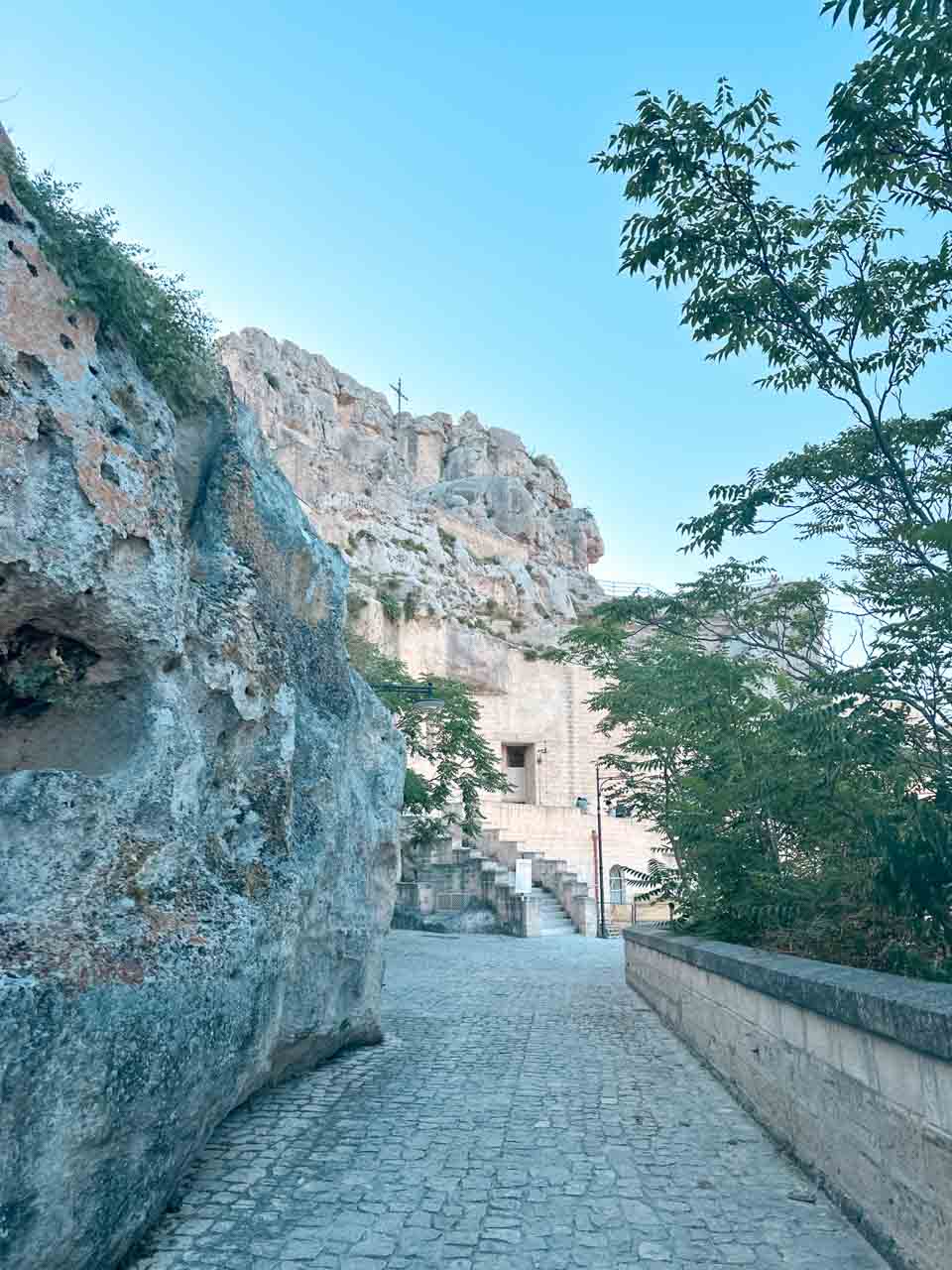
Unfortunately, you can’t take photos inside, so the only ones I have are from outside, but if you’re curious, you can find some older photos online.

The photo rules are strict for a reason. The church dates all the way back to the 9th century, and you can still see some of the original frescoes from between the 11th and 17th centuries. It doesn’t look like a traditional church inside. It feels more like walking around the ruins of a small chapel, with the frescoes still intact.
When you enter, you get a leaflet listing all the frescoes and what they show. Because the place is so small, even if you stop by every single one, it shouldn’t take you longer than 20 minutes to see everything.
Sassi Museum – Casa Grotta
If you want to get a better idea of what life was actually like inside those cave houses, I really recommend visiting Casa Grotta.
It’s a preserved 16th-century cave home in Sasso Caveoso that has been set up exactly as it would have looked when a local family lived here. It even contains some of the original furniture belonging to the last family who called it home.
Entry costs €5, and the visit takes you through several different spaces one by one.

You start in the family’s living quarters, and once you step inside, you immediately understand where the name “national shame” came from. The space was incredibly small and dark, with just one tiny window letting some light in, and that’s before you even add the lack of running water or sewage into the mix.
And if that wasn’t bad enough for the humans, you can also see where the animals stayed too (and yes, the horse had to relieve itself somewhere as well). You also learn that chickens slept next to children in small drawers underneath the bed.


It’s honestly hard to believe this was the actual size of the home, and not a recreation designed to make the museum fit into a smaller space. It already felt claustrophobic with a handful of people inside, and entire families had to share it 24/7.

From there, you can also visit the Snow House, where families collected snow in a barrel vault to preserve food and use as drinking water. Then there’s a cave that served as a meeting place for locals, where you can watch a short video about Matera’s history, and finally a rock church that took on a few different roles over the years.
It’s a really eye-opening experience, and I’d definitely recommend it!
Palombaro Lungo
If I had to pick my favourite place we visited in Matera, it’d probably be Palombaro Lungo.

It may not sound like much, because how exciting can a cistern be? But it was honestly so much better than you’d expect.
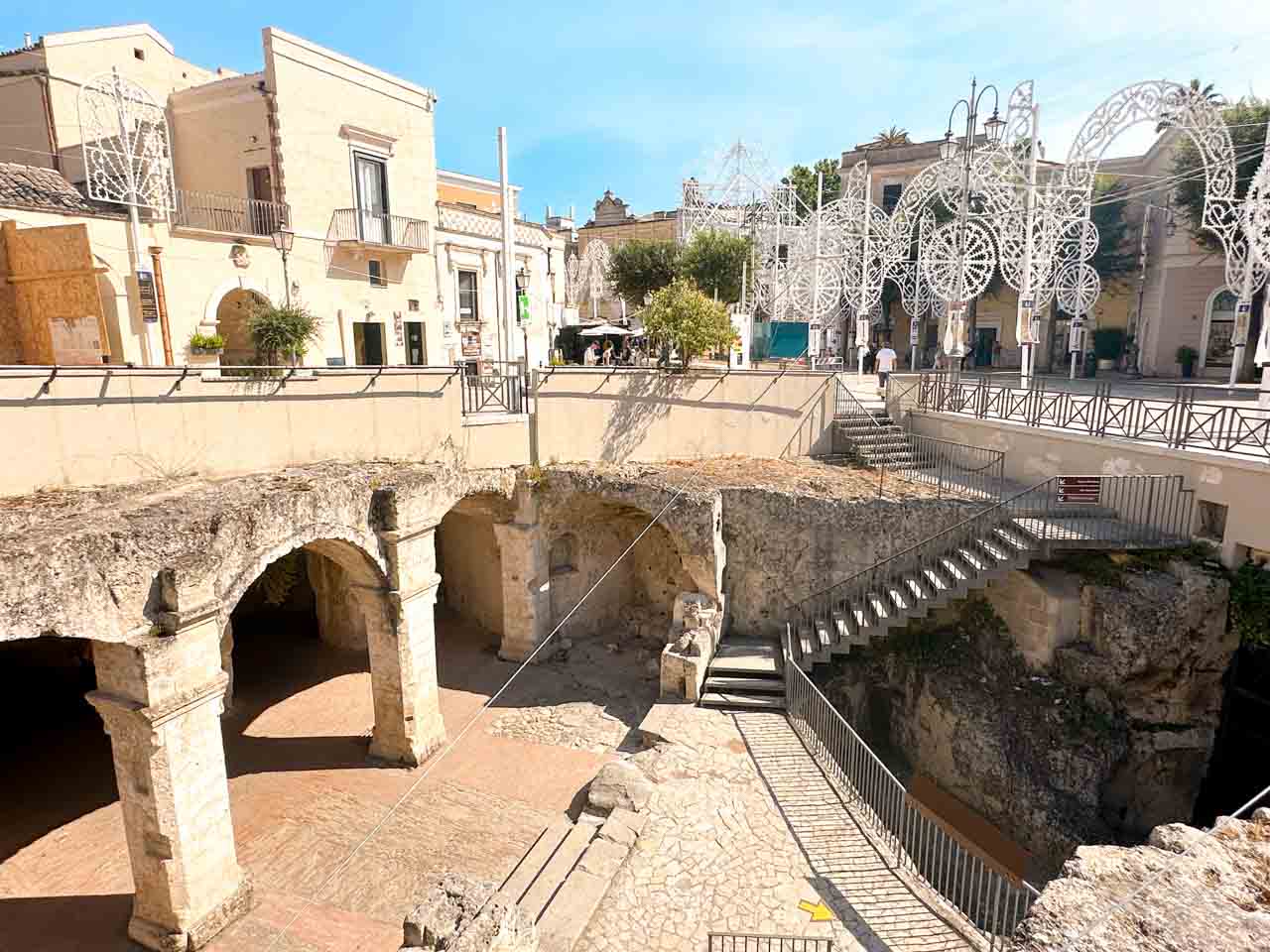
First, on a scorching hot day like the one when we visited, it gives you such a lovely break from the sun. And second, we all know I love an Instagrammable space, and this absolutely delivered.
So, what exactly is Palombaro Lungo? It’s a huge underground cistern beneath Piazza Vittorio Veneto that collected and stored rainwater to supply the city. Many people had private cisterns, but this was the largest of its kind in Matera.
It was built in the 16th century and enlarged over the years. It’s 16 metres deep and 50 metres long, and at its peak, it could hold around 5 million litres of water.
After the national aqueduct was built, the cistern was no longer needed and gradually fell into disrepair, until renovation works on the square in 1991 uncovered it again.
Entry costs €3, and the visit itself is quite short. You head down a set of stairs and suddenly find yourself inside this enormous underground chamber. There’s a suspended boardwalk above the water, so you can walk around at your own pace.
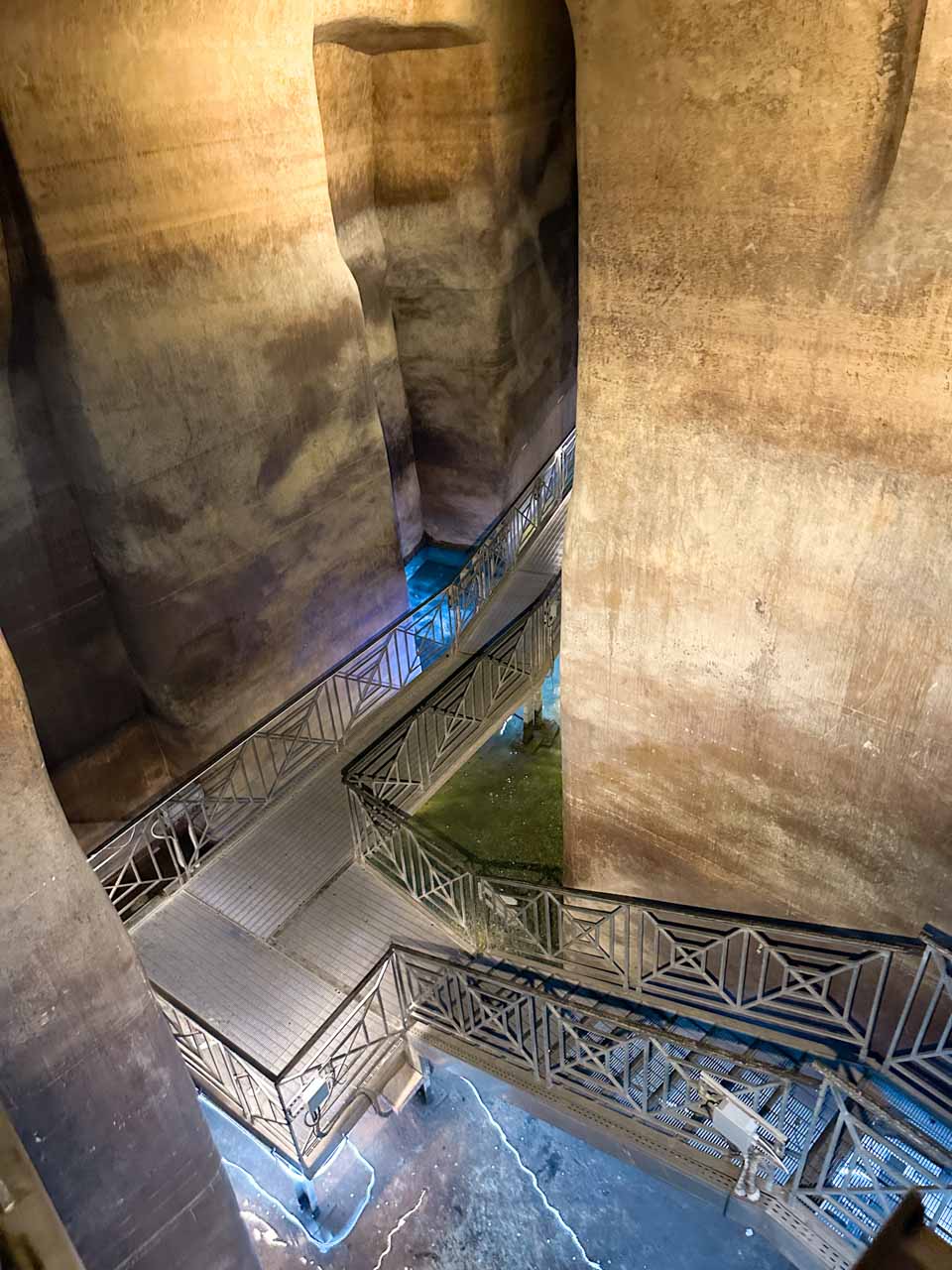

I can’t tell you how many times I walked back and forth, taking photos and trying to take in the sheer size of it!
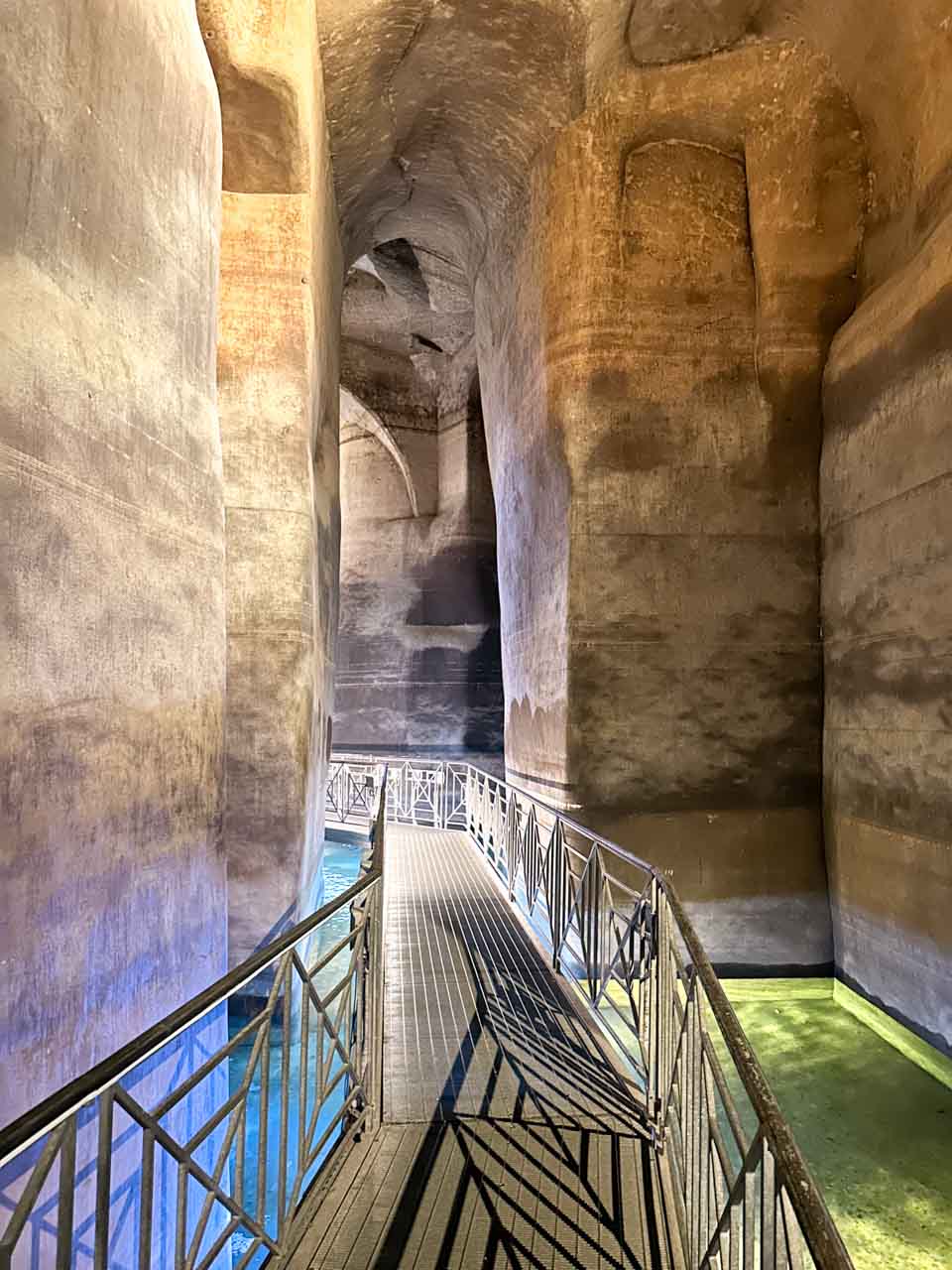
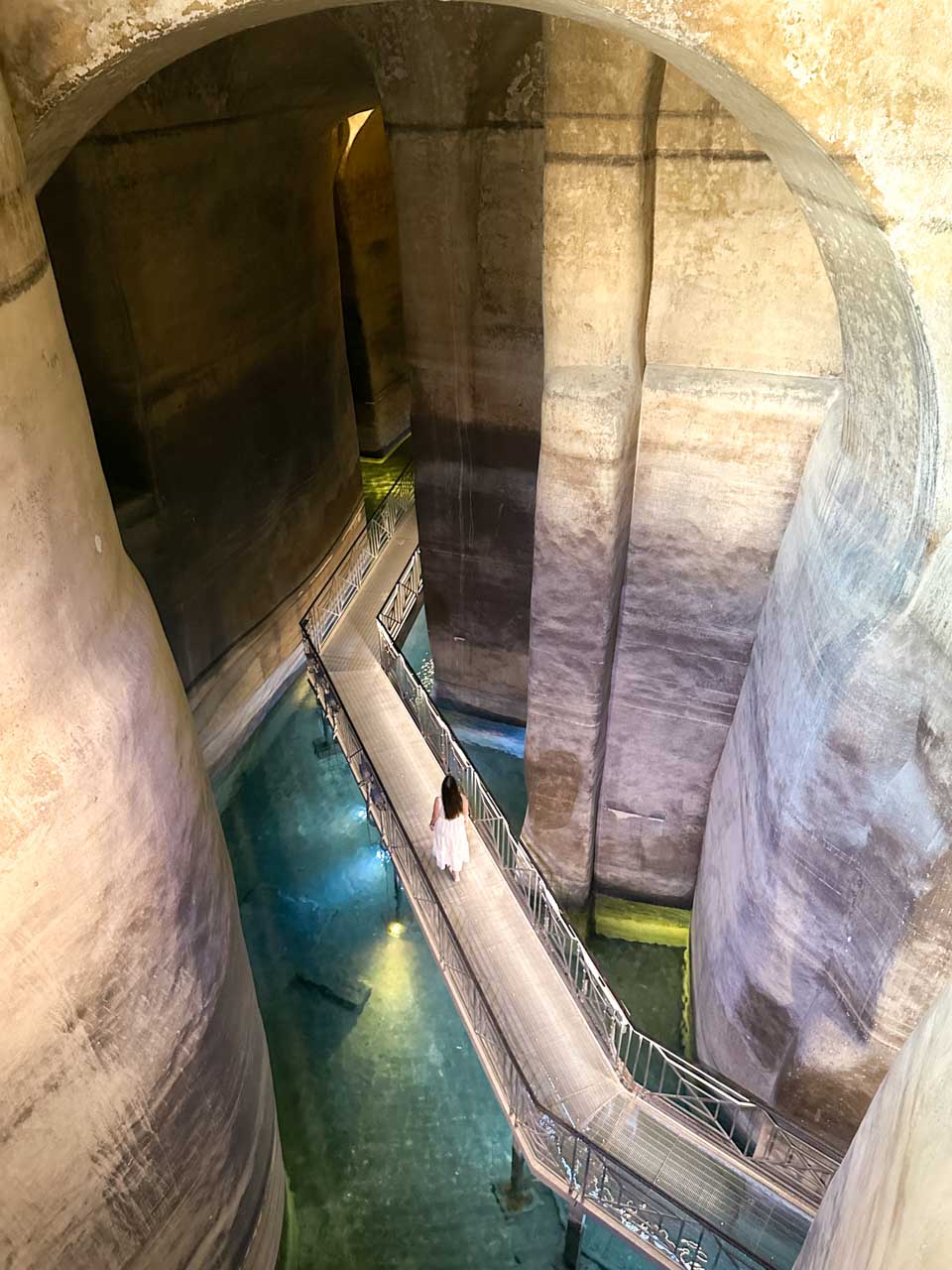
Thousands of tourists walk across Piazza Vittorio Veneto every day without realising there’s a massive cistern beneath their feet. It’s definitely not something you get to see every day, and I’d really recommend stopping by if you have the time!
Belvedere dei Tre Archi
Once you’re in Piazza Vittorio Veneto, look for the three arches. If you go through them, you’ll find a viewpoint with an amazing panoramic view over Matera called Belvedere dei Tre Archi, or Belvedere Luigi Guerricchio.
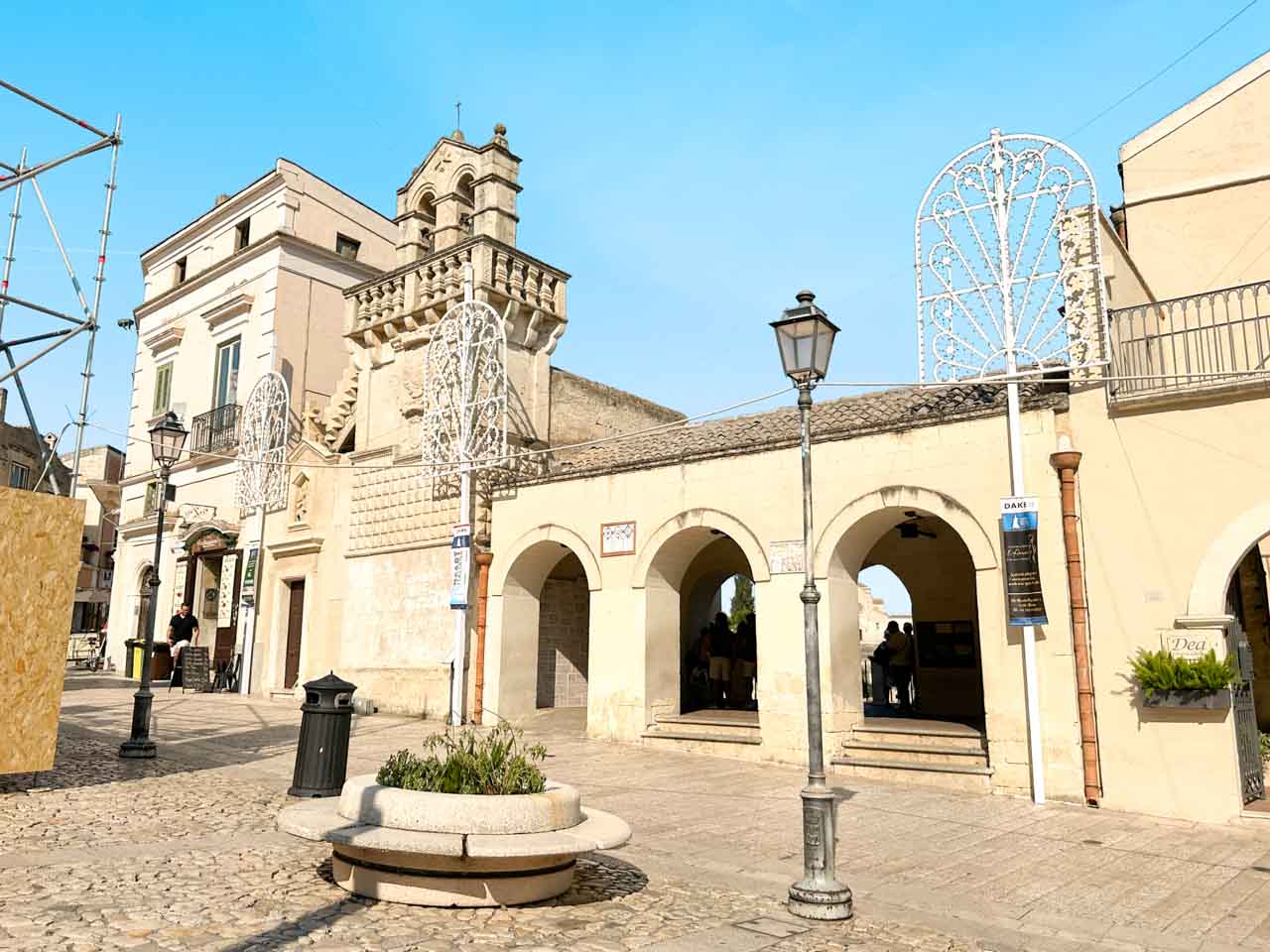
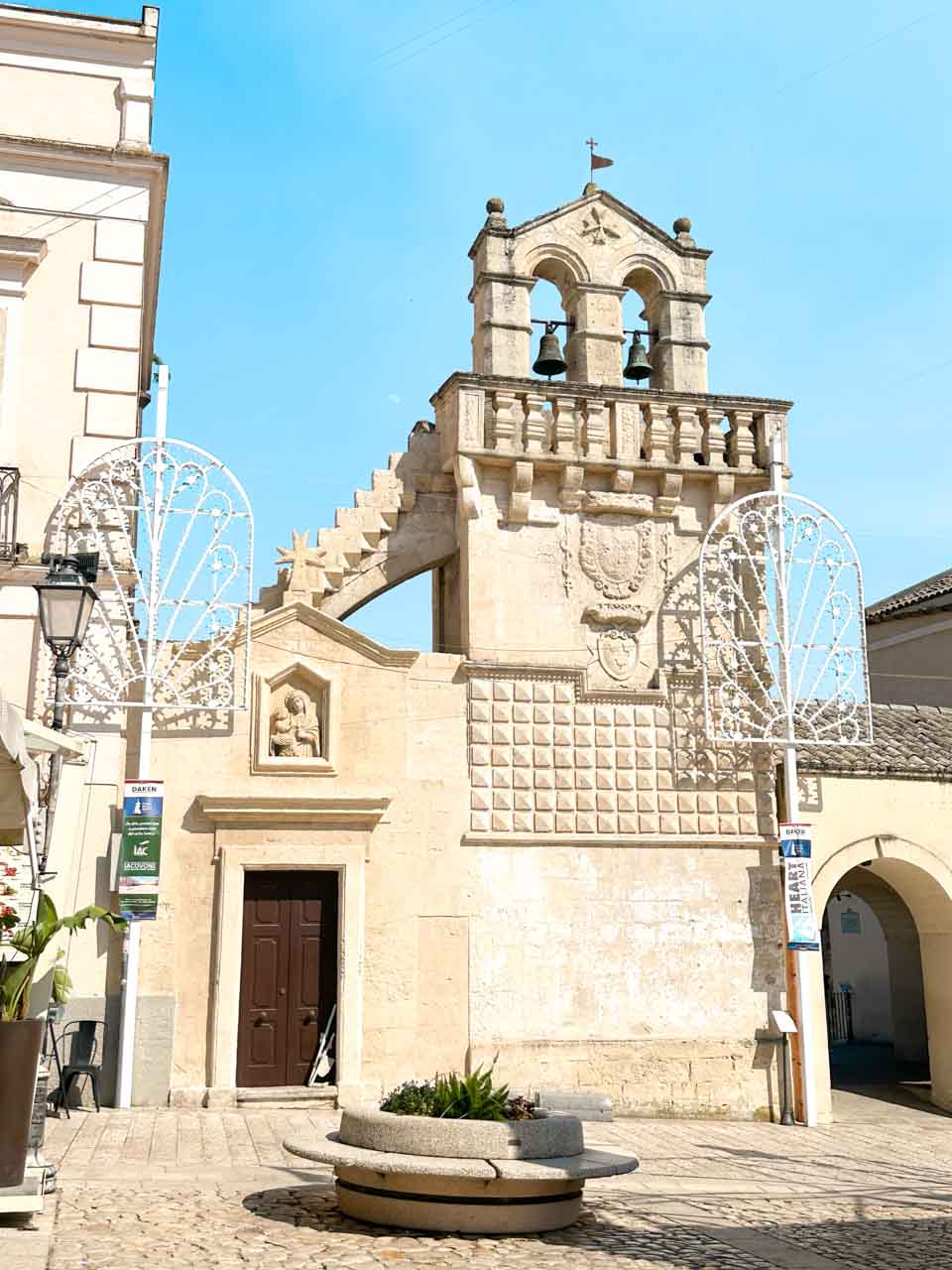
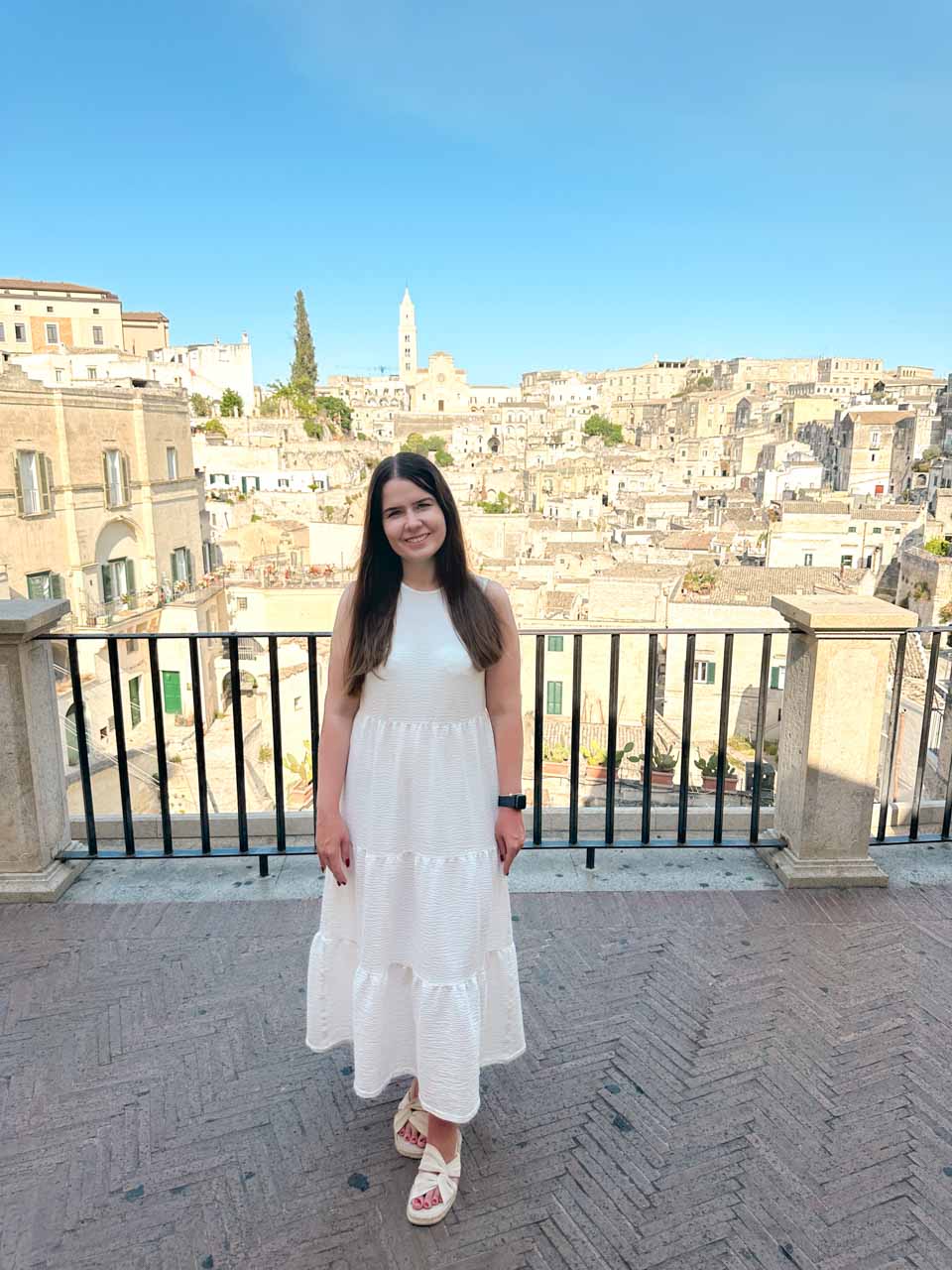
I’d recommend heading there either earlier in the day or during golden hour, as the light can be quite harsh otherwise. And because it’s one of the most popular viewpoints in Matera, it might be difficult to take a photo without people in the background.

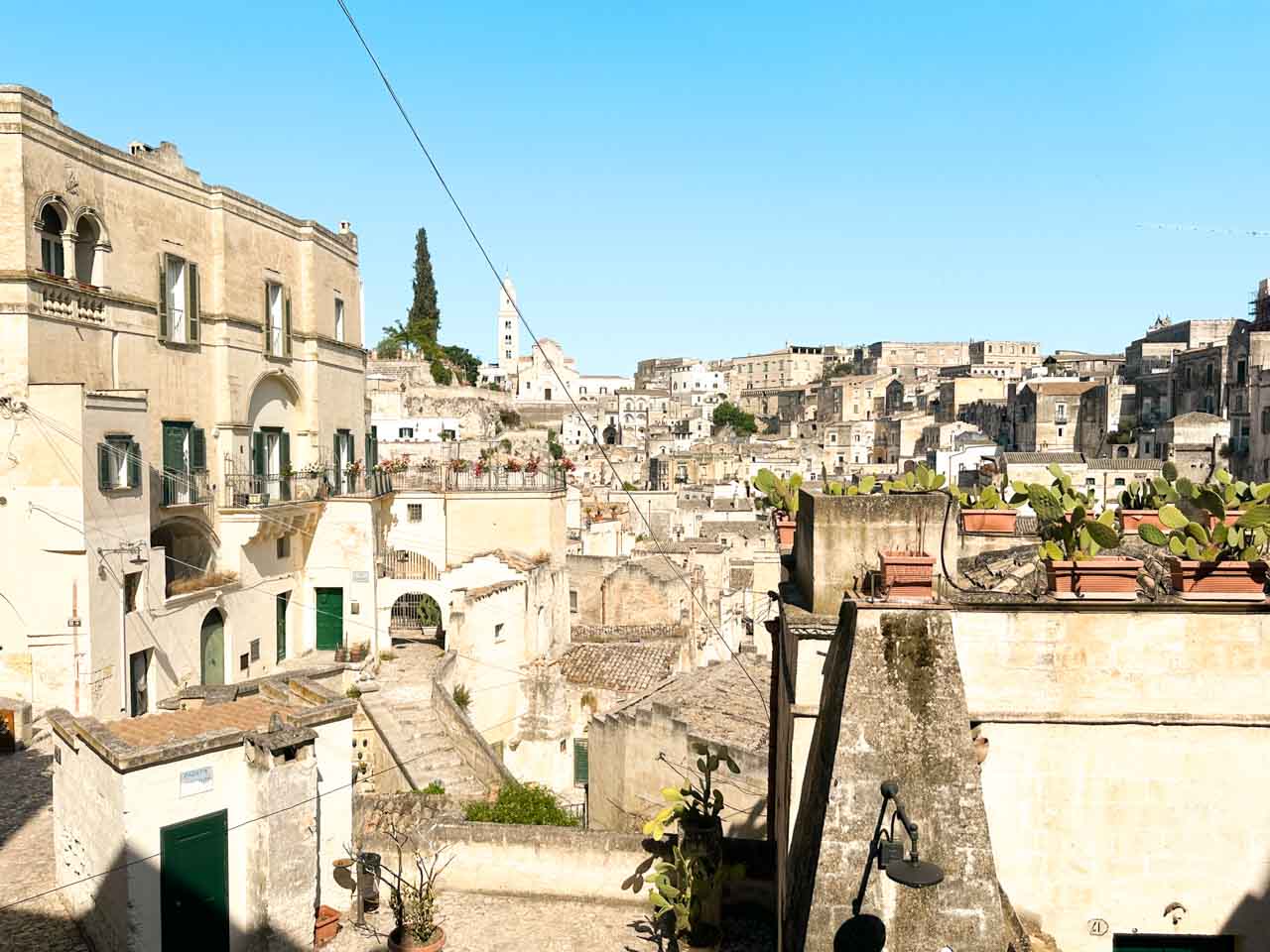
Another trick for avoiding the crowds is to head to the lower level of the viewpoint instead. Yes, there are actually two levels! The upper one is where most people go, and I do have to admit the views are slightly better from up there.
However, after you visit Palombaro Lungo, turn left and you’ll find the entrance to the lower level, which seems to fly completely under the radar. At least it was completely empty when we visited.
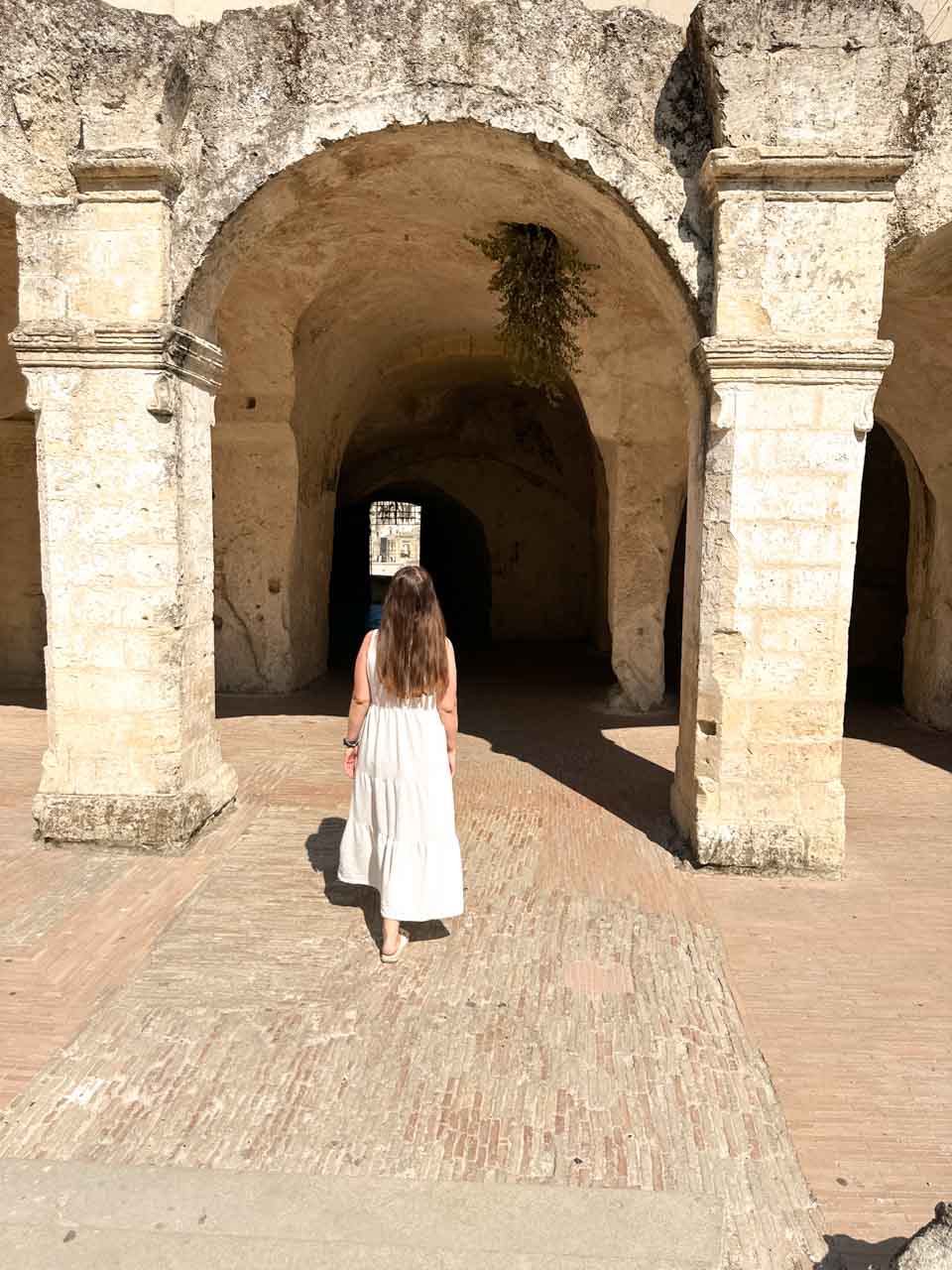
It’s definitely worth checking out both and comparing the views, especially if the upper terrace is packed!
Piazzetta Pascoli
If you want to take panoramic photos of the cave houses from a different perspective, another great spot is Piazzetta Pascoli next to Palazzo Lanfranchi.
From one side, you get a fantastic view over the Sassi, and from the other, over the hillside churches and the valley below.
Plus, it’s right next to I Vizi degli Angeli, where you can grab a gelato to cool off. It’s apparently the best place for ice cream in Matera, and it may just have been one of my favourite gelaterias ever!
Matera Cathedral
I’ll admit I’m not a massive fan of paying for church entry, unless the money goes towards restoration work and the fee is more symbolic than anything else.

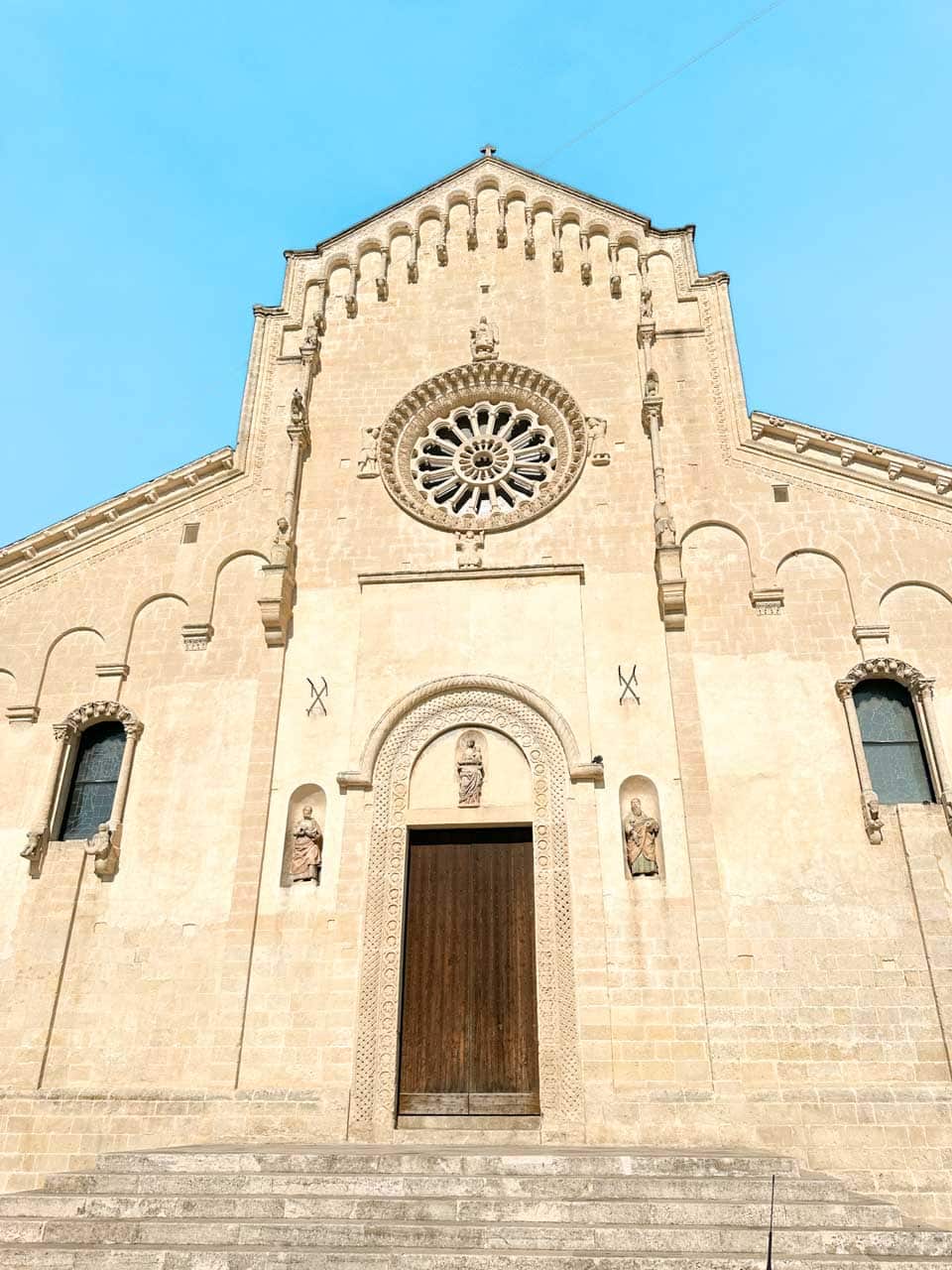
And with so many beautiful churches in Matera and only so much time in the day, I completely understand if you end up having to pick and choose, just like we did (and it gives you another excuse to come back to Matera, right?).


However, entry is only €3.50, and I’d say it’s worth the money.

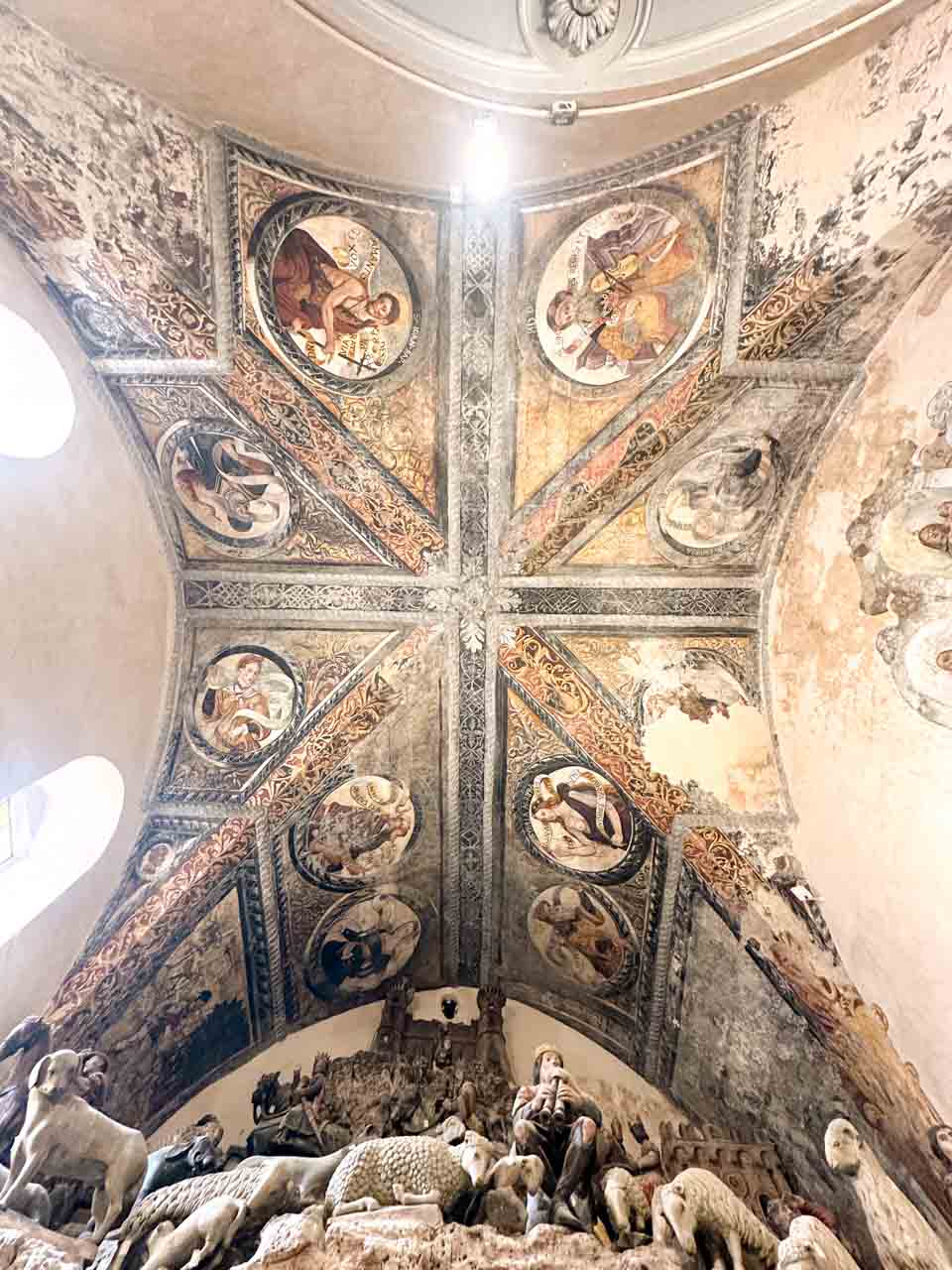
The interior is absolutely stunning, with gilded details everywhere you look, an incredible frescoed ceiling, and an intricately carved nativity scene that was unlike any other nativity scene I’d seen before.
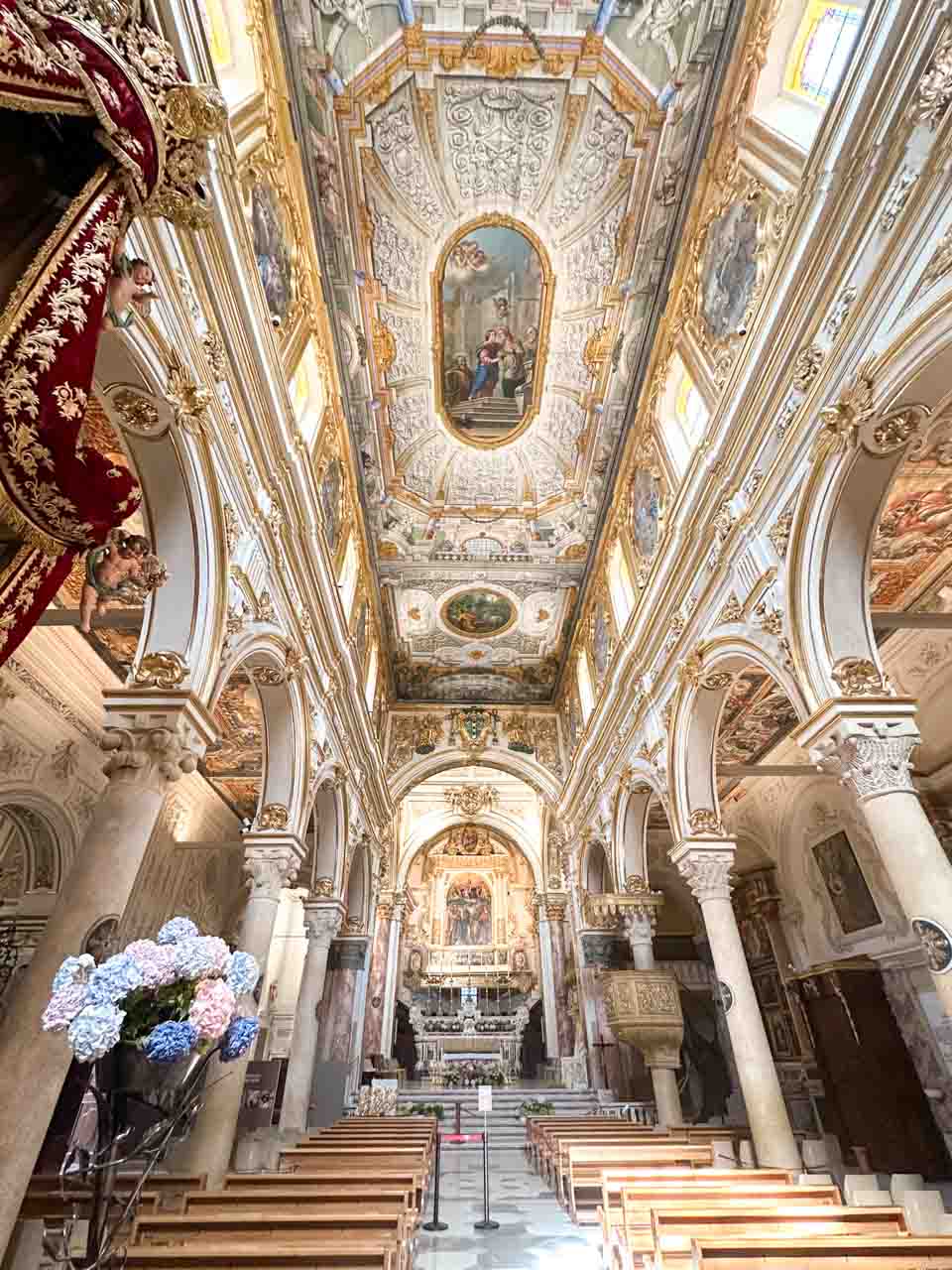

Unfortunately, we couldn’t climb the bell tower. However, the cathedral already sits at the highest point in the city, so the views from the piazza outside are already some of the best in Matera.
And as you’re walking between Piazza Vittorio Veneto and the Duomo, you’ll spot plenty of viewpoints along the way that are perfect for photos.
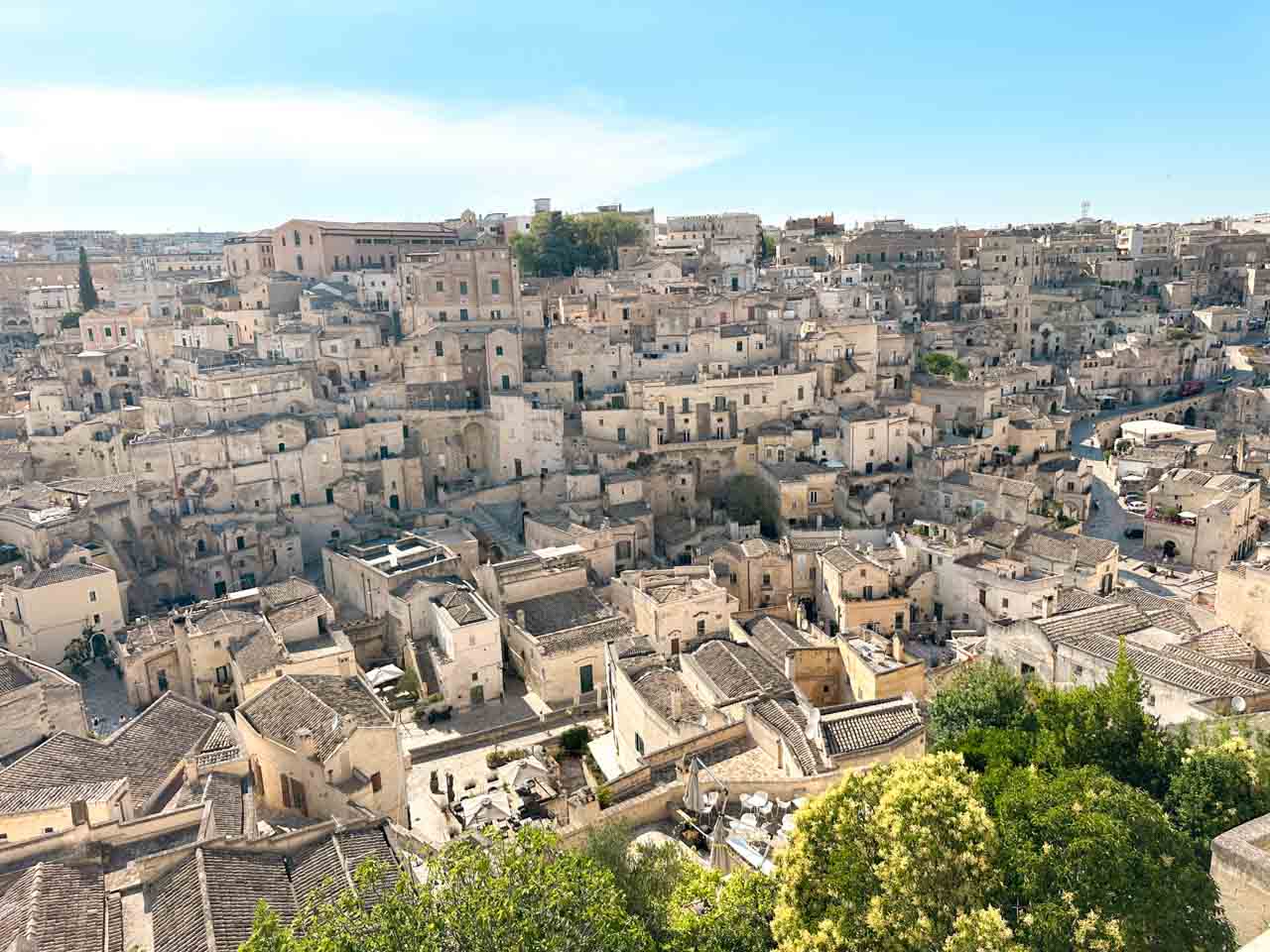
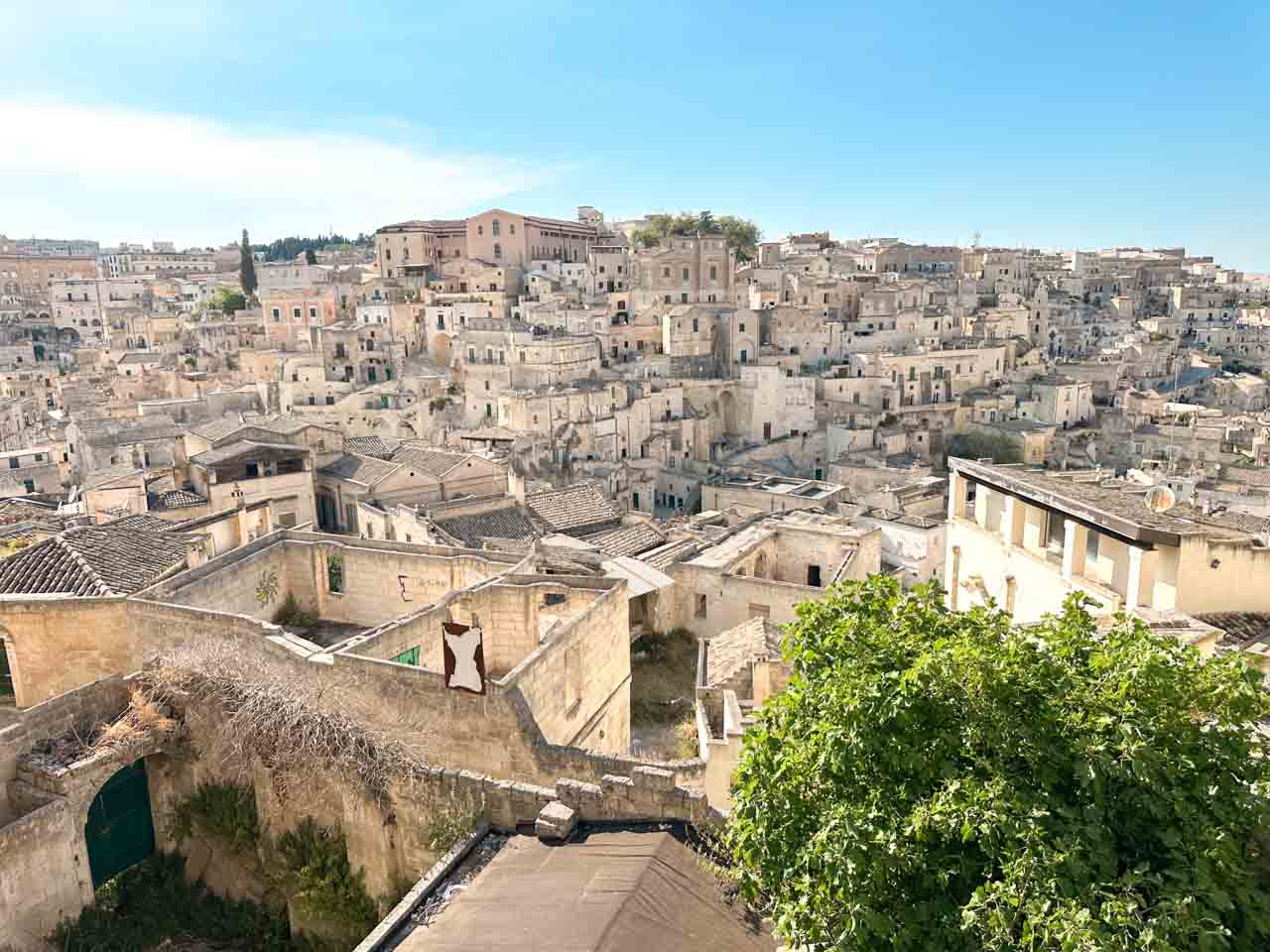
Matera is definitely one of those places where you have to get a little creative and simply keep turning down random streets to see what views are waiting around the corner!


Gravina di Matera
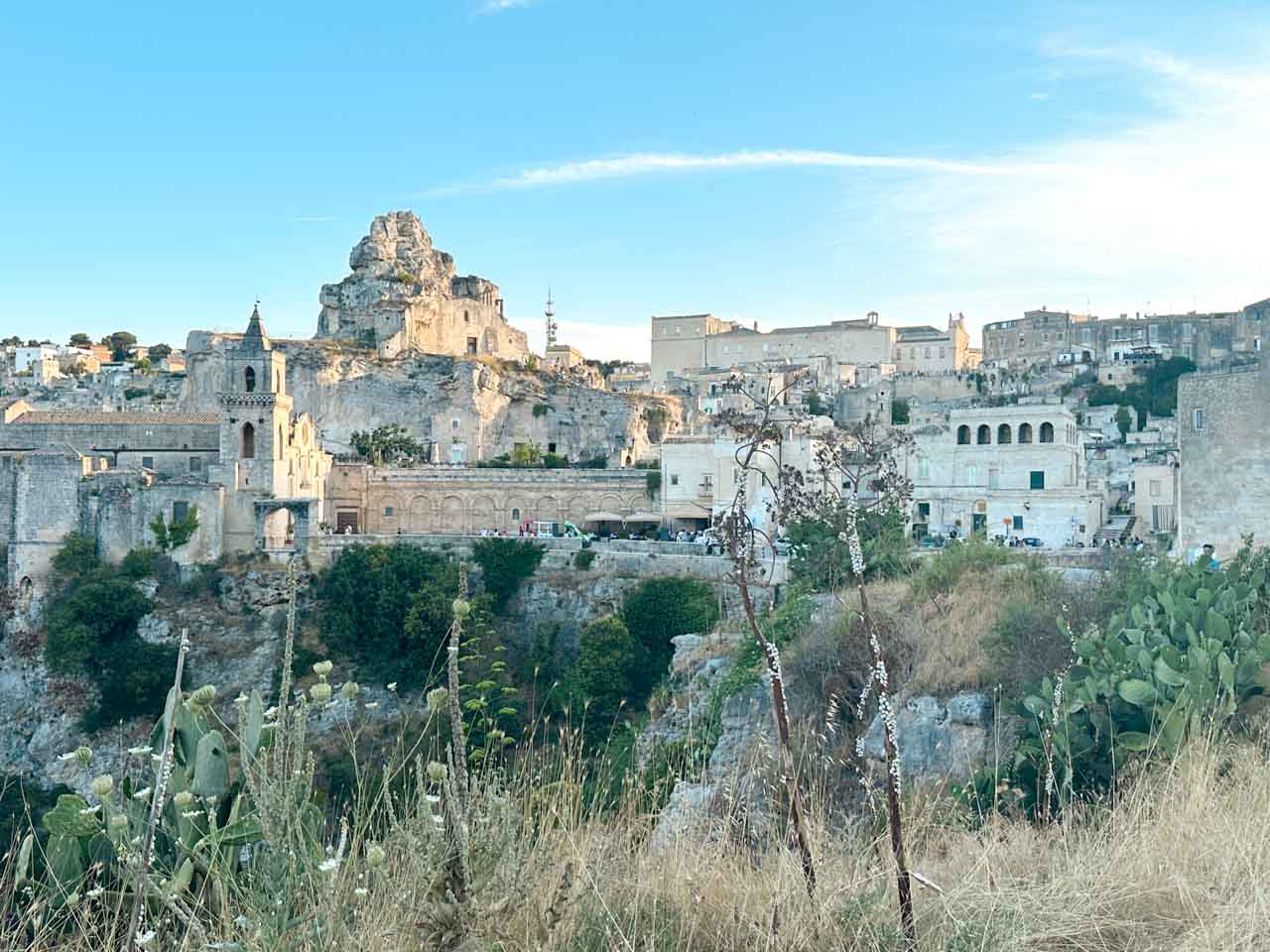
As you walk around Matera, you’ll notice there’s a valley cutting through the city. If you’re a fan of hiking, it’s definitely worth setting aside some time to explore it.

I’ve seen so many stunning photos of Matera taken from the hillside opposite, and there’s even a really cool Tibetan bridge that can take you there.

Now, I’ll admit we definitely underestimated this one, and Google Maps didn’t help matters. It told us it would be an easy 15-minute walk to the bridge from where we were. However, after more than 30 minutes of walking along rocky paths, with the bridge still looking very far away in the distance, we decided to call it a day.
I was wearing a dress and sandals, so I looked exactly like the sort of tourist you see on the local news after needing mountain rescue. I wasn’t willing to risk a twisted ankle for the sake of a photo, so we turned around.

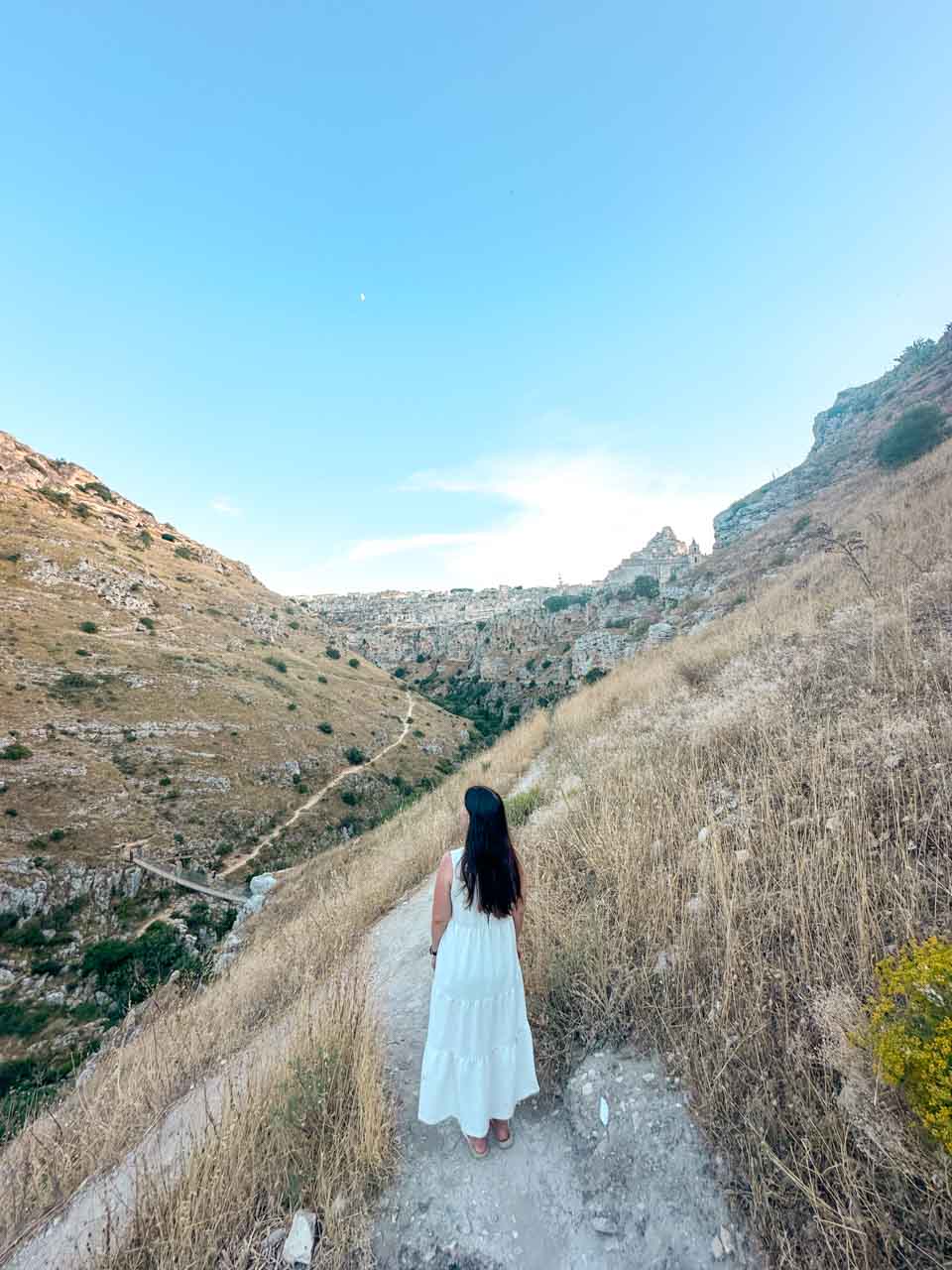
Next time, we’d definitely plan it better and make our way to Belvedere Murgia Timone for panoramic views over the city and the caves scattered around the hillside. Plus, there are plenty of so-called rupestrian churches (rock-hewn churches) that you can explore along the way.

If you’d prefer to explore the Gravina and the nearby area with a guide, there are also a few tour options:
Church of Saint John the Baptist
The last church we visited in Matera was the Church of Saint John the Baptist. I’ll admit we mostly ended up here because we were staying just around the corner and entry was completely free.
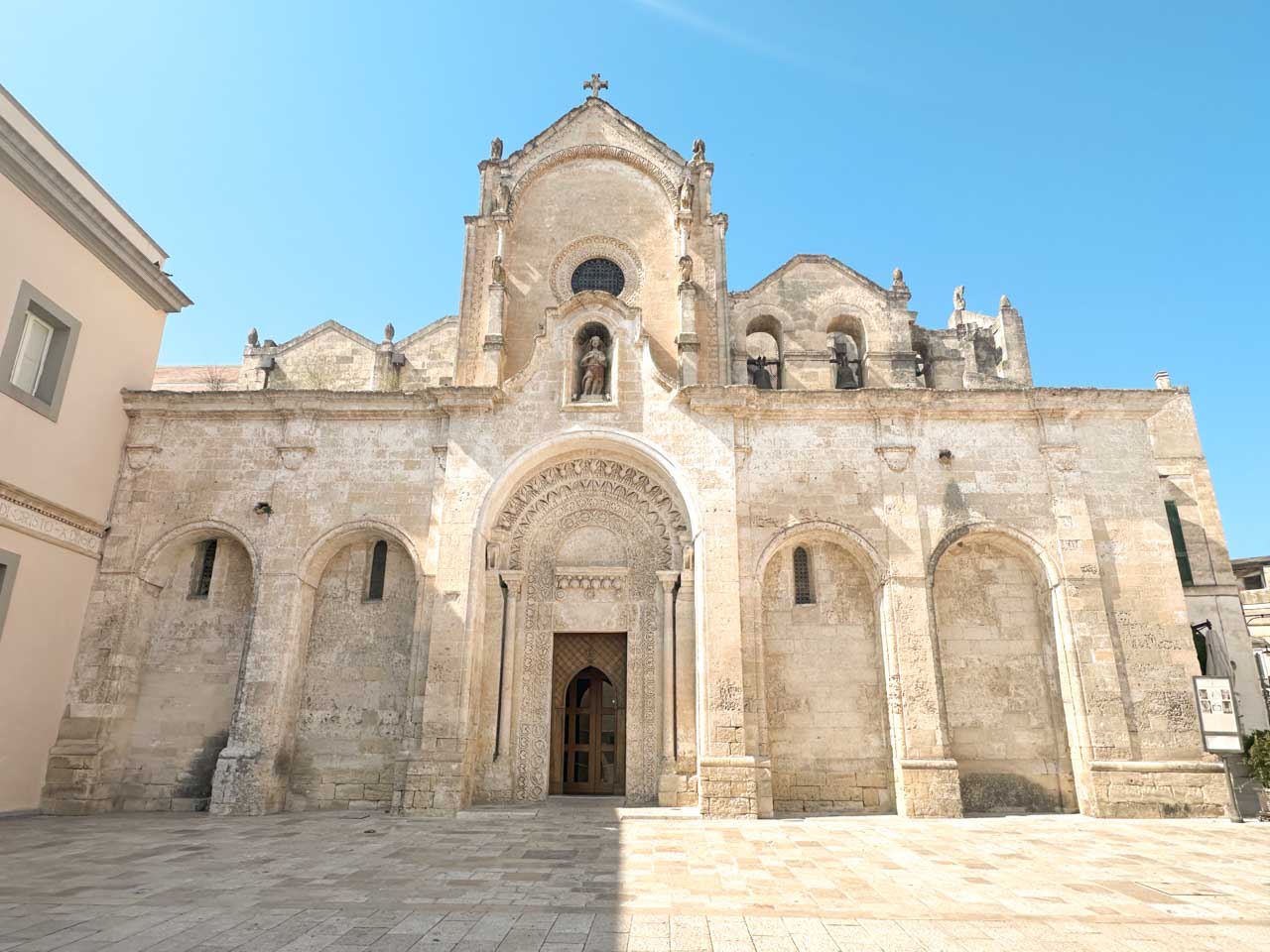
If you’re staying on the other side of town or are short on time, I probably wouldn’t make a special trip for it. But if you’re nearby and have some time to spare, the intricate carvings around the entrance are absolutely stunning and were probably my favourite part of the whole church.
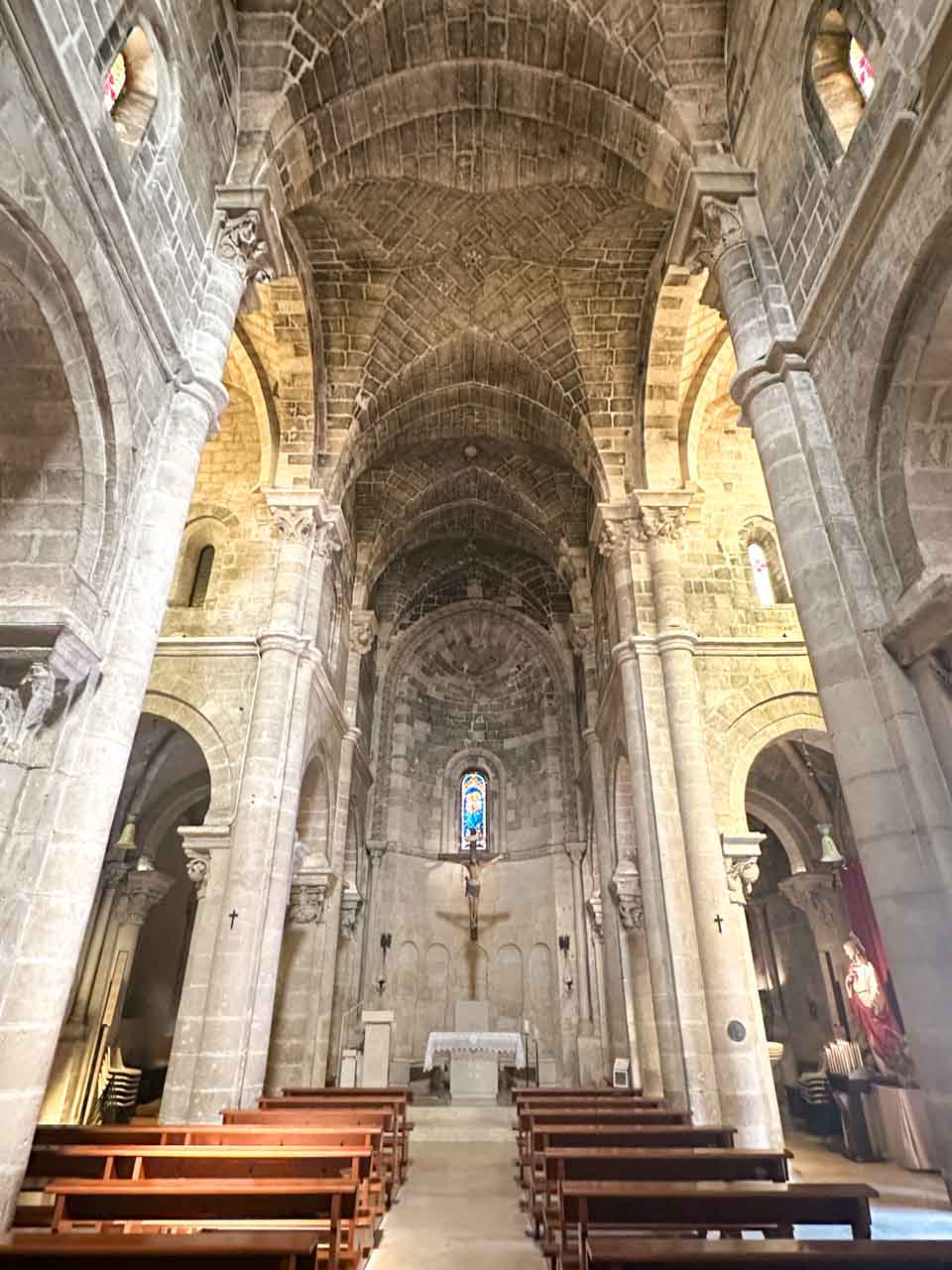
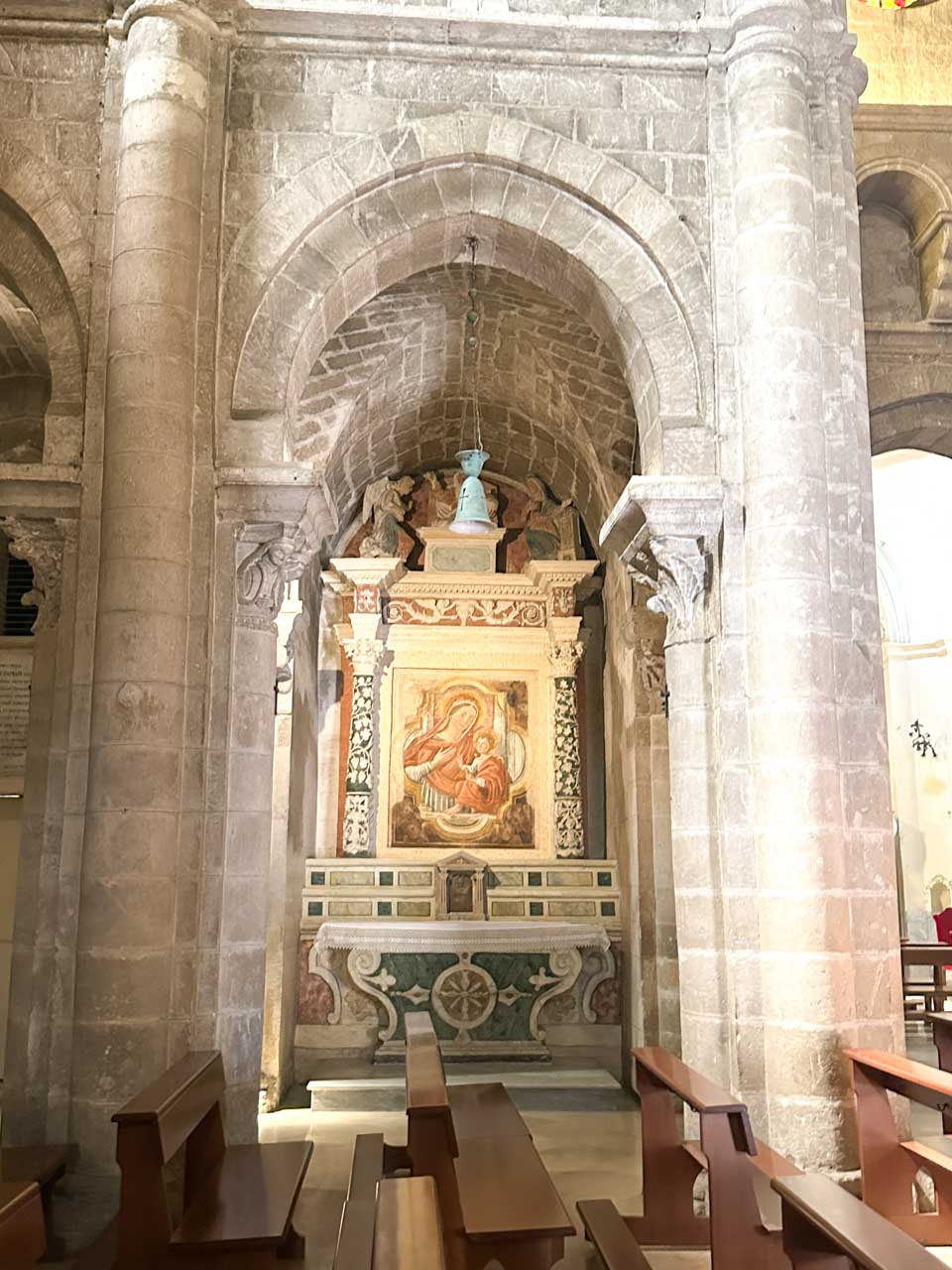
It’s a Romanesque church, so it isn’t as opulent inside as the cathedral, but the arches, statues, and stone carvings are beautiful too.
Other places we had on our list:
– Churches: Church of San Pietro Barisano, Santa Maria de Idris, San Giovanni in Monterrone, the Church of Madonna delle Virtù and San Nicola dei Greci, Convento di Sant’Agostino, and all the different rupestrian churches around the hillside.
– “La Palomba” Sculpture Park – a sculpture park inside a disused limestone quarry just outside Matera. The artist behind it was the only Italian artist allowed to work with twisted steel from one of the World Trade Center towers after 9/11, which he used to create an installation called The Global Last Supper.
– Crypt of the Original Sin – a church carved into the limestone cliffs around 10 km outside Matera, dating back to the 8th or 9th century. The thousand-year-old frescoes have survived to this day, which earned it the nickname of the “Sistine Chapel of cave painting”.

Where to eat in Matera
Di Bitonto
The first place we visited in Matera was this café. We hadn’t done any research beforehand – we simply spotted it while walking from the bus station and decided to wait there until our room was ready for check-in.
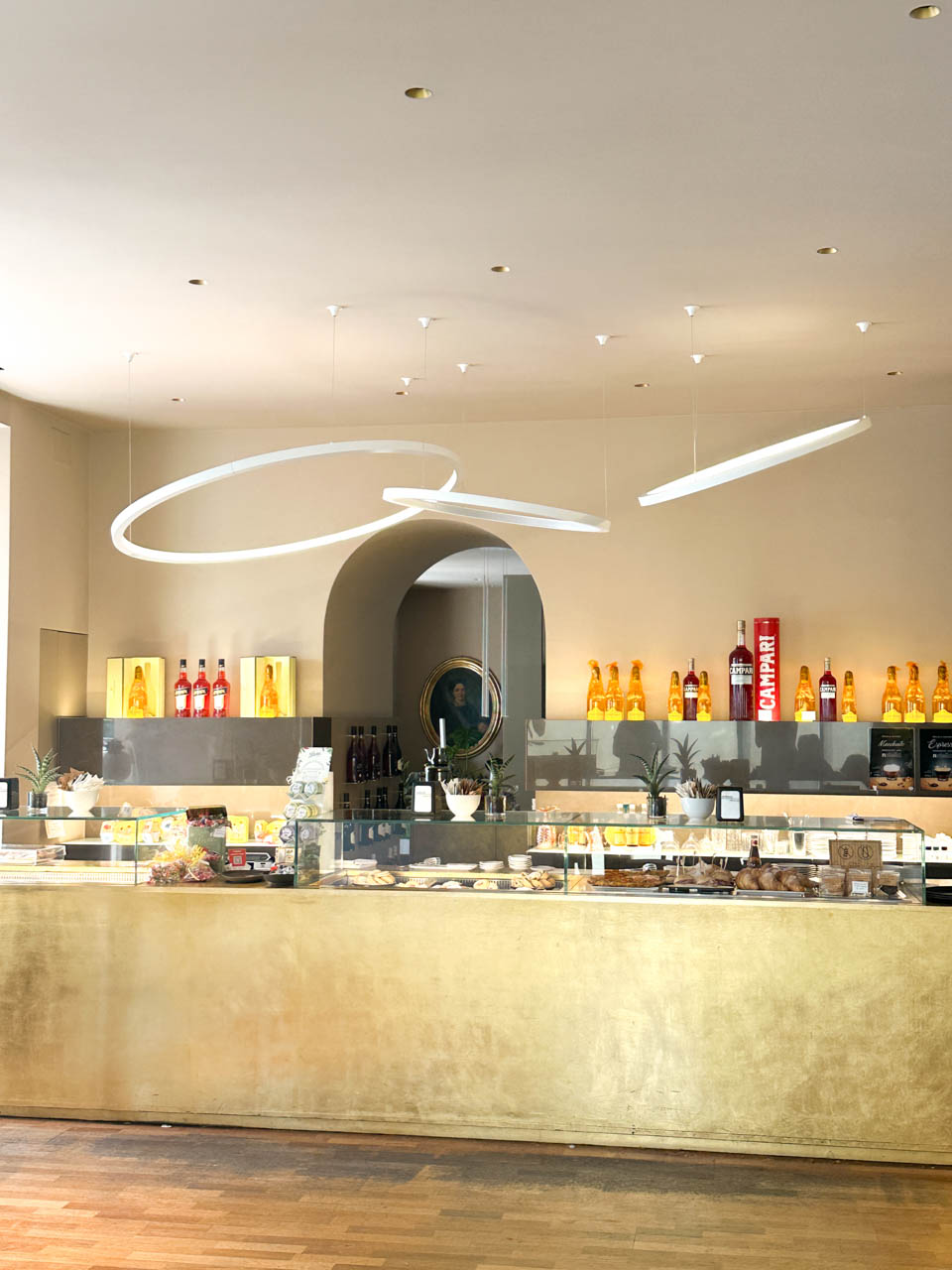
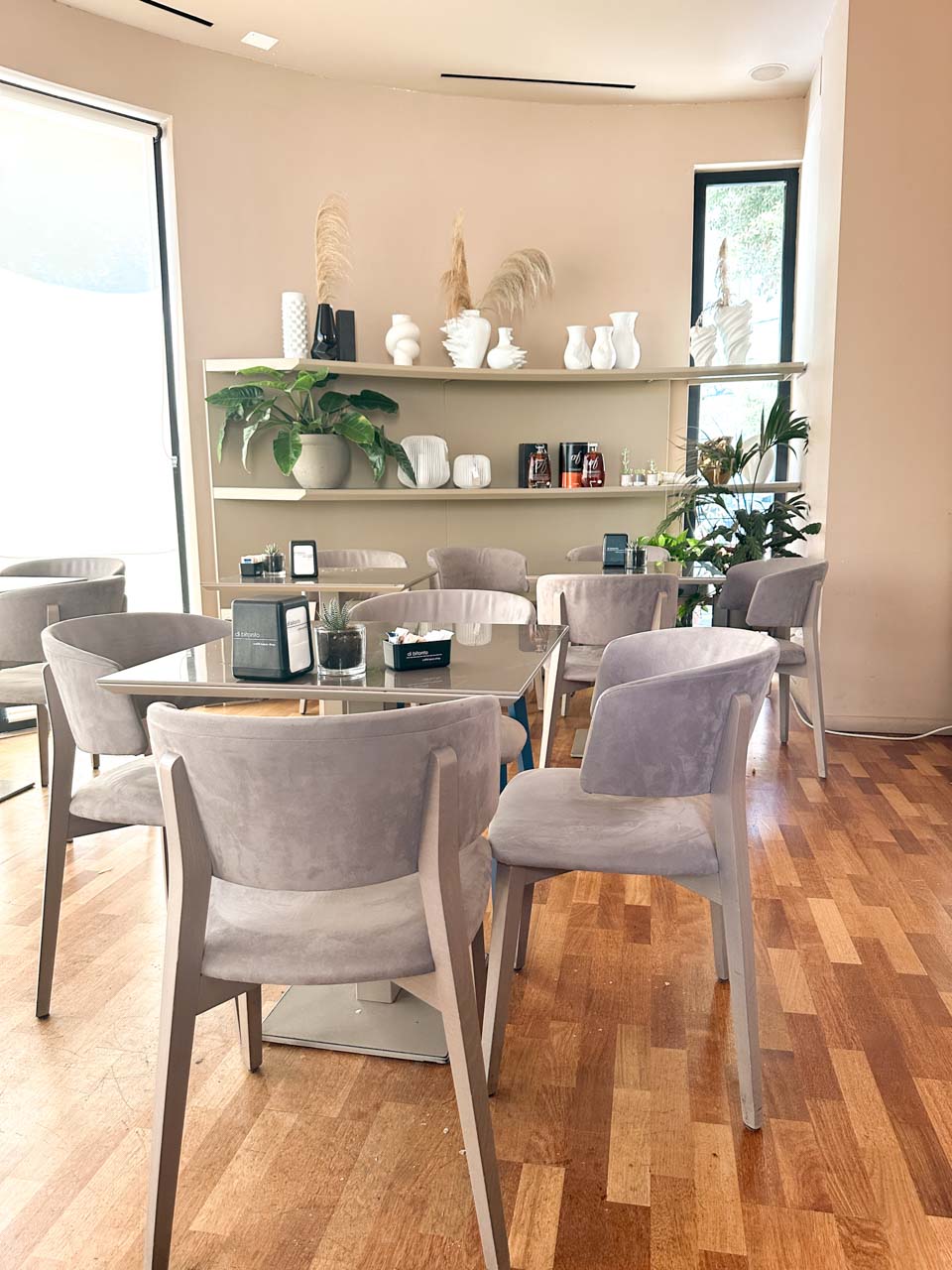
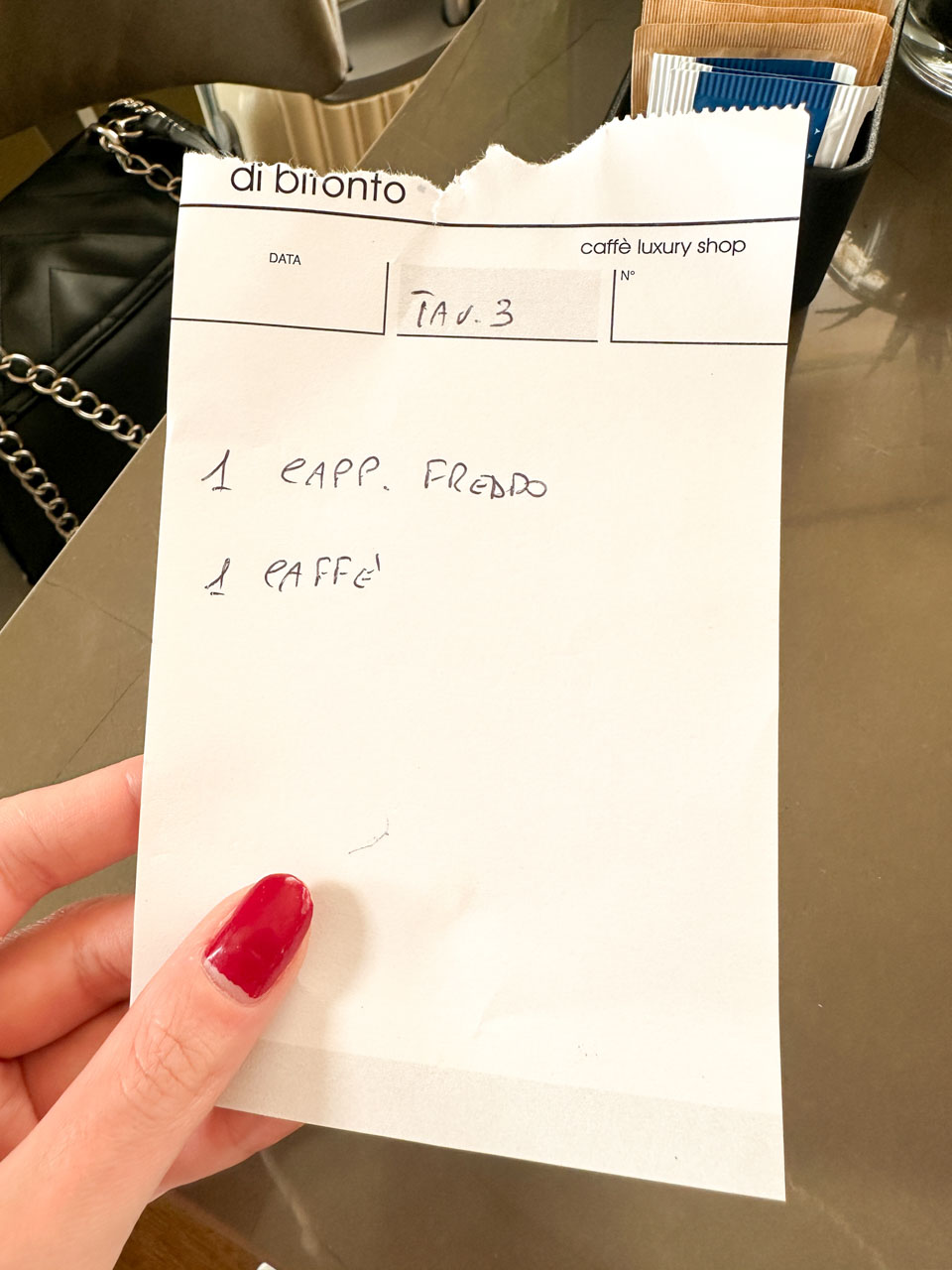
It turned out to be really popular with the locals too, but it wasn’t your typical Italian café. It felt like a really nice mix of old and new. The interior was much more modern than you’d expect, but they still served classic Italian coffee and gave you these cute handwritten receipts to take to the cashier when it was time to pay.
The choice of drinks was almost overwhelming. They also had both savoury and sweet croissants, alongside plenty of other pastries. We tried both types of croissants and they were really good.
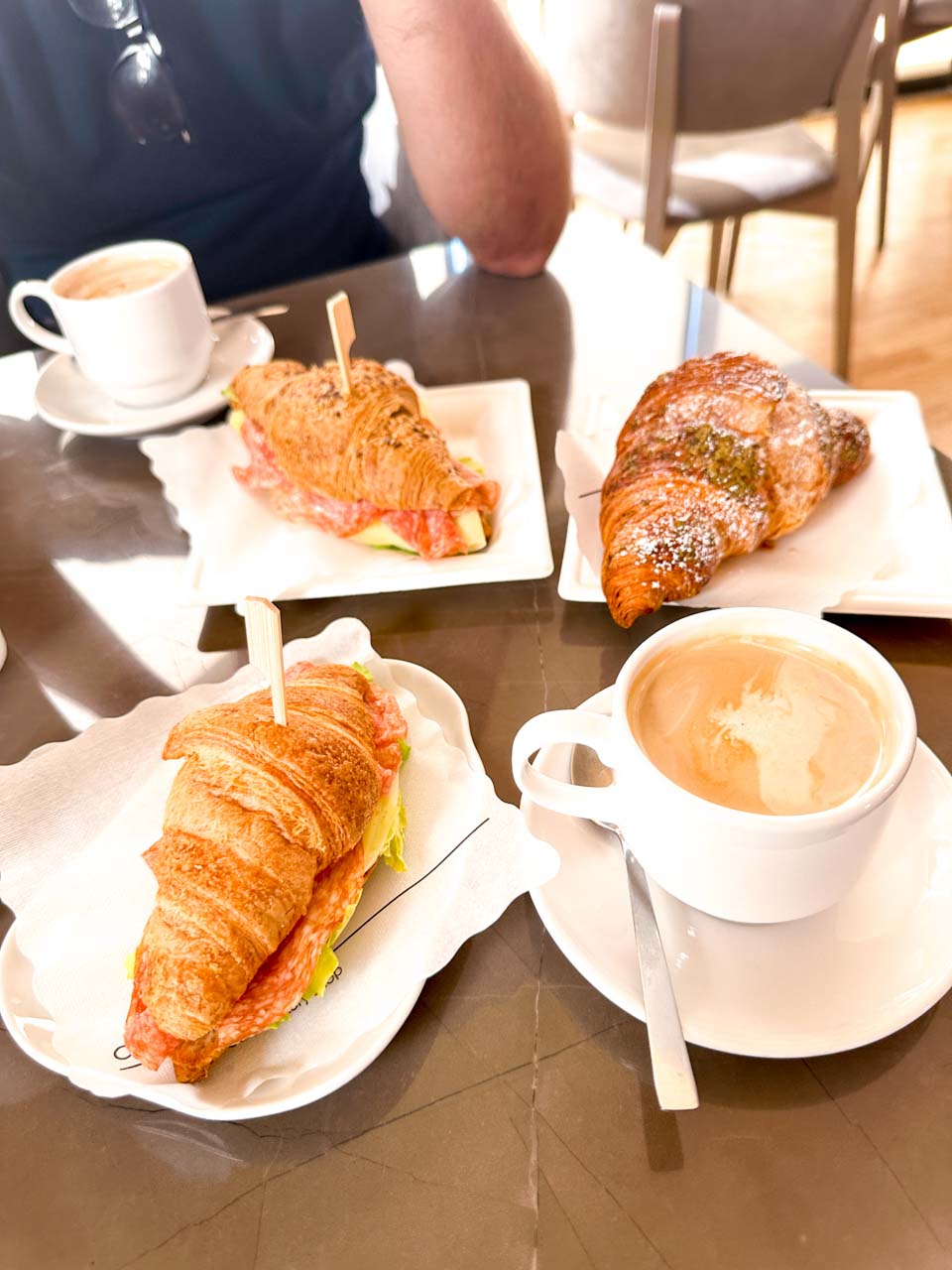
But I’d especially recommend coming here for aperitivo, because the snacks that came with each cocktail were SO good. We noticed they seemed to be slightly different at every table though, so I’m not sure whether they matched them to your drink or whether they just brought out whatever was ready at the time.
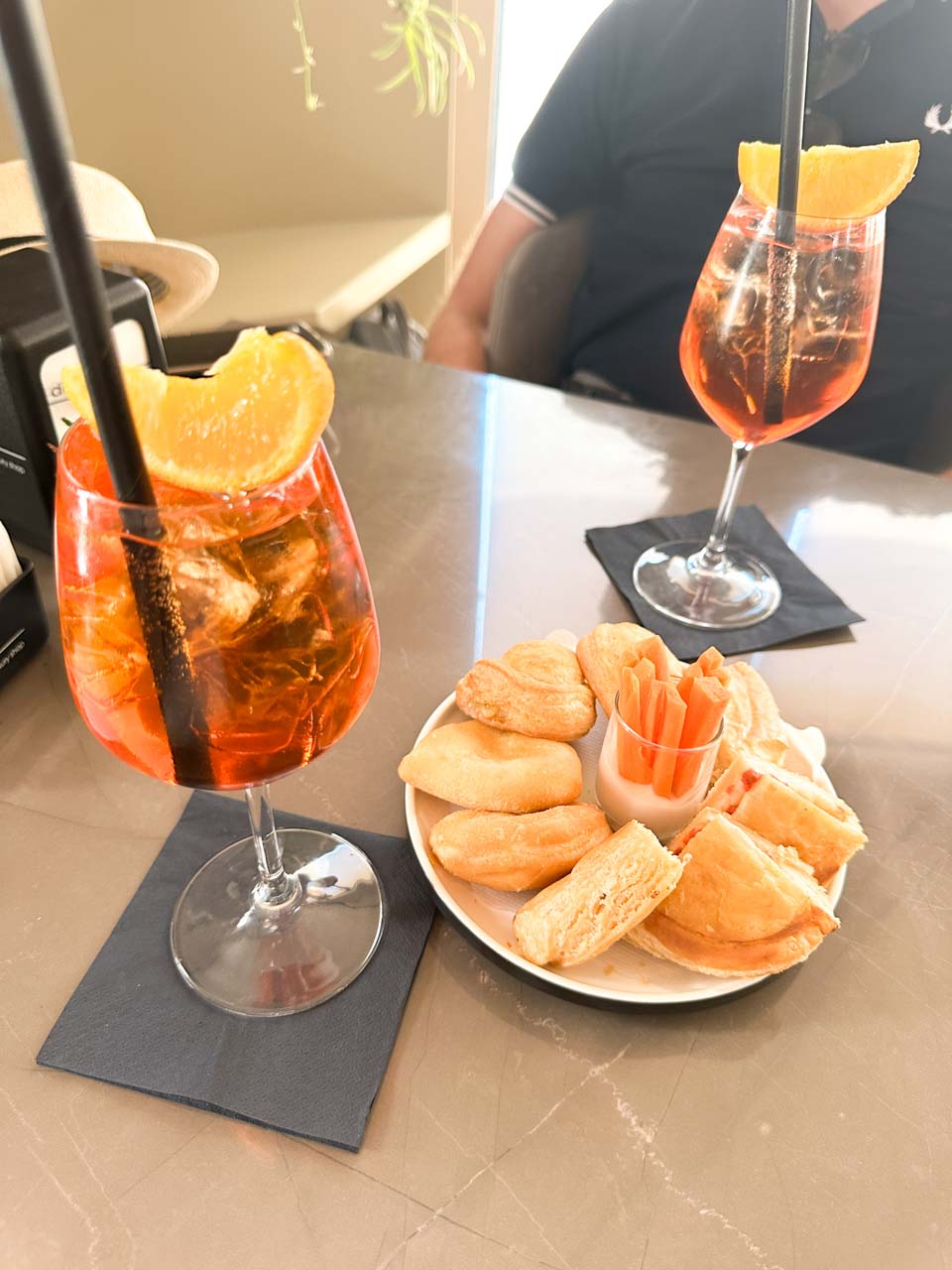
I had one cocktail, two coffees, and two pastries, and paid €20.60, which didn’t feel too bad either!
I Vizi degli Angeli
If you’re looking for a place to cool off after a hot day of exploring Matera, I Vizi degli Angeli is an amazing gelateria.
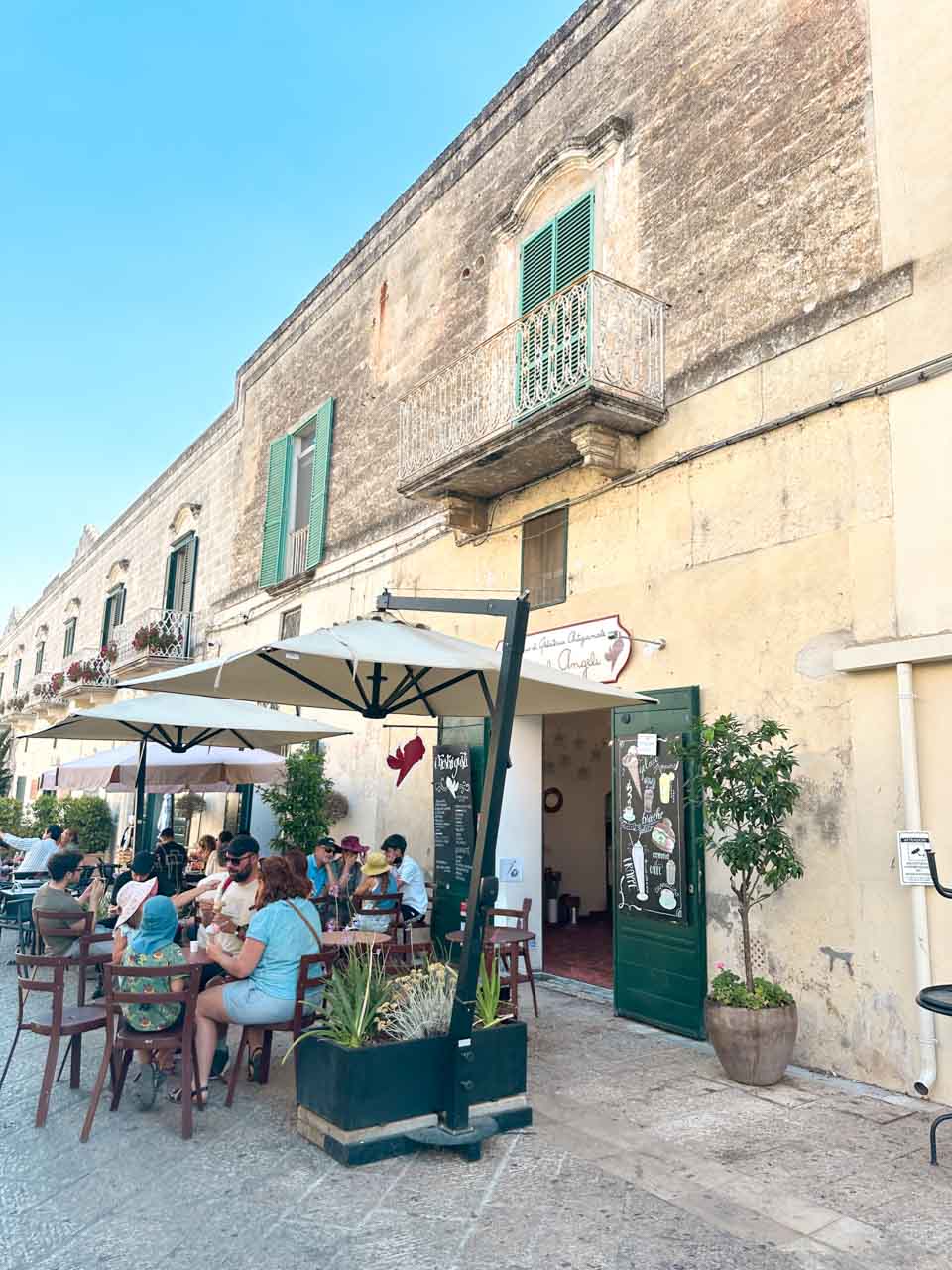

One thing I love about Italy (or at least Puglia and Matera – I’m not sure if this is a universal thing) is that you often pay for the size of your ice cream rather than by the scoop. They simply tell you how many flavours you can choose, which definitely comes in handy when there are so many good options.
There were plenty of classics, as well as some more unusual flavours. I really wanted to try the bergamot sorbet, as I’d never come across that flavour before, but unfortunately I couldn’t mix it with gelato.
The ice cream you see below was only €3.50, which felt very reasonable for the size!


San Biagio Ristorante
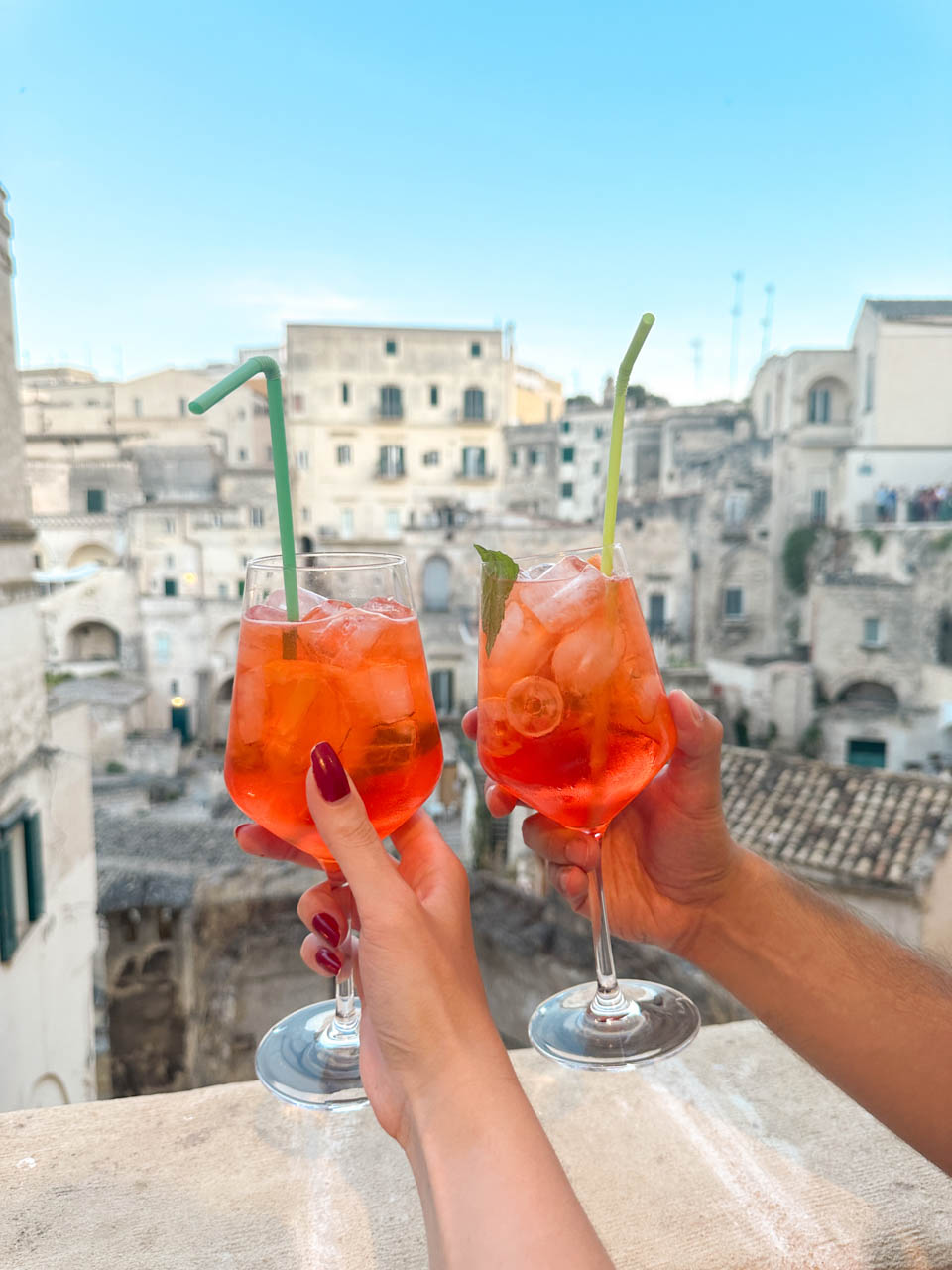
This restaurant was recommended to us by our host. We went without a reservation and managed to get a table on the outdoor terrace, which was great because we got a view of the Belvedere dei Tre Archi from a completely different perspective.


We also had a surprise visit from a group of older men playing instruments and singing. As we were eating, we could hear them getting closer and closer, so I assume they were making their way from restaurant to restaurant. I’m not sure whether it was part of the Festa della Bruna celebrations, but it was pretty cool.

San Biagio Ristorante is a great place if you’d like to try some local dishes. For starters, we had smoked Angus carpaccio, fava bean purée with chicory and toasted bread, and peperoni cruschi, which are crispy sweet red peppers.


Then we had gnocchi and orecchiette in tomato sauce, followed by tiramisu and mille-feuille with Chantilly cream for dessert.


The only thing I probably wouldn’t order again was the purée, as it was a bit too bitter for my taste, but I’m still glad I tried one of the most traditional dishes from this part of Italy. Everything else was absolutely delicious, especially the pasta, and I was pleasantly surprised that the peppers were sweet rather than spicy.

All of that, including two Aperol Spritz and water, came to €80, which felt very reasonable for the amount of food we ordered. So, if you’d like to try some local dishes without spending a fortune, I’d definitely recommend this place.
Gahve coffee & drink
As part of our booking, we had breakfast included. However, as there was no kitchen or dining area where we stayed, we could choose one pastry and one hot drink each from the nearby Gahve coffee & drink. We didn’t try any of the bruschettas, toast, or cocktails though, so I can’t comment on those.
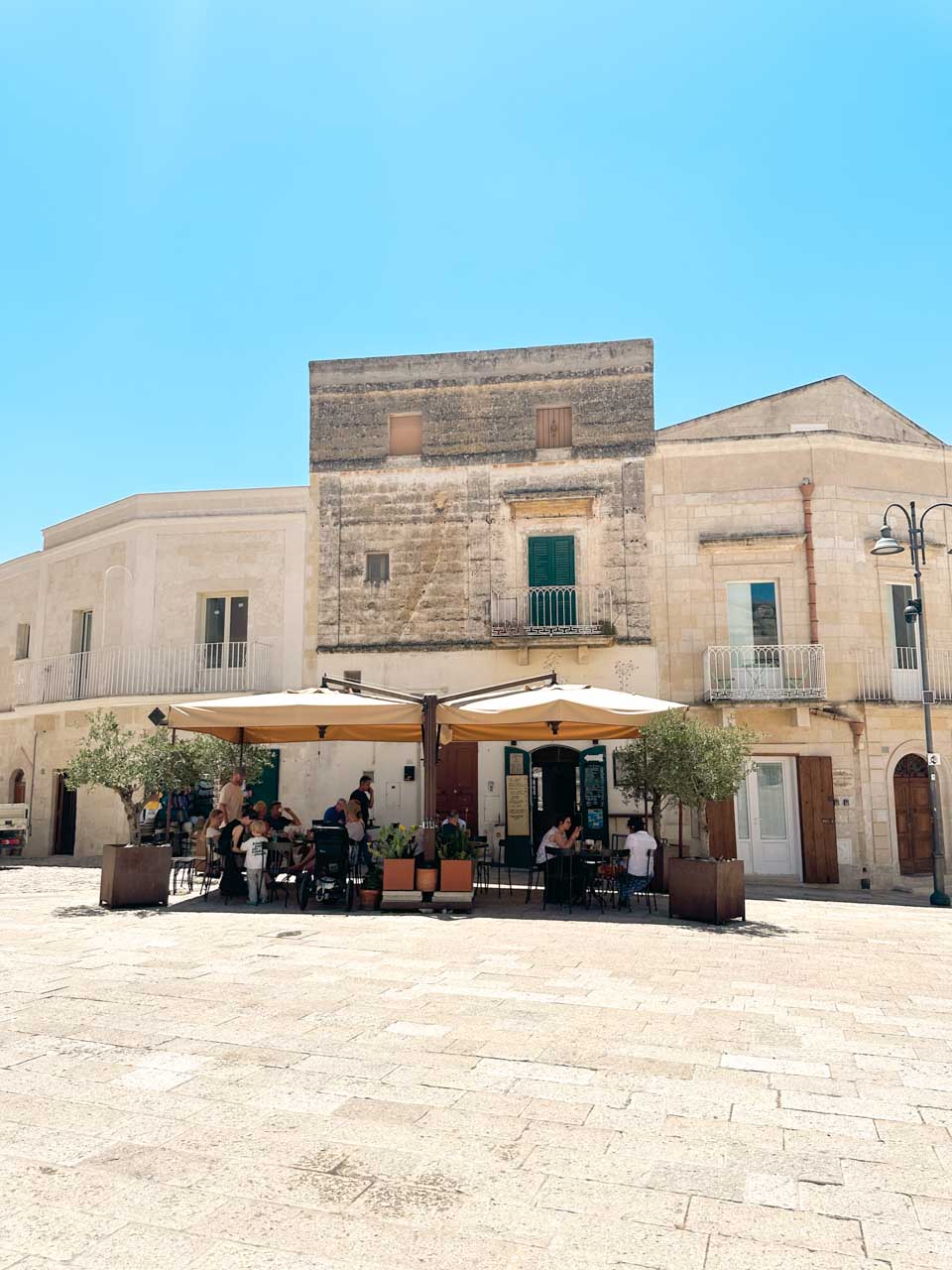

But for a regular cappuccino and cornetto in a busy square in Matera, it was surprisingly good. Even though we didn’t pay ourselves, I had a look at the menu and the prices seemed very reasonable too.
Some other places we had on our list or that were recommended by our host:
Crialoss for breakfast or drinks with a view, Trattoria del Caveoso, Ristorante Francesca, Regia Corte, La Nicchia nel Sasso Osteria Contemporanea, Bar Caffè Tripoli, Area 8, Pietra Viva, Osteria MateraMi, Osteria San Giovanni, Osteria Pico, Aroma Ristorante, Myricae Ristorante, Dimora Ulmo, and Baccanti.
Did you enjoy these tips? Check out the rest of my Puglia travel guides:
- Best Things to Do and Eat in Brindisi, Puglia’s Underrated City
- How to Spend 48 Hours in Bari: Best Things to Do, See, and Eat
- How to Spend a Day in Lecce, the Florence of the South
- How to Spend a Day in Ostuni, the White City of Puglia
- How to Spend a Day in Polignano a Mare: Best Things to Do and Eat
- 12 Best Things to Do in Alberobello, Puglia’s Fairytale Town



Thank you so much for putting up this exhaustive Matera guide – hats off 🙂 I’ve wanted to visit Matera so long and now I know how to start planning thanks to your blog post. Honestly, I’ve never seen a church let the entrance fee go towards anything else but restoration work. My recent visit to Speyer Cathedral in Germany did something interesting: they made only one section (the tombs of Holy Roman Emperors and their family members) a paid area. But the money did go towards the restoration work and the staff working there.
And how did you manage to take that photo with your smartphone filming Matera? I am curious to learn this photography skill 🙂
Author
You’re so welcome! I’m really glad to hear my guide will come in handy when you start planning your trip. Matera can feel a little overwhelming when you first start looking into it, especially if you’re travelling around the area and trying to visit a few other towns too.
And that’s a really good point about church entrance fees! They don’t always make it very clear at the ticket office, but I’d imagine most, if not all, of the money goes towards restoration and maintenance. I’m just not a huge fan of churches charging a lot just to go inside, especially in really touristy places, as it can start to feel more like visiting a tourist attraction than a place of worship. I really like the example you gave of Speyer Cathedral – you can still go inside and look around for free, and then decide if you want to pay to visit the extra areas or leave a voluntary donation.
And the photo was actually very simple to take! I was holding my boyfriend’s phone with the camera open, and he was standing behind me taking a photo on my phone. ☺️
Thanks so much for such a lovely comment, and I hope you have the best time in Matera when you finally get to visit! ☺️