Last updated on July 19, 2026
Alberobello is one of the most famous places in Puglia, and for many people, it’s the reason they decide to visit the region in the first place.
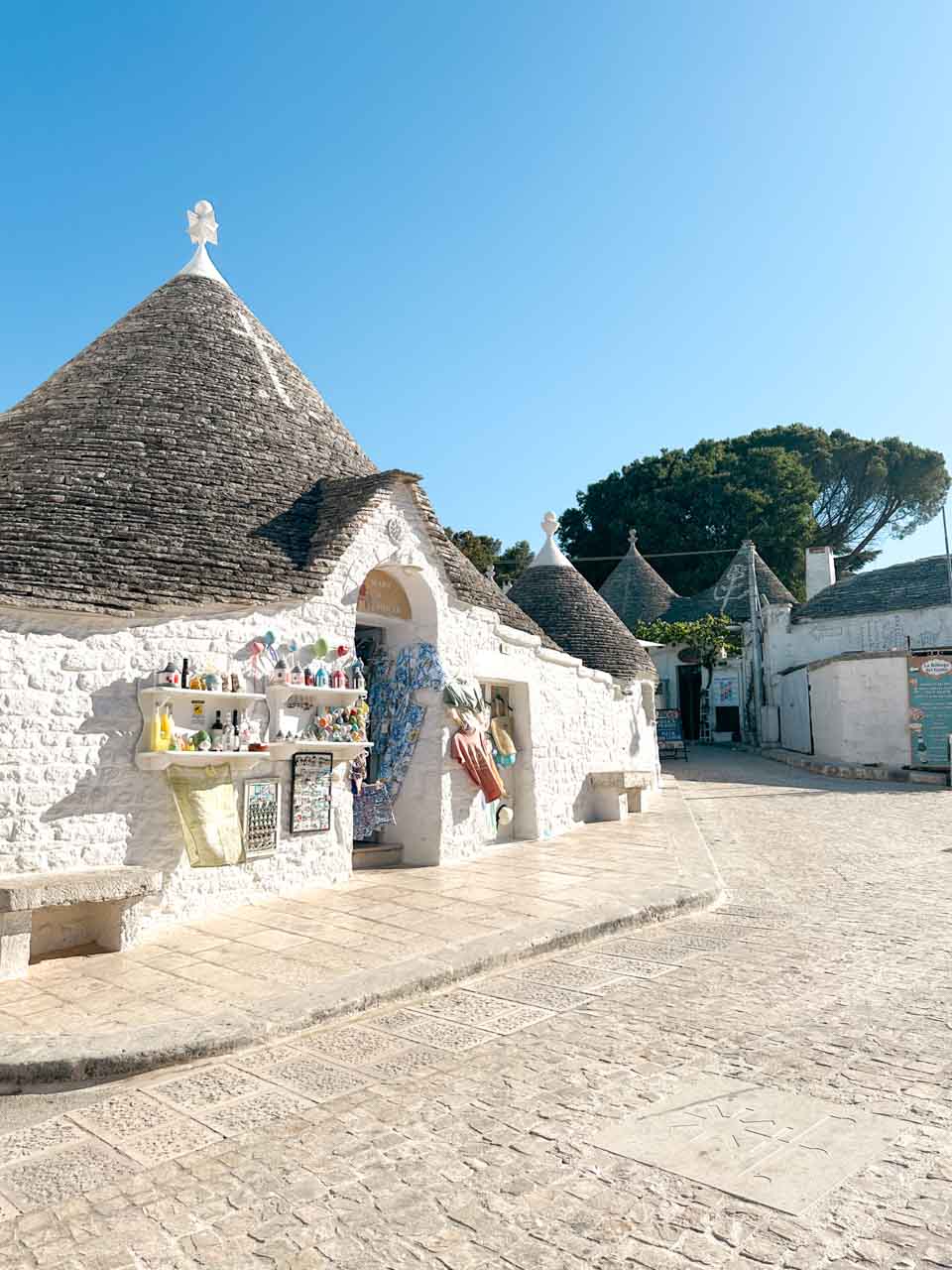
If you’ve ever looked up Puglia on Instagram or Pinterest, you’ve almost certainly seen photos of Alberobello. Rows of little white houses with cone-shaped roofs line the streets, making the whole town look like something straight out of a fairytale. And these days, when half the internet seems to be AI-generated, I wouldn’t blame anyone for wondering whether it actually looks like that in real life.
The good news is that it does. And if you know me, you’ll know that if there’s an Instagrammable spot, I’m not going to miss the chance to visit.
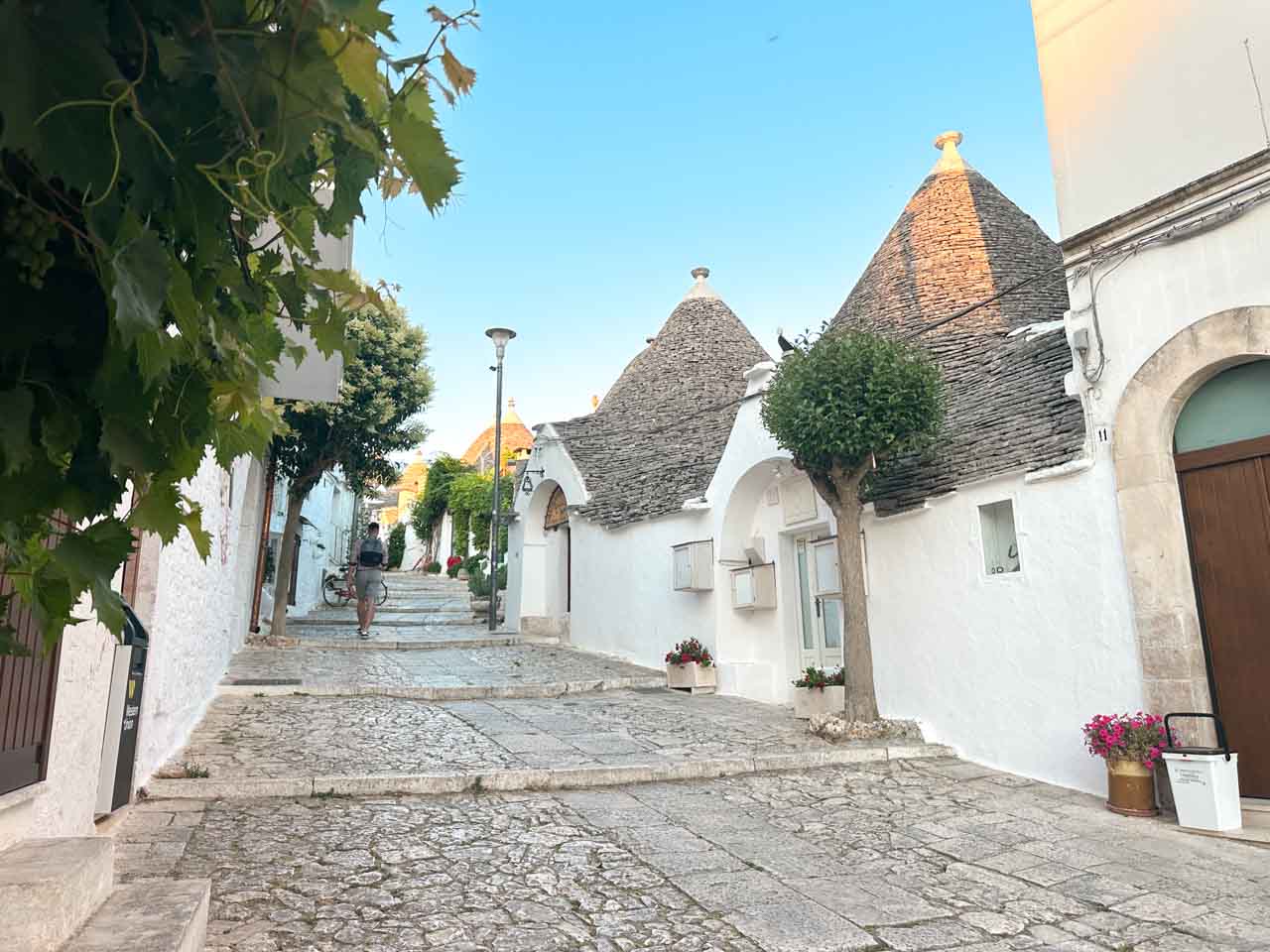
At the same time, you’ll also find plenty of people arguing that Alberobello has become Italy’s Disneyland – a place designed for day-trippers to arrive, spend money, take a few photos, and leave.
Whatever the truth, I knew I wanted to see it for myself. After all, there’s nowhere else in the world quite like it. I was also curious to find out whether a town famous for one thing had anything else to offer once you put the camera away.
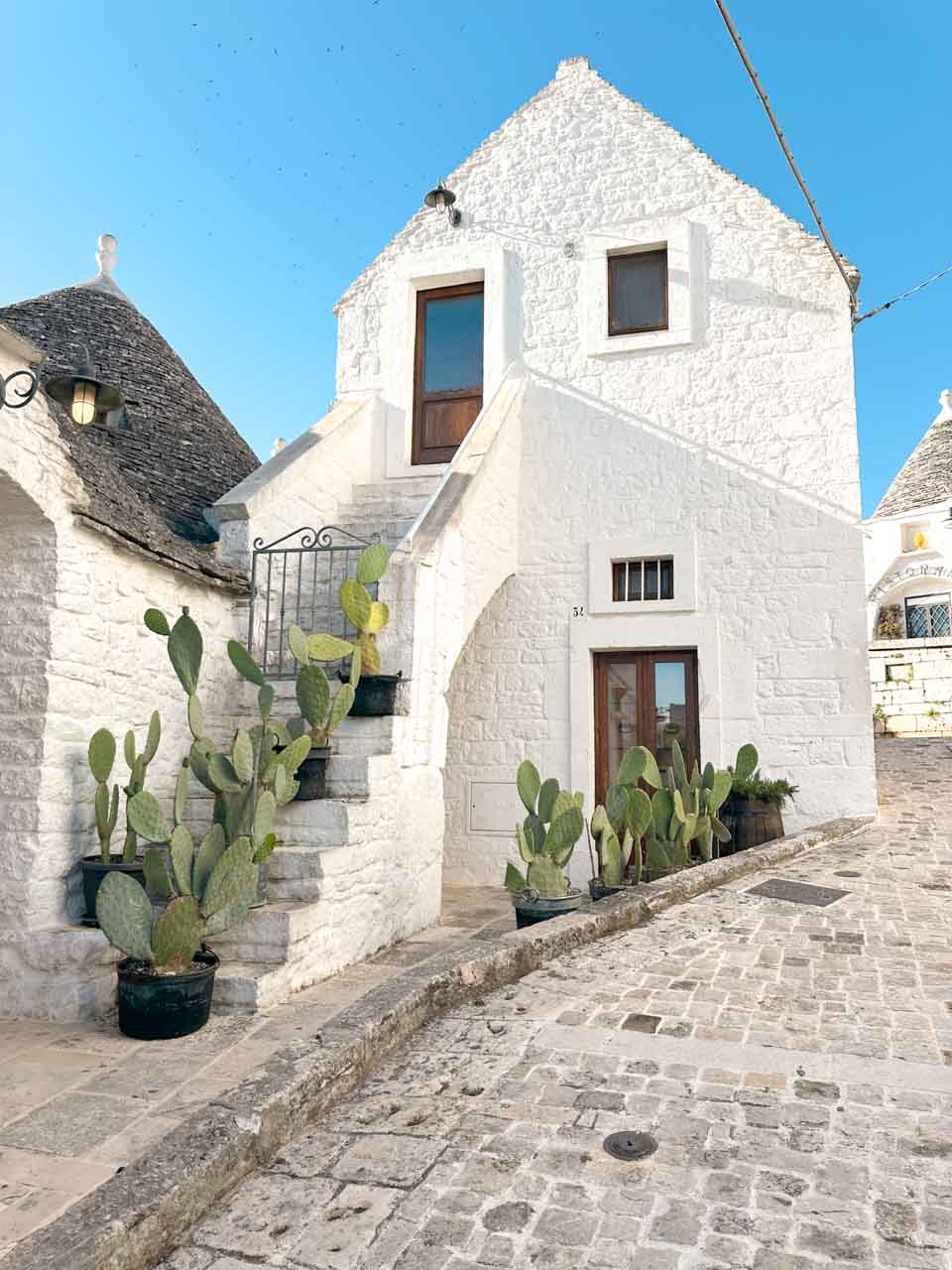
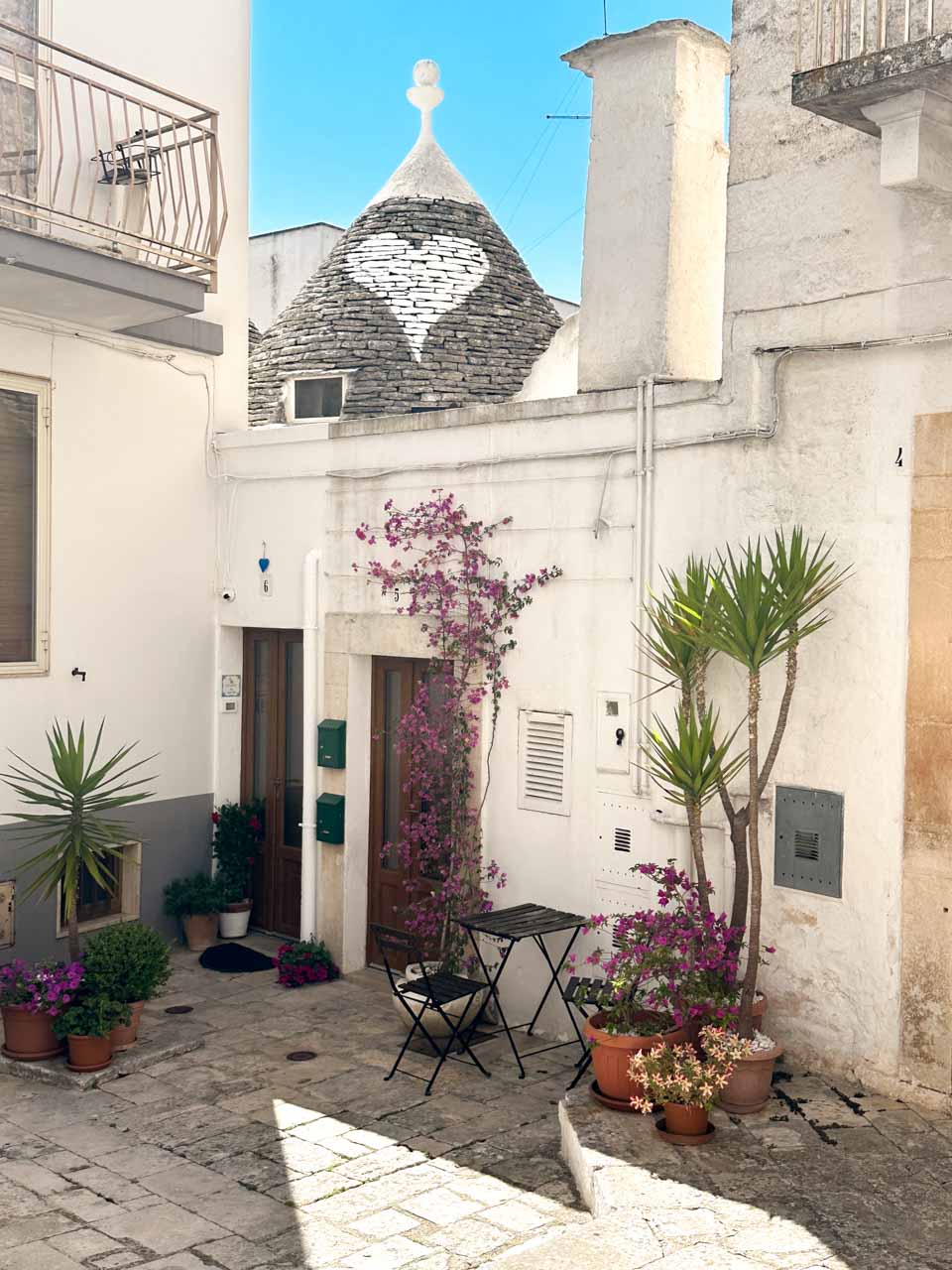
We decided to stay overnight in Alberobello (and stay tuned to see why I think you should too!). By the time we left, I felt like we’d seen most of the main sights, sampled some local food, and got a good feel for the town’s like.
So, here’s my guide to the best things to do in Alberobello, including spots for breakfast, lunch, a coffee break, and everything in between.
Let’s get started!
AD – This post contains affiliate links (marked with *) | Read my full disclaimer
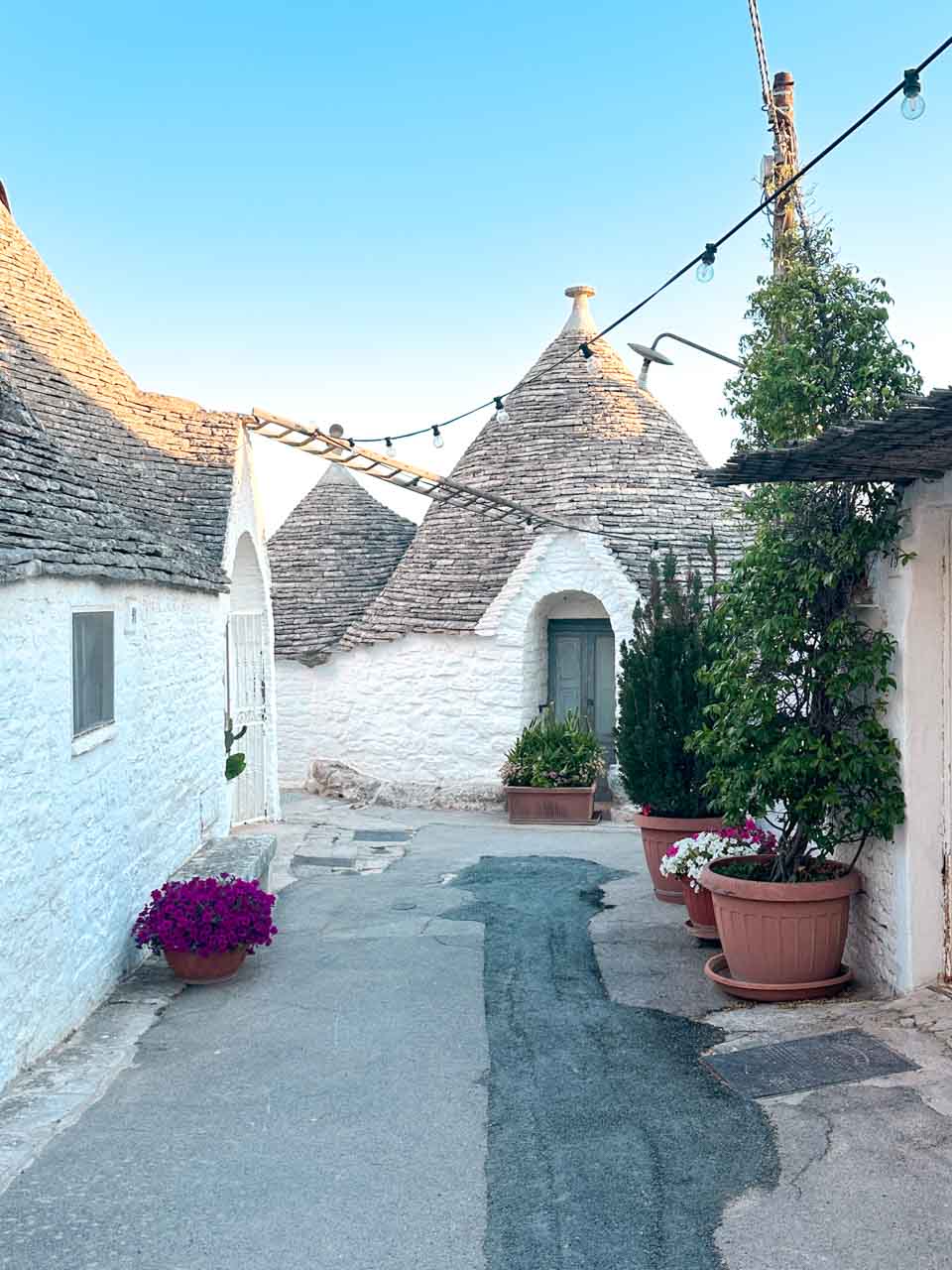
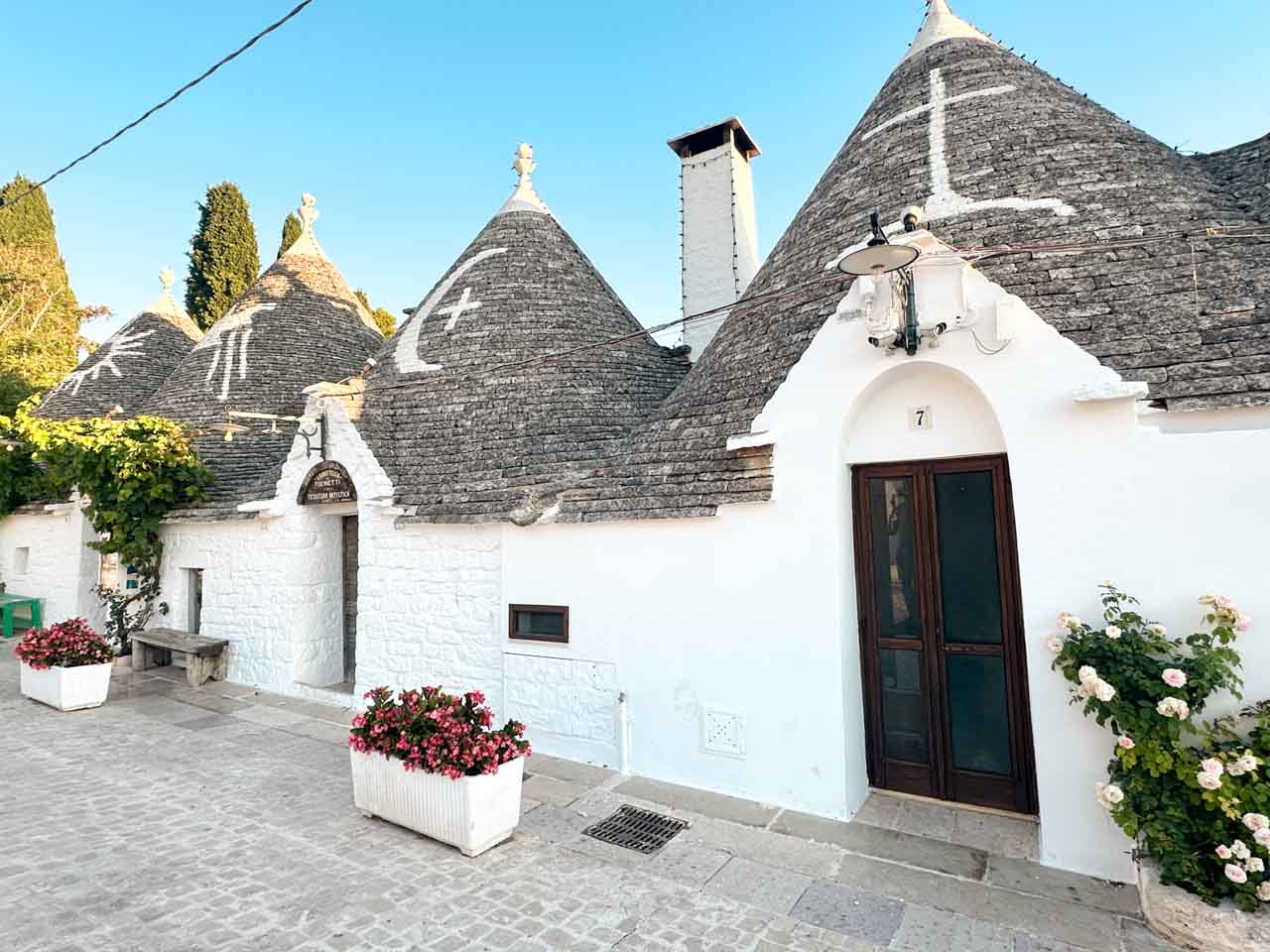
Why do Alberobello’s houses have cone-shaped roofs?
Before we get into how to spend a day in Alberobello, you might be wondering where these strange-looking little houses even came from, and why they all have those cone-shaped roofs.
These famous buildings are called trulli (or trullo in the singular). According to the most popular story, it started back in the 15th century, when the Counts of Conversano ruled the area around Alberobello. At the time, the Kingdom of Naples charged taxes on new permanent settlements.
And, much like today, people quickly realised they’d rather keep some of that money in their pockets. 😉 The important word was “permanent”. So they built houses from limestone stacked without mortar. If inspectors ever came to town, they could take the buildings apart much more easily than traditional houses.
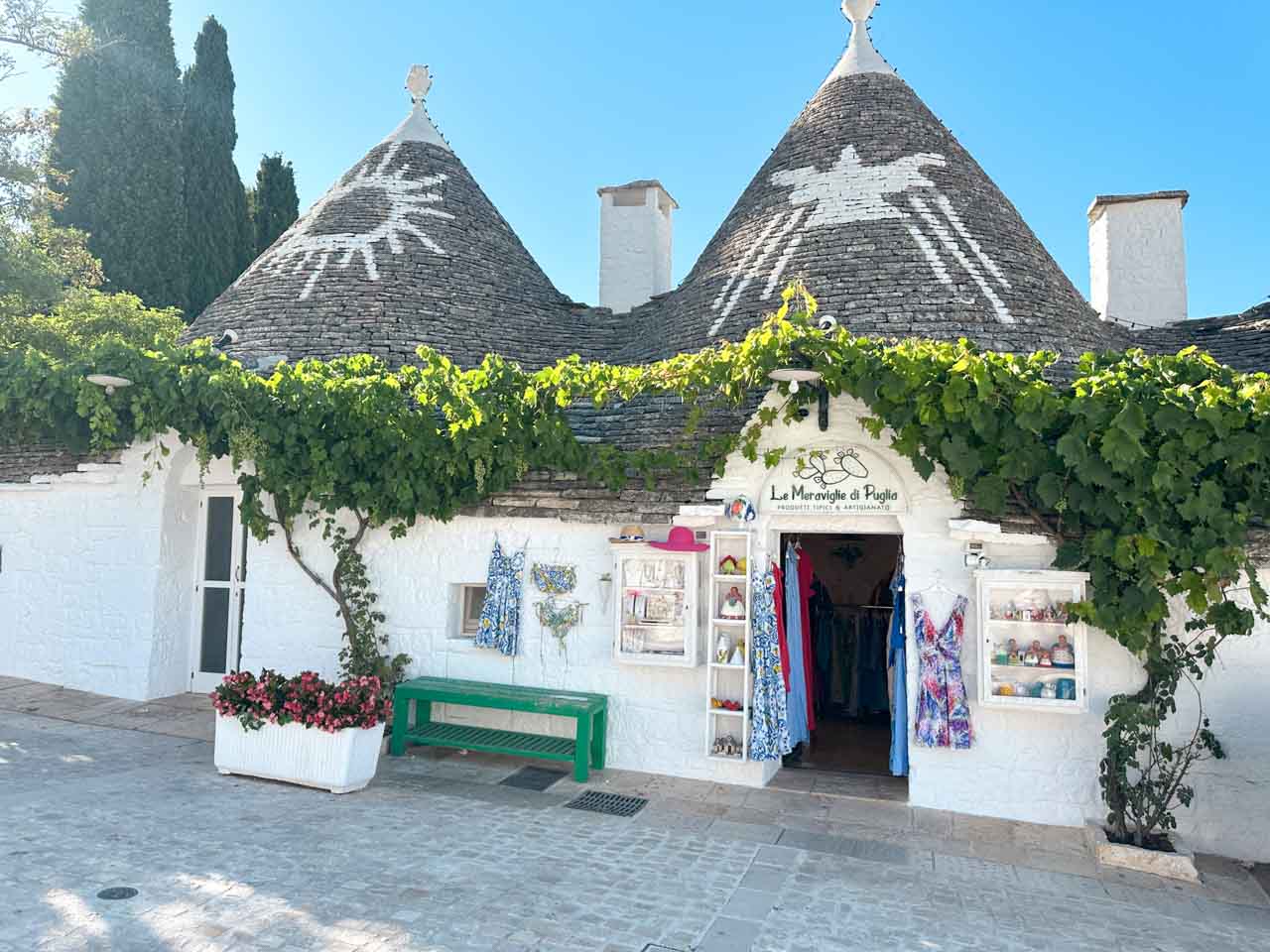
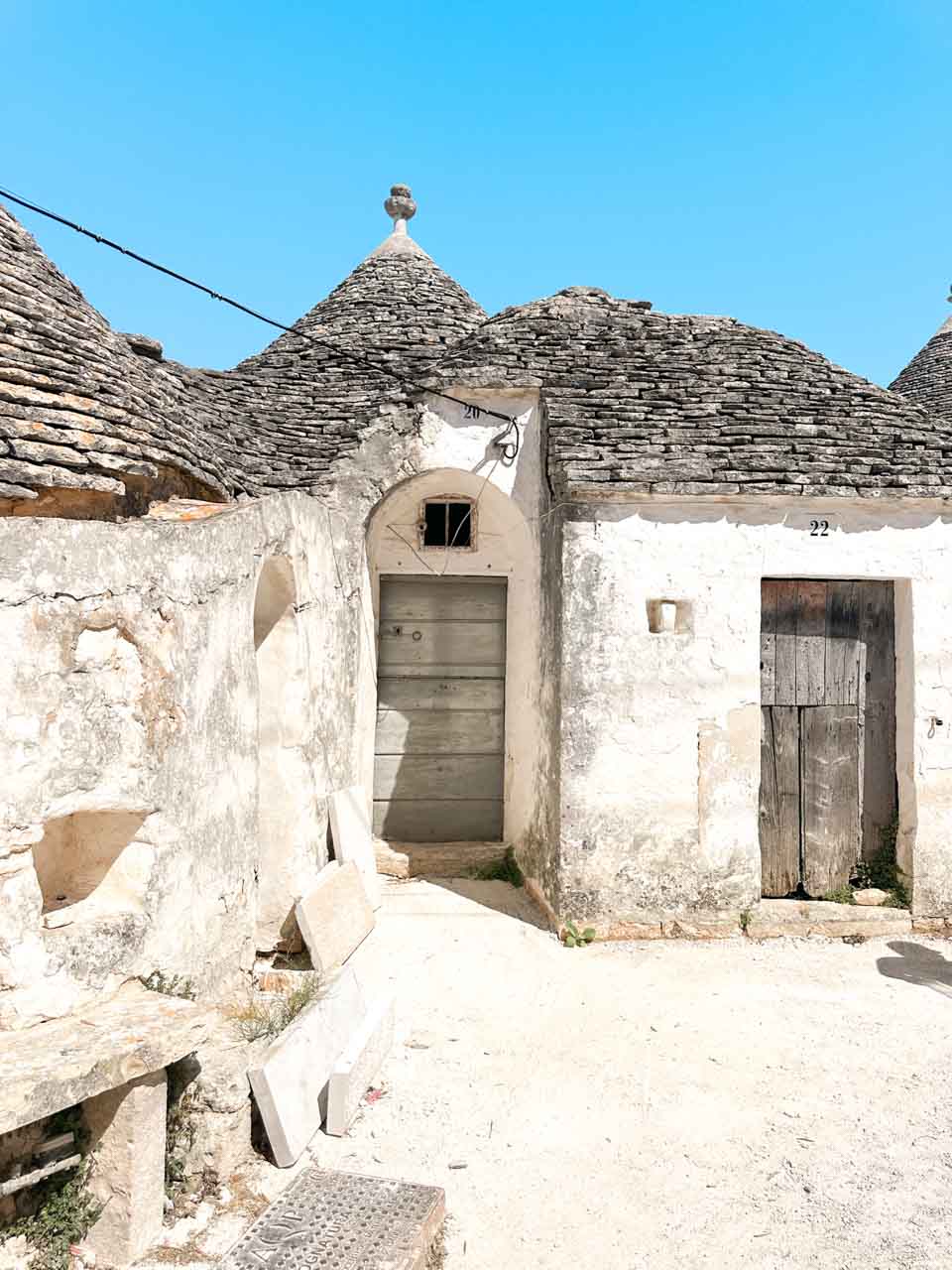
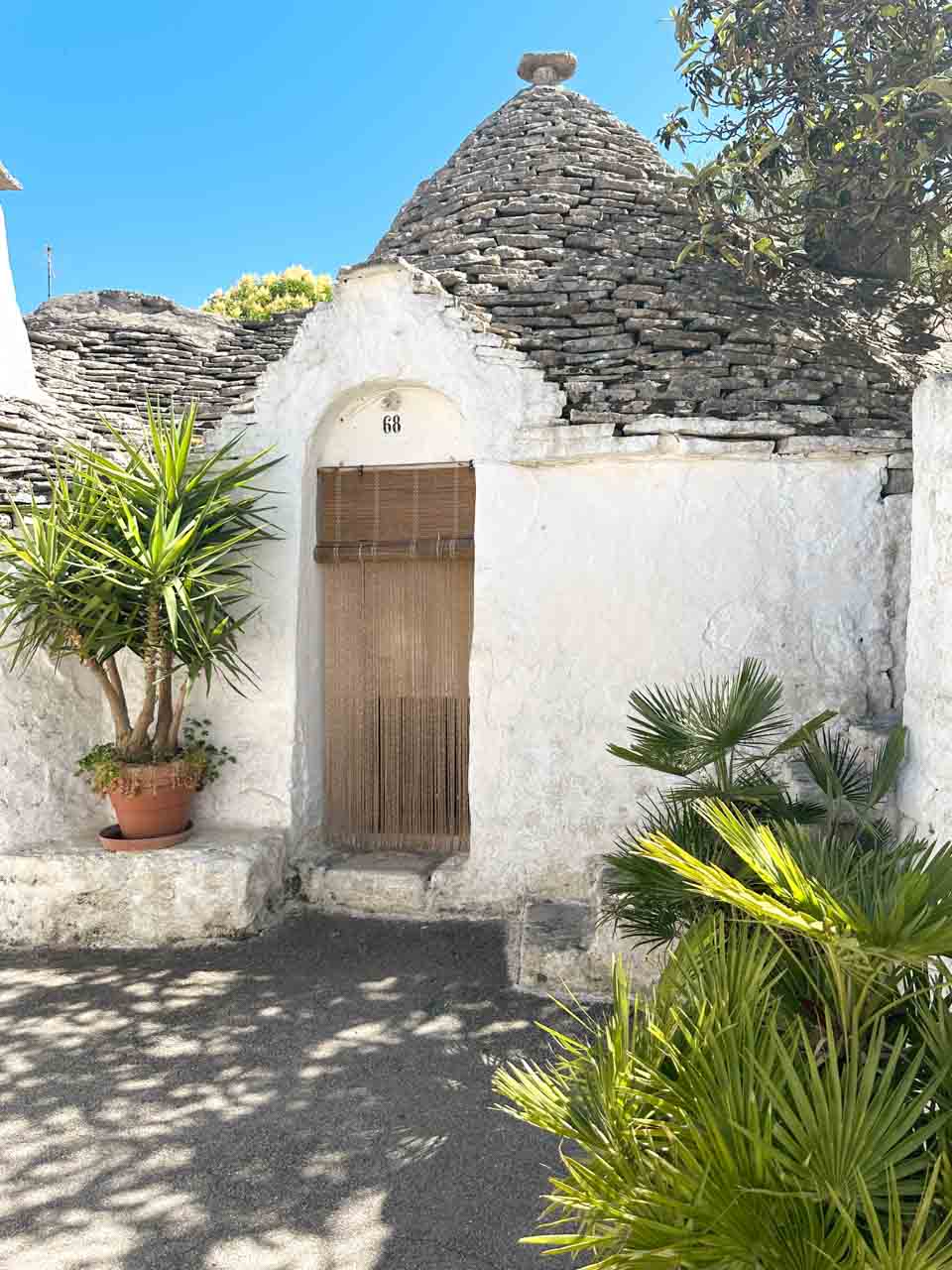
These days, not many people live in trulli year-round. Most serve as guesthouses, museums, restaurants, or souvenir shops. You also don’t need to visit Alberobello to see them, as you’ll find trulli all across the Itria Valley.
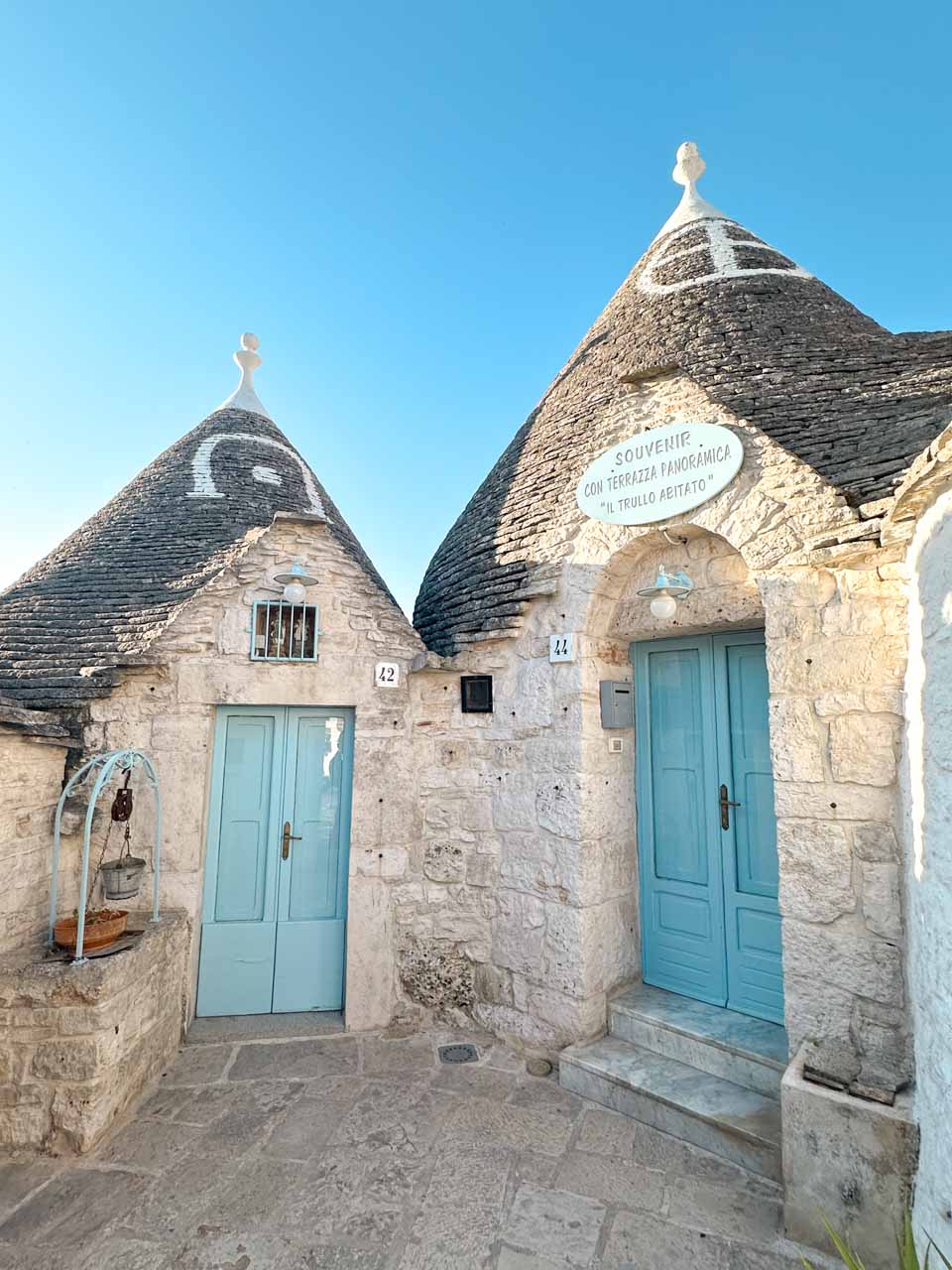
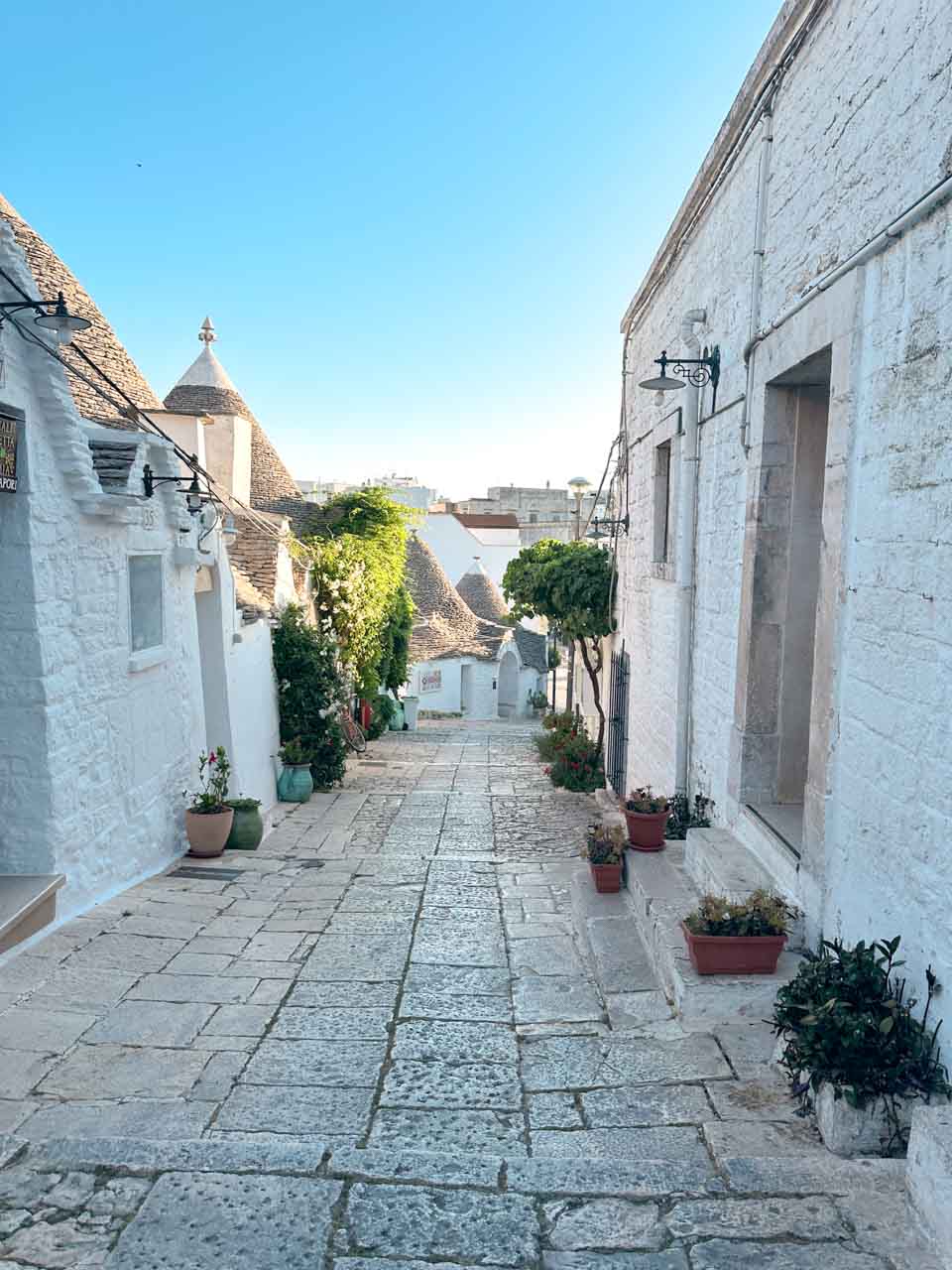
What makes Alberobello different is that there are so many of them in one place. The town has more than 1,600 trulli and only around 10,000 residents. It’s also the only place where you can walk through an entire neighbourhood made up of trulli while people still live there today.
How to get to Alberobello
Now, on to one of the most interesting parts of this guide…
I’ll be honest: getting to Alberobello was an adventure in itself, and at one point, I genuinely started wondering whether we were ever going to make it there.
I’ll share the full story in a moment, so bear with me. But more importantly, I’ll tell you what to look out for and which mistakes to avoid.
First things first, the easiest city to travel from is Bari. If Alberobello is just one stop on your Puglia itinerary, renting a car is definitely the simplest option. It gives you the freedom to stop in all the little towns and villages along the way instead of having to work around train and bus timetables.
That said, we always travel without a car, so I’ll break down all the public transport options, as well as a few guided tours.
Trulli Link
The first option is the Trulli Link, a dedicated train-and-bus connection created by Trenitalia and Ferrovie del Sud Est.
It’s aimed mainly at tourists, so you’ll probably see adverts for it all around Bari Centrale. In fact, it’s much easier to spot information about it than about the regular regional train.
The idea is pretty simple. If you’re travelling to Alberobello from outside Bari, you can buy a single ticket through the Trenitalia system that covers the entire journey – both your train into Bari and the connecting bus to Alberobello.
The easiest way to book it is through the Trenitalia website or app. Just enter your departure and arrival stations as normal. If a Trulli Link connection is available, it will show up alongside the regular train options, and you book it exactly the same way.
The journey from Bari to Alberobello takes around 1 hour and 20 minutes. All buses depart from Via Capruzzi, the road that runs behind Bari Centrale station.
By bus
The second option is almost identical, except your booking won’t say “Trulli Link” anywhere.
To be completely honest, I’m still not entirely sure what the difference is. Both services are operated by Ferrovie del Sud Est, the same company that runs trains in this part of Puglia.
Looking at the booking system now, it seems that regular bus connections often take longer and may require a change, while the Trulli Link services are usually direct. However, our bus last year was direct too, despite not being labelled as a Trulli Link service.
These buses also depart from Via Capruzzi behind Bari Centrale. The stop is more or less outside the Dok supermarket.
And now we get to the first part of my promised story…
We were travelling on a Sunday, and none of the morning buses showed up.
Ferrovie del Sud Est doesn’t have its own information desk at Bari Centrale, and when I tried asking a few security guards for help, they basically shrugged and said something along the lines of, “Ah, Alberobello… it happens all the time.”
To make matters worse, all the nearby shops were closed, the signage wasn’t particularly helpful, and there was nobody around who could tell us what was actually going on. There were a few Italians waiting with us as well, so at least we knew it wasn’t just us misunderstanding something.
Thankfully, the journey back couldn’t have been more different. The bus arrived on time, the stop in Alberobello was right outside the train station, and the signage was much clearer. So while our experience getting there wasn’t exactly smooth, I wouldn’t rule this option out completely.
By train
Now, on to the second part of my story.
As I mentioned, Ferrovie del Sud Est also operates trains in the area, and you can buy both train and bus tickets through Trenitalia. It’s convenient, but it also means you should always double-check what you’ve booked.
You can probably see where this is going…
I’m usually the person who triple-checks everything. But after booking what felt like a hundred different tickets for all our day trips around Puglia, I slipped up.
I knew we were travelling back to Bari by bus, so I somehow convinced myself we were getting to Alberobello by bus too.
Well… we weren’t.
It turns out we had train tickets all along, so there was absolutely no reason for us to stand around waiting for a bus that was never going to arrive. By the time we realised what had happened, our train had already left, and we had no choice but to eat the €6 tickets and buy new ones.
Thankfully, the actual train journey turned out to be the easy part. All Ferrovie del Sud Est trains leave from the same platform, so that’s one less thing to worry about.
However, there was one more thing that confused me. Our ticket showed a direct connection to Alberobello, but all the departure boards only listed trains to Putignano.
Whether it was a mistake on the ticket or something else, I’m still not sure. Our original plan was to get off at Putignano and change trains there. Then, once we were on board, the conductor came around and announced that the train would continue directly to Alberobello after all.
So, the moral of the story is: always check your tickets, and always listen to the conductors. Apparently train routes can change at the last minute. 😉
On a guided tour
I know Alberobello is a popular day trip destination, but that’s exactly why I’d recommend staying overnight if you can.
Once the tour groups leave and the streets start to empty out, the town feels completely different. Walking among the trulli in the evening was easily one of my favourite parts of our visit.
However, I also know that not everyone has the luxury of unlimited time. My Puglia itinerary was already packed, and there were still places I didn’t manage to squeeze in.
So, if you’ve only got one day in Alberobello, here are a few guided tours worth considering:
If you’re travelling as a group, this private tour is also a great option and is more reasonably priced than many of the others I came across:
Where to stay in Alberobello
If you’re staying overnight in Alberobello, there’s only one real choice: you HAVE to stay in a traditional trullo.
We chose Trullo Aprico*, and it was genuinely one of the highlights of our entire trip to Puglia. You get the whole place to yourself, and it’s right in the heart of the trulli district.
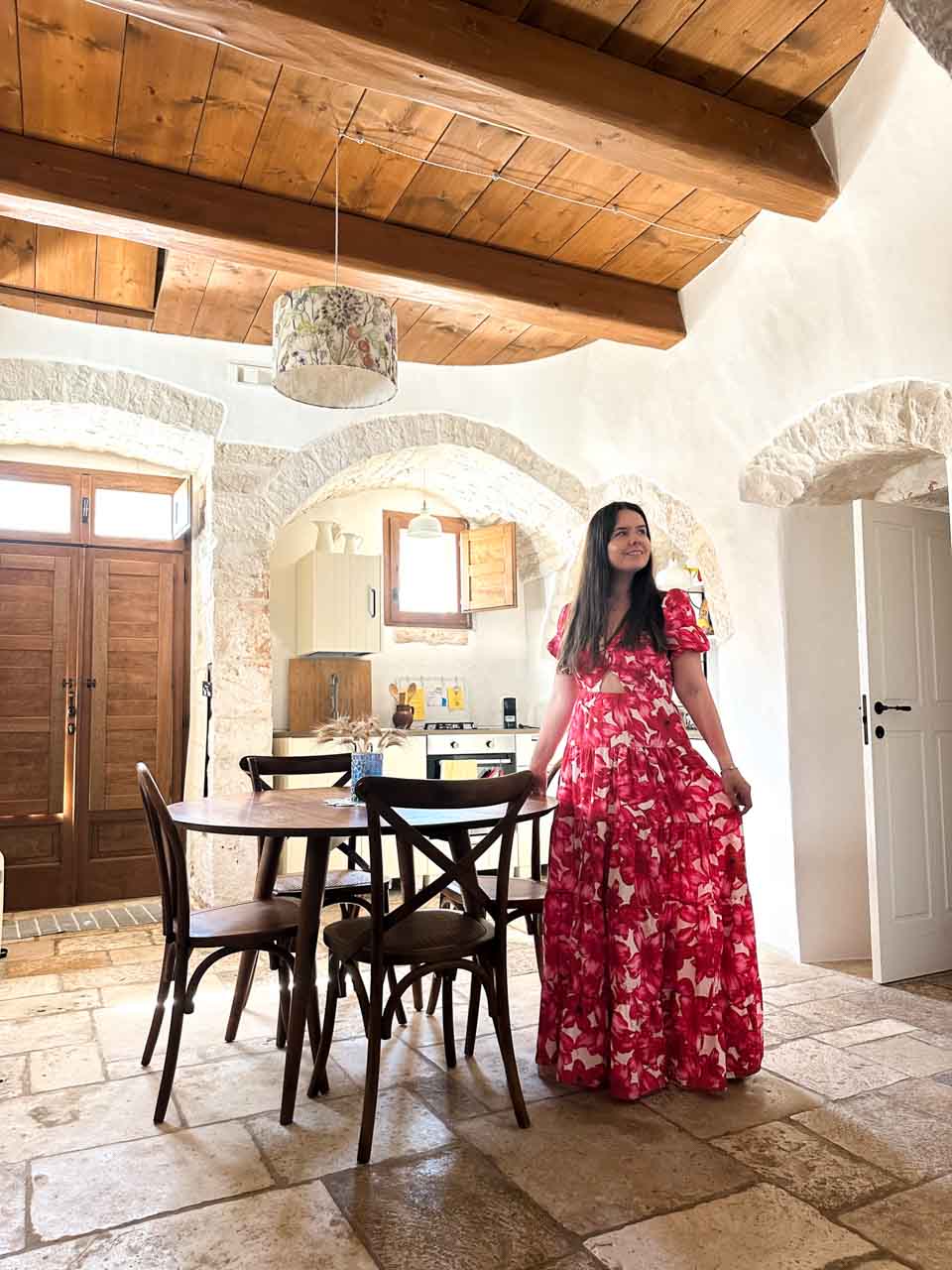
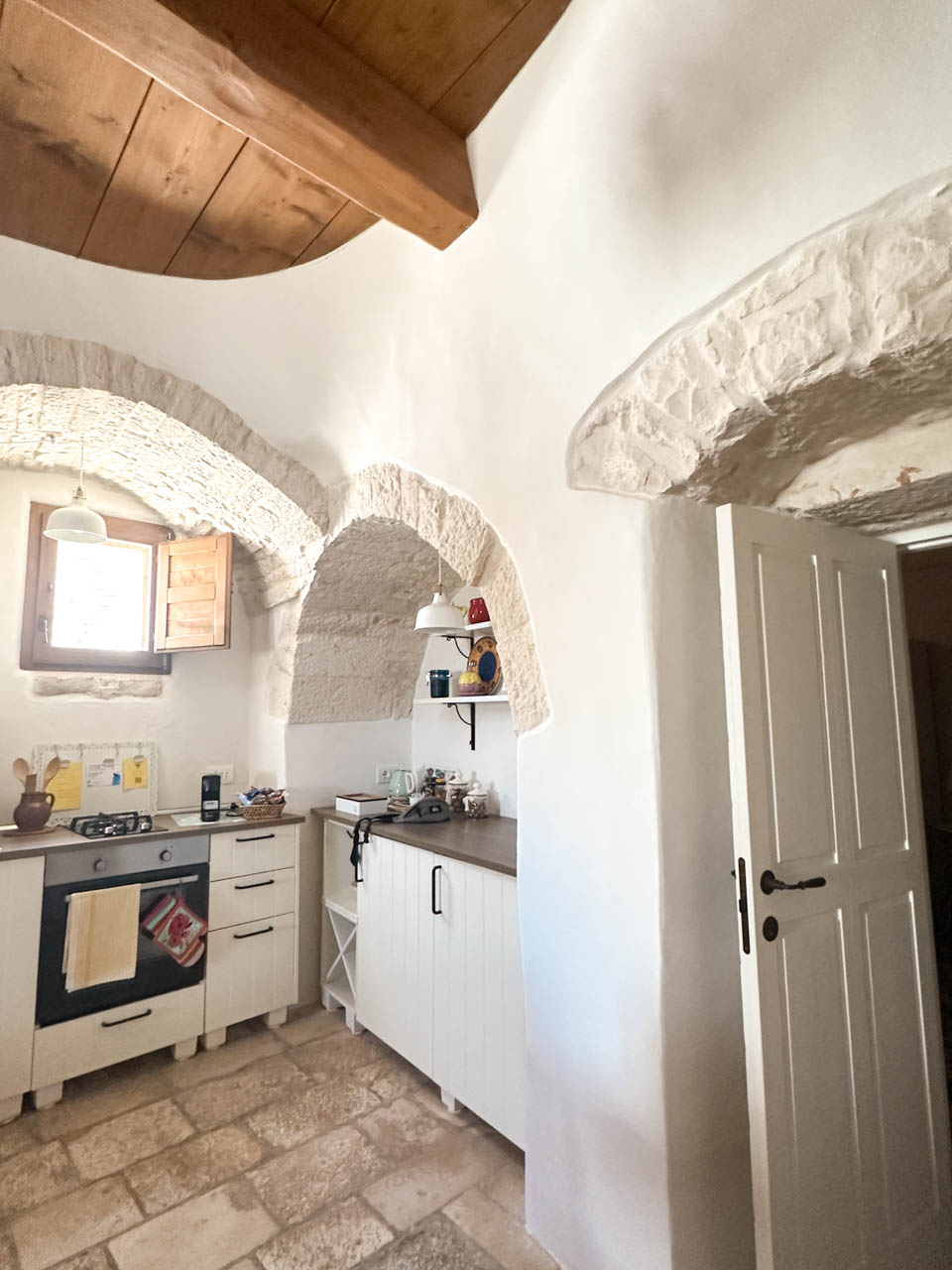
That does mean tourists walk past your front door throughout the day. However, trulli usually have tiny windows, so once you close the curtains, it doesn’t feel much different than it normally would.
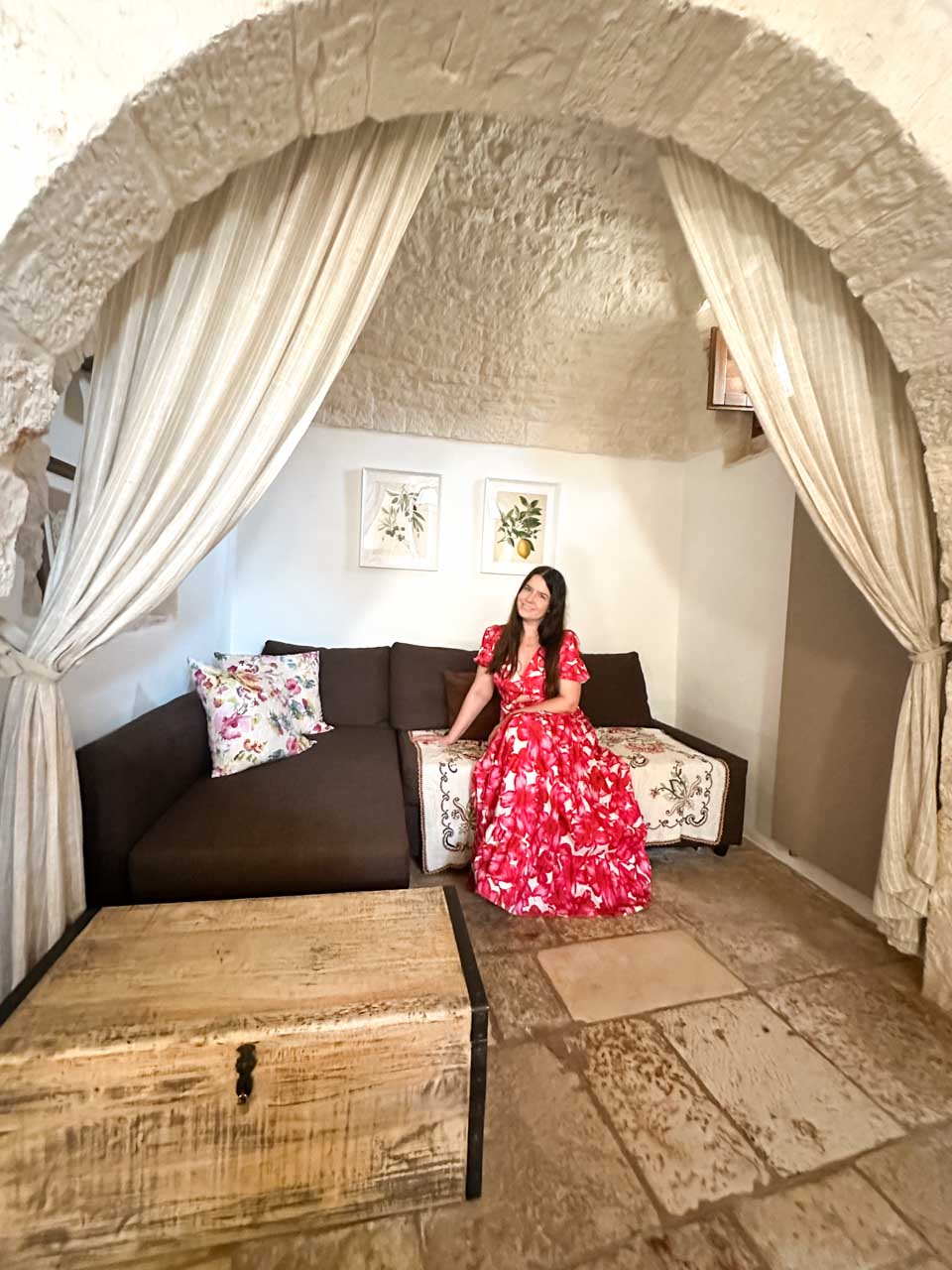
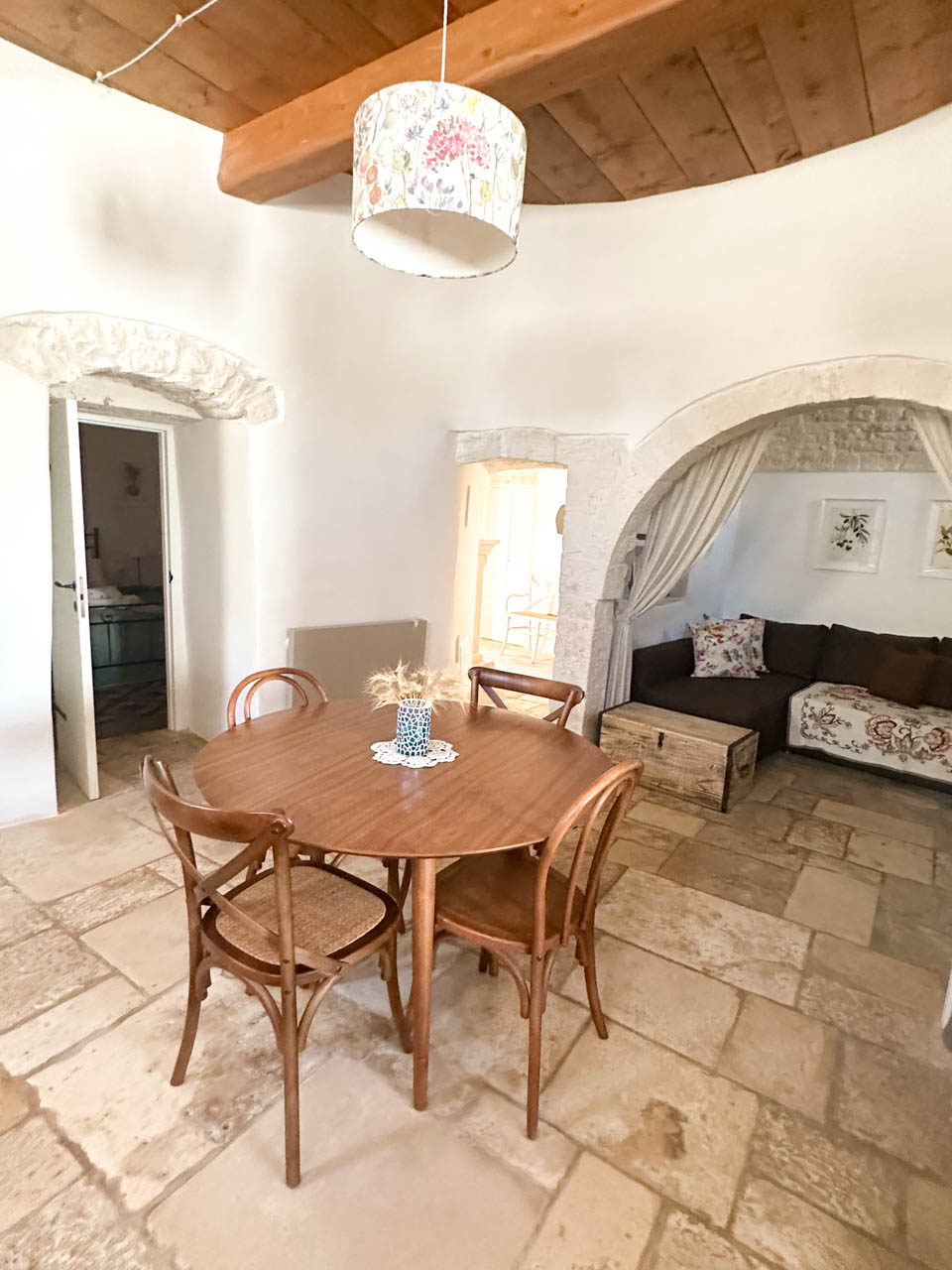
The only noise came from the souvenir shop next door, where the owner occasionally tried to attract customers by blasting techno music. 😉 To be fair, he was very respectful about it and only did it a couple of times for a few minutes at a time.
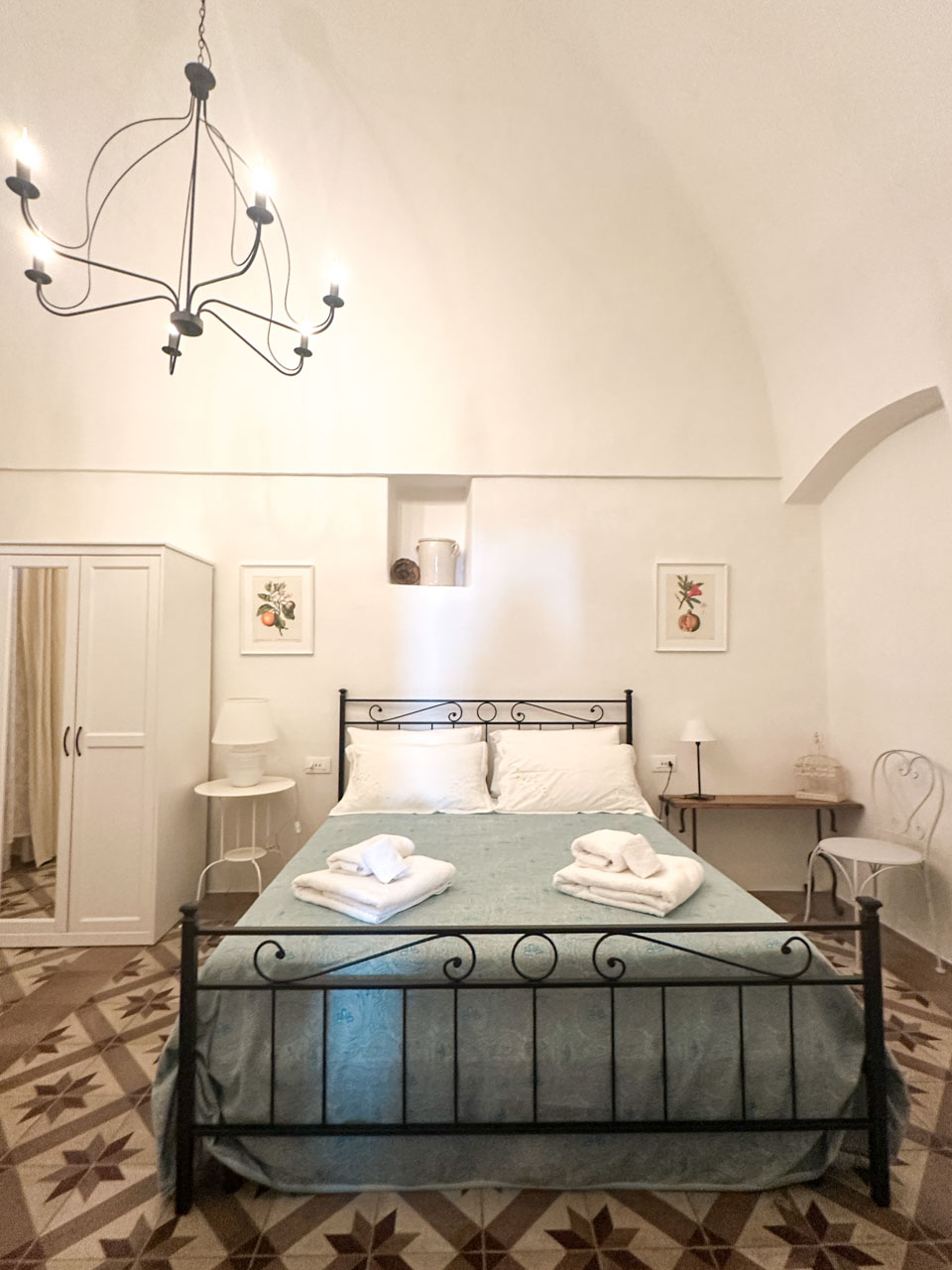
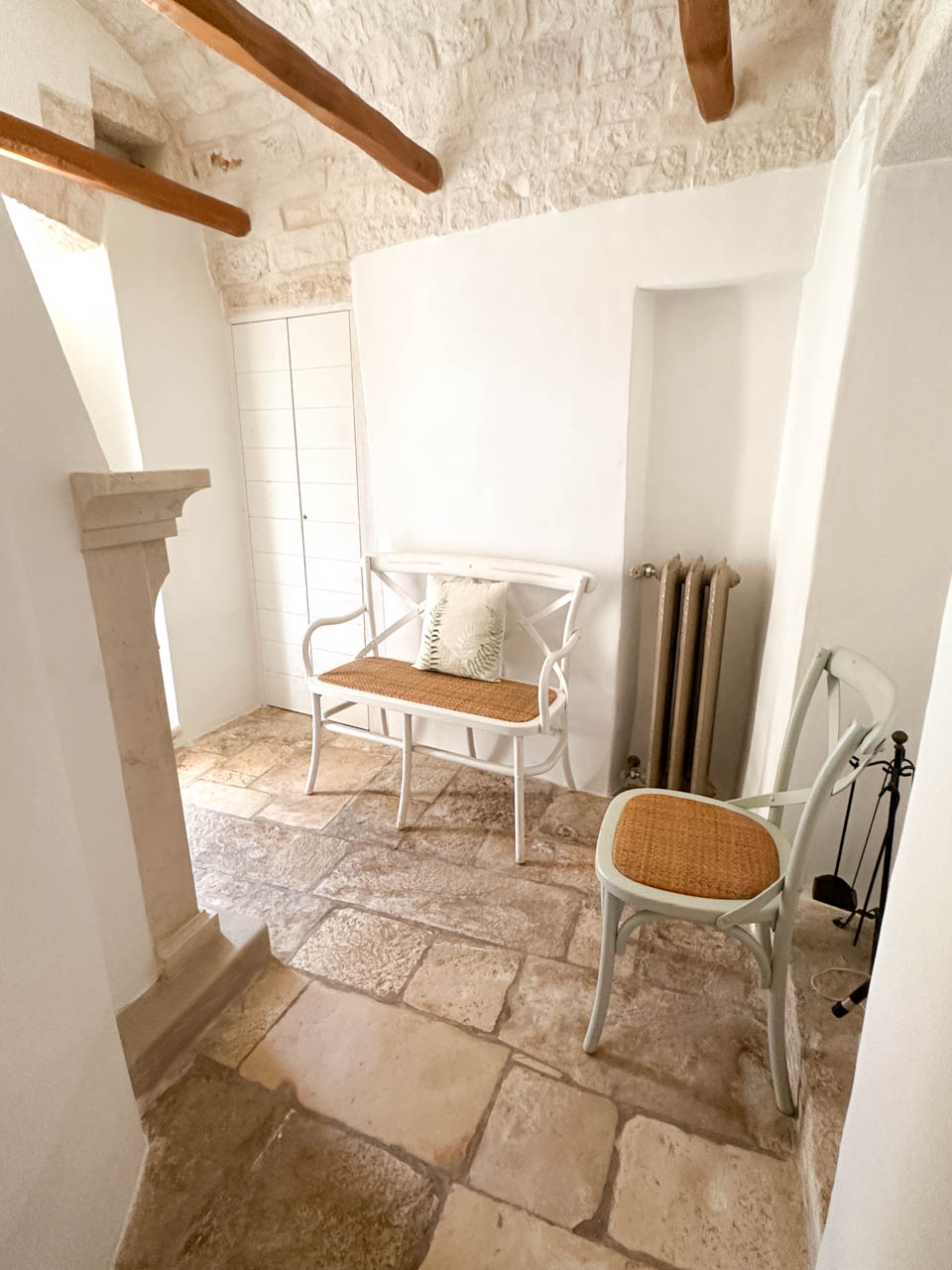
The spacious back garden was probably my favourite part. It’s the perfect place to have breakfast, enjoy a drink, or simply sit and relax.
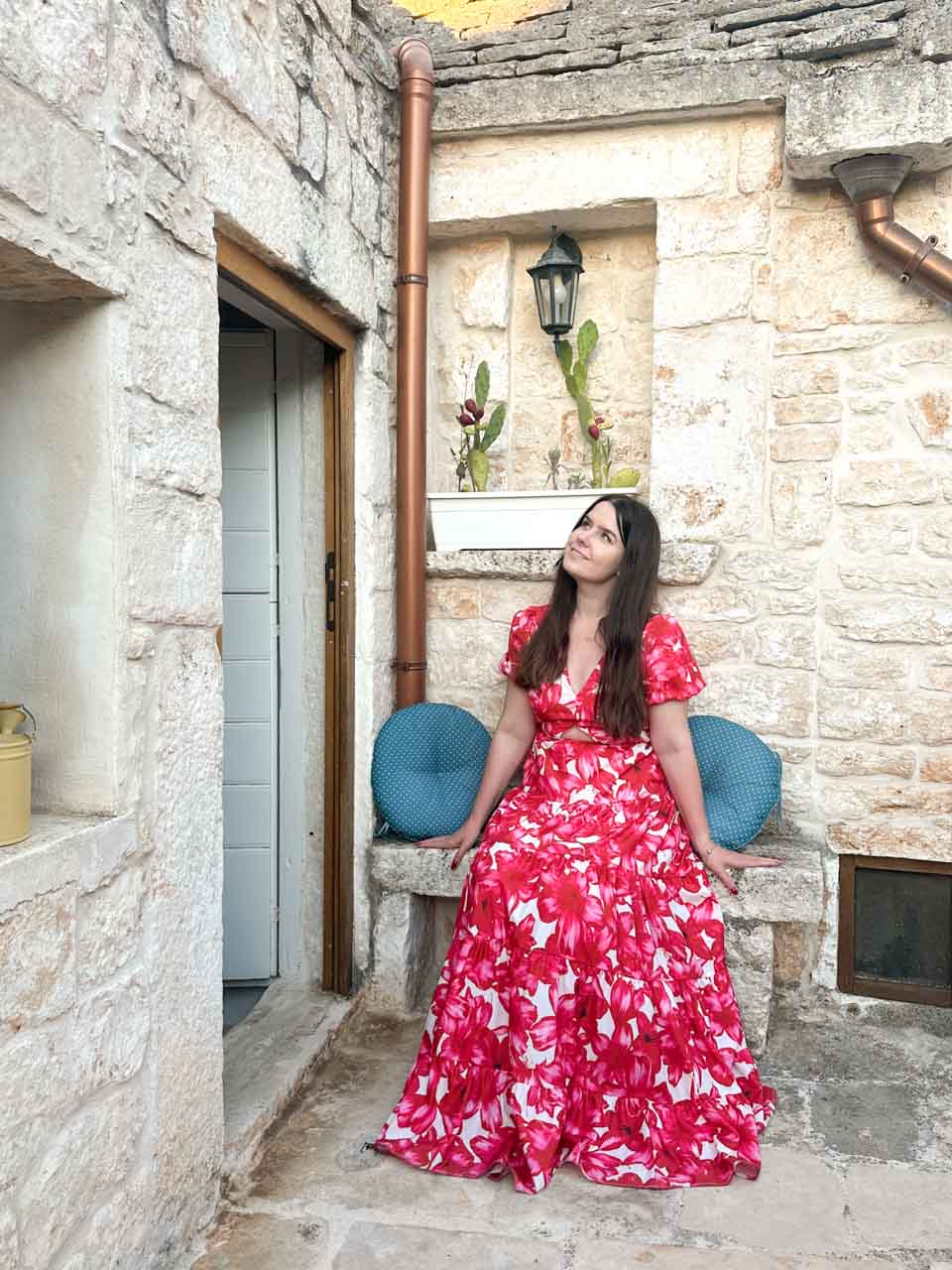
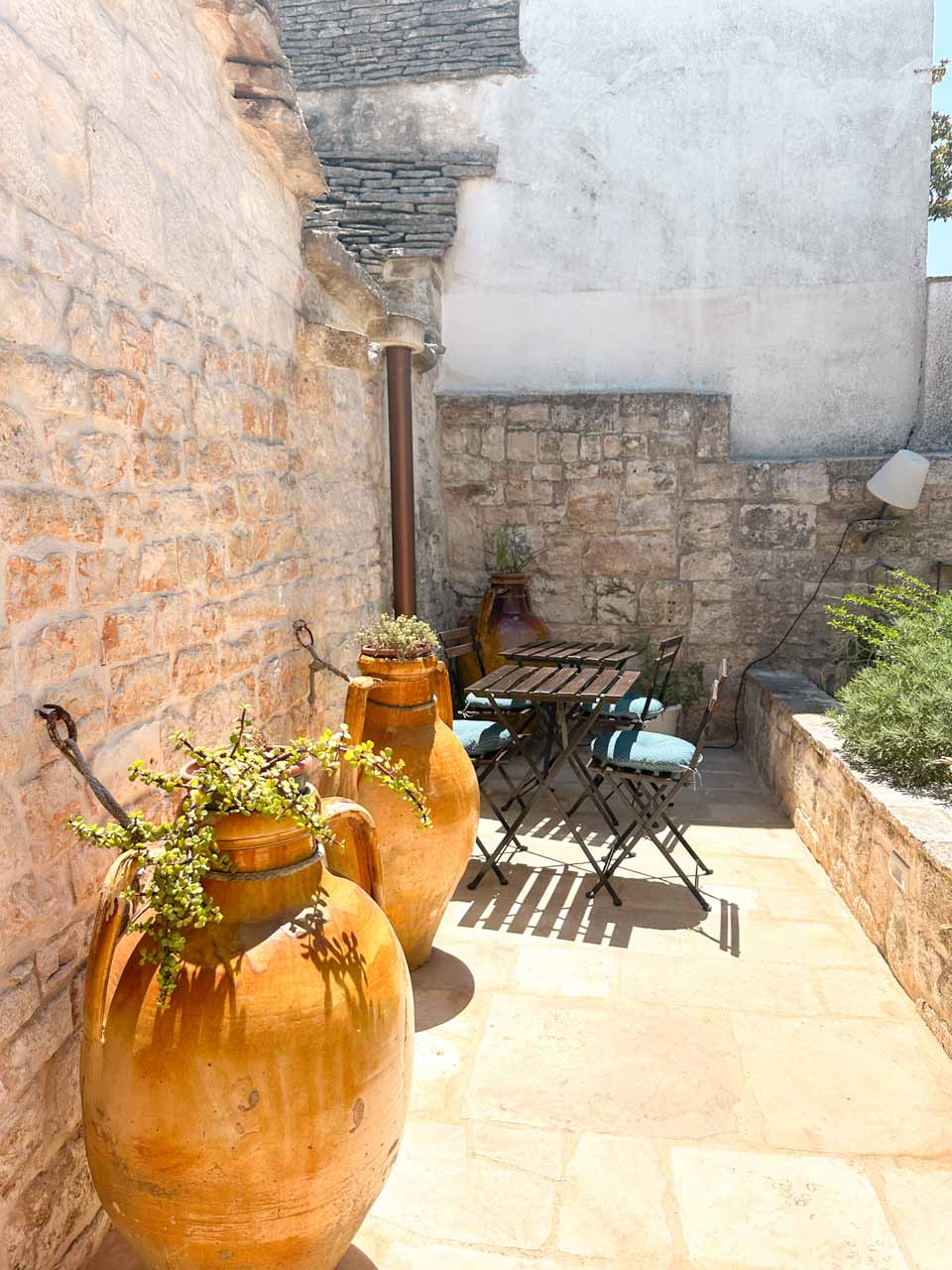
It also does a surprisingly good job of blocking out the sounds from the main street, and if you’re lucky, you might even get a friendly lizard stopping by for a visit. We were genuinely sad to leave.
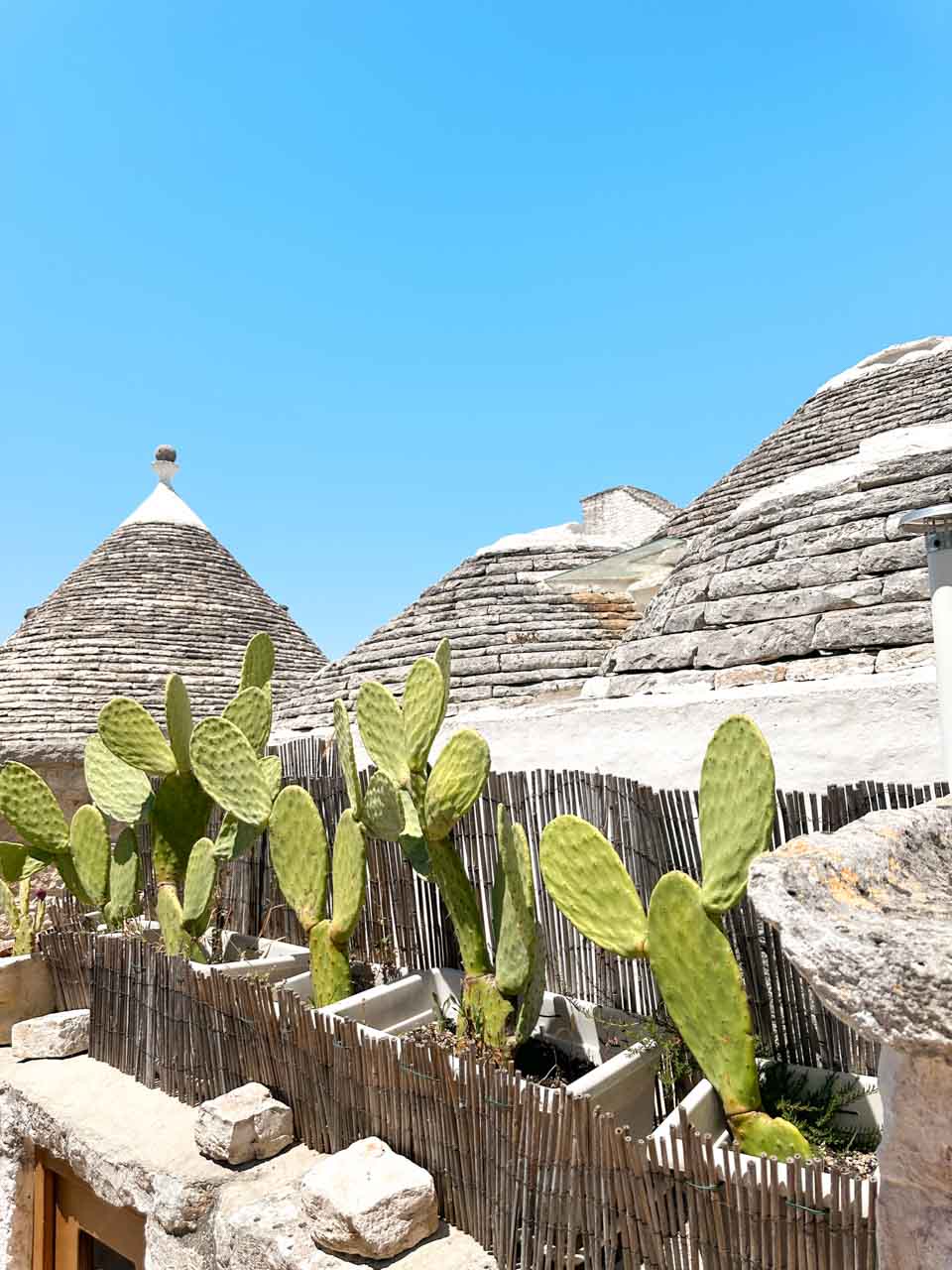
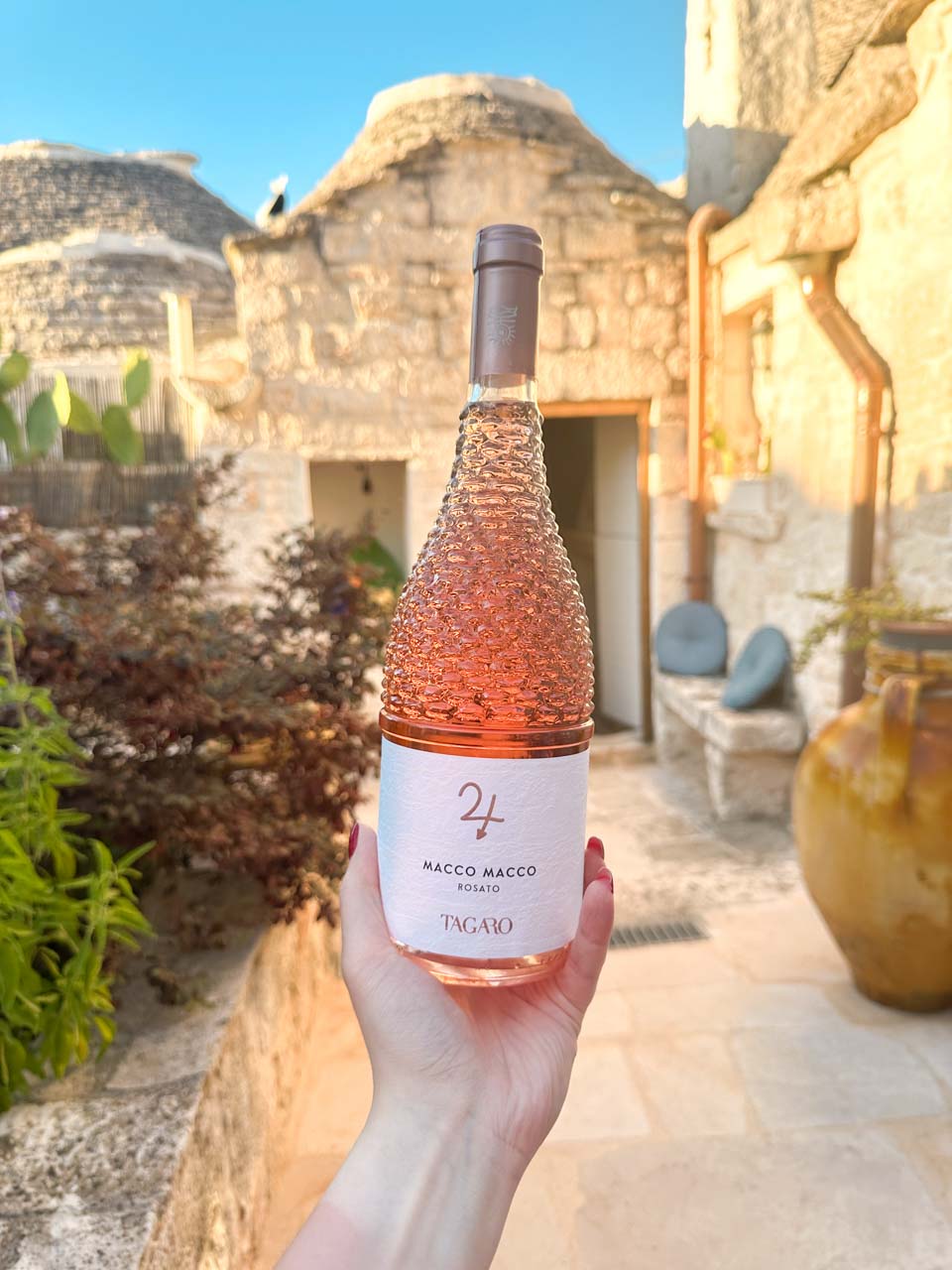
The only downside was the bathroom, which was tiny. But that’s just part of staying in a trullo, and for one night, it was absolutely fine.
We paid €145 for the night, plus €6 in city tax, which felt very reasonable for an entire house in the middle of one of Puglia’s most popular destinations at the end of June. I’d book it again in a heartbeat, as it was such a special experience!
You can check all available options for your dates below:
Best things to do in Alberobello
Walk around the two parts of town
Alberobello has two main trulli districts: Rione Monti and Rione Aia Piccola. The road that separates them is Largo Martellotta, which cuts through the middle of the historic centre.
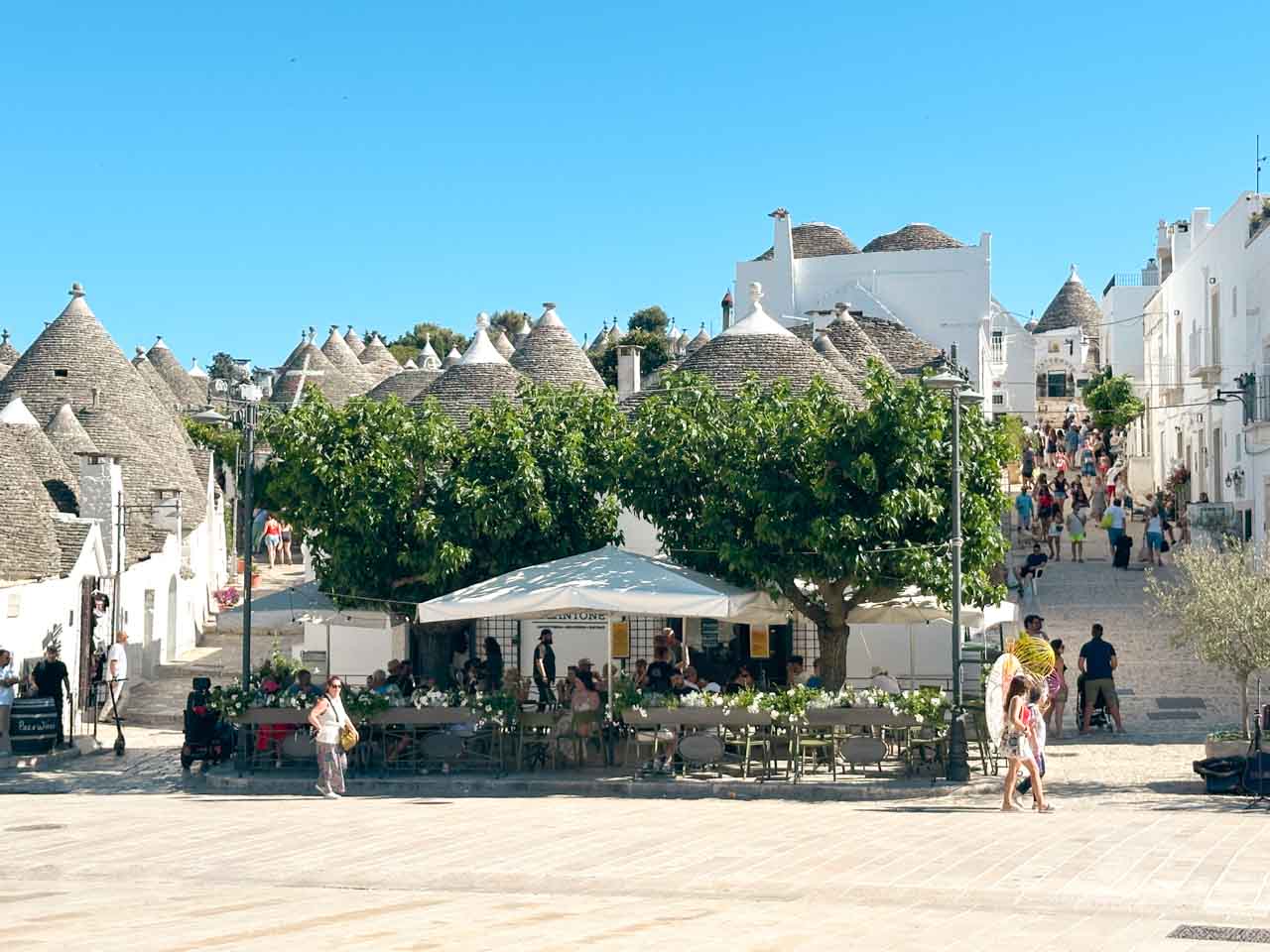
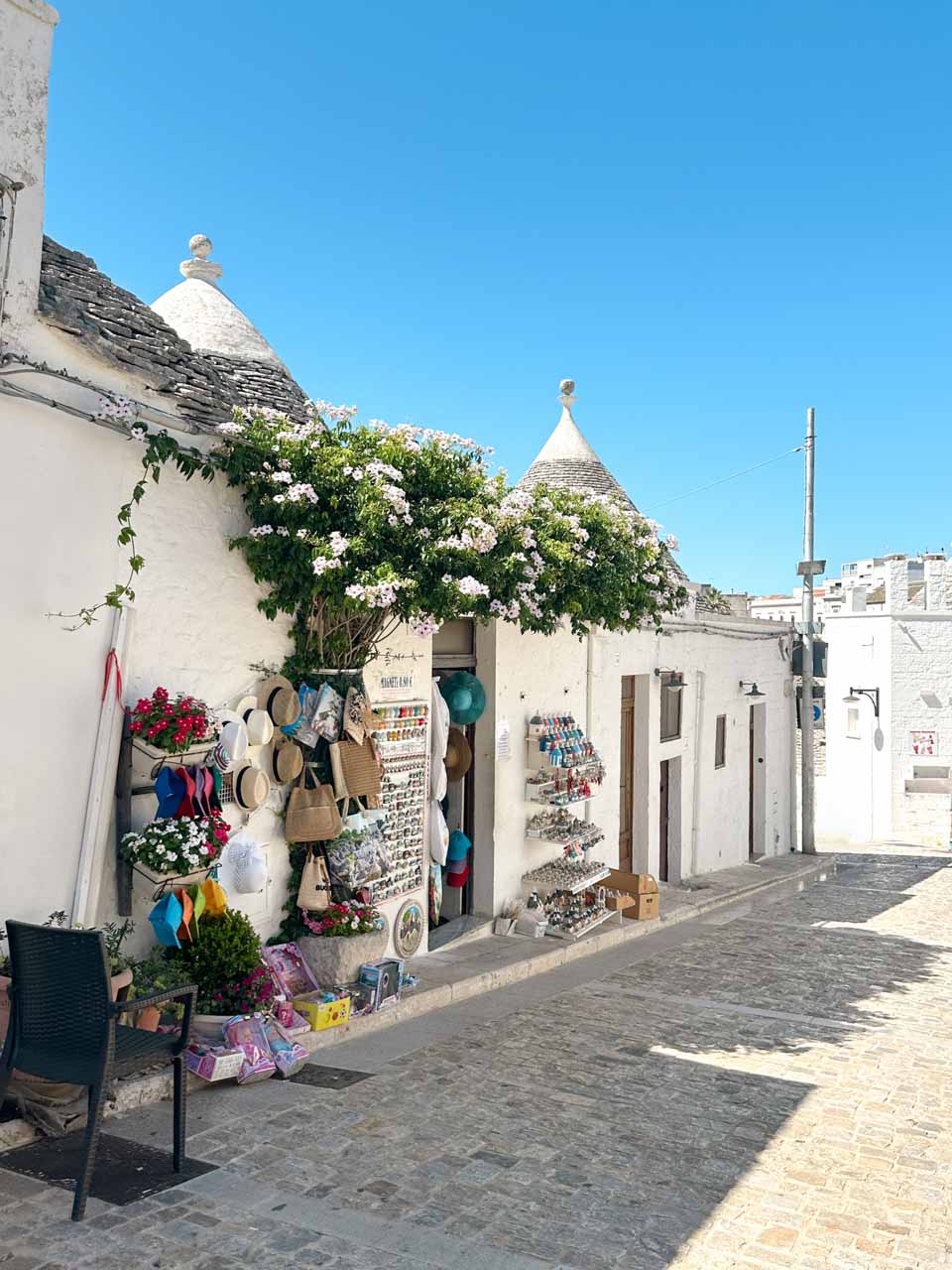
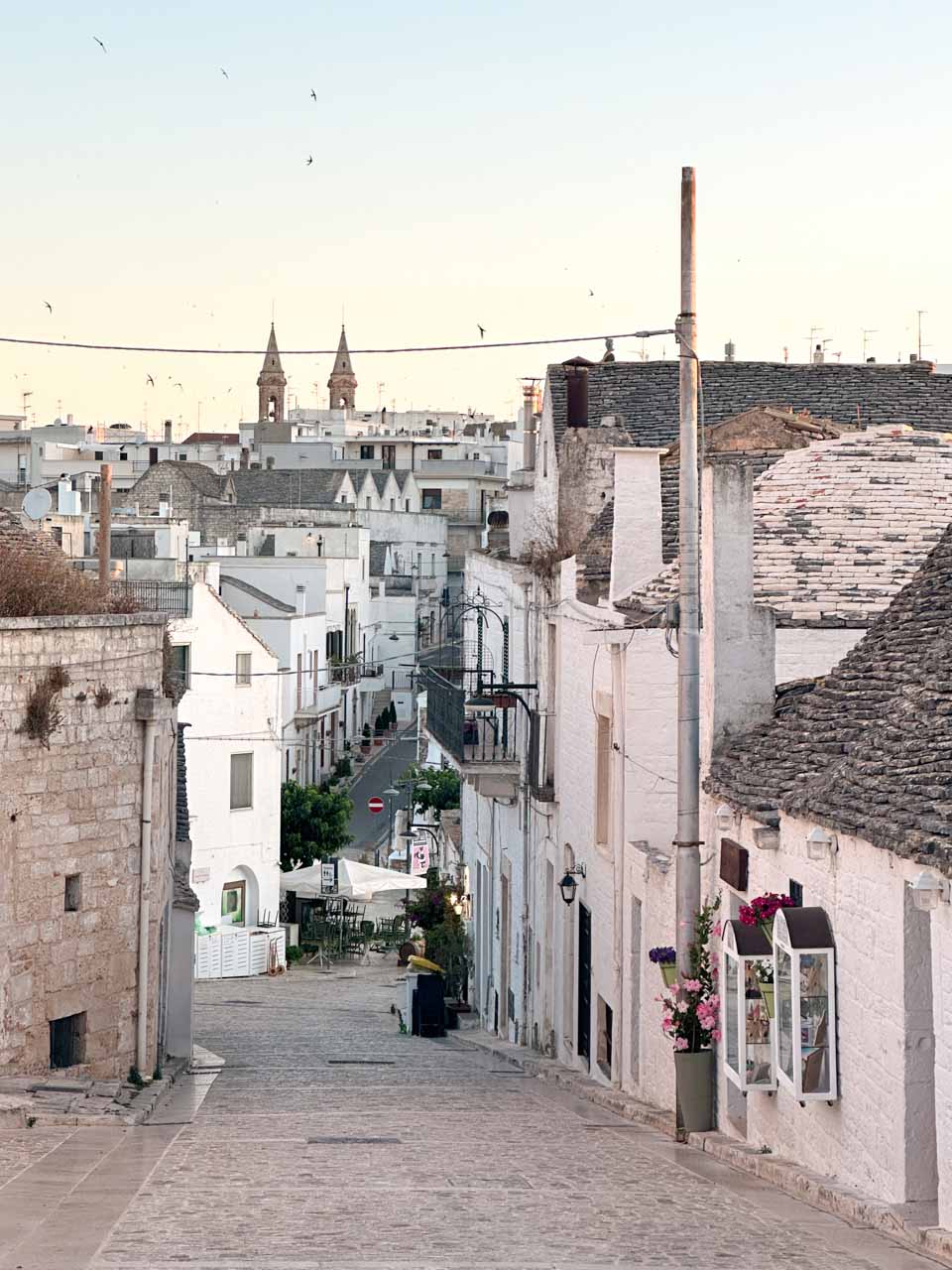
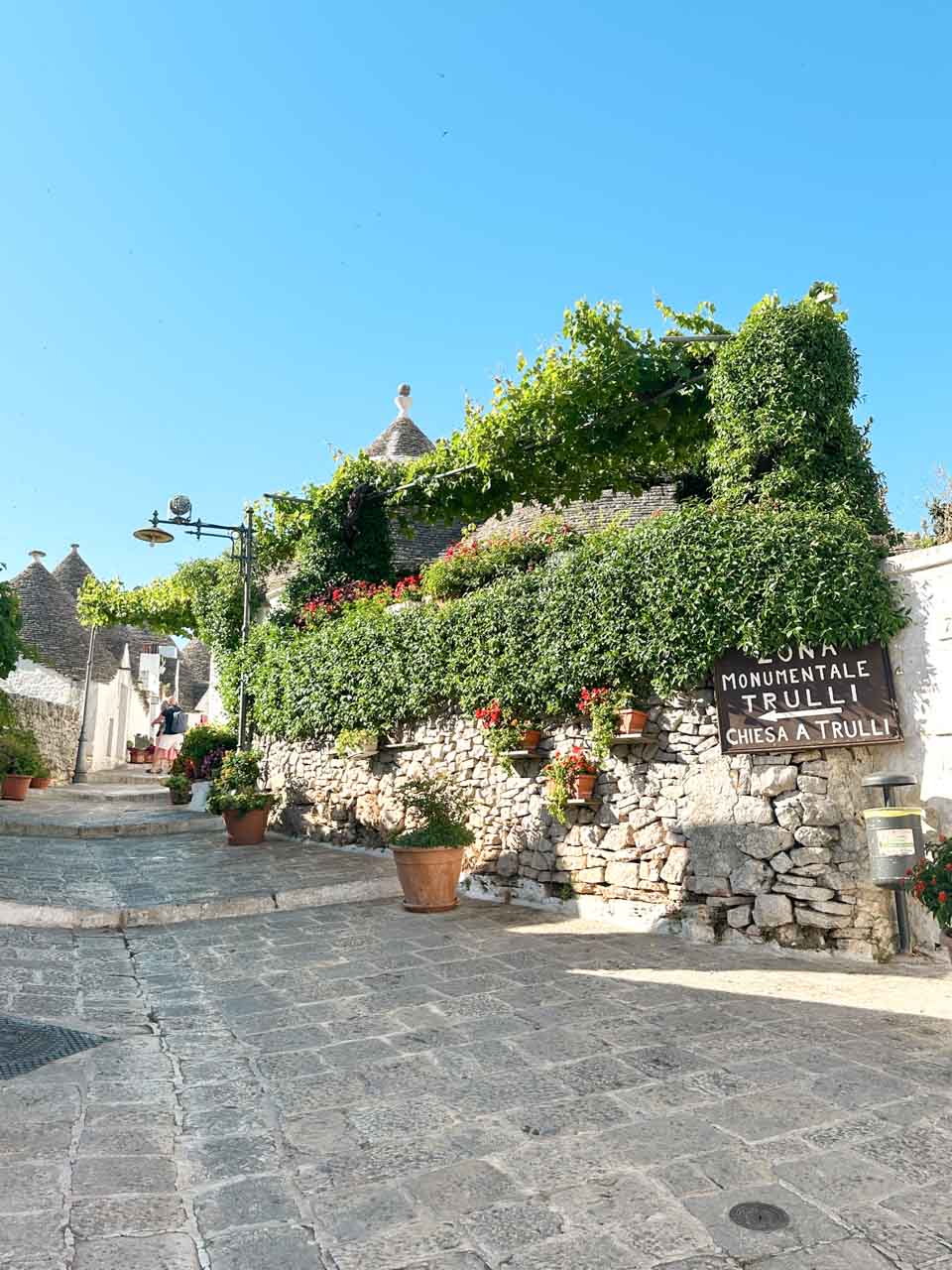
Rione Monti is the part you’ve almost certainly seen in photos. It’s where you’ll find most of the famous trulli, as well as many of the souvenir shops, cafés, and restaurants. One of the main streets is Via Monte San Gabriele, where you can shop for souvenirs and get one of the classic views over Alberobello’s sea of cone-shaped roofs.
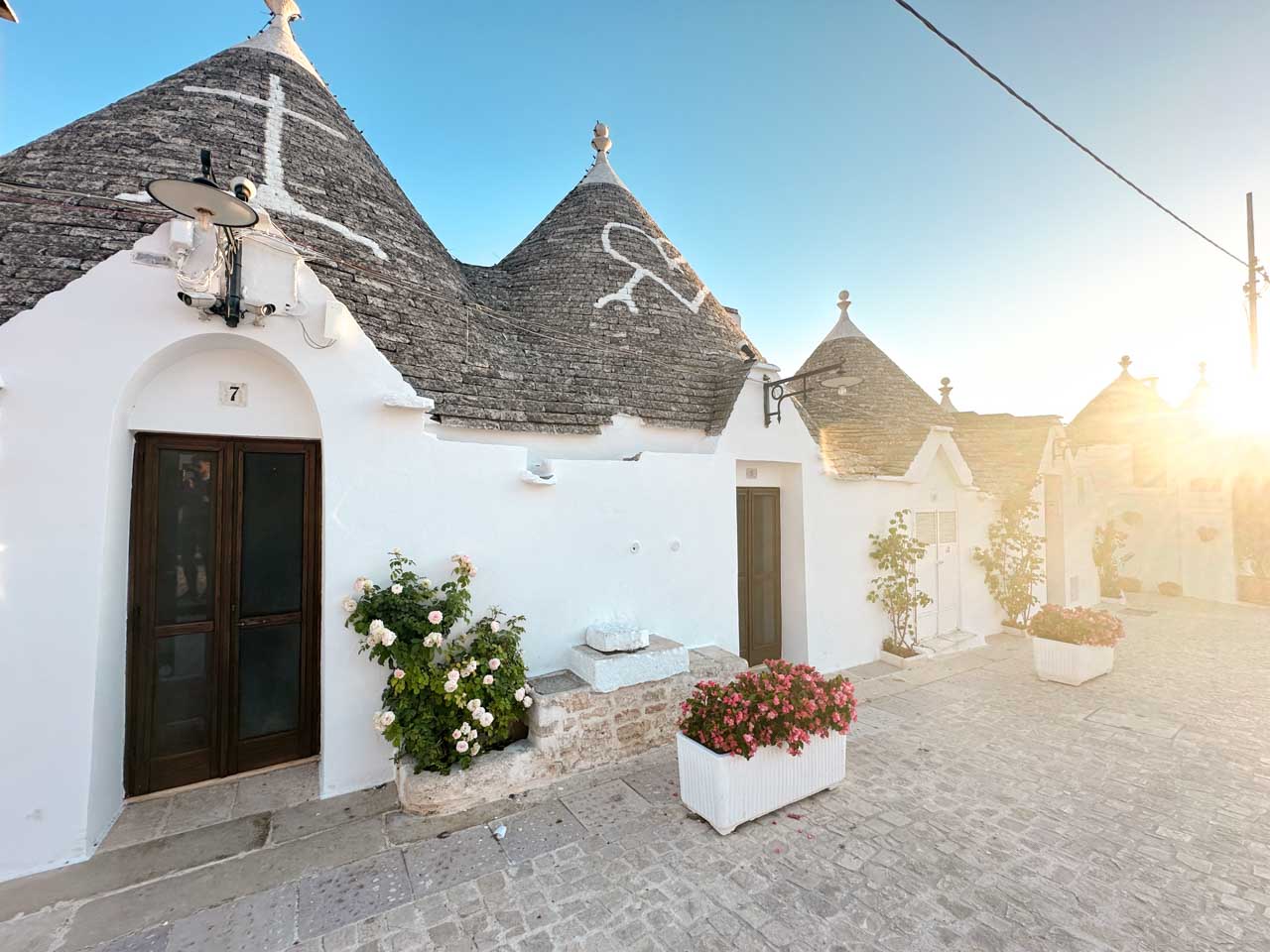
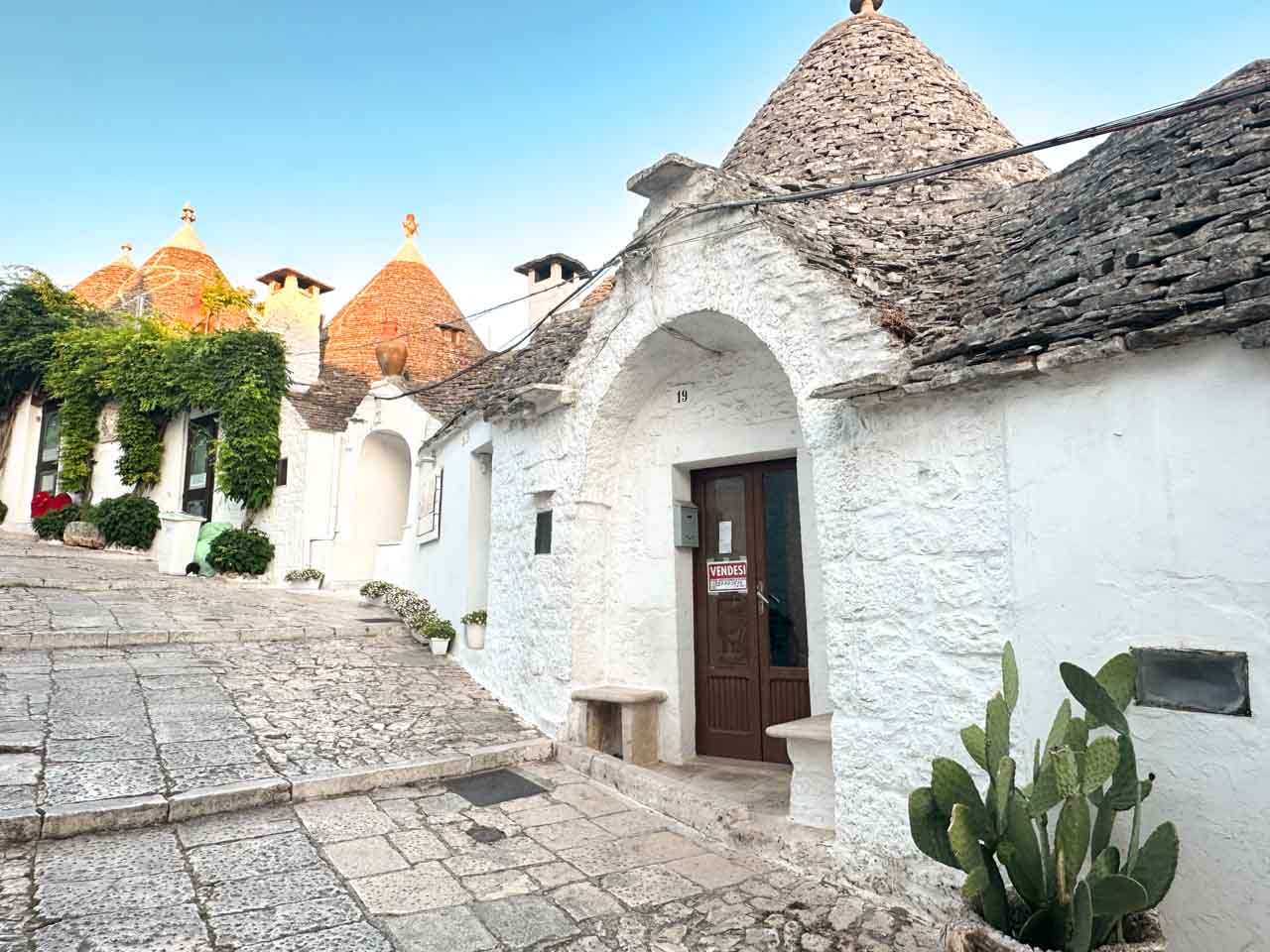
I won’t lie – it can feel a bit overwhelming during the middle of the day. There are people everywhere, squeezing through the narrow alleys and stopping every few steps for photos.
But come back early in the morning or later in the evening, and it feels like a completely different place. Once the day trippers leave, the whole area becomes surprisingly peaceful.
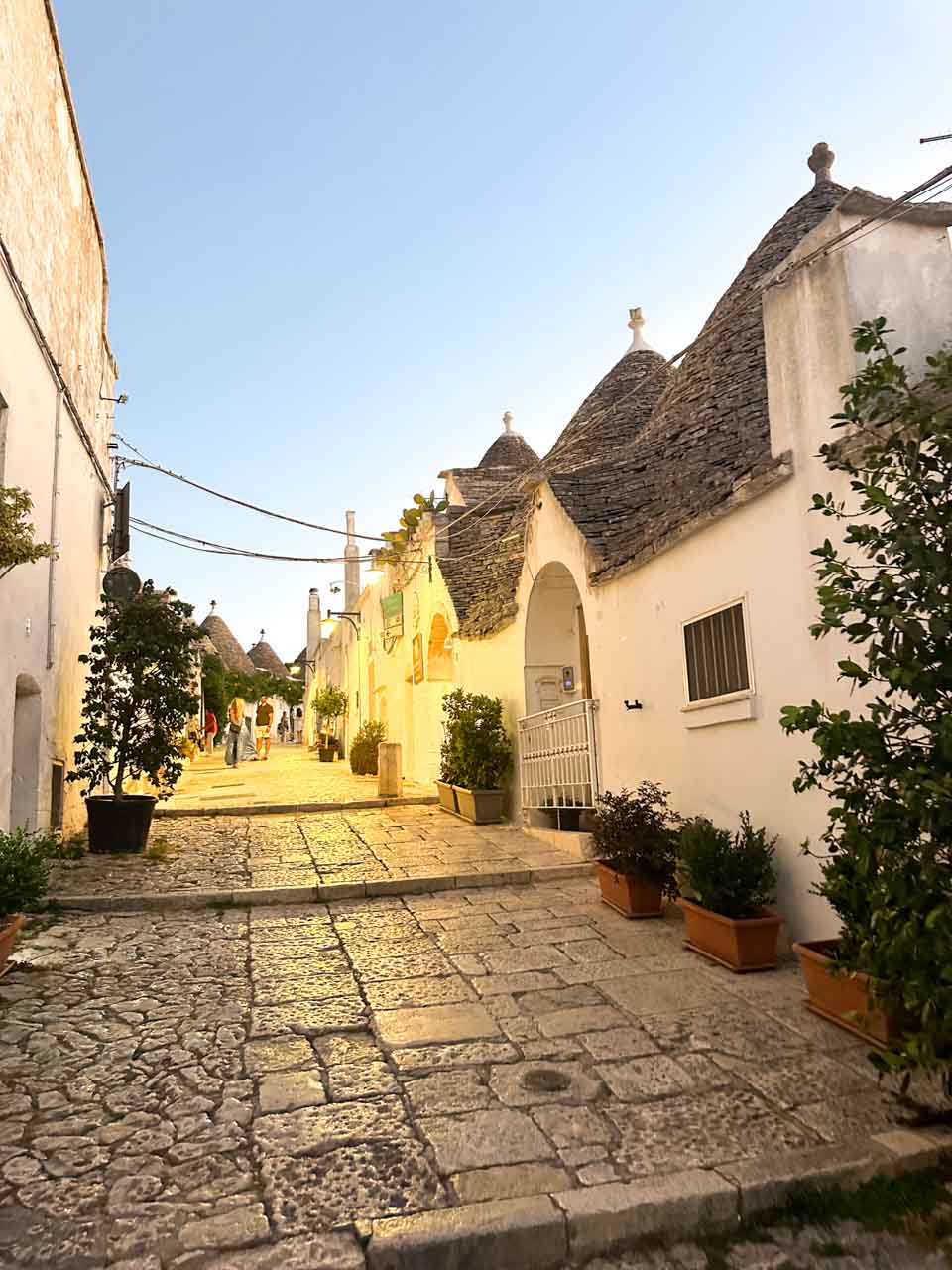
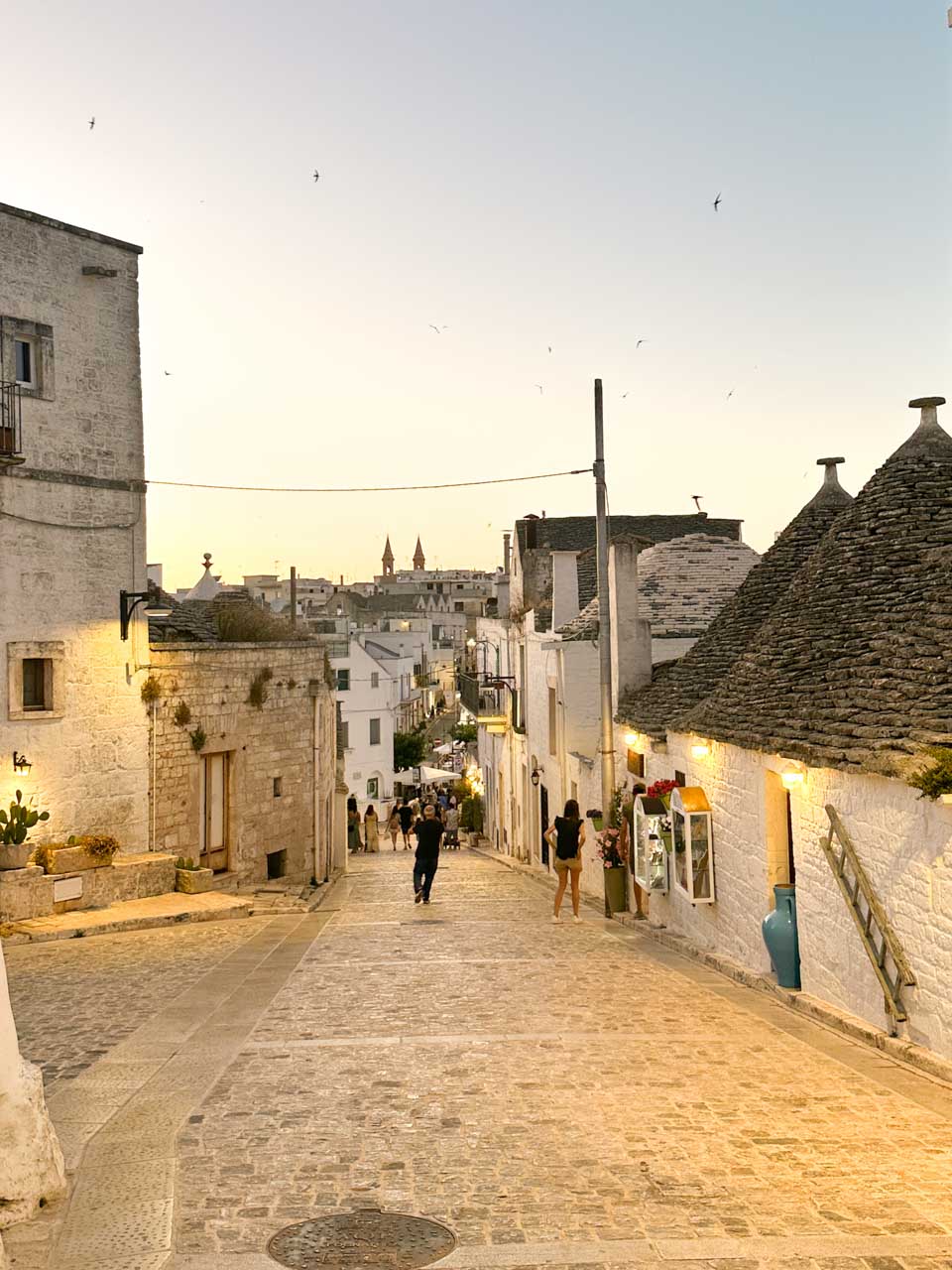
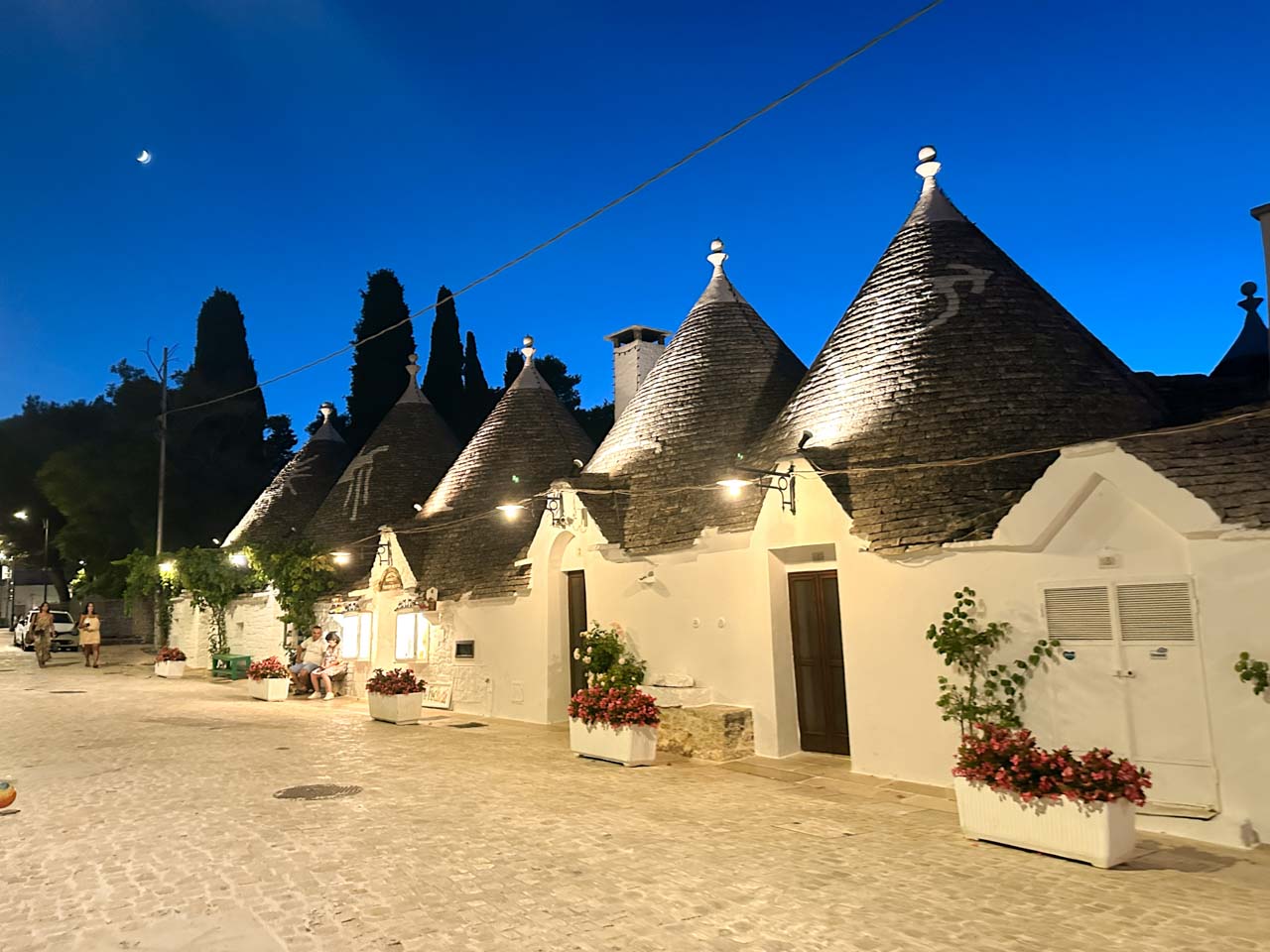
Cross over to Rione Aia Piccola, and the atmosphere changes almost immediately. It’s only a short walk away, but somehow far fewer people make it over there.
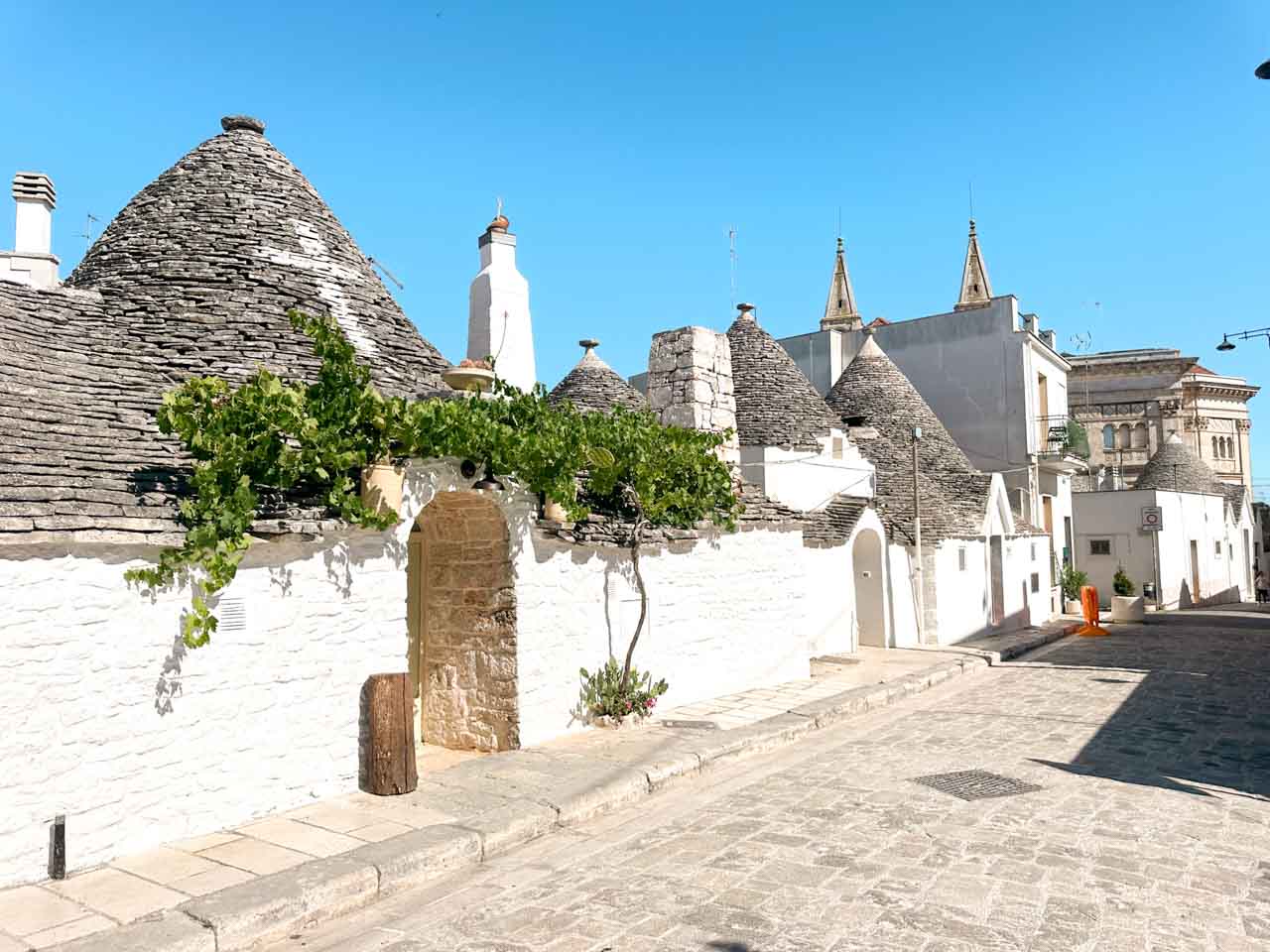
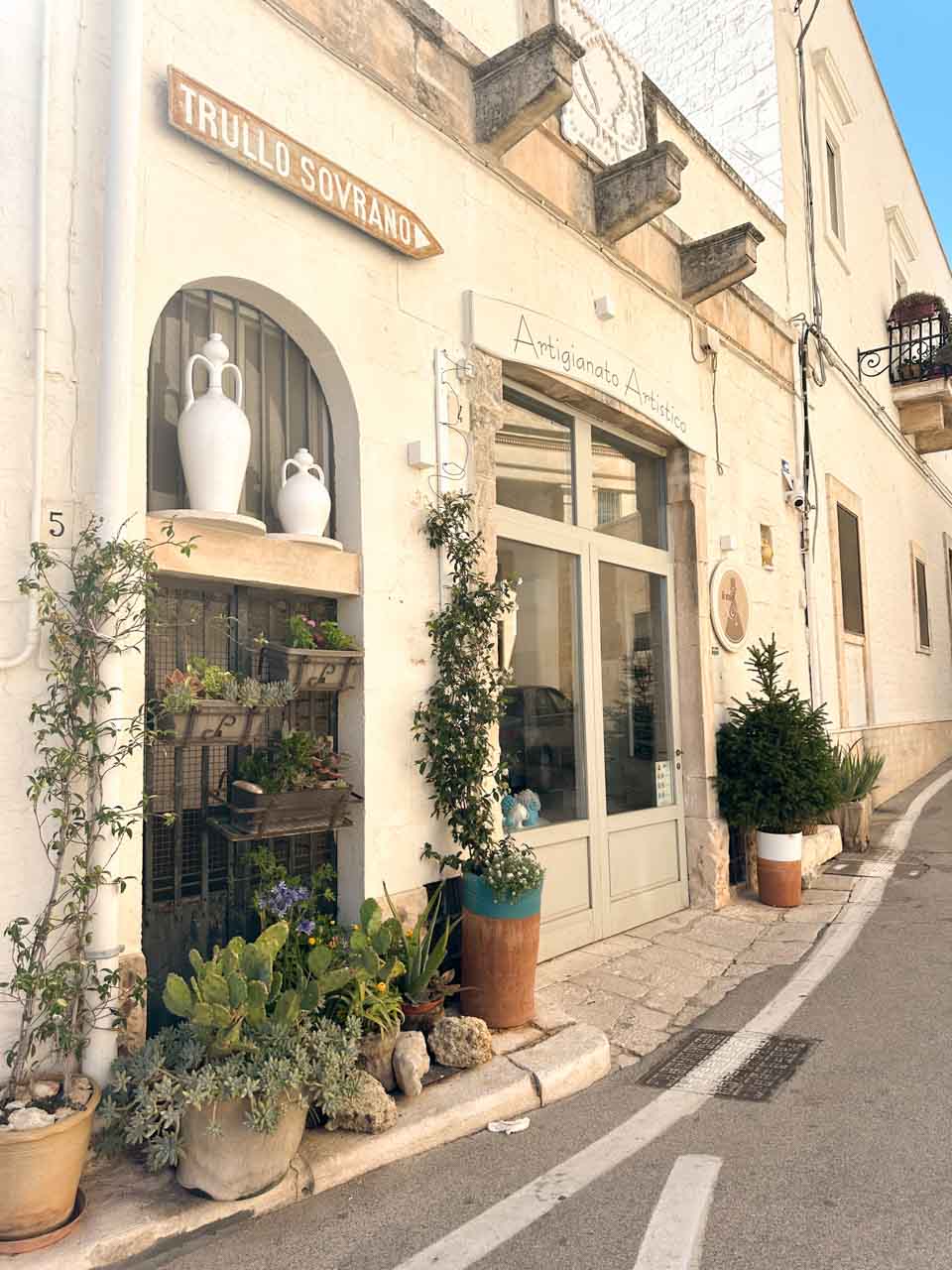
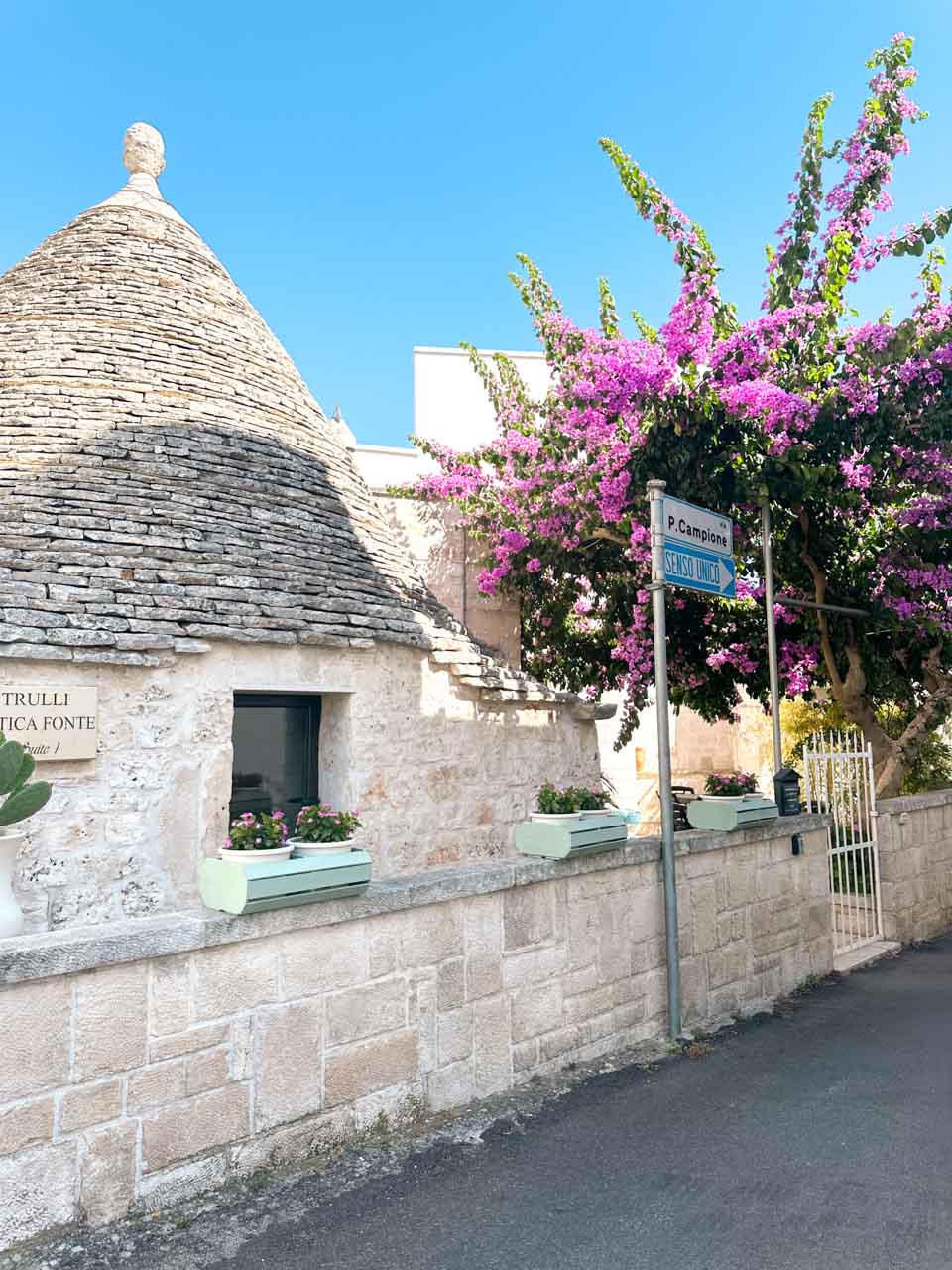
The trulli are more spread out, which is probably why most tourists don’t spend as much time exploring this side of town.
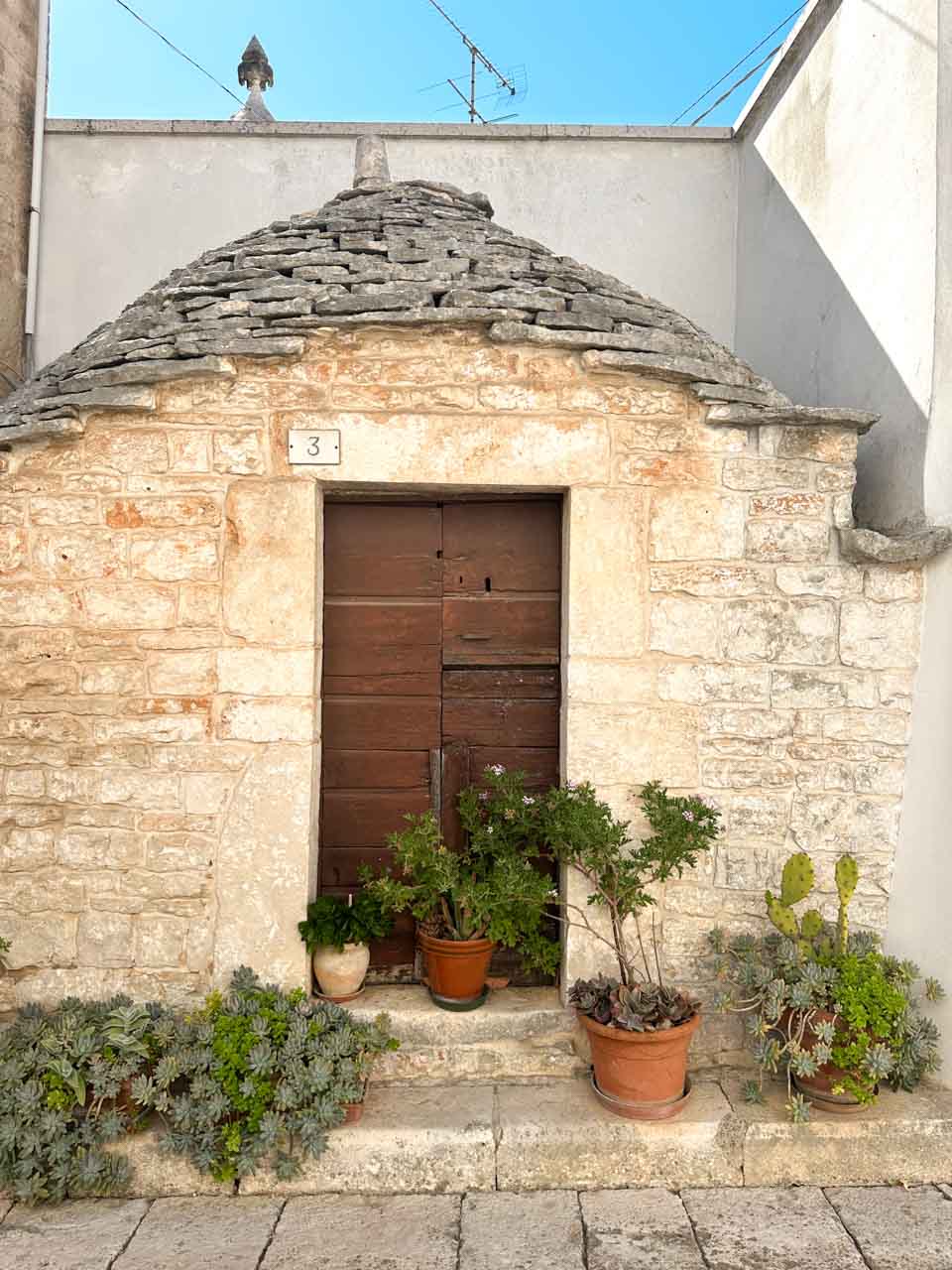
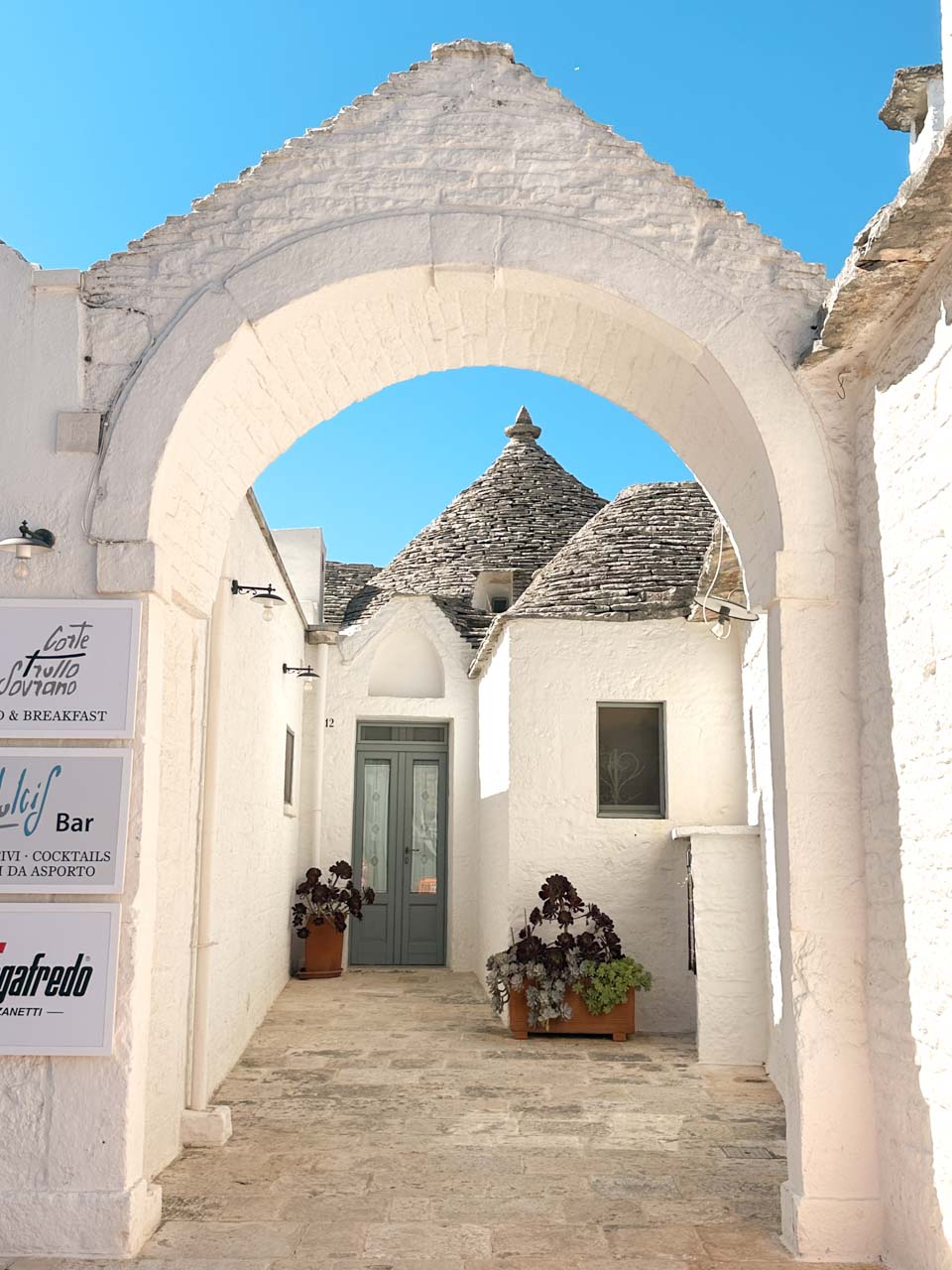
You’ll also find some of Alberobello’s main sights here, including the Church of Saints Cosmas and Damian and Trullo Sovrano, the only two-storey trullo in Alberobello, which now operates as a museum. As a bonus, the slight uphill walk also gives you some lovely views back over Rione Monti.
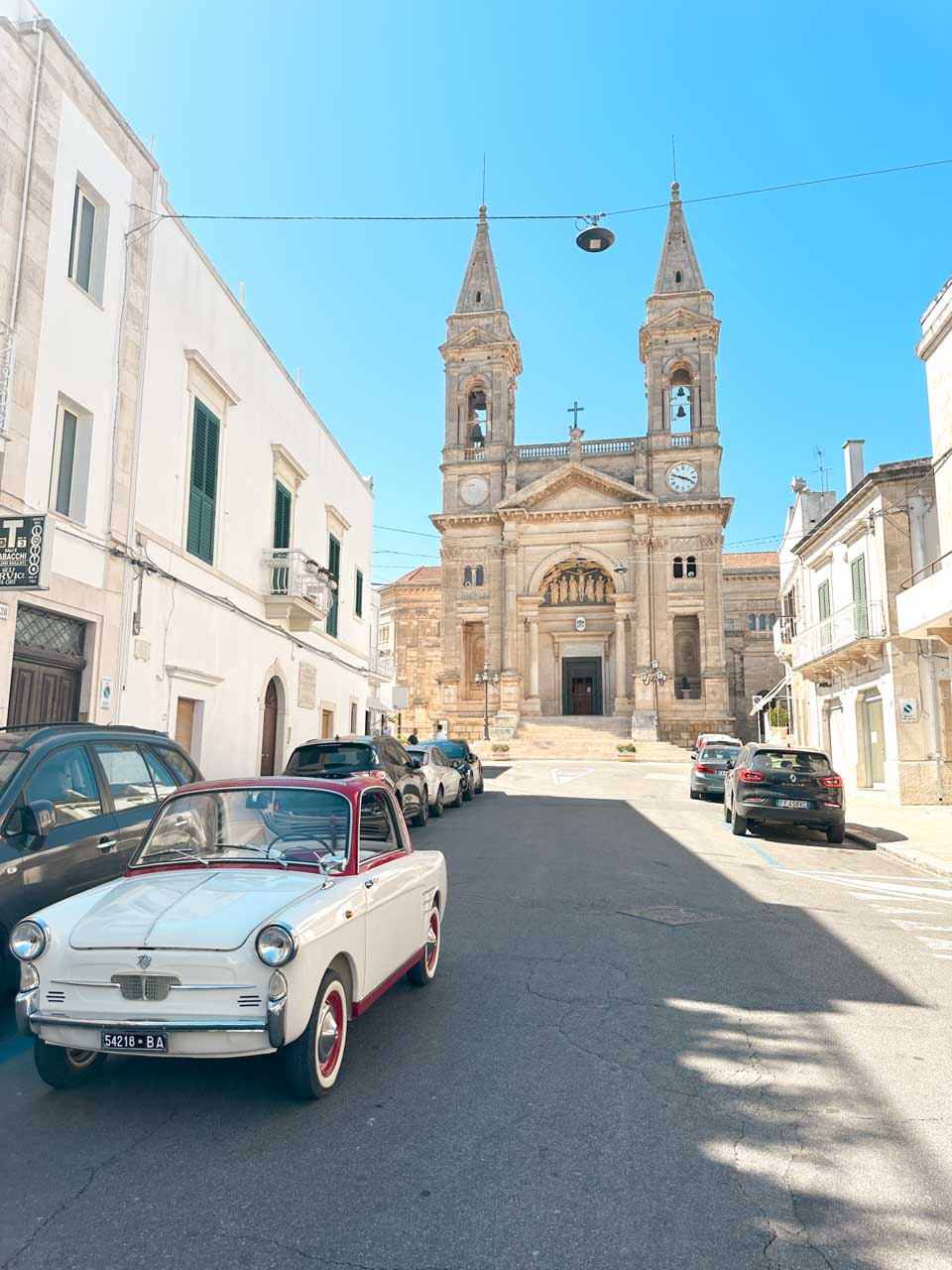
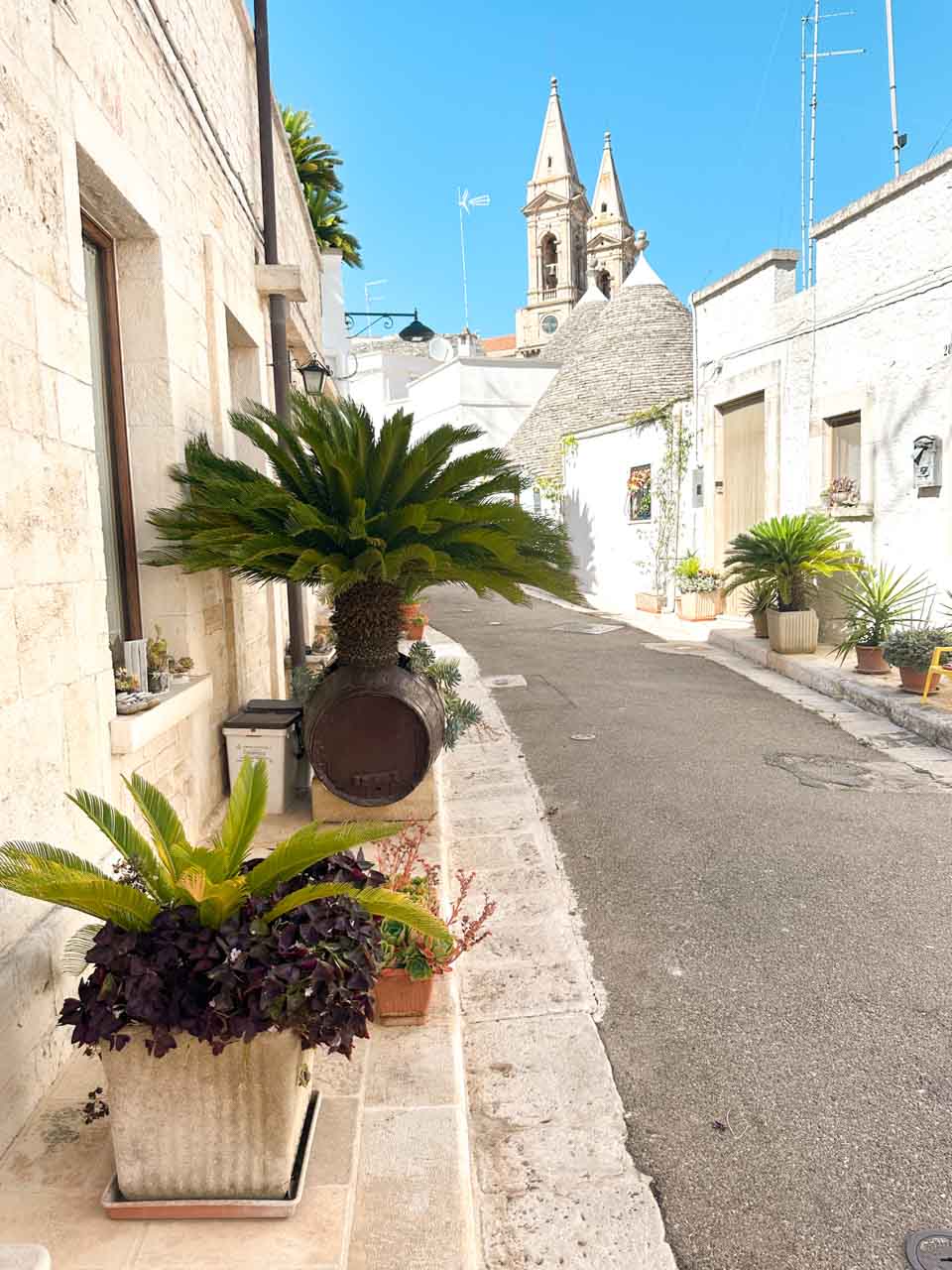
You can easily explore Alberobello on your own, and there are plenty of articles online explaining the symbols painted on some of the roofs. But if you’d like to hear a few local stories or have someone to answer your questions, here are some walking tours worth checking out:
Explore the only two-storey trullo – Trullo Sovrano
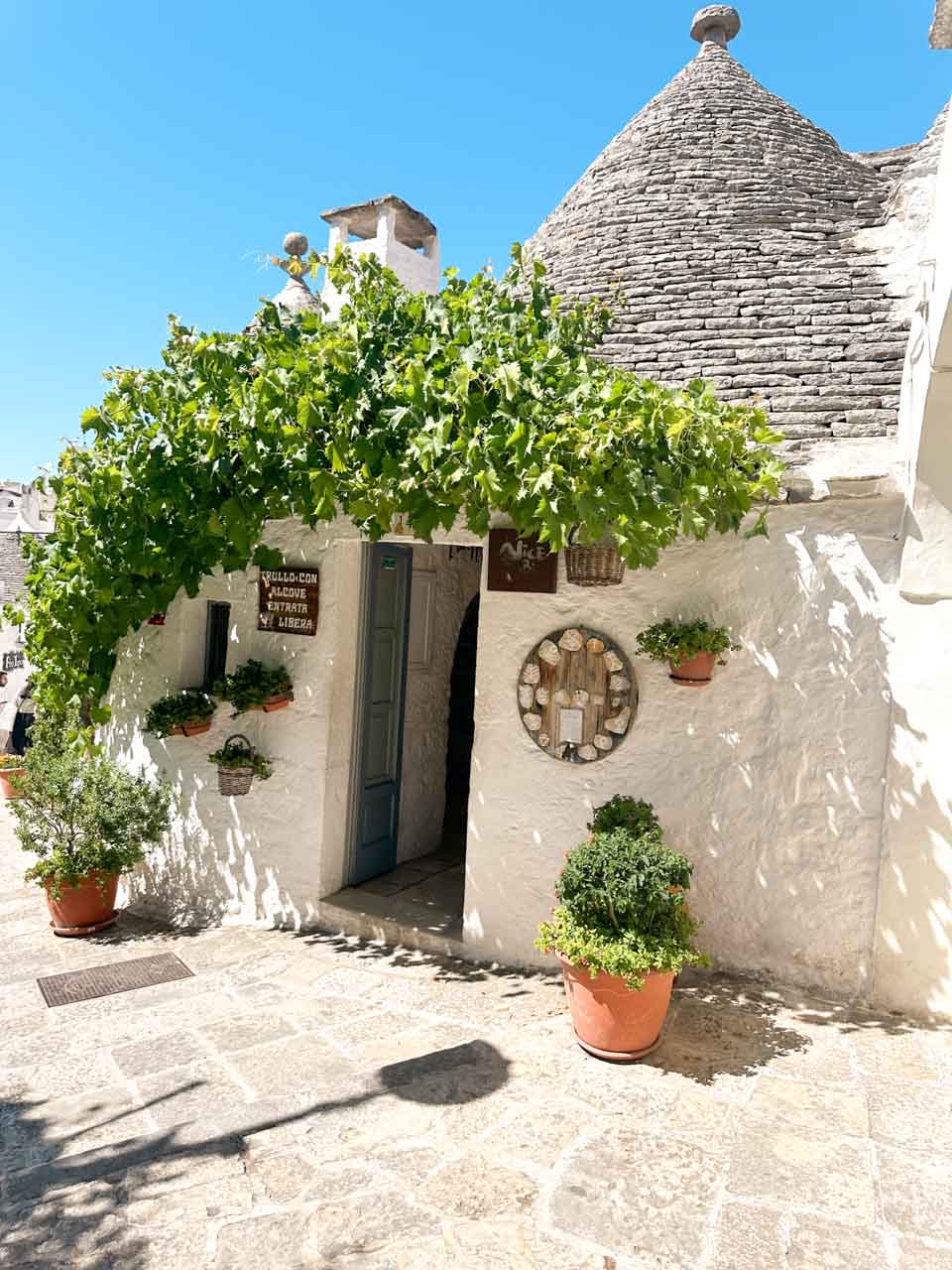
Even if you’re not staying in a traditional trullo, there are plenty of ways to get inside one. Some have been turned into souvenir shops or restaurants, while others have signs inviting visitors in. You might even come across locals willing to make a bit of extra money by showing tourists around their homes.
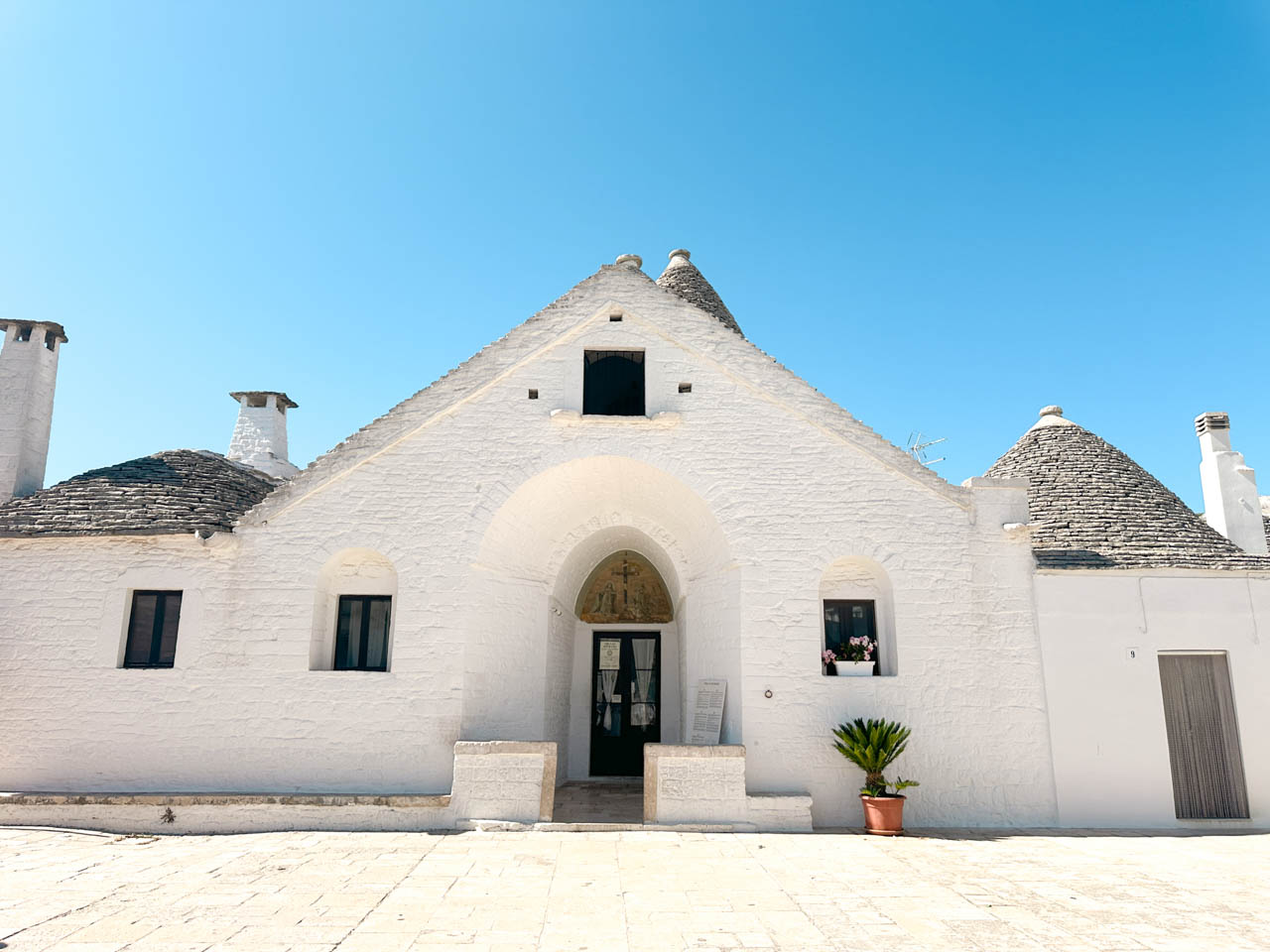
But if you’d like to get a better idea of what it was actually like to live in a trullo, I’d recommend visiting Trullo Sovrano. Now, this isn’t your average trullo. It’s the only two-storey trullo in Alberobello. Entry costs just €2.50, and you can walk through the different rooms and see the period furnishings inside.
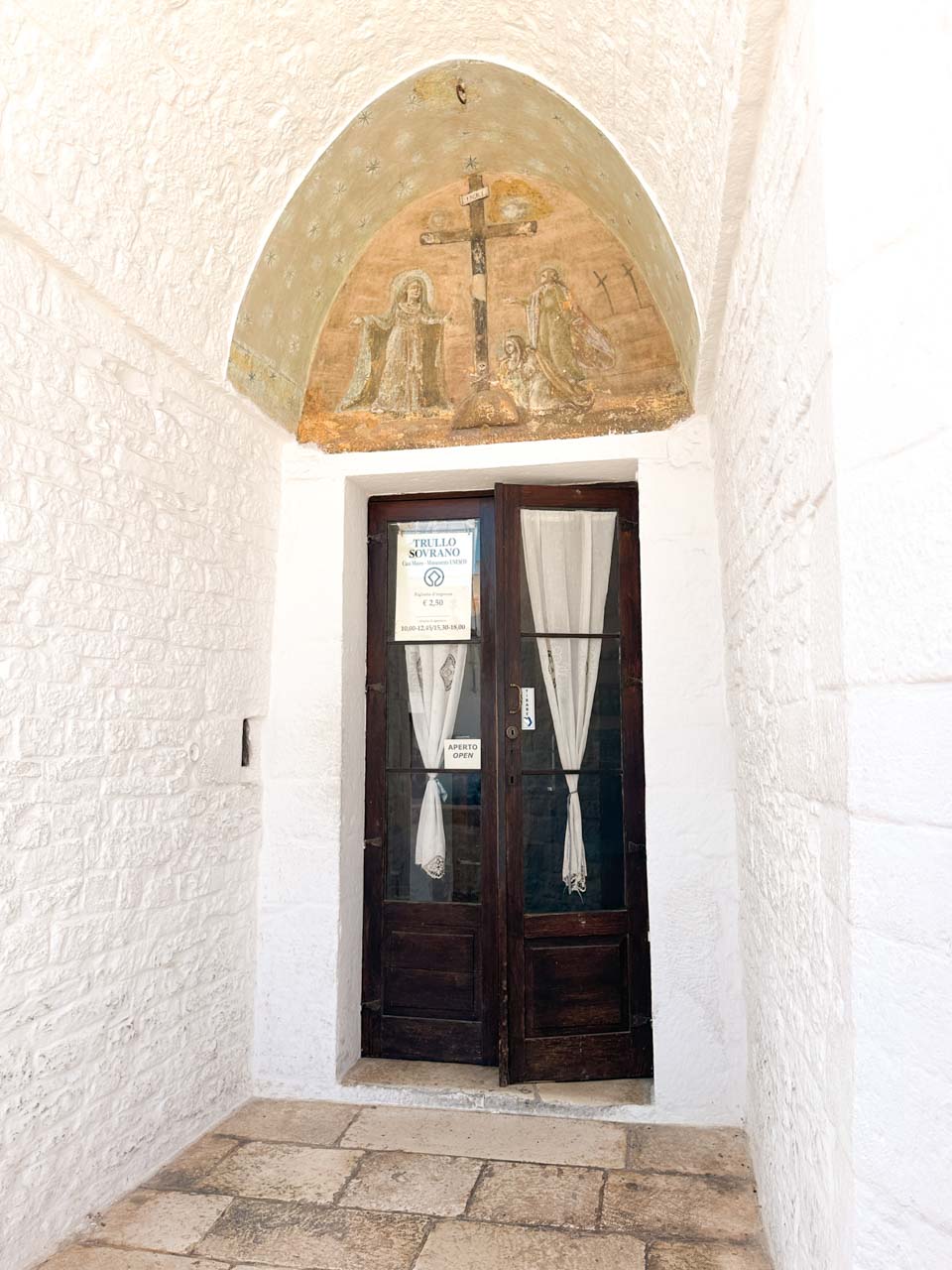
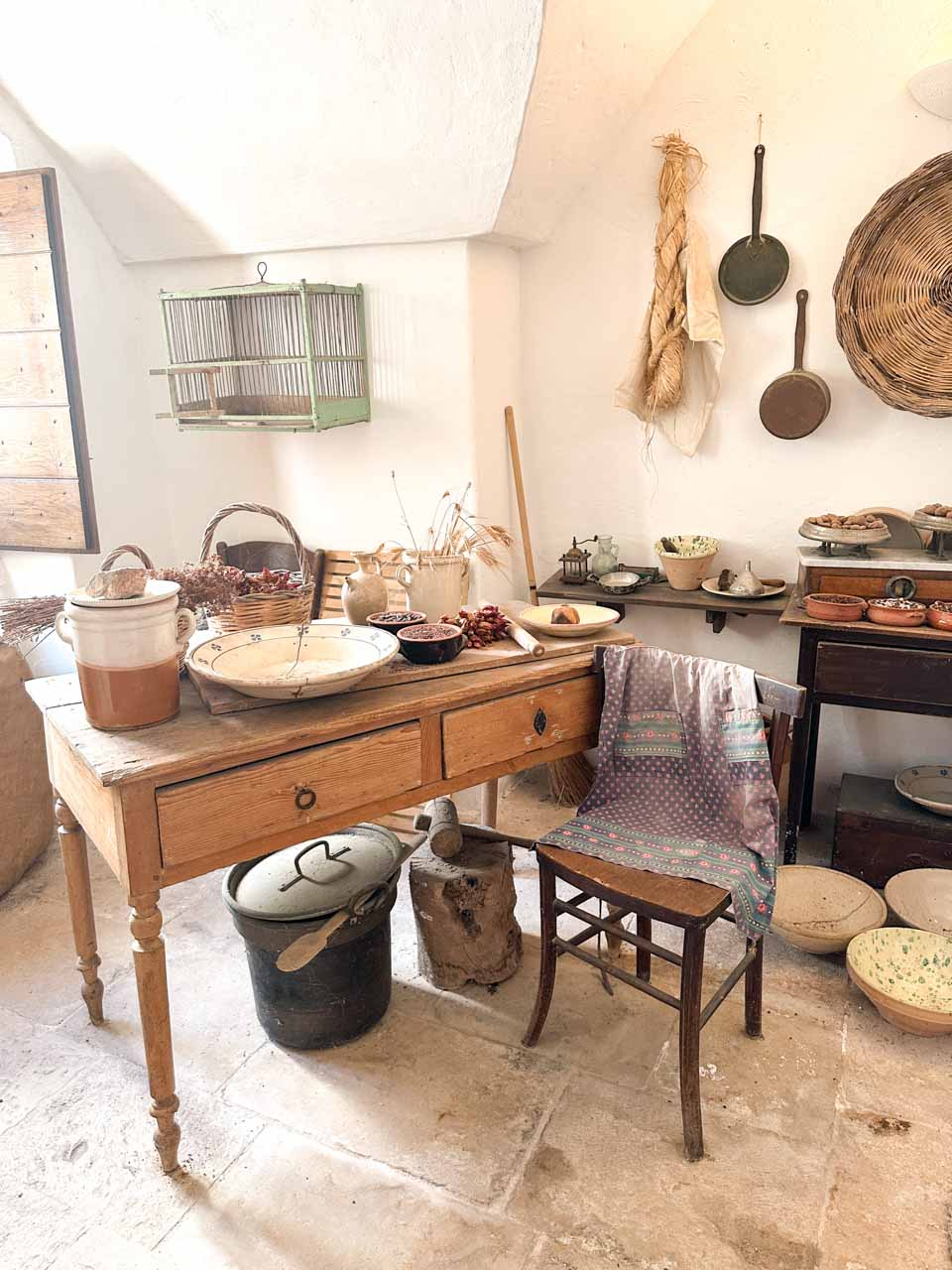
Upstairs, there’s also a well where you can throw a coin for good luck.
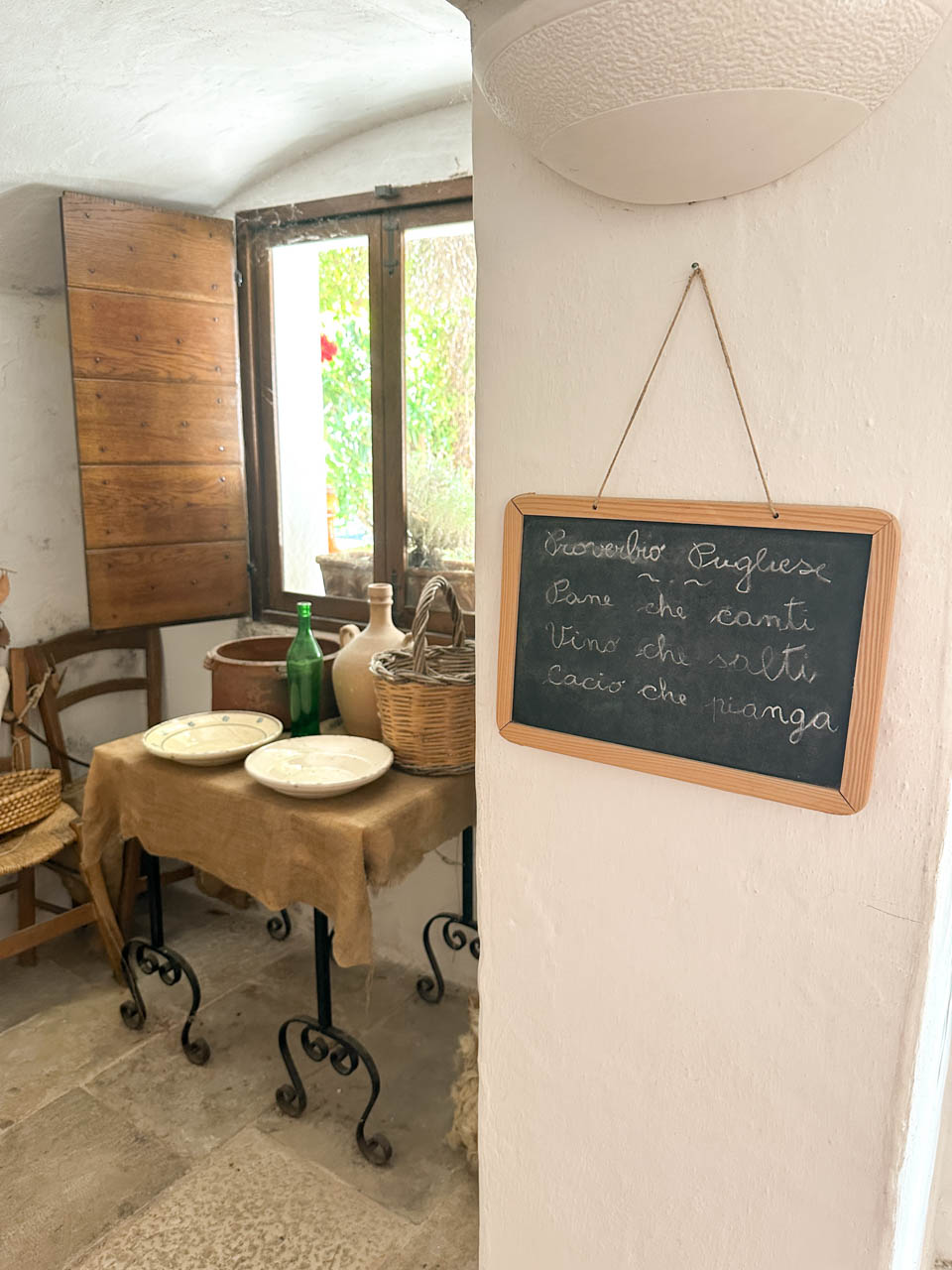
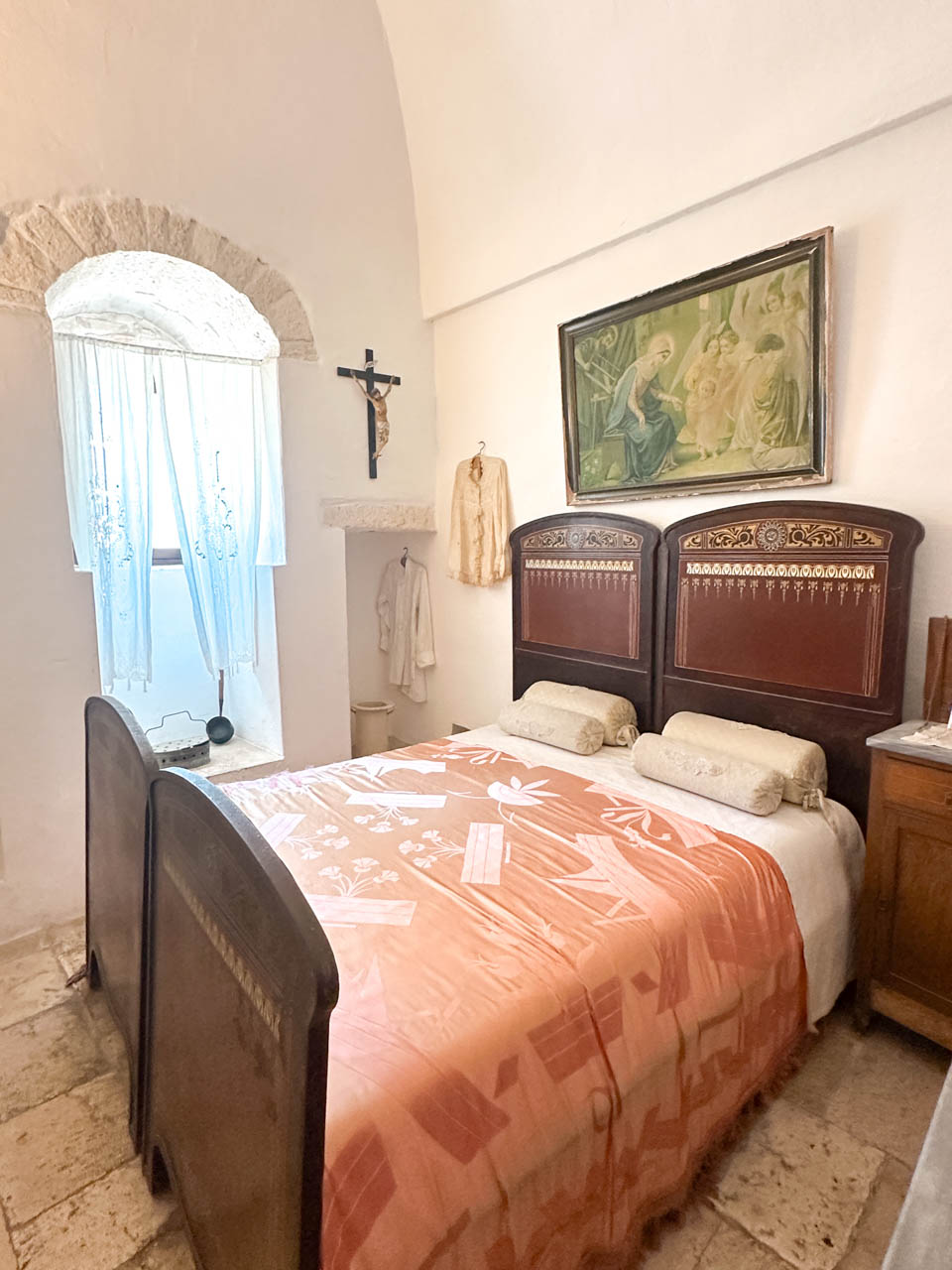
If you’d like to learn a bit more about the history of Alberobello and the surrounding area, there’s also the Museum of the Territory inside another trullo complex called Casa Pezzolla, although we didn’t visit that one ourselves.
Stop by the Basilica of Saints Cosma and Damian
If you’re heading over to the Rione Aia Piccola side of Alberobello, I’d recommend stopping by the Basilica of Saints Cosma and Damian.
Chances are you’ve already noticed it while walking around Alberobello. Because it sits on top of a hill, you can see its twin bell towers from different parts of town. Alongside the trulli, they’ve become one of Alberobello’s most recognisable landmarks.
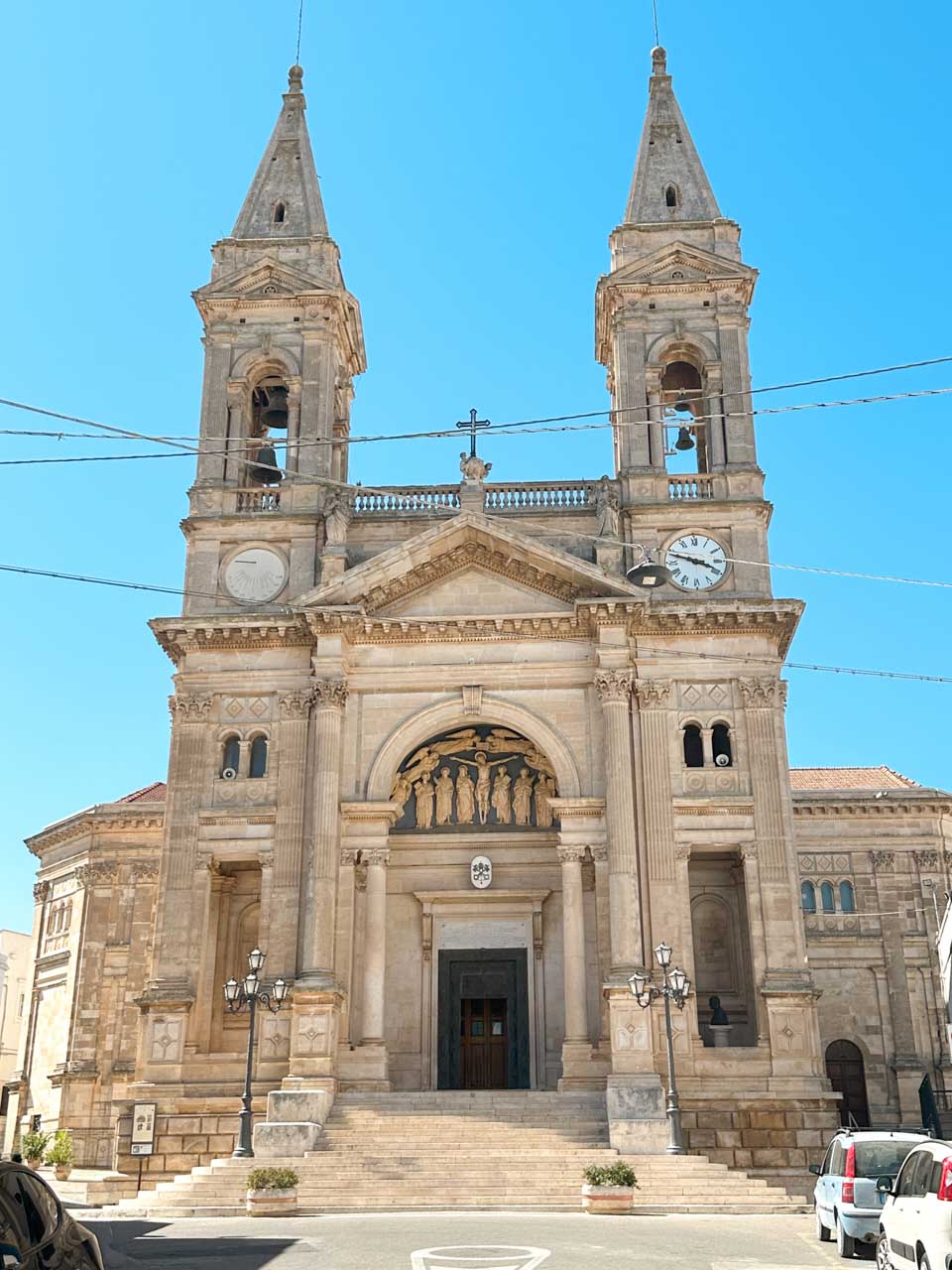
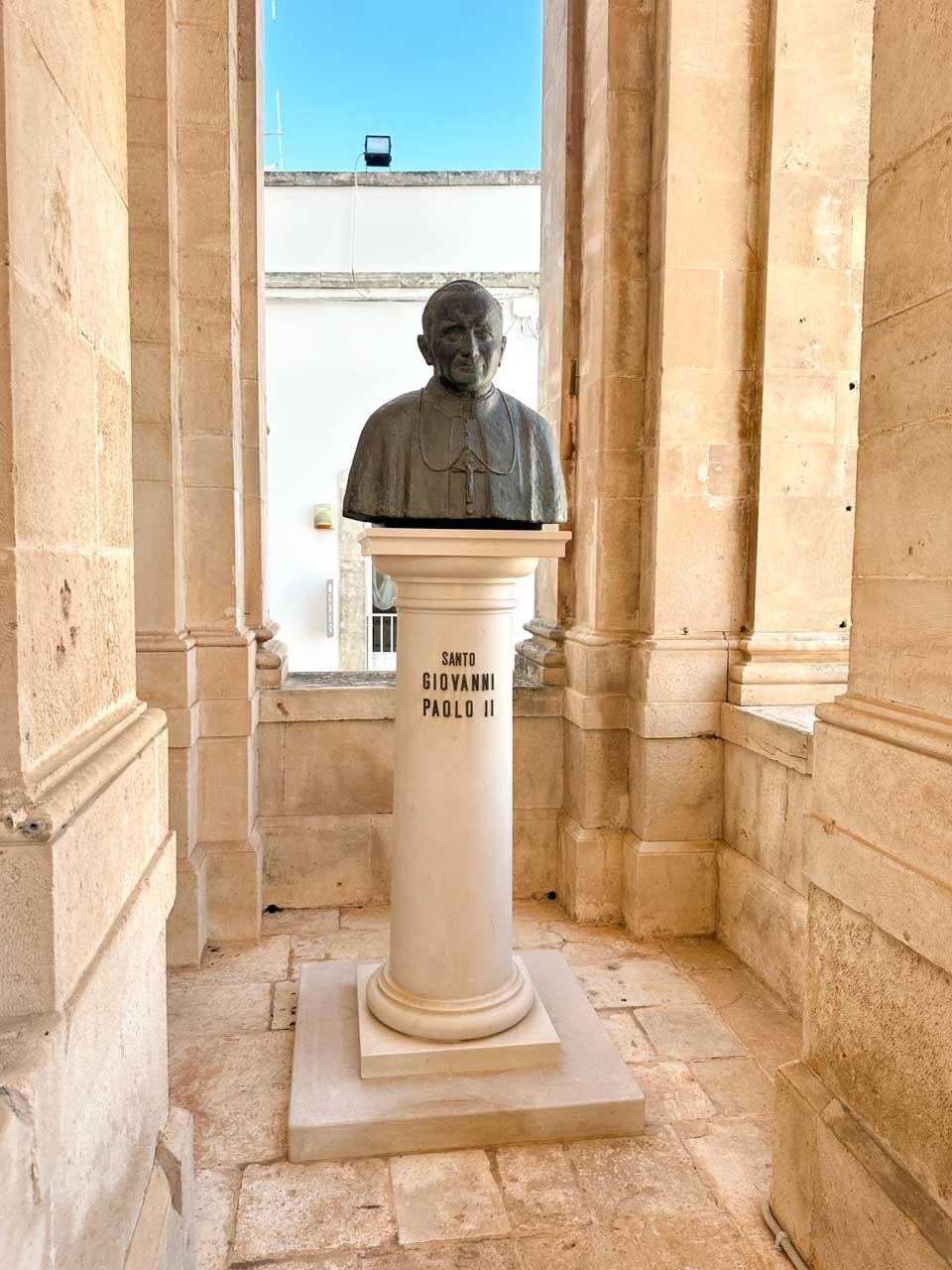
Saints Cosmas and Damian were twin brothers who worked as doctors and treated people free of charge. Over time, they became associated with healing and medicine, and today they’re the patron saints of Alberobello.
If you happen to be visiting at the end of September, you might also catch the annual feast in their honour, with processions, concerts, food stalls, and fireworks.
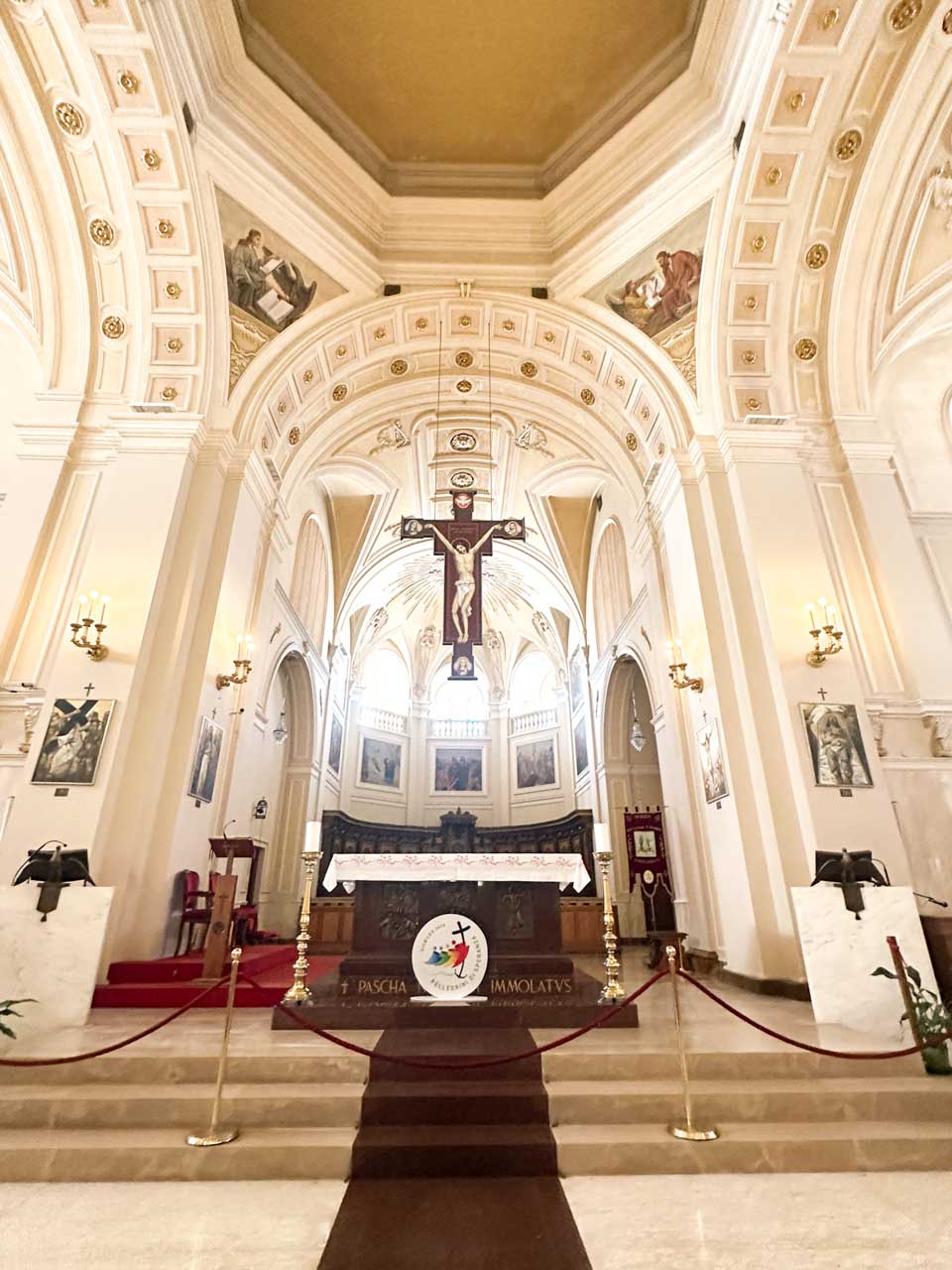
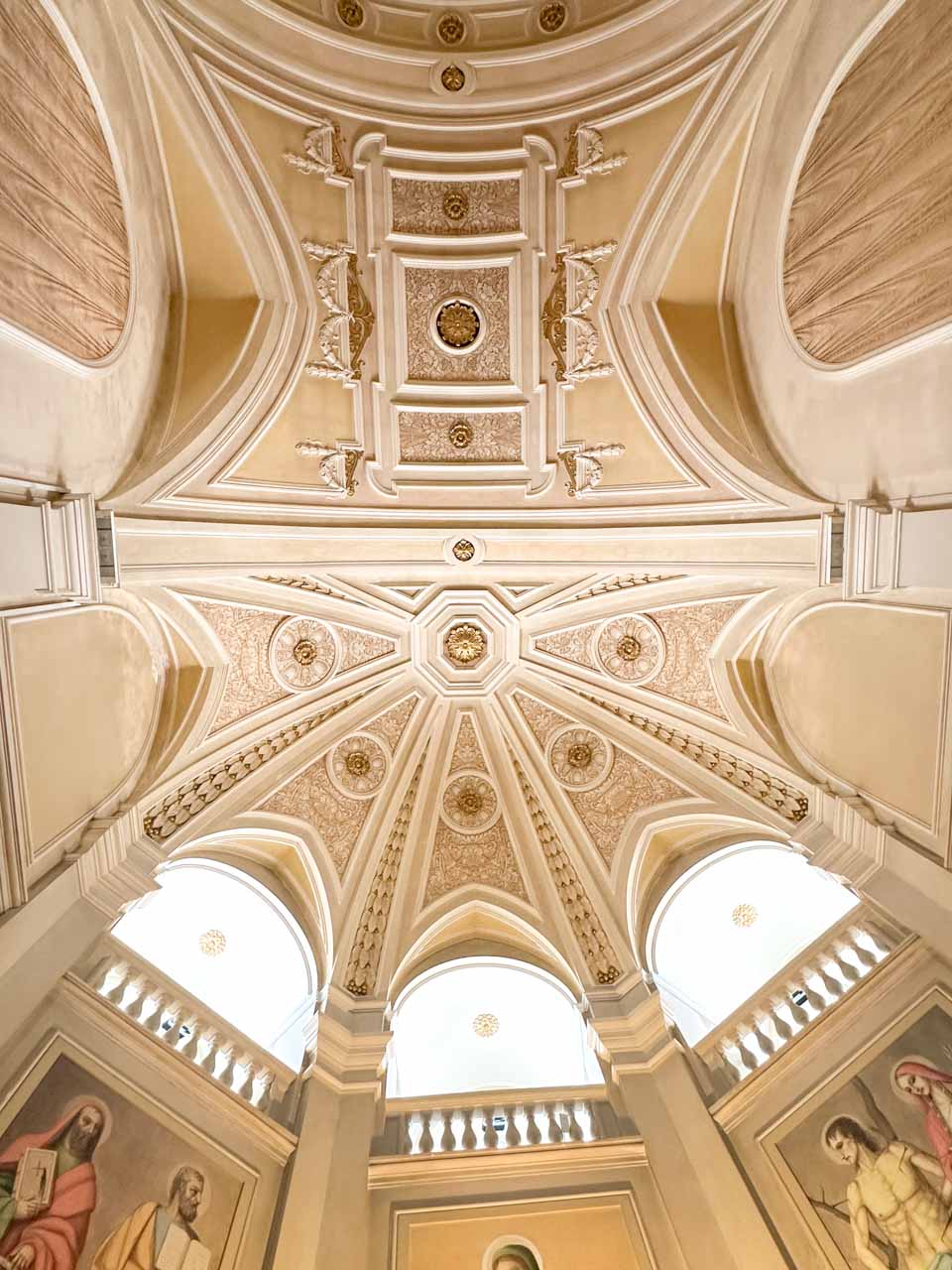
Entry is free, and as it’s only a short walk from Trullo Sovrano, it’s very easy to visit both at the same time.
See Casa d’Amore – Alberobello’s first permanent house
This next stop is more of a fun little curiosity than a must-see place. I wouldn’t go out of my way just to see it, but if you’re walking towards the train station or the Basilica of Saints Cosmas and Damian, you’ll pass right by it anyway.
Remember the story about why trulli were built without mortar?
Well, in 1797, Alberobello became a free city. Once residents no longer had to worry about taxes on permanent buildings, Francesco D’Amore became the first person in town to build a house using mortar and terracotta.
That’s why Casa d’Amore is such a big deal in Alberobello.
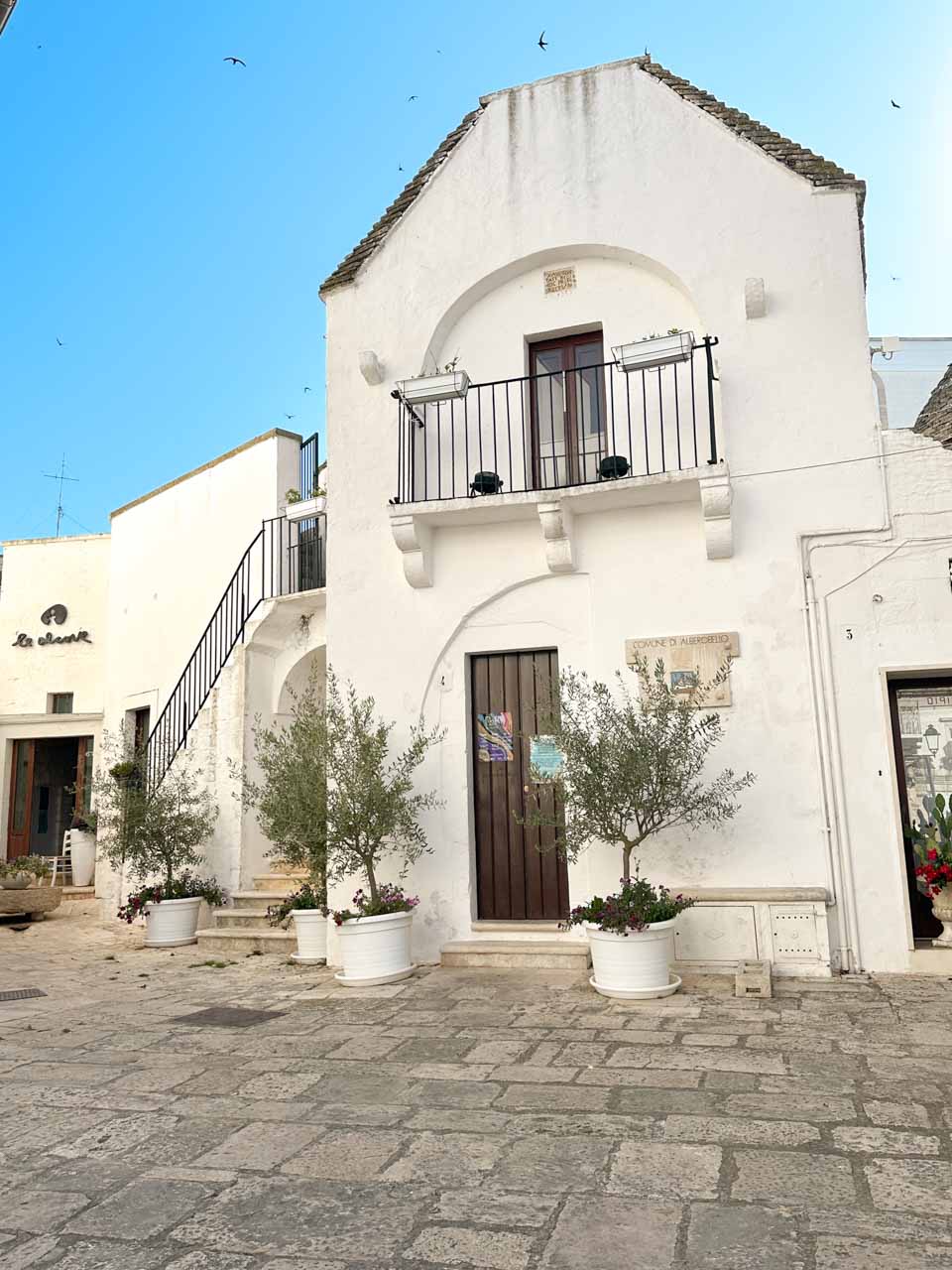
It also looks quite different from the surrounding buildings. Not only was it built in a completely different way, but it also has two storeys and a balcony, which was pretty unusual at the time (especially when you remember that Trullo Sovrano is the only two-storey trullo in town).
Today, the building houses Alberobello’s Tourist Information Office, so you can technically pop inside. But even if you only see it from the outside, I think it’s worth stopping for a minute once you know the story behind it.
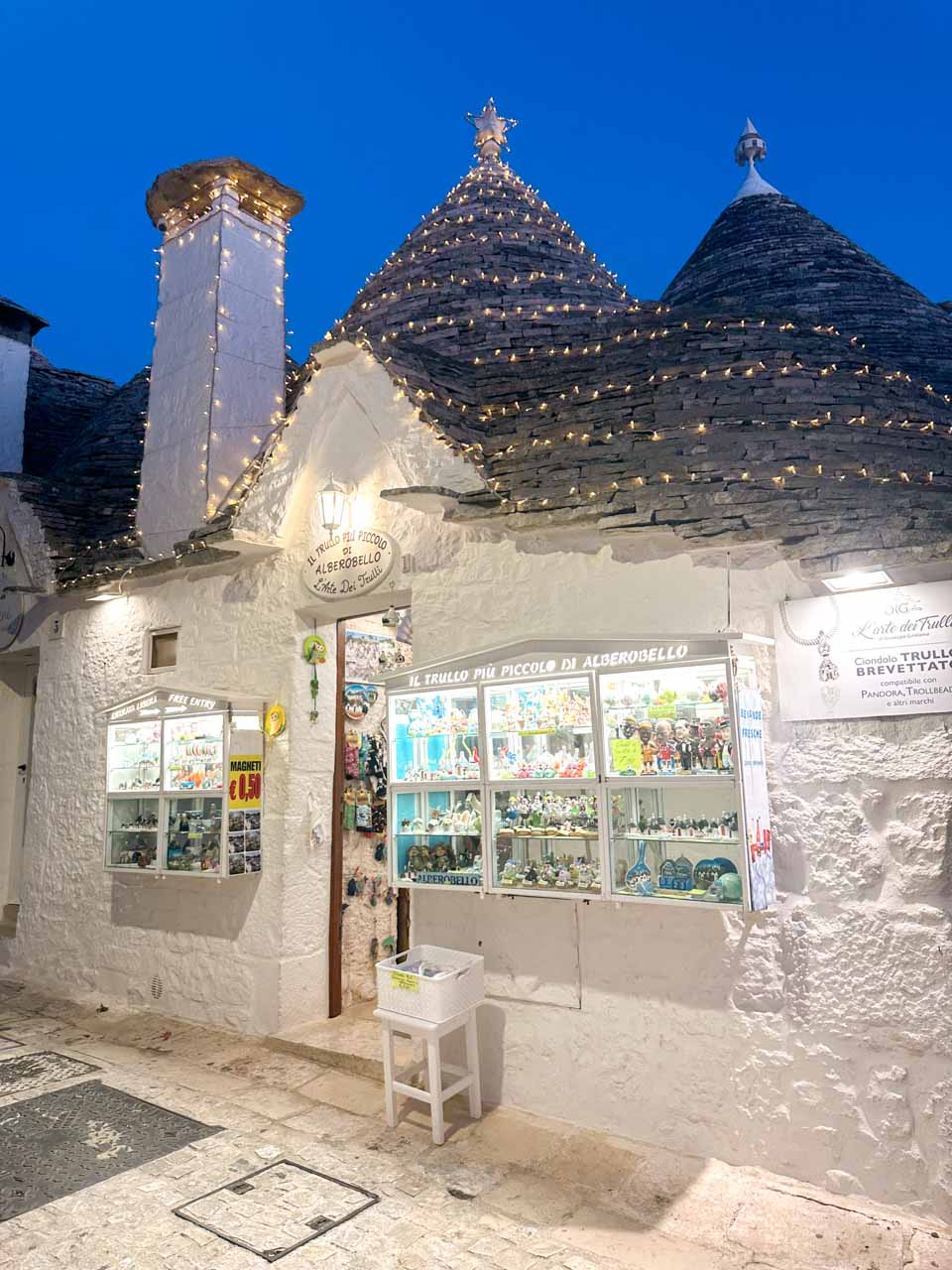
Go inside Il Trullo Più Piccolo, the smallest trullo in Alberobello
By now, you’ve probably noticed a bit of a pattern when it comes to attractions in Alberobello. Because the town is so famous for its trulli, quite a few places have their own claim to fame.
This one, as the name gives away, is the smallest trullo in Alberobello.
Thankfully, it’s not one of those places where you have to pay for a ticket. It’s actually a souvenir shop, so you can simply pop inside and have a look around while you’re exploring the town.
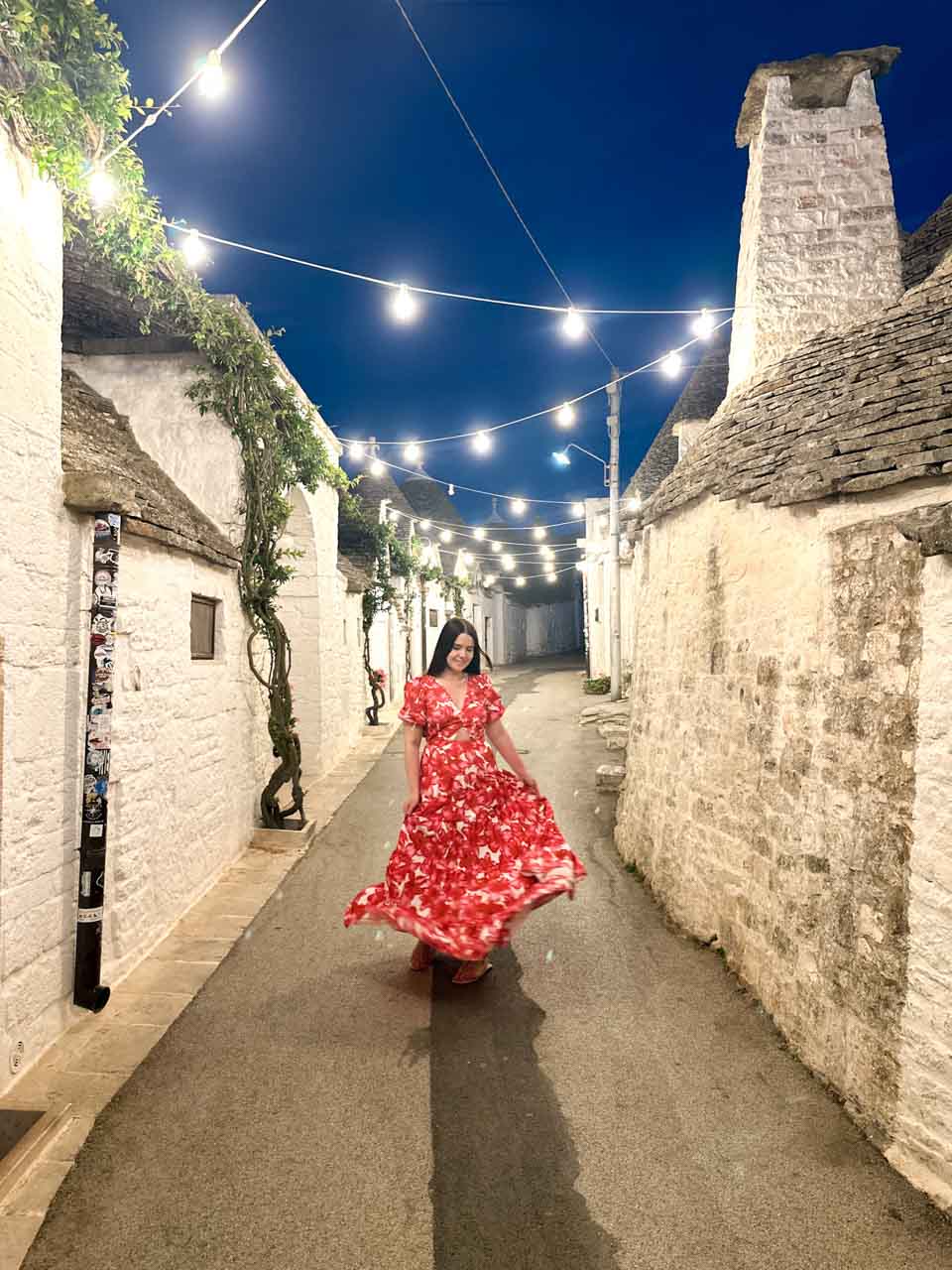
It’s right in the middle of the most touristy part of Alberobello, so you won’t have any trouble finding it. There’s also a lovely little street nearby that looks especially pretty in the evening if you’re taking photos.
See Trullo Siamese – the only double trullo house
Continuing the trend of trulli with their own claim to fame, there’s also Trullo Siamese.
It’s easy to spot because it has two joined domes. At first, it looks like a single building, but it actually has two separate entrances.
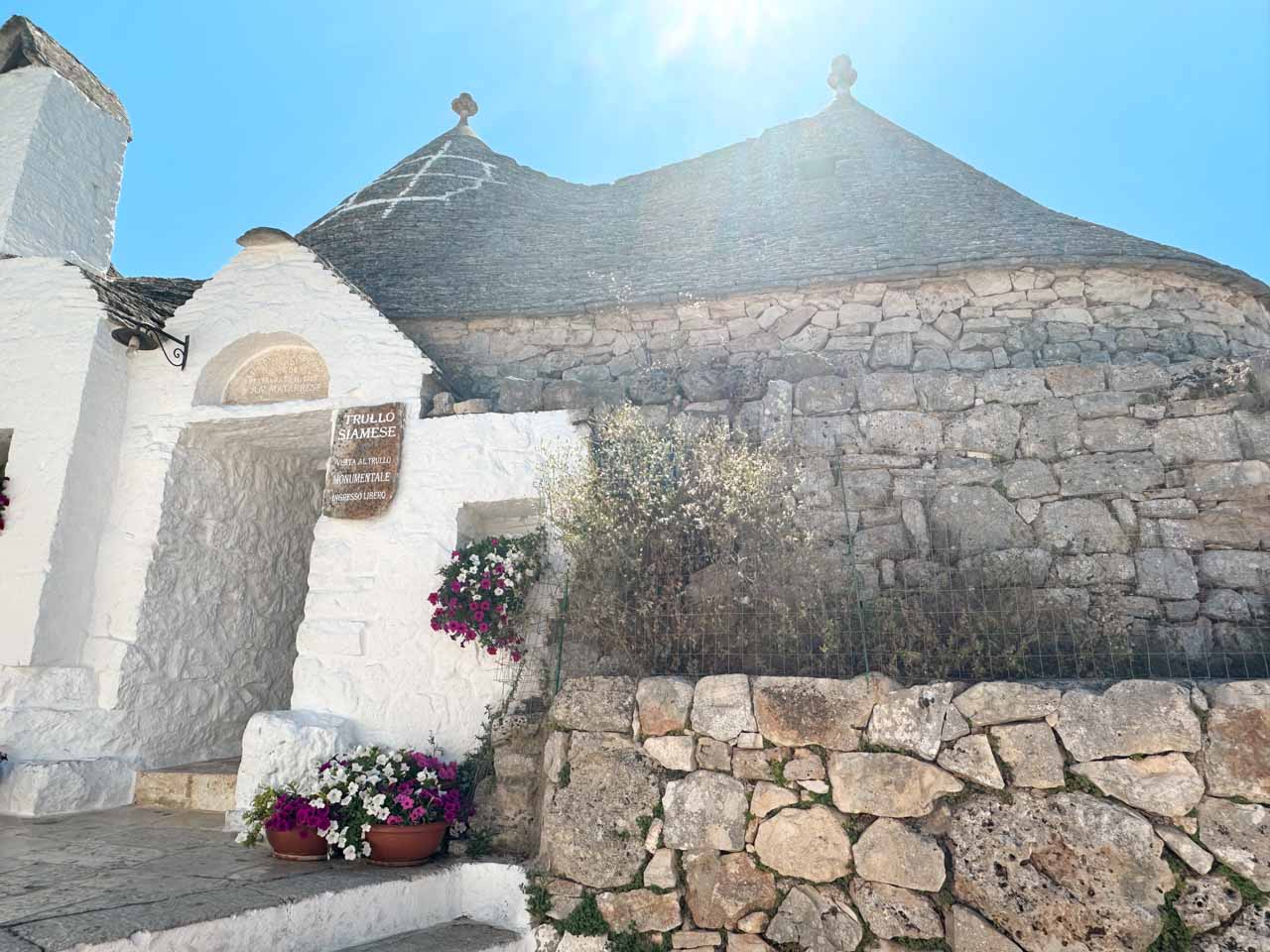
According to a local legend, two brothers once lived here and fell in love with the same woman. When she chose one of them over the other, the rejected brother was so heartbroken that he split the house into two separate homes.
Today, one half is still a private home, while the other operates as a souvenir shop, so you can step inside if you’re curious.
Visit St. Anthony’s Church – the world’s only trulli church
I know people throw around phrases like “one of a kind” all the time when talking about tourist attractions, but St. Anthony’s Church genuinely is. As far as I know, it’s the only church in the world built entirely in the trulli style.
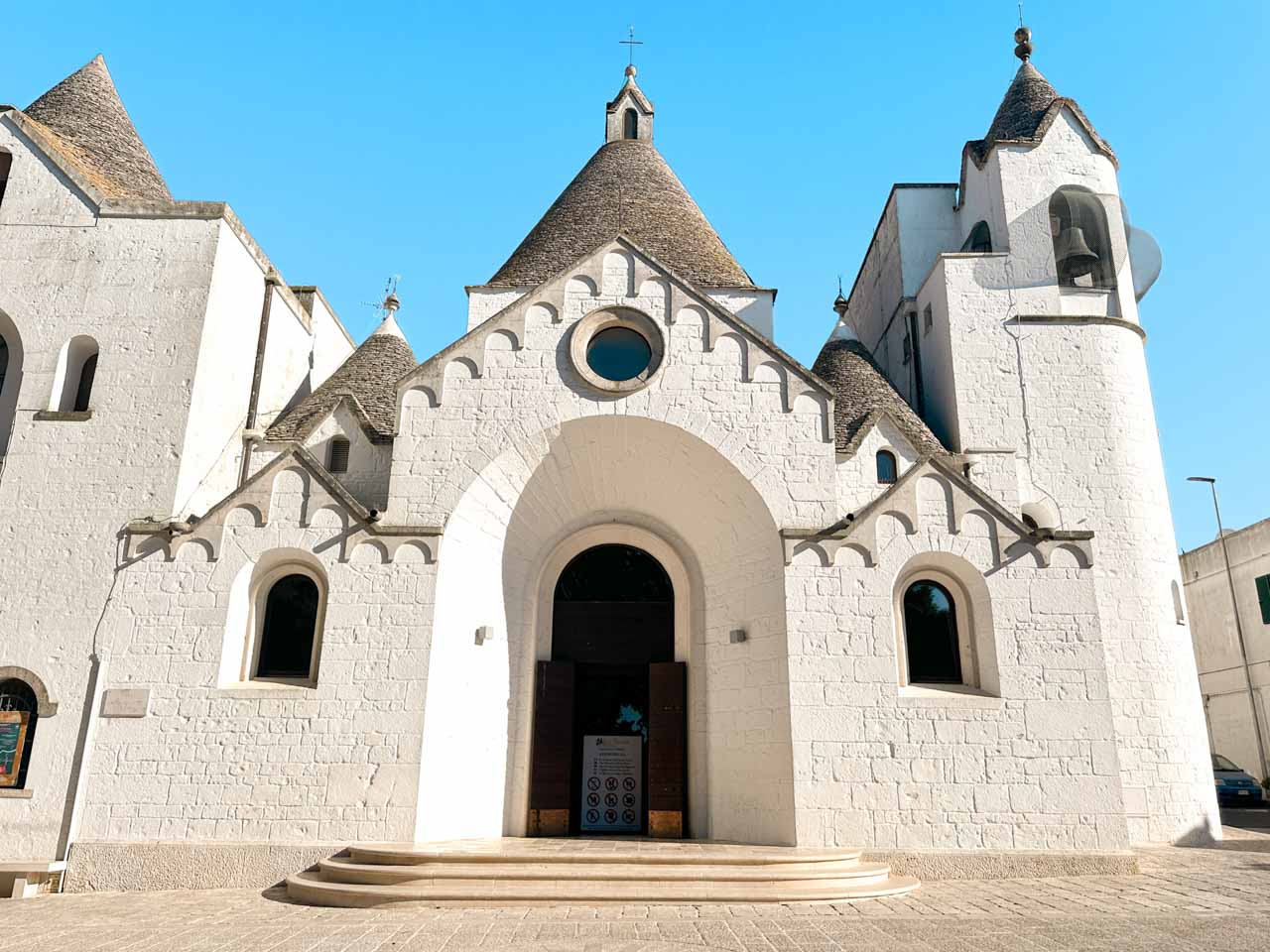
You’ll find it at the very top of the Rione Monti district. From a distance, it looks like one giant trullo, but once you get closer, you’ll notice the smaller cones branching off from the main one. It almost looks as if someone joined a whole collection of trulli together and turned them into a church.
What I found especially interesting is that it isn’t nearly as old as the other trulli in Alberobello. It dates back to the 1920s, and they deliberately designed it to match the town’s existing architecture. Honestly, more city planners should take notes. 😉
The inside is much smaller and simpler than you might expect from the outside. There were hardly any people around when we visited, and it felt like a lovely quiet spot to take a break from the crowds for a few minutes.
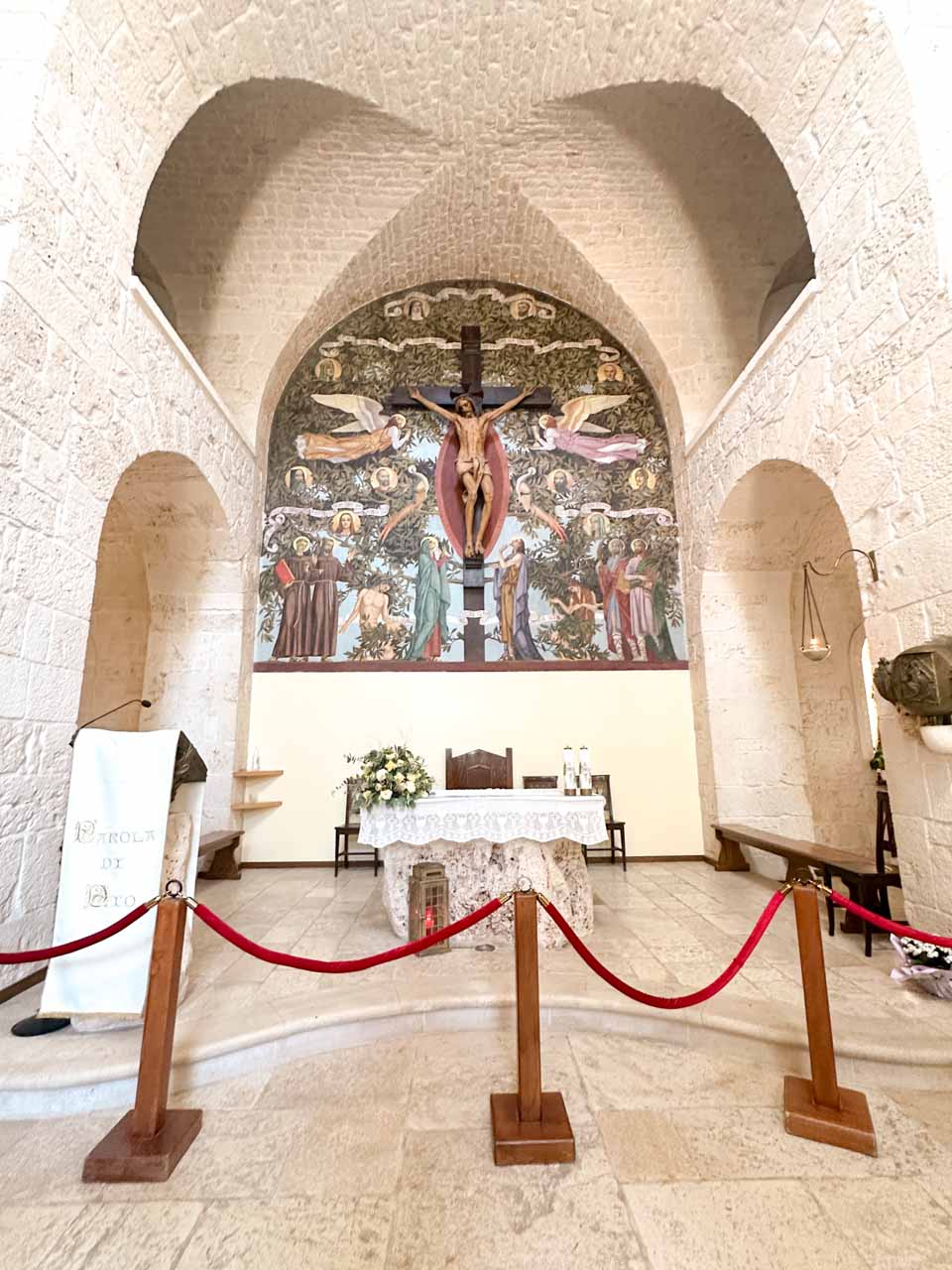
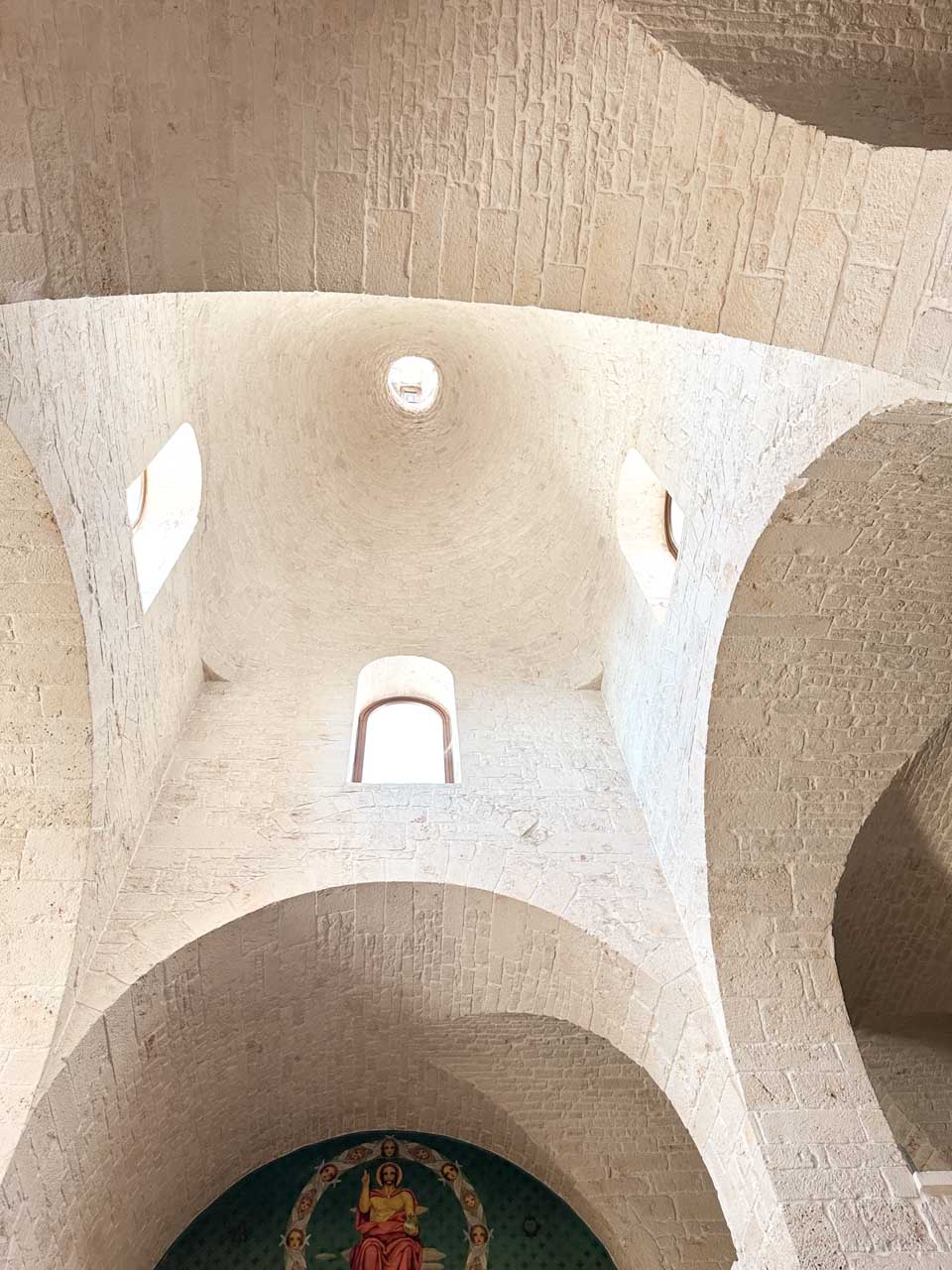
There’s also a small park just outside with views over the town.
Have a photoshoot with the trulli houses
Now, on to the part that’s probably on a lot of people’s minds… Where can you get the best photos of Alberobello?
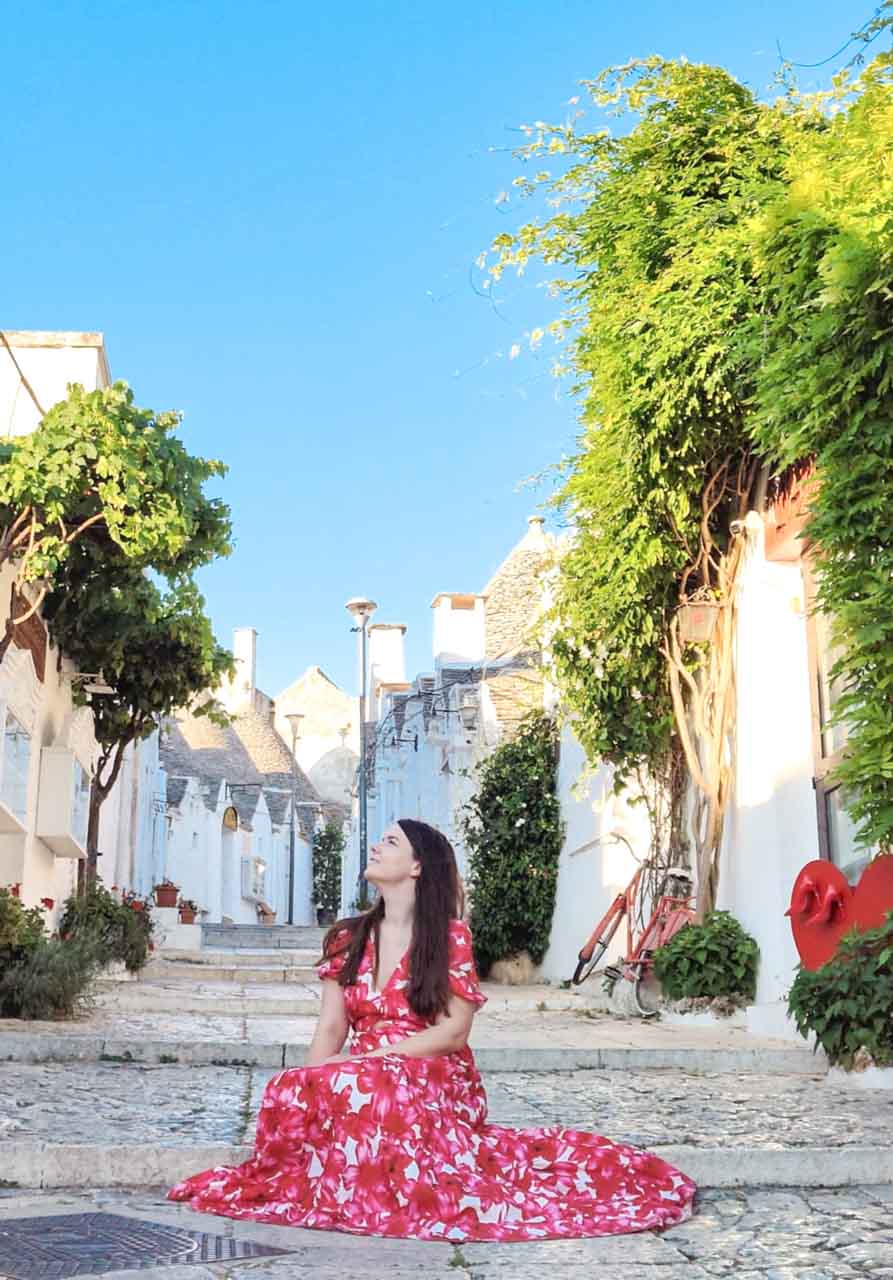
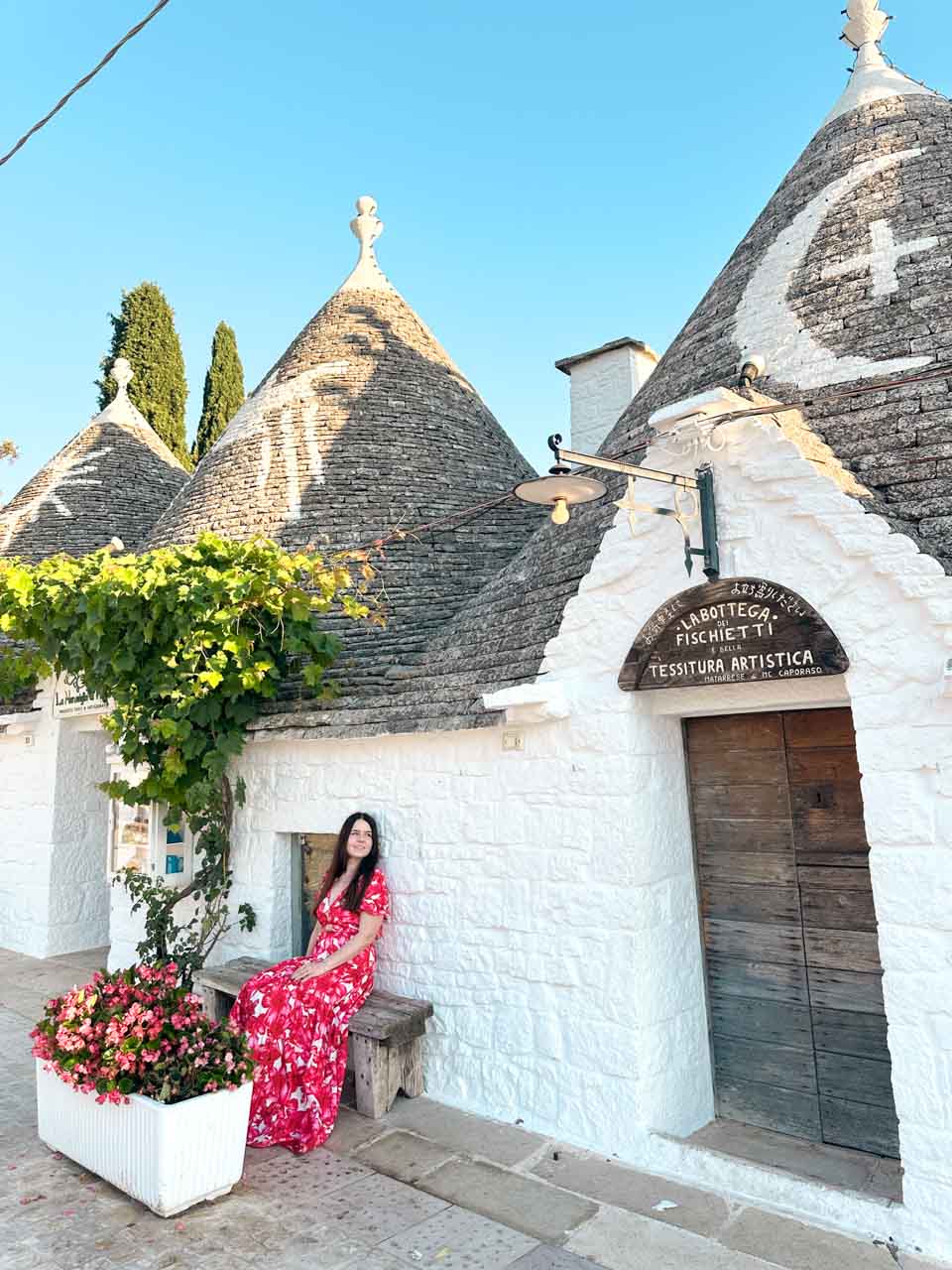
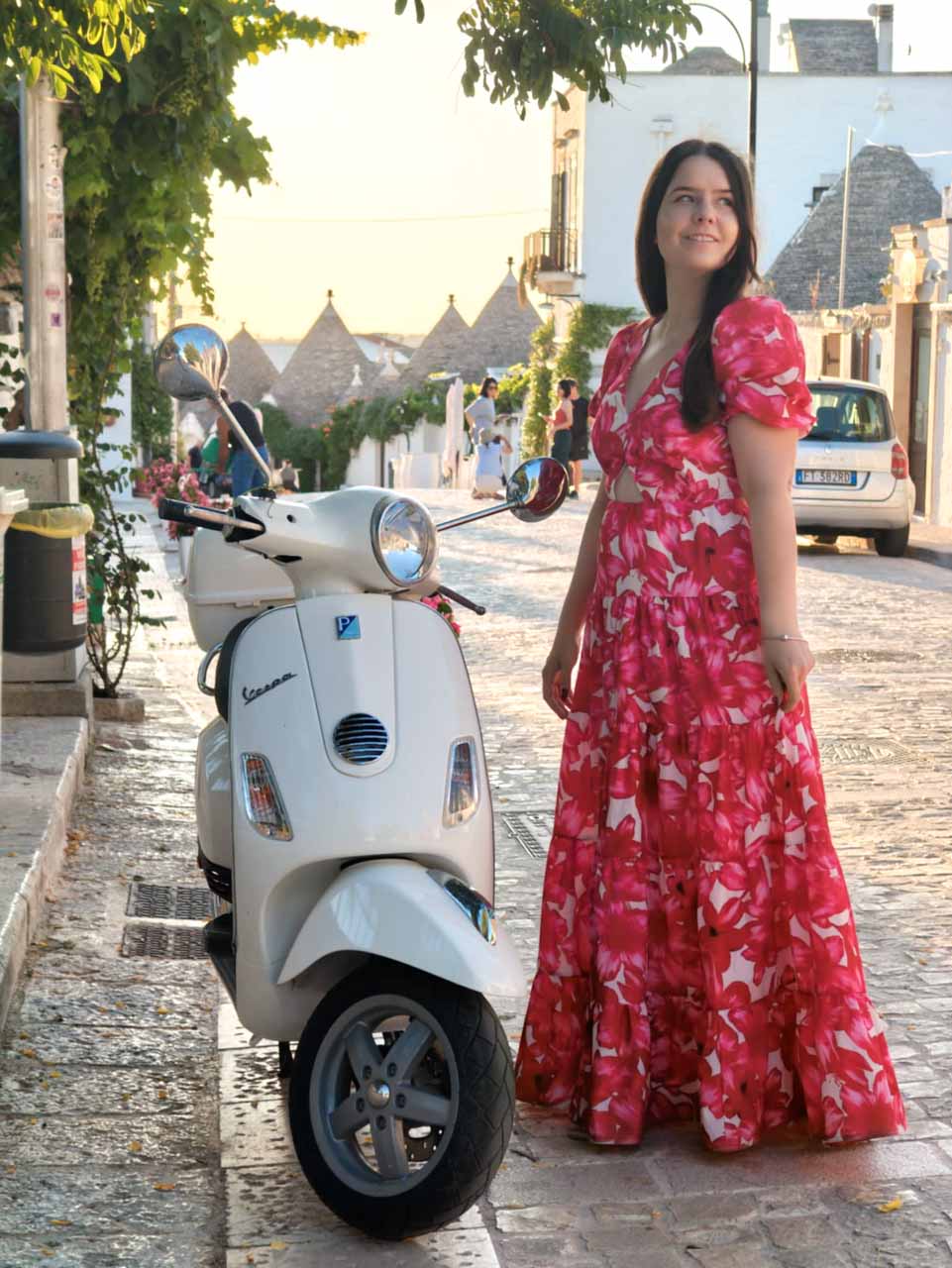
The first thing to know is that Largo Martellotta, the road that divides the historic centre, sits at the lowest point. So if you walk uphill on either side, you’ll eventually get a view over the other part of town.
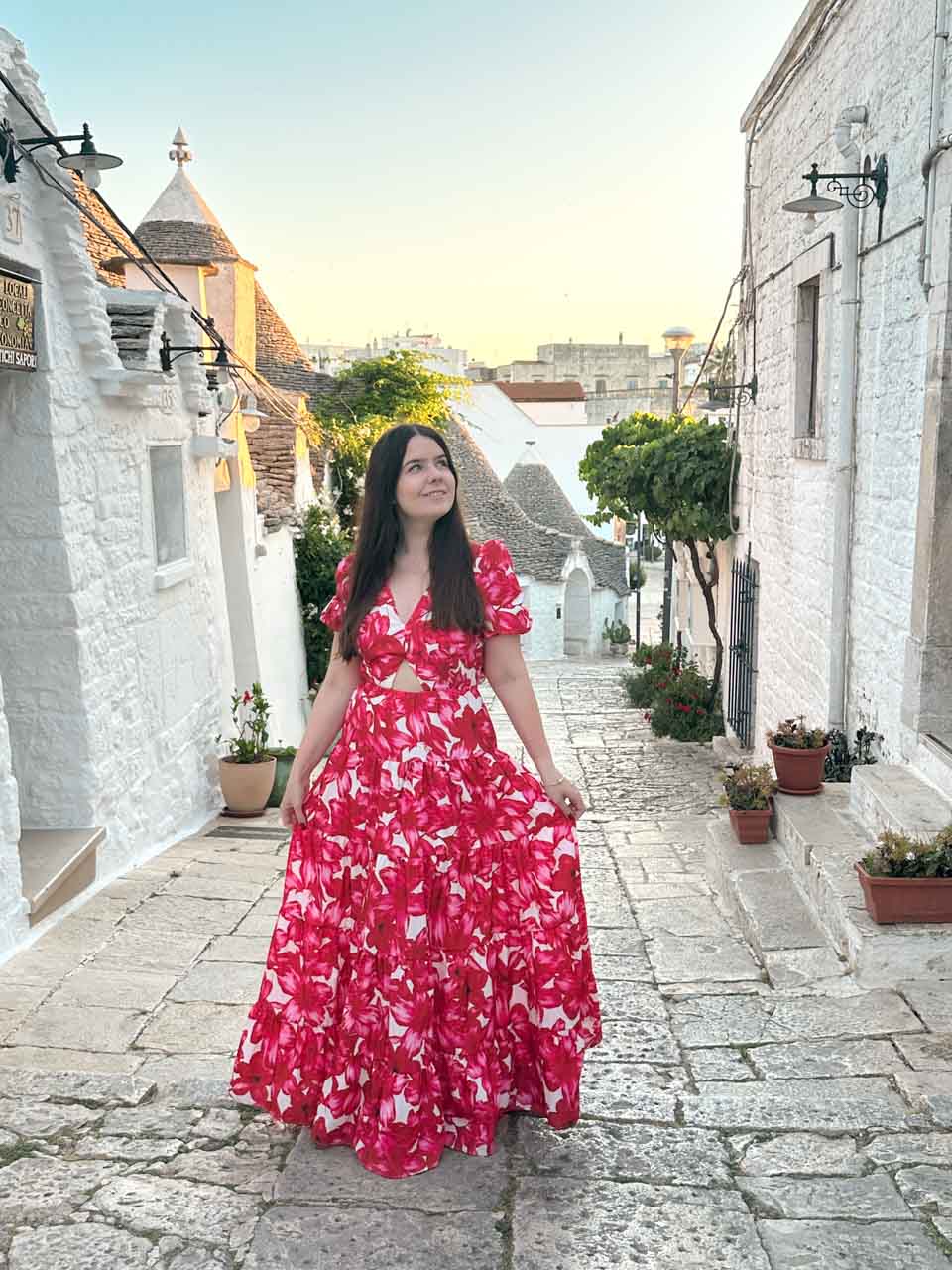

Honestly, half the fun is discovering these viewpoints for yourself. If you’re serious about photography, I’d recommend getting up as early as possible and exploring a few different streets.
Better yet, scout out your favourite spots the day before, then come back for sunset or sunrise when the light is at its best and the crowds are much smaller.
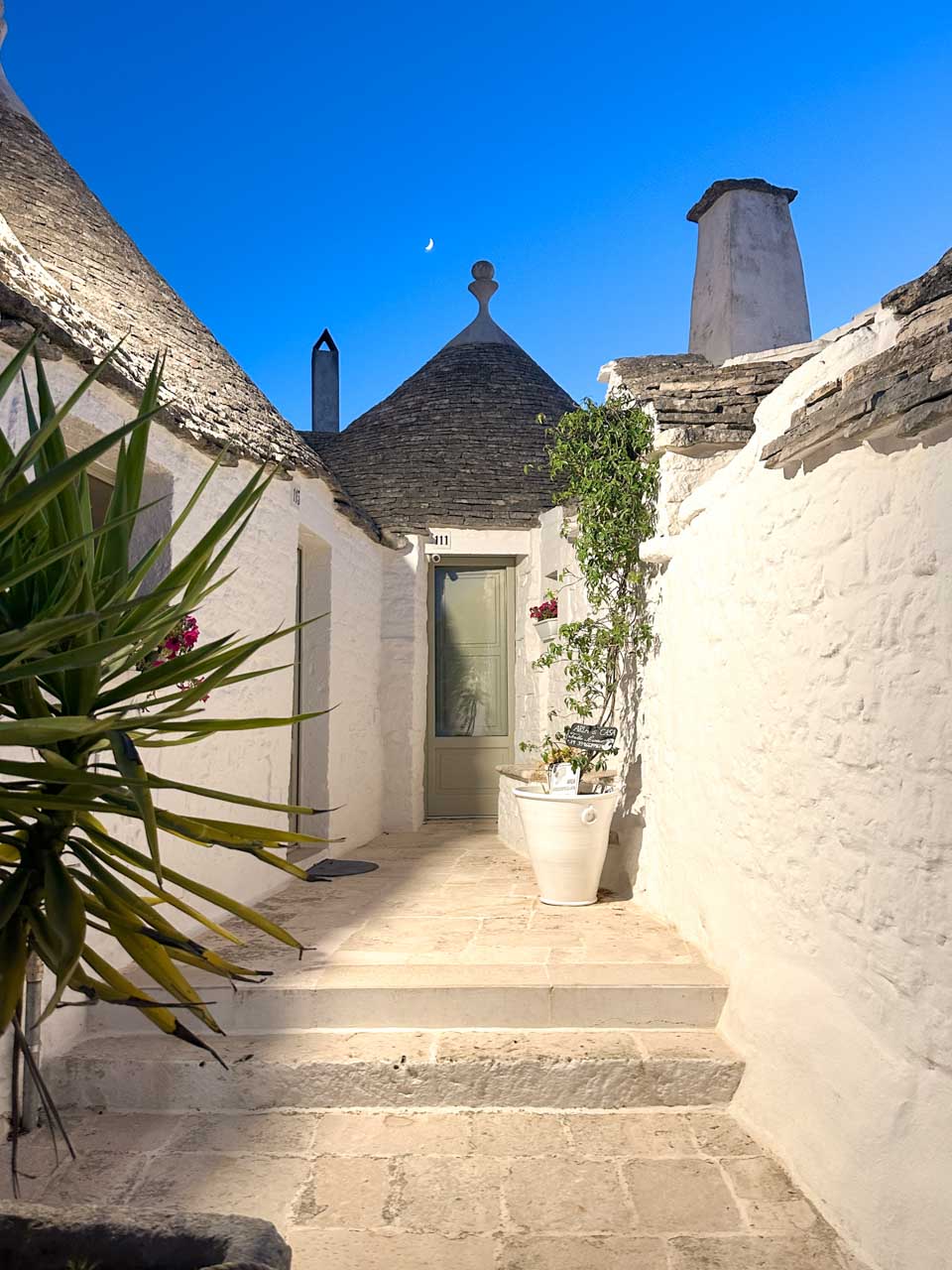
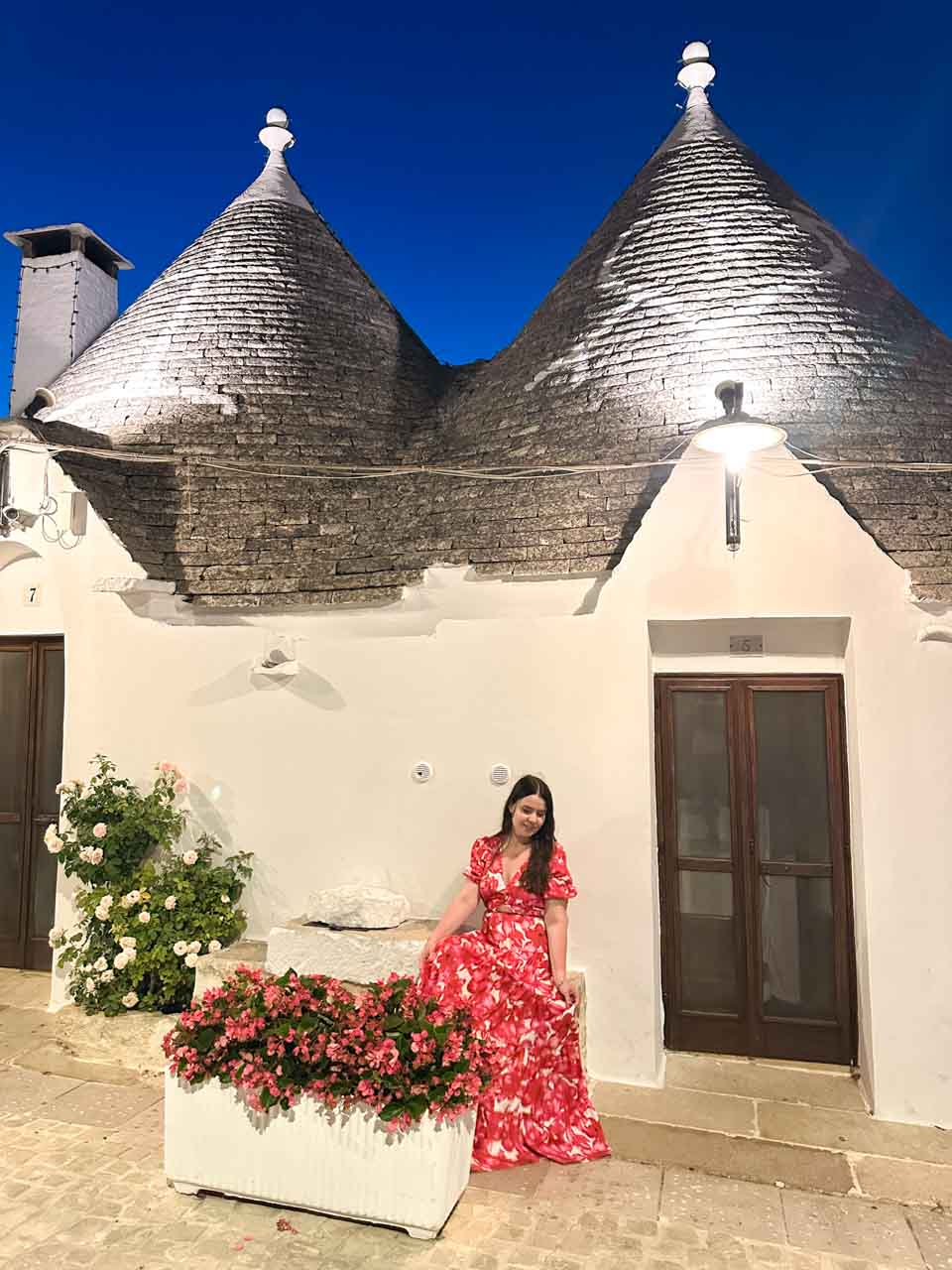
The most famous viewpoint in Alberobello is Belvedere Santa Lucia, the terrace next to the Church of Saint Lucia. The view is fantastic, although it wasn’t my favourite place for photos because the light felt a bit too harsh when we visited.
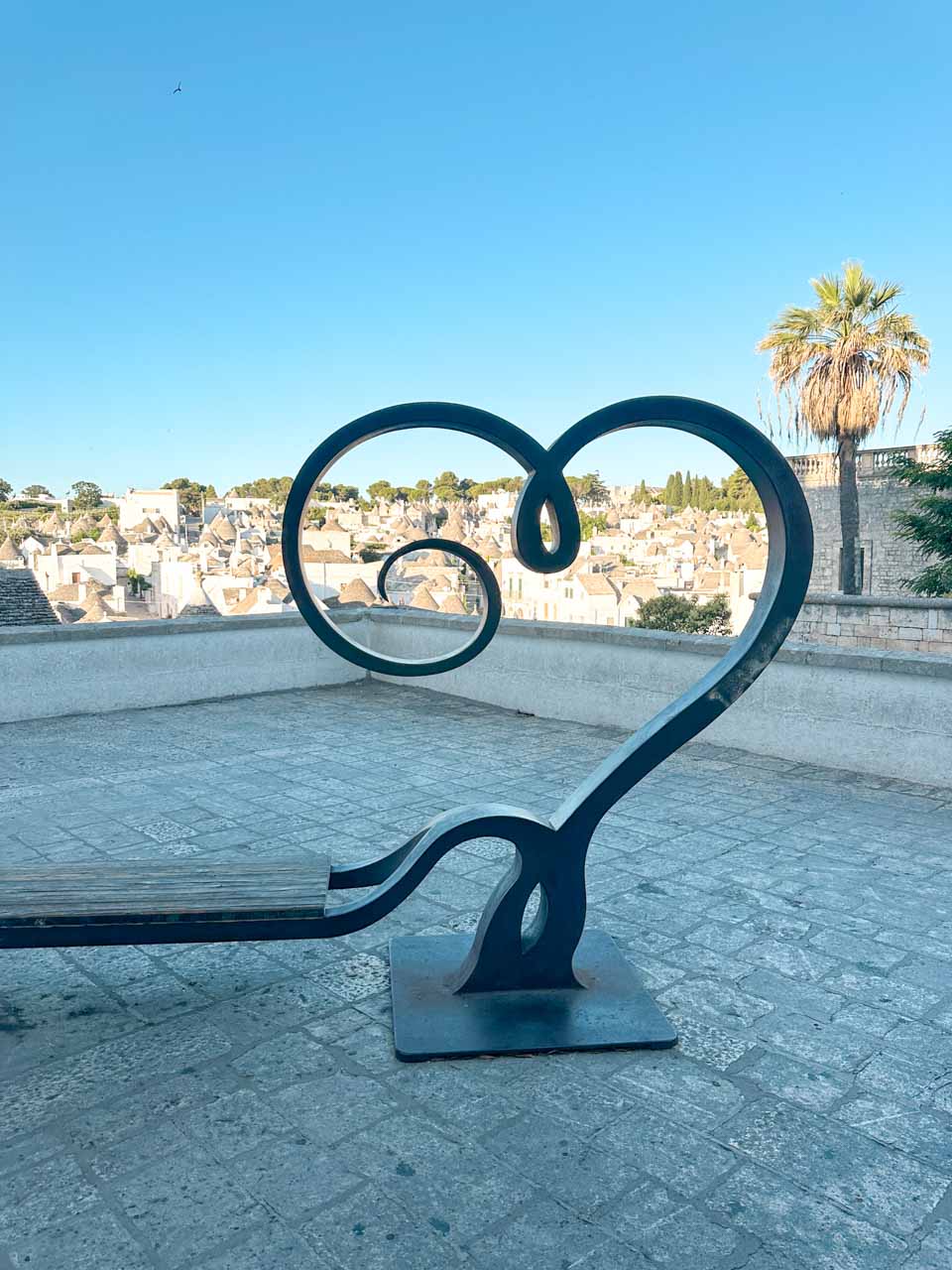
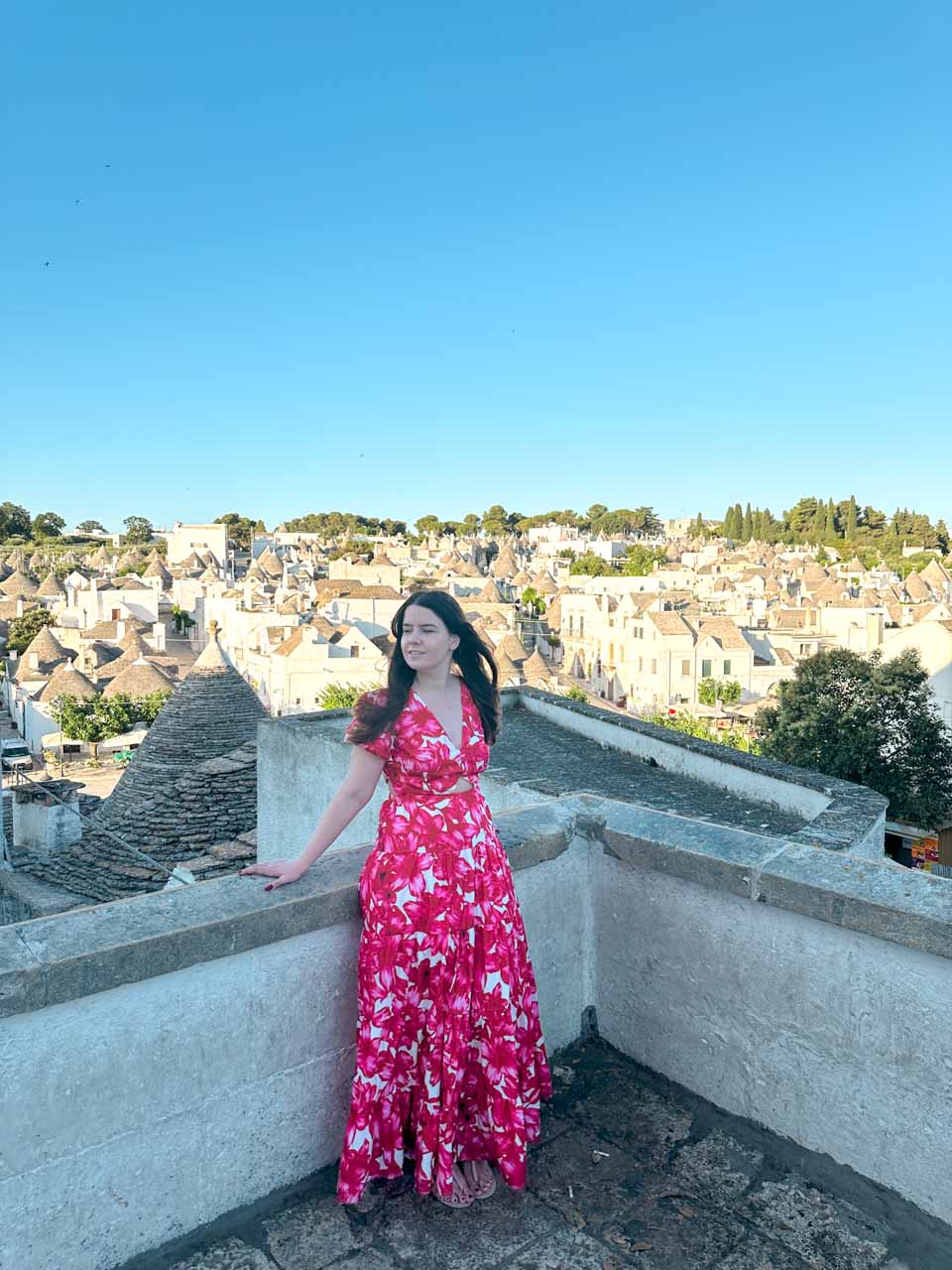
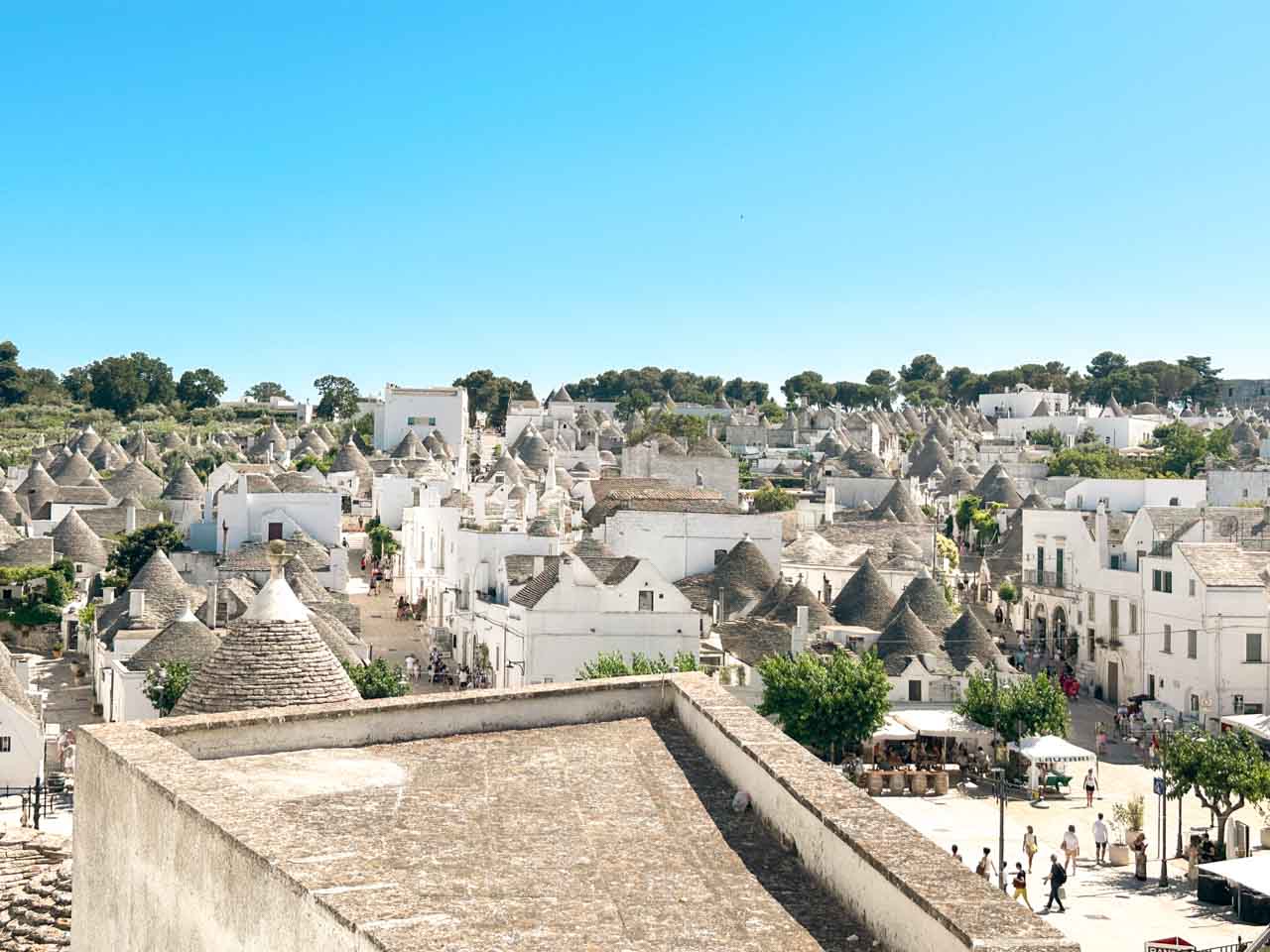
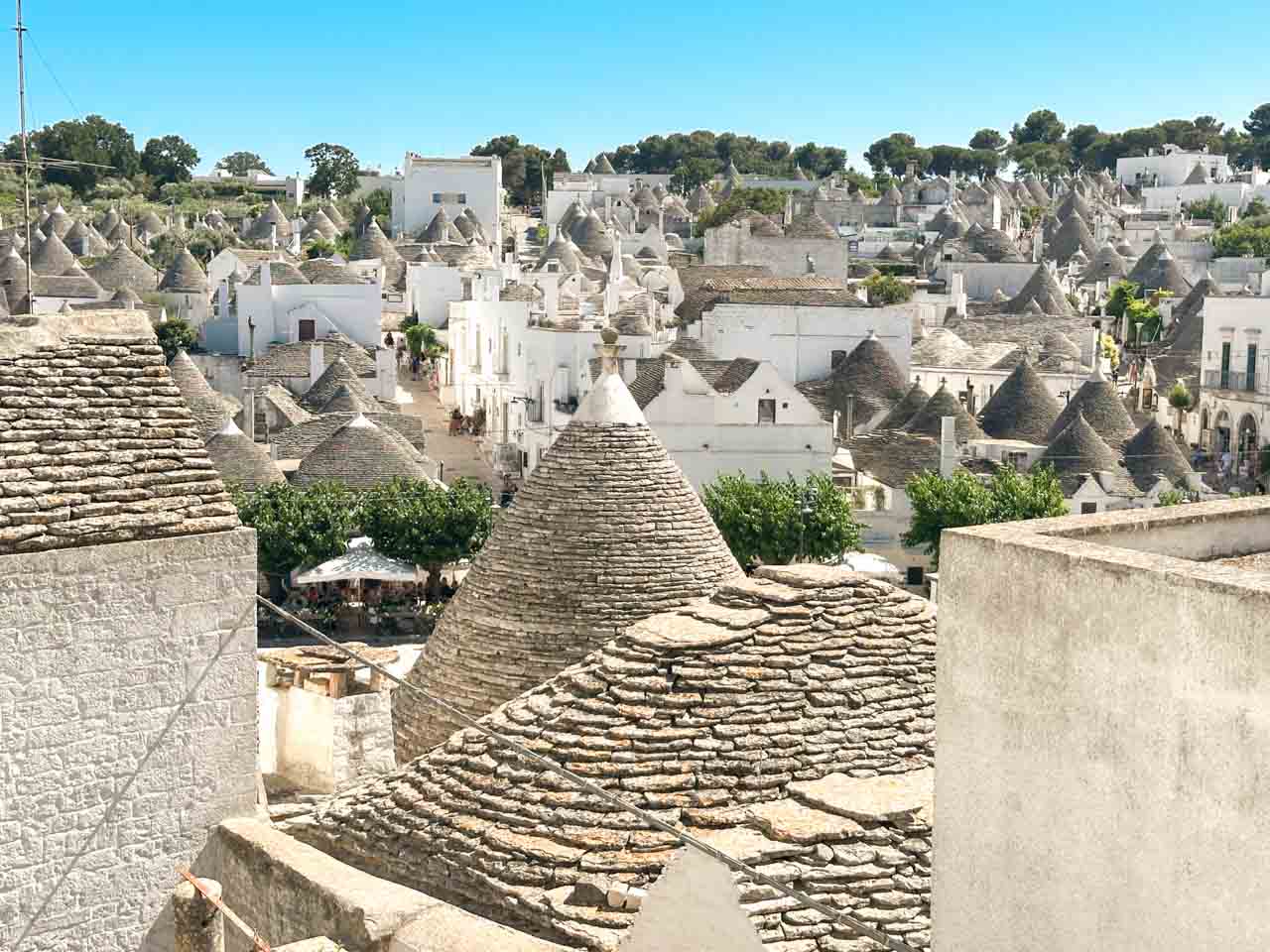
A short walk away, you’ll find Villa Comunale Belvedere on Via Indipendenza. I thought the park and the nearby Via Duca degli Abruzzi were great for photos of the trulli rooftops, partly because there were fewer people around.
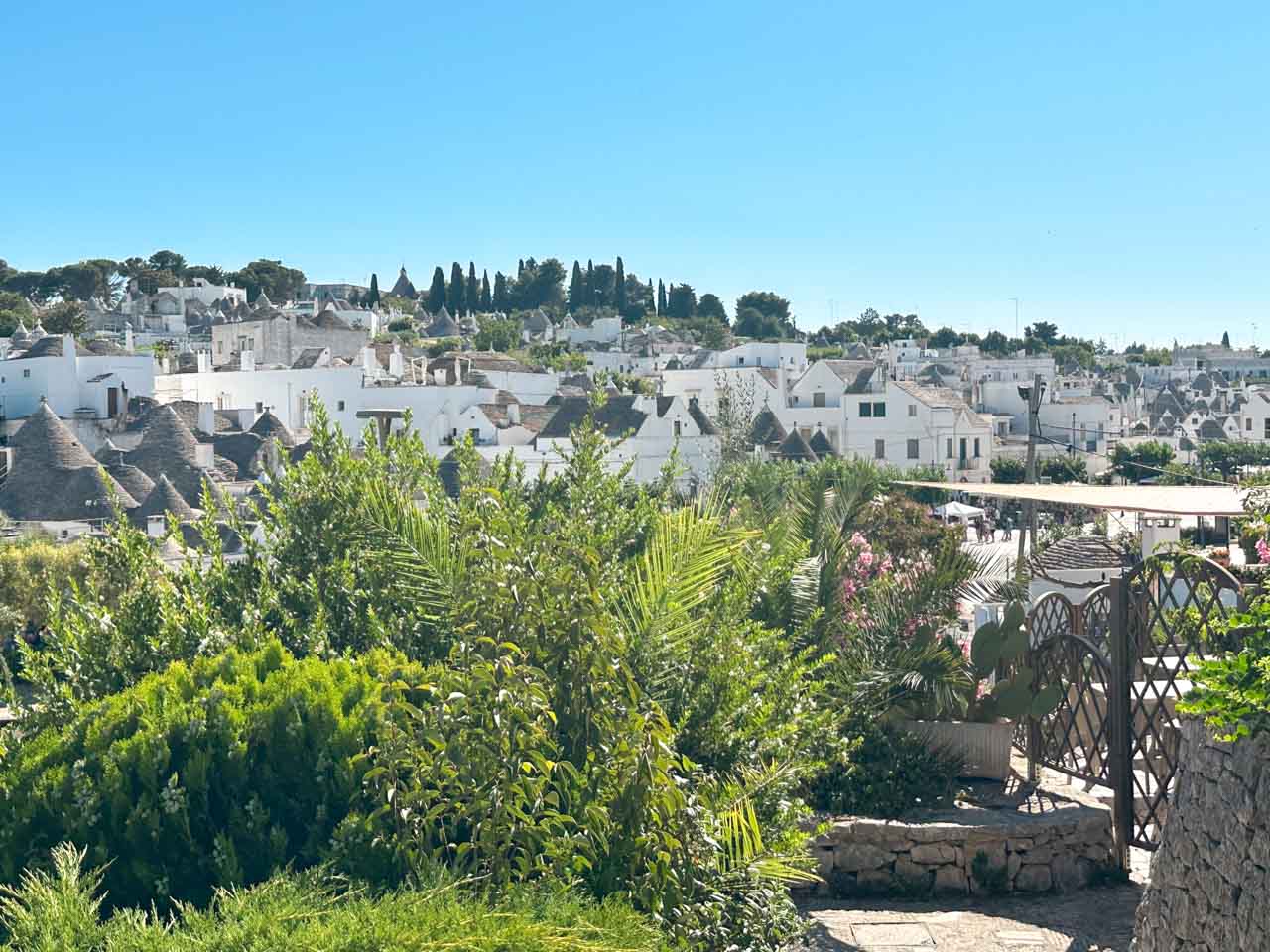
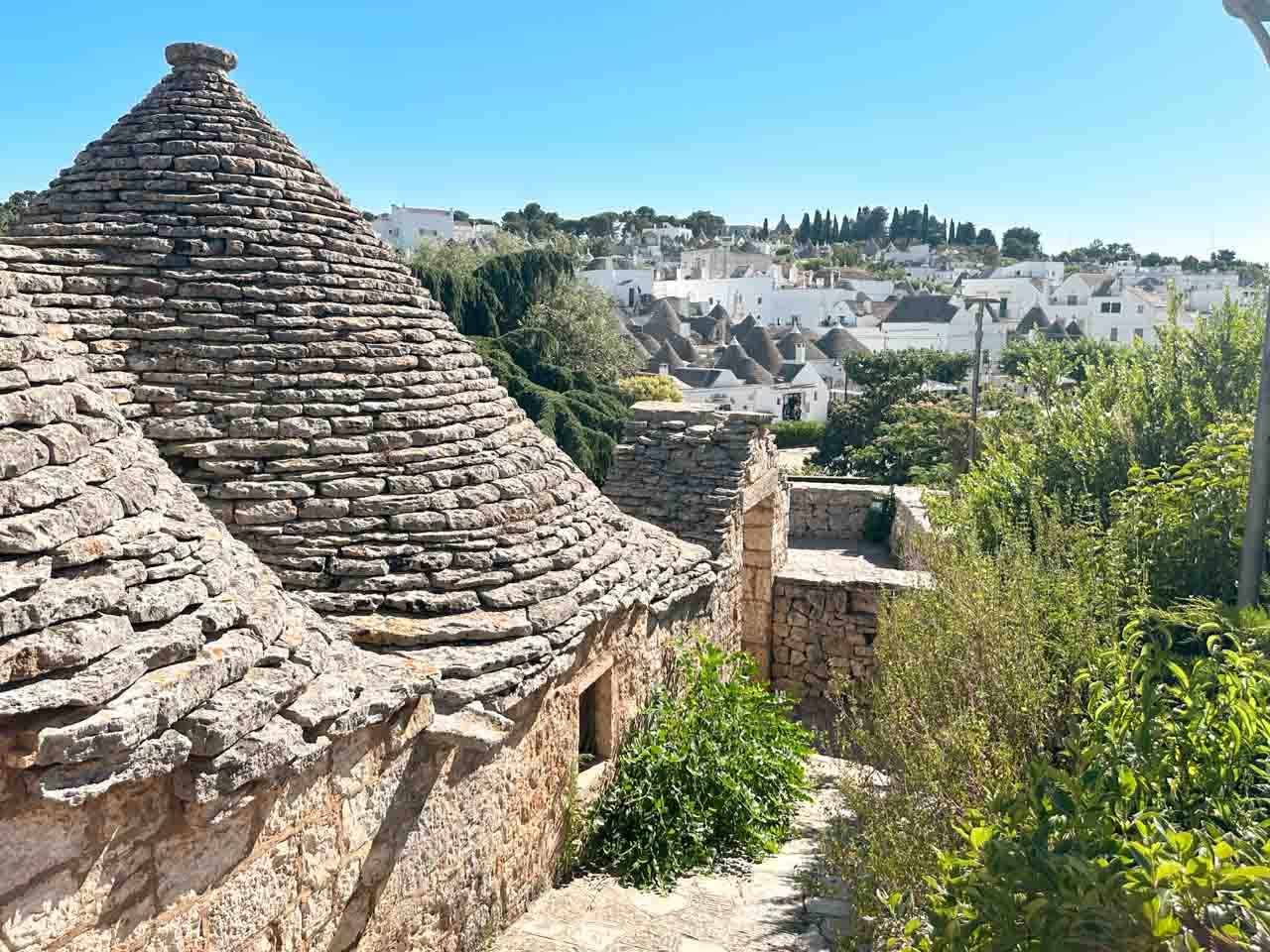
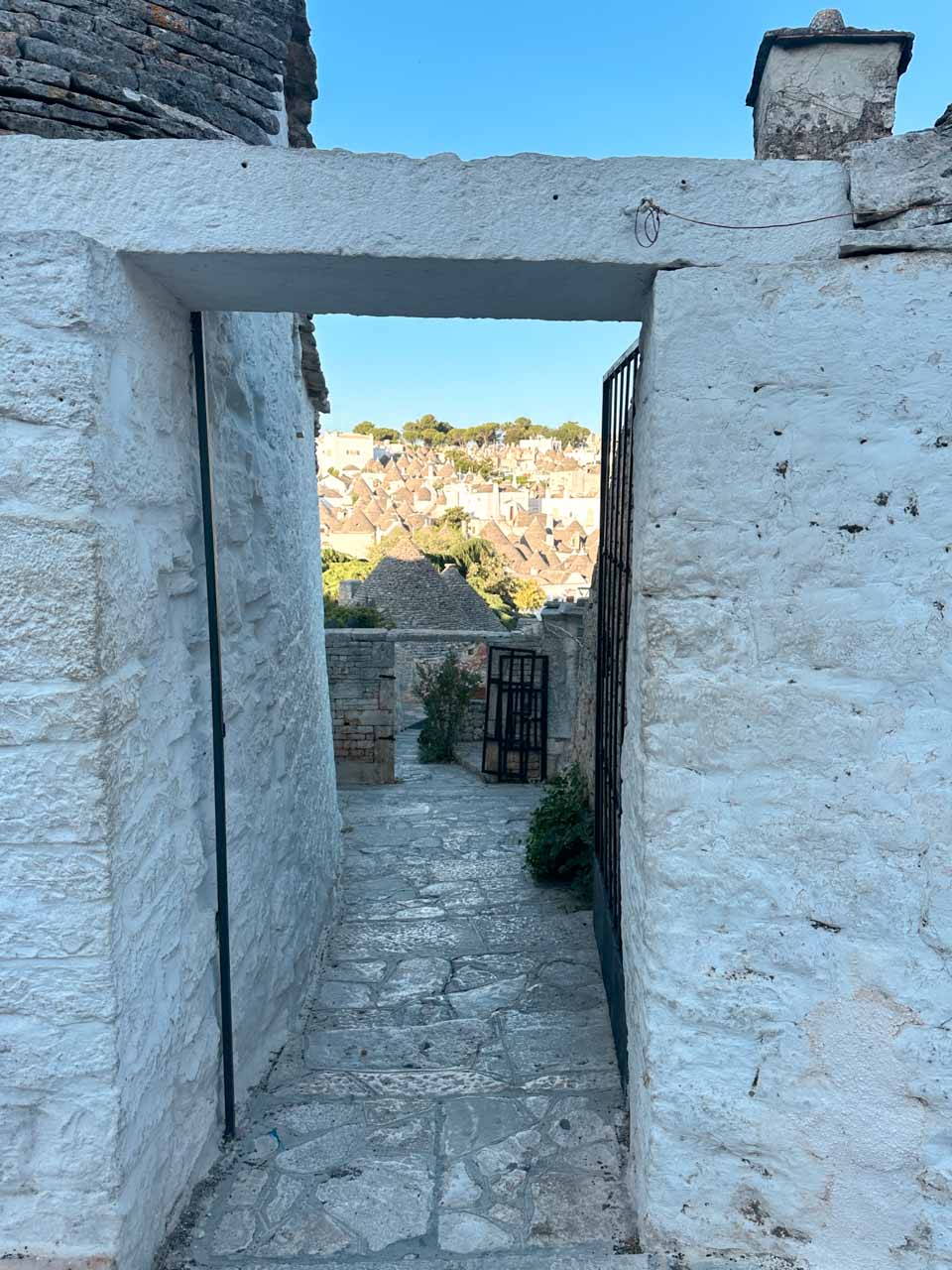
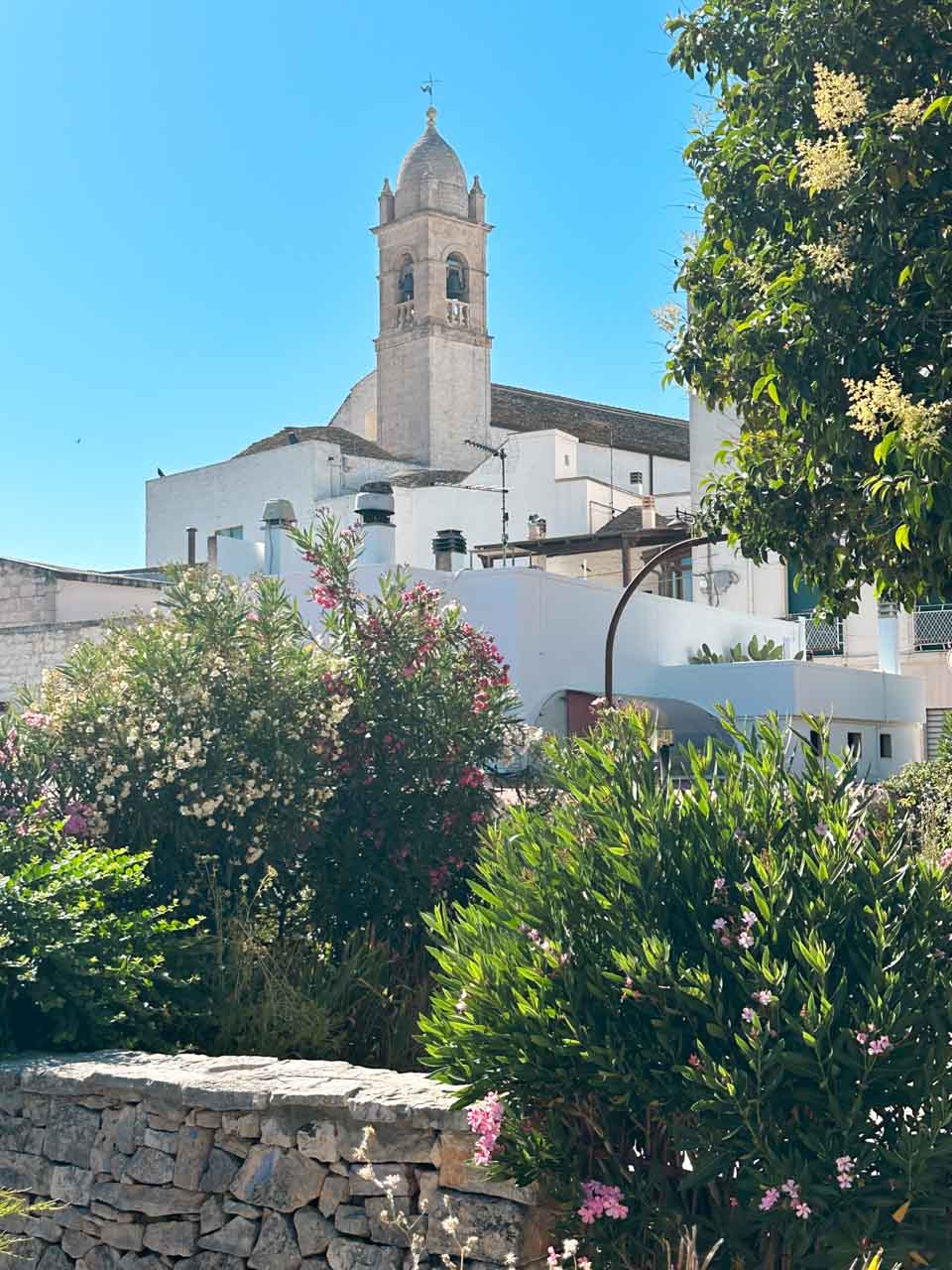
Nearby, you’ll also come across Via Brigata Regina, a lovely little street with straw hats and other decorations hanging overhead.
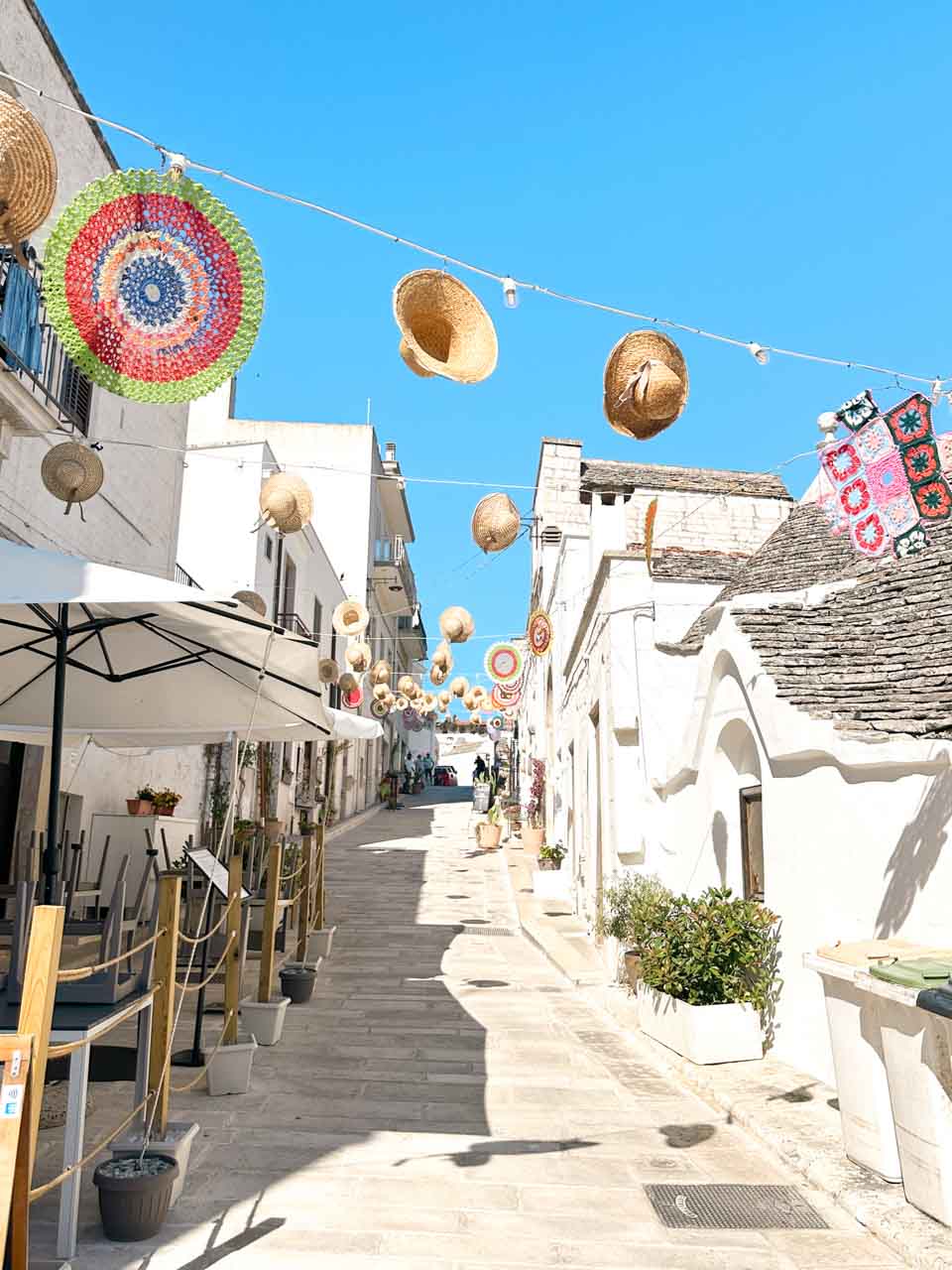
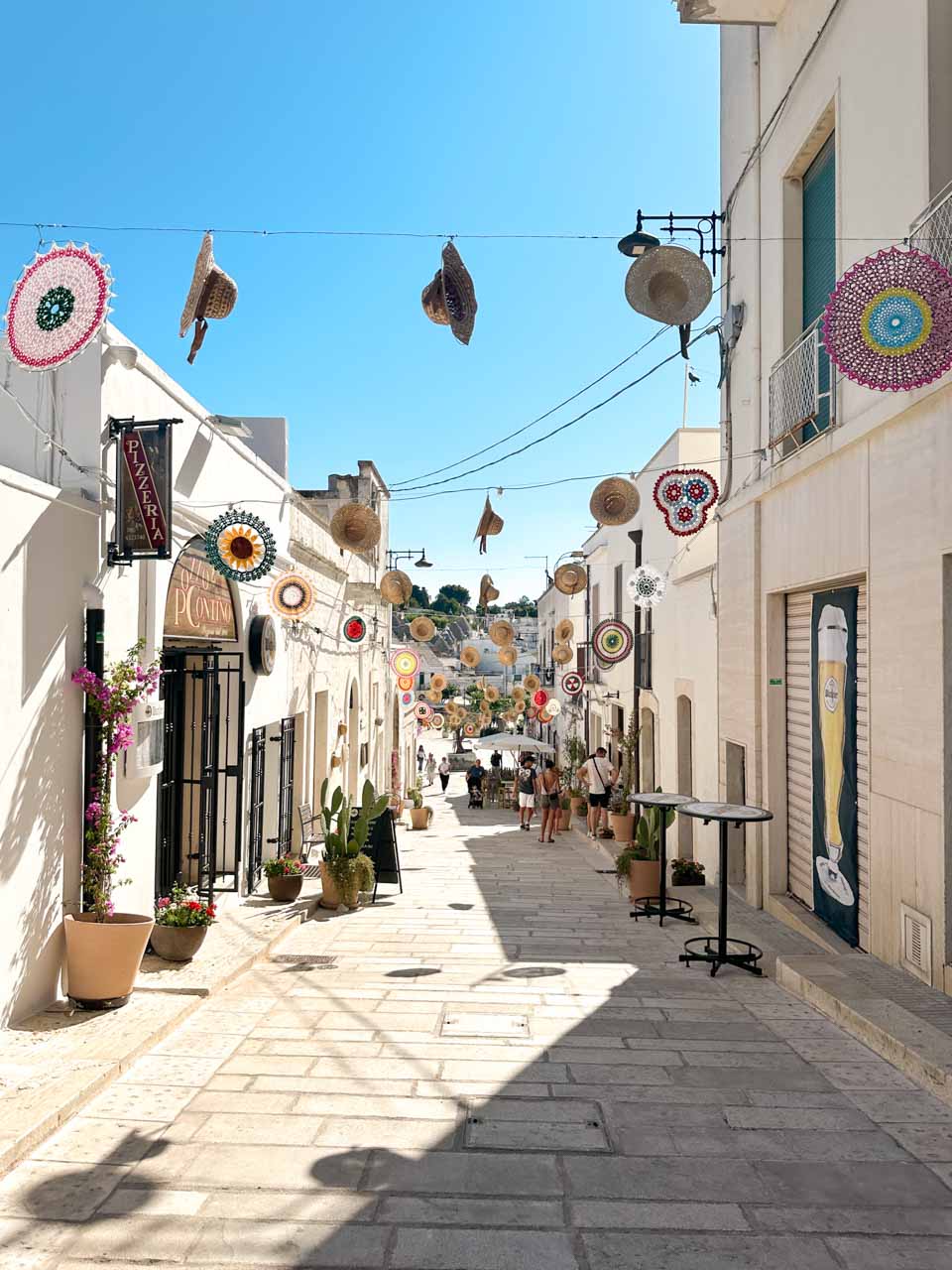
My favourite spot, though, was a street I haven’t seen mentioned in any Alberobello guide. Looking at the map afterwards, I think it was Via Monte Sabotino. We turned down one of the side streets off Via Monte San Michele and suddenly found ourselves looking straight at the Basilica.
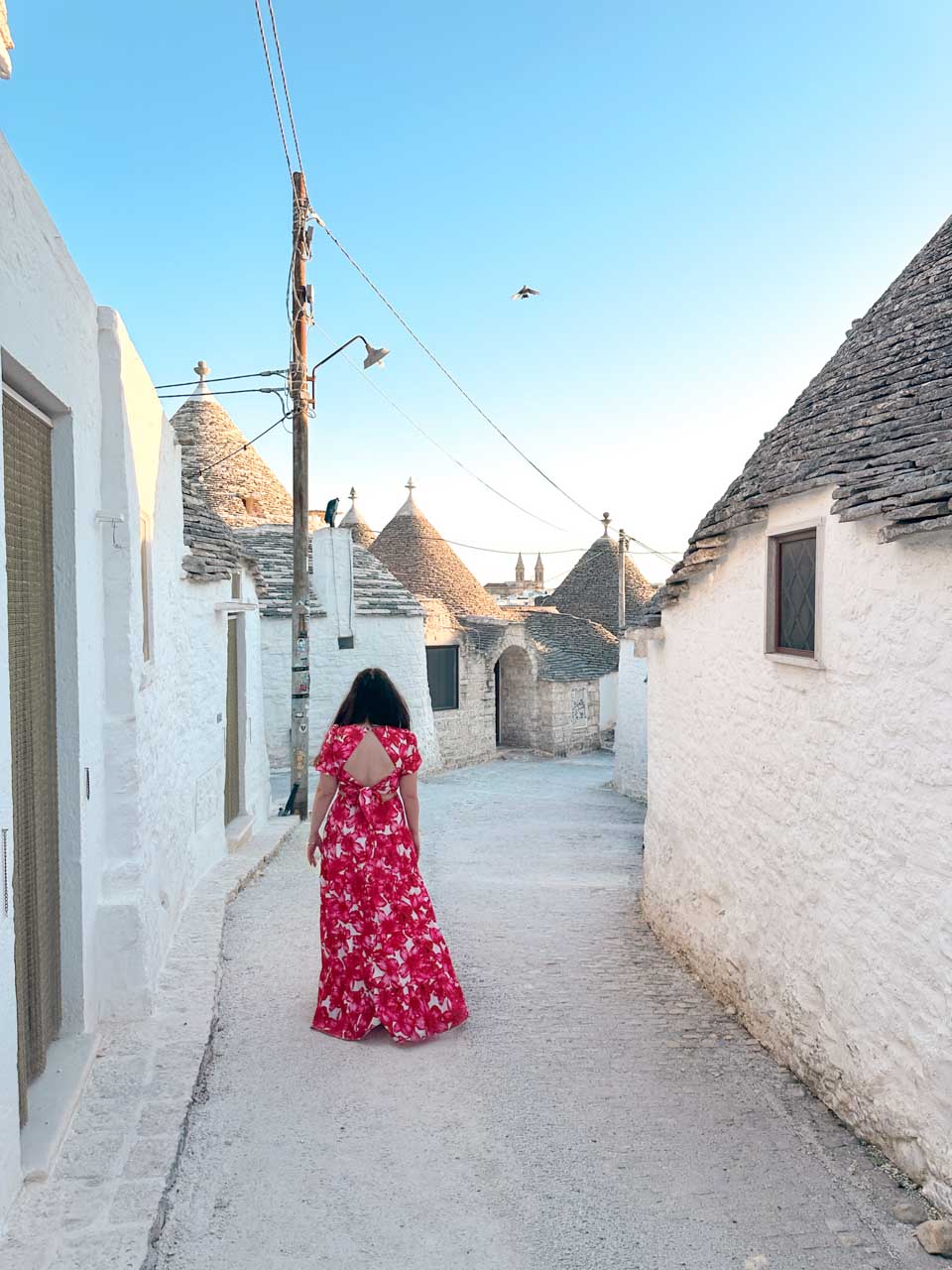

That’s why I’d encourage you to spend some time wandering around rather than following a list of photo spots. Some of the best views in Alberobello are the ones you discover by chance!
Have the Pasqualino at La Lira Focacceria
As we only spent one night in Alberobello, we didn’t have time to eat our way around town. However, if there’s one thing I’d recommend trying, it’s the local specialty: the Pasqualino.
Unlike many of the other foods you’ll find around Puglia, this one is closely tied to Alberobello itself.
Back in the 1960s, Pasquale Dell’Erba owned a grocery shop in town. A group of friends who regularly stopped by started ordering a sandwich with a rather unusual combination of ingredients: tuna, capers, salami, and cheese, always added in that specific order.
Over time, it became so popular that people simply started asking for “the Pasqualino”.
We didn’t test the theory ourselves, but apparently you can walk into almost any bakery, deli, or sandwich shop in Alberobello and ask for one. Even if it’s not on the menu, people will know exactly what you mean.
One of the most popular places to try it is La Lira Focacceria on Largo Martellotta. They also serve it as a focapizza – essentially a pizza made with focaccia dough – and that’s what we ordered.
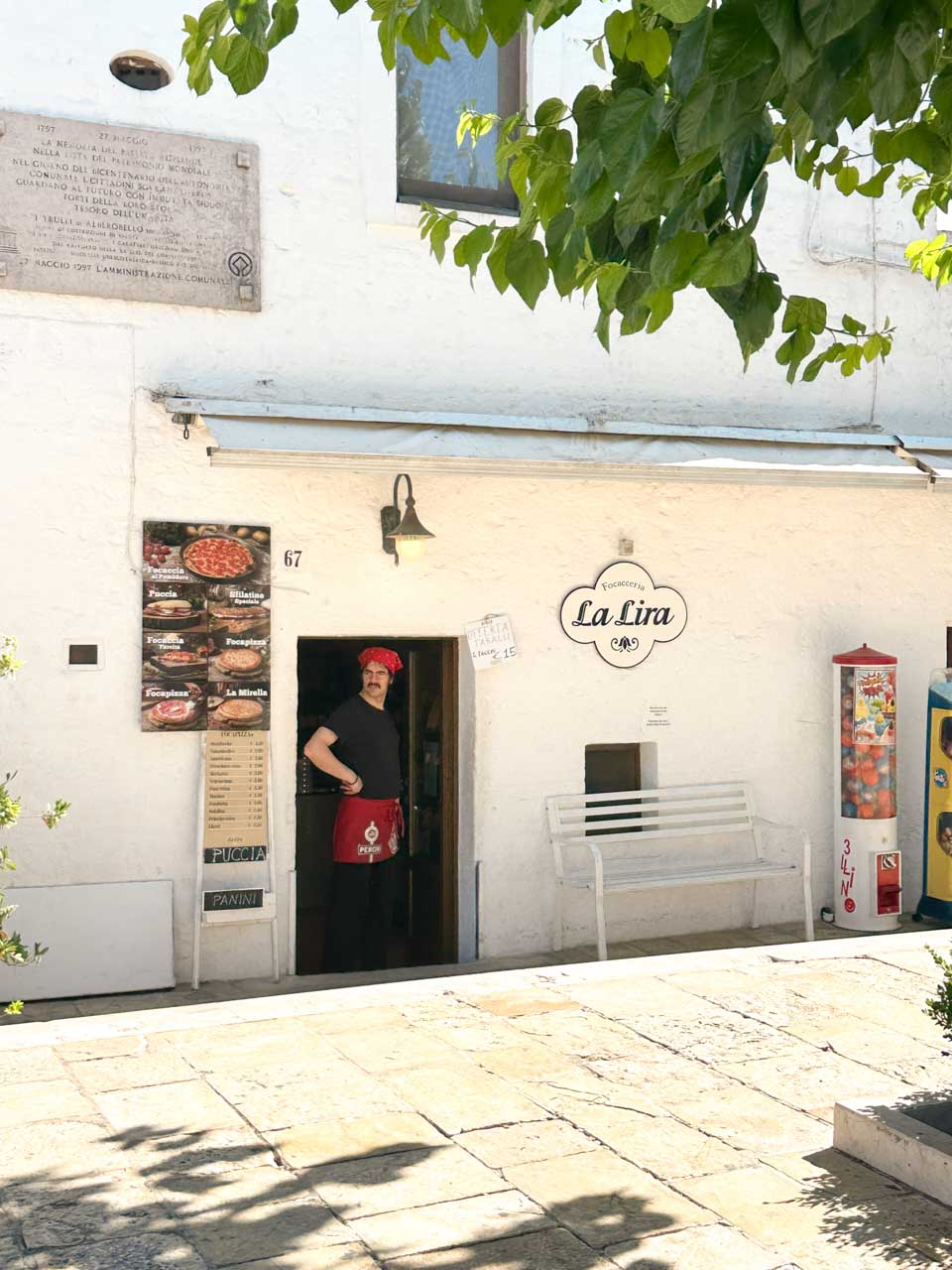
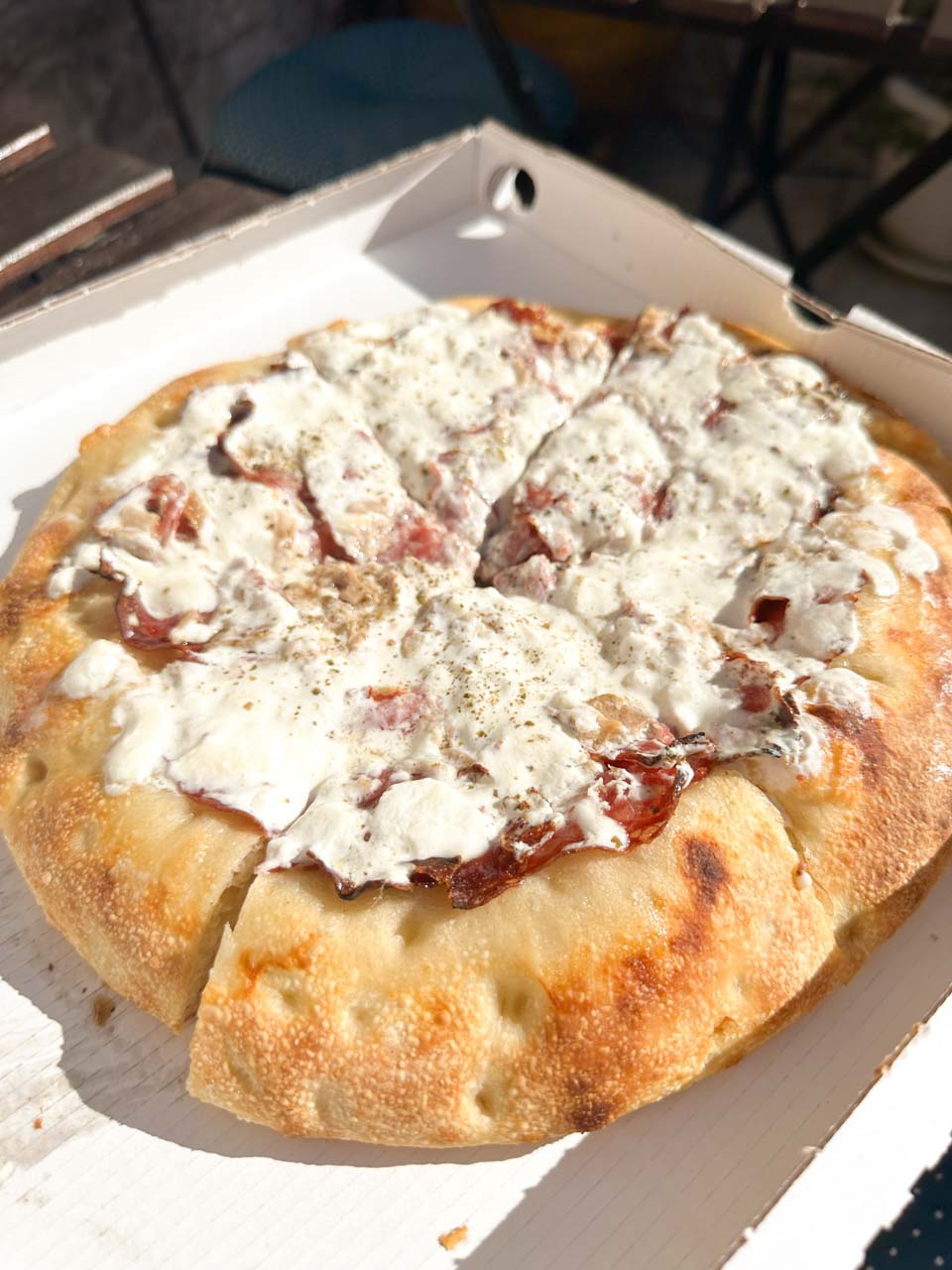
Honestly, it may not look like anything special, but it was absolutely amazing.
The only downside is that there isn’t much seating outside, and the place is incredibly popular. Thankfully, this is where staying in a trullo less than 100 metres away turned out to be very useful. 😉
Try local specialties at Così Com’era
I don’t know about you, but I’m not a huge fan of a typical Italian breakfast. My first meal of the day has to be savoury, so we went looking for somewhere with more options and ended up at Così Com’era.
One thing I really liked about the place is that they focus on local ingredients. You can either order à la carte or go for the continental breakfast buffet. Last year, it cost €11 per person, although it’s since gone up to €13. That also includes two hot drinks and one cold drink per person.
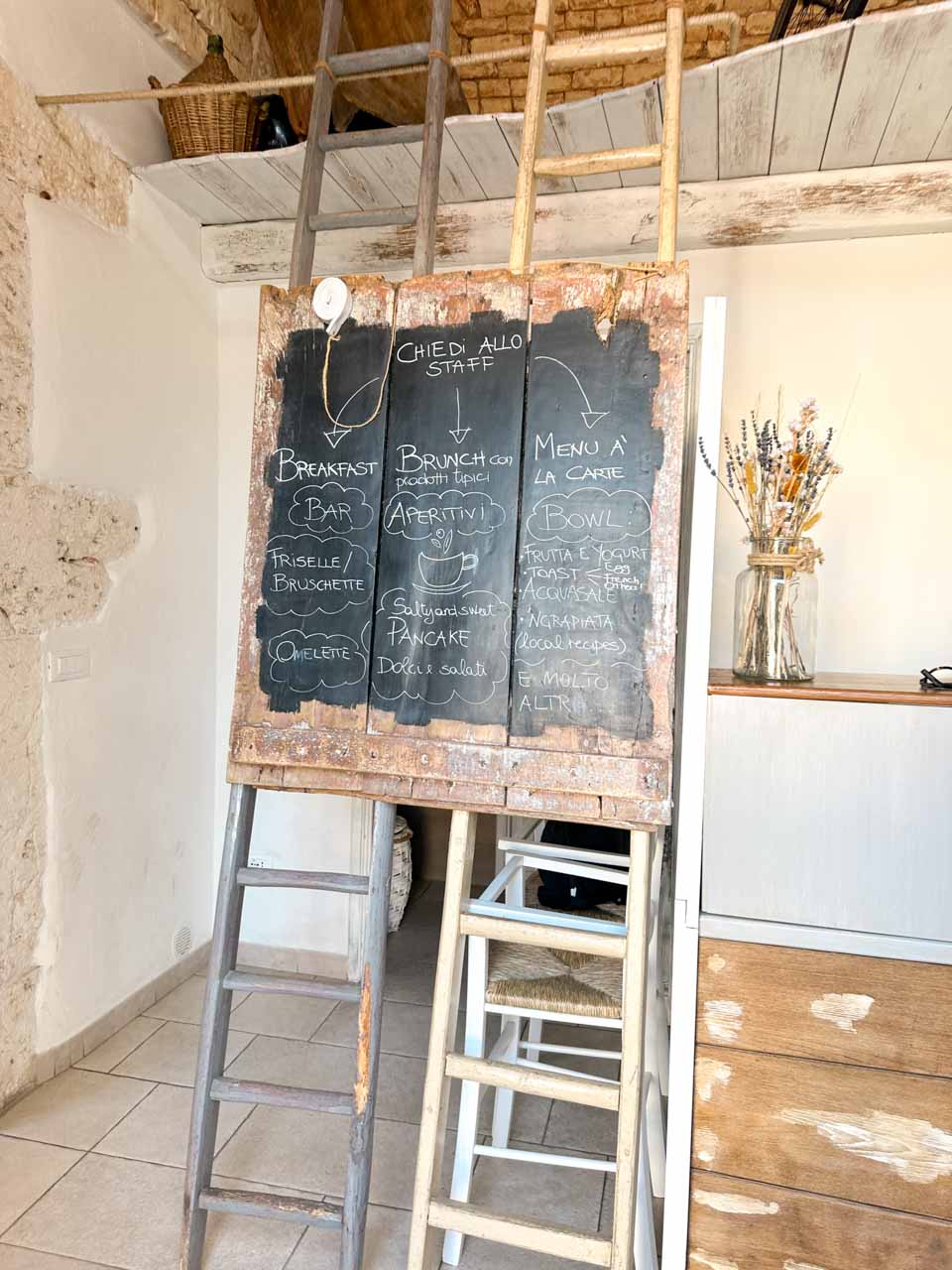
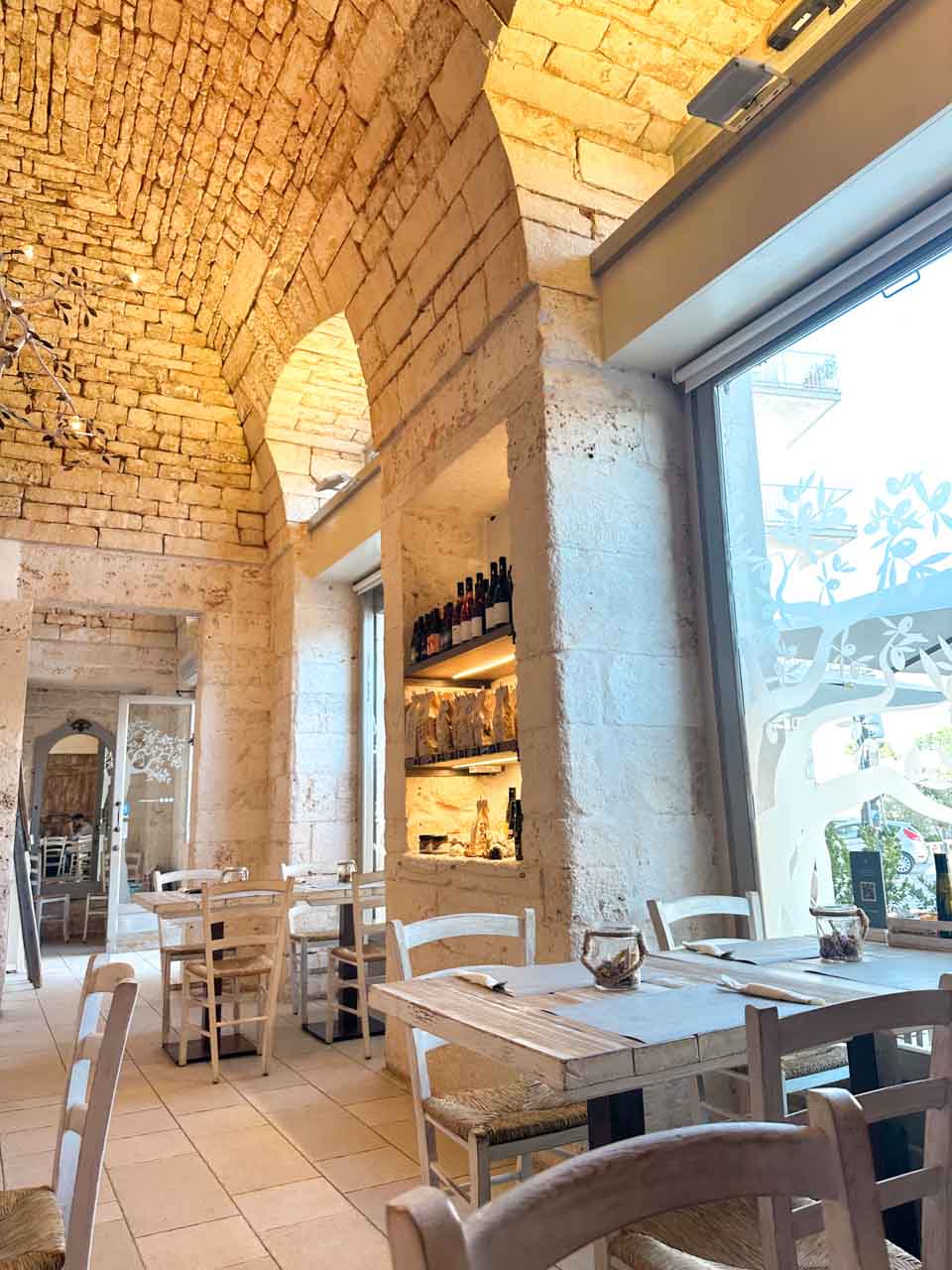
The buffet itself is in a small nook. You queue up, and when it’s your turn, you step inside and choose what you’d like.
The selection wasn’t huge, and I think it could do with a few more hot dishes. However, it felt reasonable for the size of the place, and everything we tried was really good. Next time, I’d probably order à la carte, as there were a few dishes on the menu that caught my eye.
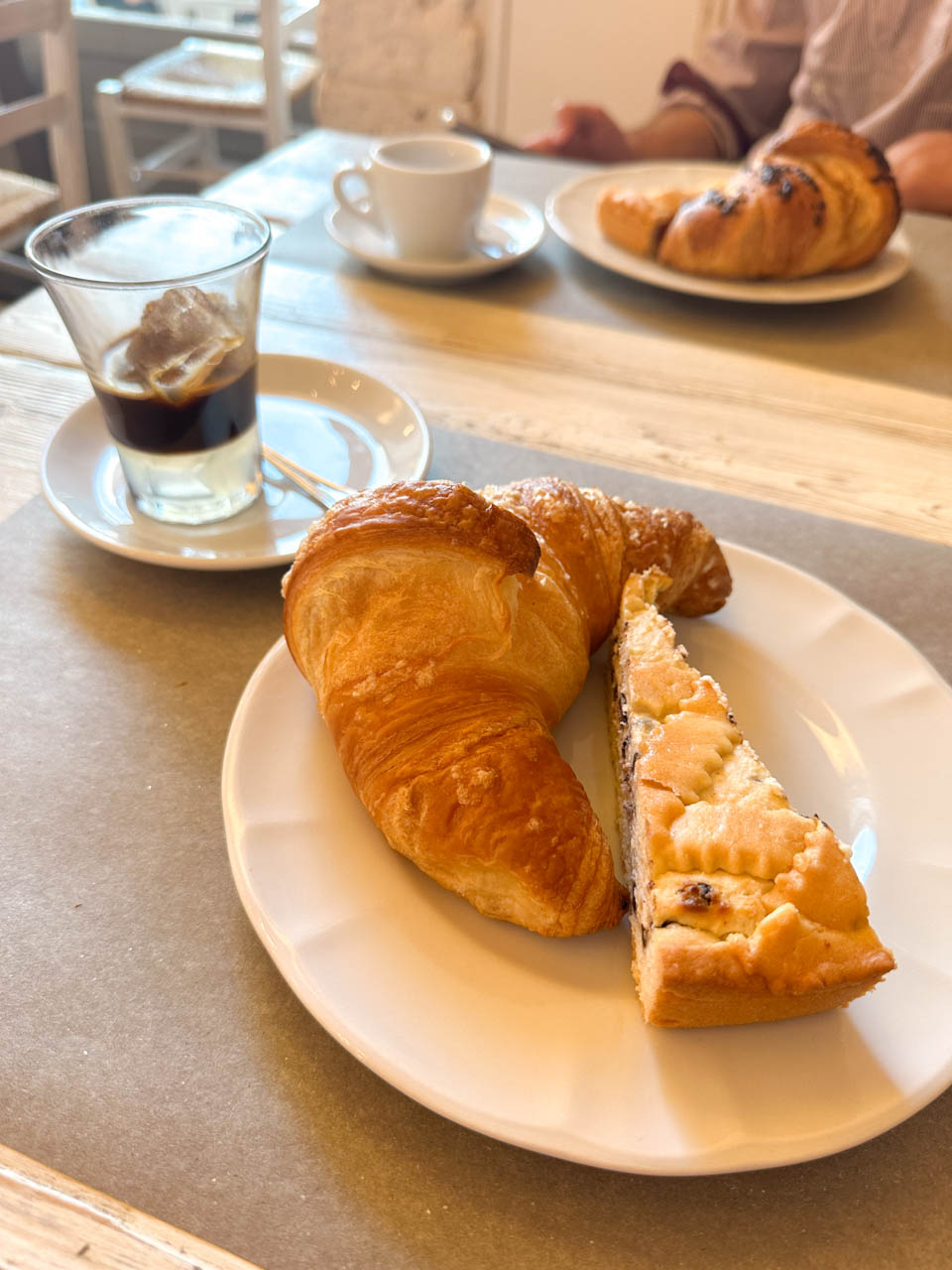
Later in the day, they also serve brunch and aperitivo. What’s particularly interesting is that they focus on beer and wine produced around Alberobello, so it’s a great place to try some local drinks.
My only real criticism has nothing to do with the food. While we were there, one of the waiters accused another family of eating too much bread. It was awkward to watch and felt a bit unnecessary. As long as people aren’t stuffing rolls into their bags to take home, I don’t think it’s anyone’s business how much they eat.
At €13, I think the restaurant would survive someone going back for a few extra slices of bread. Plus, counting gluten in Italy of all places? Come on, you used to be a proper country. 😉
Have a coffee break at Cols – Coffee Experience & more
If you’ve read any of my other travel guides, you’ll know I’ll find a specialty coffee shop pretty much anywhere. And as we had some time to kill before our bus back to Bari, we decided to stop by Cols.
It’s a great place if you’re into coffee, as you can chat with the barista and ask for recommendations. Plus, it’s at the top of the hill, inside a residential building and away from the tourist crowds, so it feels much more relaxed than the cafés in the centre.
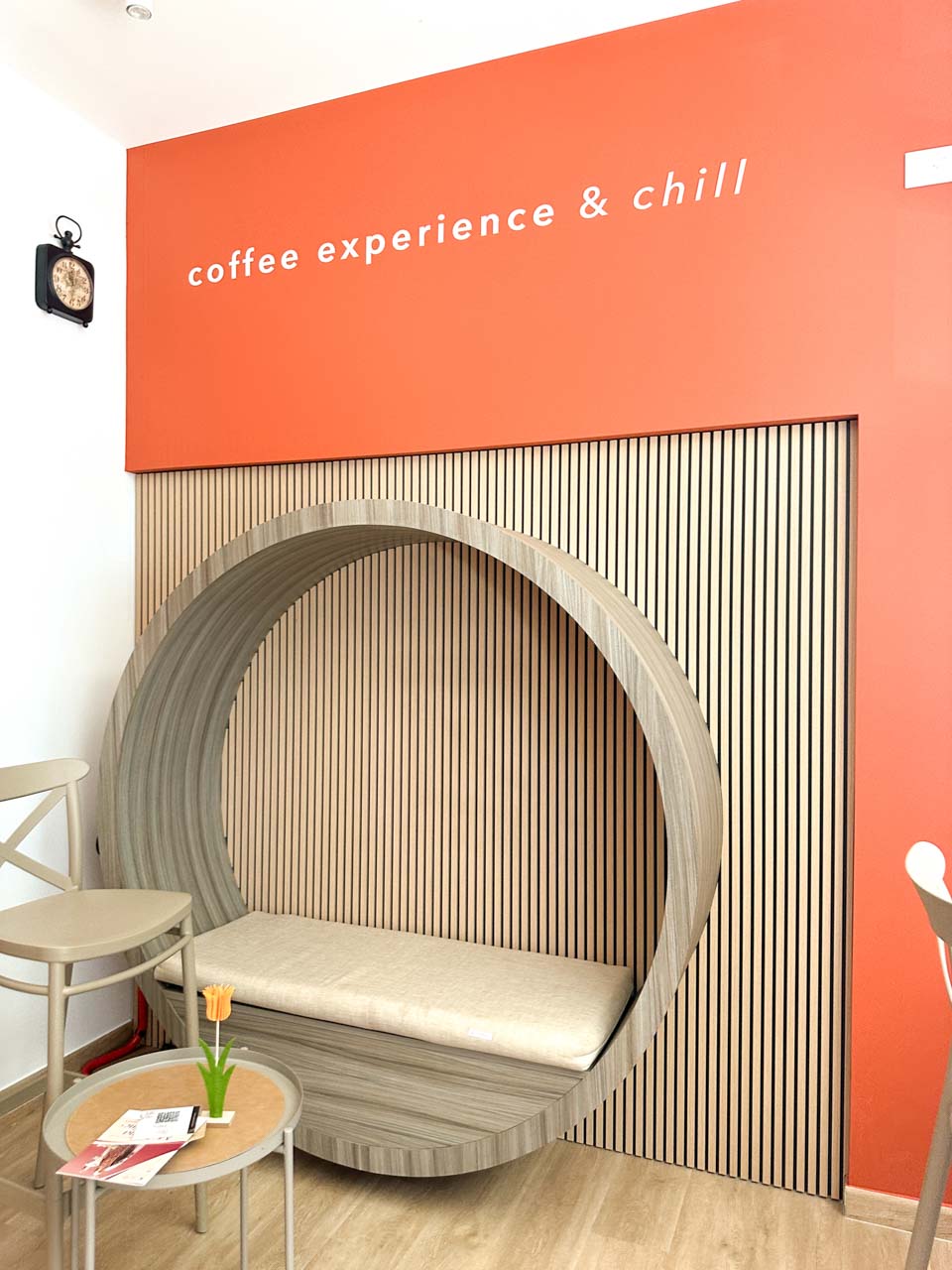
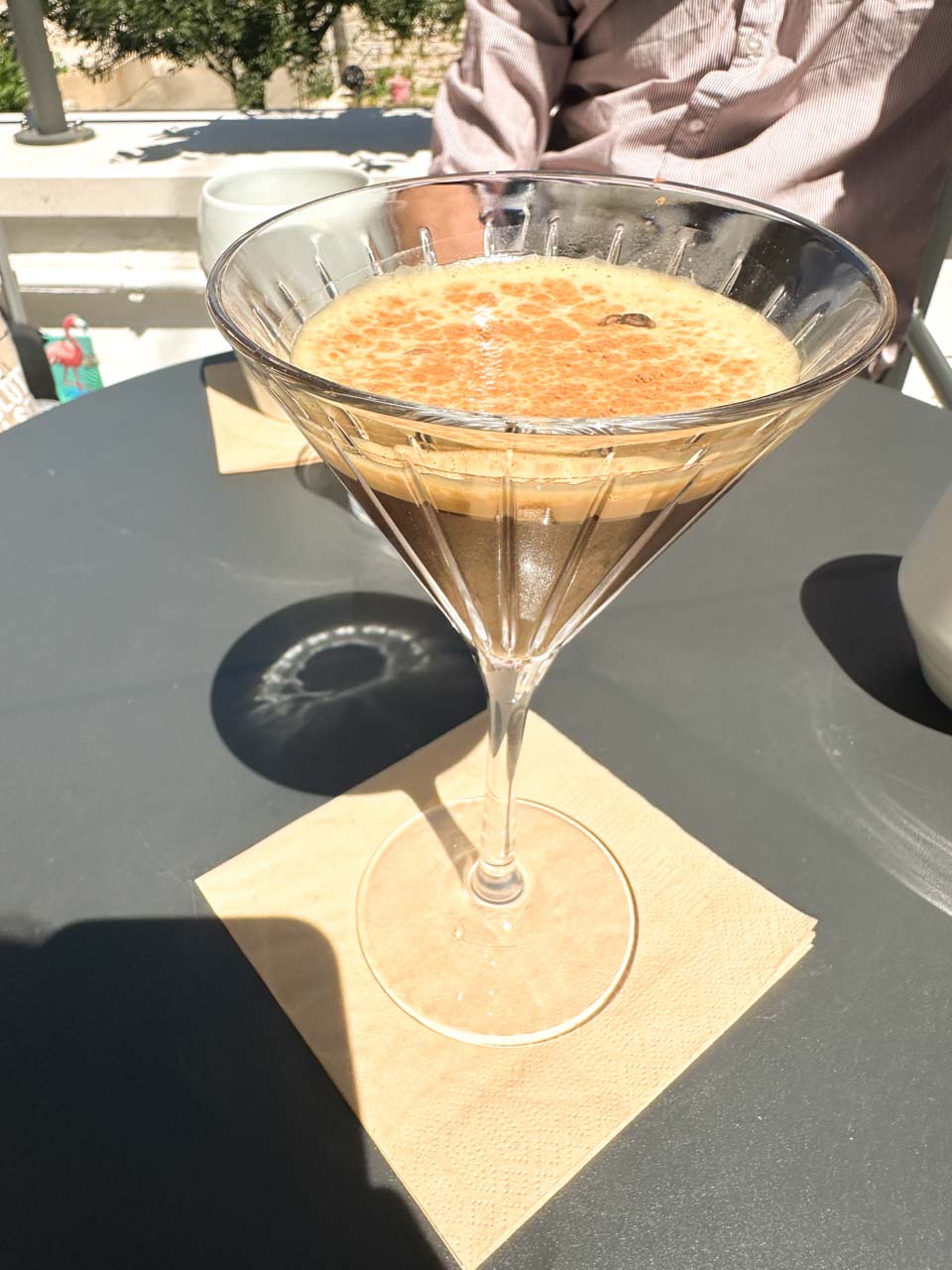
The only thing to keep in mind is that they definitely took their sweet time. I’m not sure if we just happened to visit at a particularly busy moment, but we had around an hour and a half to spare and still ended up drinking our coffees in a rush before leaving for the station.
Still, specialty coffee isn’t that easy to find in Italy. So if, like me, you occasionally need a break from your usual espresso or cappuccino, this is a great spot to stop by while you’re in Alberobello.
Other places we had on our list:
- Paco Wines for a glass of wine,
- Casedda a Cummersa for a drink with a view,
- Corte dei Trulli, Trullo d’Oro, Ristorante L’Aratro, Il Pinnacolo, and Casa Nova Il Ristorante for food
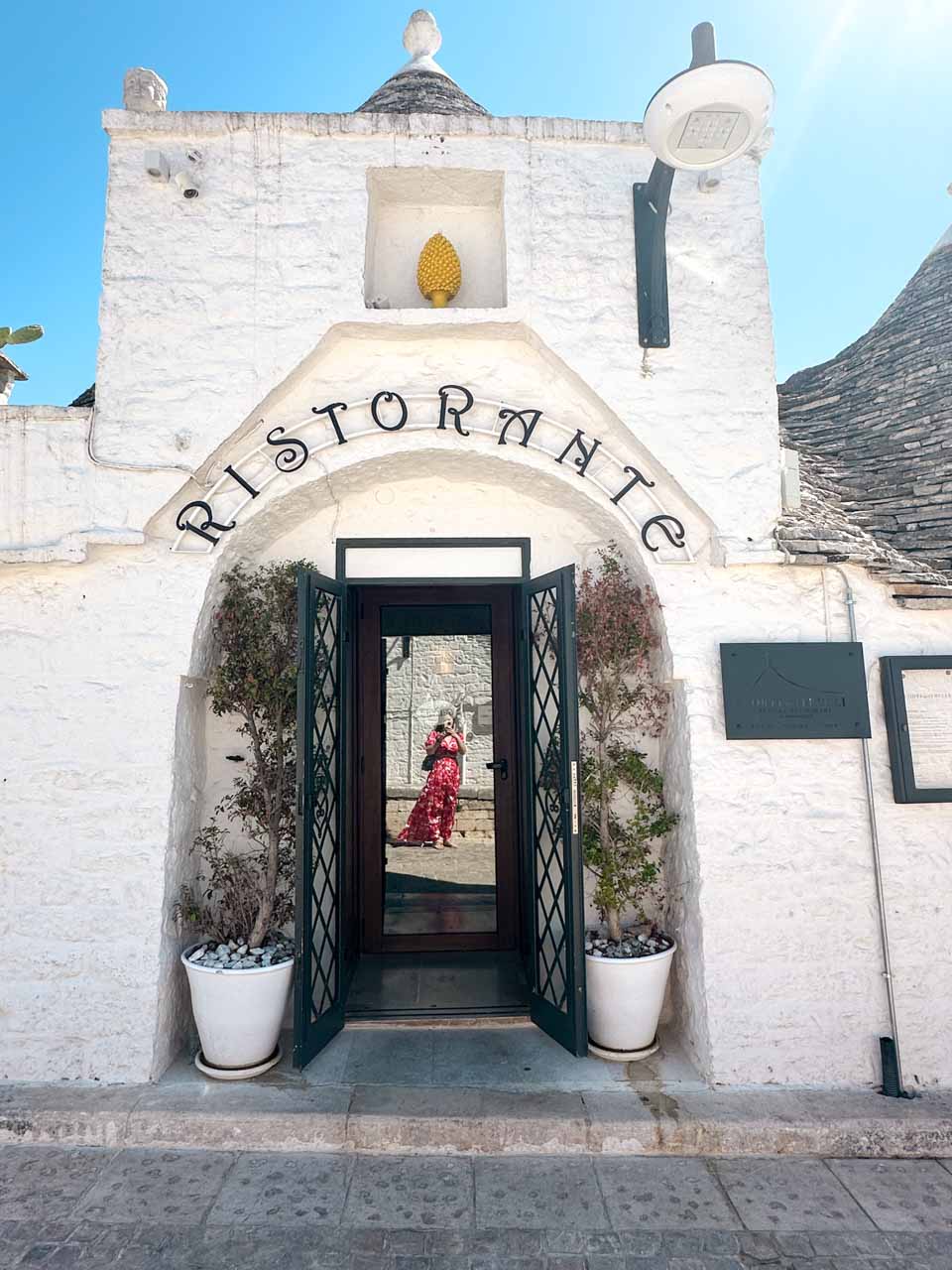
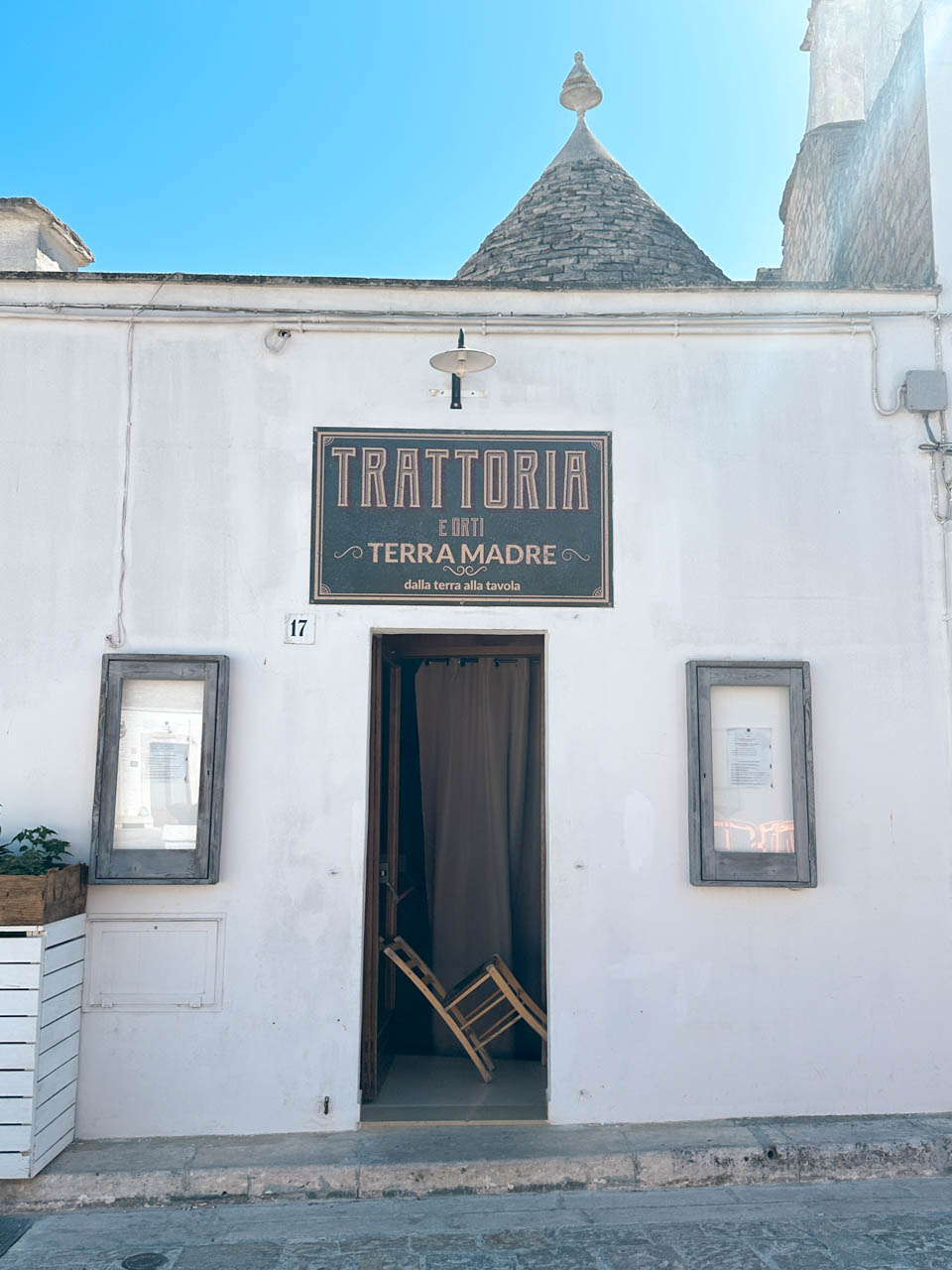
Go souvenir shopping
Now, I rarely buy typical souvenirs and usually prefer bringing home some local food or alcohol instead.
While walking around Alberobello, we ended up in a random souvenir shop and found some genuinely interesting things, so I thought I’d leave a recommendation.
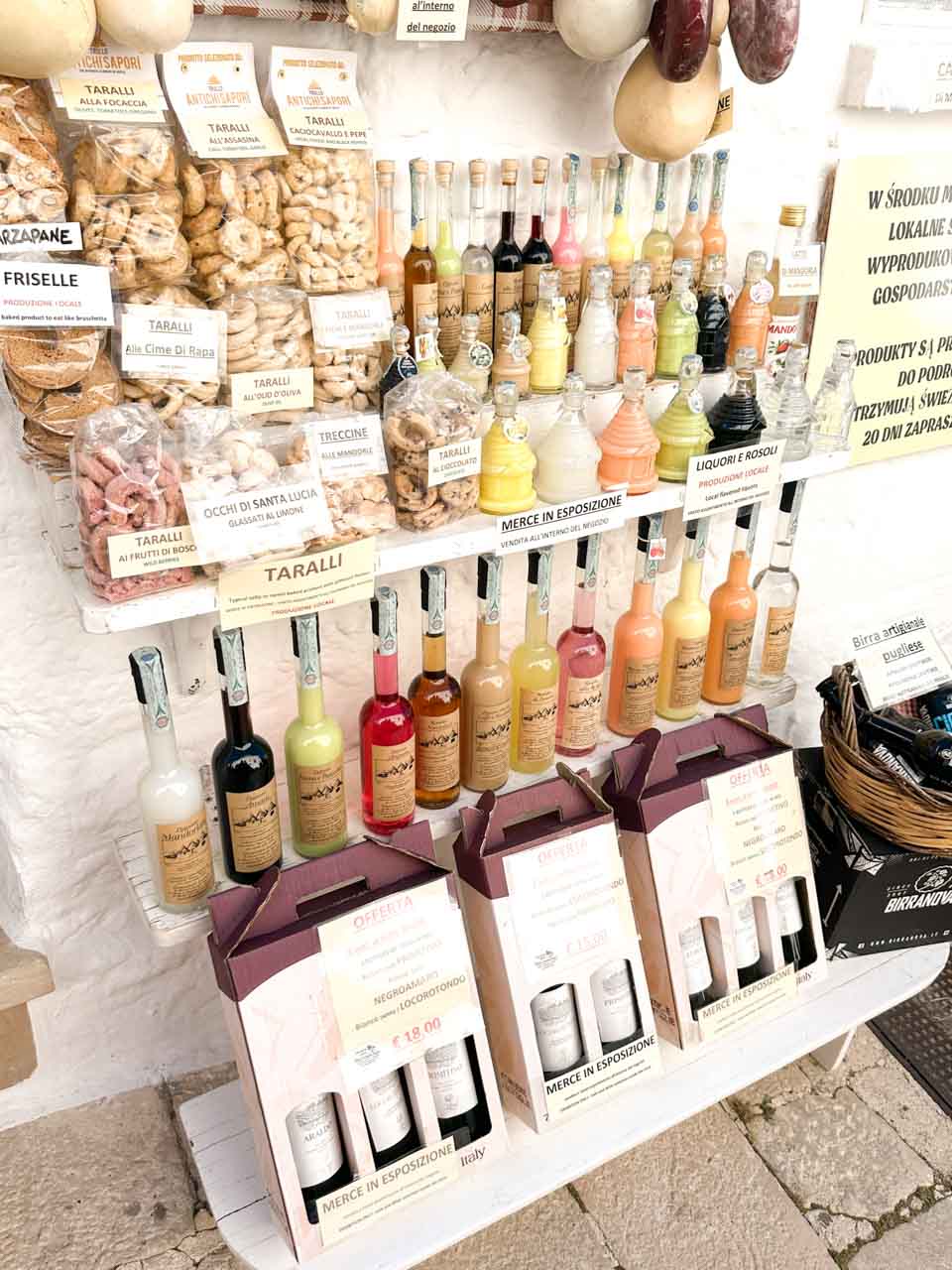
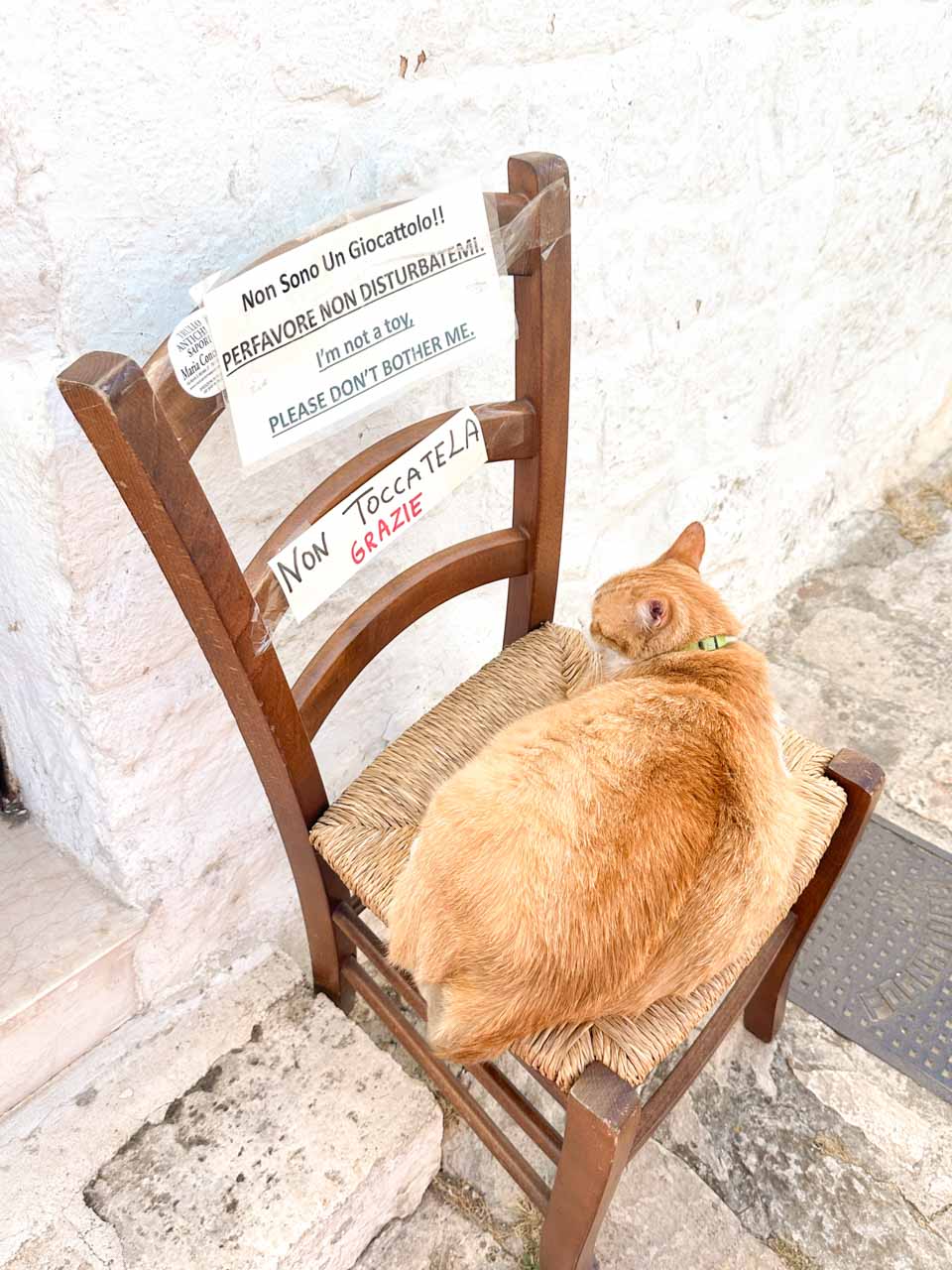
The shop was on Via Monte San Michele. I believe it was called Via Souvenir Alberobello and, despite some pretty rough Google reviews, we had a good experience there.
What caught our eye were the different flavoured liqueurs sold in little trullo-shaped bottles. They make such a cute gift, and the best part is that you can taste anything before buying it.
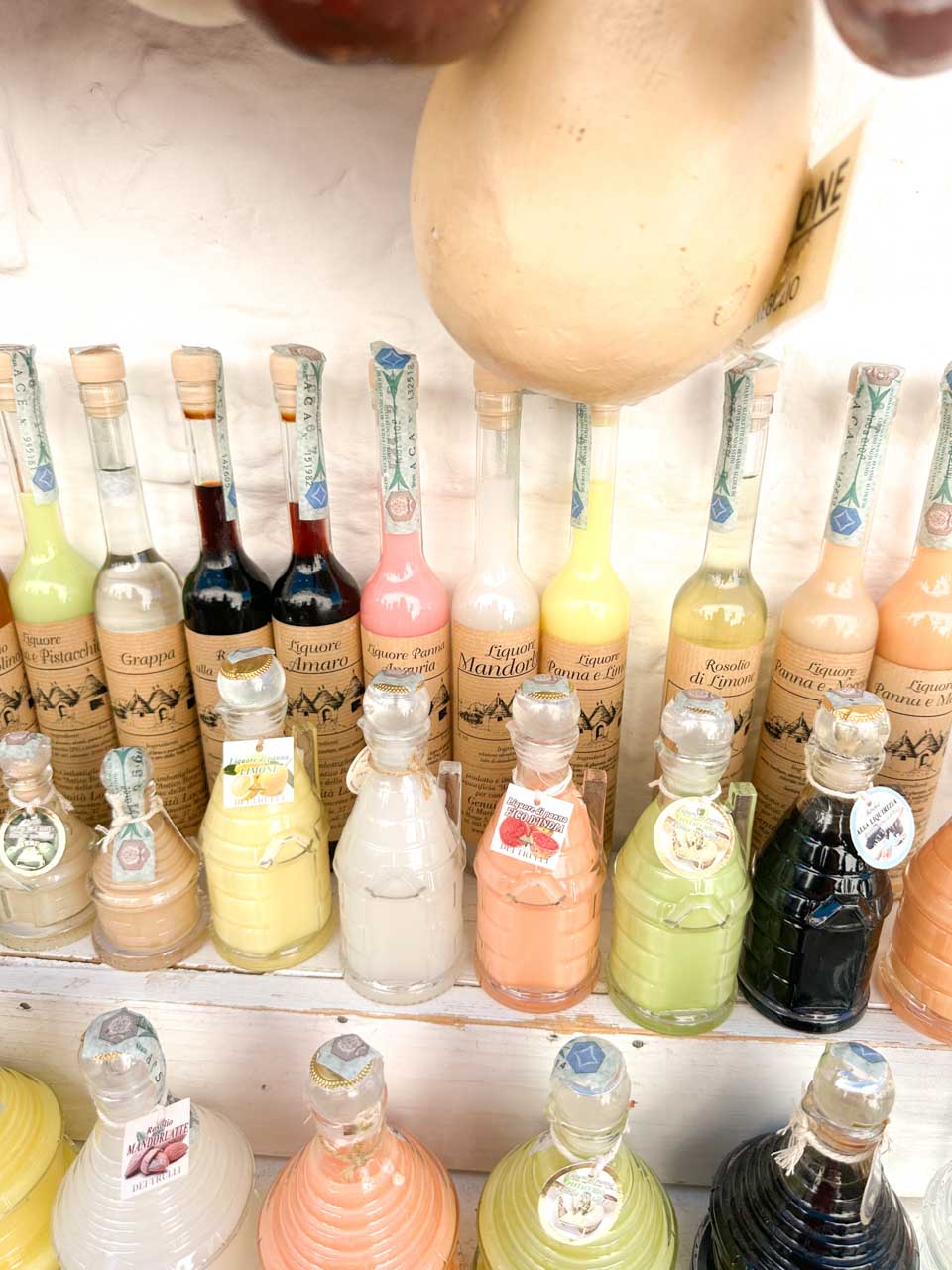
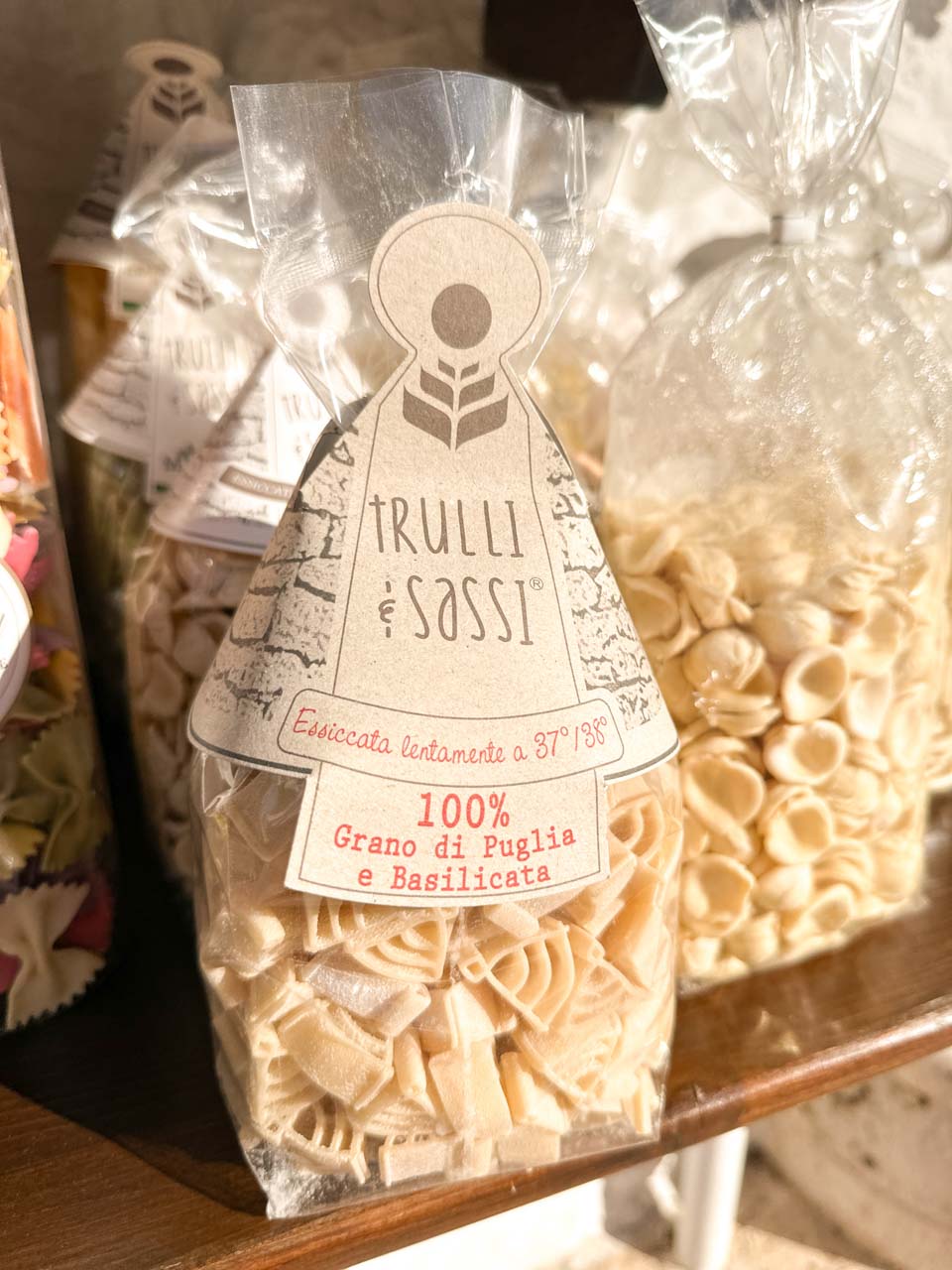
I highly recommend the strawberry one. We brought a few small bottles back for friends and family, and they were a huge hit. Several people told us afterwards how much they enjoyed them!
Did you enjoy my travel tips? You can also read the rest of my Puglia guides here:
- Best Things to Do and Eat in Brindisi, Puglia’s Underrated City
- How to Spend 48 Hours in Bari: Best Things to Do, See, and Eat
- How to Spend a Day in Lecce, the Florence of the South
- How to Spend a Day in Ostuni, the White City of Puglia
- How to Spend a Day in Polignano a Mare: Best Things to Do and Eat
- Matera Travel Guide: Best Things to Do, See, and Eat in Matera


