Last updated on June 27, 2026
Brindisi is a port city on the heel of the Italian boot that even served as Italy’s capital for a few months during WWII. Still, it’s mostly ignored by tourists, who either stick around Bari or head straight down to Lecce. Even when we mentioned our Puglia trip, everyone just assumed we were flying into Bari. Most people hadn’t even heard of Brindisi, let alone knew there were direct flights from where we live.

And I don’t blame them. Brindisi first popped up on my radar thanks to my friend Jonathan, who spent two years teaching at an international school there and shared some stories. Even when we first arrived, I wasn’t totally convinced. It felt like maybe all those people who skip it were actually onto something. It’s not the kind of place with a big list of must-see sights. Most of the people you pass on the street are locals, and everything just moves a bit slower.


But after spending a bit of time there, that slower pace is exactly what made us fall in love with it. Brindisi has a few proper gems – some that genuinely rival those in more popular cities – just without the chaos or the crowds. And you can explore most of them for free. There aren’t many Brindisi travel guides out there, so I figured I’d put one together and share all the best things to do, see, and eat while you’re in this underrated port city.


AD – This post contains affiliate links (marked with *) | Read my full disclaimer
How to get to Brindisi
If your home airport offers direct flights to Brindisi, I’d definitely recommend taking them. The airport’s much smaller than Bari’s, which means you can be in and out super quickly – and the bus ride into the city centre only takes about 10 to 15 minutes, depending on traffic.


A one-way ticket costs €1.20, and you can get one from Gelateria Sandrino – the coffee shop next to the exit inside the terminal. On your way back, you can buy a ticket at Bar Chiosco (opposite the Brindisi train station), the bar inside the station building, or Tabaccheria Rizzo just behind Bar Chiosco. You can also buy it on board, but apparently it’s a bit more expensive.
If you’re coming from elsewhere in Italy, it’s easy to reach Brindisi by train. There are direct routes from Bari, Lecce, and several other major cities. You can also change in Bari if needed. The journey from Bari takes just over an hour, and you can buy tickets at the machines at the station or online through the Trenitalia website.


Where to stay in Brindisi
All the main tourist spots in Brindisi are clustered around the waterfront. So, if you want to stay within walking distance of everything, I’d recommend finding a place somewhere between the train station and the seafront.
We stayed at Camelia Apartment*, just a 4-minute walk from the Brindisi train station. From there, it was about a 15-minute stroll down to the water – the route takes you along the main street lined with shops and bars, which made for some excellent people-watching.
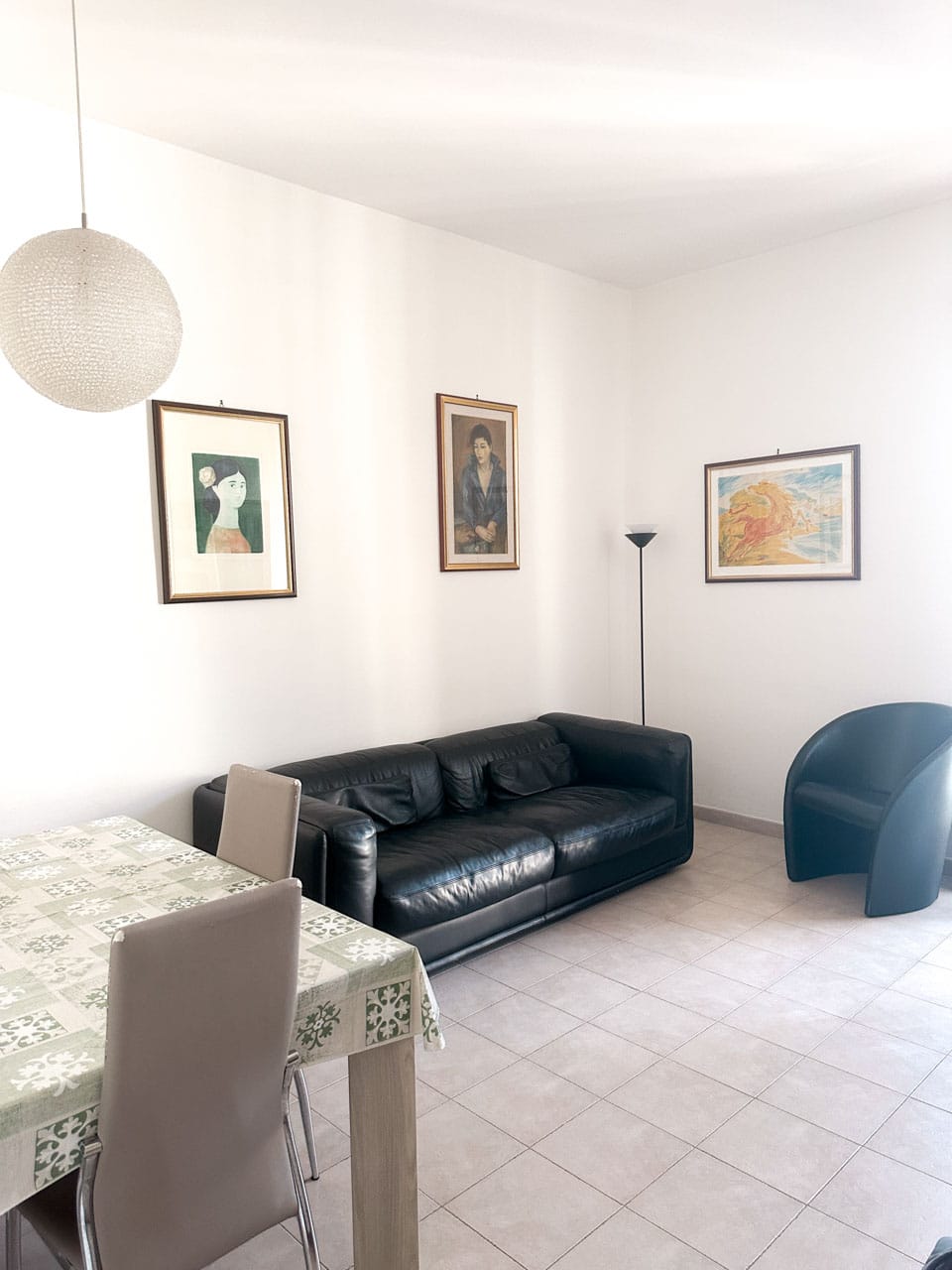

The flat itself was really spacious and came with a sweet little balcony we spent loads of time on. The host had kindly stocked the fridge with water, milk, and juice, plus some apricot croissants and rusks to have with jam, which was such a nice touch.
The kitchen had everything we needed to make breakfast in the mornings, which helped us save a bit of money (especially handy as we’re both more into savoury breakfasts). There was also a washing machine and detergent, which comes in super handy for a longer stay.


We paid around €80 a night. Just a heads-up: if you’re visiting Puglia, keep some coins handy for the city tax – some hosts will ask you to leave it in cash inside the flat. (Only one of our four stays charged it to our card directly.) In Brindisi, it was €2.50 per person per night.
You can check the available accommodation options below:
Best things to do in Brindisi
Roman Columns of Brindisi
If you read any of the (very few) Brindisi travel guides out there, the Roman Columns will likely be the first thing they mention or somewhere near the top – and for good reason.
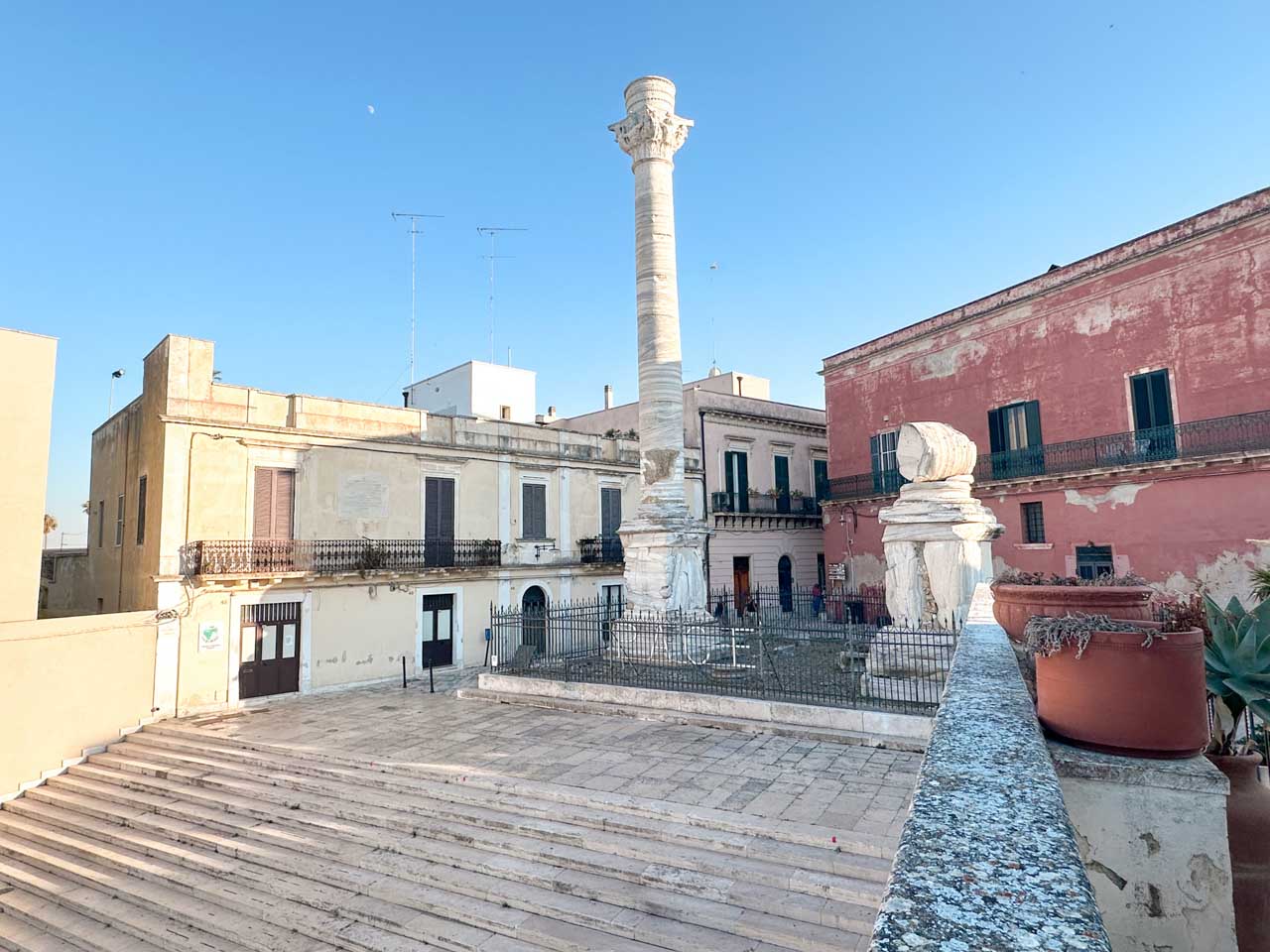
Just near the waterfront, you’ll spot a staircase leading up to a large Roman column standing next to the remains of another. These are thought to have been built sometime between the 1st century BC and the 2nd or 3rd century AD, marking the end of the Via Appia – the ancient Roman road that once connected Rome to Brindisi.
One of the columns collapsed after an earthquake in 1528, and in 1657, its pieces were gifted to the city of Lecce. They used them to build a column in honour of Saint Orontius – credited with saving the Salento peninsula from the plague.
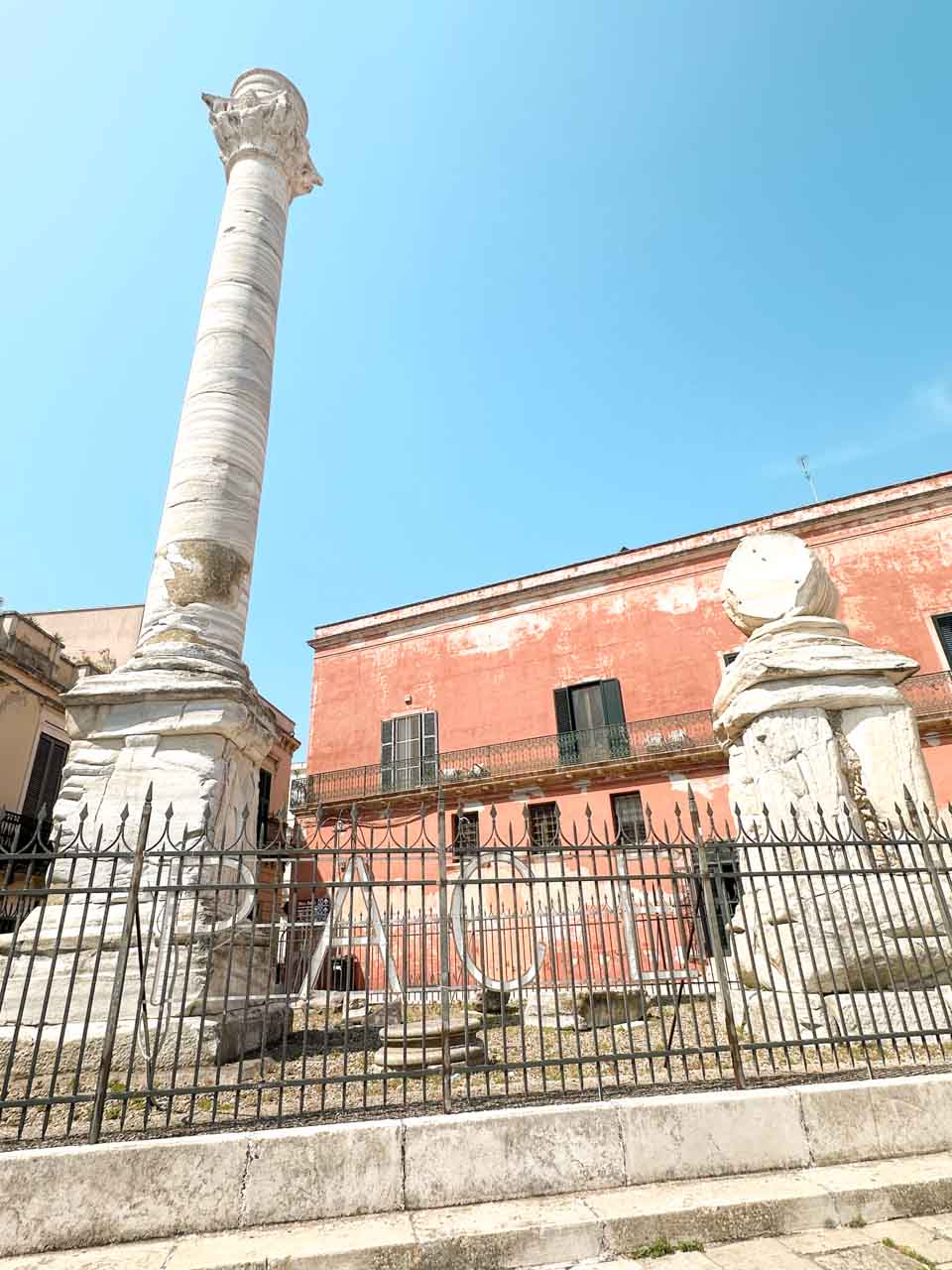

They dismantled the surviving column during WWII to avoid further damage, and again in 1995 after another earthquake hit the region. So, the one you see today is actually a replica – they now keep the original in Palazzo Granafei Nervegna (which I’ll talk about in a sec!).
At the top of the stairs, you’ll also find the house where the poet Virgil lived and died – which is why they call it the Virgil Staircase.
Museo Archeologico Francesco Ribezzo
After the Roman Columns, the one place you absolutely have to visit is the archaeological museum. It’s completely free to enter, and there’s a lovely little courtyard where you can take a break on one of the benches.

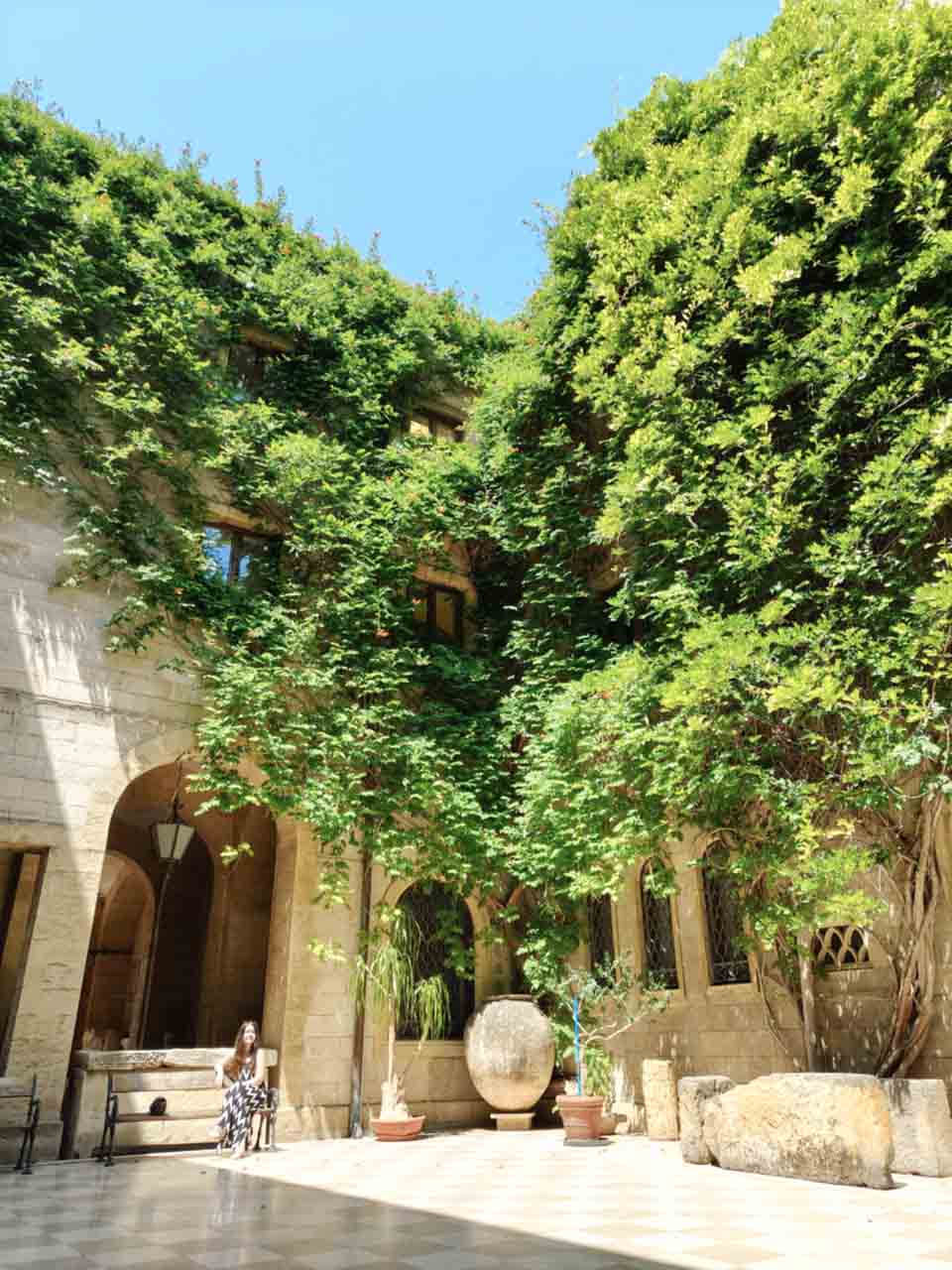
Even if you’re not usually into museums, the fact that you can see thousands of years of civilisation in one place is just wild to me.


There’s a collection of objects found during excavations across the city – from over 2,000-year-old ceramics and stone busts to tombstones dating back to the 1st century. Some of the Salento pottery dates back to between the 8th and 7th centuries BC, which completely blew my mind.


As cliché as it sounds, it really does make you think how things just aren’t built to last anymore. A lot of the prehistoric pieces actually look surprisingly modern – you’d never guess how old they are if it weren’t for the little plaques.


One of my favourite finds was a female statue from the 2nd century, built in memory of a young girl from a wealthy family who died too soon. They discovered it during excavations back in 1909, and it’s one of those pieces that really sticks with you.
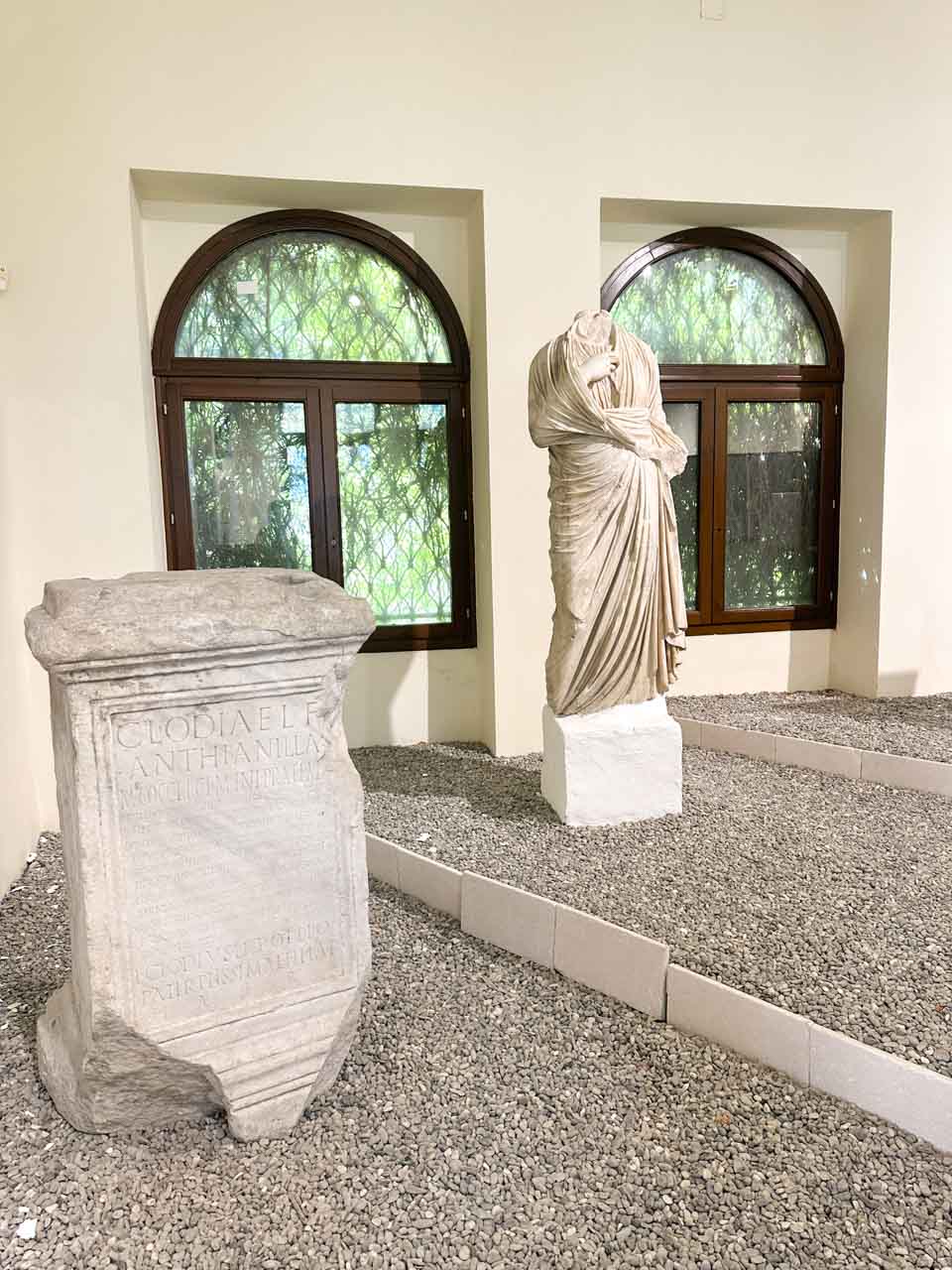

It’s not every day you get to see so many prehistoric artefacts without elbowing your way through a crowd – and even rarer to do so for free.


Right next to the entrance, you’ll also spot the Loggia dei Templari – two arches separated by a marble column. Some say it was part of a former Knights Templar church, but more likely it belonged to a wealthy local family’s palace. Either way, it’s a pretty cool little bonus before you head inside.


Cattedrale di San Giovanni Battista
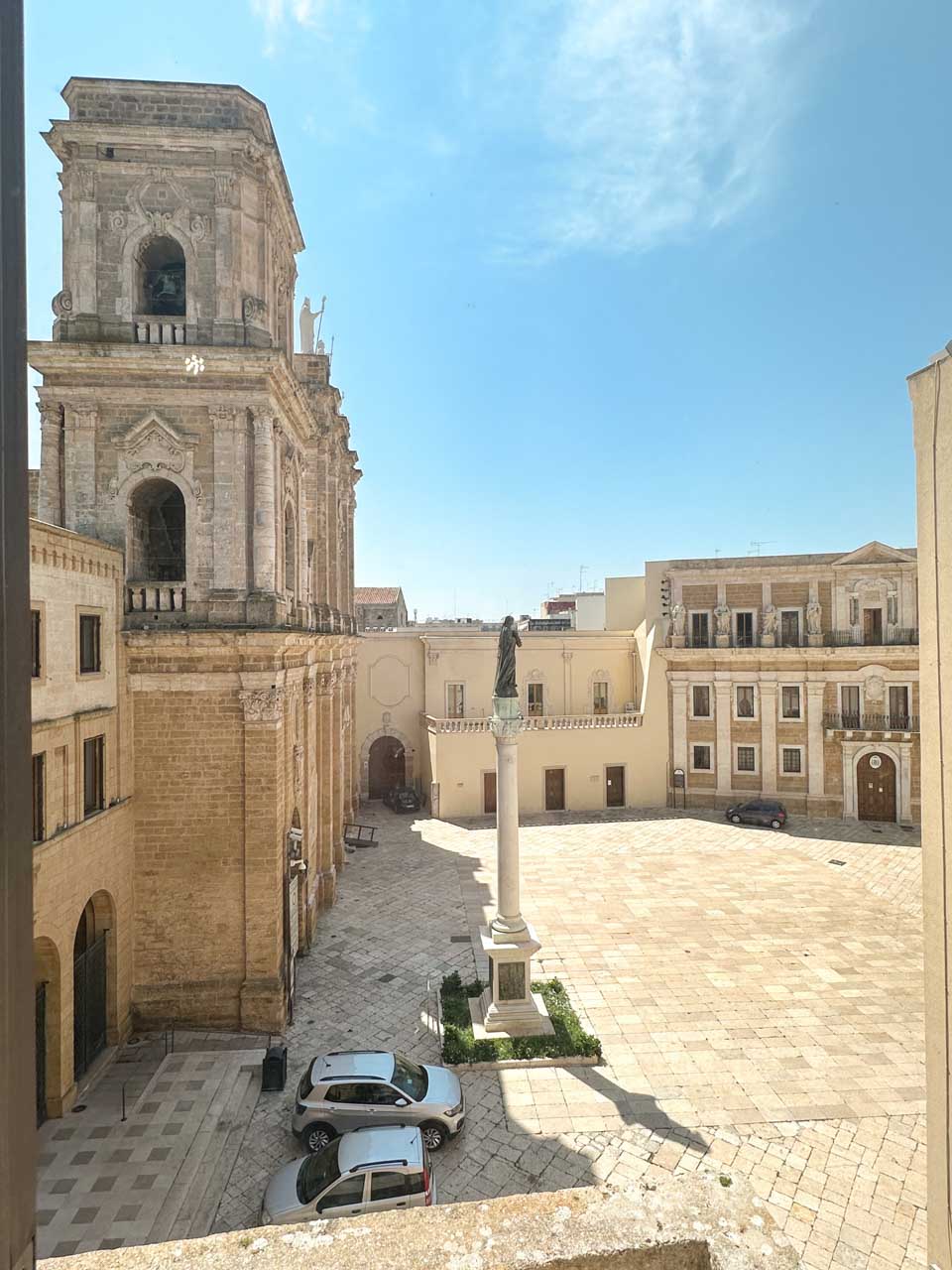
On the same square as the archaeological museum – Piazza Duomo – you’ll also find the Brindisi Cathedral. It’s completely free to enter (though fair warning: there are sometimes people asking for money on the steps, which makes it look like they’re charging admission).


This is where Emperor Frederick II married his second wife back in 1225, and you can still spot parts of the original 12th-century mosaic floor inside. There’s also a chapel that holds the remains of Saint Theodore of Amasea, Brindisi’s patron saint.


It’s a beautiful, peaceful spot to step out of the sun for a moment – especially if you’re wandering around on a hot day and need a quiet little breather.


Palazzo Granafei Nervegna
Just a short walk from Piazza Duomo, you’ll find Palazzo Granafei Nervegna – a 16th-century Renaissance palace that once belonged to the Granafei and Nervegna families. These days, it houses the tourist office, a café, a few exhibition spaces, and the remains of a Roman house.
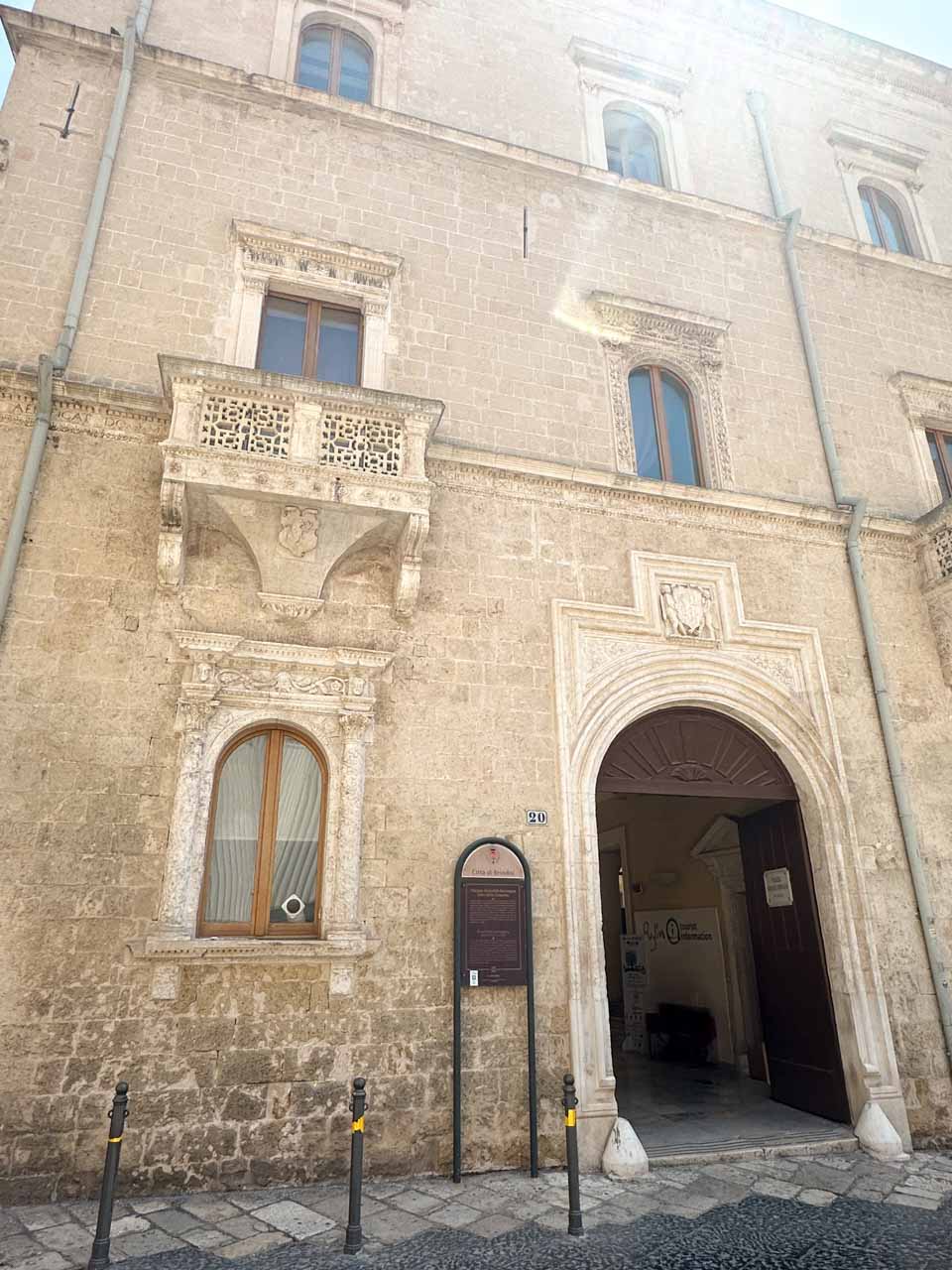


But the real reason to pop in is that you can see the original Roman column that once stood proudly by the Brindisi waterfront – and again, it’s completely free to visit. I wouldn’t bother with the exhibitions upstairs unless you’re really into contemporary art. When we visited, one piece was literally a pile of rubbish… interpret that how you will 😉.


The garden café is a lovely spot to take a break – they open the palace doors so you can admire the Roman column while sipping your coffee. And let’s be honest, how often do you get a coffee break with a 2,000-year-old backdrop?
Right across the entrance, next to Teatro Verdi, you’ll also find the archaeological area of San Pietro degli Schiavoni, where many of the city’s Roman discoveries were made. Beneath the theatre, there’s a glass floor where you can look down at the remains of an ancient Roman town, which is pretty surreal!

Church of San Giovanni al Sepolcro
Tempio di San Giovanni al Sepolcro is one of those places you could easily miss if you didn’t know to look for it.
It’s a small circular church that was built in the 11th century by a Norman king returning from a crusade, as Brindisi was the main departure point for the Holy Land.
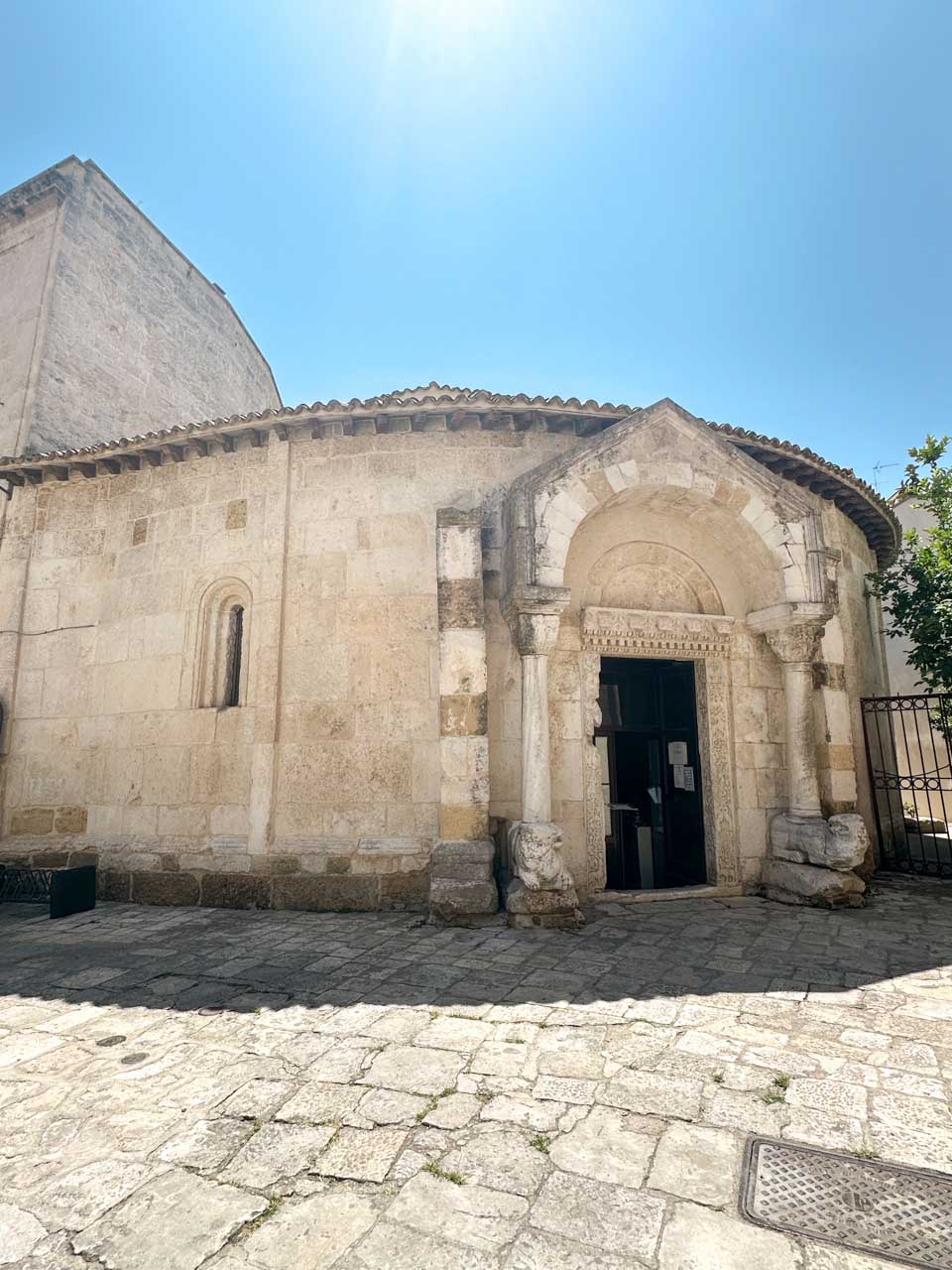

It is actually a replica of the Church of the Holy Sepulchre in Jerusalem, and it quickly became a stop for pilgrims heading east – or a place of worship for those who couldn’t make the long journey.
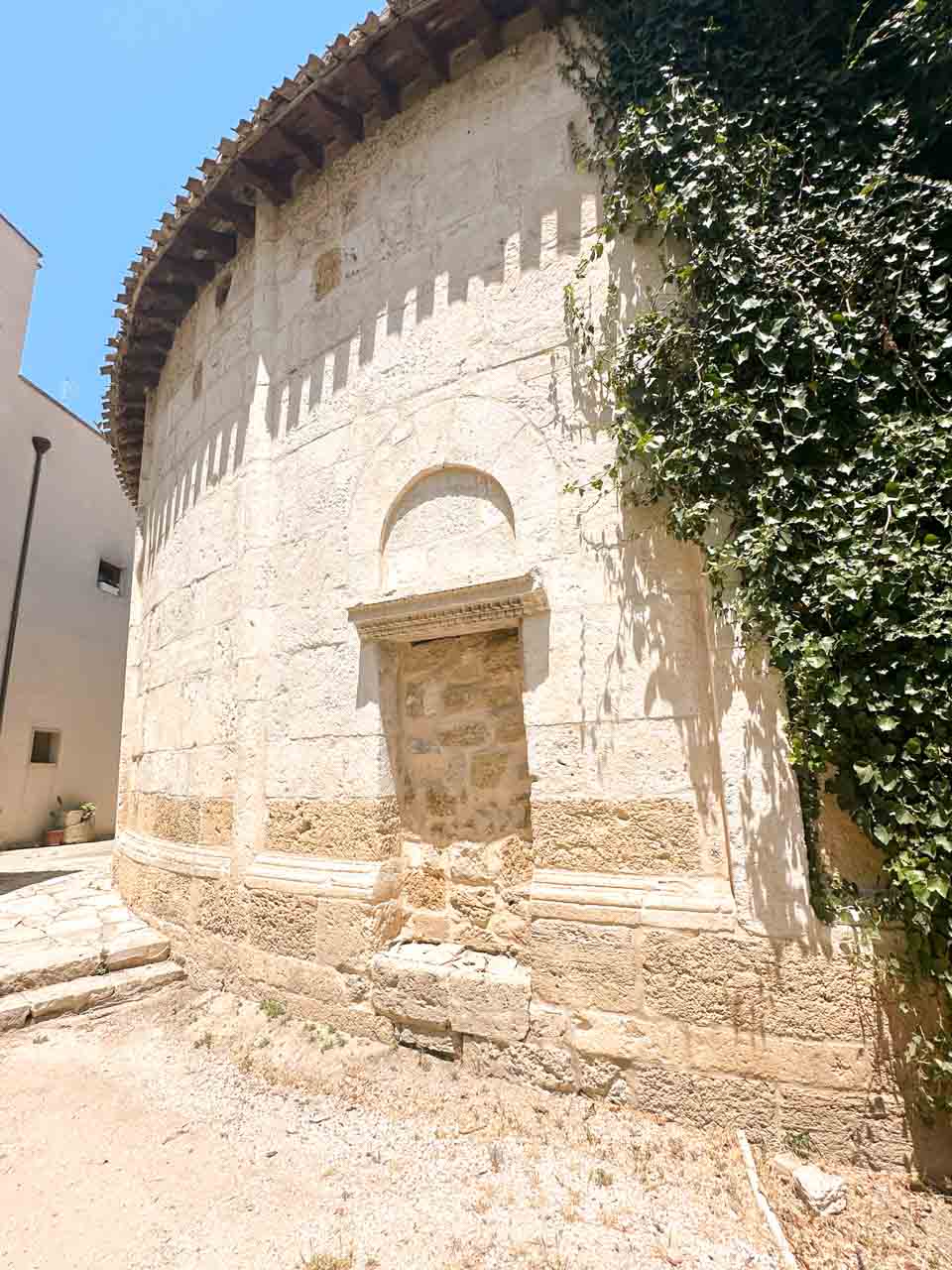
The inside is quite bare these days, but you can still spot traces of the old frescoes along the walls. And here’s a fun little detail – Brindisi’s archaeological museum was originally housed here back in the 19th century, before it moved next to the cathedral when the collection outgrew the space.

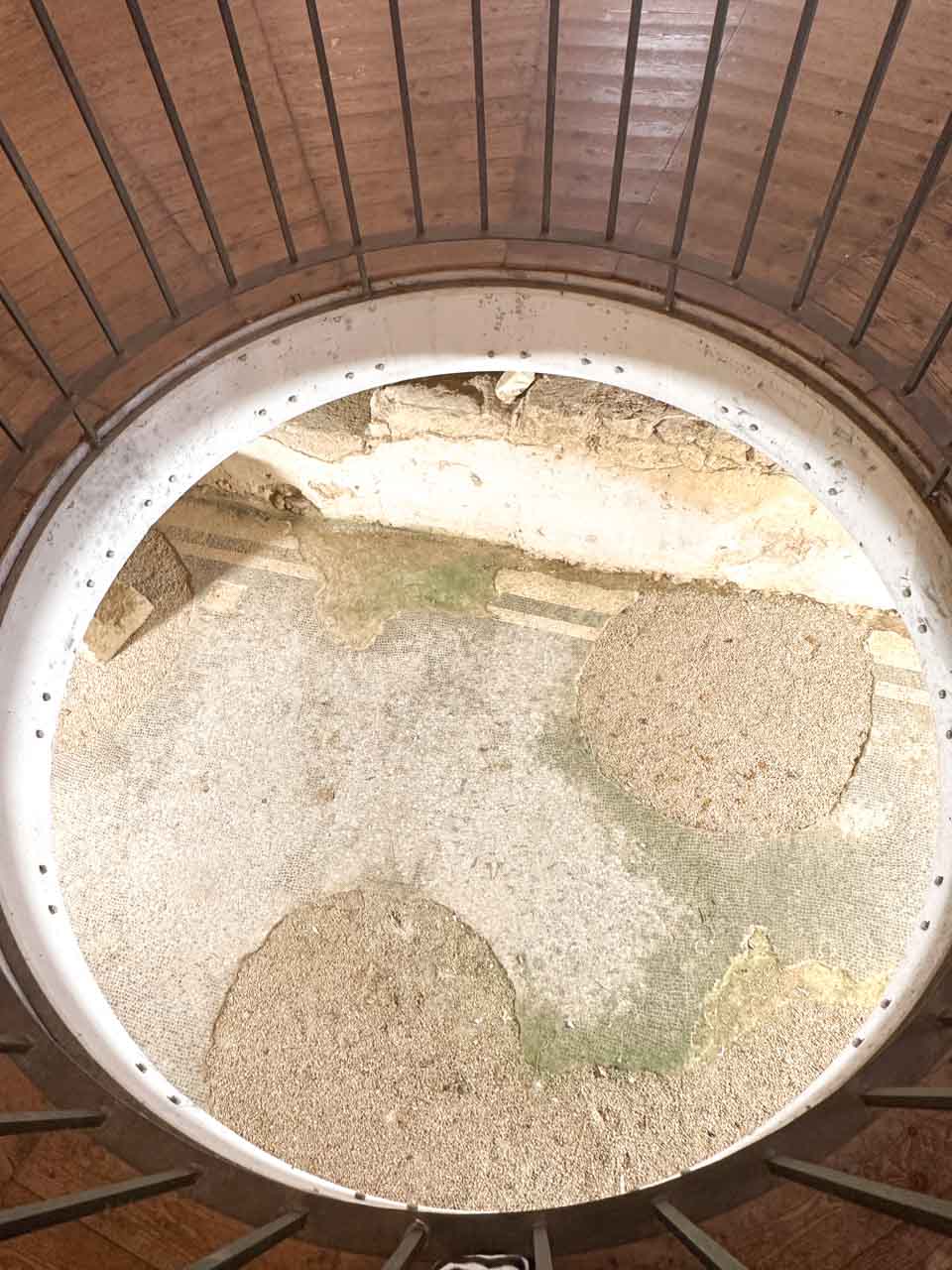
There’s also a small garden around the back – nothing grand, but it’s a peaceful spot to walk around. And honestly, I’ll never get over how some locals have balconies that look straight out onto medieval churches! Entry costs €3 and is cash only, so make sure you’ve got some coins on you.
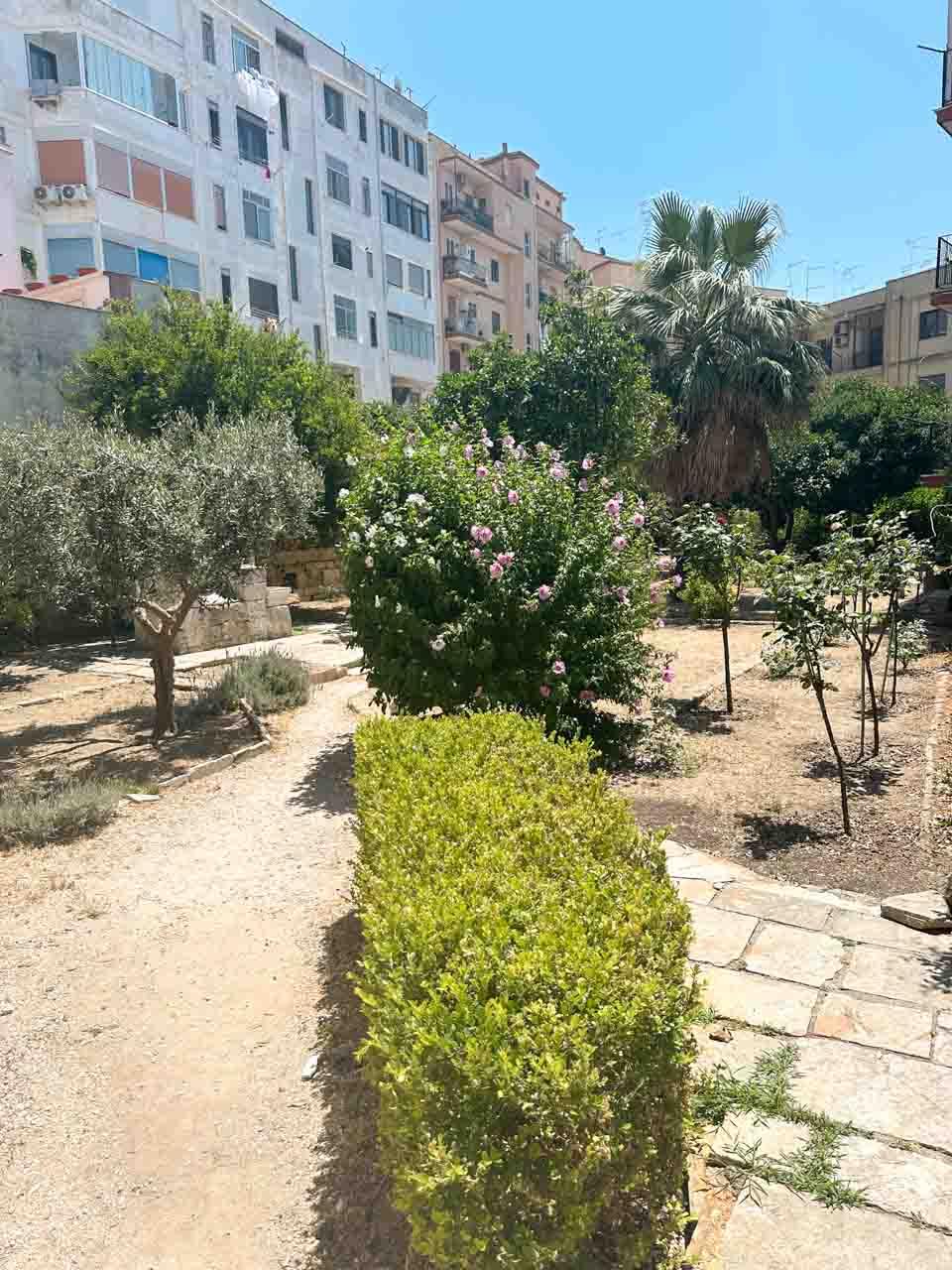
Faldetta Archeological Collection
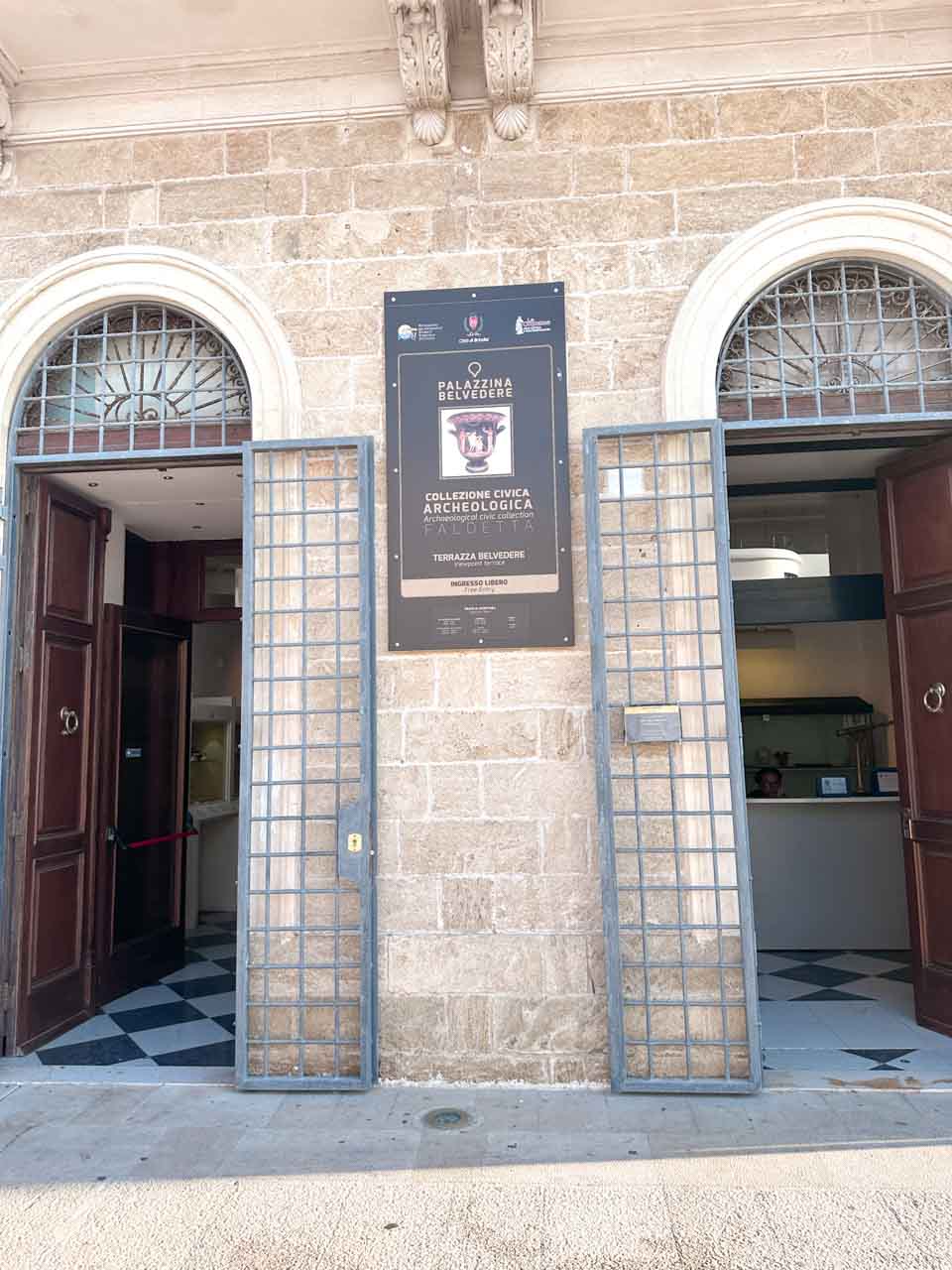
We actually stumbled upon this place completely by accident while walking along the promenade – and it turned out to be yet another spot in Brindisi that’s totally free to visit!
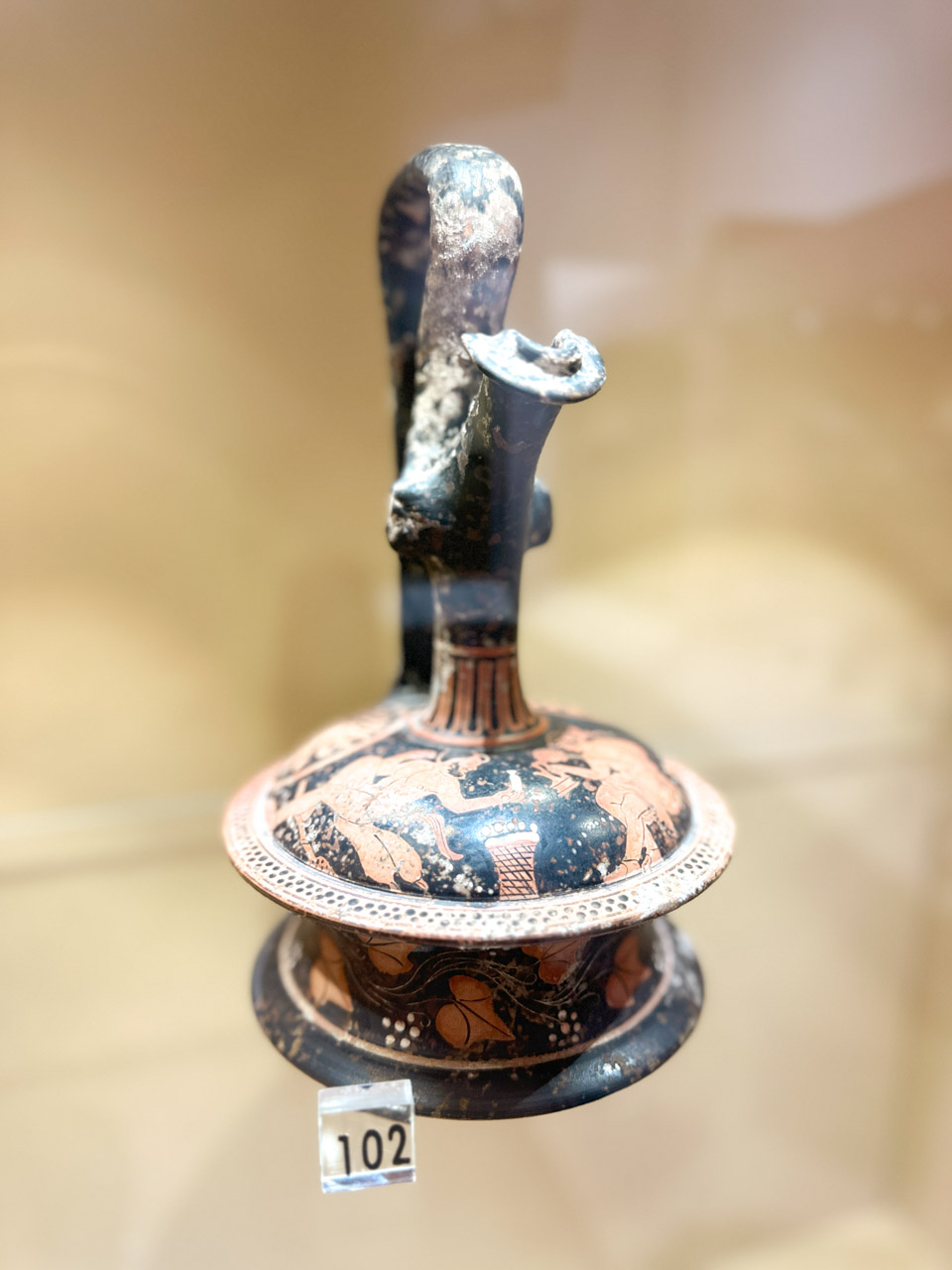
Inside the Palazzina Belvedere, you’ll find a smaller but really lovely collection of over 360 archaeological finds, ranging from the end of the Late Bronze Age to the Middle Ages. Most of them are vases and bits of pottery in all sorts of styles from around Puglia.
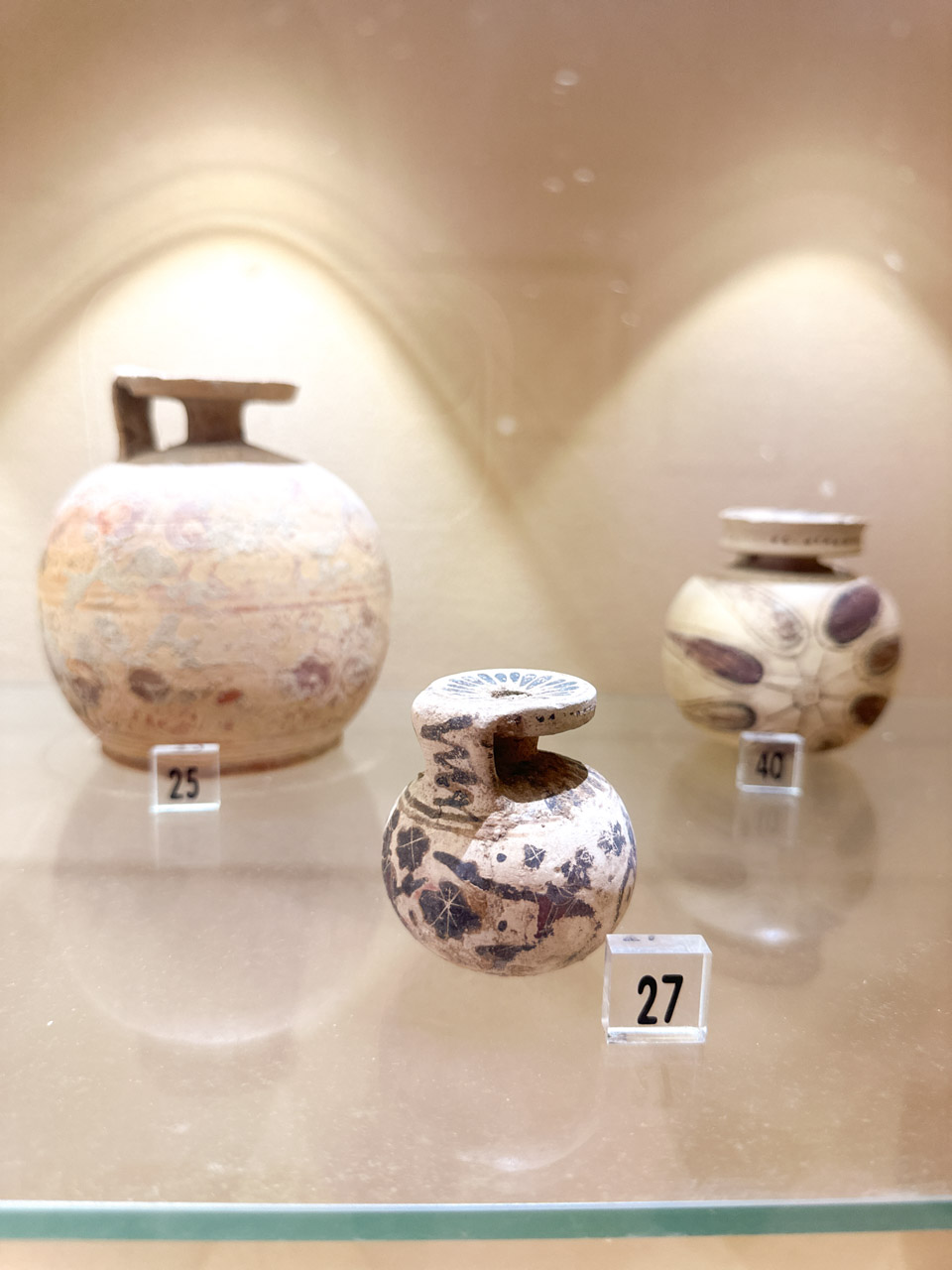

I especially loved the vases with geese painted on them. Clearly, people have always been a bit obsessed with putting animals on their favourite bits and bobs, which is the cutest thing!

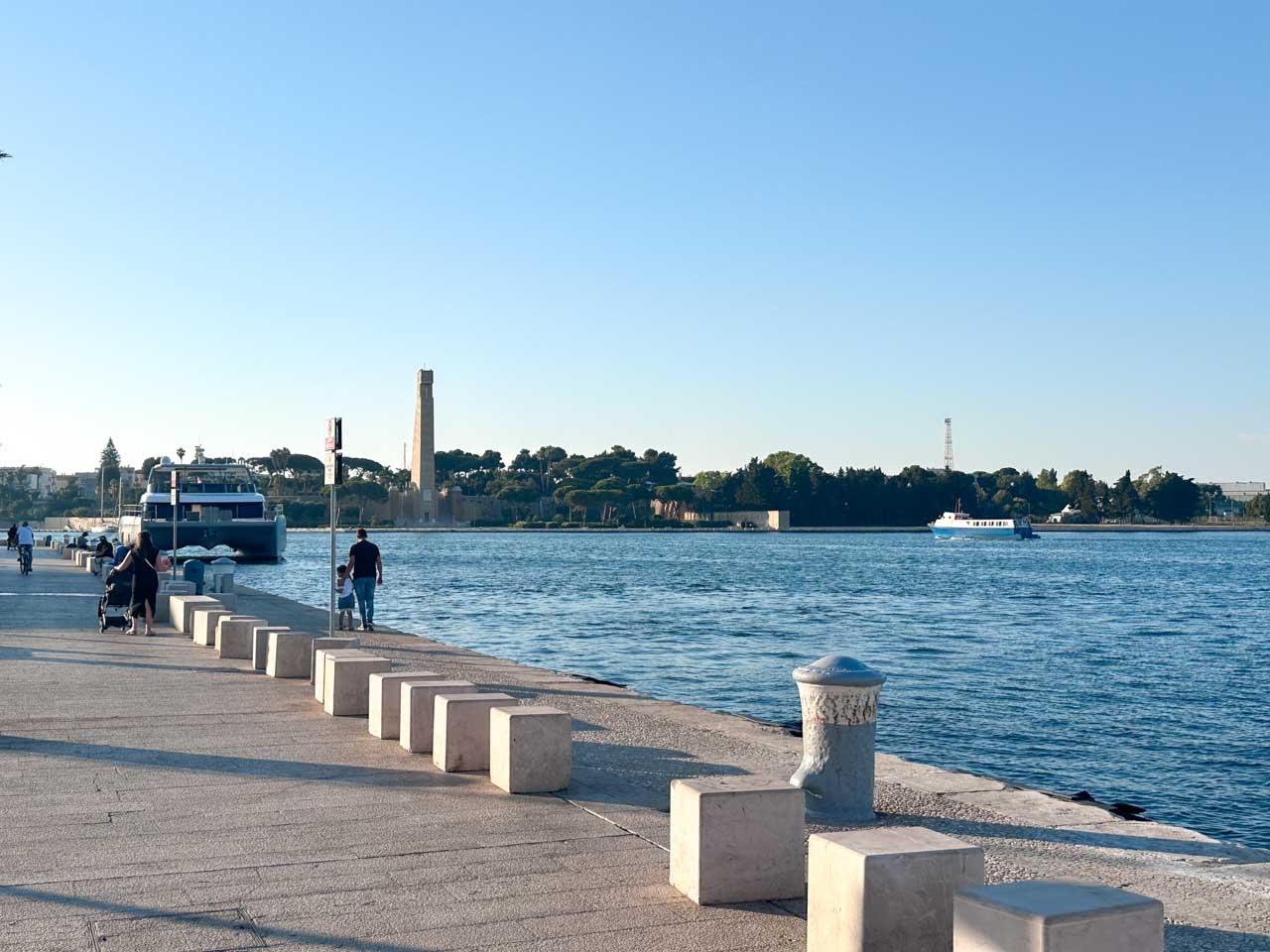
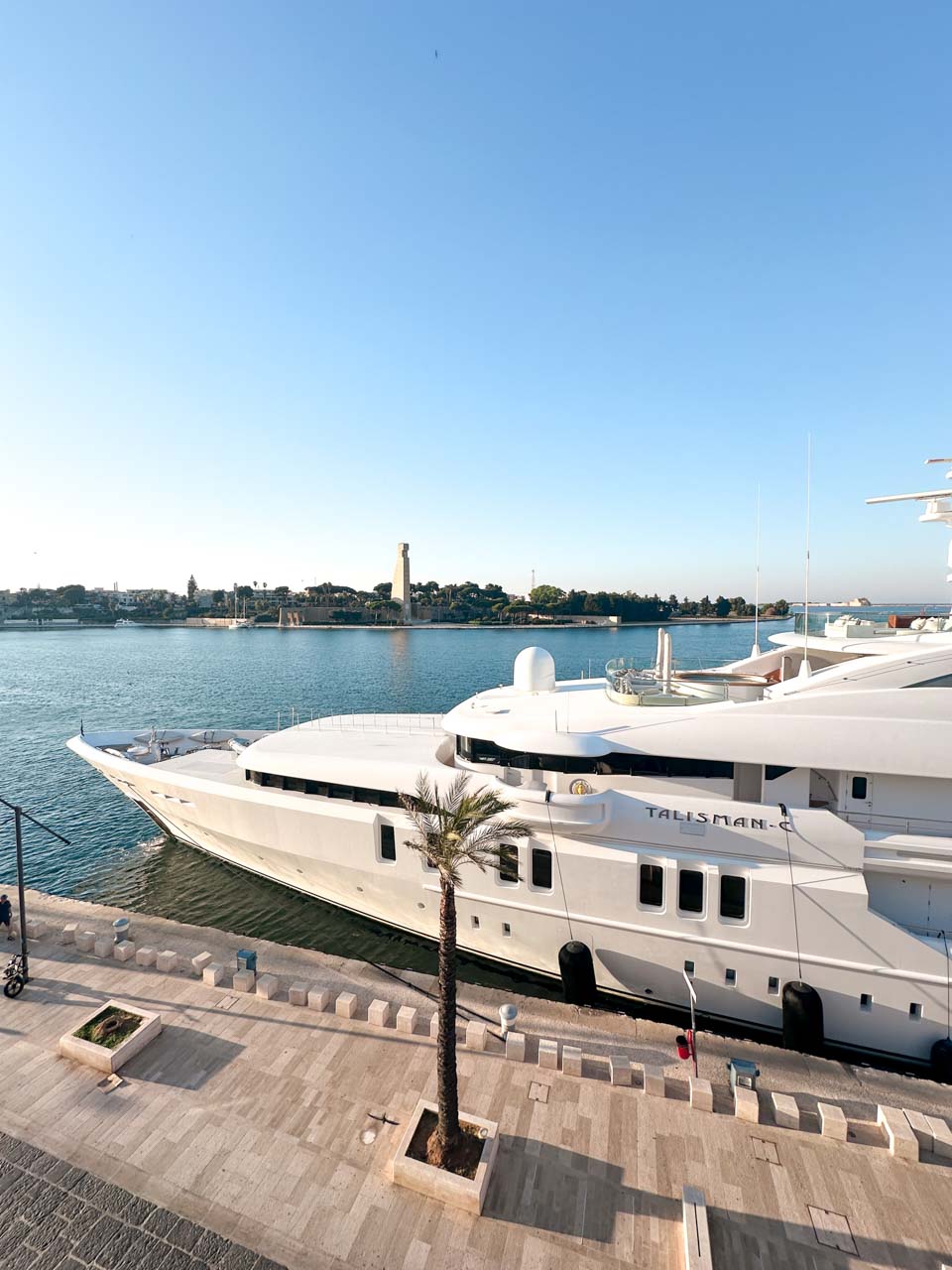
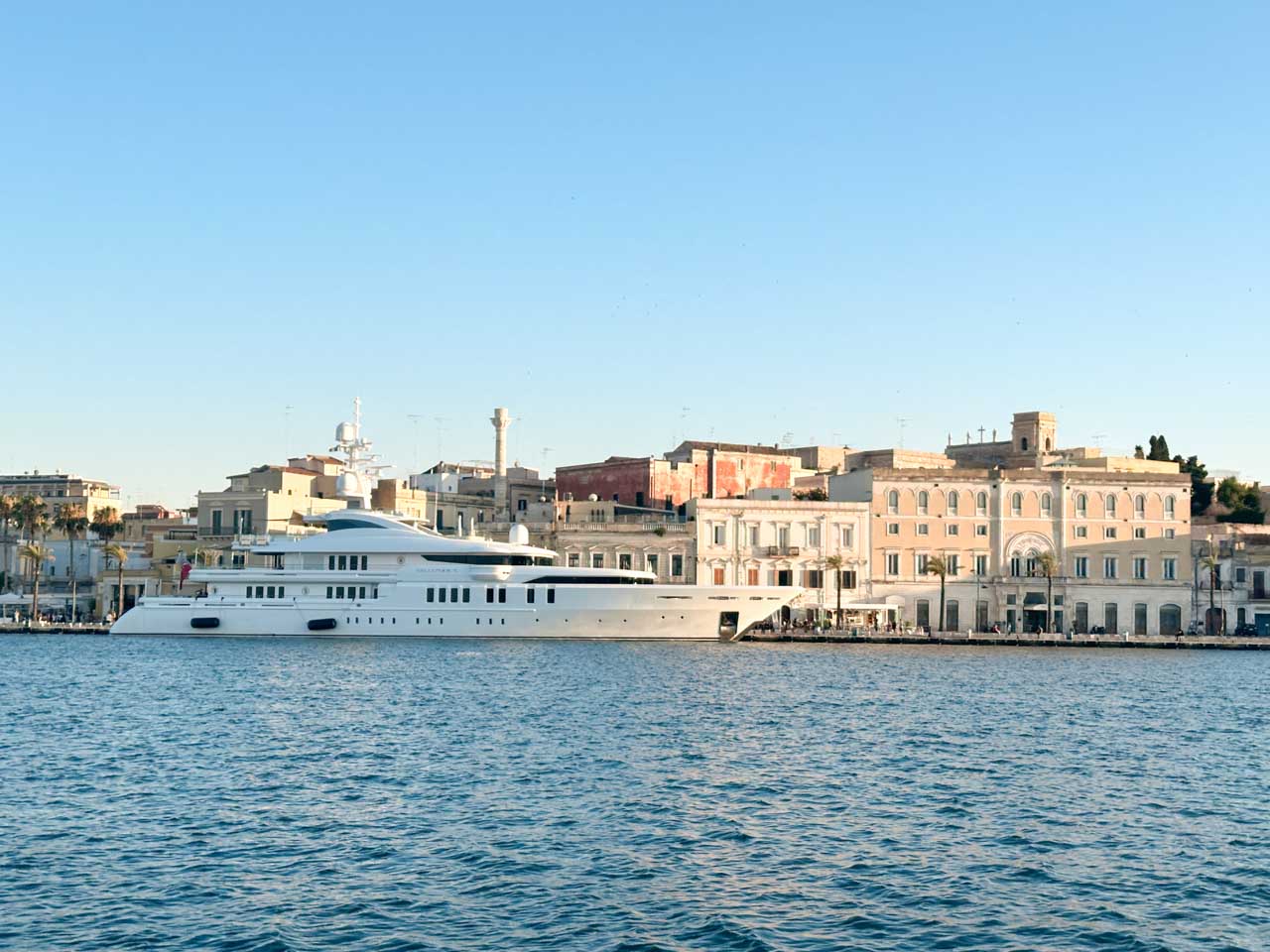
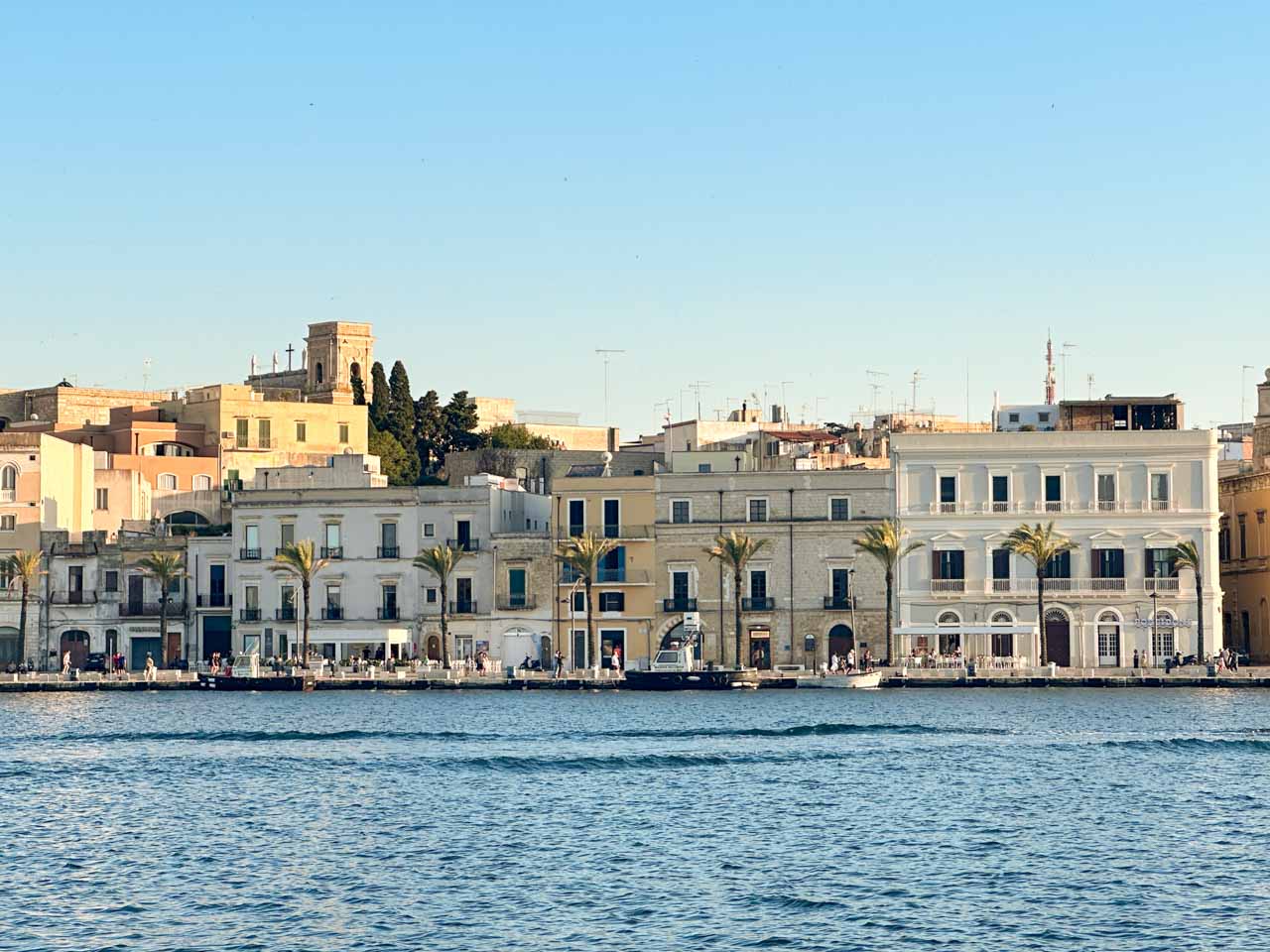
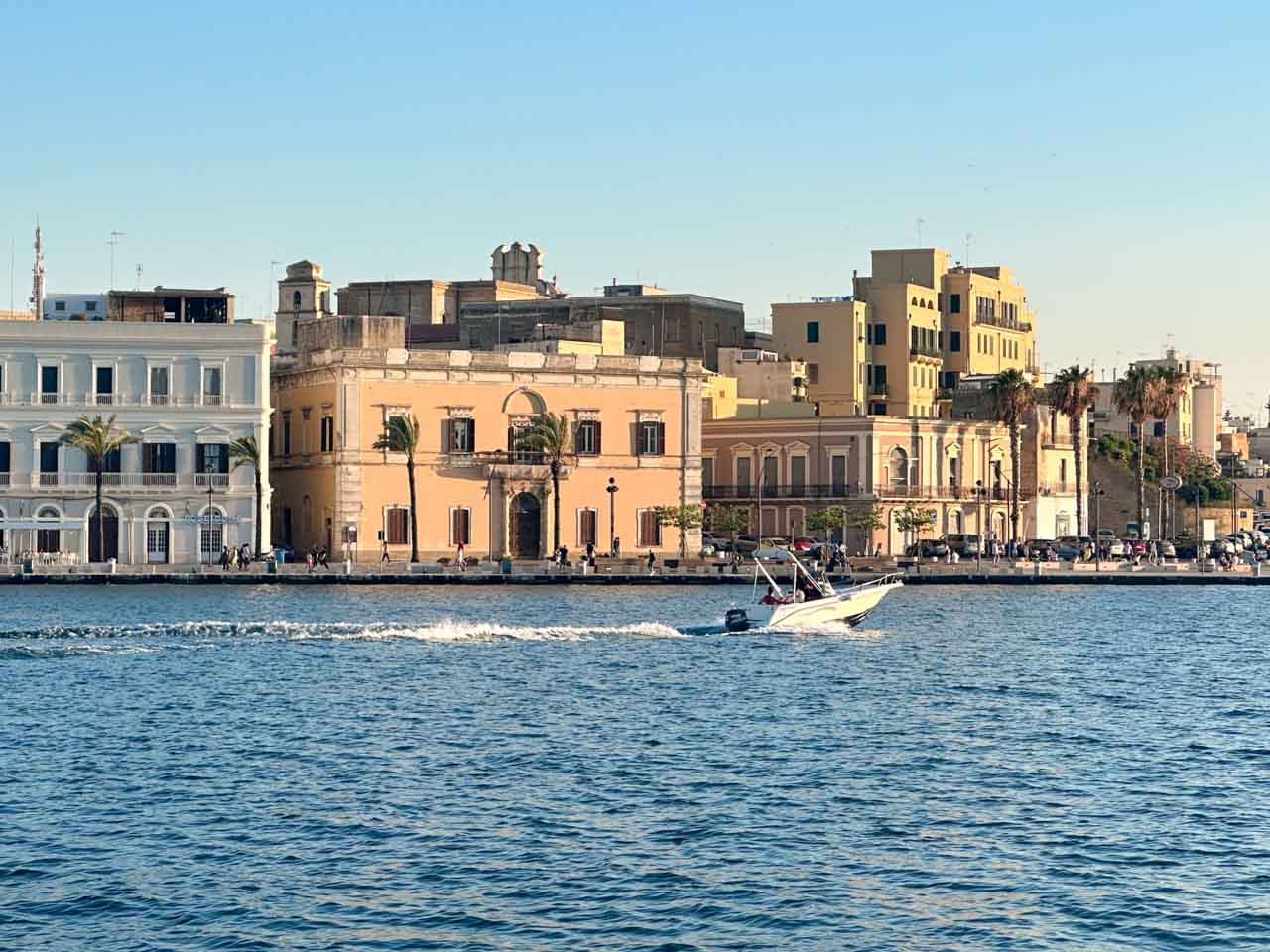
The real highlight, though, is the terrace at the top of the building. You get an incredible view of the Roman Columns (it’s right next door, so the view from up here is way better than from the bottom of the staircase), plus a great look at the Brindisi waterfront and the Monument to the Italian Sailor across the water. Definitely worth popping in for a different perspective on the city.
The Monument to the Italian Sailor
As you walk along the promenade, you’ll spot a large monument shaped like a ship’s rudder across the water. They built it to honour the 6,000 sailors who died during WWI, and it consists of two parts: a chapel at the bottom and a small exhibition at the top.
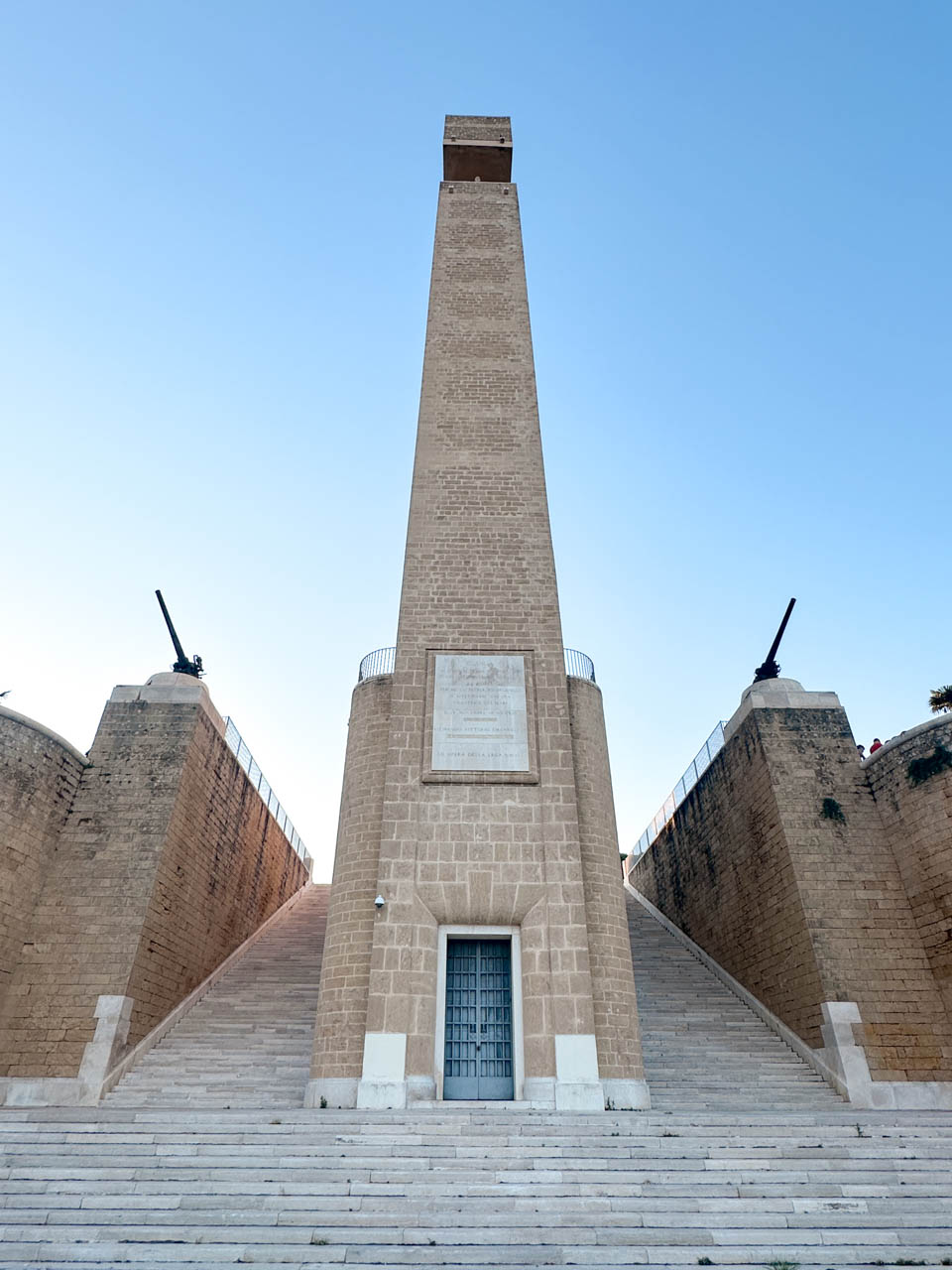

The chapel is apparently free to enter, while the exhibition costs €3, and you can head all the way to the top for panoramic views of Brindisi.
When we visited, the monument was sadly closed for renovation, so we didn’t get to go up – but I’d still recommend crossing over to the Casale district where it’s located.
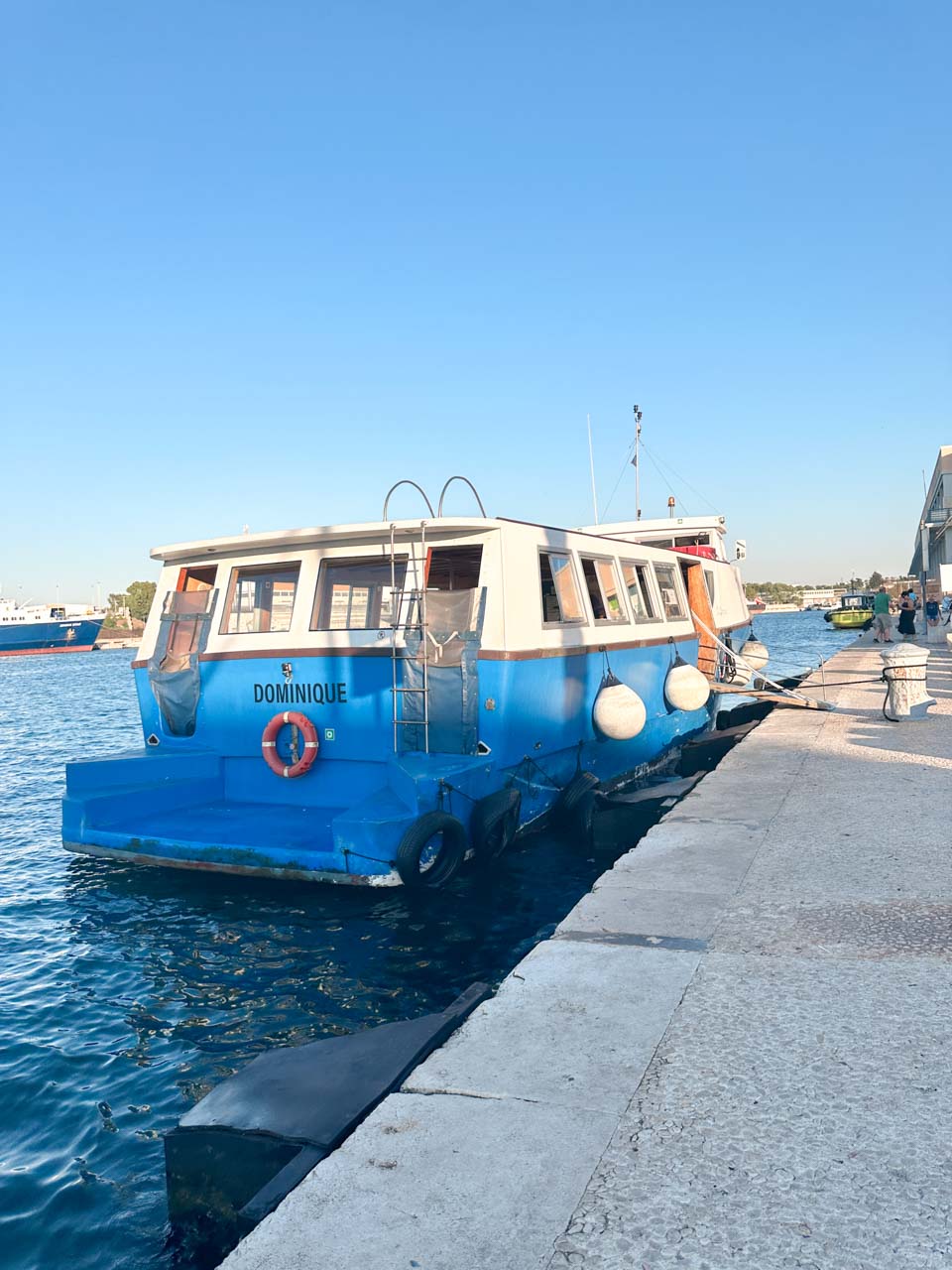
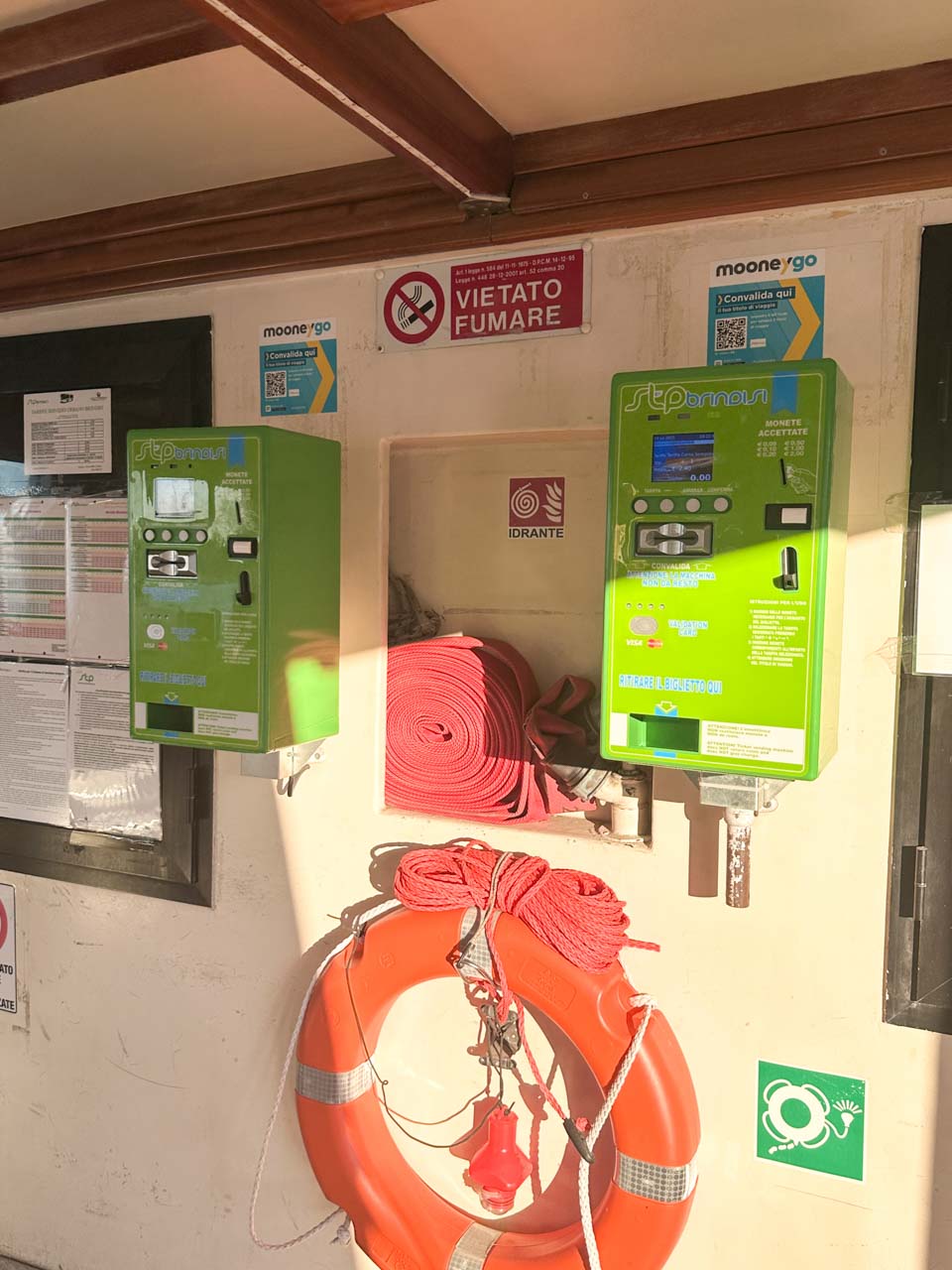
You can catch a water taxi from the waterfront. They run about every 20 minutes from early morning until late at night. Tickets cost €1.20 one way, and you can get them from the green ticket machines on board. They accept cash and cards, but on our return trip, the card machine broke down and it was cash only. So maybe keep some coins handy, just in case!
Castello Svevo
The Swabian Castle of Brindisi is a 13th-century fortress overlooking the sea, built using materials taken from destroyed Roman monuments (recycling, but make it medieval-style!).
Originally, it was meant to protect the port from enemy attacks, but over the centuries, it’s played all sorts of roles – as rulers changed hands, so did the castle’s purpose. It’s been a penal colony, a prison, a naval base, and even the temporary seat of the Italian government when Brindisi served as the capital of Italy during WWII.
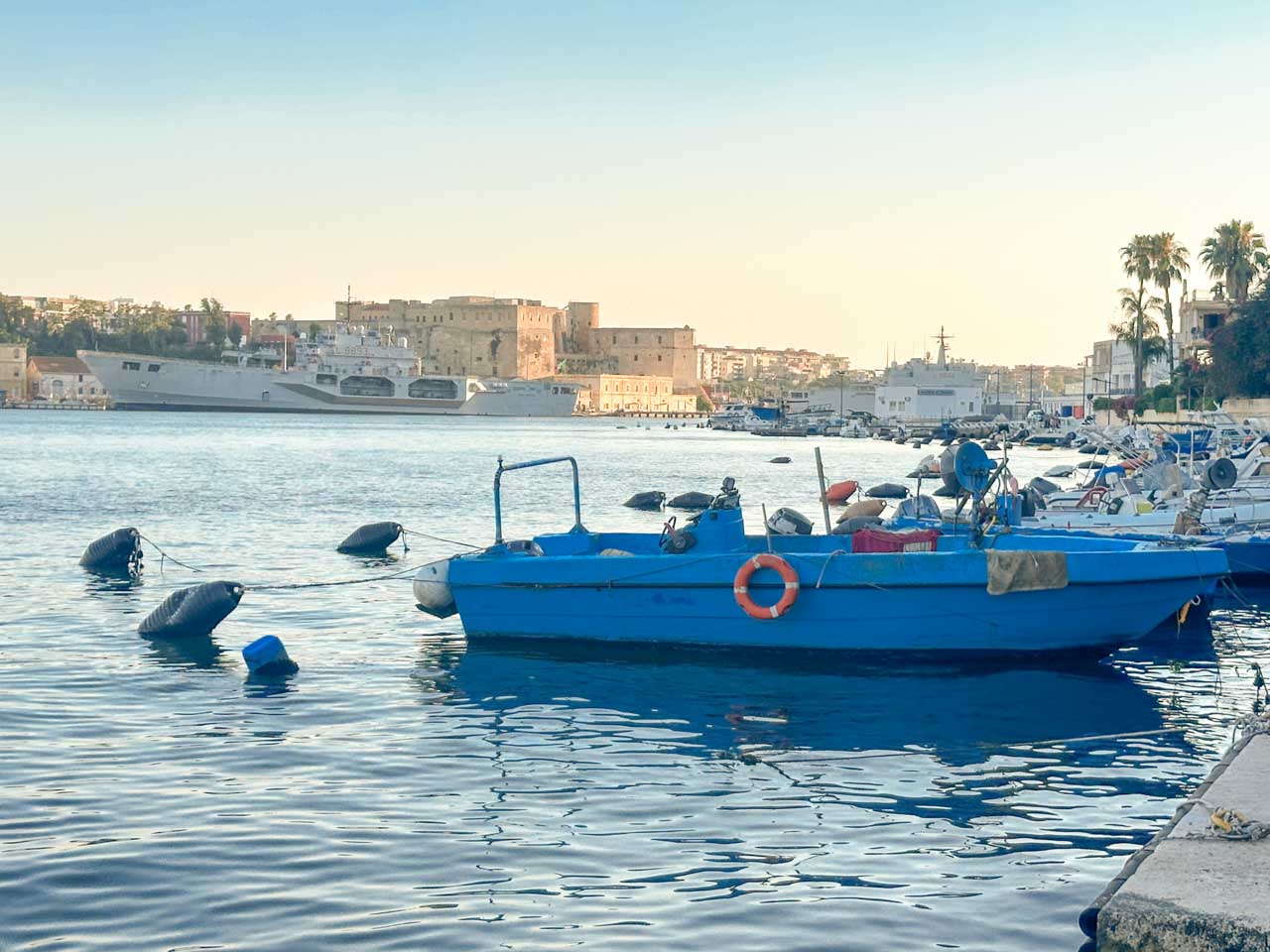
These days, it’s managed by the military – you can even spot some Navy ships in the harbour. We walked up to the entrance, but after seeing the “military zone” signs, we figured there was no chance we’d get in.

Turns out, though, you can actually visit! They offer free guided tours every other weekend, but you have to book at least 48 hours in advance – either on the PastPuglia website or in person at the reception of the Faldetta Archeological Collection by the waterfront.
We’re hoping to visit Brindisi again soon, and we’ll definitely try our luck if the castle’s open off-season!
Alfonsino Castle
Alfonsino Castle is a fortified stronghold located on the Island of Sant’Andrea. It was built in the 15th century over the ruins of a former Benedictine abbey, and its job was to keep an eye on ships going in and out of the port of Brindisi.
Over the years, it’s served all sorts of roles – most recently as a military base, until it was decommissioned in the 1980s.
These days, you can only visit it on an hour-long guided tour, which you’ll need to pre-book on the same PastPuglia website as for the Swabian Castle.
We skipped it this time, mostly because we couldn’t find an easy way to get there without a car. You’d need to go all the way around the airport, and Ubers aren’t exactly budget-friendly in Puglia.
If you do decide to visit, just a little heads-up – Italian castles often look a bit different to the fairytale-style ones you might picture in Germany or France. Many of them were built more like fortresses – so they’re more raw, with thick stone walls, square towers, and a more practical, defensive feel. Just putting it out there so nobody ends up disappointed!
Visit the neighbouring countries
Brindisi might not be the booming port it once was, but it’s still a great jumping-off point if you fancy exploring beyond Italy.
You can catch a ferry and be in Albania or Greece in just a few hours – ideal if you’re in the mood for a mini adventure or want to tick off a couple of countries in one go.
It’s easy to book tickets online and there are regular connections, especially during summer. So if you’ve got a bit of extra time, it’s well worth considering a little ferry hop across the Adriatic.


Where to eat in Brindisi
Brunda Pizzeria
🕒 Open daily from 7 pm to 12 am
If you’re after the best pizza in Brindisi, Brunda Pizzeria is the place to go. It’s located in a beautiful vaulted cellar, and the pizza menu is so extensive it took us a while just to read through it all.
You’ll find all the classics, but also some more creative combos on the specials menu that we haven’t seen anywhere else. We went for the Black Brunda pizza with mozzarella, basil cream, smoked Black Angus, and ricotta – and honestly, it was divine.
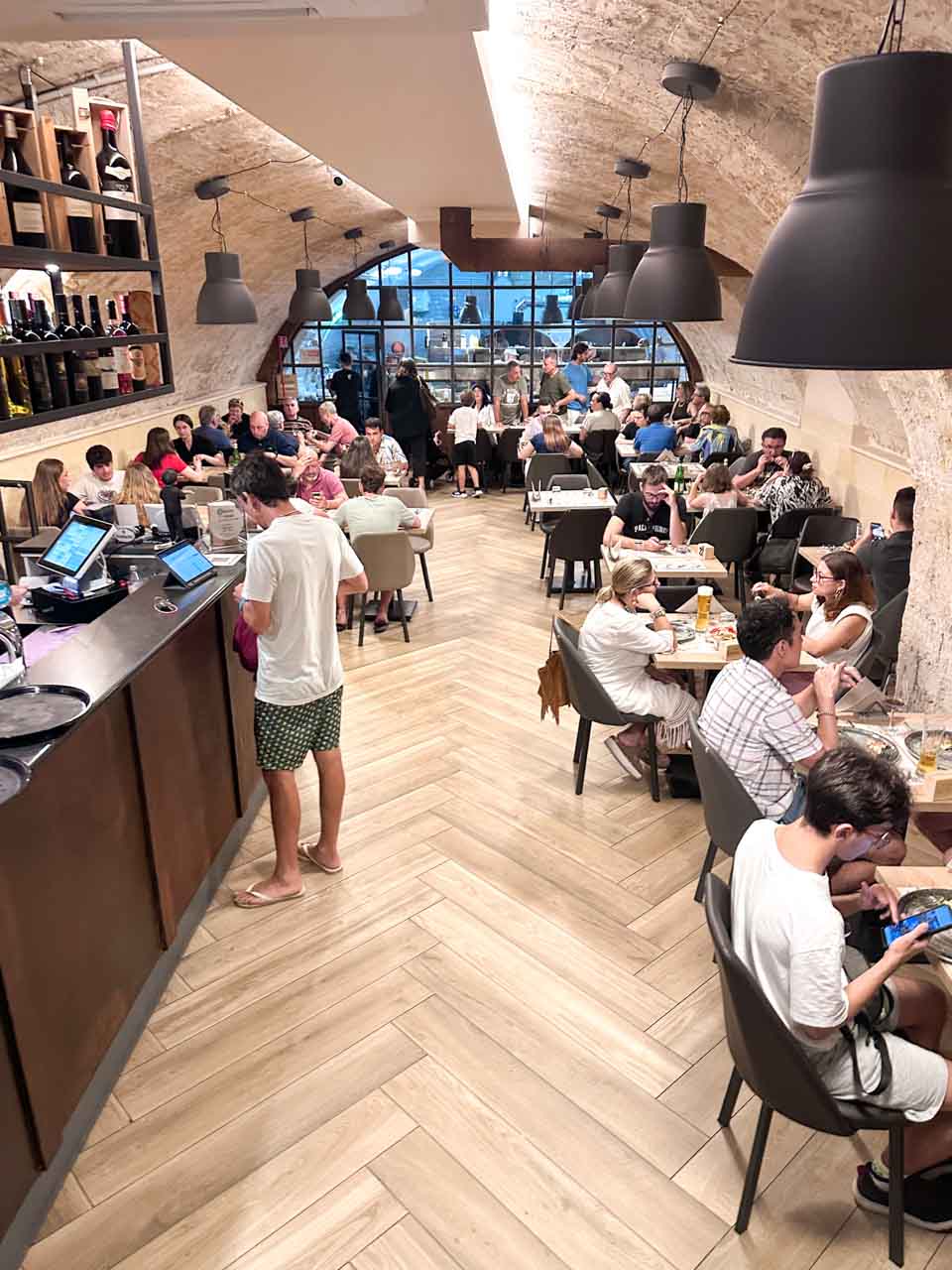
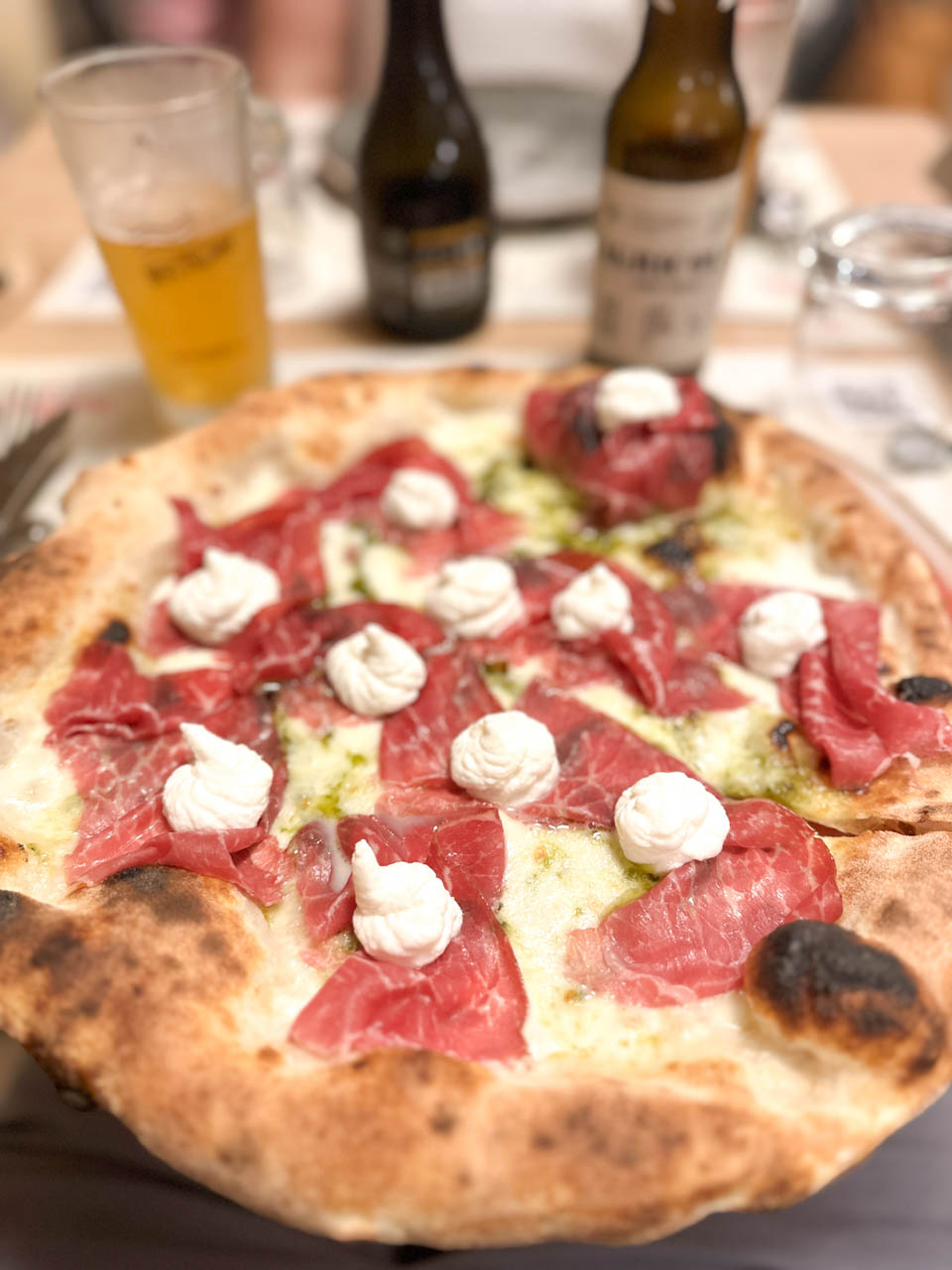
They also have a great selection of local wines from Puglia and beyond, plus a mix of draft and bottled beers, including some from Salento. I tried one with sea salt and chilli peppers – I thought it might be a bit of a gimmick, but you could really feel the kick!
If you’re planning a visit, I’d recommend booking ahead or getting there not long after it opens. Locals tend to eat late, so while we got a table around 8:45 pm, there was a huge queue forming by the time we left. (This goes for most restaurants in Puglia too!)
La Locanda del Porto
🕒 Open daily from 12:15 – 3 pm and 7:15 – 11:30 pm
The other restaurant you absolutely have to visit in Brindisi is La Locanda del Porto. Like most popular spots in Puglia, it gets busy in the evenings, so either book ahead or show up just after it opens if you want to avoid a long queue.
They specialise in seafood, fish, and meat dishes, and it’s a great place to try some proper Pugliese specialities. We definitely ordered way too much because we wanted a bit of everything.
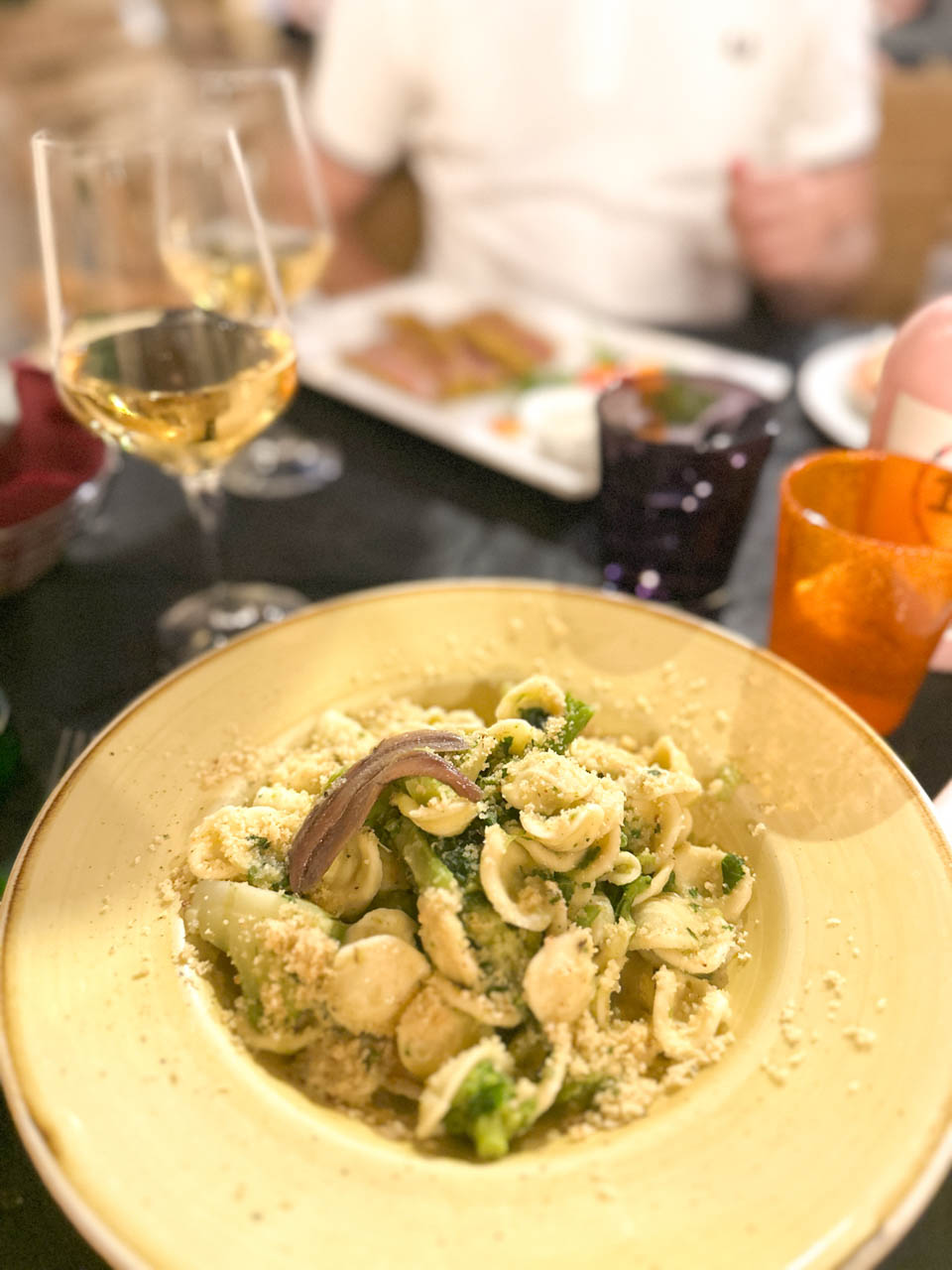
One of the region’s signature dishes is orecchiette alle cime di rapa – ear-shaped pasta with broccoli rabe, anchovies, and toasted breadcrumbs. I’m not big on bitter greens, so it wasn’t quite my thing, but I’m still glad I gave it a go.
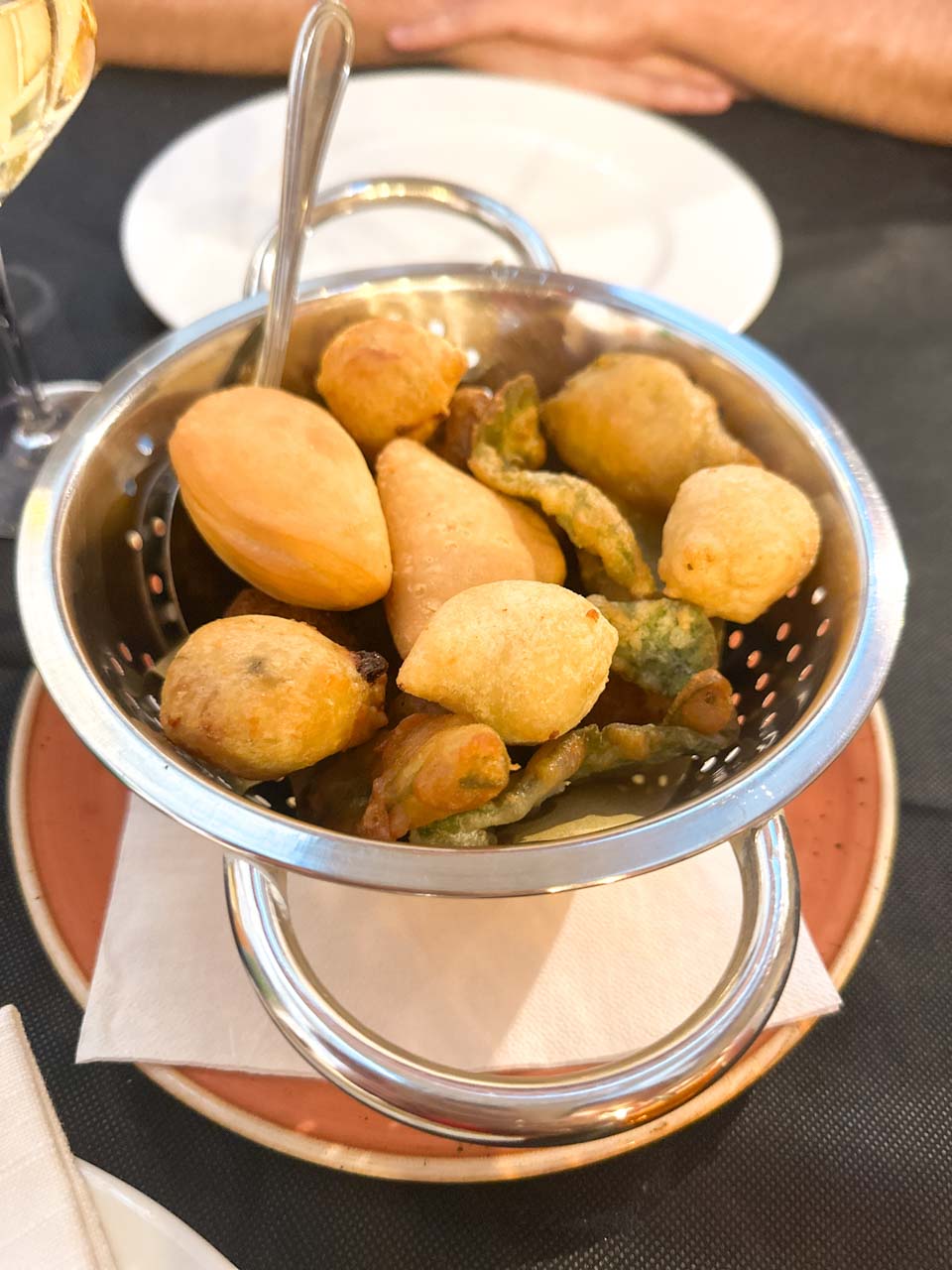
If you want to sample a few things at once, start with the frittino pugliese – a little basket of local bites like pettole (fried dough balls), panzerotti (fried pizza pockets), croquettes, and courgette flowers.
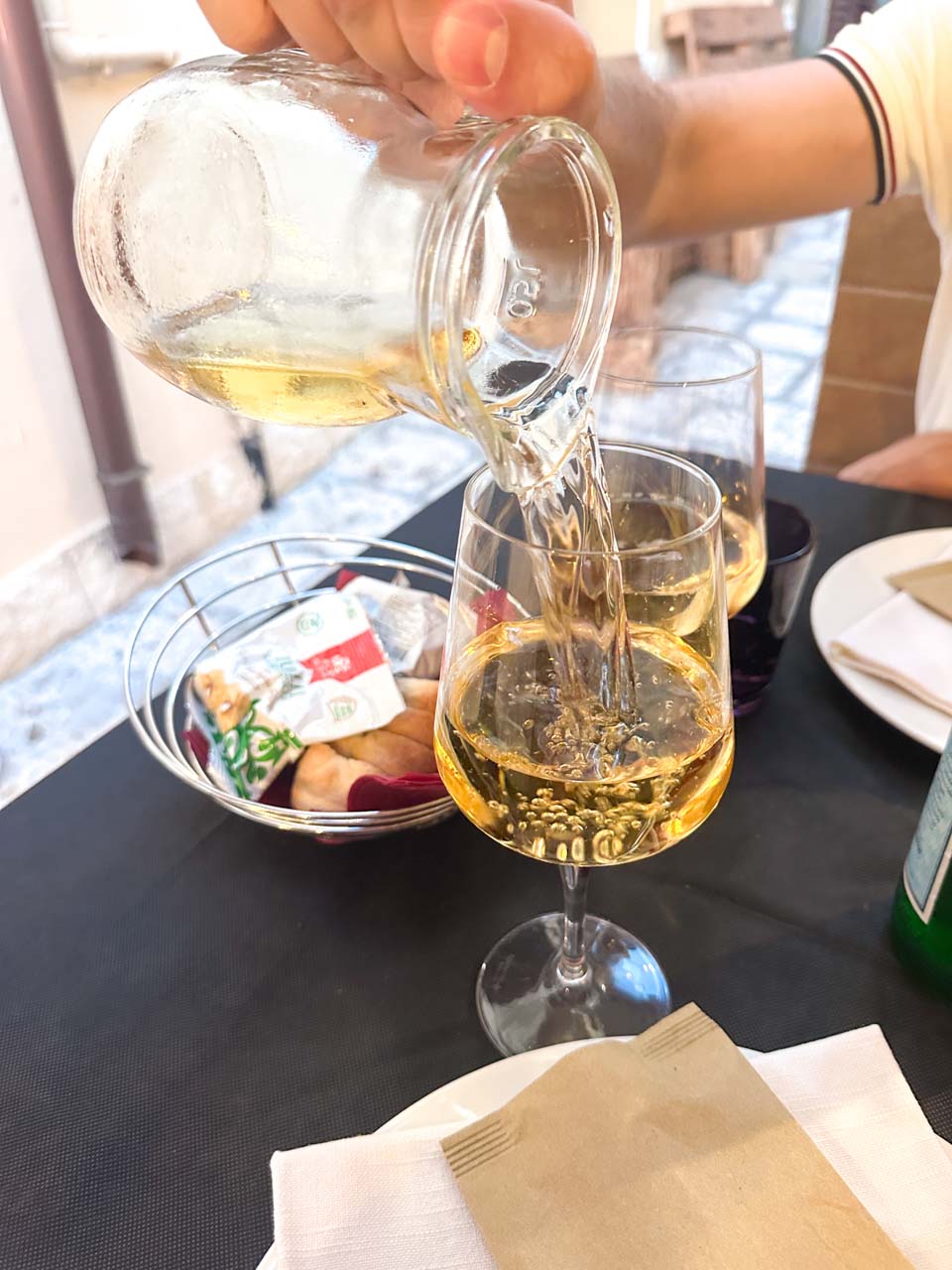
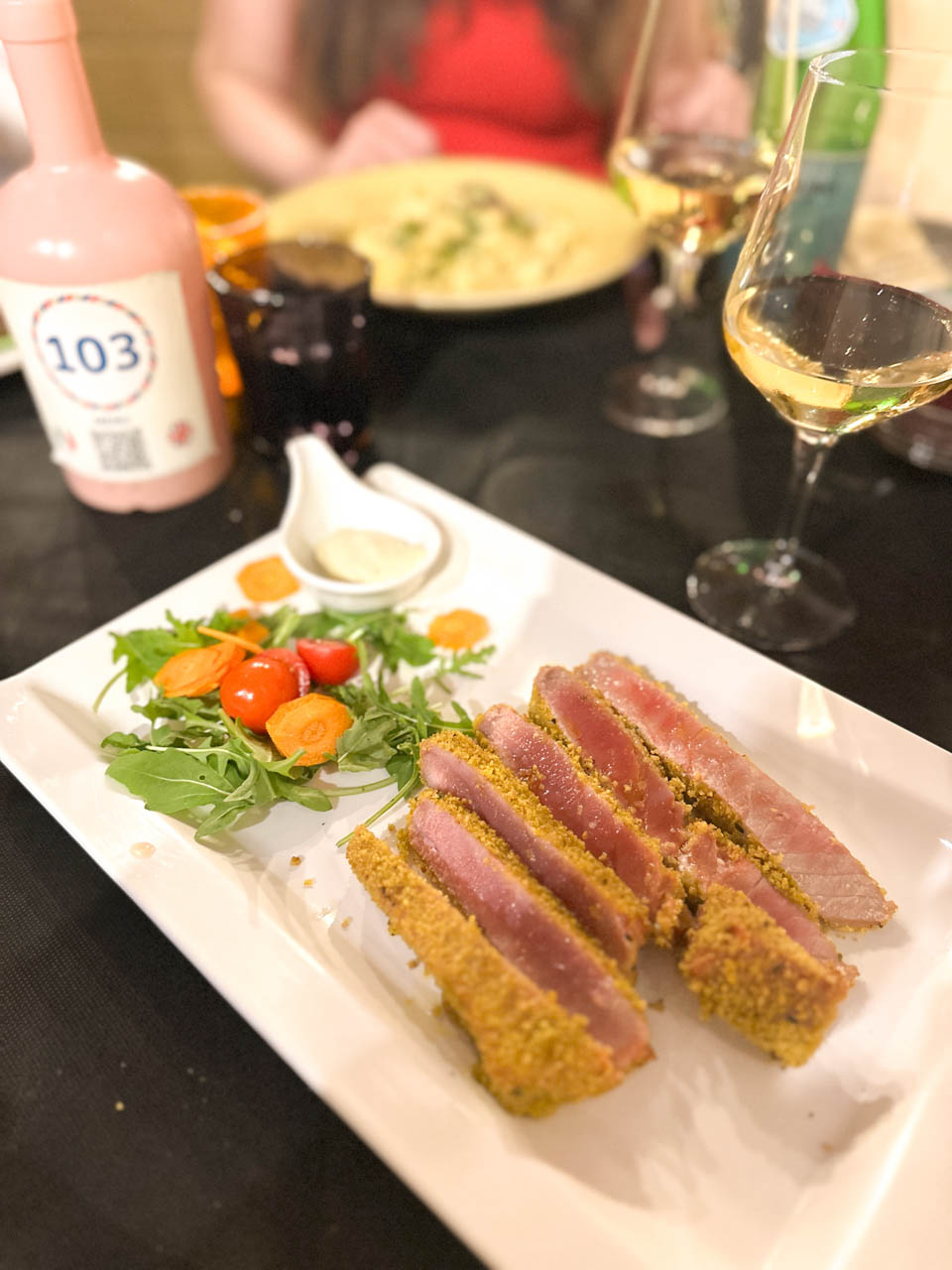
For mains, try the bombette pugliesi – little pork rolls stuffed with cheese and pancetta. However, if you only have room for one thing, make it the crispy tuna steak – I keep thinking about it even now! And at €4 for half a litre of house wine, you really can’t go wrong.

Spilusi
🕒 Open daily from 12 pm to 11 pm
We ended up at Spilusi because it was one of the few nearby spots that stayed open through the afternoon – and we were really glad it did. They specialise in pizza and pasta, and the whole team were really friendly.


If you’re going, I’d suggest starting with the fondue made from a dreamy combo of three Italian cheeses, or the polpettine pugliesi – little meatballs in tomato sauce.
For your main, don’t miss the cacio e pepe, which they whip up in a giant wheel of cheese right at your table. I’ve always wanted to see that in person, and the whole spectacle was totally worth it (plus, the pasta was genuinely delicious!).


Ausonia 1963
🕒 Open from 5:30 am to 9 pm on weekdays, and until 1:15 pm on Saturdays and Sundays
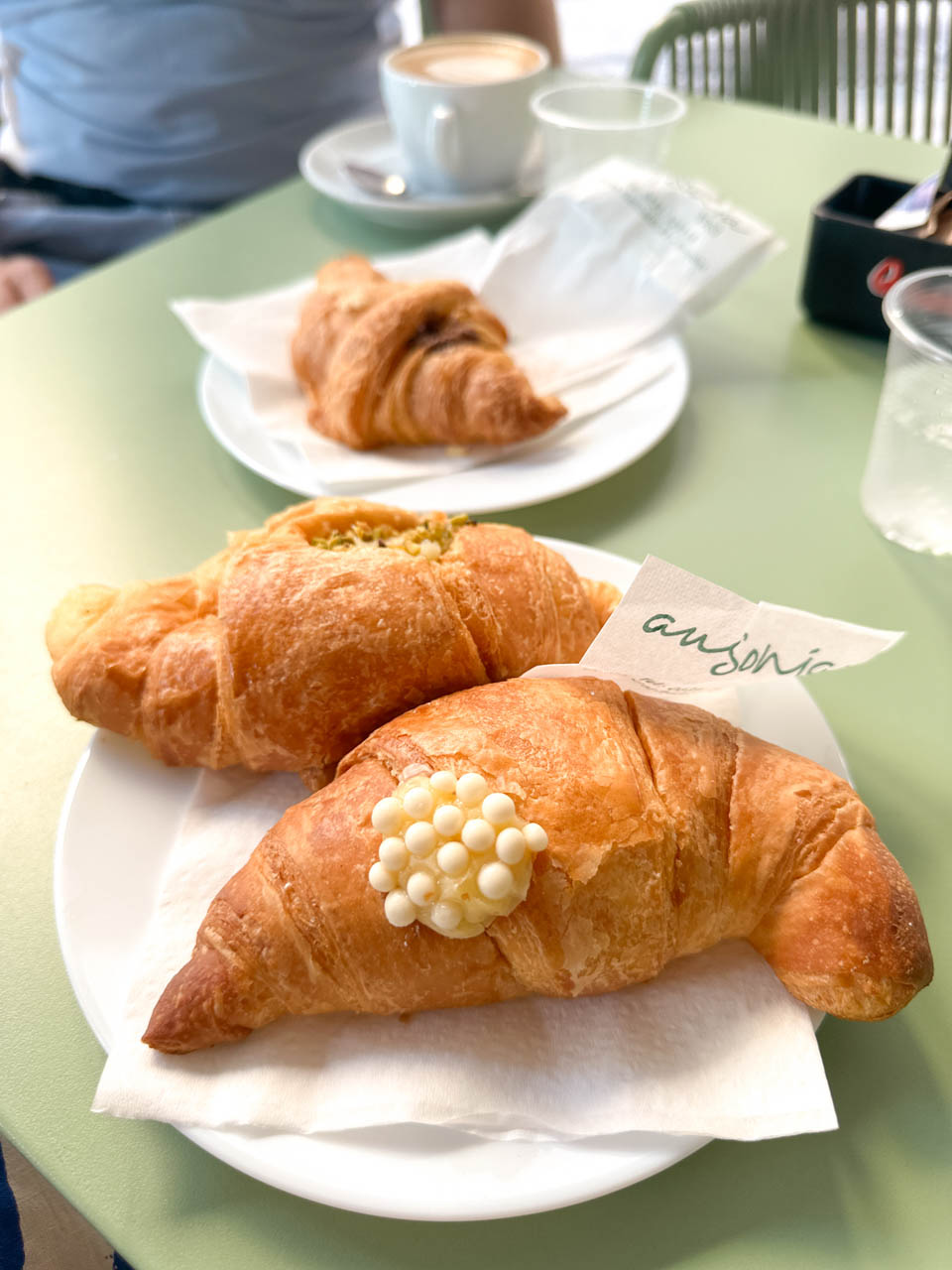
When it comes to the best cafés in Brindisi, Ausonia 1963 was hands down our favourite. They’ve got loads of delicious pastries, plus a few savoury bits if you’re not after something sweet.
I’d especially recommend the cornetto with a Kinder Bueno filling, or a pasticciotto – a traditional Pugliese shortcrust pastry usually filled with custard. The places we’ve been to offered it with vanilla custard or pistachio cream, and I promise it’s a little slice of heaven, especially when it’s still warm.
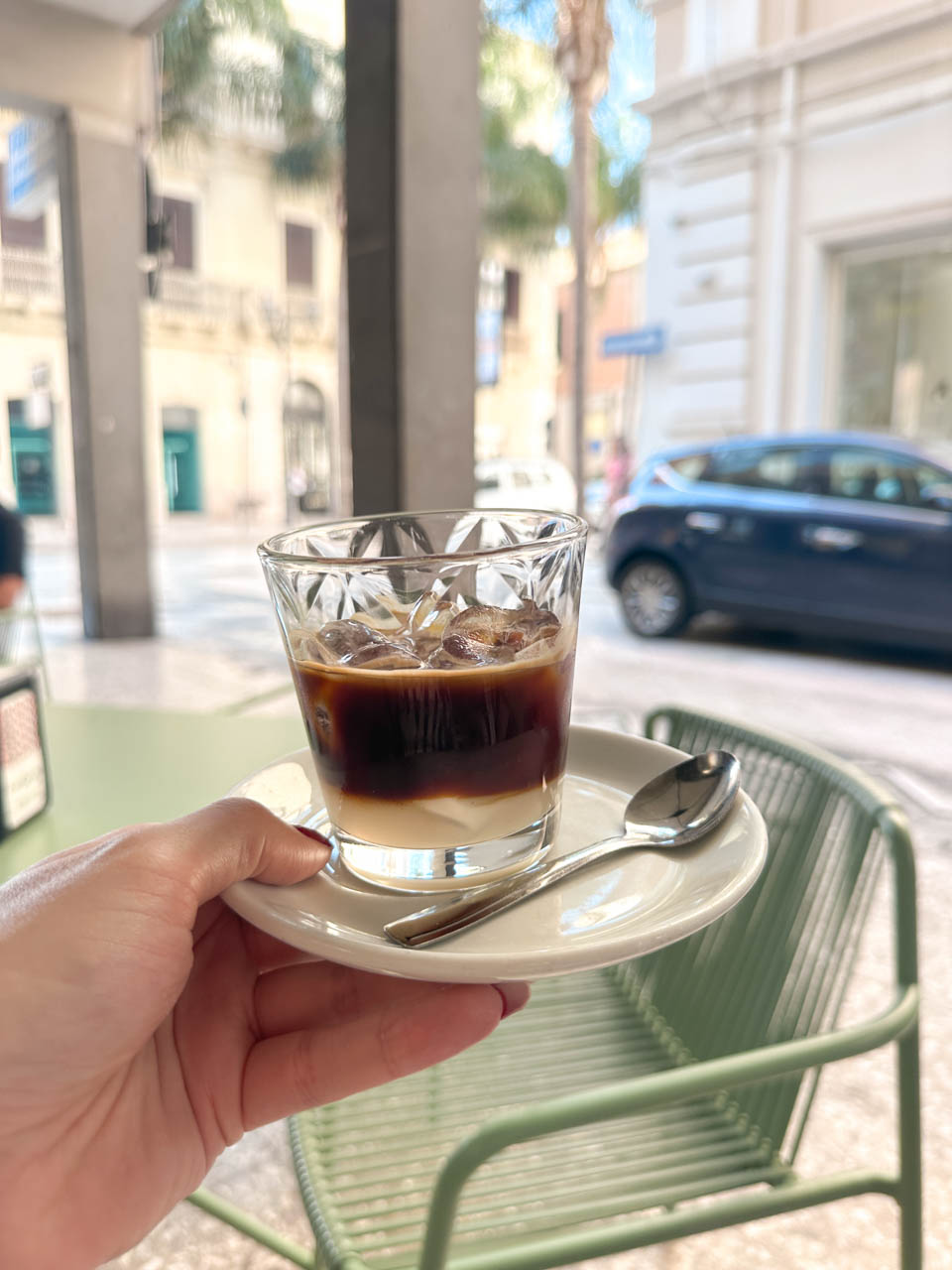
Both go perfectly with a caffè Leccese. Despite the name, it’s popular across the whole region (you can sometimes find it on the menu under caffè Salentino). It’s basically espresso with a splash of almond milk syrup or sweetened almond milk and a few ice cubes – and it’s seriously addictive.
If you’re stopping by in the afternoon, they’ve got a whole spritz menu too. I’m usually loyal to Aperol, but my latest obsession is the Sarti Spritz, which mixes Sicilian blood orange with mango and passionfruit. If you like Aperol, you should try this one next!


Betty
🕒 Open daily from 7 am to 12 am, or until 1:30 am on Saturdays
I’ll admit I wasn’t too sure about this place at first. My friend mentioned it was the go-to spot for expats in Brindisi, so I worried it might feel a bit too international and not all that authentic.
But when our host told us it was one of his two favourite restaurants in the whole city, we figured it was worth a shot on our first evening. As soon as we sat down, we noticed all the surrounding tables were filled with people speaking Italian – which already felt like a good sign.


We went for the mixed bruschettas with flavours from Salento. They were tasty, though a bit steep at €10 for three small pieces. Still, if you’re after a cocktail with a lovely view of the waterfront, this is a pretty solid spot.
Caffè Olympia
🕒 Open from 6:30 am to 12 am, closed on Mondays
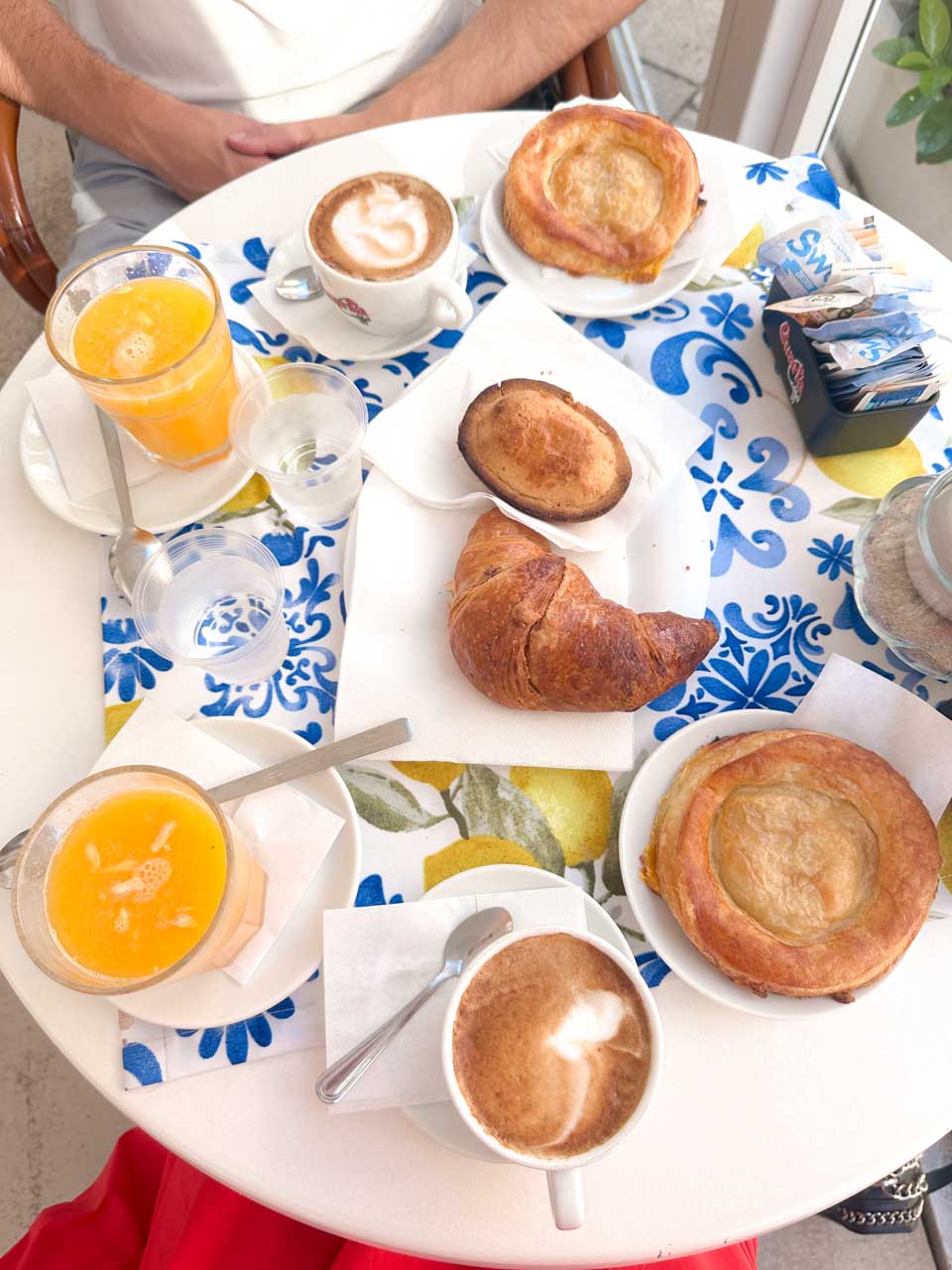
If you’re after a classic espresso bar for a traditional Italian breakfast of coffee and a cornetto, Caffè Olympia is a solid choice.
The staff spoke English – there was a lovely waiter who kindly talked us through the pastry options after spotting us squinting at the display case with no labels. There’s no indoor seating, but plenty of outdoor tables under a canopy.
If you’re more into savoury than sweet, they’ve got several options too. You can grab a rustico – it’s a flaky puff pastry filled with tomato sauce, mozzarella, and béchamel. The one we had in Lecce was super heavy on the béchamel, but this version had a better balance, with more tomato coming through.
They also sell some cute Italian sweets inside, like little bonbons in spritz-themed tins, which made perfect souvenirs to bring home.
I still preferred Ausonia overall, but if you fancy mixing things up or need a spot that stays open a little later on weekends, it’s definitely worth a stop.


Did you enjoy these tips? Check out the rest of my Puglia travel guides:
- How to Spend 48 Hours in Bari: Best Things to Do, See, and Eat
- How to Spend a Day in Lecce, the Florence of the South
- How to Spend a Day in Ostuni, the White City of Puglia
- How to Spend a Day in Polignano a Mare: Best Things to Do and Eat
- 12 Best Things to Do in Alberobello, Puglia’s Fairytale Town
- Matera Travel Guide: Best Things to Do, See, and Eat in Matera