Last updated on June 27, 2026
As we were planning our Puglia itinerary, Ostuni was one of my non-negotiables – and one of the places I was most excited to visit after seeing it all over YouTube and Instagram.
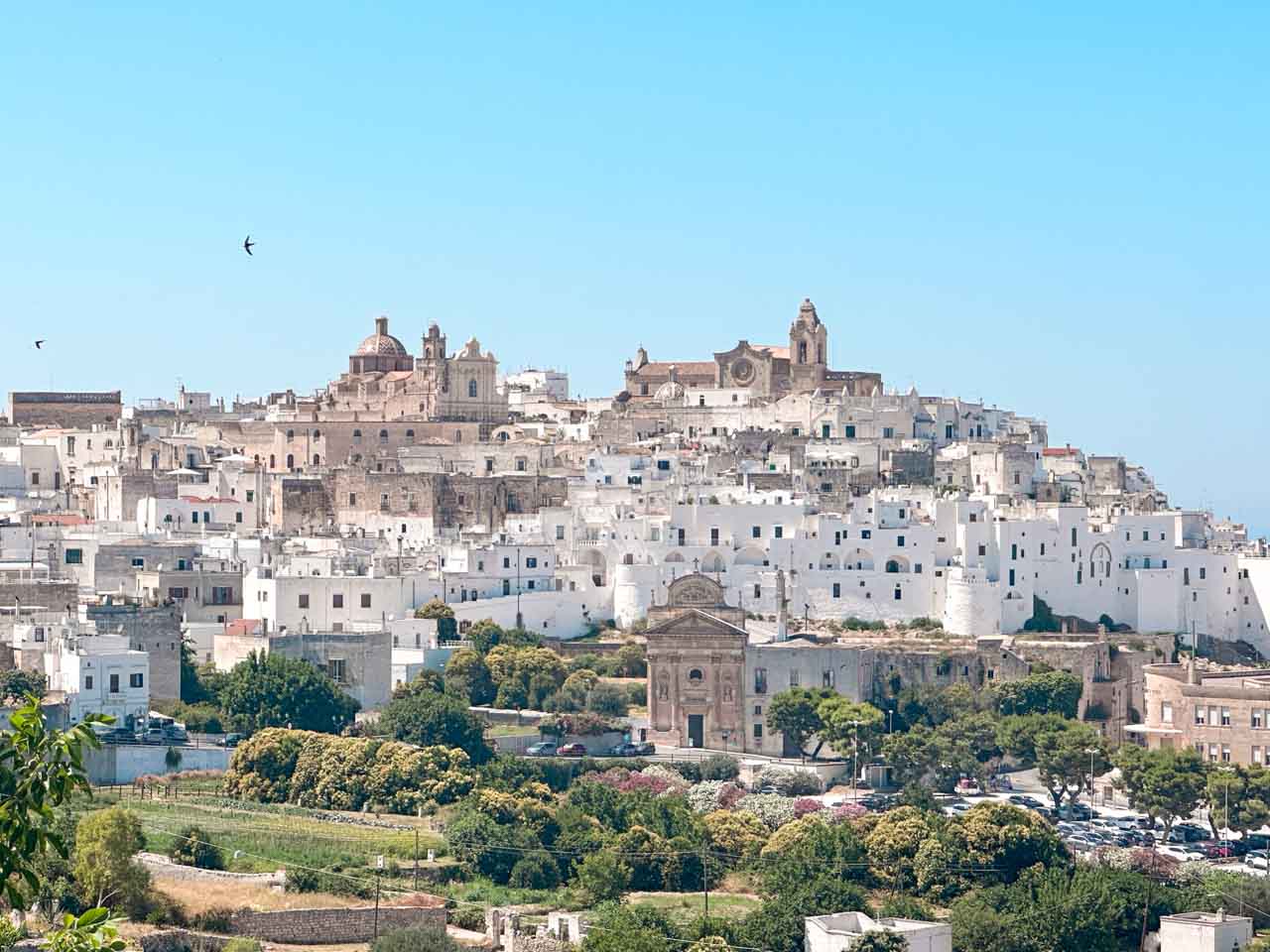
What makes this fairytale town so special is its location. The Old Town sits on top of a hill overlooking the Adriatic Sea. It was originally built as a fortified citadel, surrounded by ancient walls – and its defences were later strengthened under none other than the Queen of Poland, Bona Sforza, who ruled Ostuni in the 16th century!
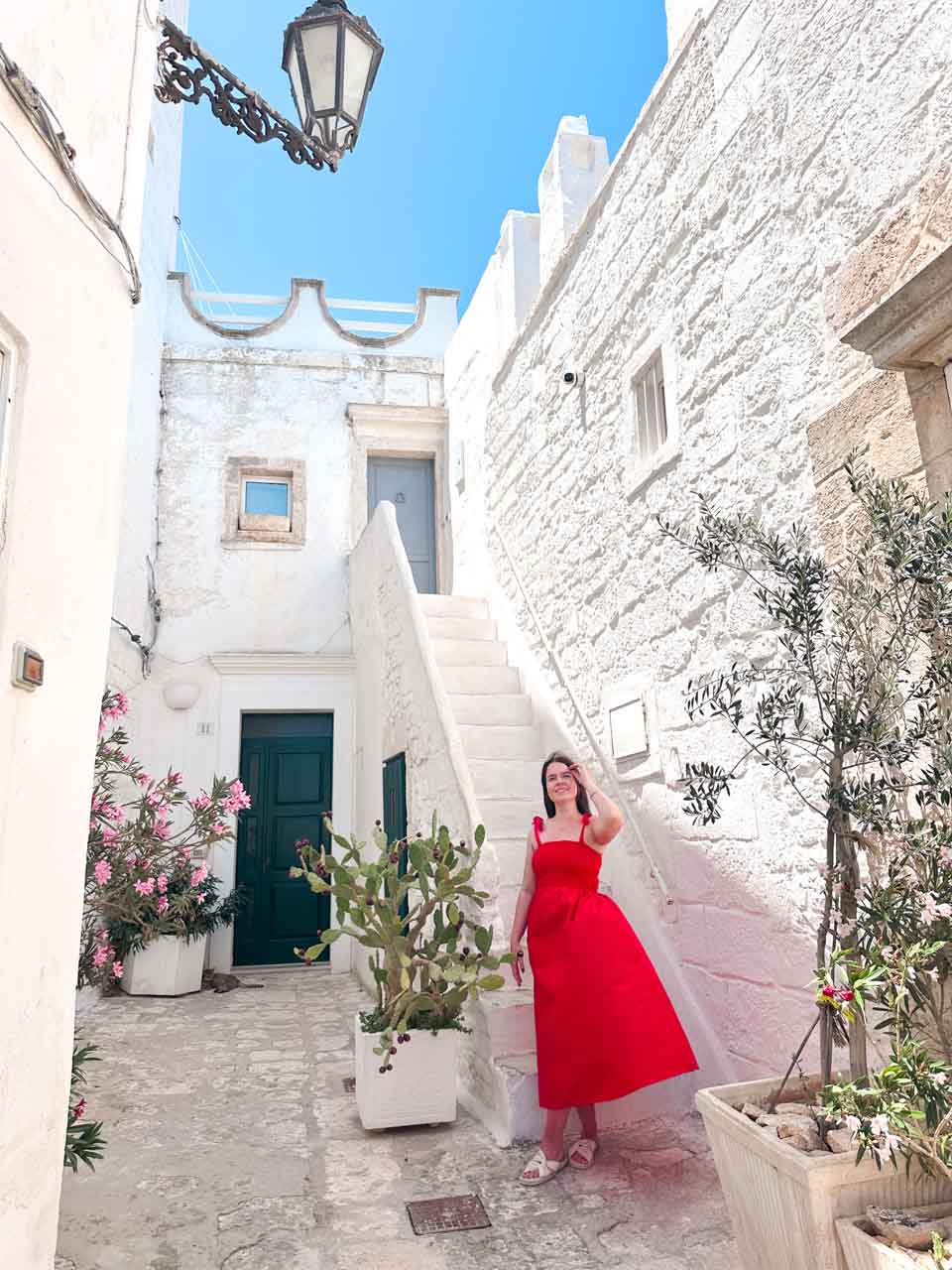
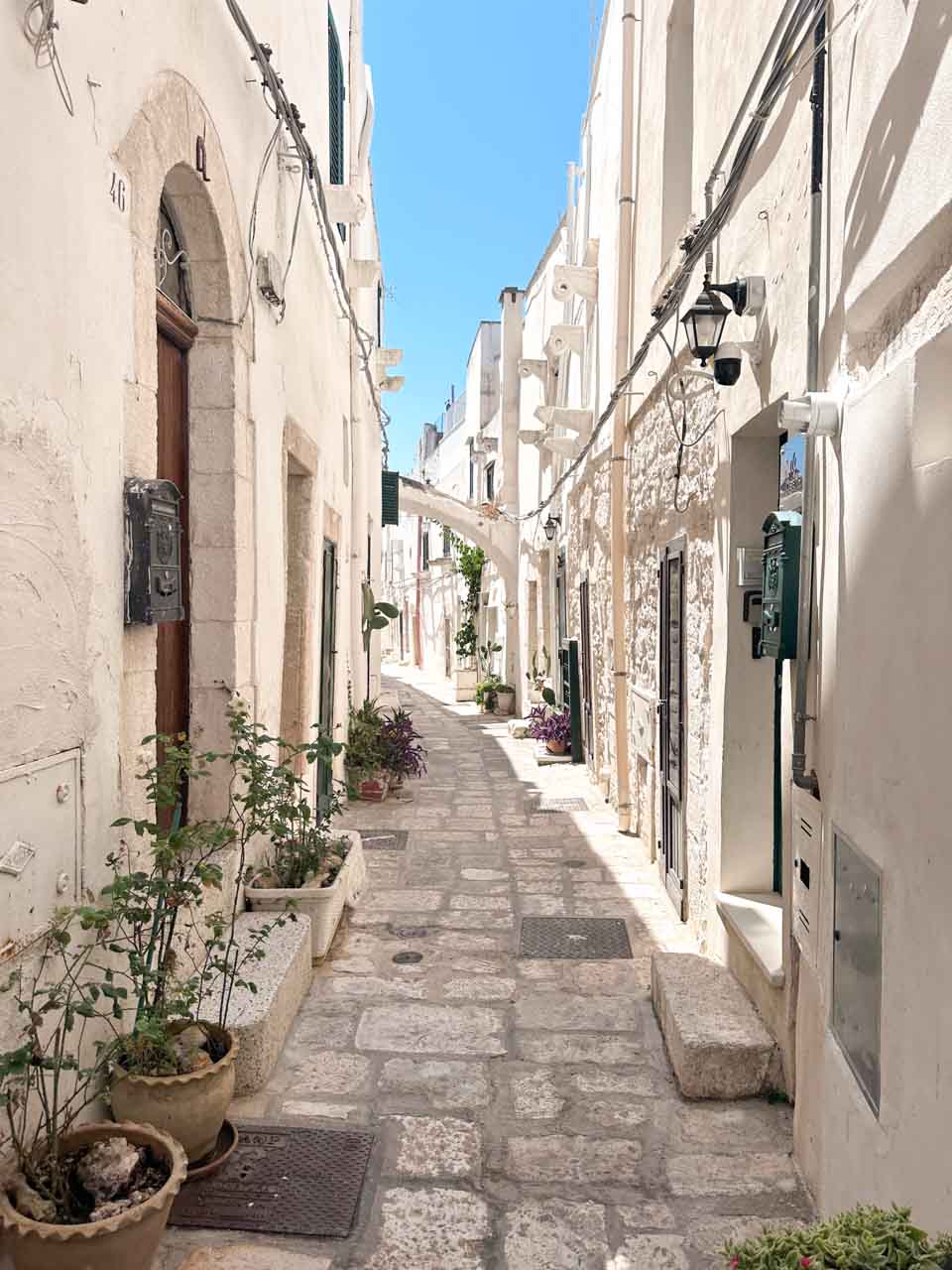
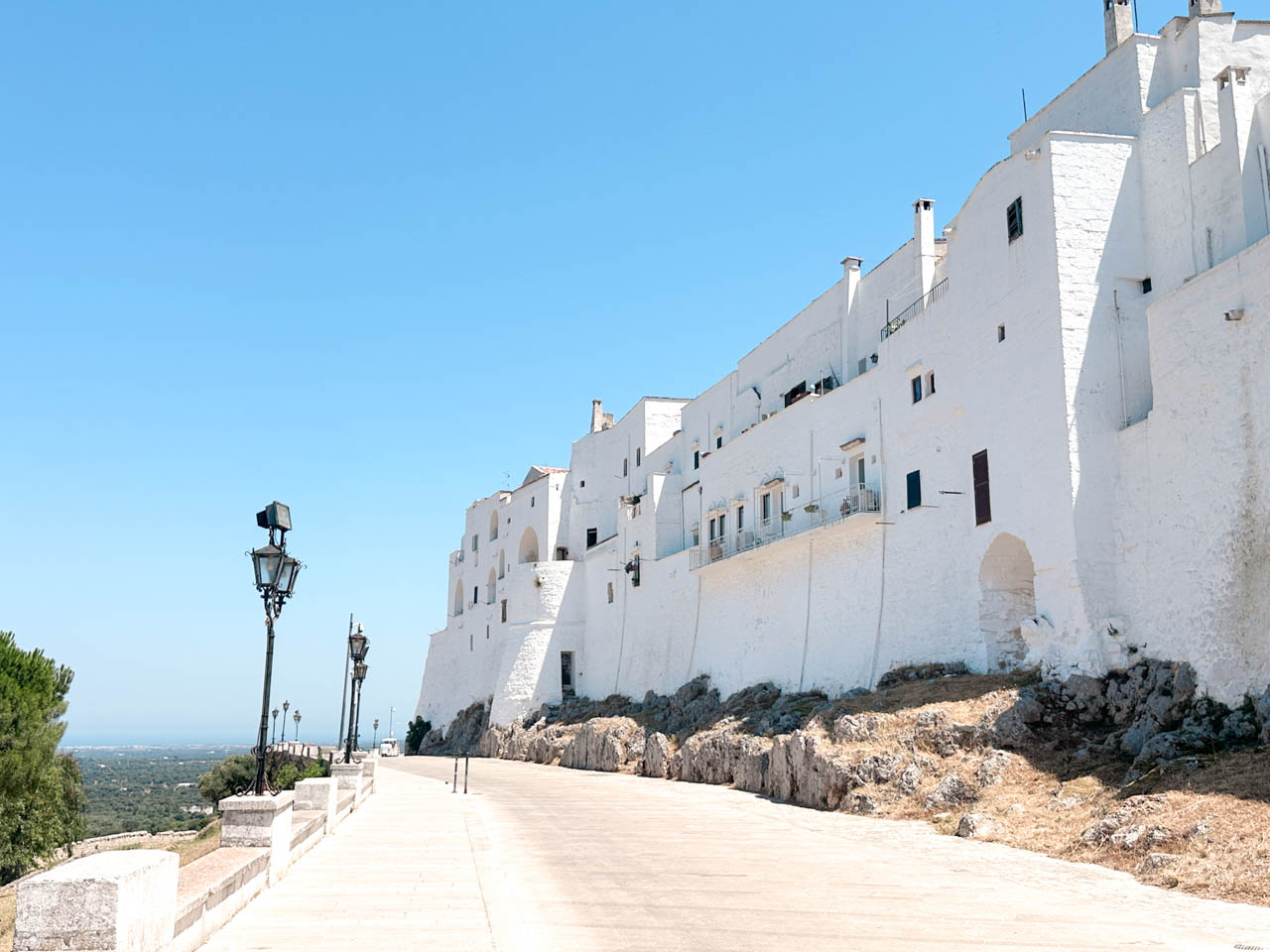
But what really makes it famous are the whitewashed houses, which gave Ostuni its nickname, la Città Bianca – the White City.
Ostuni also makes for a really easy day trip from Brindisi, Lecce, Bari, or other parts of Puglia. It’s compact enough that you can see all the main highlights in a day, but it’s also a great place to stay overnight or use as a base for exploring more of the region.
So, here’s my guide to spending a day in Puglia’s White City – including all the best things to see, do, and eat in Ostuni.
AD – This post contains affiliate links (marked with *) | Read my full disclaimer
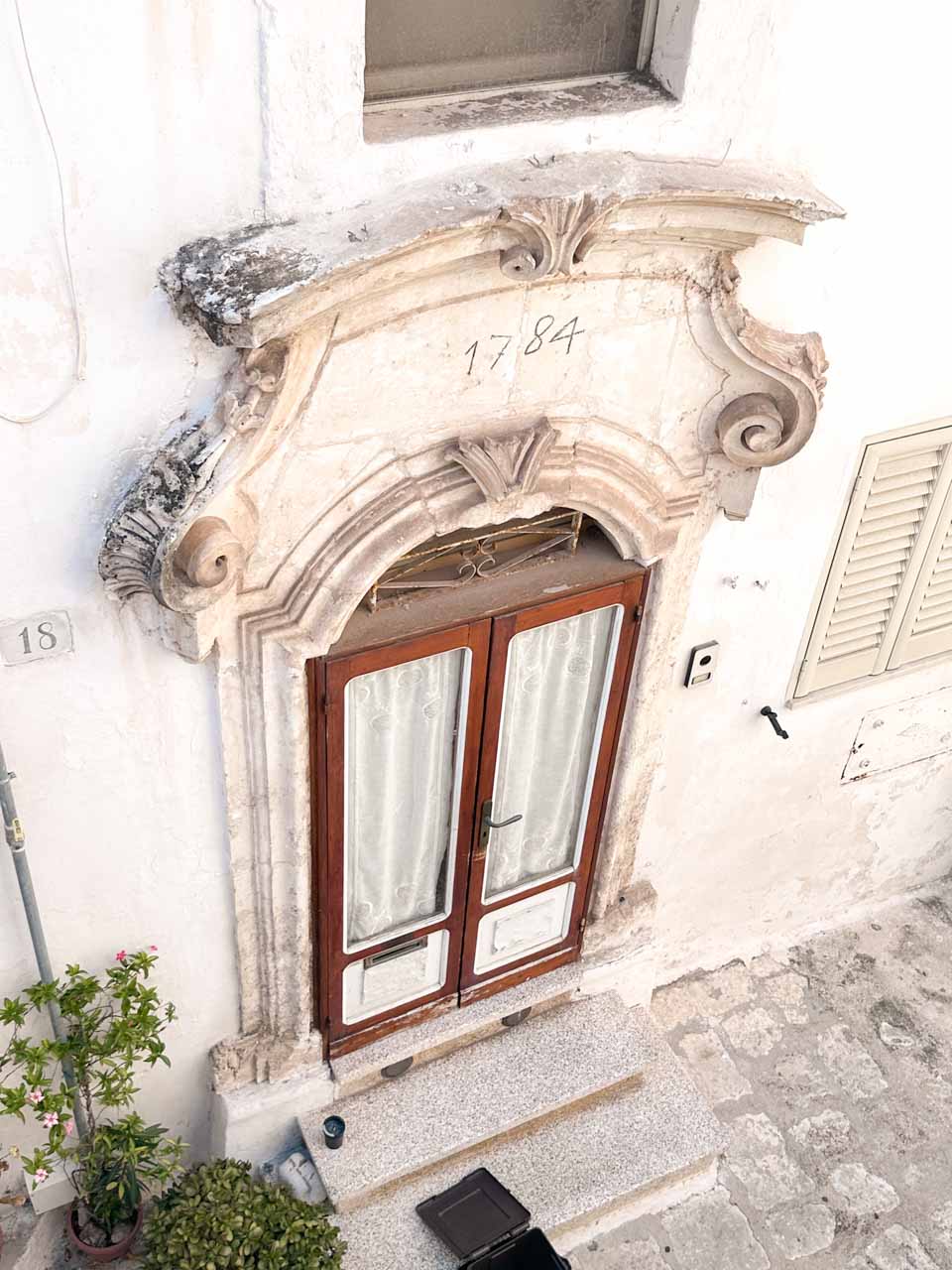
Why are all the houses in Ostuni white?
As with many traditions that go back hundreds of years, it’s actually quite hard to pin down one clear reason why all the houses in Ostuni are white. It’s more of a mix of different things.
Part of it is simply practical. White reflects sunlight rather than absorbing it, which helps keep the houses cooler during those very hot Puglian summers.
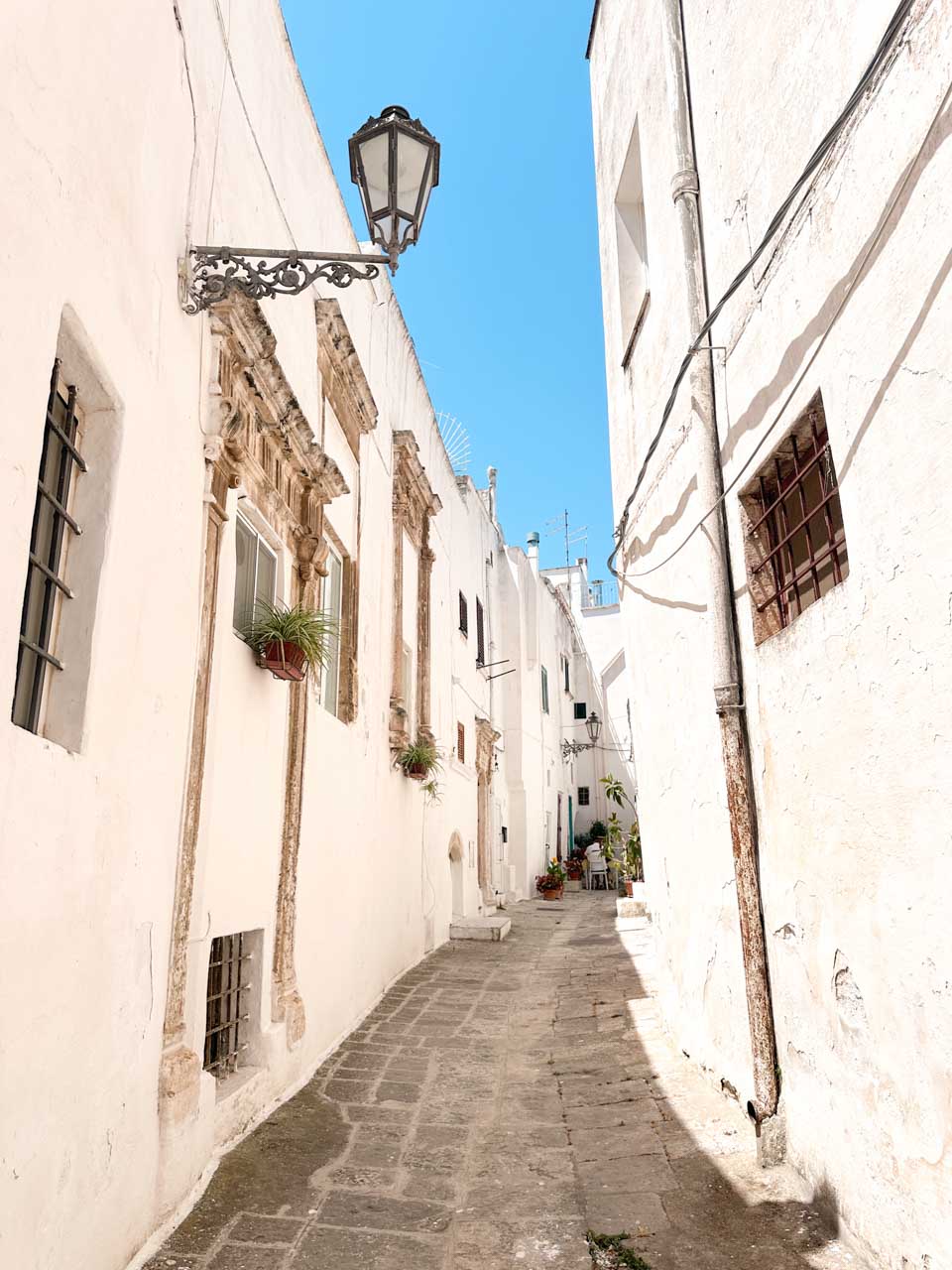
Then there’s the fact that people used to make a white paint from limestone dust. Since limestone is so easy to find in this region, it was cheap and accessible, which meant that people could repaint their homes regularly without much effort.
But over time, people realised lime works as a natural disinfectant and can kill bacteria too. This became especially important during outbreaks of disease – particularly in the 17th century, when a plague devastated Puglia. People believed that the lime paint helped slow the spread in Ostuni and even saved the city, which is why the tradition stuck.
I’ve also seen a few mentions that the local government helps cover part of the cost of repainting the houses, so they always stay that bright white – although I’m not sure how accurate that is!
How to get to Ostuni
The easiest way to get to Ostuni from nearby cities like Brindisi, Lecce, or Bari is by train. You can book your tickets on the Trenitalia website, but it’s just as easy to buy them at the station using ticket machines or from the ticket office. Prices start from around €3.50, and the journey takes about 20 minutes from Brindisi, or 45–50 minutes from Lecce or Bari.
One thing to keep in mind, though, is that the Ostuni train station isn’t actually near the historic centre. It’s about a 35-minute walk, or less than 10 minutes by car.
Luckily, there’s a public bus that runs from just outside the station. When you leave the station, turn right, then left, and you’ll find the bus stop just around the corner. There are signs along the way, and it’s very easy to find.
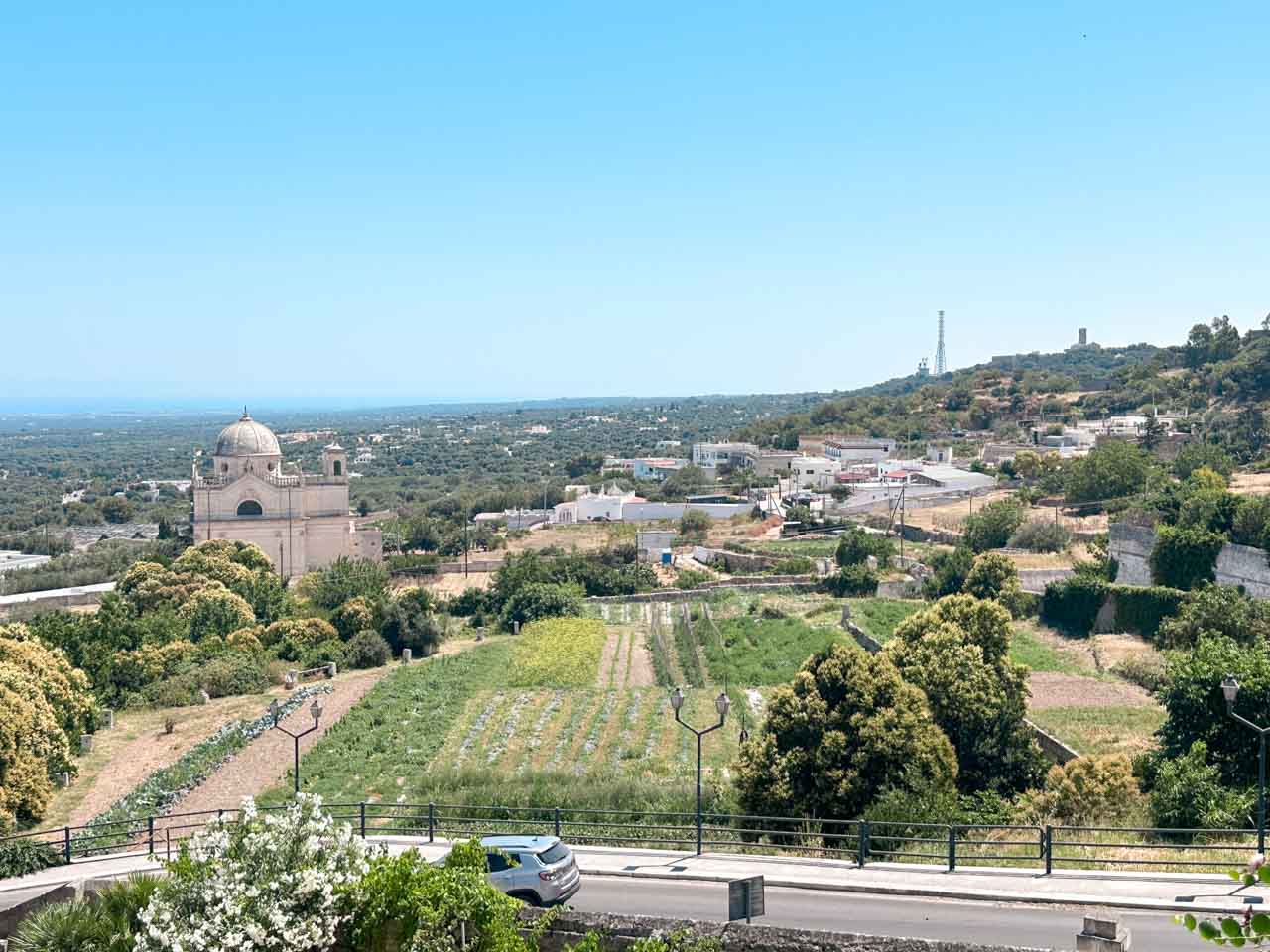
When we visited last summer, a one-way ticket cost €1.10. You could either buy it from the driver or at Bar La Stazione inside the station building (which, by the way, also serves a very good Sarti Spritz). The bus ride itself takes under 10 minutes, and I loved watching Ostuni’s Old Town slowly come into view as we got closer.
You can find the full timetable as a PDF on the STP Brindisi website. The name of the stop outside the train station is “Ostuni – Stazione FF.SS.”, while the one closest to the historic centre is “Ostuni – via Tenente Specchia – Parcheggio”. The first 4 pages show buses from the historic centre to the station (Monday to Friday in blue, Saturdays in green, Sundays and public holidays in red), and pages 5–8 cover the route in the opposite direction.
Where to stay in Ostuni
Now, we obviously didn’t stay overnight in Ostuni. But if you’re thinking of staying for a night – or using it as a base – there are two options I’d consider.
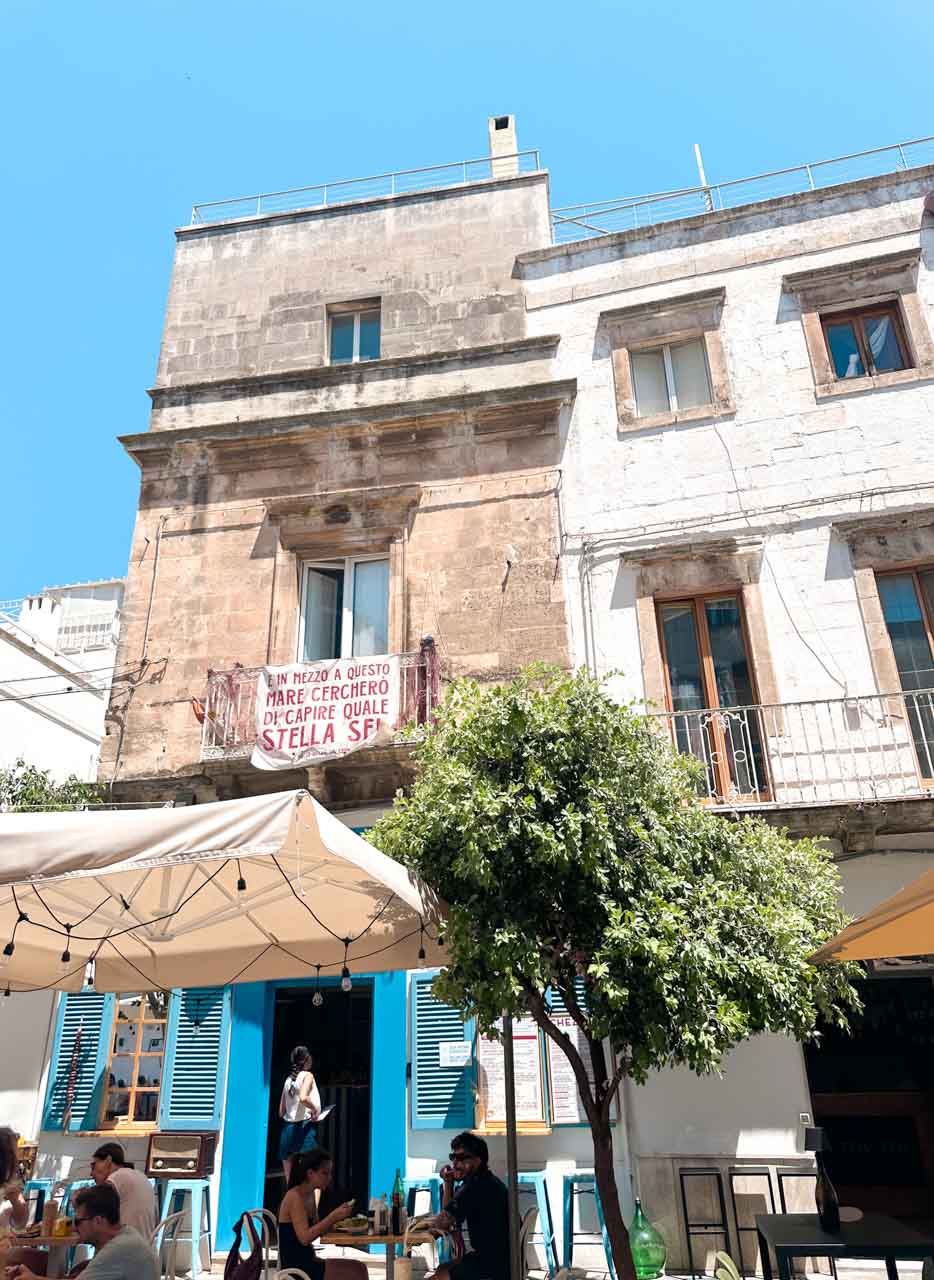
The first one will probably sound quite obvious, and that’s staying somewhere in the historic centre. It saves you from having to walk up and down the hill every day, and it’s just much more convenient overall, especially since a lot of what you’ll want to see is within or around the old walls.
I’d also recommend booking your accommodation in advance. One thing I found quite interesting is that while around 30,000 people live in Ostuni year-round, that number can jump to over 200,000 in the summer – more than 6 times as many people!
And it’s not just tourists – a lot of people (especially from the UK) actually own homes here and return every year. So if you come across a reasonably priced place, I wouldn’t wait too long to book it.
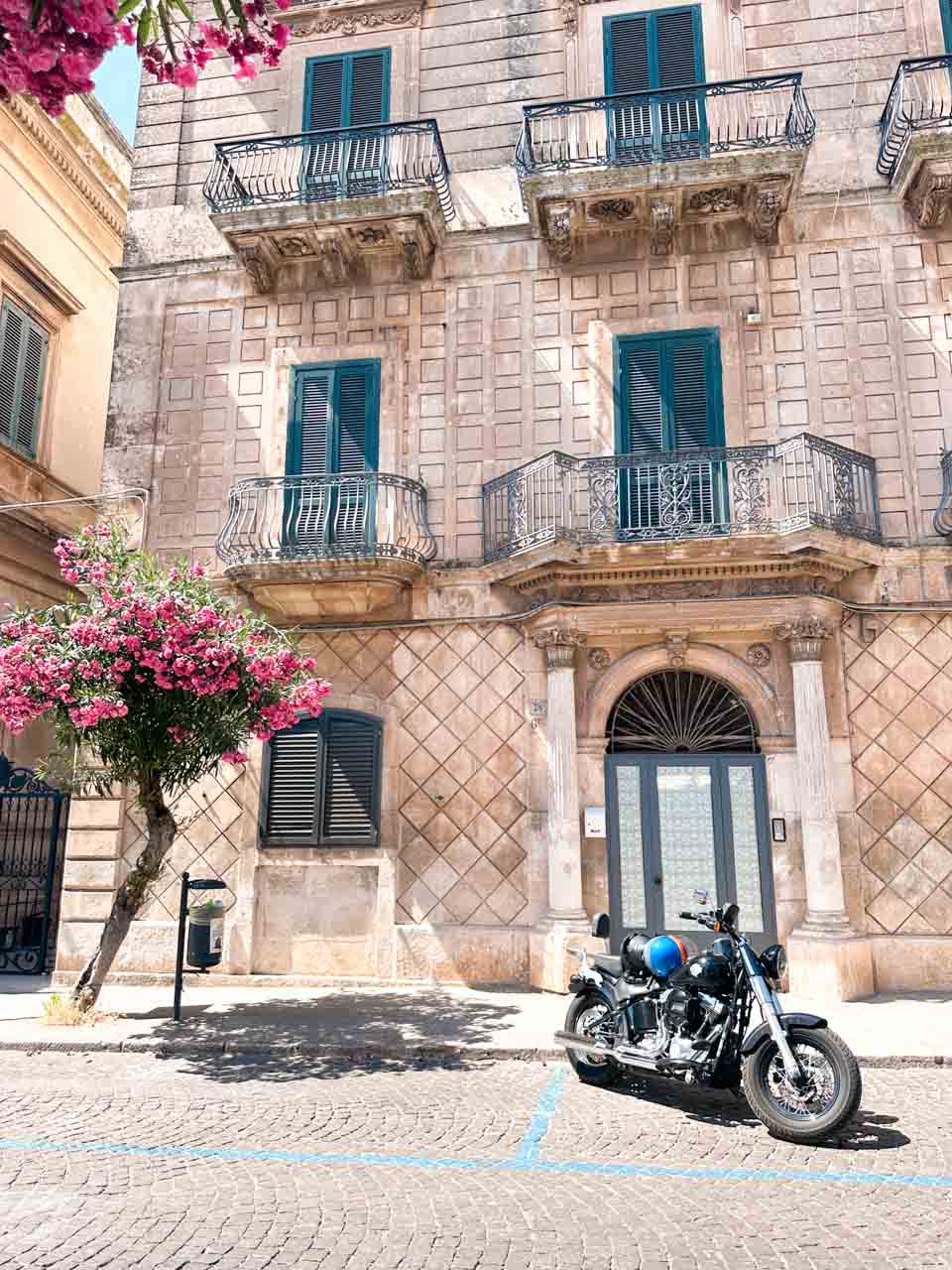
Popular masserie around Ostuni
A second option is staying at a masseria just outside the city, which is a very popular alternative to hotels in Puglia. A masseria is a traditional farmhouse in the countryside – most were built hundreds of years ago and used to be working farms.
Over time, owners restored many of them and opened them up to guests. Some are small countryside stays, while others are boutique hotels or even 5-star luxury resorts.
They’re usually surrounded by olive groves, and many grow their own produce for the kitchen. On Sundays, some of them host long, multi-course lunches where you can try local dishes. So if you like the idea of staying somewhere quieter, closer to nature, and with a bit more character, this is a great option.
One of the most famous masserie in Puglia is Masseria San Domenico*, which dates back to the 15th century, when the Knights of Malta used it as a watchtower. Today, it’s a 5-star resort – although it’s around a 25-minute drive from Ostuni.
Here are some beautiful masserie closer to Ostuni:
- Masseria Il Frantoio*
- Masseria Salinola*
- Masseria Cervarolo* with traditional Trulli houses
- Masseria Santo Scalone*
- Masseria Le Carrube*
- Masseria Mangiamuso*
Or you can check all available options for your dates below:
Best things to do in Ostuni
I Gradini della Bellezza – The Stairs of Beauty
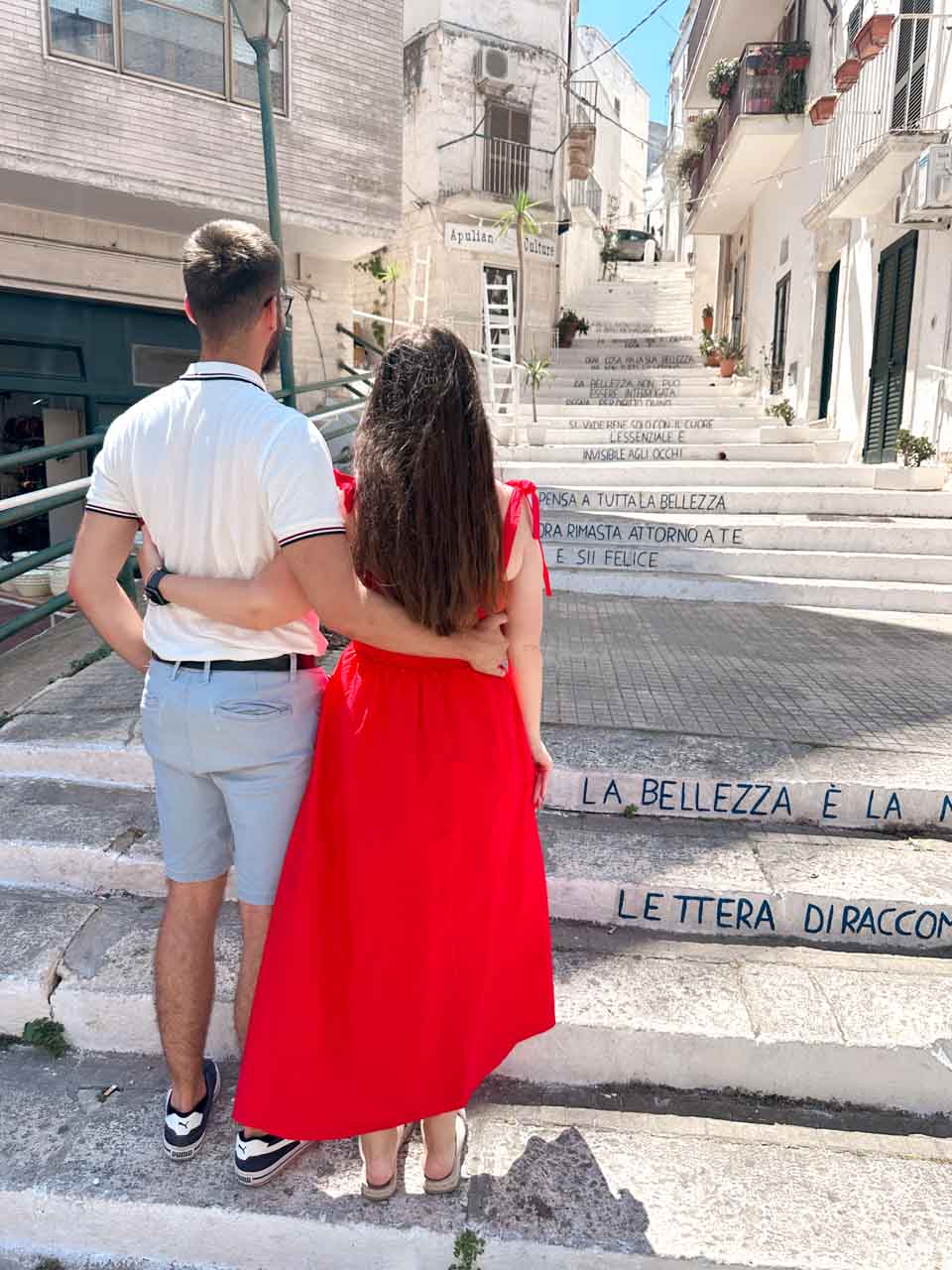
As you make your way from the bus stop towards Piazza della Libertà, there’s a small Instagrammable spot that a lot of people seem to walk straight past.
I couldn’t find much information about it online. In the photos I took, it wasn’t labelled at all, but I came across an older photo where one of the steps had the hashtag #igradinidellabellezza – so that’s what I’m calling it here for the sake of this guide.
I’m not entirely sure if it’s a local art project or if there’s a bigger story behind it. What you will find, though, are 7 quotes about the meaning of beauty written along the steps.
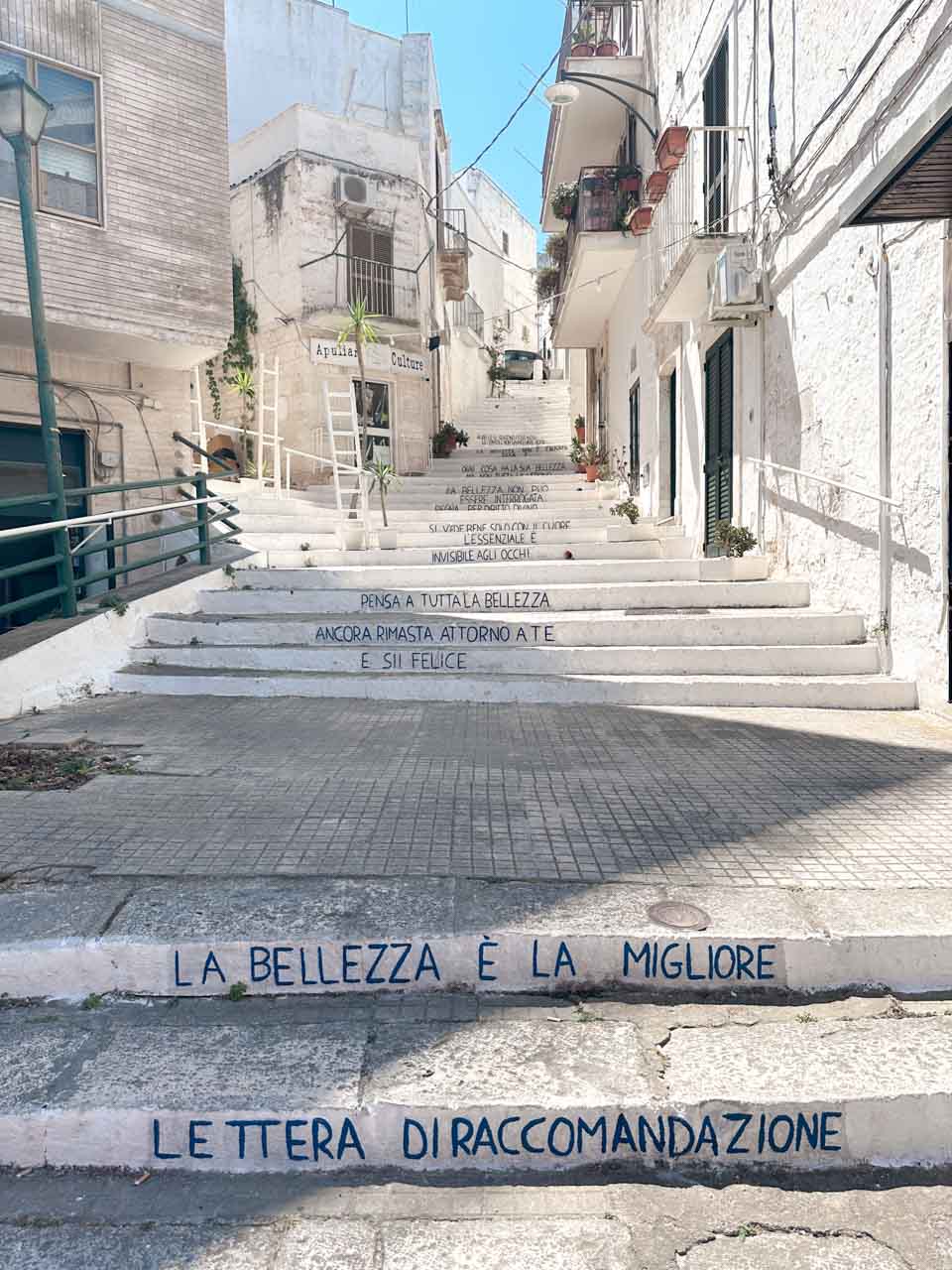
From bottom to top, they read:
- “Beauty is the best letter of recommendation.” attributed to Aristotle.
- “Think of all the beauty still left around you and be happy.” from Anne Frank’s The Diary of a Young Girl.
- The famous quote from The Little Prince: “One sees clearly only with the heart. What is essential is invisible to the eye”.
- “Beauty cannot be questioned; it reigns by divine right.” by Oscar Wilde.
- “Everything has its beauty, but not everyone sees it.” by Confucius.
- “Beauty is not caused. It simply is.” by Emily Dickinson.
- “There are things you feel instinctively that words cannot name.” by an Italian poet, Alda Merini. (I don’t speak Italian, so I can’t vouch 100% for the translation!)
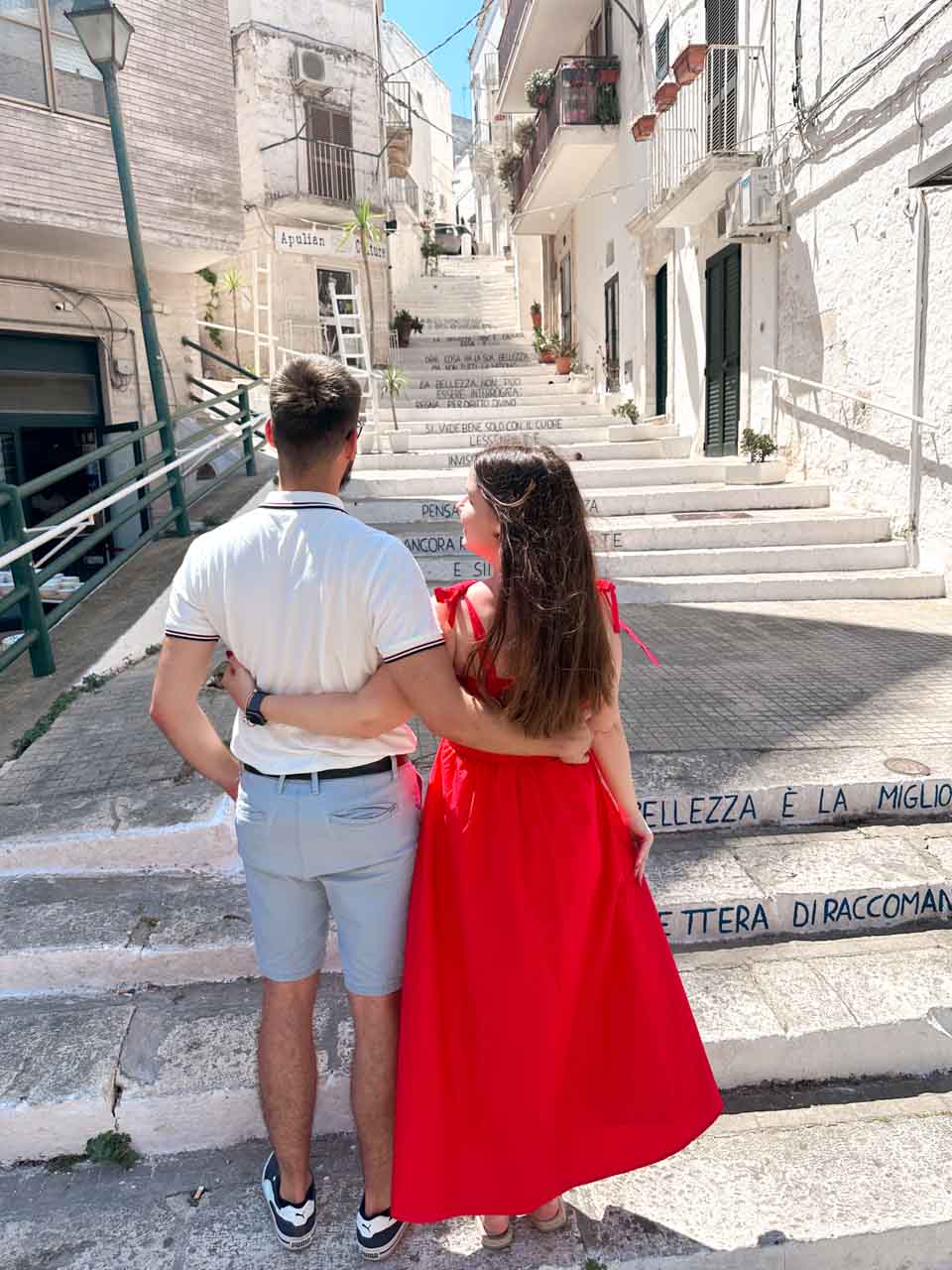
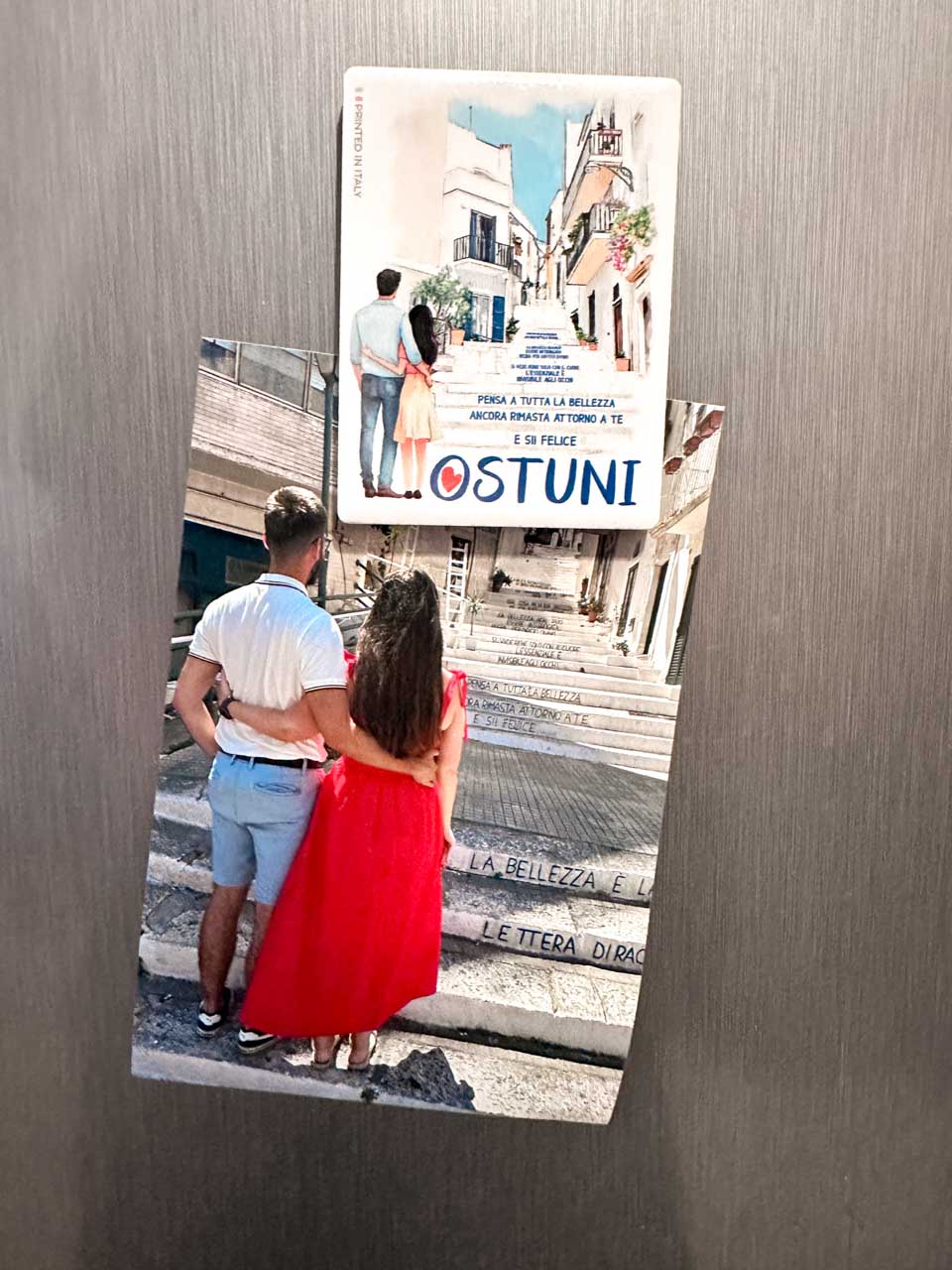
There’s also a cute souvenir shop right by the stairs – we picked up a magnet with the same scene and then tried to recreate it ourselves!
Piazza della Liberta
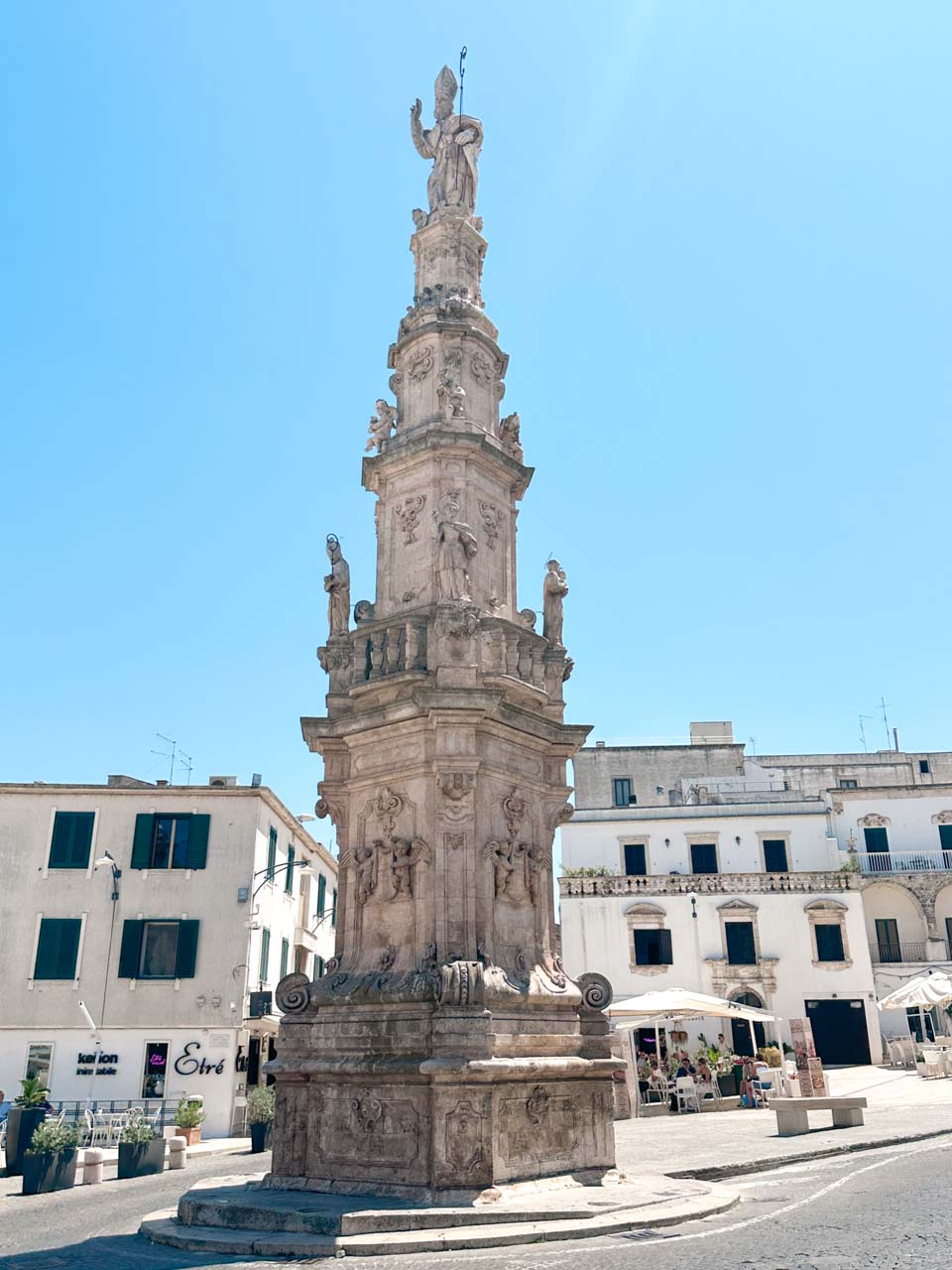
The heart of Ostuni’s historic centre is Piazza della Libertà. In the middle of the square, you’ll spot the Column of Saint Oronzo – and if you’ve already read my Brindisi or Lecce guides, the name might ring a bell. 😉
Saint Oronzo is one of the most beloved saints in this part of Puglia, especially around Lecce. Locals believe he helped protect the region during the plague of 1656, which is why you’ll see statues of him in several nearby cities.
Ostuni has its own connection too. According to a local legend, he once hid in a cave just outside the town, and a nearby spring became known for its “miraculous” water. To this day, locals celebrate him with a big three-day festival at the end of August.
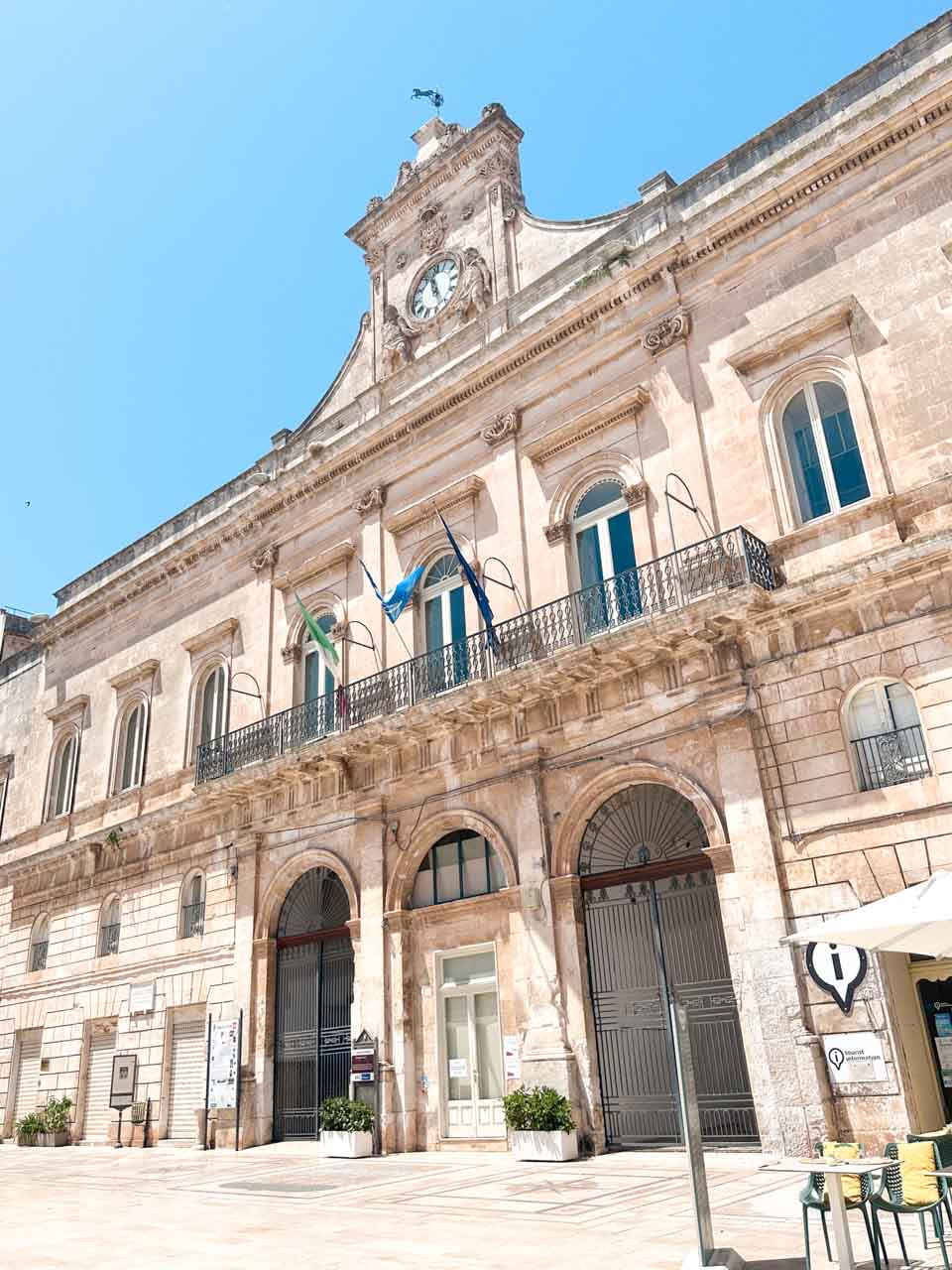
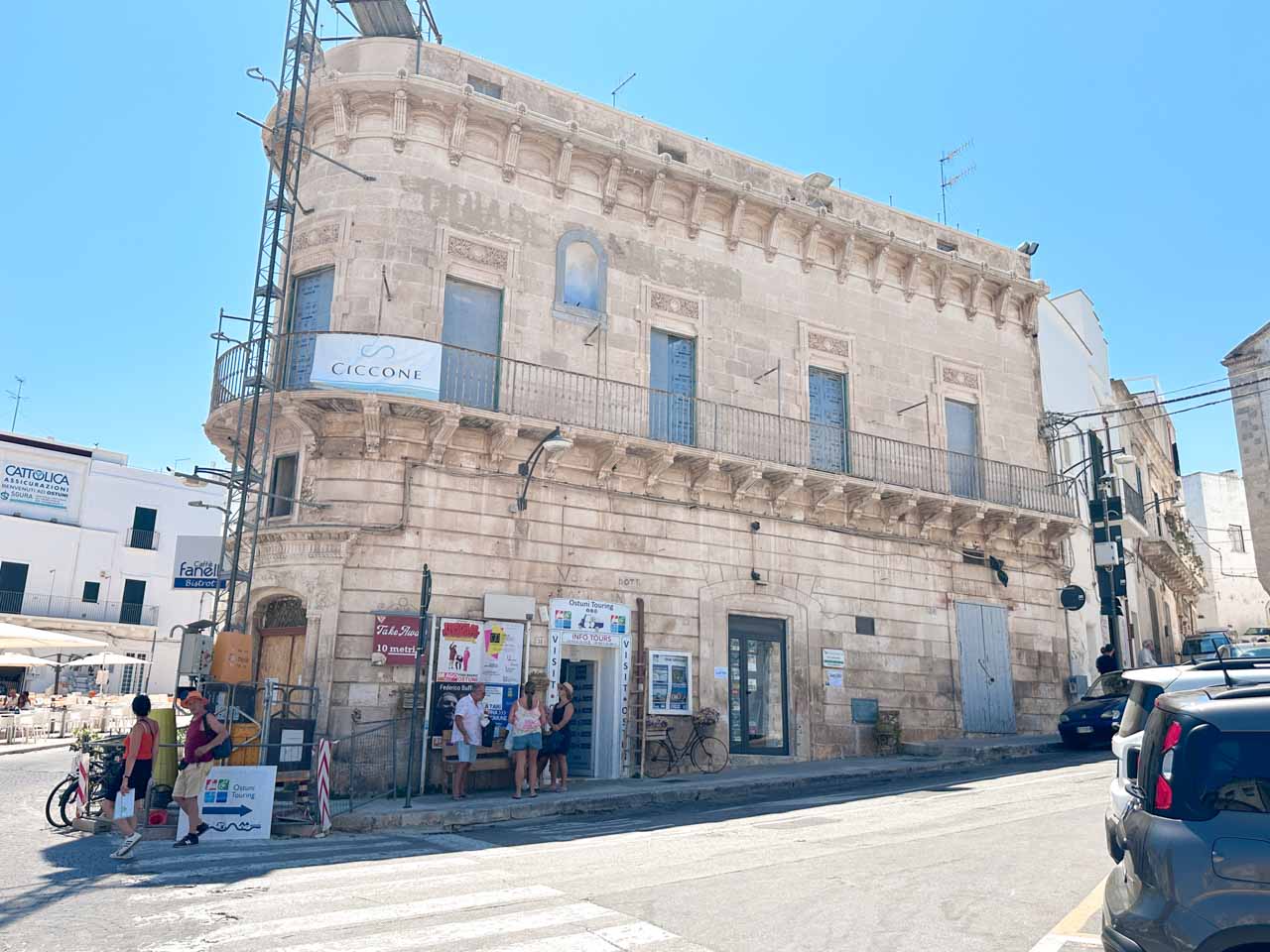
The main building on the square is the town hall, which used to be a Franciscan convent. Inside, you’ll also find a tourist office, a bookshop, and the Church of San Francesco d’Assisi – all in the same building, which I’m not sure I’ve come across anywhere else.
There are plenty of restaurants and bars around the square too, with people enjoying their meals and drinks. Prices here are a bit higher, which isn’t surprising given the location. If you’re after something more affordable, Caffè Fanelli Bistrot is a good option for a quick drink or bite.
And if you do stop by, make sure to look up. Above two of the first-floor windows, you can still spot traces of a Fascist-era slogan, “Odiare gli inglesi” (“hate the English”). They’ve painted over it, but you can still make it out if you know where to look.
Walk around the town
Now, in a place that’s famous for its whitewashed houses (or anywhere, really), you probably don’t need me to tell you to just wander around… but hear me out.
Getting lost in the historic centre is honestly one of the best things to do in Ostuni – and we definitely did plenty of that. However, there are a few spots you might want to keep an eye out for as you explore.
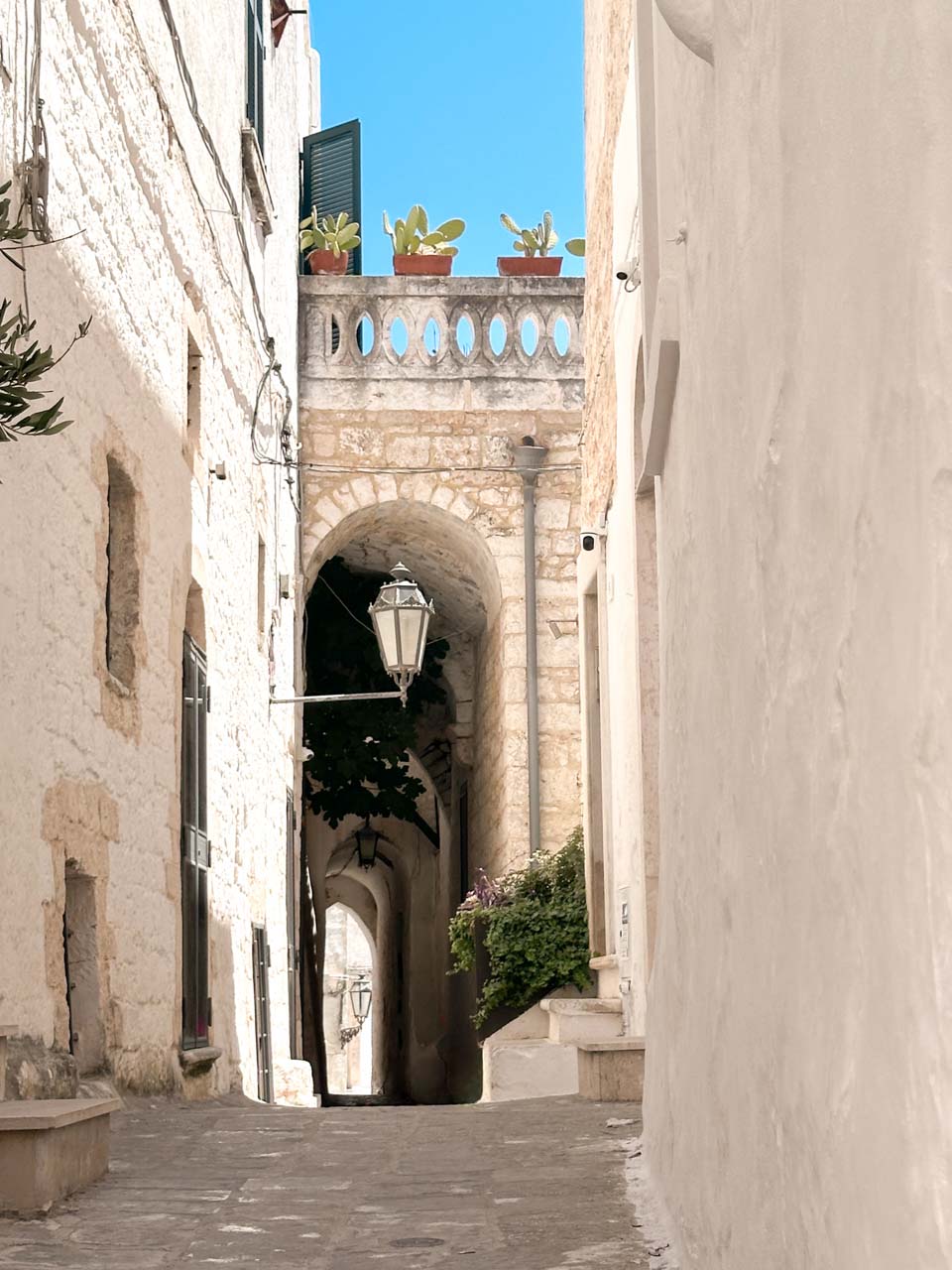
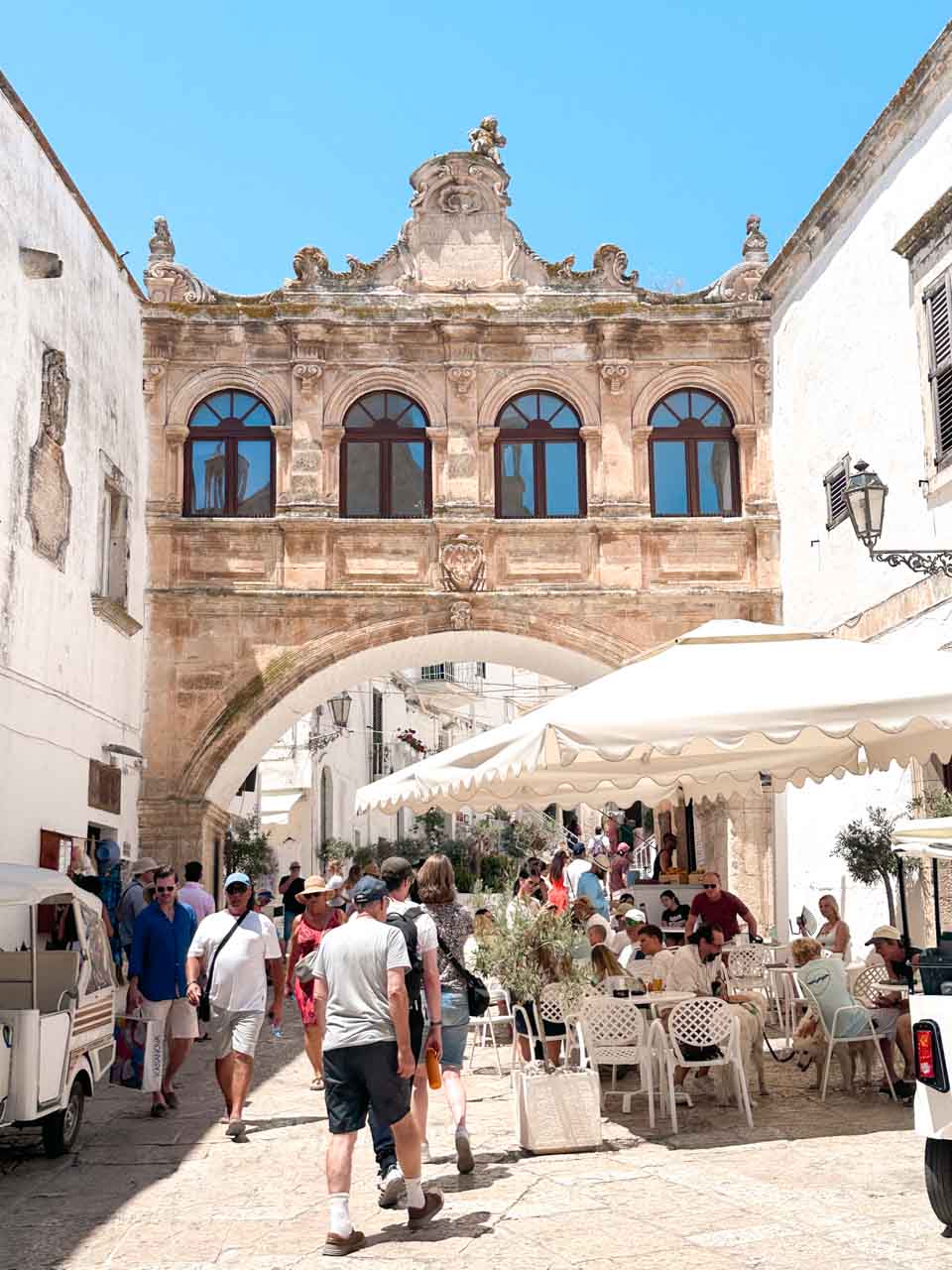
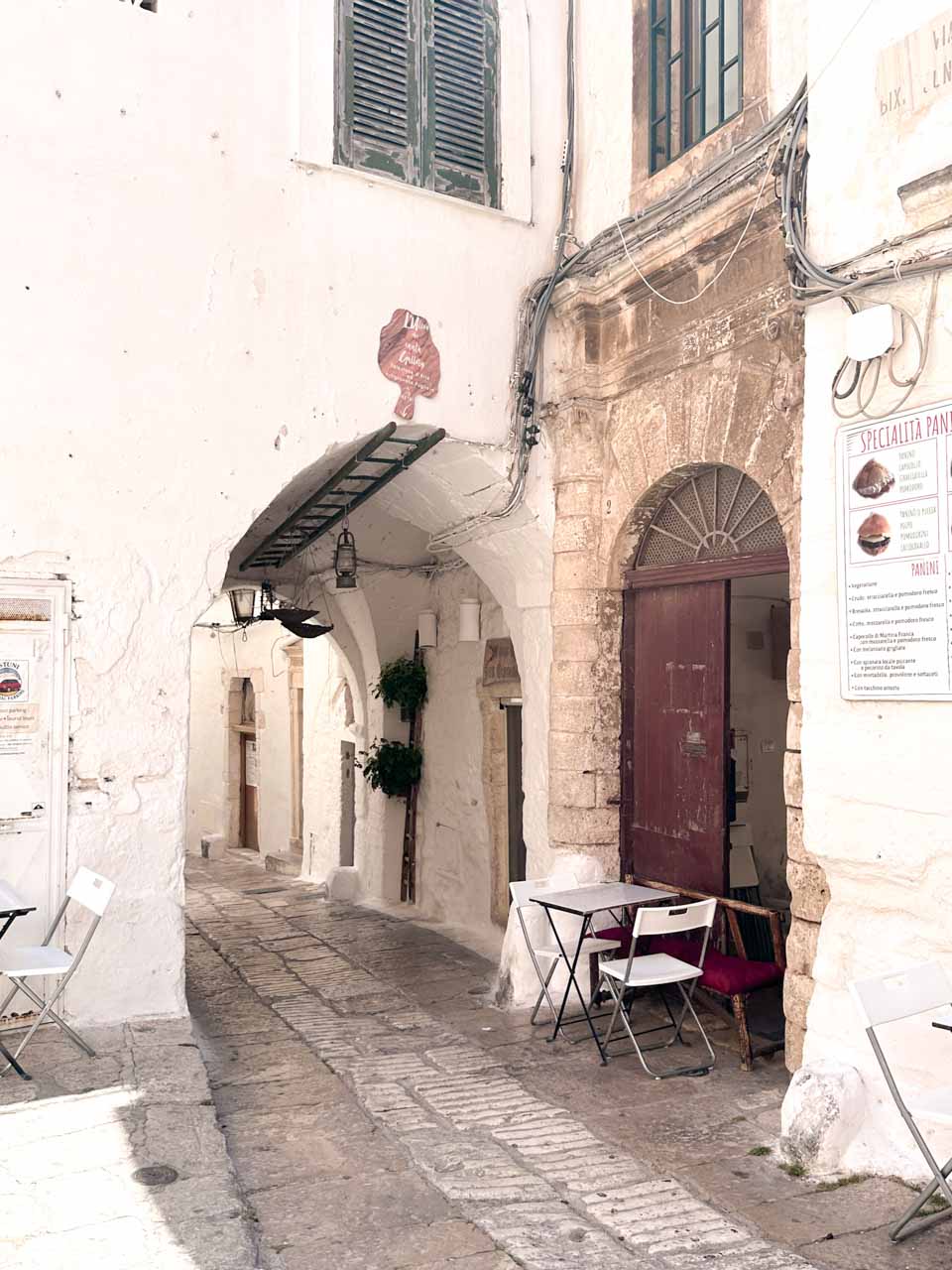
The first one is Arco Scoppa, a beautiful archway that connects the Bishop’s Palace with the Seminary Palace. It was originally made of wood, but they rebuilt it in stone to make it more durable and earthquake-resistant. Apparently, they took inspiration from Venice’s Bridge of Sighs – and I can kind of see it. I’d recommend going early in the morning, though, before the restaurant terraces open up and block the view a bit.
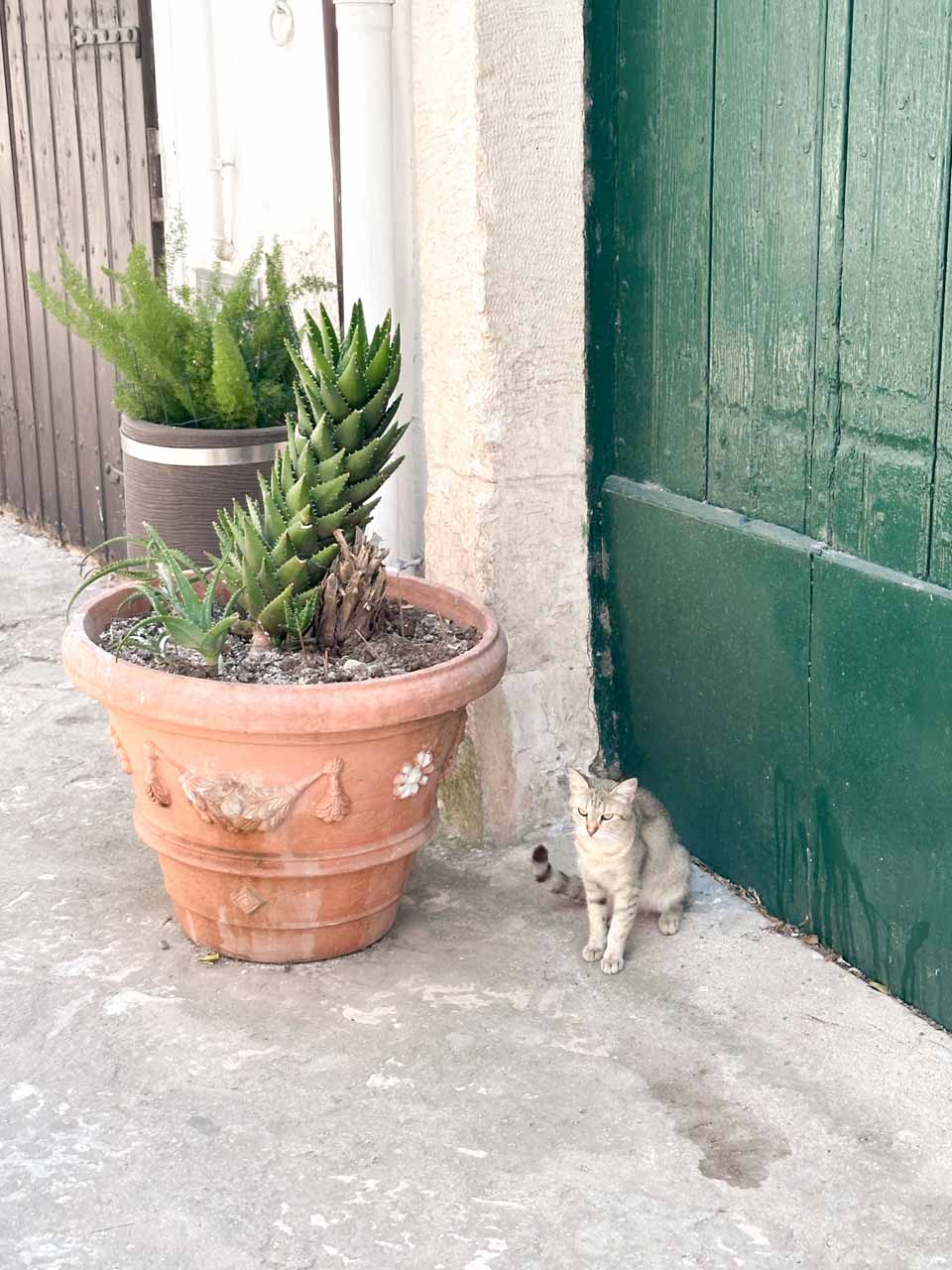
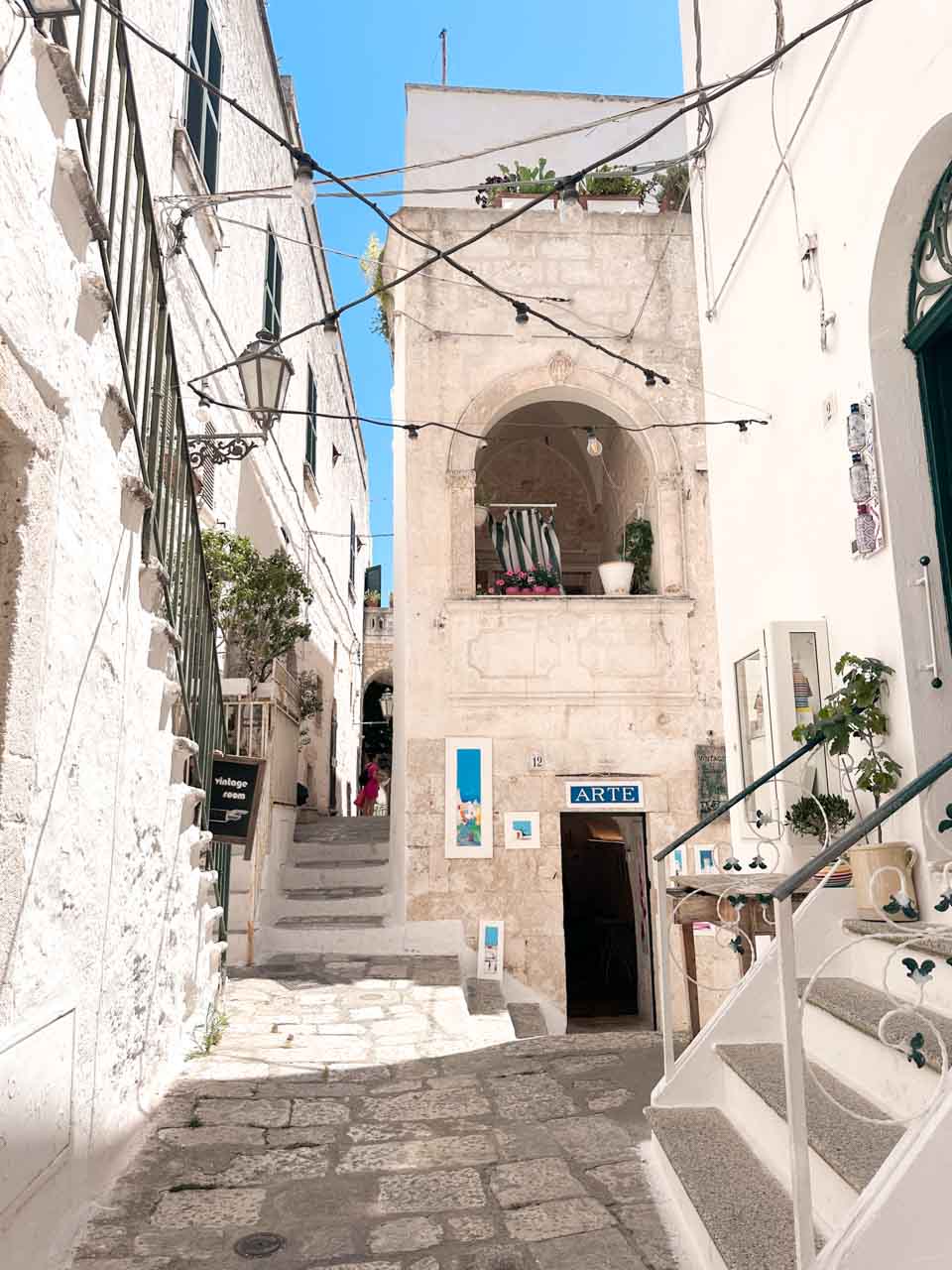
My favourite Instagrammable spot in Ostuni was Vicolo Castello, a small alley with a staircase, blooming flowers, and some very relaxed cats lounging around.
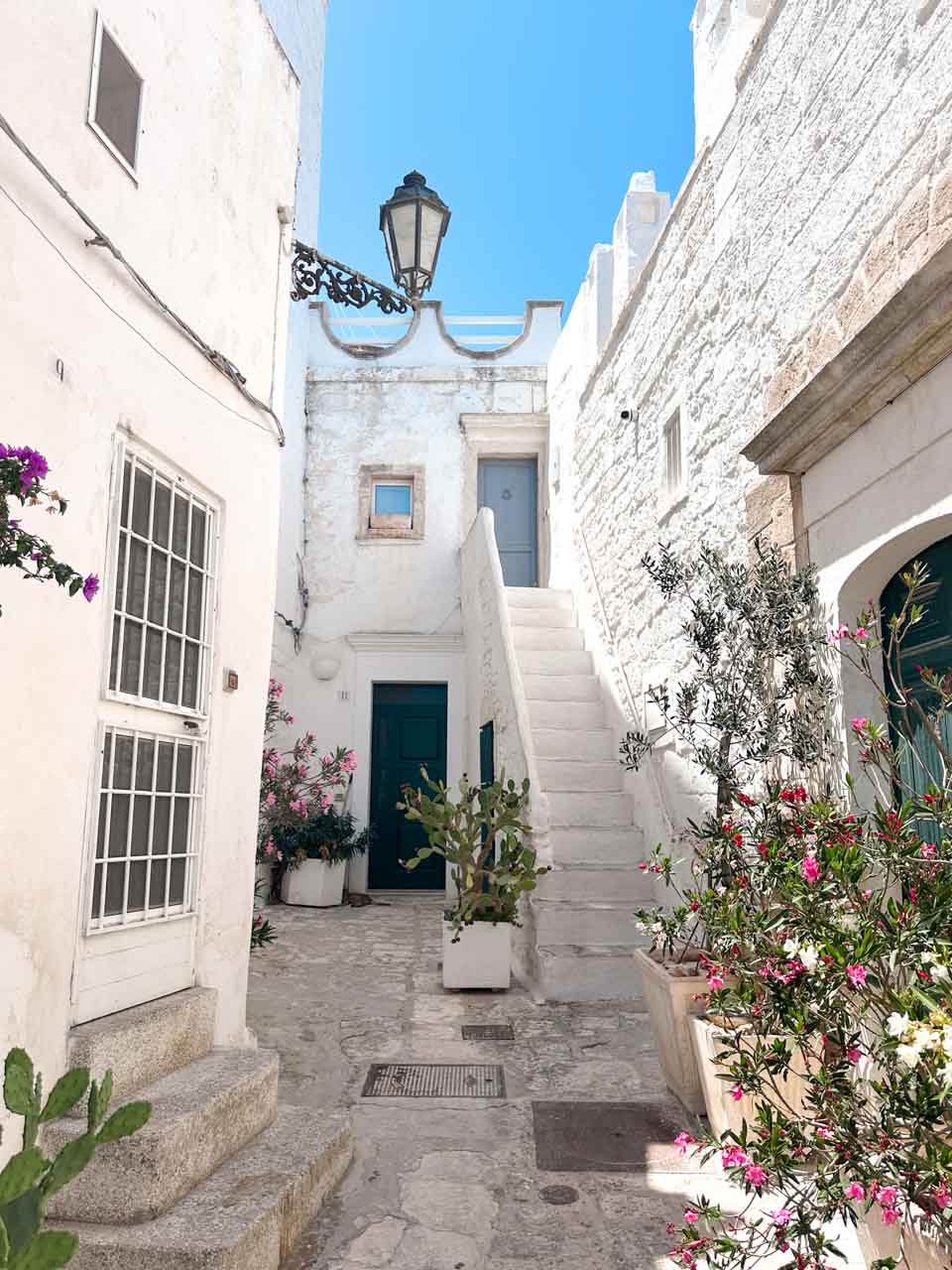
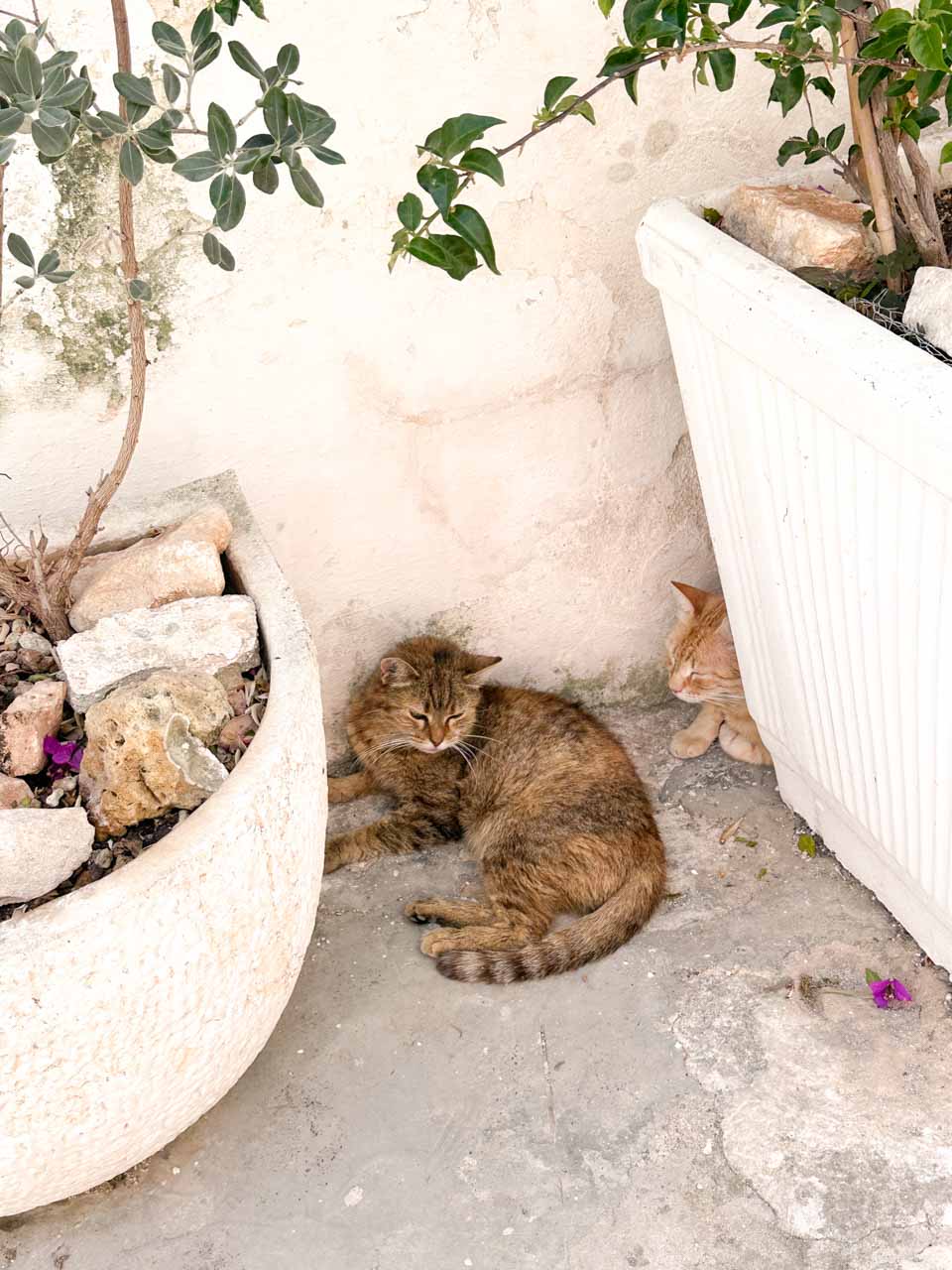
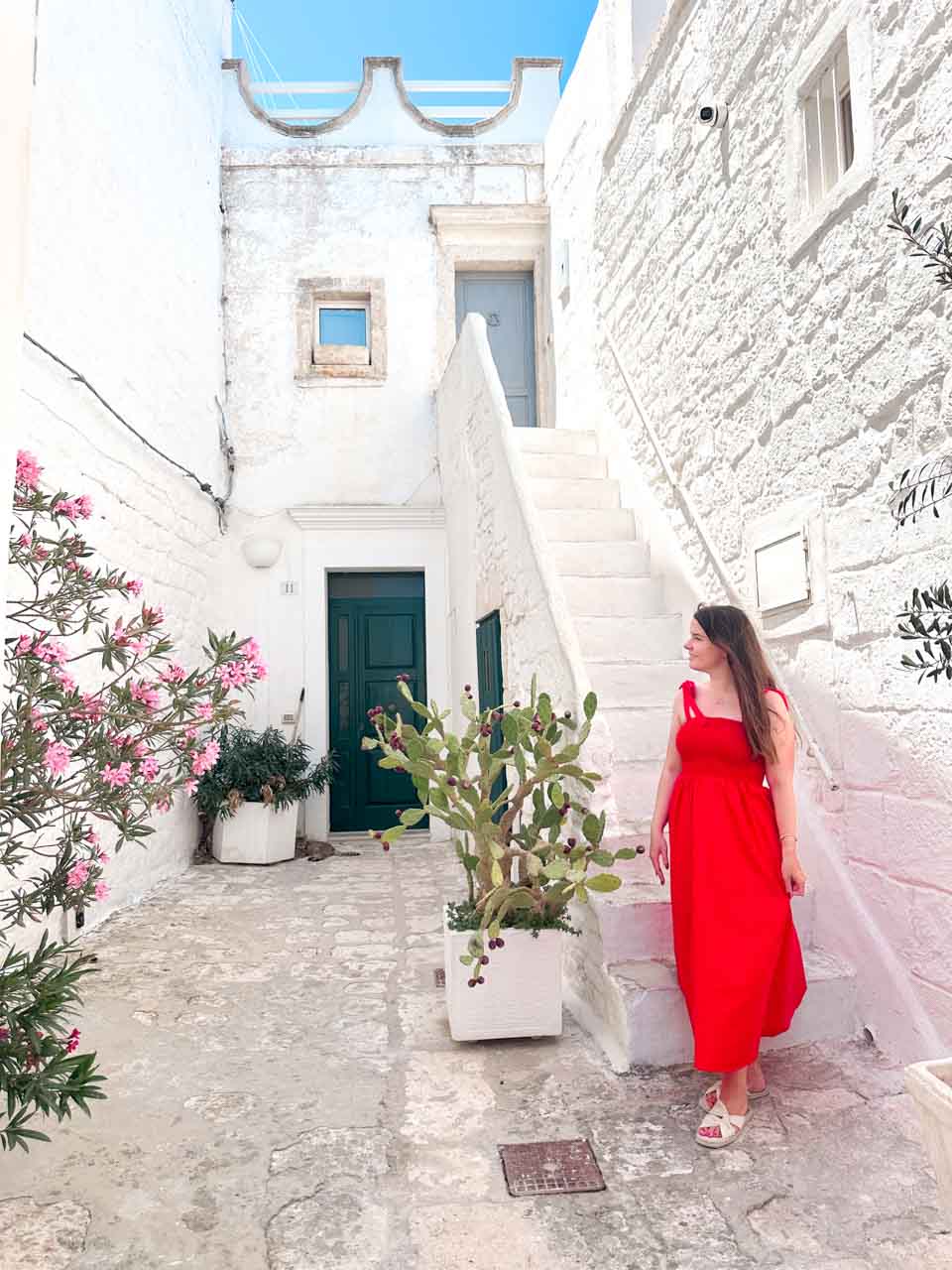
You won’t find it on Google Maps, but it’s just around the corner from Borgo Antico Bistrot.
If you’re visiting when the bougainvillea are in bloom, it’s also worth stopping by Piazzetta Spritz – the façade looks incredible when it’s covered in flowers (sadly, it was bare when we visited). We also came across a place called Bar Perso, where you can sit on the steps with a drink, which looked like such a nice spot.
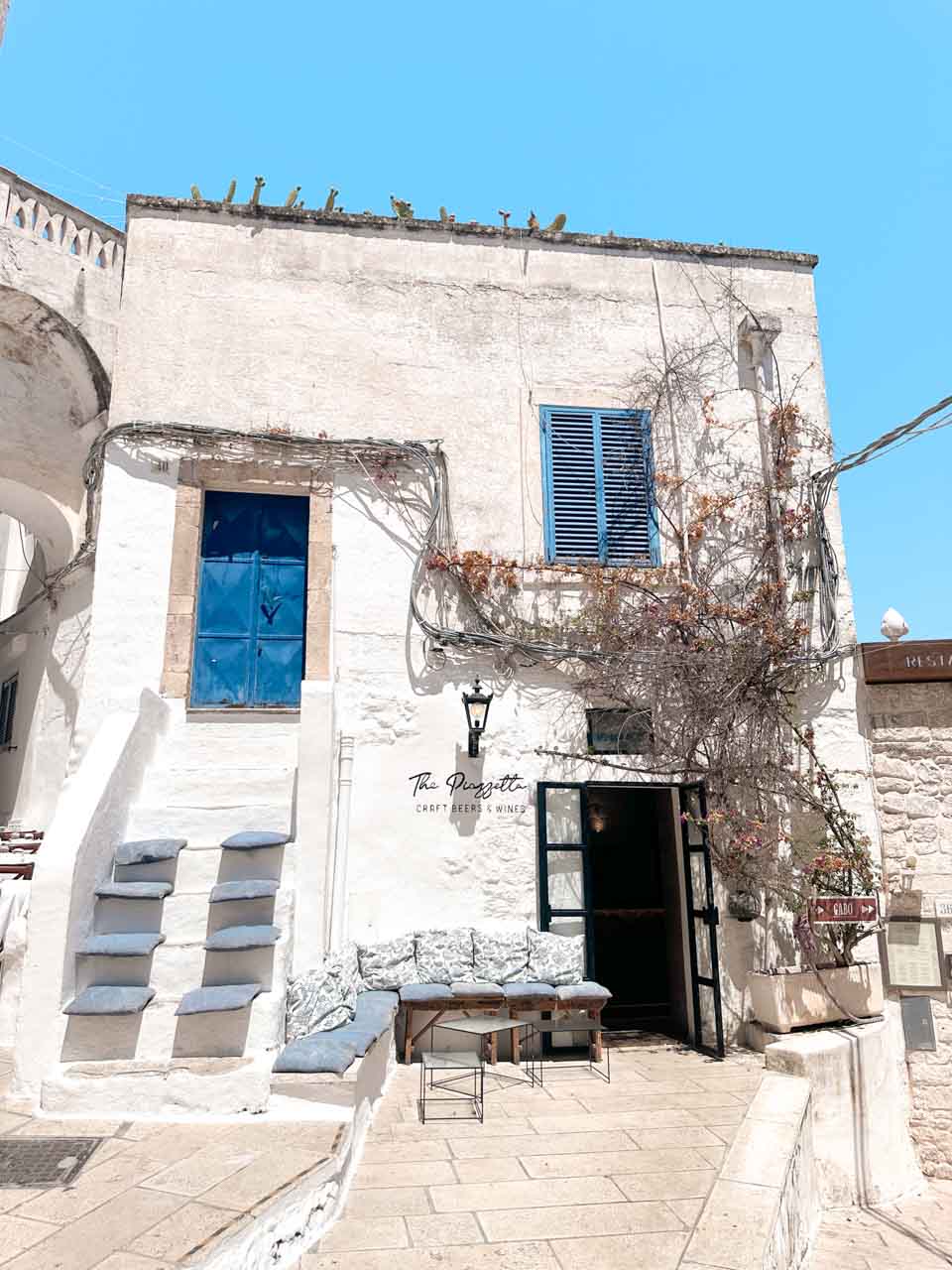
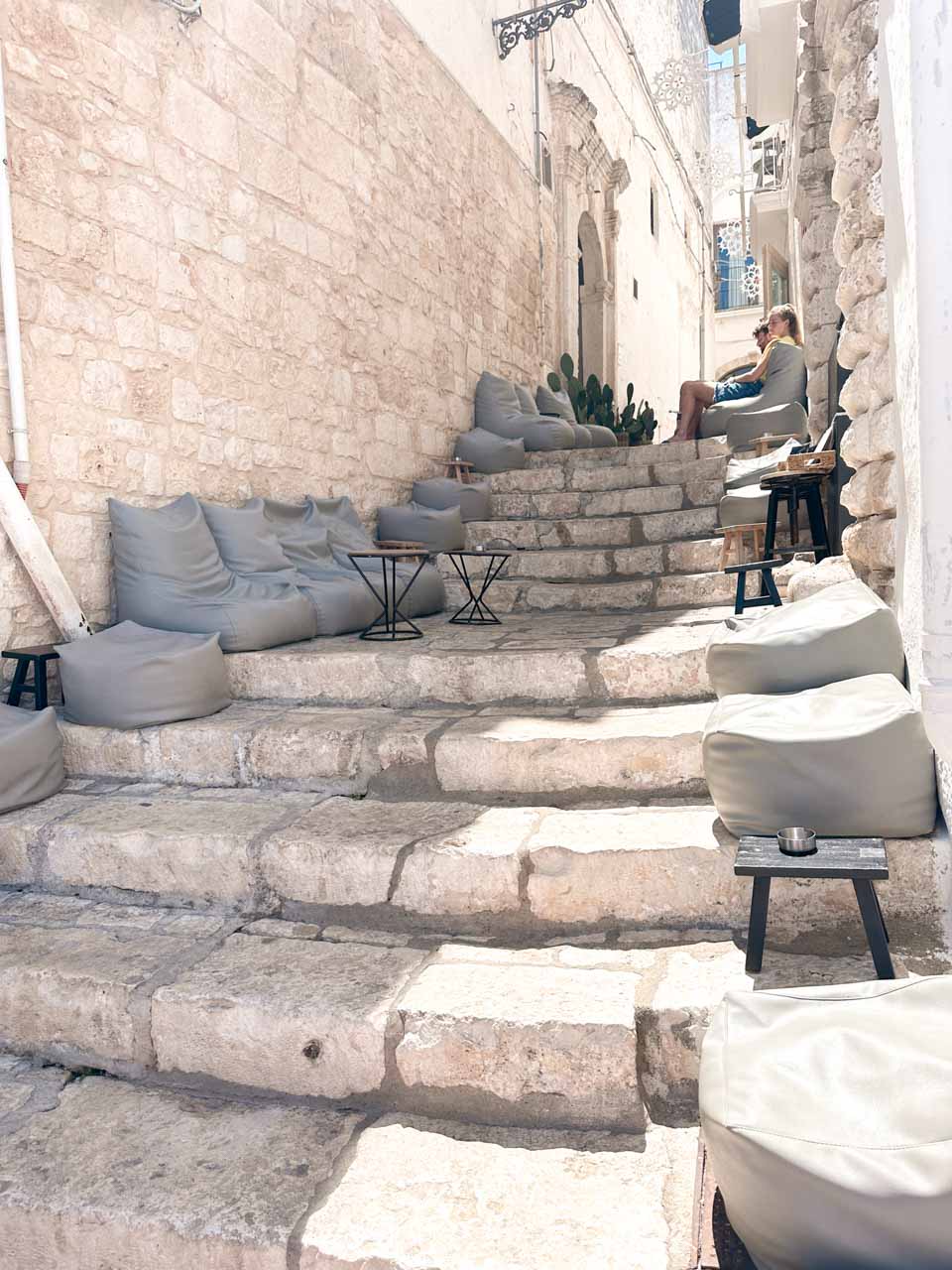
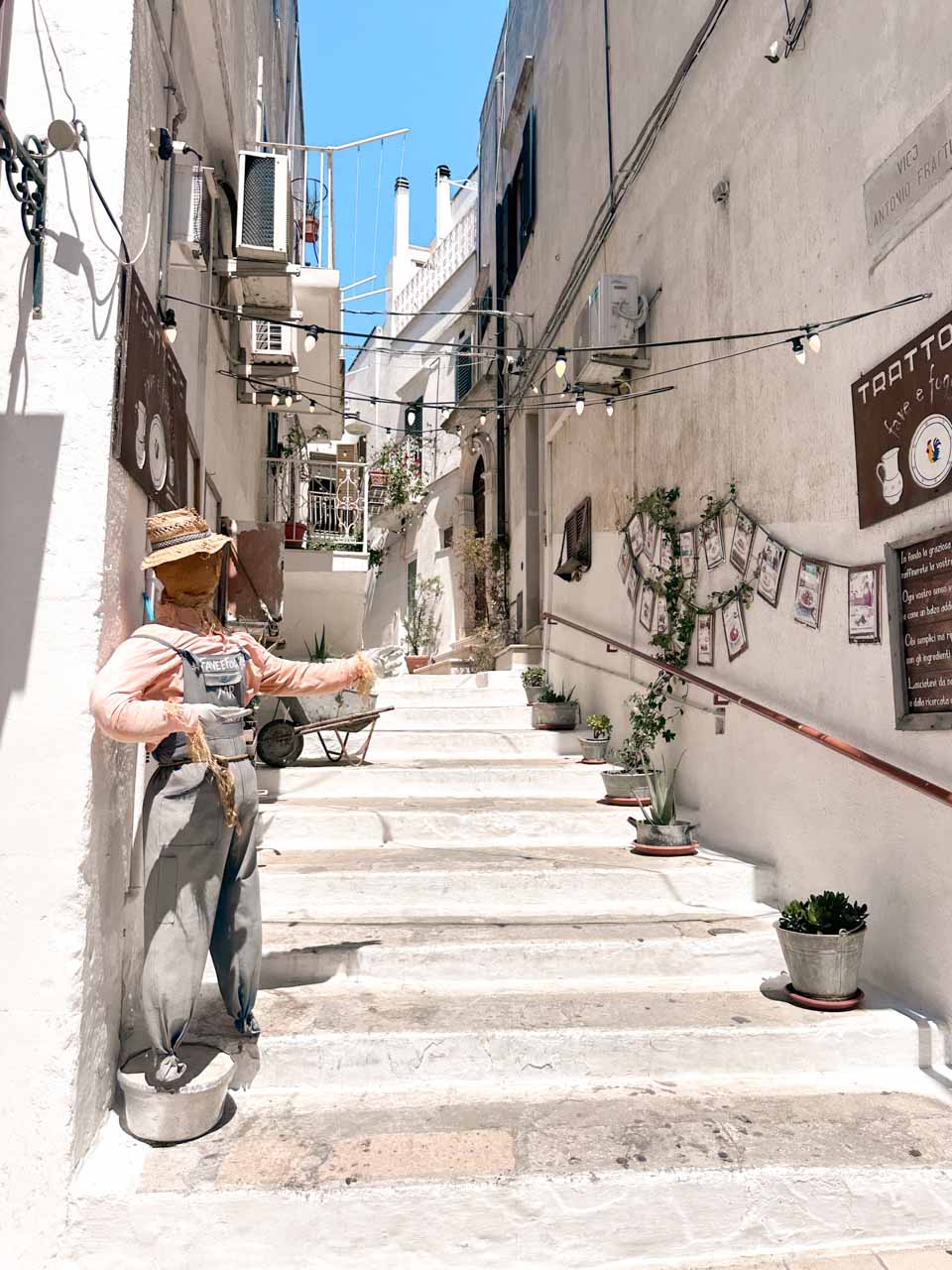
Vico Balsamo de Landria is another lovely alley for photos, with wide steps, rows of white houses, and some plants.
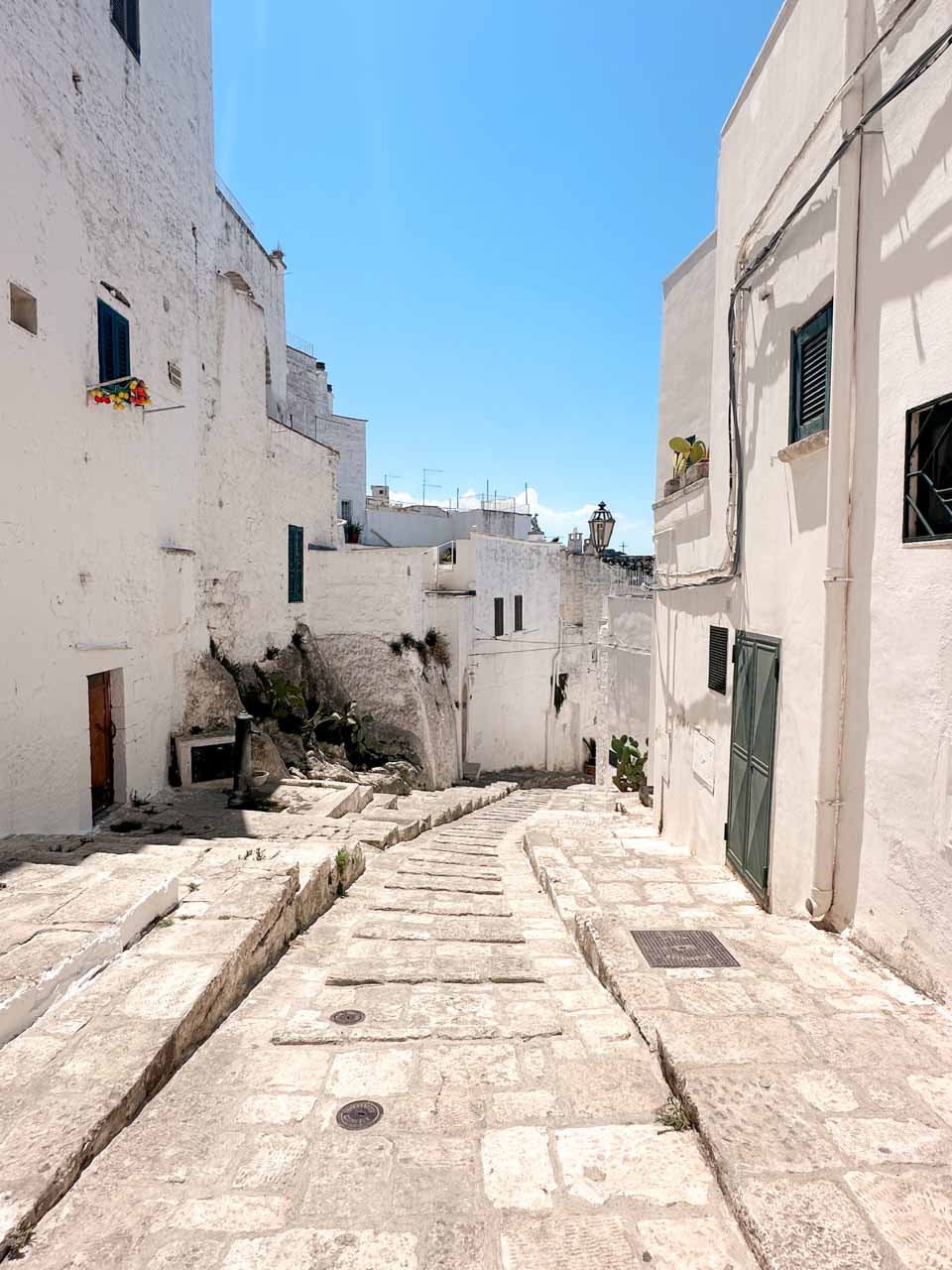
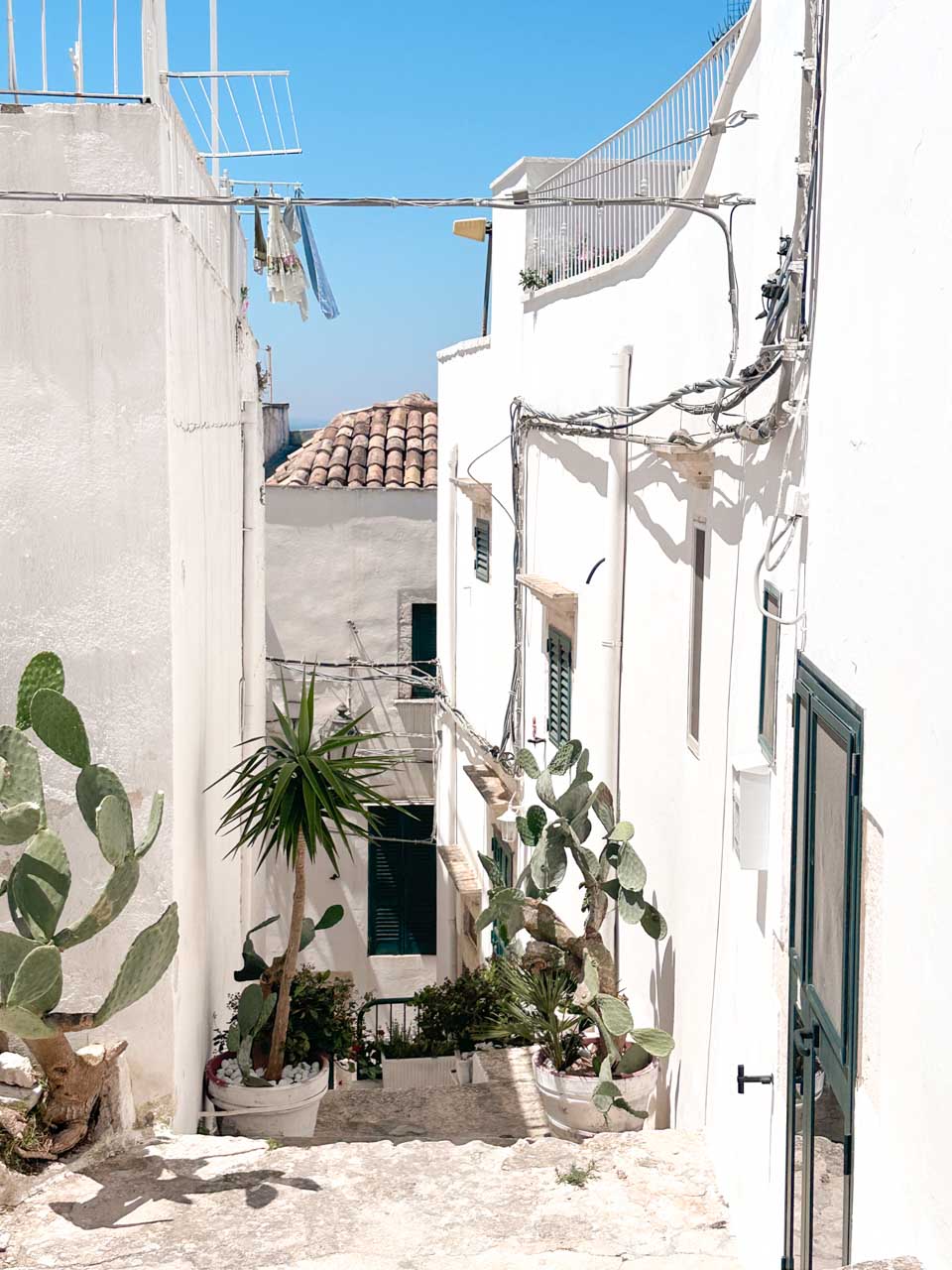
And if you want a nice view of the city walls, you can walk from Porta Nova to Viale Oronzo Quaranta – but if you’re after the best viewpoint over the historic centre… keep reading!
Cattedrale di Santa Maria Assunta
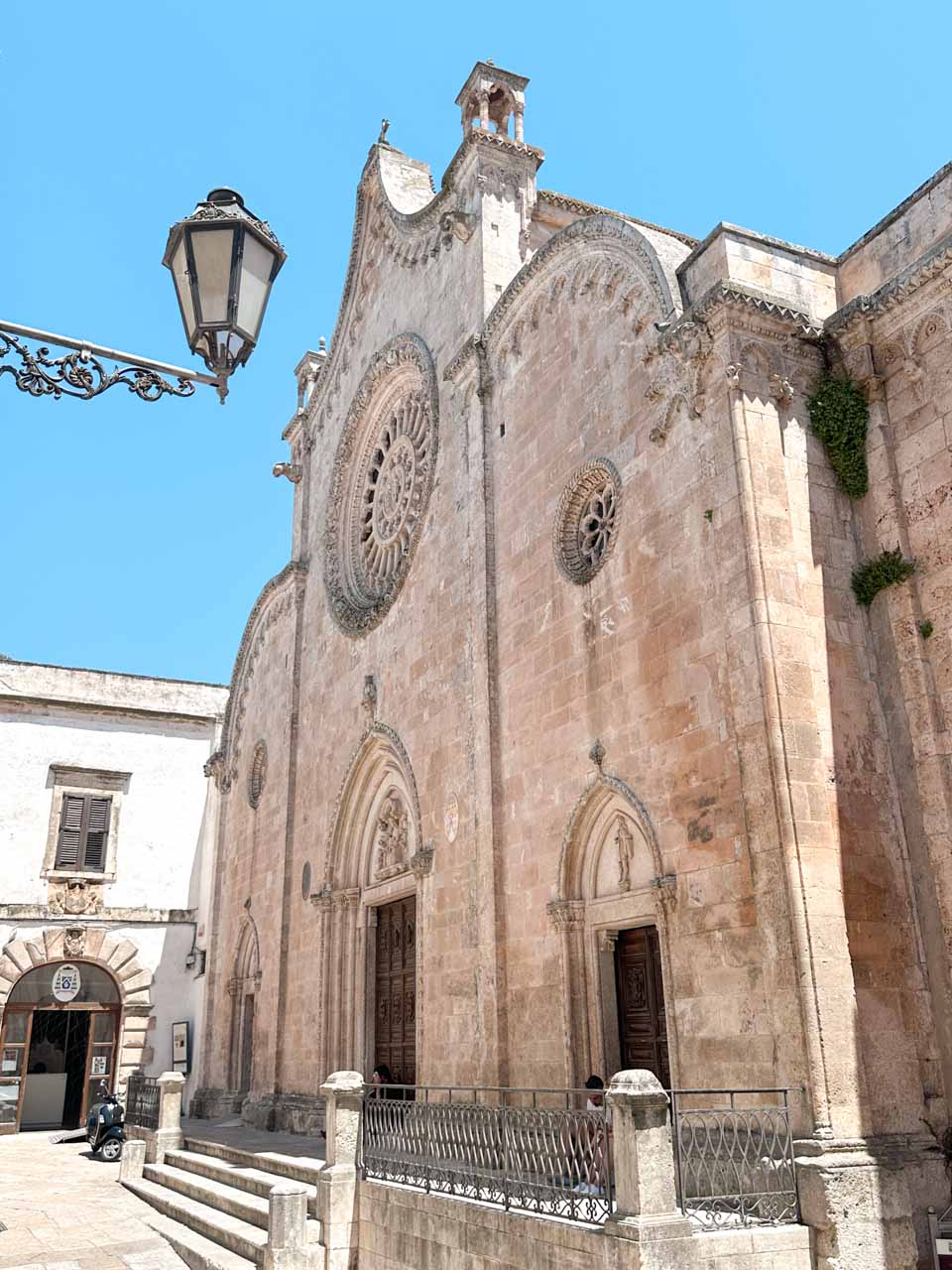
Right next to Arco Scoppa, you’ll find Ostuni Cathedral. It sits at the highest point of the Old Town, on the site of a former medieval Orthodox church. It became a cathedral in the 13th century, but an earthquake destroyed it about two centuries later. What you see today is a reconstruction in Gothic style, with some Baroque elements added over time.
My favourite part was the incredibly detailed rose window on the façade. Right in the centre, you’ll see God, with 24 spokes radiating outwards (one for each hour of the day, apparently). Around it, the artists carved figures, animals, and floral details, all coming together to represent the creation of the universe and the passage of time.
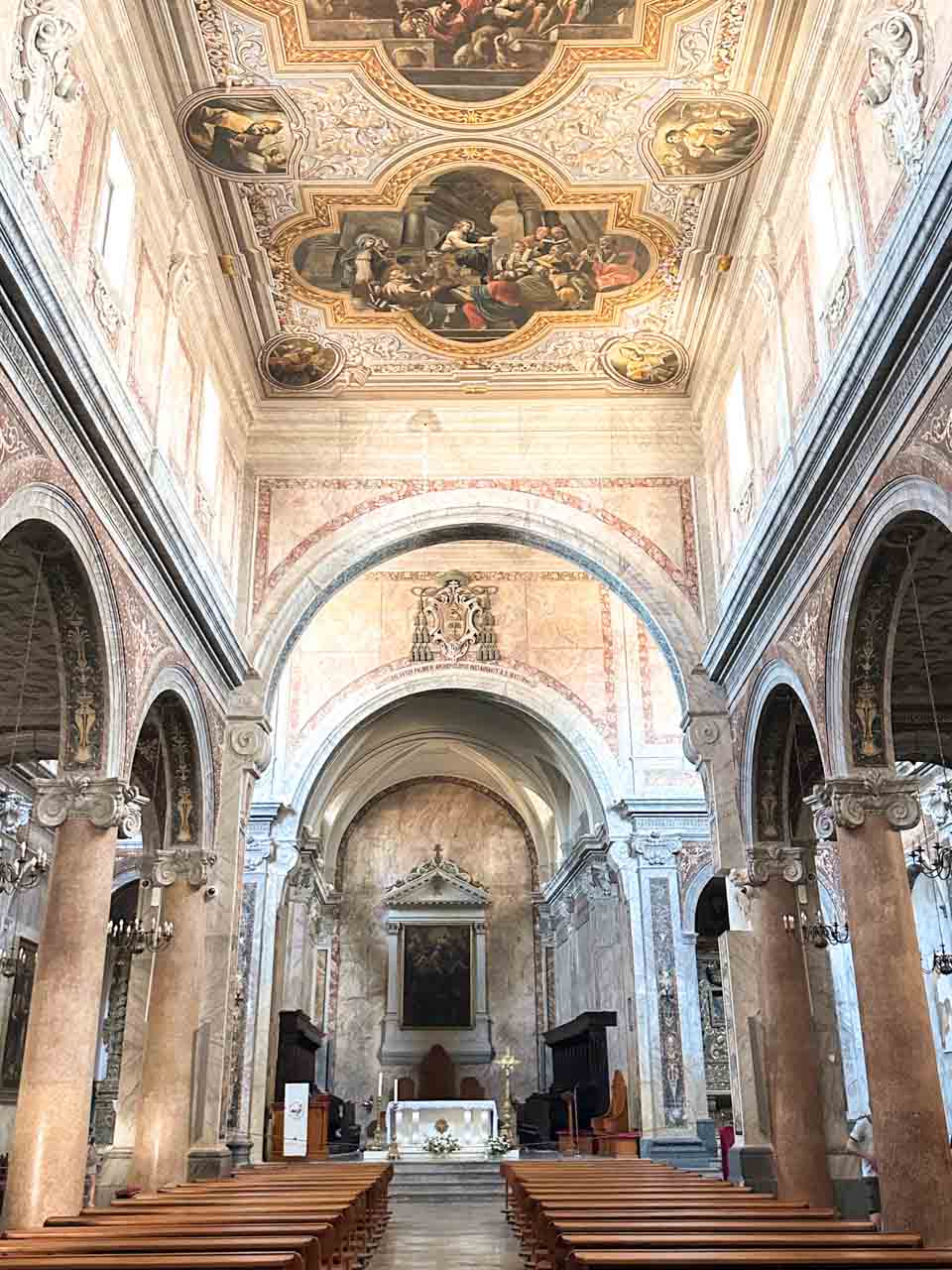
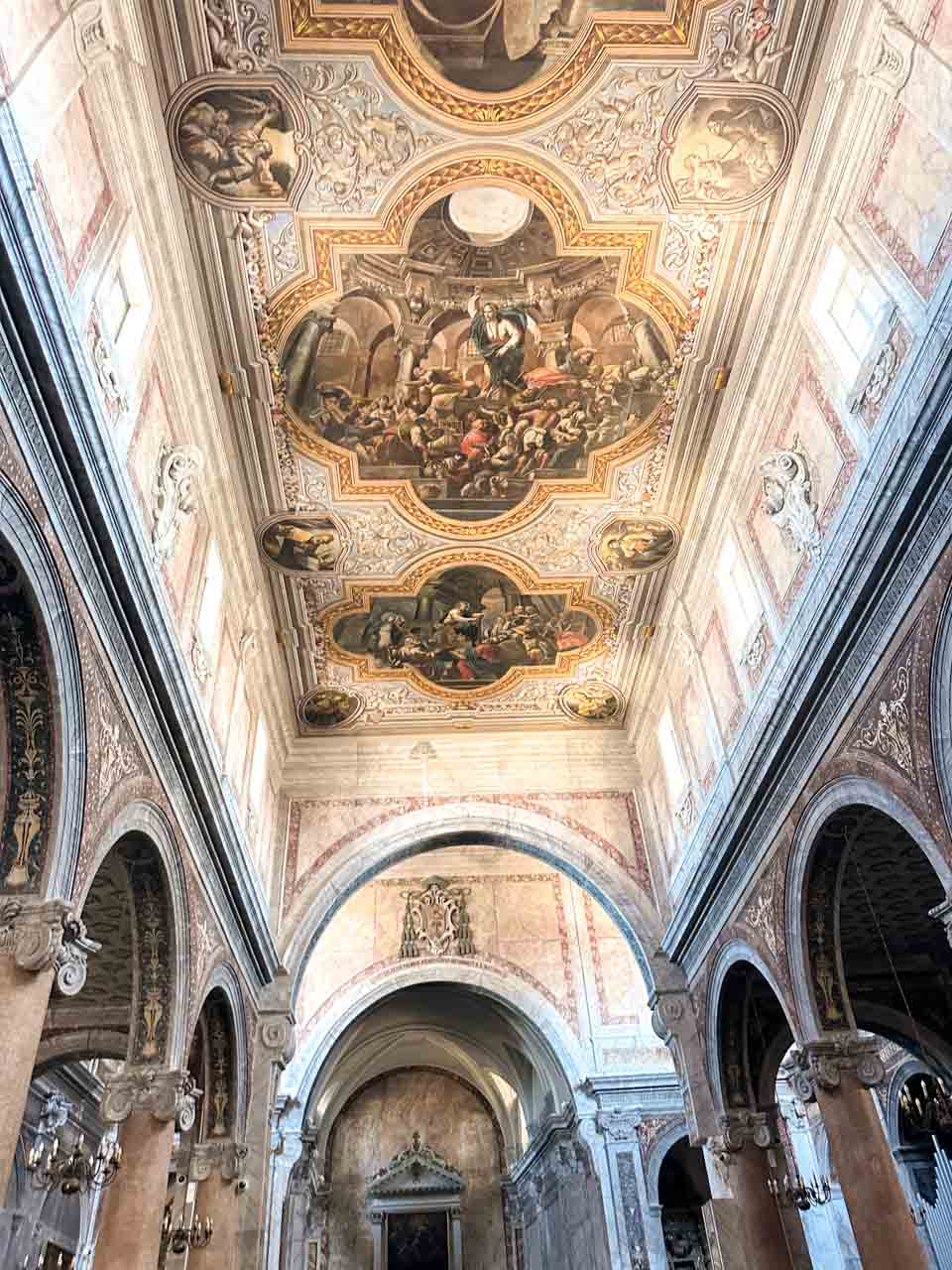
The best part is that you can go inside for free. You’ll find more religious artworks, paintings, and even the statue of Saint Orontius, which locals parade through the streets during the three-day festival in his honour. It doesn’t take long to see everything, but it’s definitely worth popping in.
Museo Civico di Ostuni
Sadly, we didn’t get to visit this museum ourselves, as it’s currently under renovation. I don’t think there’s a confirmed reopening date yet, but it’s definitely one to keep on your list if you’re into history and archaeology.
You’ll find the museum in a former Carmelite monastery, right next to a church. It focuses on prehistoric settlements in the area, with many of the exhibits dating back to the Palaeolithic and Neolithic periods and some later finds too.
The most fascinating one is the Woman of Ostuni, known as Delia. She was around 31–33 weeks pregnant when she died, and people buried her here roughly 26,000 years ago. Archaeologists discovered her remains in 1991 in the nearby Santa Maria di Agnano cave, along with jewellery made from seashells, deer teeth, and animal bones – all of which you can still see in the museum.
It’s a bit grim, but also incredibly rare – it’s one of the few discoveries where both the woman and the foetus were preserved. So if that’s something you’d find interesting, it’s definitely worth visiting once it reopens.
Piazzetta Martiri delle Foibe
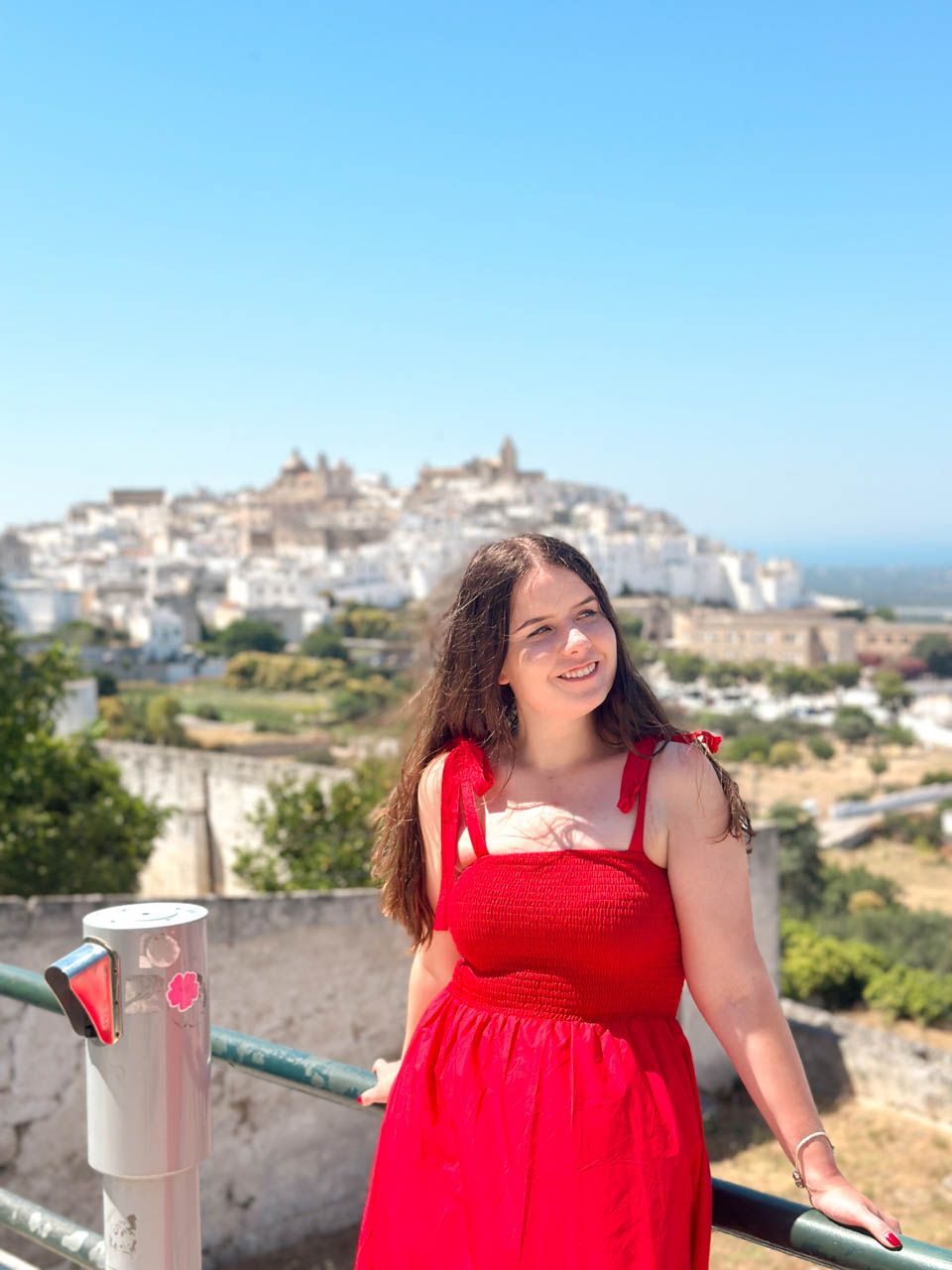
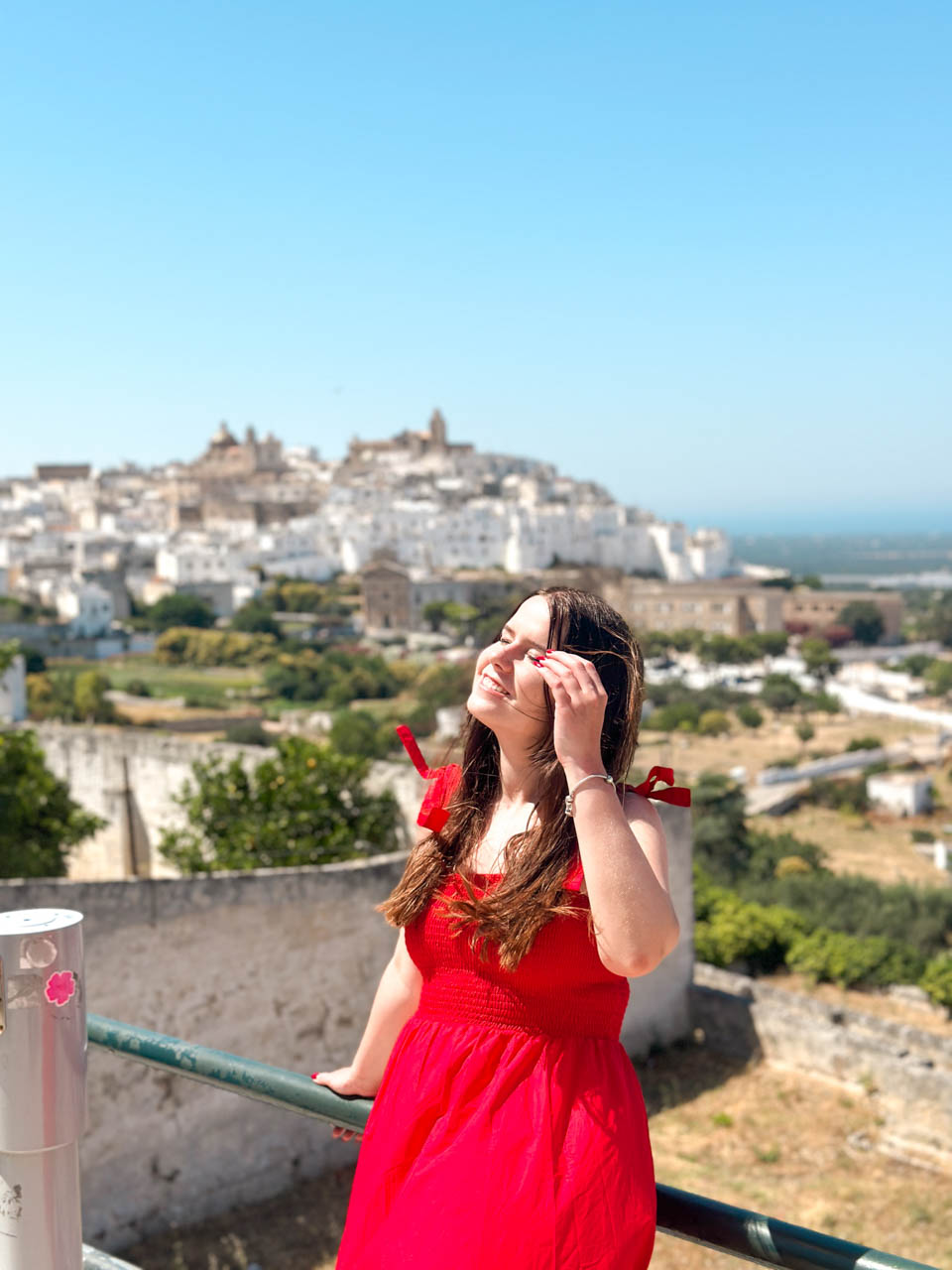
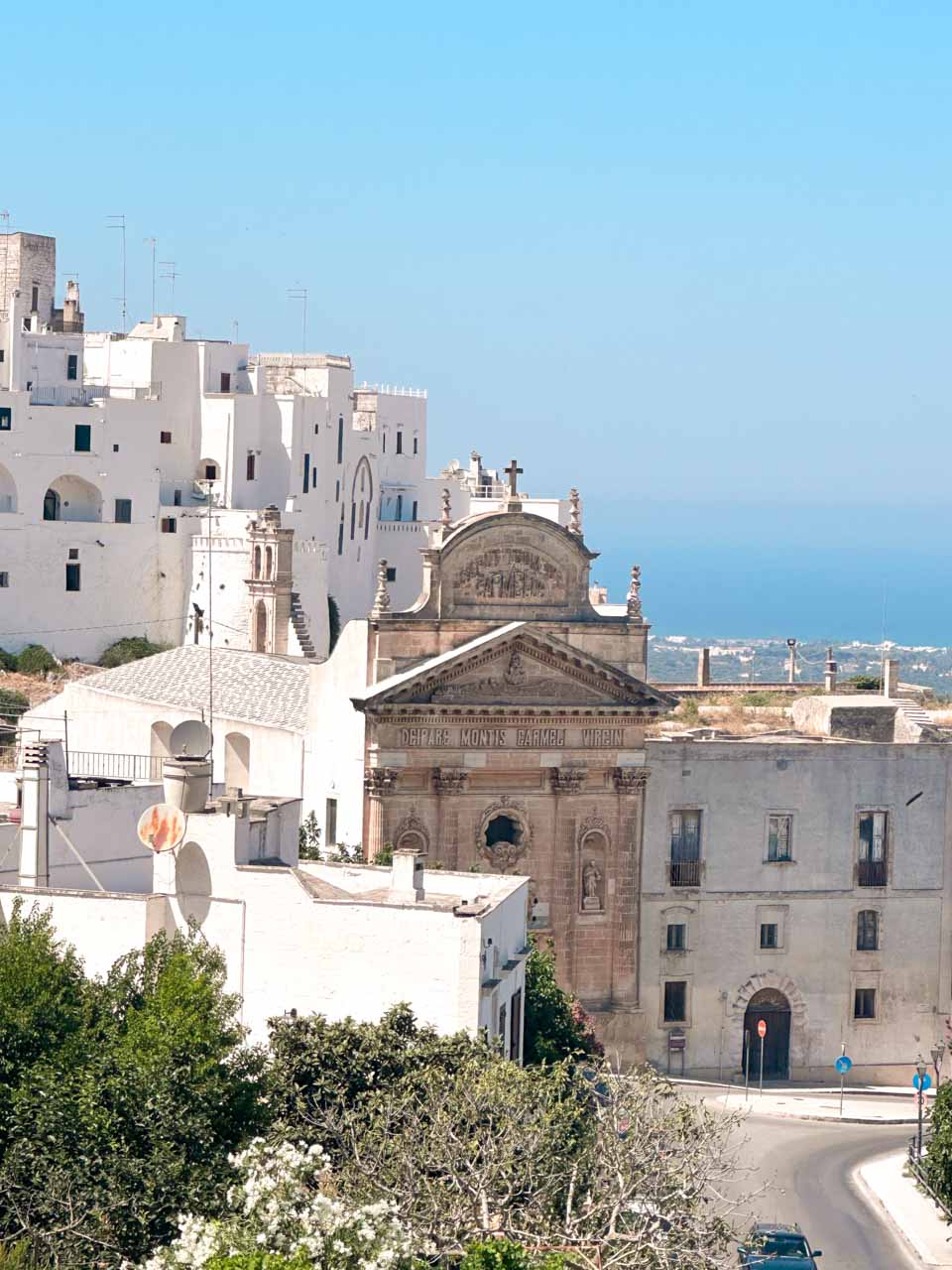
Now, on to the place I promised earlier… If you want those classic photos with the entire Old Town in view, head towards Piazzetta Martiri delle Foibe. It’s a viewpoint along Corso Vittorio Emanuele II, and you get a really beautiful, unobstructed view of Ostuni’s whitewashed houses from there.
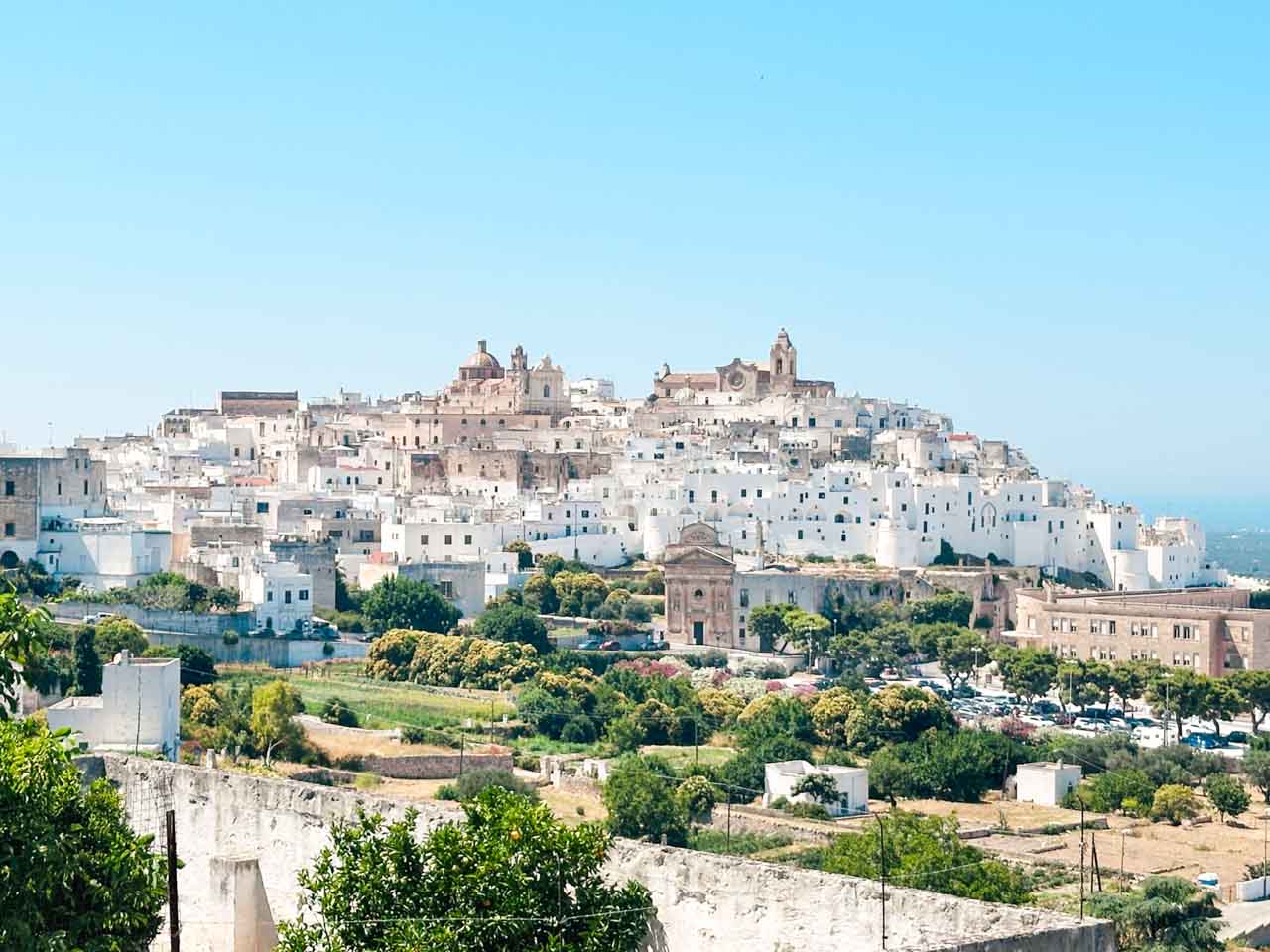
Maybe it was because we went during the hottest part of the day, but there were barely any people around, so we could take our time snapping photos without feeling rushed or getting in anyone’s way. I can only imagine how magical it must look at sunset – definitely one I’d love to come back for!
Go shopping
We didn’t have loads of time to shop around, but Ostuni is a great place to pick up a few souvenirs.
First of all, Puglia is known for its wine. The most popular grape varieties are Primitivo and Negroamaro, but you’ll also come across others like Fiano, Bombino Bianco, Verdeca, or Nero di Troia. If you’re looking to bring a bottle home, Enoteca Vini di Puglia is a great spot – they only stock wines from the region.
The countryside around Ostuni is also full of ancient olive trees (some of them hundreds, if not thousands, of years old), and many families still produce their own olive oil. You can buy it in shops around the historic centre, but it’s usually a bit overpriced.
If you happen to be visiting on a Saturday, I’d recommend heading to Via Nino Sansone. There’s a weekly market where local farmers sell fresh produce – olives, vegetables, cheese, seafood, and olive oil. It starts around 8 am and runs until about 1 pm.
We didn’t make it ourselves, but on the second Sunday of each month there’s also a smaller market near Villa Comunale, where you can browse antiques and vintage bits.
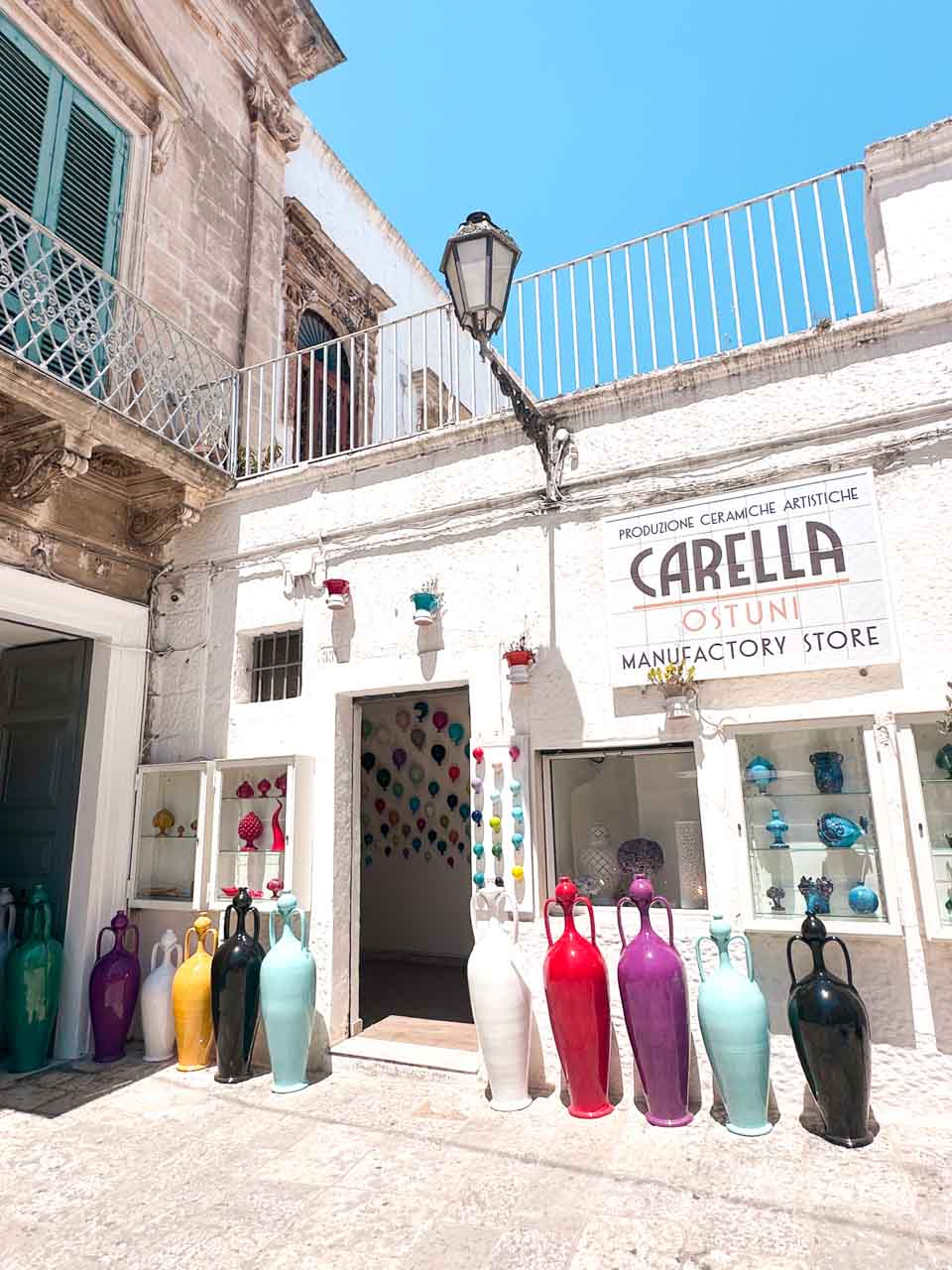
And if you love ceramics, there’s a beautiful shop in the historic centre called Carella Ostuni, where you can pick up some lovely local pottery.
Visit an olive grove
Finally, if you’re after a more authentic experience, you can visit one of the olive groves around Ostuni and do an olive oil tasting. It’s something we really wanted to do ourselves, and there are a few great options nearby.
This is the one we were considering, as it’s quite close to Ostuni – you could easily get there by car or even take a taxi from the train station:
This is another option if the first one has no availability, although it’s a bit more expensive:
Masseria Il Frantoio also offers olive oil tastings, although I couldn’t find much information about the pricing. If you’re staying at a masseria, it’s definitely worth checking with them as well, as they might organise tastings for their guests.
Where to eat and drink in Ostuni
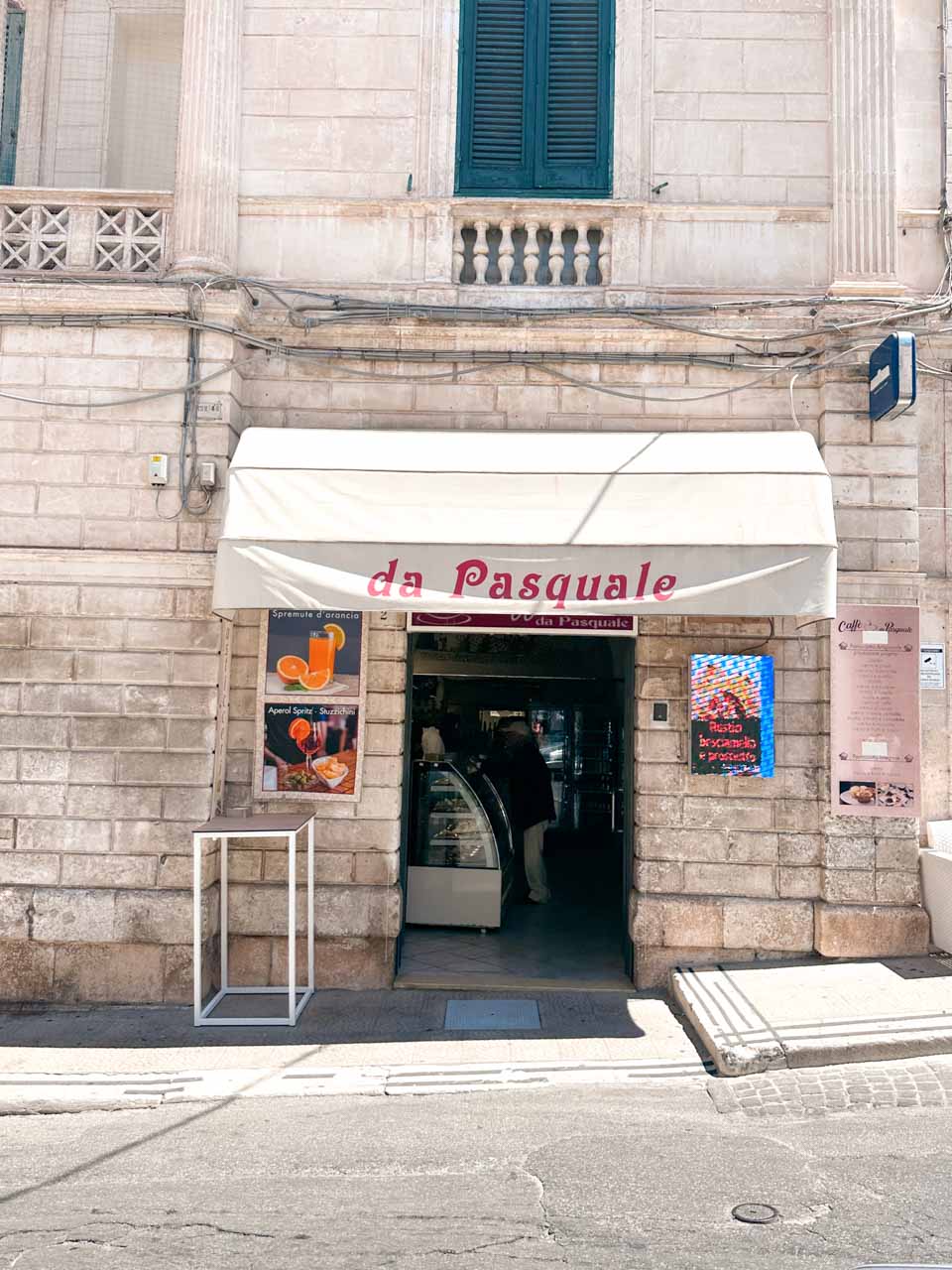
Pasticceria da Pasquale
Bar Pasticceria da Pasquale opens super early (we’re talking 5 am), so it’s a great spot if you’re after breakfast or dessert near Piazza della Libertà.
It’s a proper Italian pasticceria, with a really impressive selection of local pastries. You’ll find pasticciotti, traditional cannoli, maritozzi, and plenty of other tempting options.
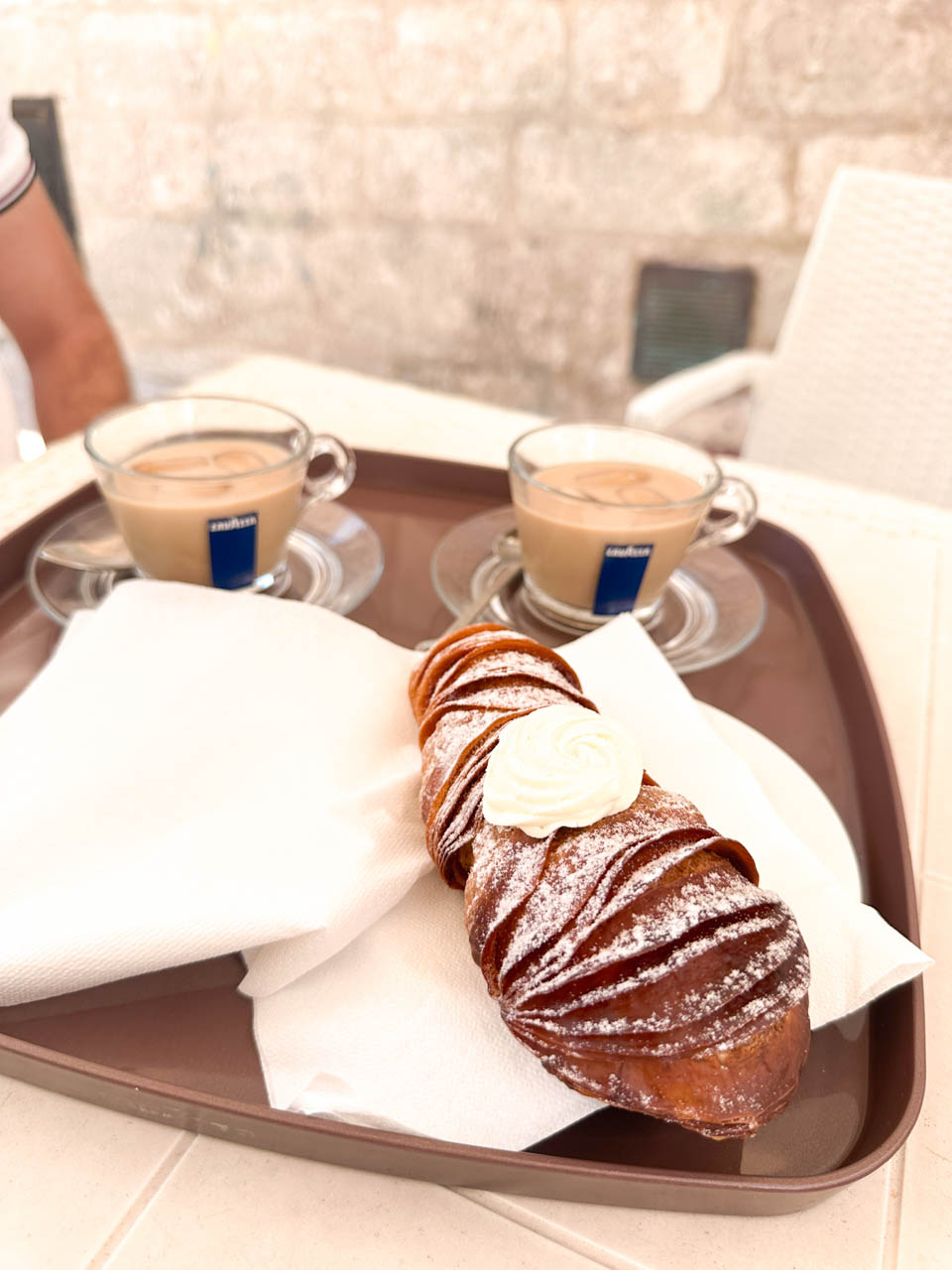
We decided to try something we’d never had before – coda d’aragosta (which translates to “lobster tail”). It’s a crunchy, flaky pastry filled with cream, and you can usually choose between Chantilly, chocolate, or pistachio. We shared one pastry, had two coffees on the side, and paid €6.50 in total, which felt very reasonable.
Another slightly funny Apulian pastry you might come across is tette delle monache, which literally translates to “nun’s breasts”. It’s a soft sponge cake shaped into little domes, filled with cream, and dusted with icing sugar. Sadly, they didn’t have that one when we visited.
Les Cre Fantastique
Another place we visited in Ostuni was Les Cre Fantastique. It’s a small spot where you can get crêpes, piadina sandwiches, and milkshakes – but what they’ve really been known for since the late 1990s are panzerotti.
Panzerotti are a traditional snack from Puglia. They’re small, fried dough pockets, a bit like mini calzone – same crescent shape, but deep-fried instead of baked. The most traditional filling is mozzarella and tomato, but you’ll find plenty of other options too.
We tried the classic one, and of course I had to go for a sweet option as well. I’m a huge white chocolate fan, so the moment I saw it on the menu, there was no way I was skipping that.
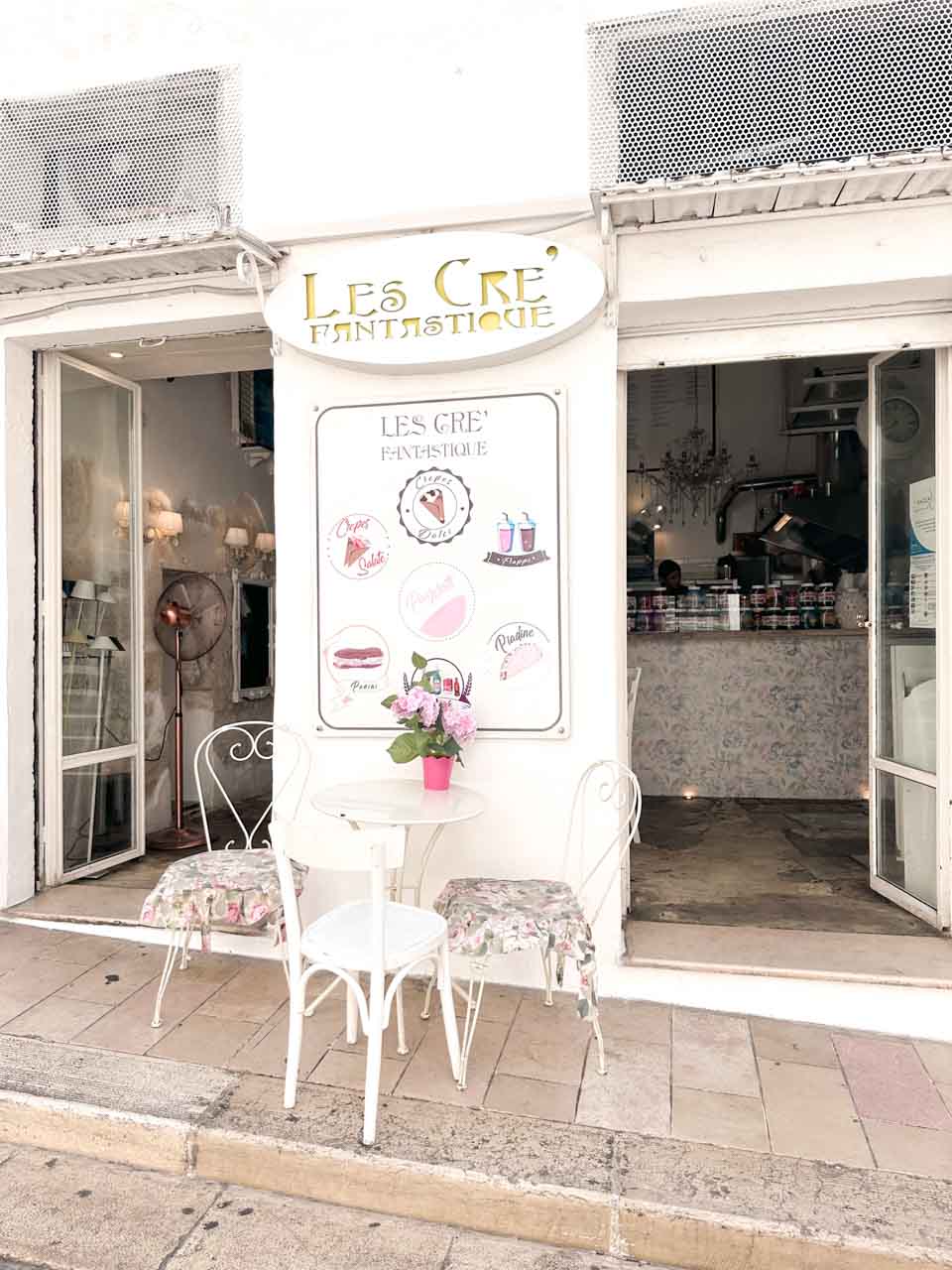
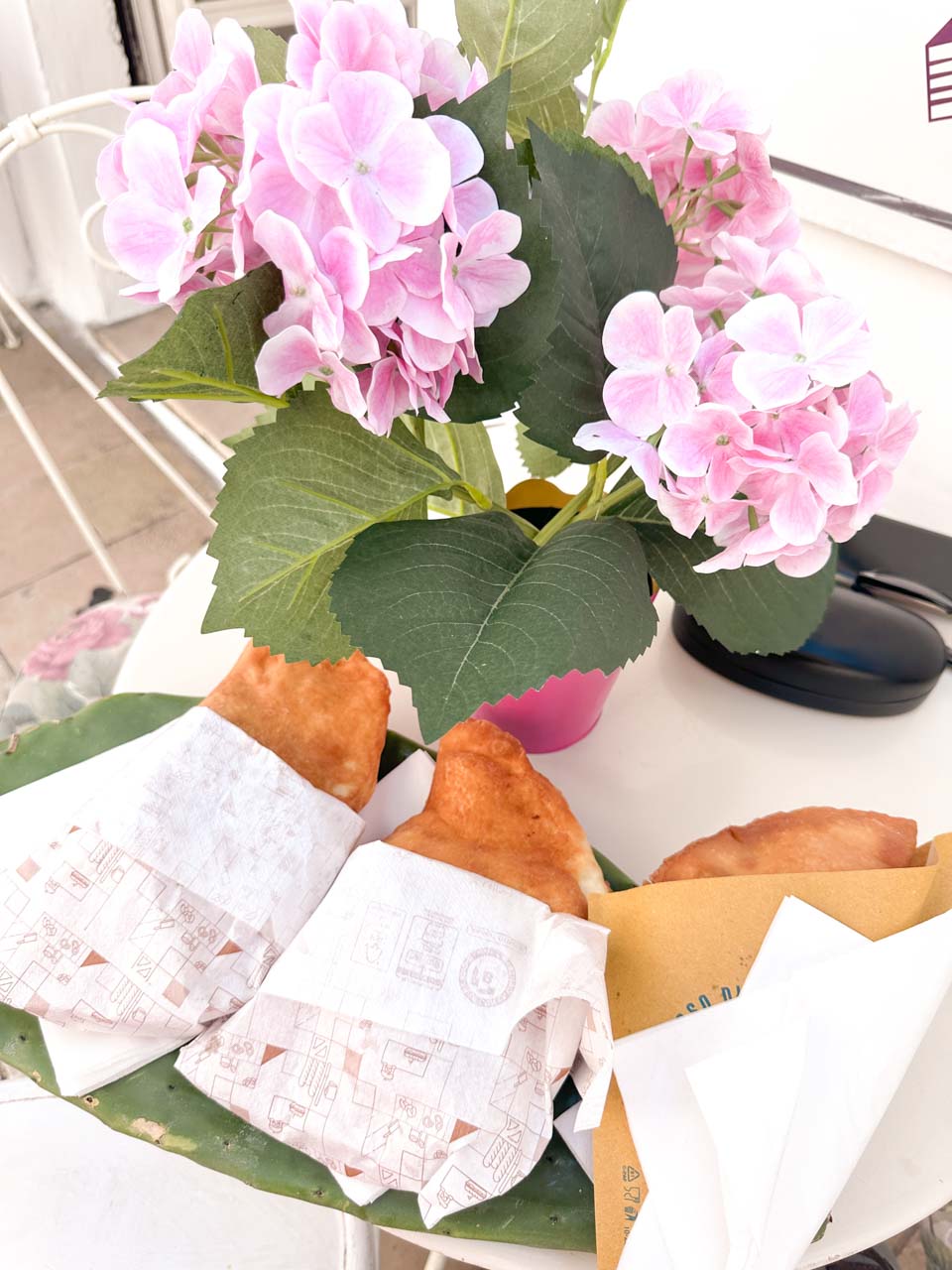
The classic panzerotto was €2.50, while the white chocolate one cost €4, which was pretty good value. They fry them fresh when you order, so you get them piping hot – and even though they don’t look huge, they’re surprisingly filling. I’d definitely recommend grabbing one as a quick snack, especially in the afternoon while you’re waiting for restaurants to reopen for dinner.
Asso di Spade
The most famous panzerotti spot in Ostuni is Asso di Spade, and since it’s literally less than 100 metres from Les Cre Fantastique, I had to stop by and compare the two.
I only went for the classic one here, which was slightly more expensive at €3. What’s nice about Asso di Spade is the wider range of flavours (although sadly, no white chocolate). They even had a carbonara option on the menu, which I absolutely would’ve tried if I had any room left. They also serve other snacks like polpette – Apulian meatballs – and pettole, which are little fried dough balls.
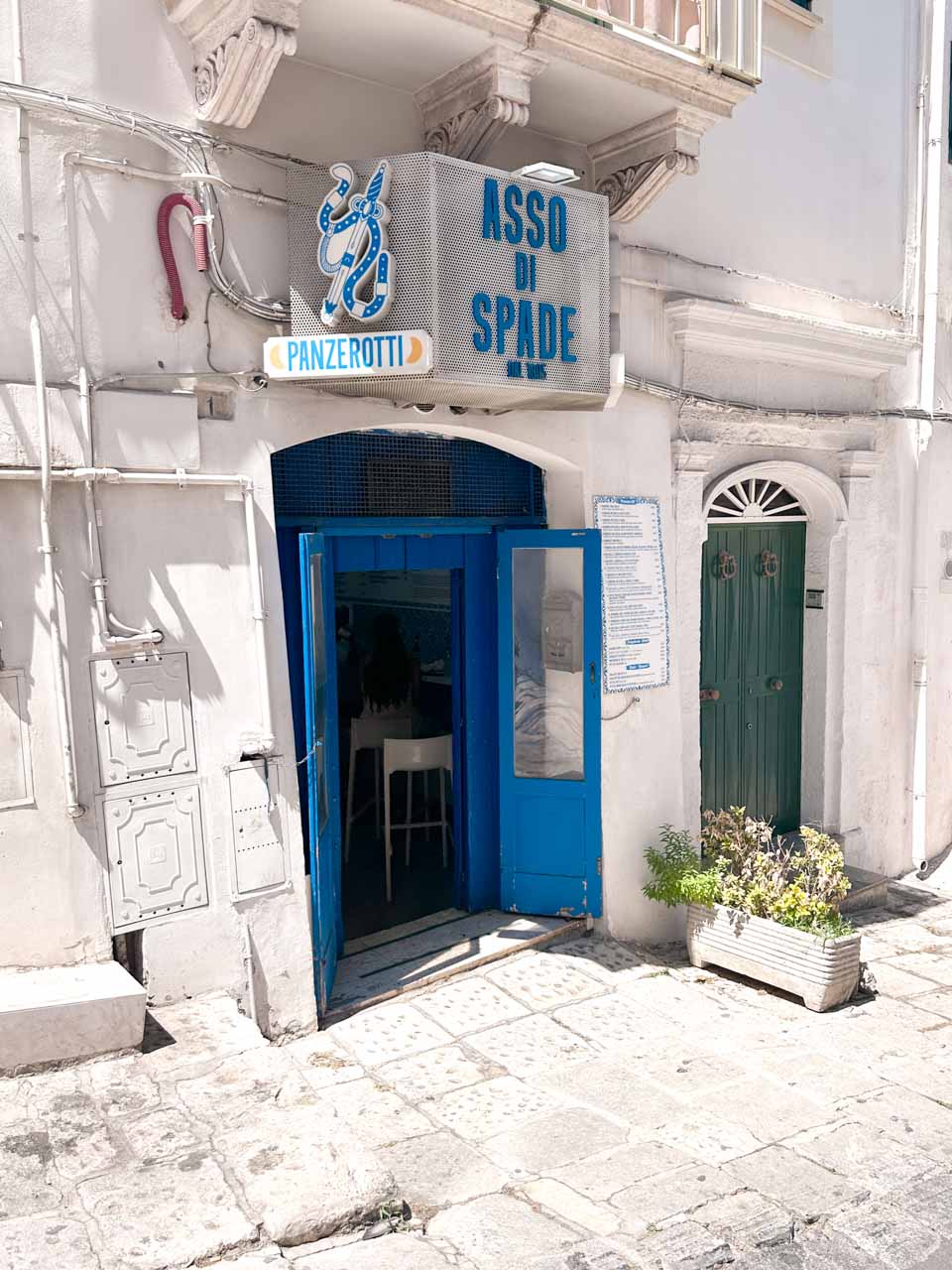
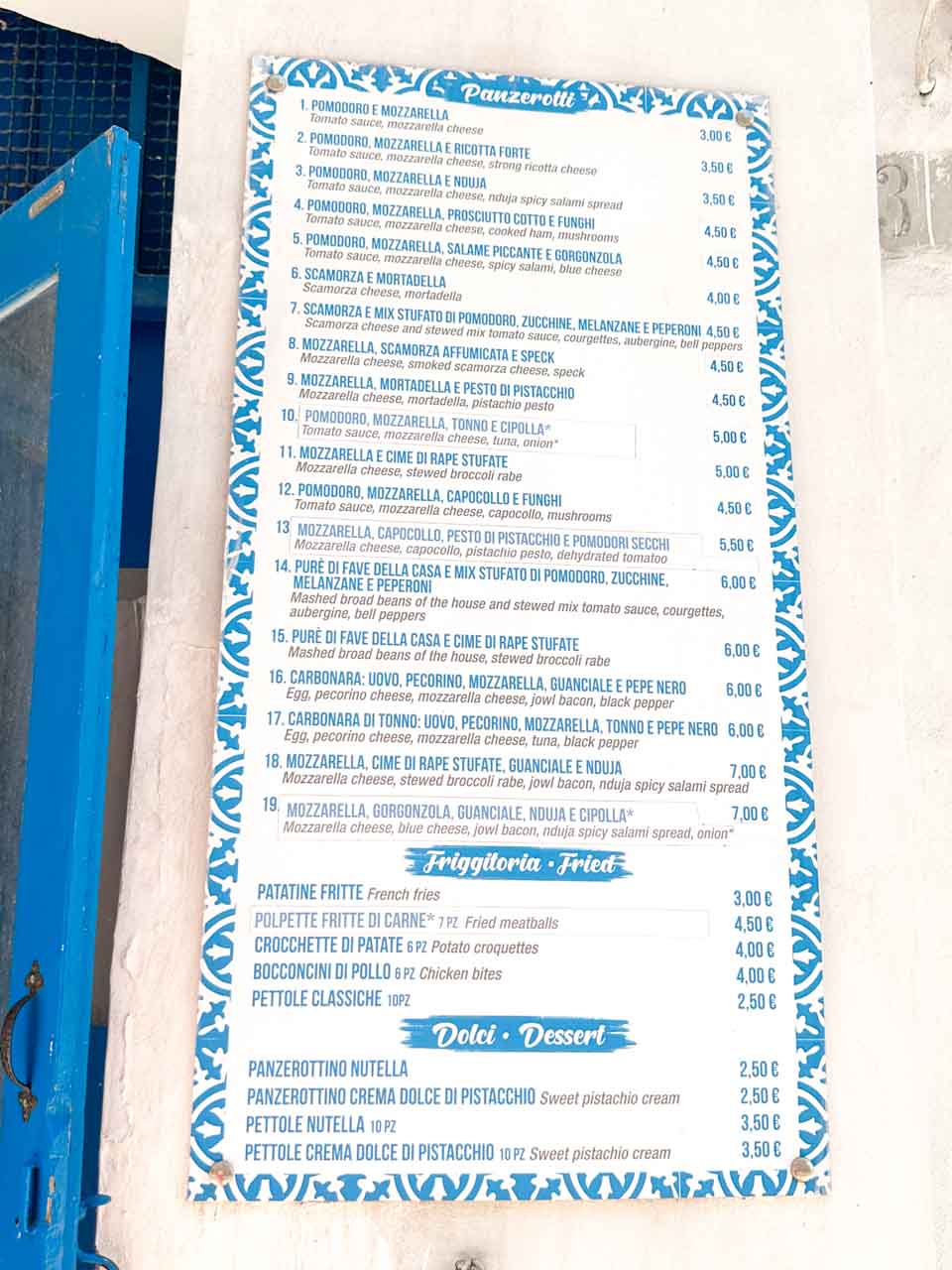
Both places are great, but they have slightly different vibes. Les Cre Fantastique does both sweet and savoury, but with crêpes and milkshakes on the menu, it feels a bit more like a dessert spot overall. Asso di Spade, on the other hand, leans more towards savoury options and also serves beer.
If you had to pick just one, I’d probably go for Asso di Spade for the variety and the more local feel – but honestly, you can’t go wrong with either.
Borgo Antico Bistrot
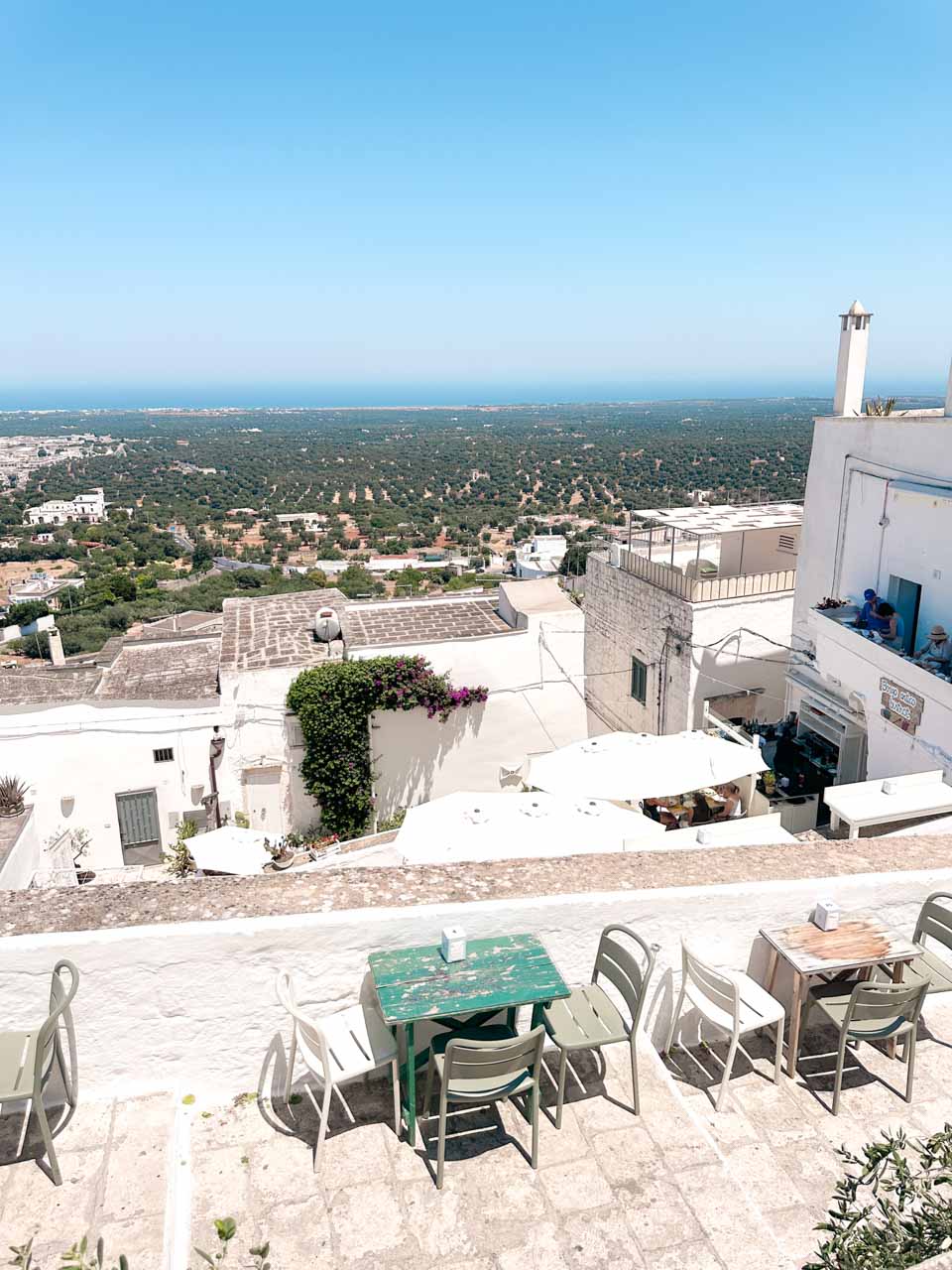
Borgo Antico Bistrot is probably the most touristy restaurant in Ostuni – and with views like this, it’s not hard to see why. I’ve heard the food is surprisingly good for such a popular spot, but since we were saving room for all the panzerotti, we didn’t get to try it ourselves.
We only stopped for a cocktail, but honestly, that alone made it worth it. You get a panoramic view over Ostuni, with the Adriatic Sea visible on the horizon. We paid €7 each for a Hugo, which is pretty standard – if not slightly cheaper than what you might pay elsewhere in a similar setting.
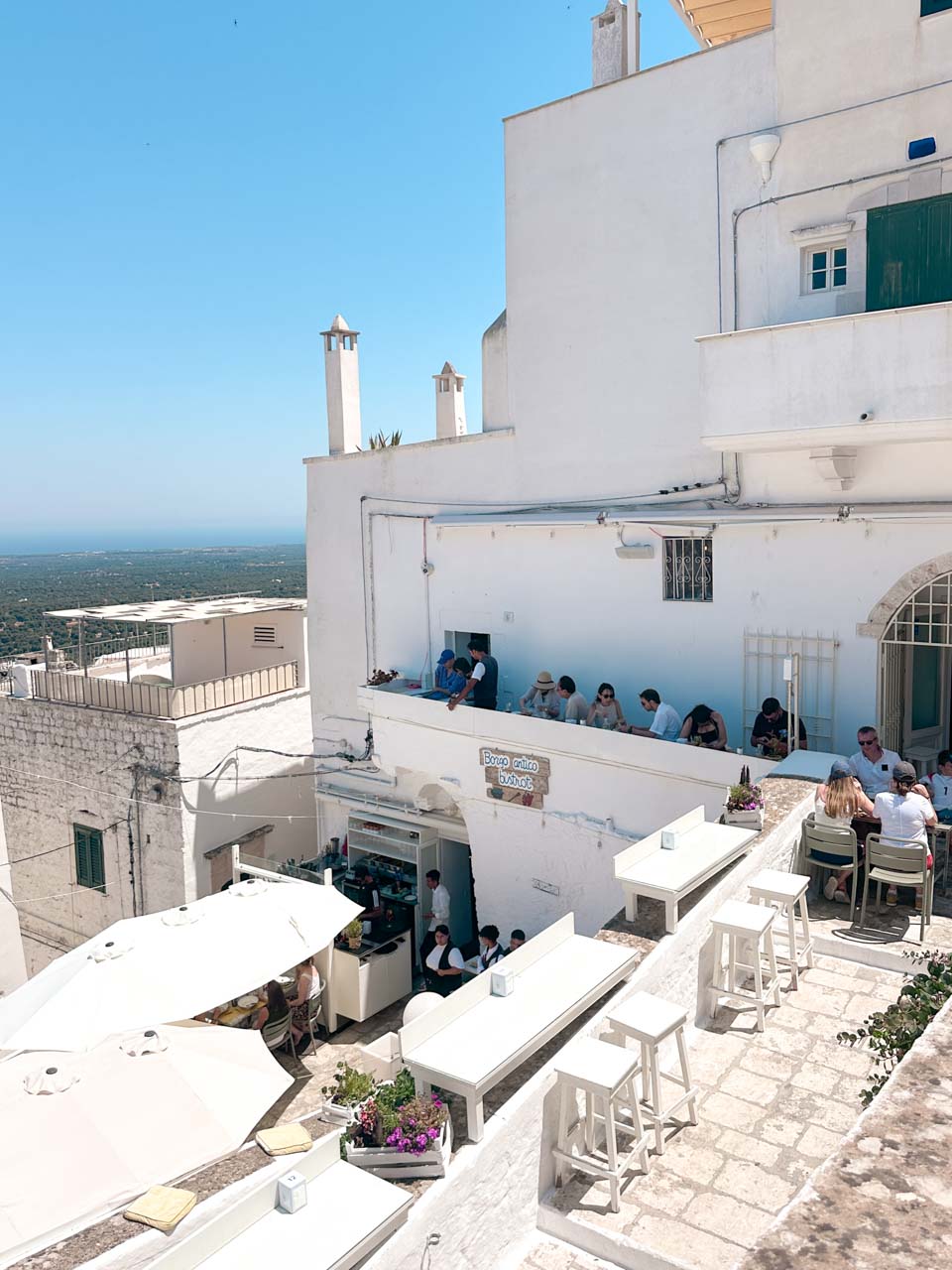
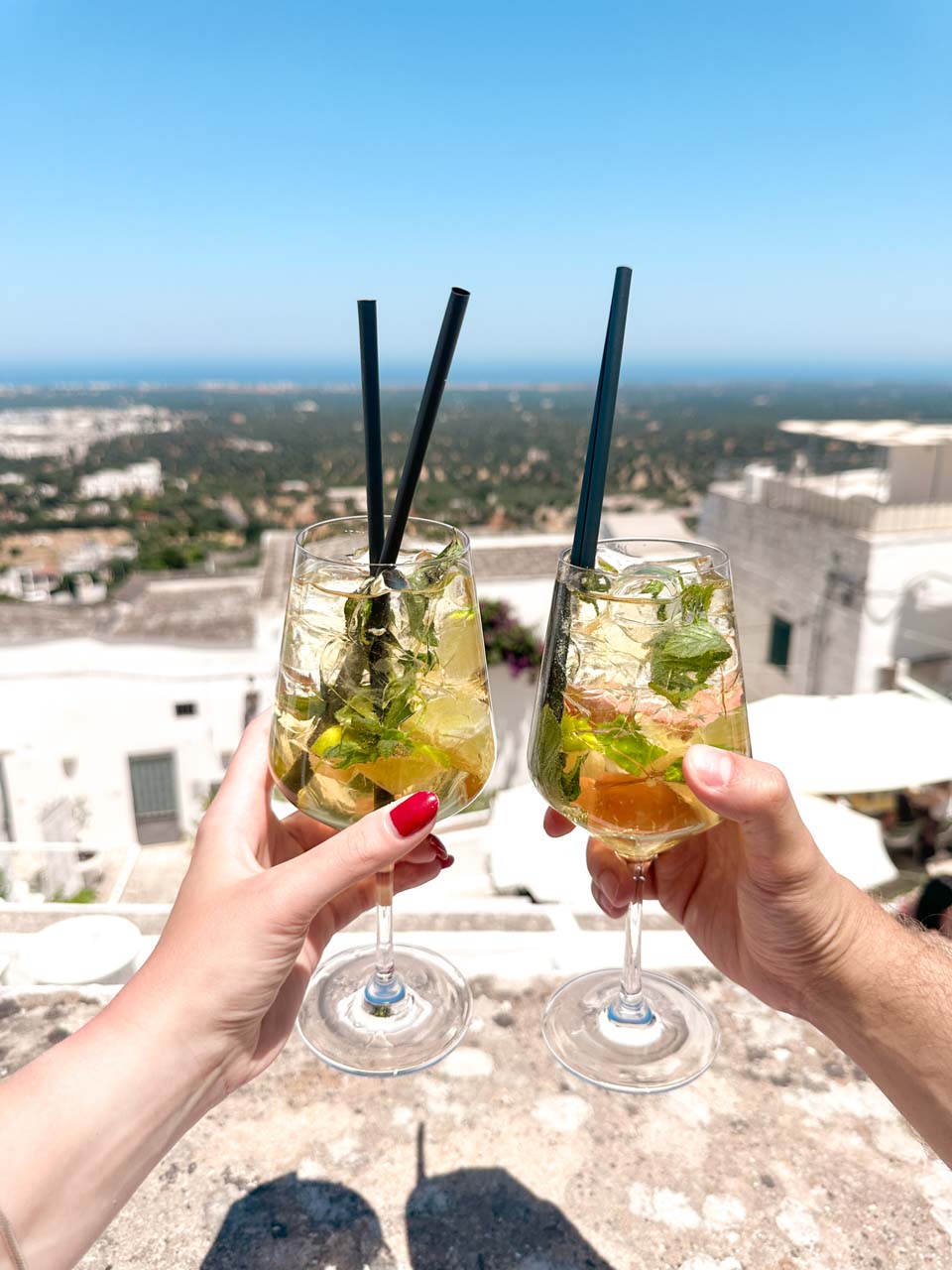
The tables outside are arranged in rows along the winding stairs that lead down to the lower streets. So yes, technically, you could just snap a photo while walking past and carry on. But realistically… how often do you get to sit down for a drink with a view like this? Especially on a hot summer day when you’re ready for a break anyway.
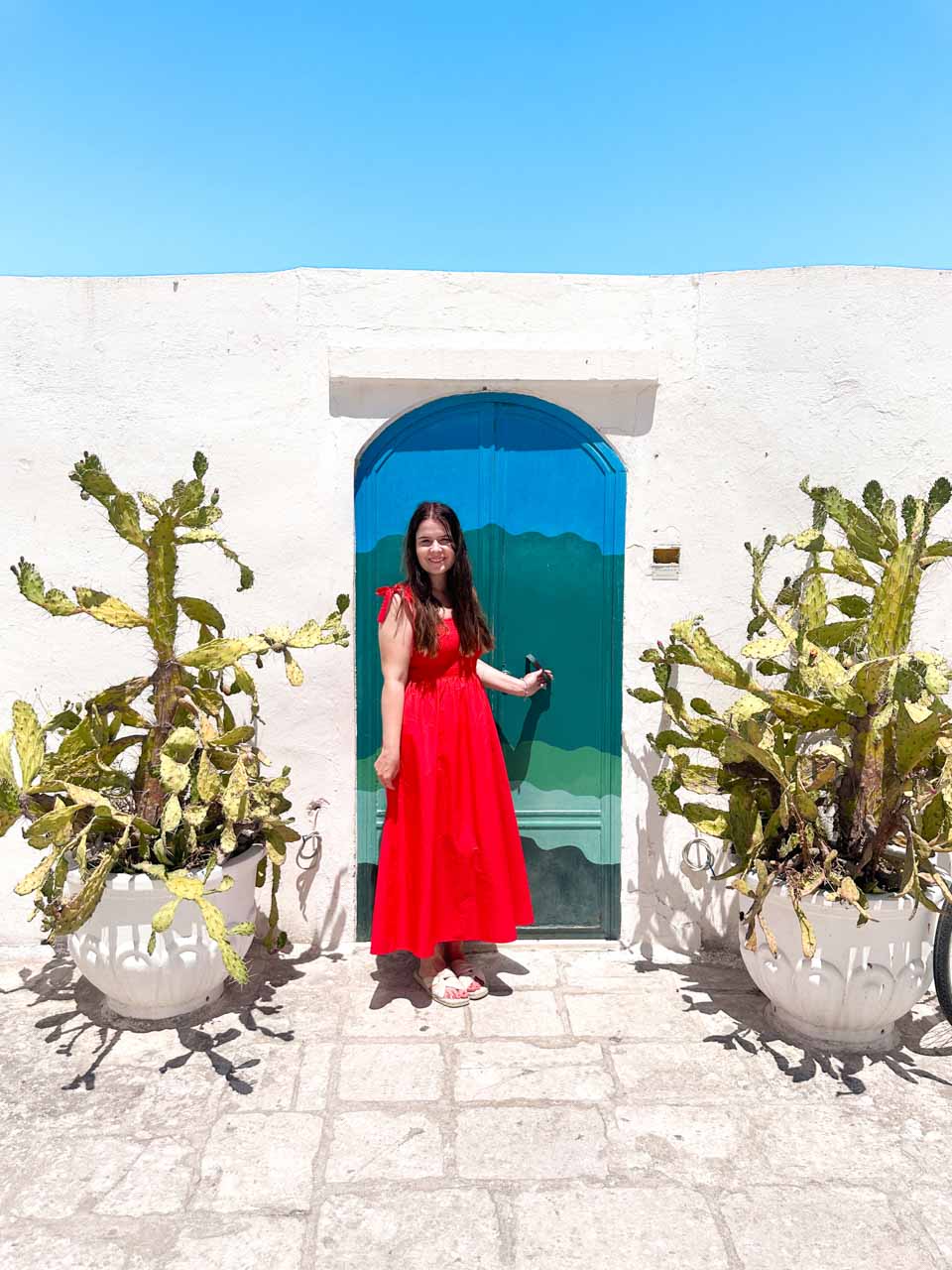
Right next to the bistro, you’ll also find one of the most popular photo spots in Ostuni – Porta Azzurra. It’s a door painted in shades of blue and green, said to symbolise the gateway to heaven. Just opposite, there’s another colourful door meant to represent the gateway to hell. It’s nothing extraordinary, and I wouldn’t queue for it, but it’s a nice little pop of colour in an otherwise all-white town.
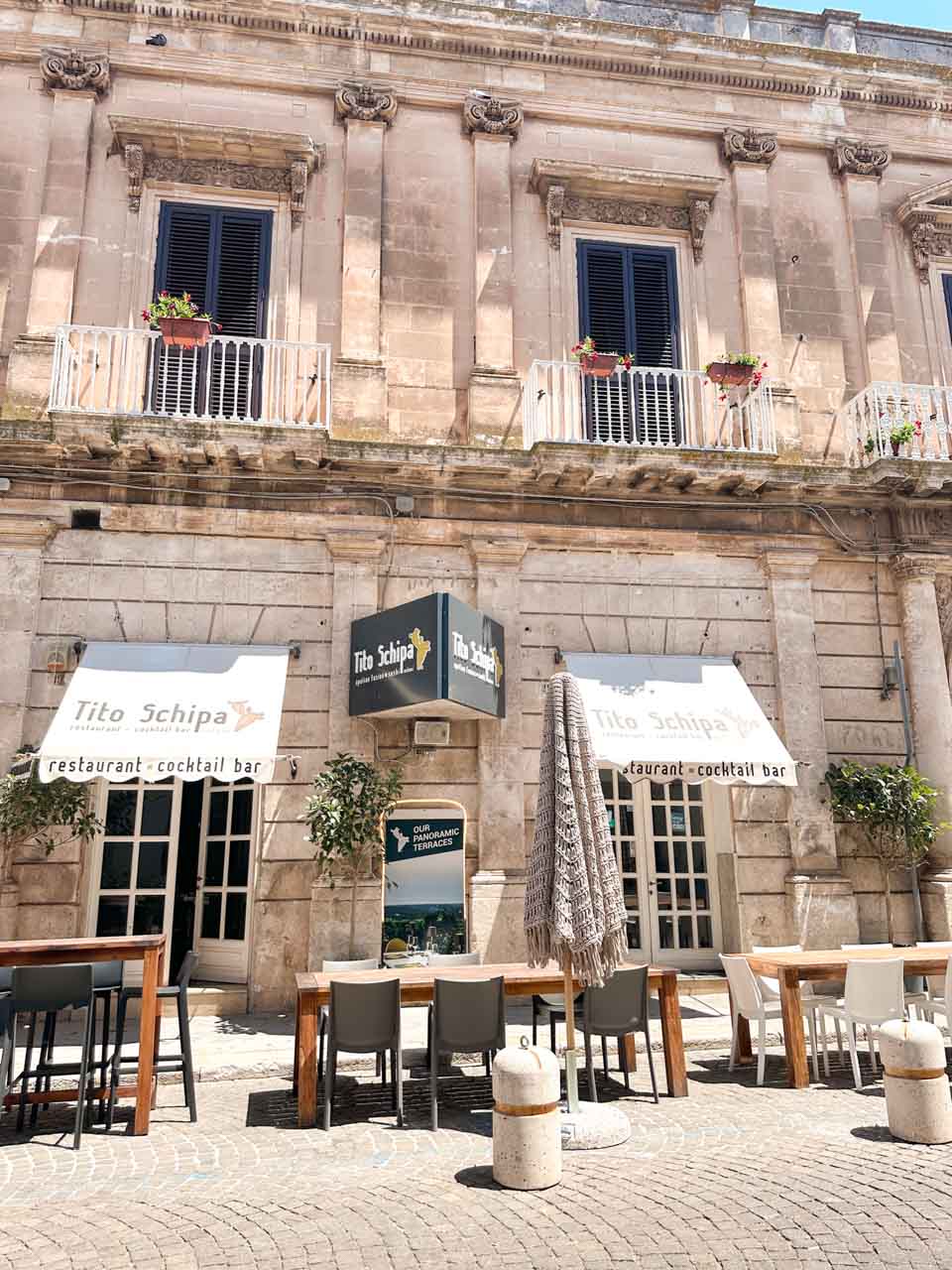
Bonus spots: If we had more time in Ostuni, we would’ve loved to try Casa San Giacomo (which Madonna rented out for her 63rd birthday), grab ice cream at Cremeria Alla Scala, have drinks at Hanky Panky’s, try pizza at Al Solito Posto, or check out Tito Schipa for Asian-Puglian fusion.
Did you like my tips? Read the rest of my Puglia travel guides here:
- Best Things to Do and Eat in Brindisi, Puglia’s Underrated City
- How to Spend 48 Hours in Bari: Best Things to Do, See, and Eat
- How to Spend a Day in Lecce, the Florence of the South
- 12 Best Things to Do in Alberobello, Puglia’s Fairytale Town
- How to Spend a Day in Polignano a Mare: Best Things to Do and Eat
- Matera Travel Guide: Best Things to Do, See, and Eat in Matera