Out of all the places I’ve been to in my life, Sofia is definitely one of the cities that surprised me the most. I feel very at home travelling around the Balkans, so I figured Bulgaria would be no different, but I didn’t realise just how much I was going to fall in love with Sofia and the country in general.
Already when I started planning our trip, I knew there was no way we’d get through all the places I’d saved. But once we actually arrived, I discovered even more cool spots, and quickly realised we’d need at least twice as much time to properly explore the city.
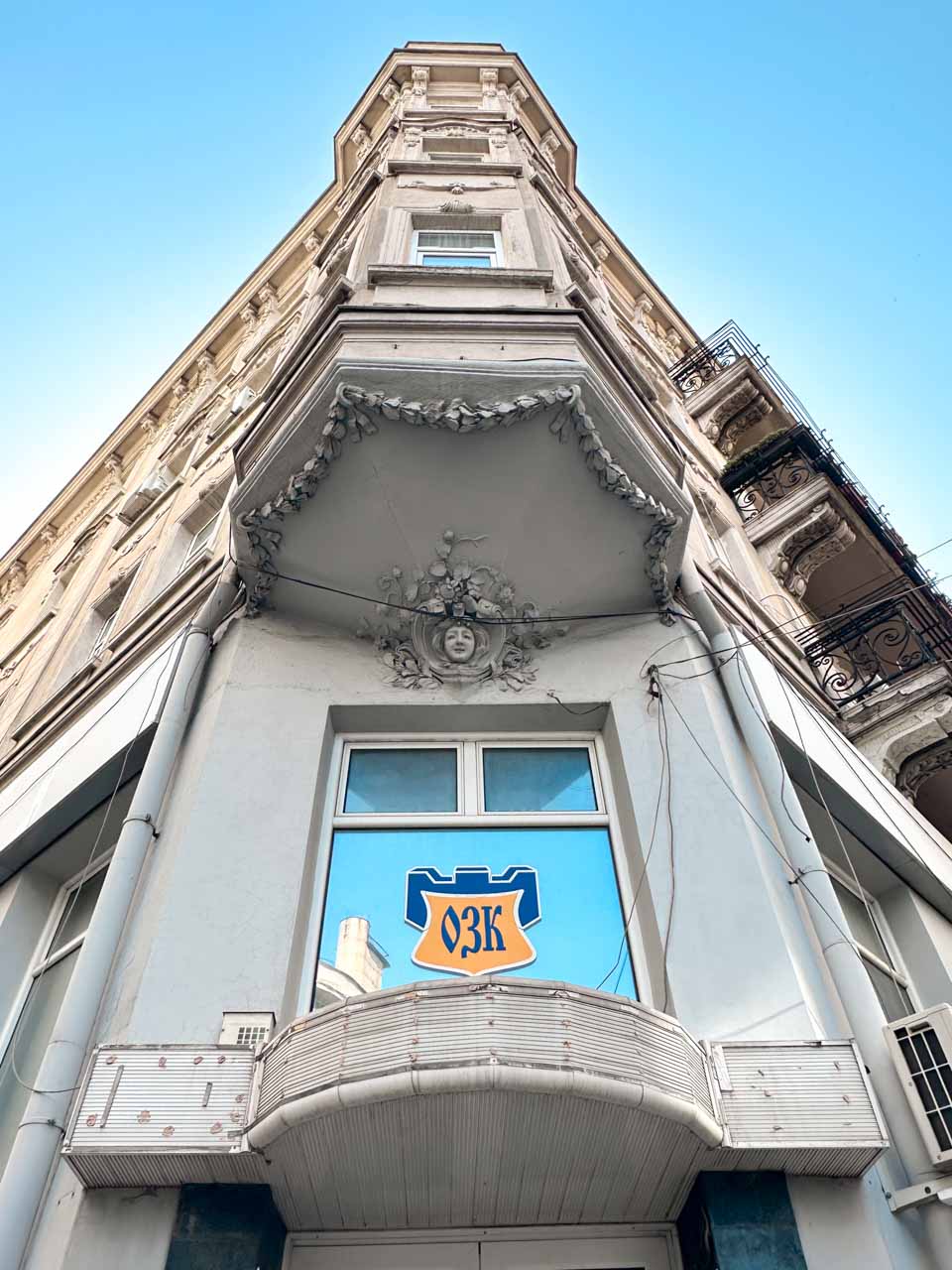
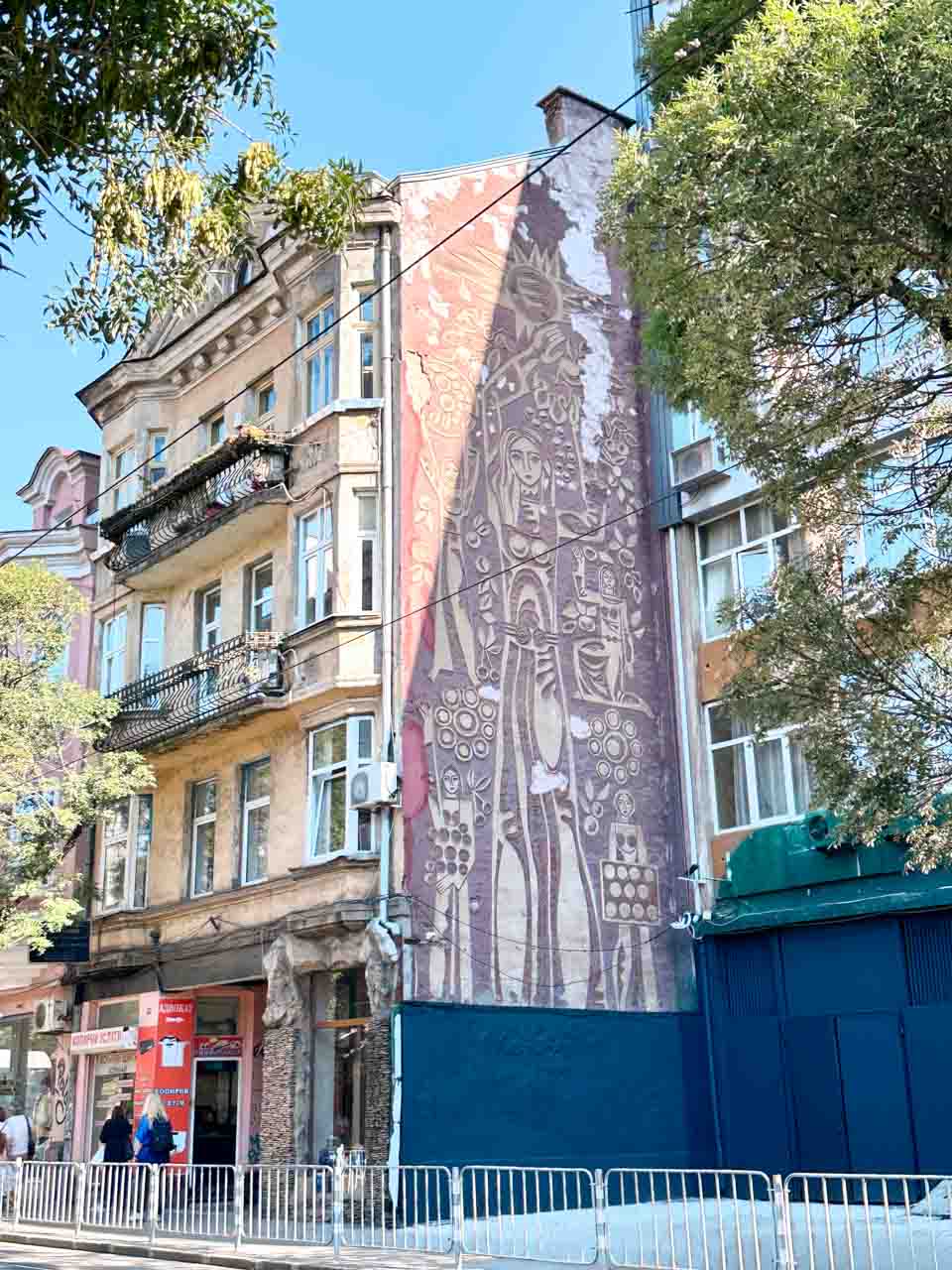
One of the coolest things about Sofia is that every part of its history is still there. You’ll see ancient ruins next to Soviet-style blocks, stunning Art Nouveau buildings, and then suddenly a modern office tower.
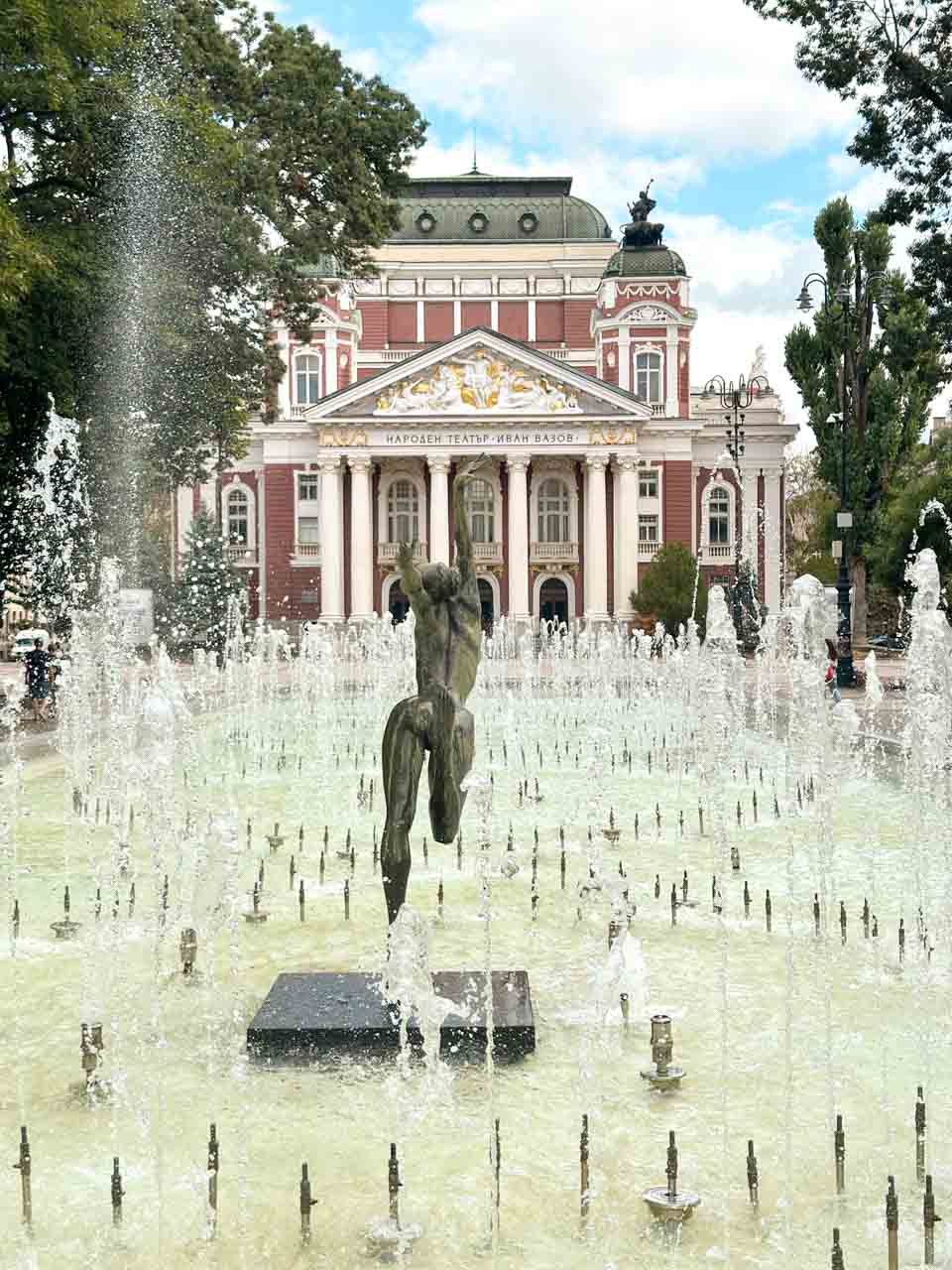
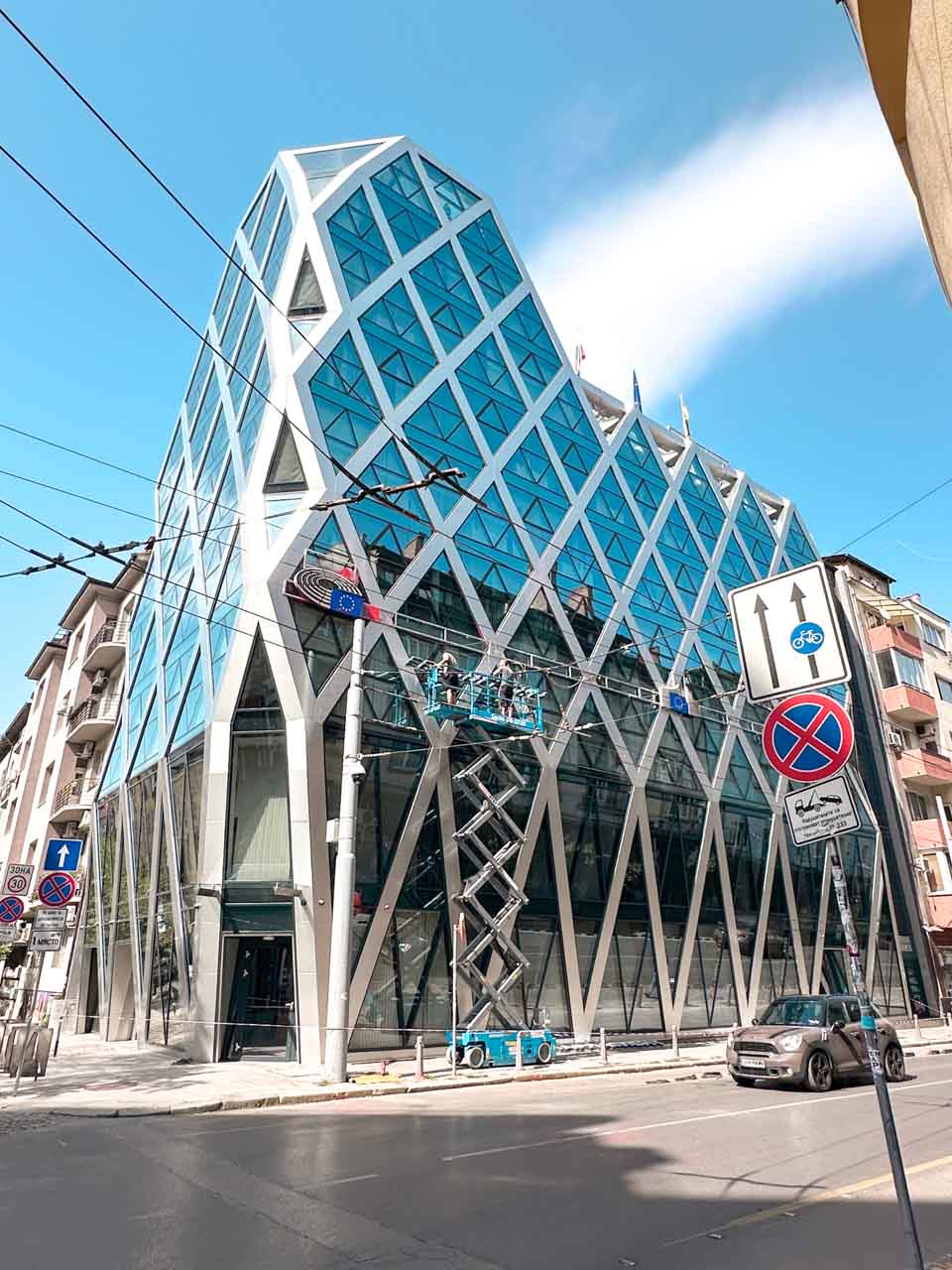
You’ll find plenty of traditional restaurants serving Bulgarian food, but there’s also a really cool alternative coffee scene, with so many great Scandi-style specialty coffee shops and bakeries.
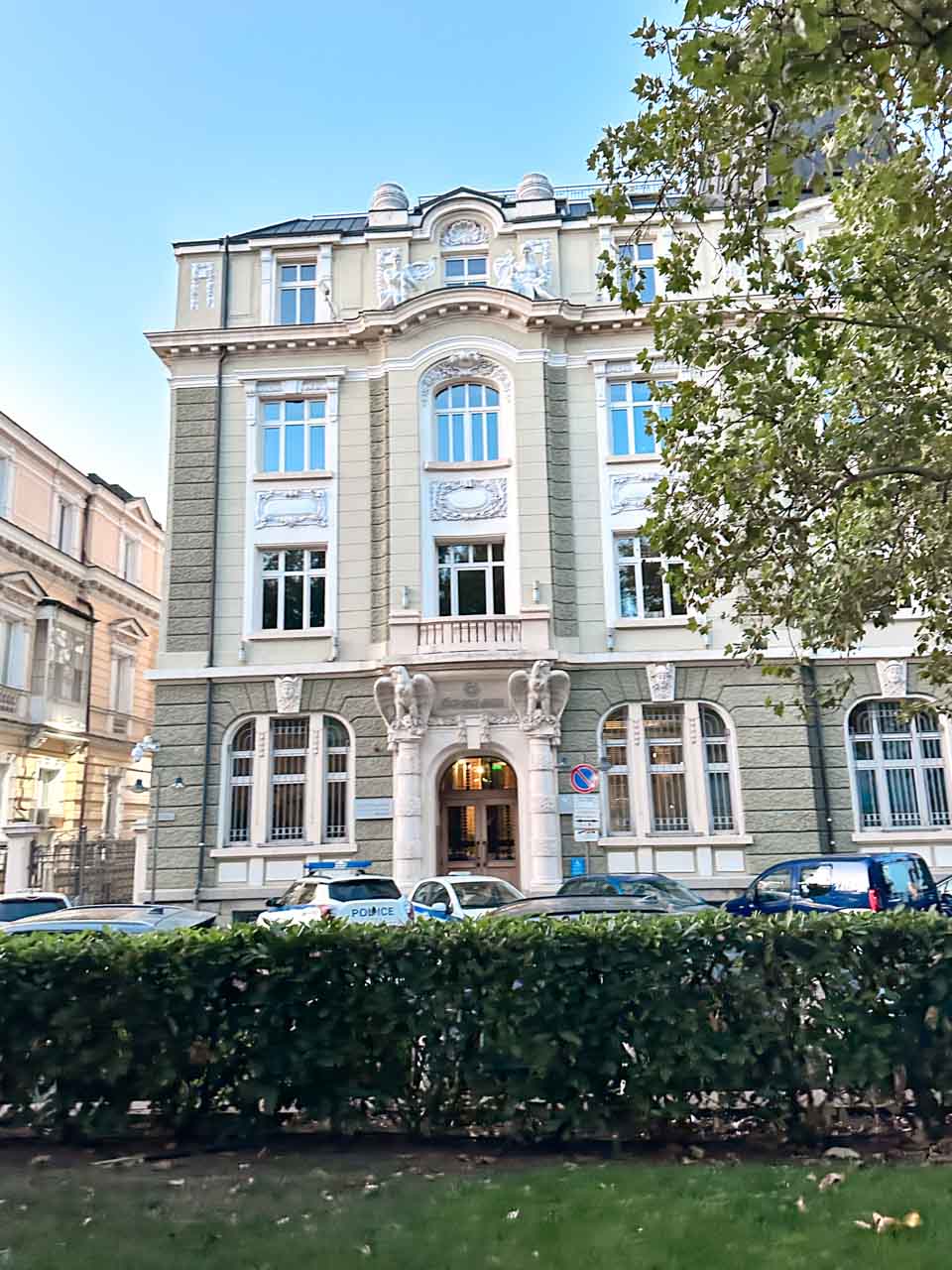
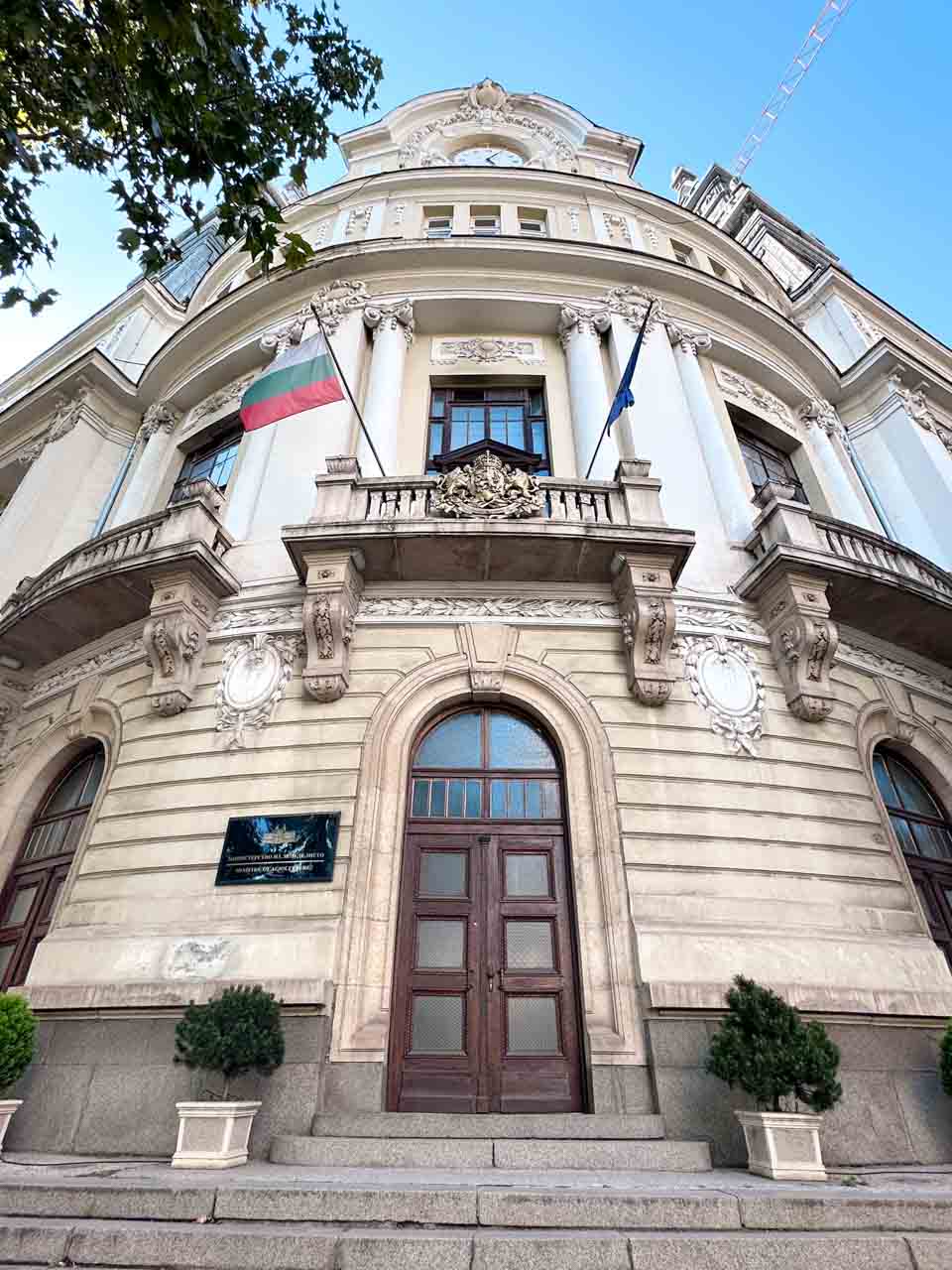
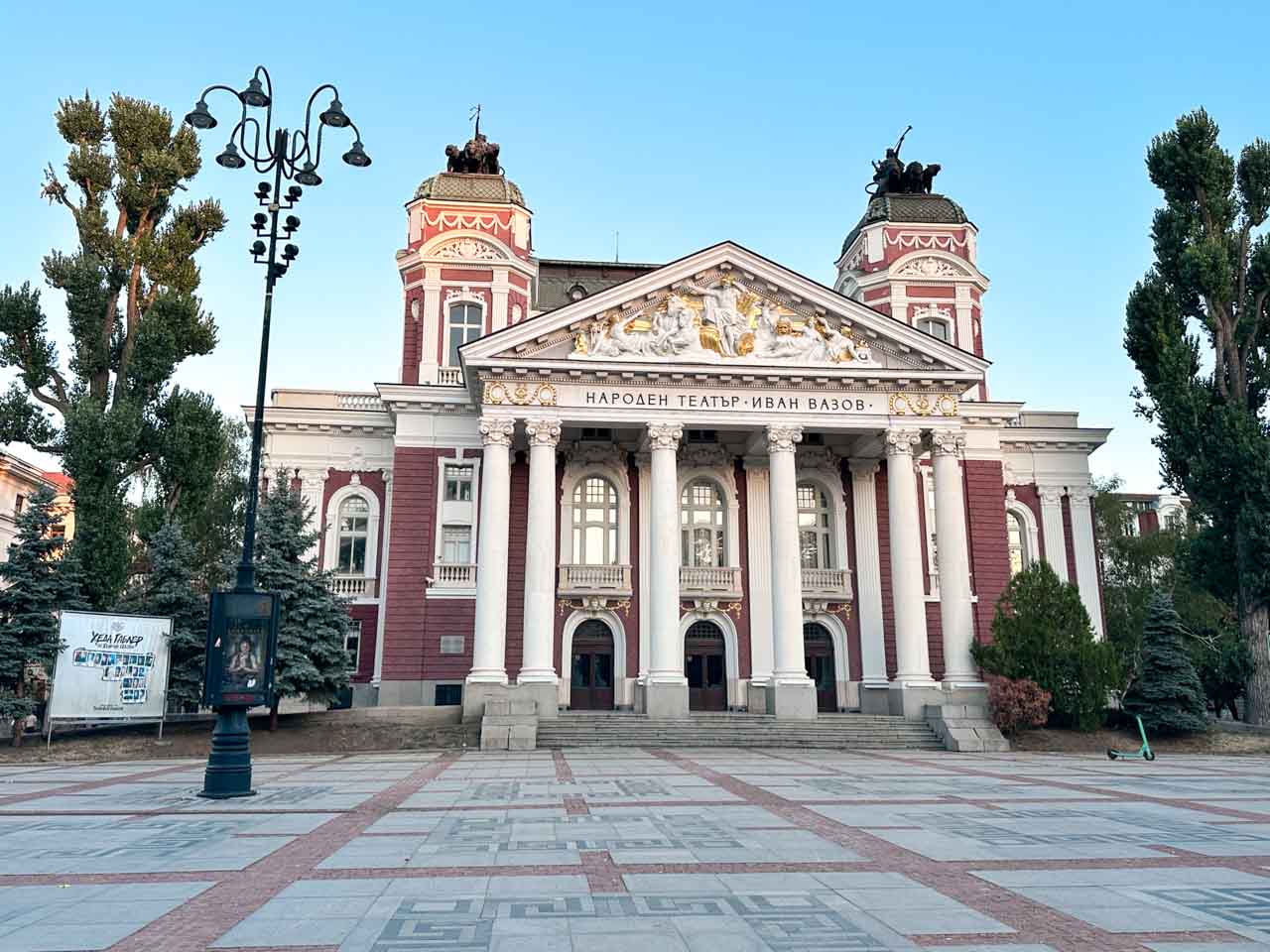
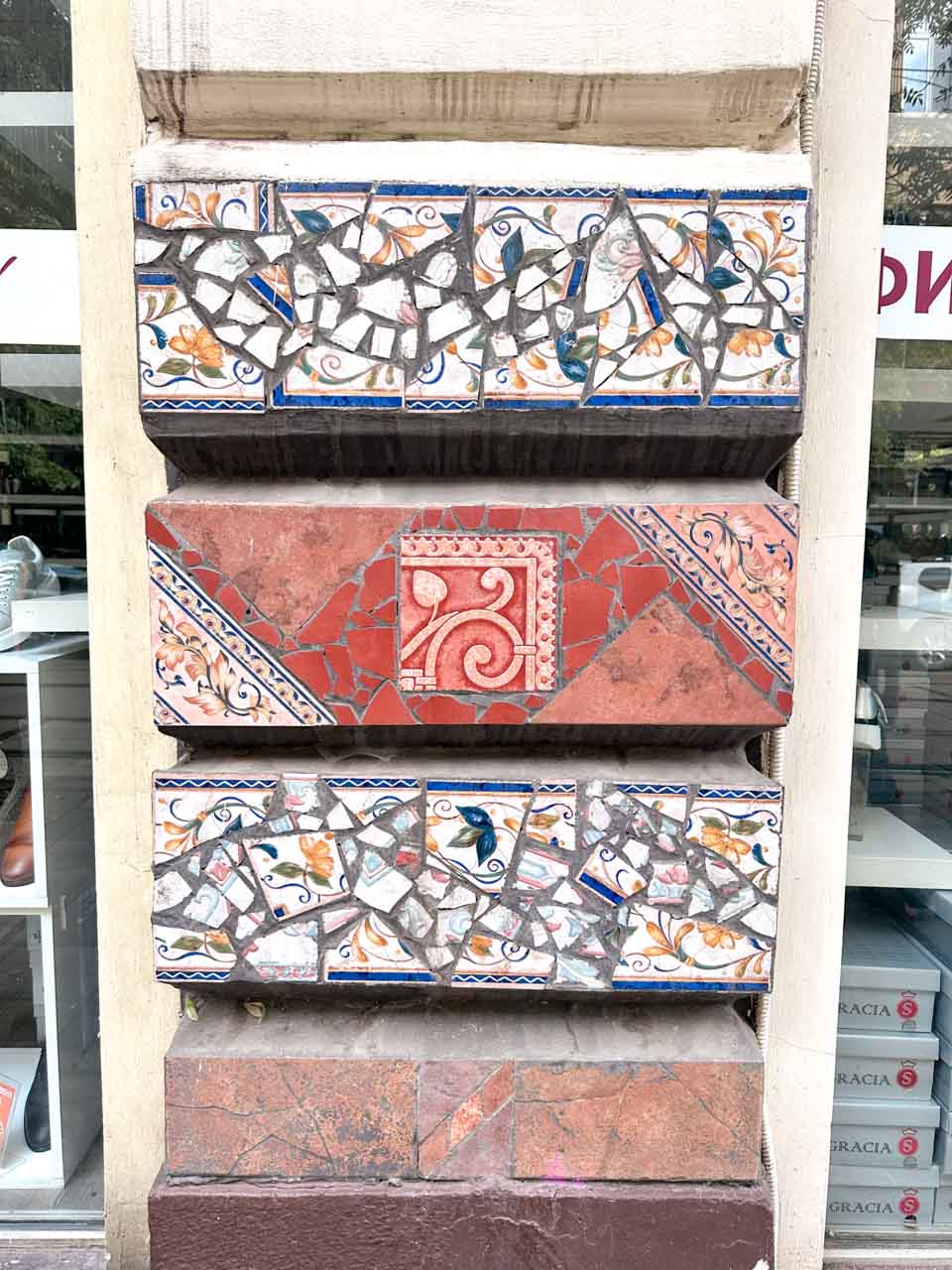
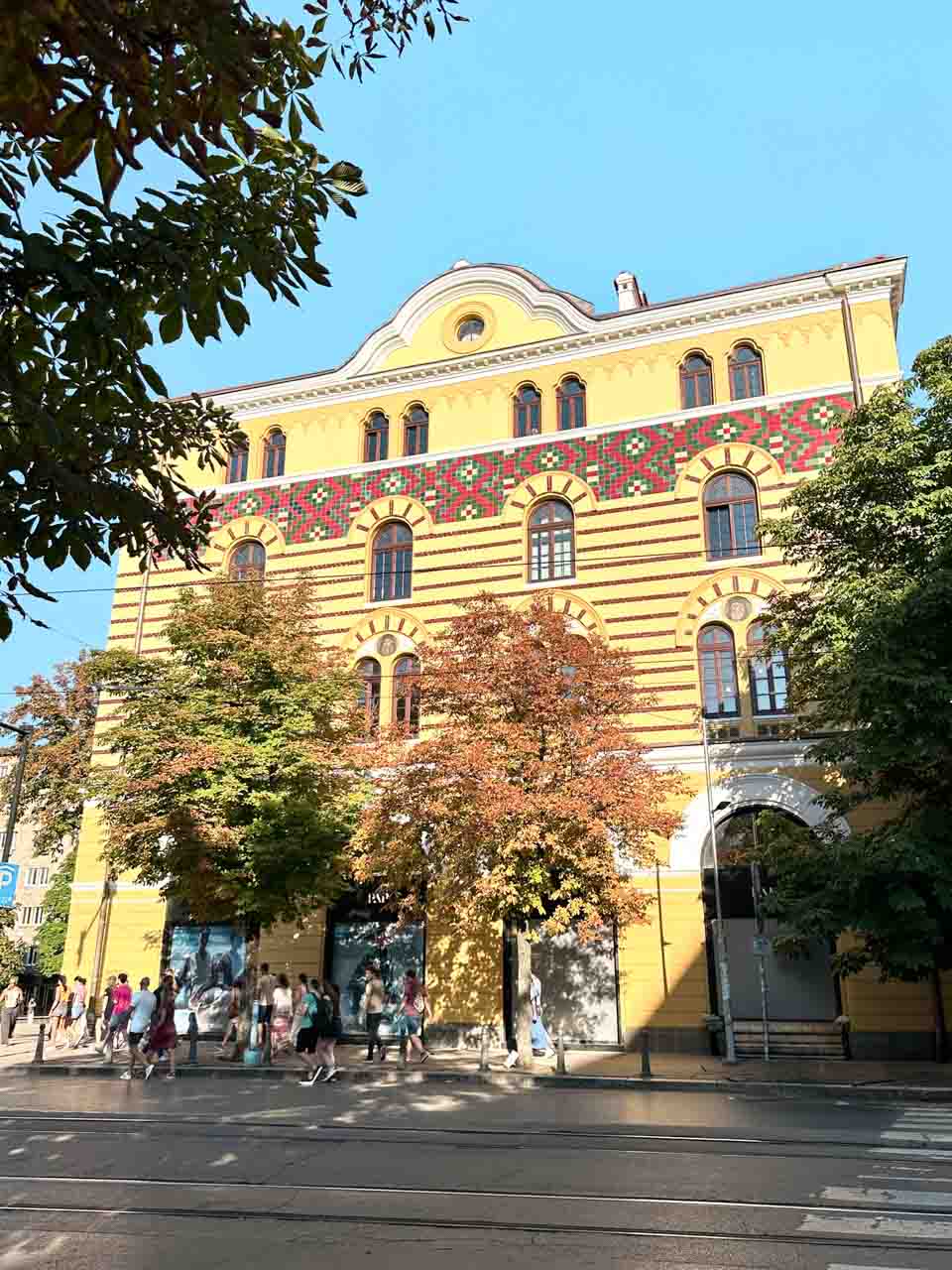
However, Sofia is also the kind of place that might not make the best first impression if you don’t pick the right area to stay or give yourself enough time to get to know the city.
So, in this guide, I want to share all the best things to do in Sofia, so you can make the most of your time there and hopefully enjoy it just as much as we did!
AD – This post contains affiliate links (marked with *) | Read my full disclaimer
How to get around Sofia
I recently came across a ranking that listed Sofia as one of the cities with the worst public transport in Europe – and frankly, I don’t understand why! Of course, the experience may be completely different if you live on the outskirts and rely on public transport to get to work or into the city centre on time. But as tourists, we either walked or used public transport throughout our time in Sofia, and every single experience was positive!

A quick note on prices: We visited Sofia in August and September 2025, just a few months before Bulgaria adopted the euro. Prices may have changed since our visit, so I’ll update this guide wherever I can, but some of the figures might no longer be accurate. All the recommendations, tips, and places in this guide are based on our own experience though, and are still just as relevant.
How to get to the city centre from Sofia Airport
The easiest and cheapest way to reach the city centre is by metro. The M4 line departs directly from Terminal 2 and gets you to Serdika in around 30 minutes. If you arrive at Terminal 1, simply take the free shuttle bus to Terminal 2 first.
If you prefer, bus 84 also serves the airport and heads into the city centre, although the journey usually takes around 45 minutes, depending on traffic.
You can pay for public transport with a contactless bank card or buy a ticket from one of the machines. A 30-minute ticket costs €0.80, while a 60-minute one is €1.10.
If you’re arriving late at night, the N4 night bus also stops at the airport. But if you have lots of luggage or are staying outside the centre, getting a taxi or using a ride-hailing app might be your best option.
The cool thing about public transport in Sofia is that if you simply tap in for every journey using the same bank card, the system automatically caps how much you pay at the price of a day ticket. This doesn’t include night buses, but a day of unlimited public transport in Sofia costs just €2, which is an absolute steal!
So, instead of worrying about buying individual tickets, I’d definitely recommend just tapping in for every journey and letting the system do the maths for you. And if you’re planning to use the night buses too, a 24-hour pass costs just €3.

Where to stay in Sofia
If it’s your first time in Sofia, I’d recommend staying in or around the city centre, ideally within walking distance of Serdika, Vitosha Boulevard, or the Alexander Nevsky Cathedral. Most of the city’s main sights are around here, so you can easily explore on foot and only use public transport when you want to venture a bit further out.
If you’re visiting on a budget, though, don’t worry too much about staying right in the heart of the city. Sofia’s public transport is fast, super cheap, and easy to use, so anywhere close to a metro station or tram stop should work well.
That said, we found Sofia had accommodation for pretty much every budget, and even staying centrally was surprisingly affordable. We stayed just around the corner from the Central Market Hall and paid around €285 for 5 nights for a cosy, modern flat, which we thought was excellent value.
We stayed at North 21 – Brand New Modern 18D Apt in Sofia Center*. The only downside was that it’s on the second floor and there are some pretty steep stairs to get there. The communal staircase also hasn’t been renovated, so don’t let the slightly run-down entrance put you off! The flat itself was very modern and cosy, with everything we needed, including a washing machine.

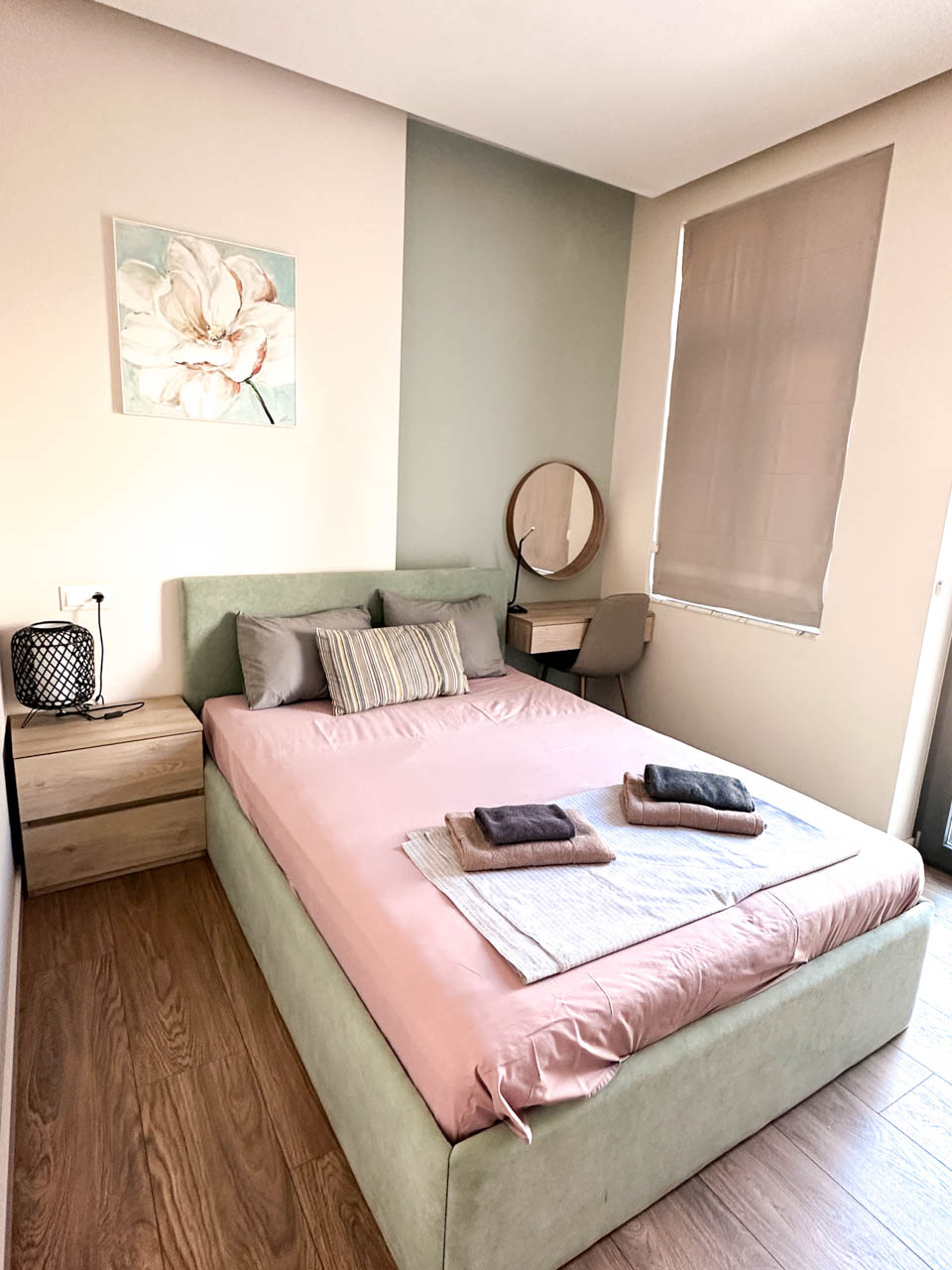
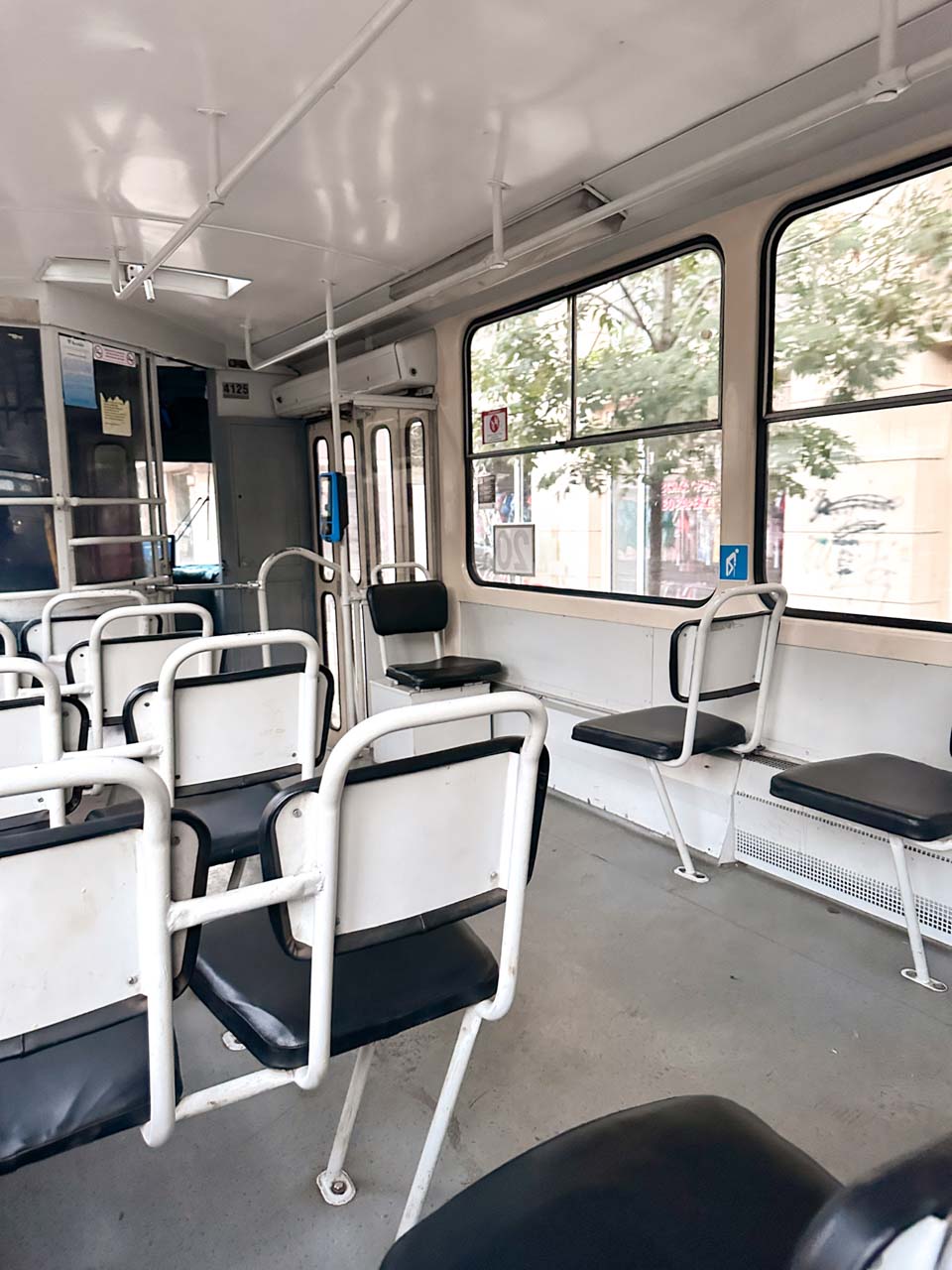
If you’re a light sleeper, it’s also worth knowing that trams run right outside every couple of minutes between 5 am and midnight. However, the windows are double-glazed and the noise didn’t bother us at all.
If it’s not available for your dates, you can check out other accommodation options in Sofia below:
Best things to do in Sofia
1. Go on a free walking tour of Sofia
When I was doing my research, I saw a local say that if there was just one thing they could recommend to anyone visiting Sofia, it would be this free walking tour. So, we booked it for our first day in the city, and I totally understand why it’s so highly rated!
It’s run by Free Sofia Tour, and there are four time slots every day – at 10 am, 11 am, 2 pm, and 6 pm. They also offer a free Jewish tour, as well as a paid communist Sofia tour and pub crawl.
The free Sofia tour we did takes around 2 hours, works entirely on tips, and takes you around some of the most important sights in the city. Plus, it’s a great opportunity to ask a local some questions and get recommendations for the rest of your stay, which is why I always like doing these tours on the first day!
One of the most interesting things we learned is just how proud Bulgarians are of two things that people often associate with other countries: the Cyrillic alphabet and Bulgarian yoghurt.
The Cyrillic alphabet actually originated in the First Bulgarian Empire, and even the bacterium used to make yoghurt carries Bulgaria in its name – Lactobacillus bulgaricus. So, definitely don’t call it the Russian alphabet or Greek yoghurt in front of any Bulgarians if you don’t want to piss them off. 😉
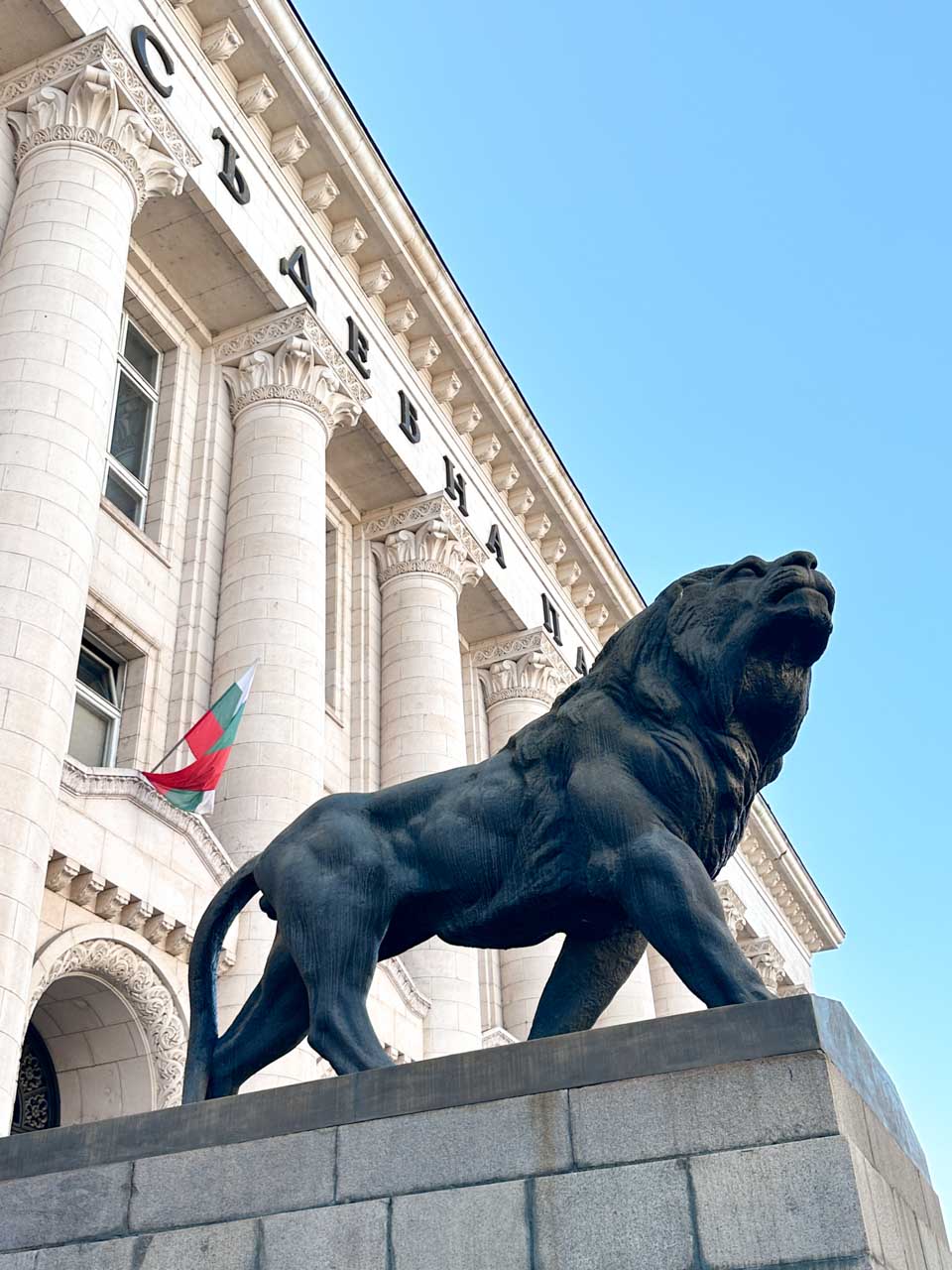
You don’t have to pre-book unless you’re in a group of 10+ people – you can simply show up in front of the Palace of Justice. It’s a great way to get your bearings in a new city, and I’d highly recommend doing it, ideally in combination with this other free tour we did in Sofia…

2. Do a Bulgarian food tour
Now, most major cities have free walking tours, but I’d never heard of a free food tour before. According to the Balkan Bites website, theirs was actually the first of its kind in Europe, which honestly makes me wonder why more cities haven’t copied the idea!
This sounded right up our alley, so we made a booking. And if I could only recommend one thing to do in Sofia, I think this would probably be it.
They split everyone into small groups, and you visit 5 different places, trying bite-sized samples of traditional Bulgarian food at each one. And if any of the dishes contained meat, each place had a vegetarian alternative available, so you could still try everything.
It’s such a good way to try more local dishes without ordering full portions of everything, while also finding places you might want to come back to later. So again, I’d recommend doing this one early in your trip!
We even stopped at a wine shop to try some Bulgarian wine, which I wasn’t expecting at all.
The tour runs every day at 2 pm, but they can only take 30 people in total, so I’d recommend booking at least 24 hours in advance to make sure you get a spot. You can email them at [email protected], or you’ll find a phone number and booking form on the Balkan Bites website.
The exact places you visit can change from day to day, so keep that in mind. We went to Магазин ГЕРАН (Vrachanski Geran), Mekitsa and Coffee, Zoya, Wine Generator, and Dobro Restaurant.
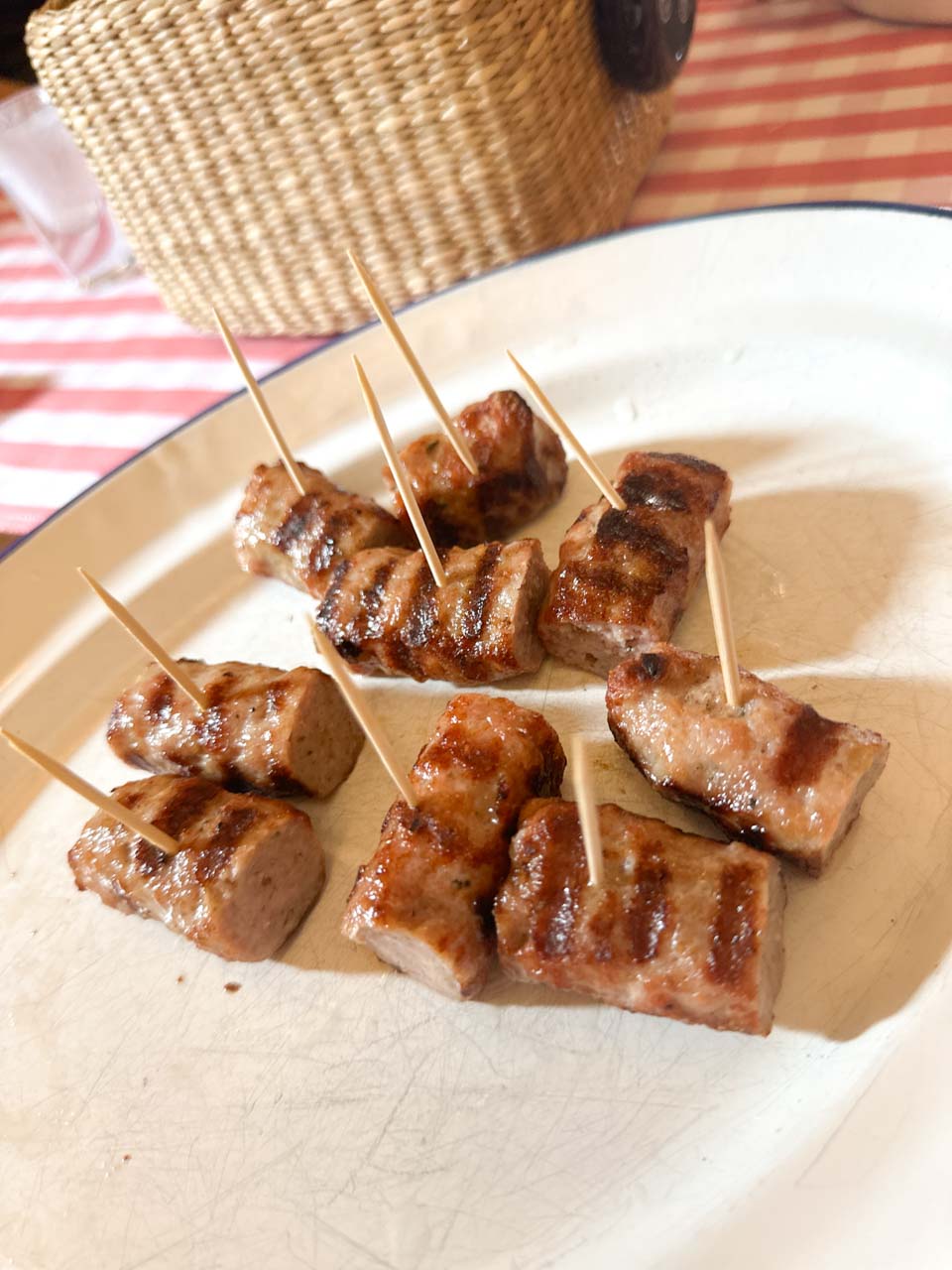

The tour works just like a classic free walking tour – at the end, you pay whatever you think it was worth. I genuinely wish more cities did this because it’s such a fun way to discover local food!
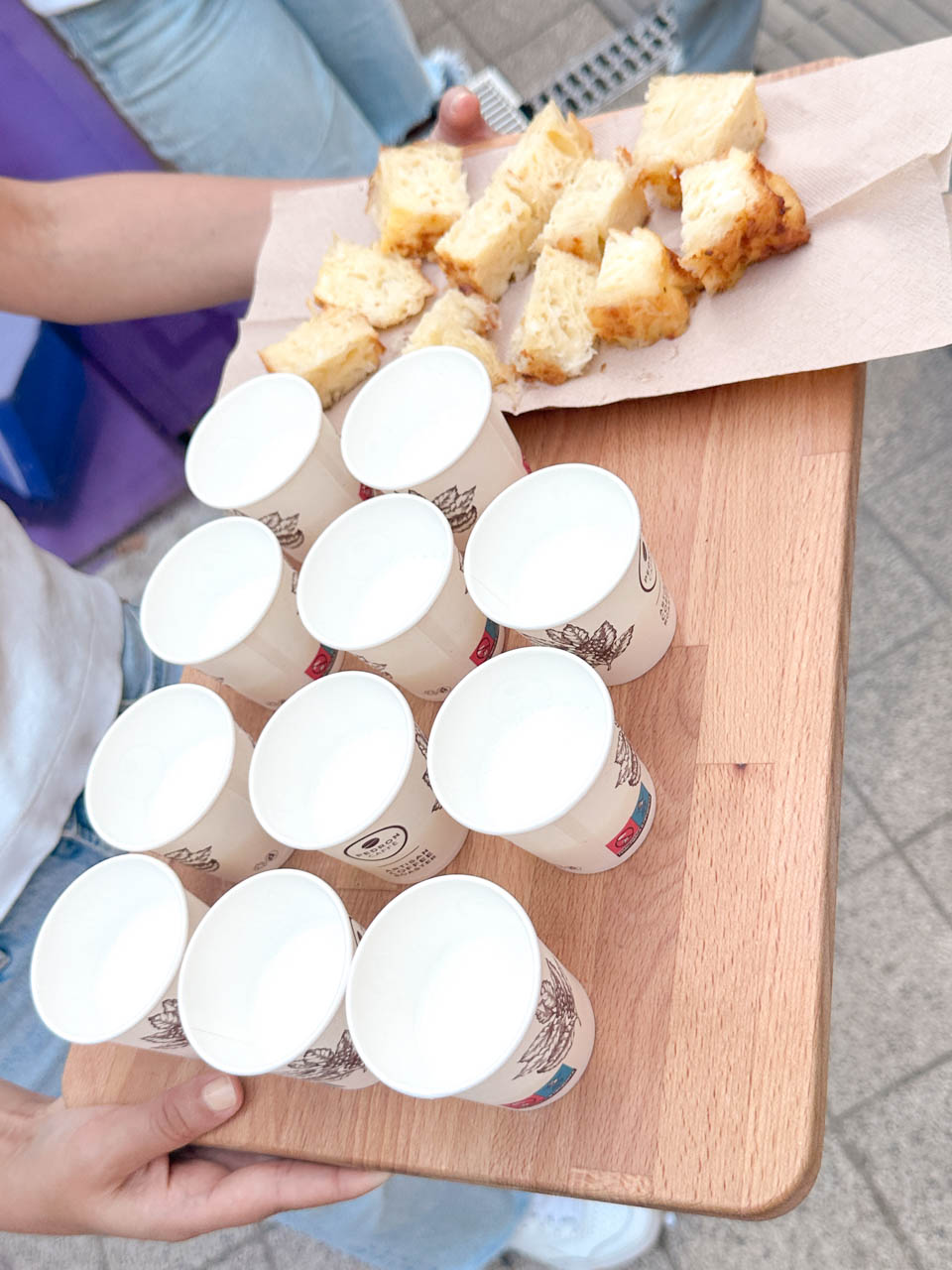

3. Try Bulgarian wine
I’d definitely recommend trying some Bulgarian wine while you’re here, as I think it’s pretty underrated.
In Poland, most people probably associate it with Kadarka, which tends to be one of the cheaper bottles you see in the shops – fine, but not exactly the kind of wine you’d go out of your way to recommend. And that’s a shame, because Bulgarian wine is much more interesting than that, with loads of local grape varieties that you don’t often come across outside the country.
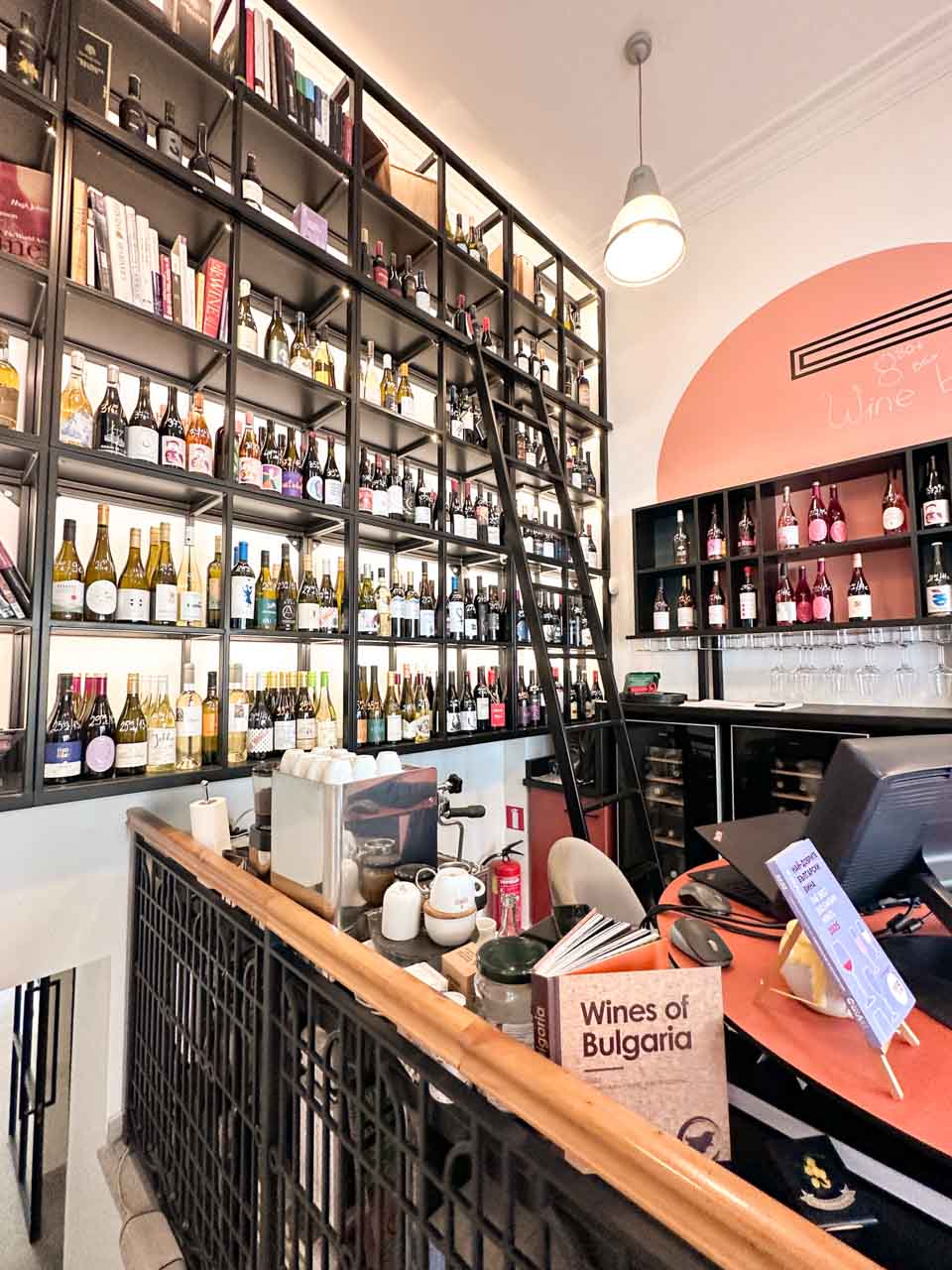
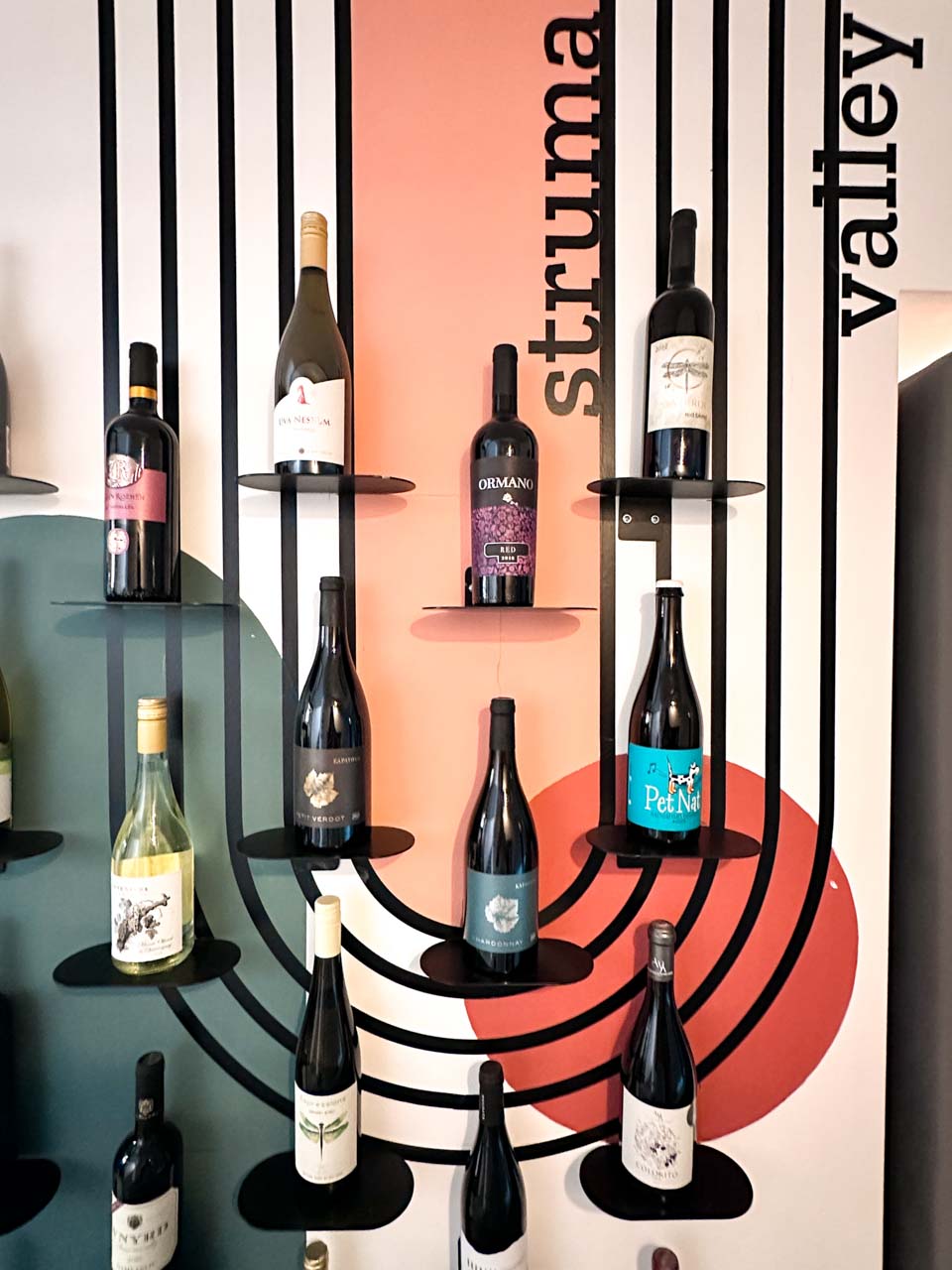

If you prefer red wine, Mavrud is probably the main one to look out for. It comes mostly from the area around Plovdiv and tends to make rich, full-bodied red wines. Melnik is another one we came across a lot. It’s grown in south-western Bulgaria around the town of Melnik, and the wines tend to be a little spicier.
For white wine, look out for Tamyanka. It’s related to Muscat, so if you like really aromatic, fruity wines, this might be a good one to try. There’s also Red Misket, which, despite the slightly confusing name, is actually used to make white wine.
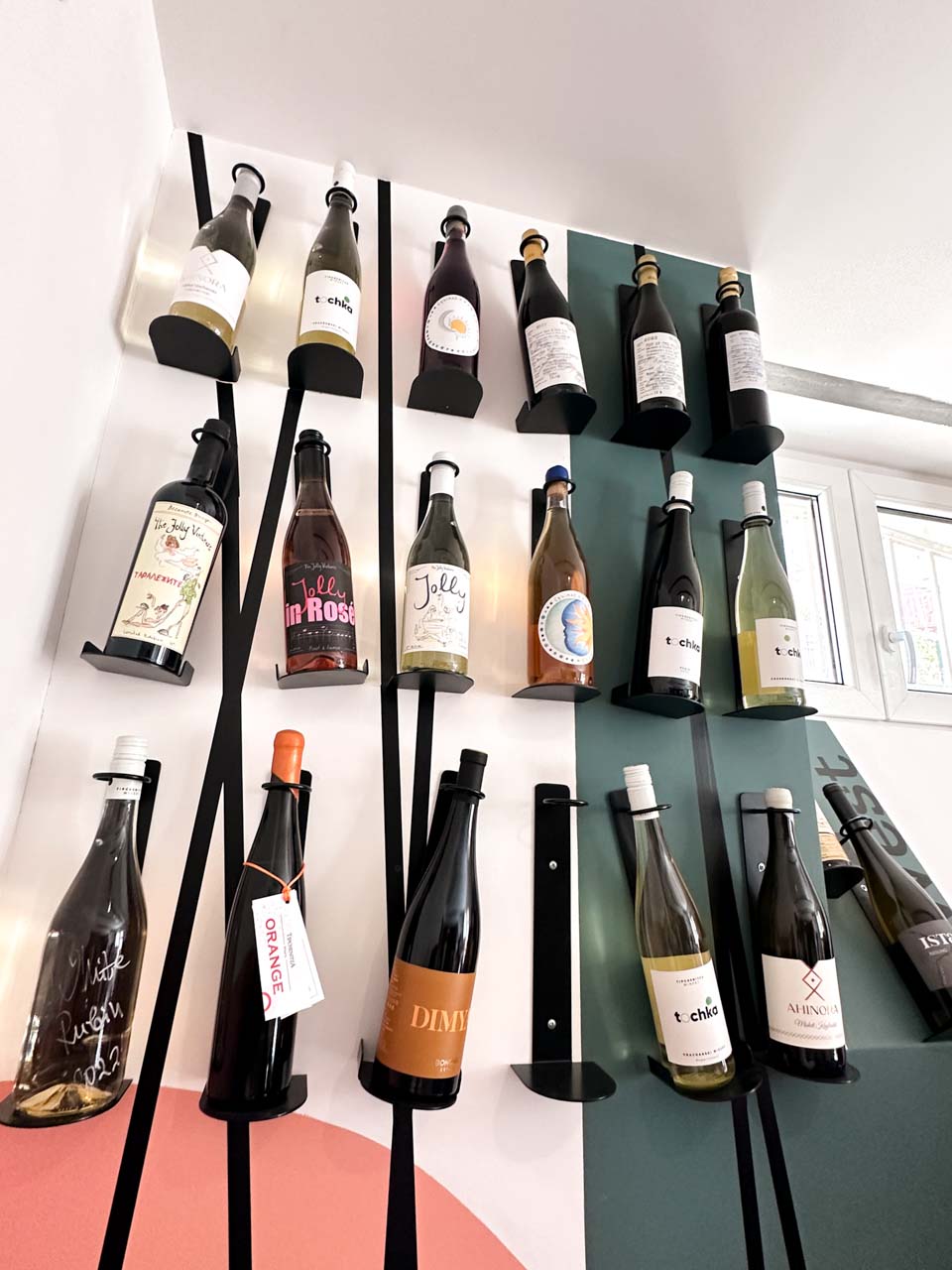

And you might hear that Winston Churchill was a big fan of Melnik wine – there’s even a story that he used to order 500 litres of it a year. I have no idea if that’s actually true, but it’s a story Bulgarians love to tell. We managed to track down the exact wine he was supposedly a fan of in Plovdiv! Once my guide is ready, I’ll link to it here so you can see what it was and where to find it.
We did our tasting at Wine Generator, and I really recommend it, but here are some other options you can book online:
4. See Sofia’s iconic Alexander Nevsky Cathedral
When you think of Sofia, this place is likely one of the first to come to mind. Saint Alexander Nevsky Cathedral is the biggest symbol of the city and one of the largest Eastern Orthodox cathedrals in the world.
The cathedral itself is free to enter, but if you want to take pictures or videos inside, you have to buy a photography pass. I’ve read that apparently it costs €5 to take photos and €15 to make videos, so we didn’t even bother.
Keep in mind that if you want to go inside the cathedral, women should cover their shoulders and knees, and men should remove their hats. It was honestly sad to see how many people chose to visit in very revealing clothing, as it is an active place of worship first and foremost.

The cathedral is fairly new, as construction was only completed in 1912, but that doesn’t make the interior any less impressive. There’s marble everywhere, along with beautiful mosaics and frescoes, and some grand chandeliers. You can also visit the Museum of Christian Art in the crypt, which has the largest collection of Orthodox icons in Bulgaria. Entry costs €4.
When we visited, they were getting ready for the Unification Day celebrations, so there was a stage outside blocking part of the view from the front, but it was still impressive. There was also a small flea market outside selling all kinds of bits and bobs, although I’m not sure if it’s there every day or only on select days.
5. See the church that gave Sofia its name
Right next to Saint Alexander Nevsky Cathedral, you’ll find another, much more unassuming church. I bet if I asked a bunch of people which of the two was older, the majority would point to the cathedral, when the opposite is actually true.
Saint Sophia Church is the church that Sofia got its name from, and it dates all the way back to the 6th century, making it one of the oldest surviving buildings in the city.

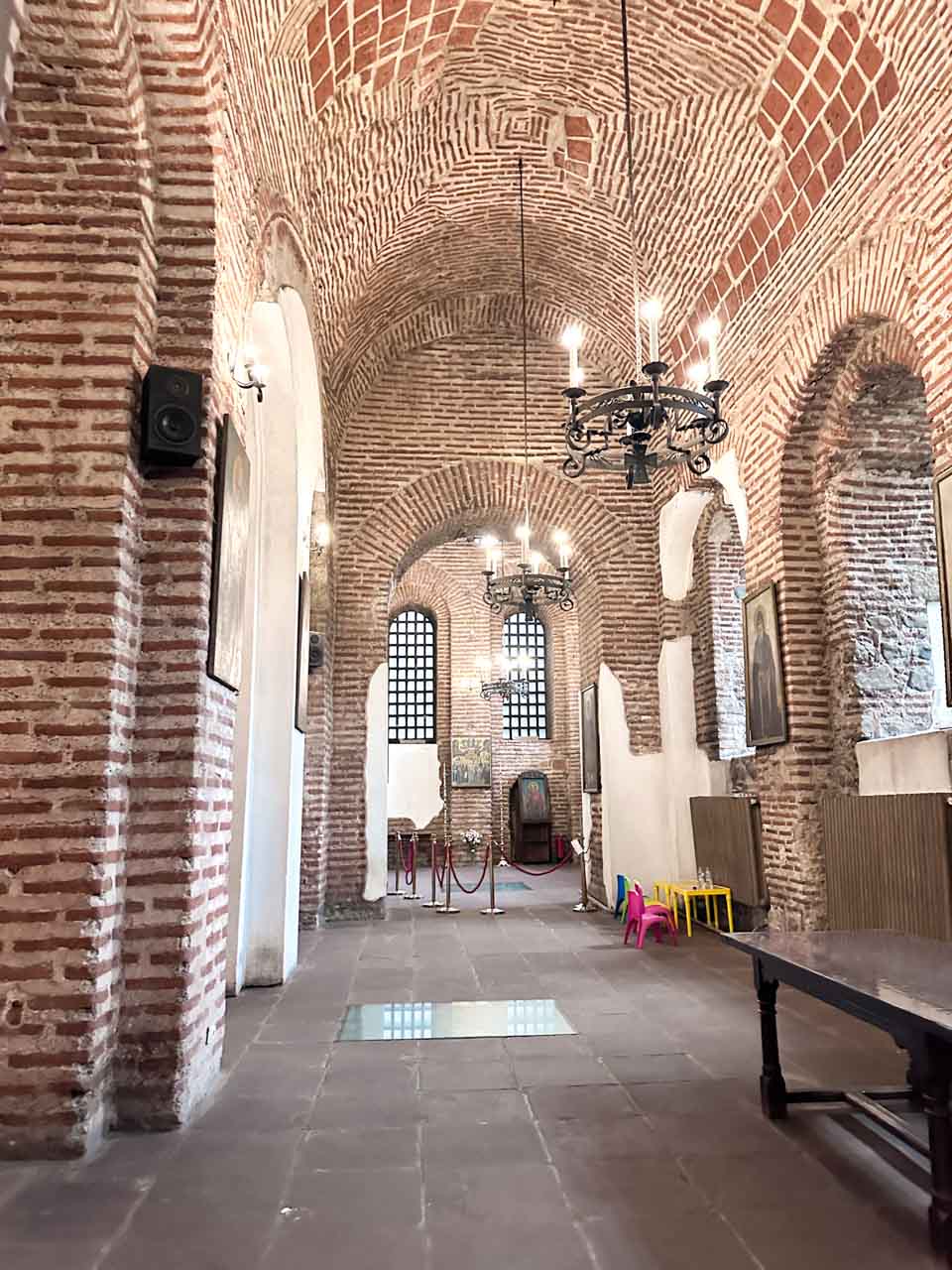
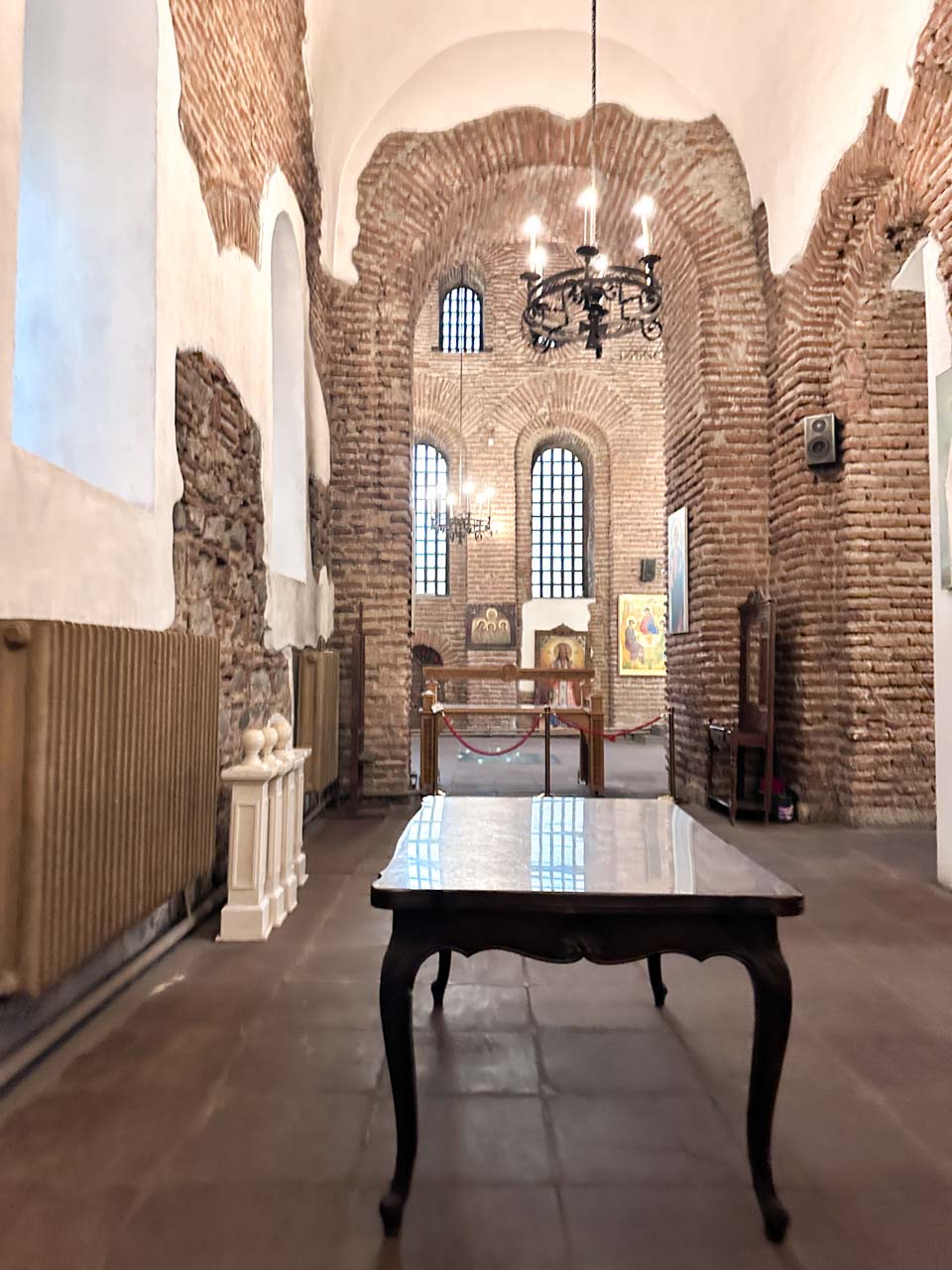
You can go inside for free, and the interior is much more minimalist than you might expect. There are no frescoes or gilded elements, just exposed brick throughout the church, which somehow makes it look fairly modern.
If you’d like to learn more about its history, there’s also an underground archaeological level that you can visit for €4, or you can buy a combined ticket that includes several sites around Sofia. Apparently, entry is free every second Thursday of the month.
If you want to take photos or shoot videos inside, though, you have to pay extra. Downstairs, you can see the remains of an ancient necropolis, tombs, and the foundations of earlier churches.
When we visited, there was a wedding inside the church, so we only had a small window between it finishing and the church closing and didn’t get a chance to go downstairs.
Plus, I have to admit I’m not a fan of places charging you just to take a few photos on your phone. It bothers me even more when you’ve already paid an entrance fee!
6. Walk around the Ancient Serdica Ruins
Out of all the places we’ve been to in Sofia, this is easily the one that blew me away the most. I can’t think of many cities where you leave the metro station and walk straight into 2,000-year-old Roman ruins!
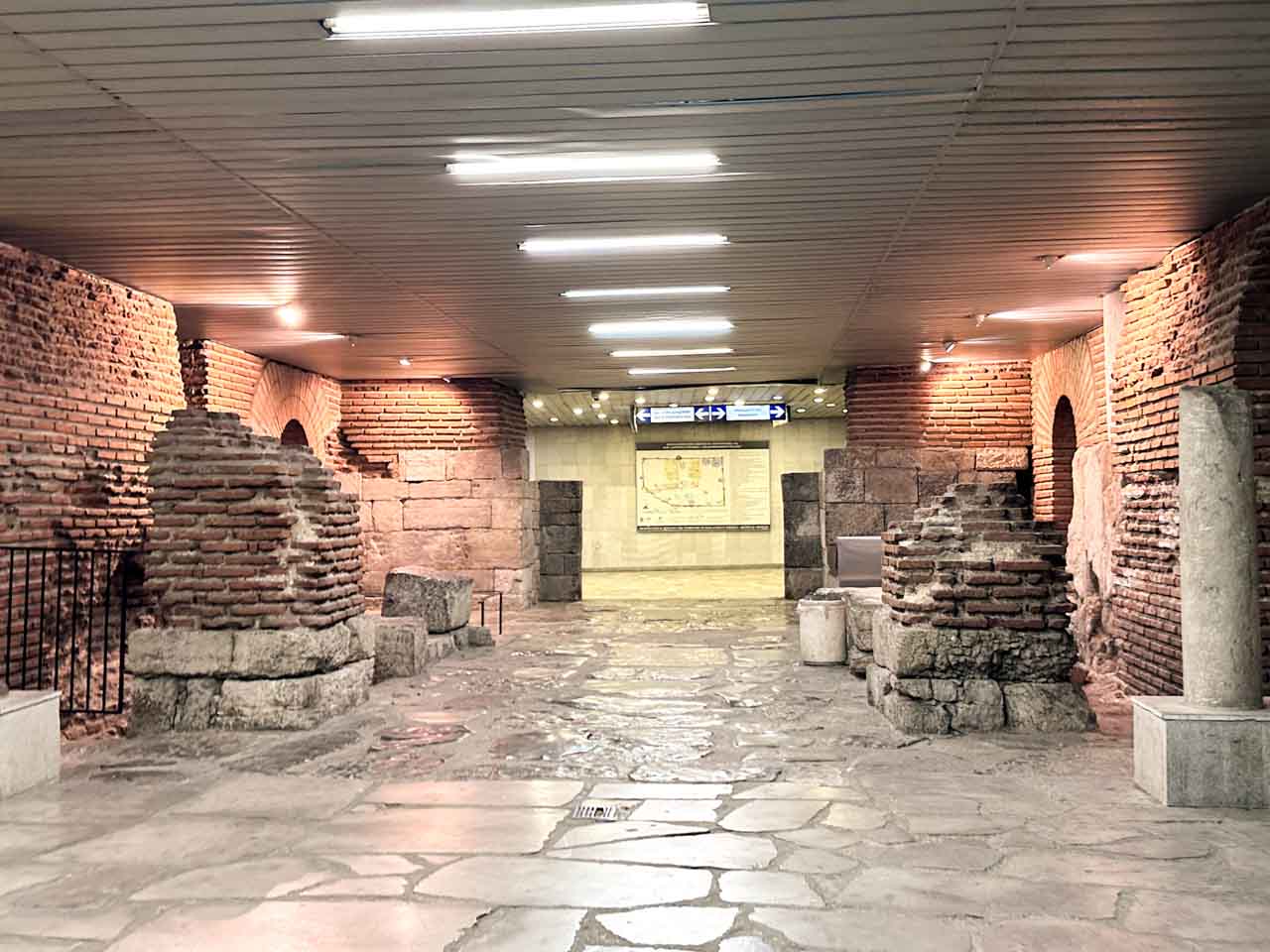
Long before it was called Sofia, the city was known as Serdica, named after the Serdi, a Thracian tribe who settled here around the natural hot mineral springs. The Romans later conquered the city and turned it into one of the most important settlements in the area.
And today, you don’t have to imagine what it must’ve looked like back in the day. When Sofia started digging to build the metro, they uncovered the ruins of ancient Serdica right underneath the modern city!
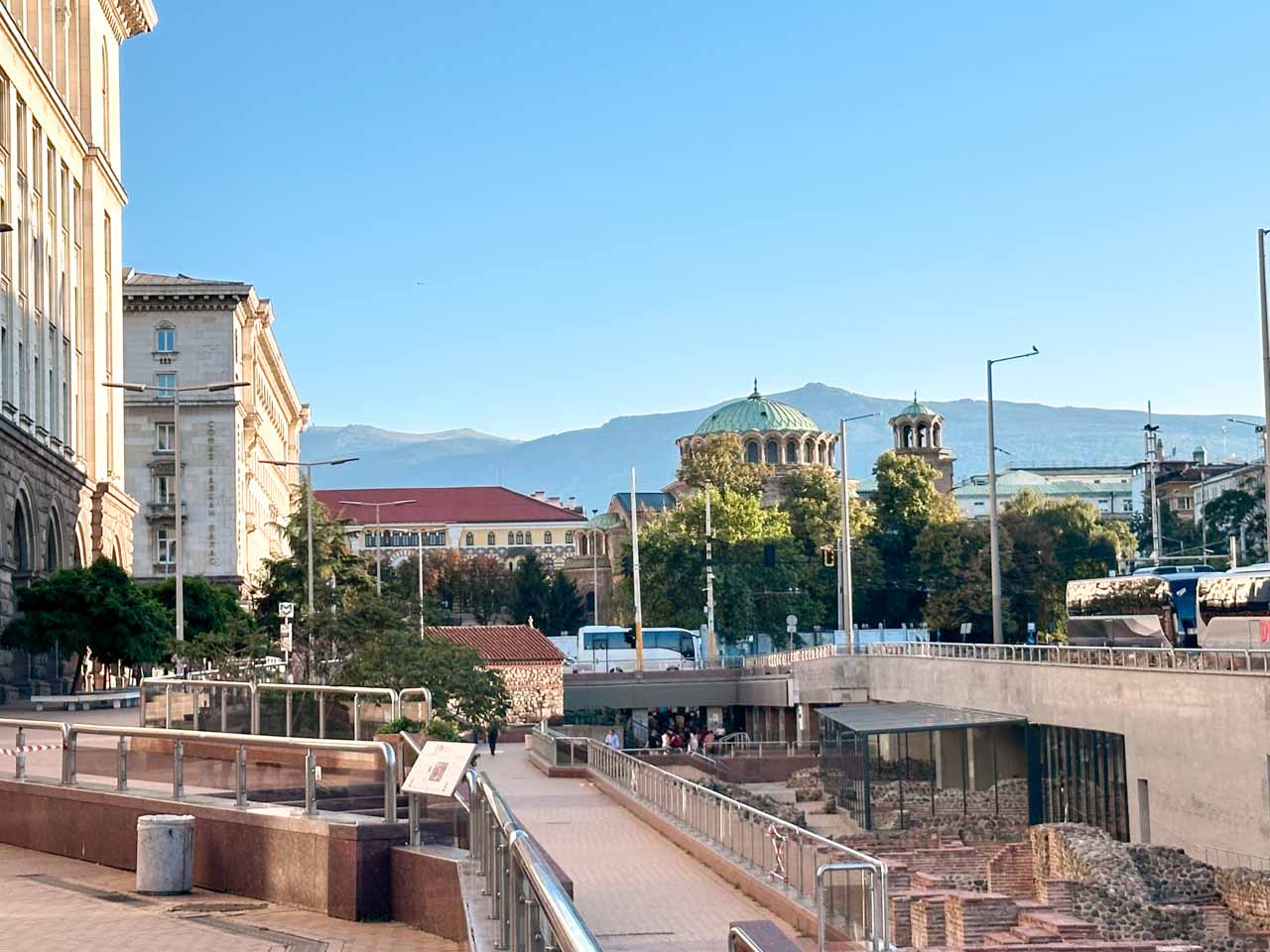
You’ll find some of the best-preserved ruins underneath Nezavisimost Square, in the so-called “Largo” zone, between the Presidential Palace, the Council of Ministers, and the Serdika metro station. There are original Roman streets, the remains of houses and shops, and even parts of the ancient city’s drainage system.
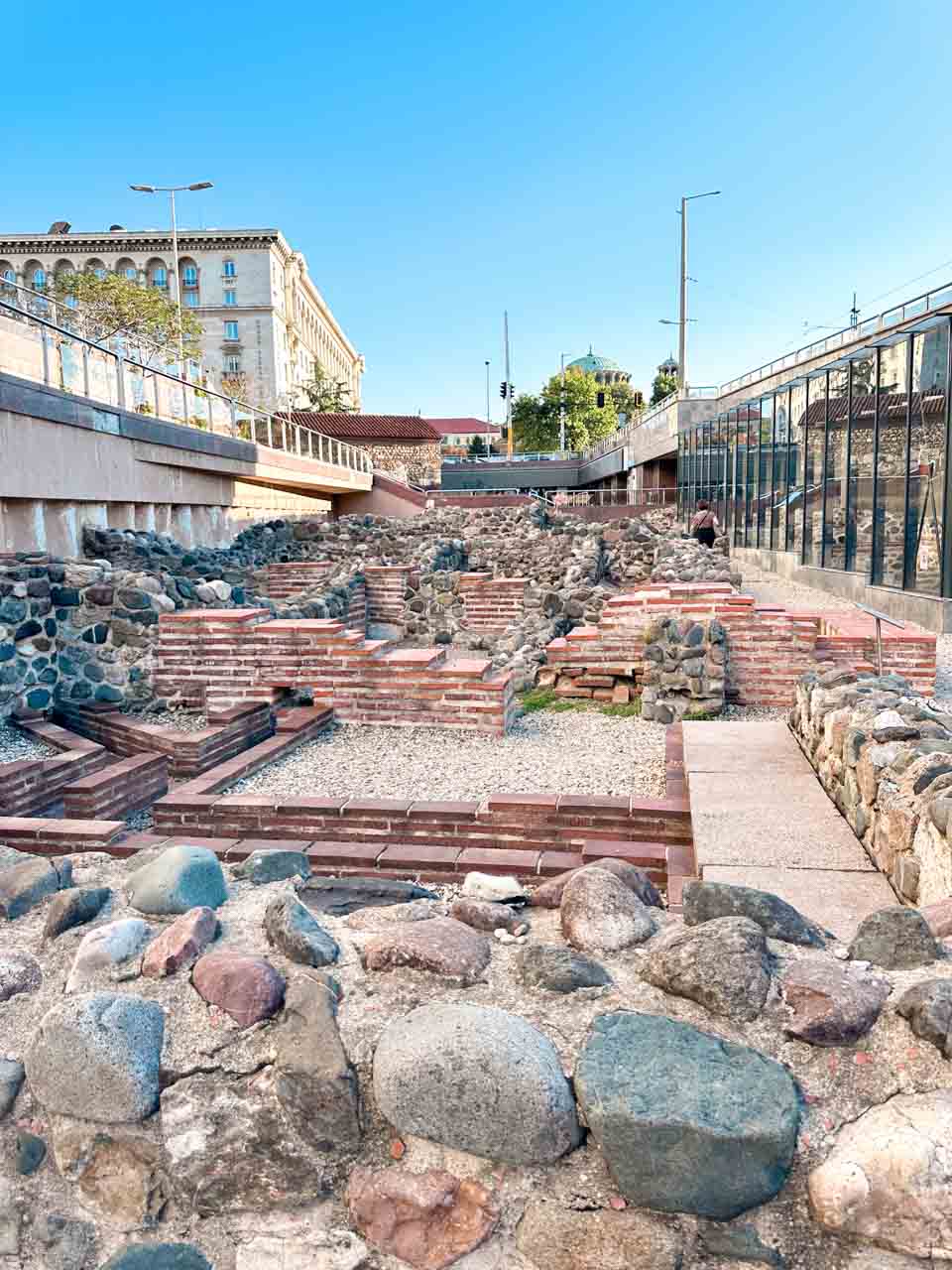
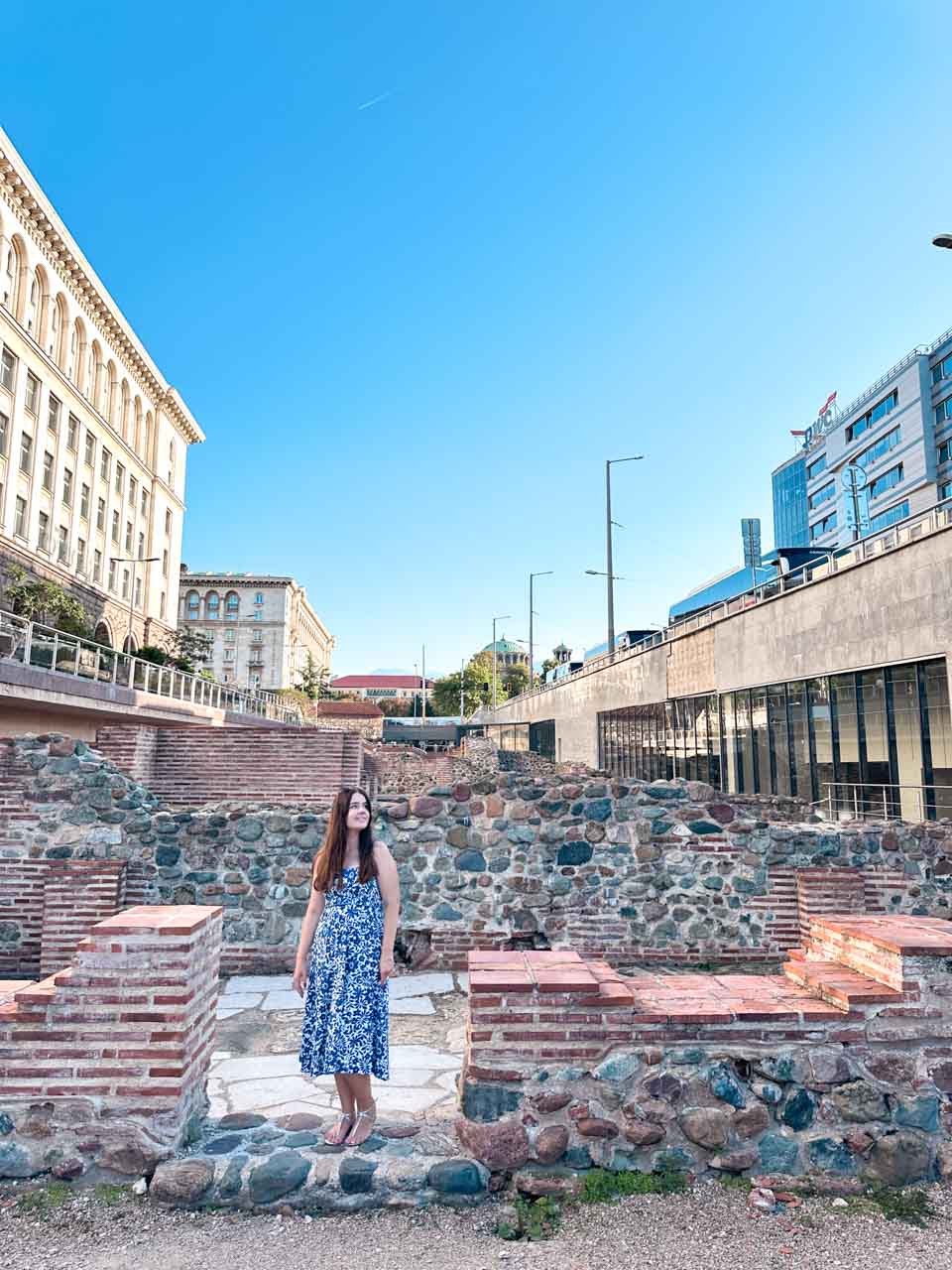
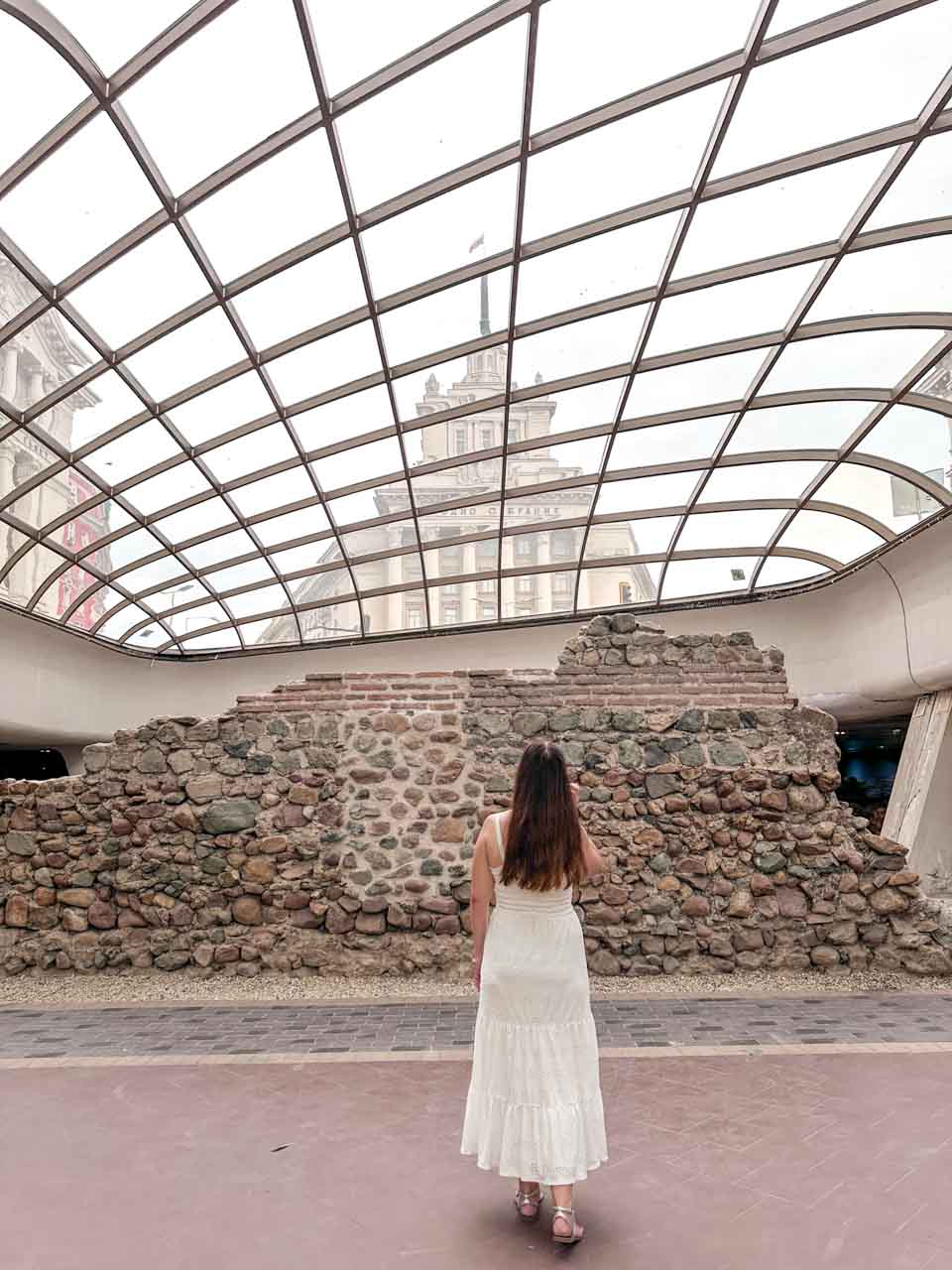
You’ll also see more ancient ruins as you walk through the underpass leading to Serdika station. Part of the site sits under a glass dome, with the National Assembly of Bulgaria in the background, which makes for an amazing photo op! This part is completely free to visit and open to anyone from 7 am to 10 pm.
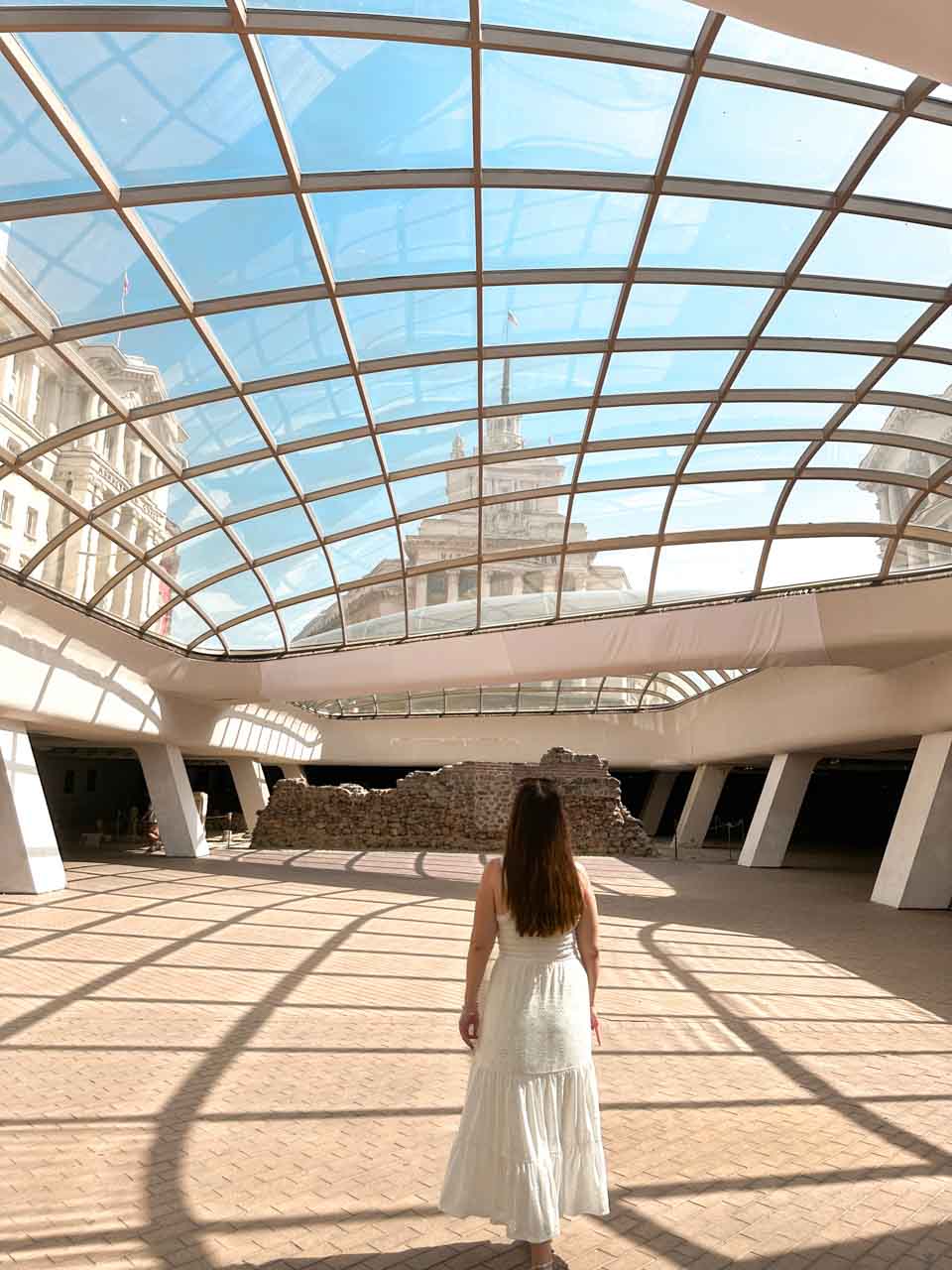
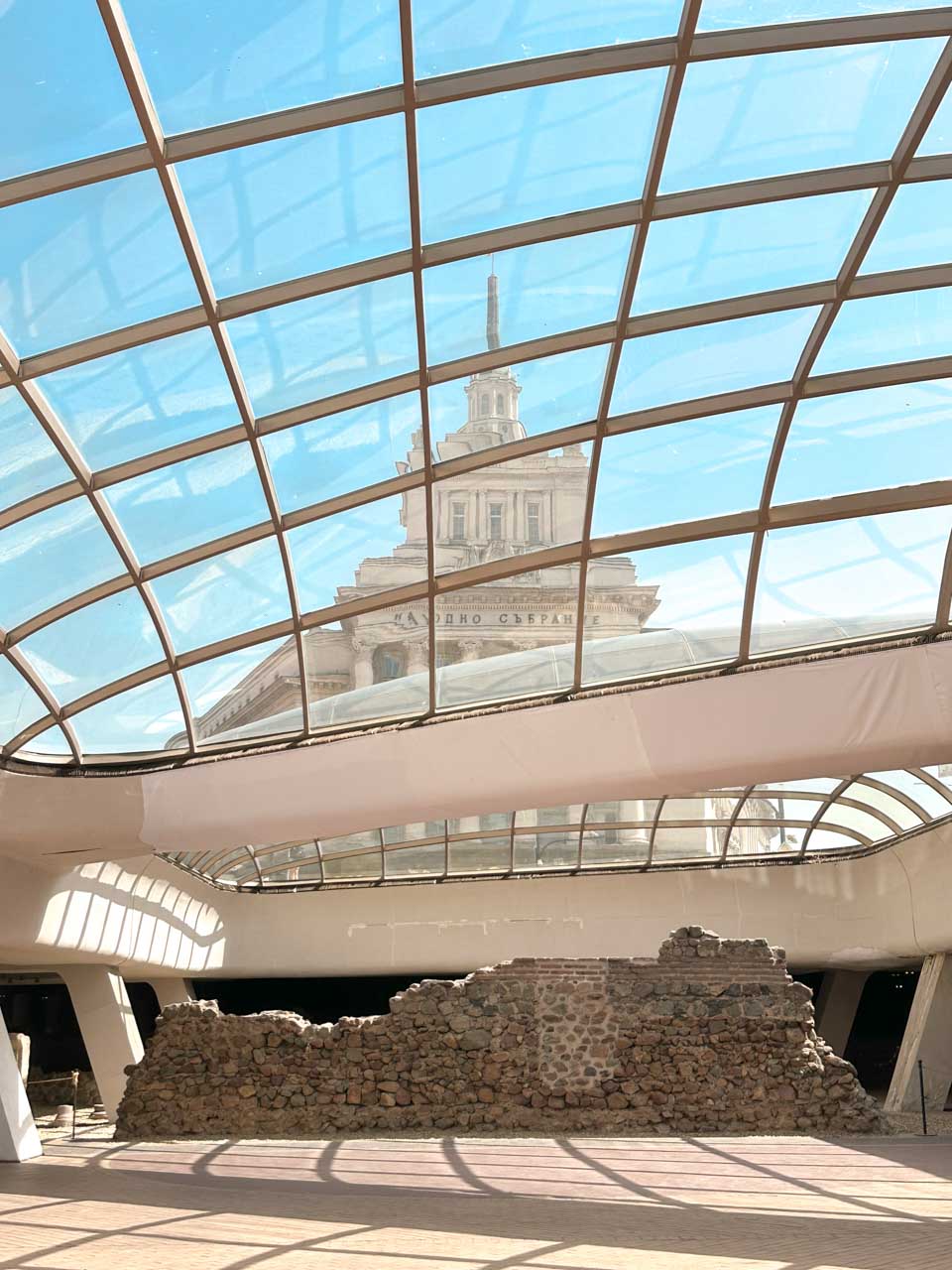
If you’d like to see even more, there’s an underground museum section beneath Maria Luiza Boulevard with mosaics, early Christian basilicas, and artefacts from Roman Serdica. That part has an admission fee – when we visited, it was 6 Bulgarian lev, or around €3. We didn’t pay and honestly didn’t feel like we missed out, as there’s SO much you can see just by walking around!
7. See the Statue of Sofia
As you leave the Serdika II metro station, right above one of the busiest crossroads in Sofia, you’ll see the Statue of Sofia.
Although it looks much older, it’s actually only been there since 2000. Before the statue stood here, there was a large monument to Vladimir Lenin, which was removed after the end of communist rule. If you want, you can still see the original at the Museum of Socialist Art in Sofia.
The new statue is still a bit controversial, as some people thought the city’s name came from Saint Sophia and didn’t like that the statue was sexualised or featured pagan symbols. However, Sofia actually takes its name from the Saint Sophia Church, which in turn was named after Hagia Sophia, meaning Divine Wisdom.
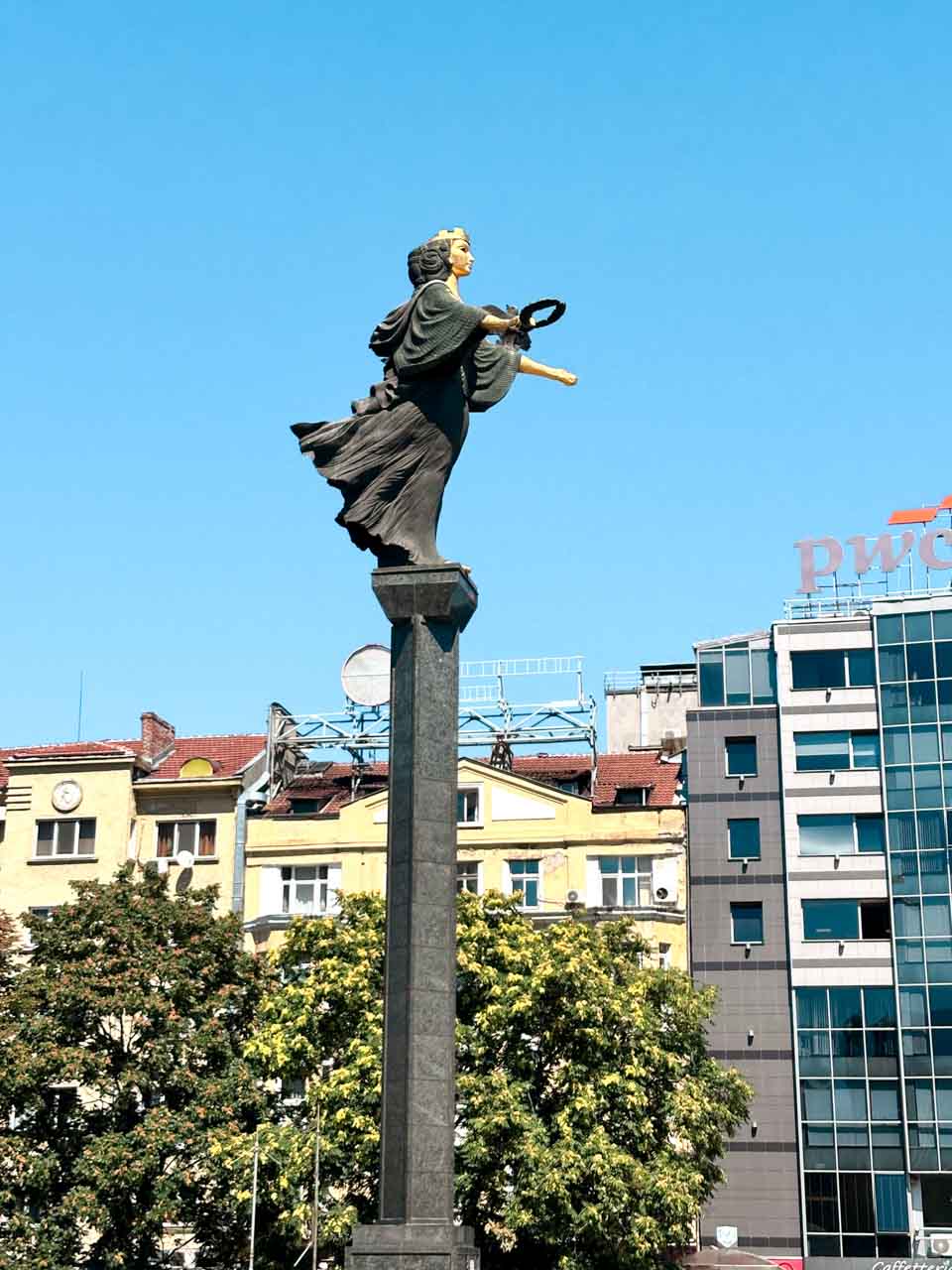
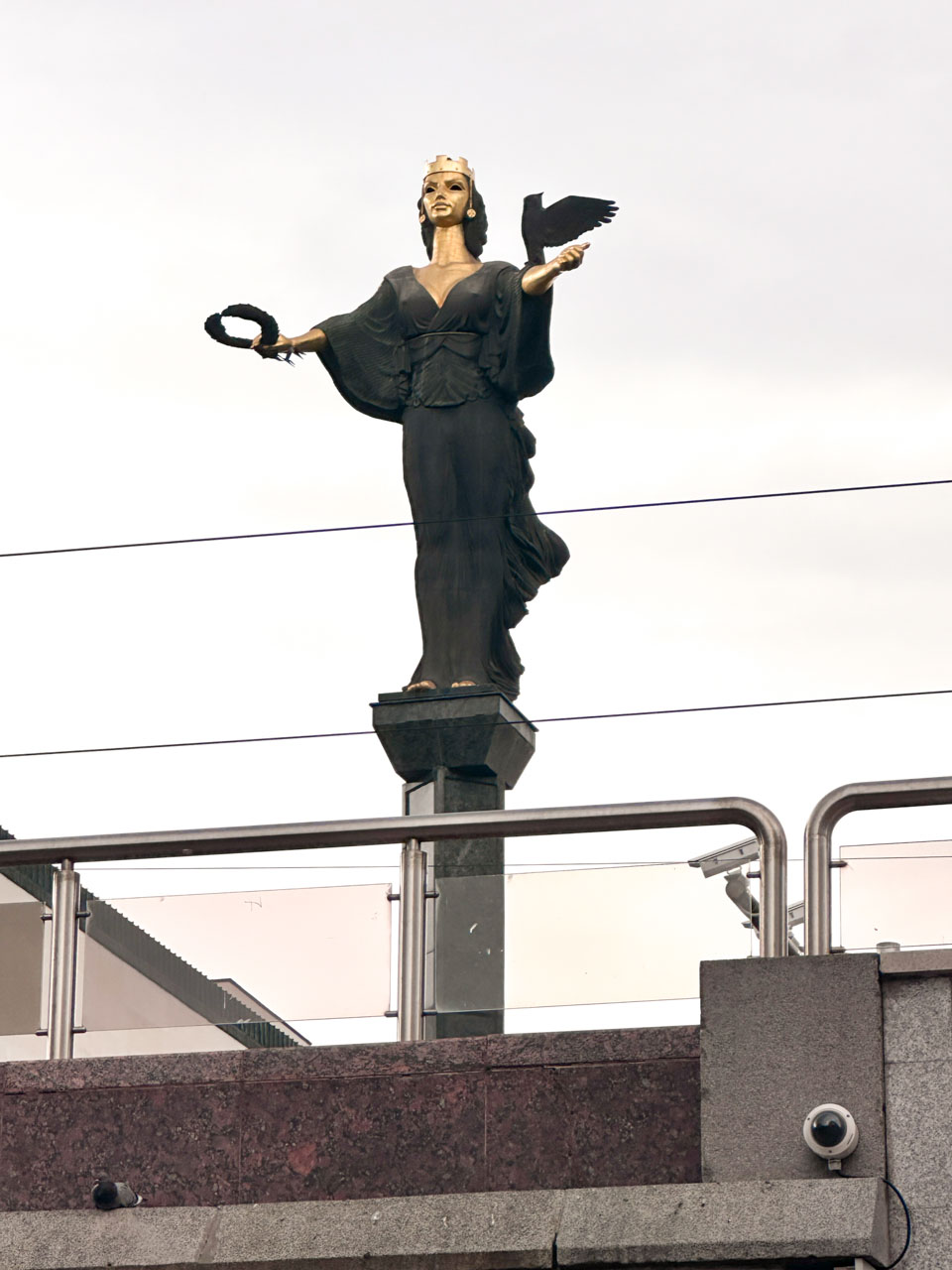
The statue itself doesn’t represent any saint or goddess. Instead, it’s meant to symbolise the spirit of the city. The owl represents wisdom, the laurel wreath symbolises success and honour, and the golden crown stands for strength and confidence.
I personally like that they decided to honour this fresh start by celebrating the city itself rather than putting another political figure in its place!
8. Visit Saint Nedelya Cathedral
Saint Nedelya Cathedral is one of Sofia’s most important landmarks, and it also has one of the most tragic stories in the city.
The church has stood on this spot in one form or another for well over 1,000 years, although the building you see today was rebuilt in 1933. It had to be, because on 16th April 1925, it was the site of the deadliest terrorist attack in Bulgaria’s history.
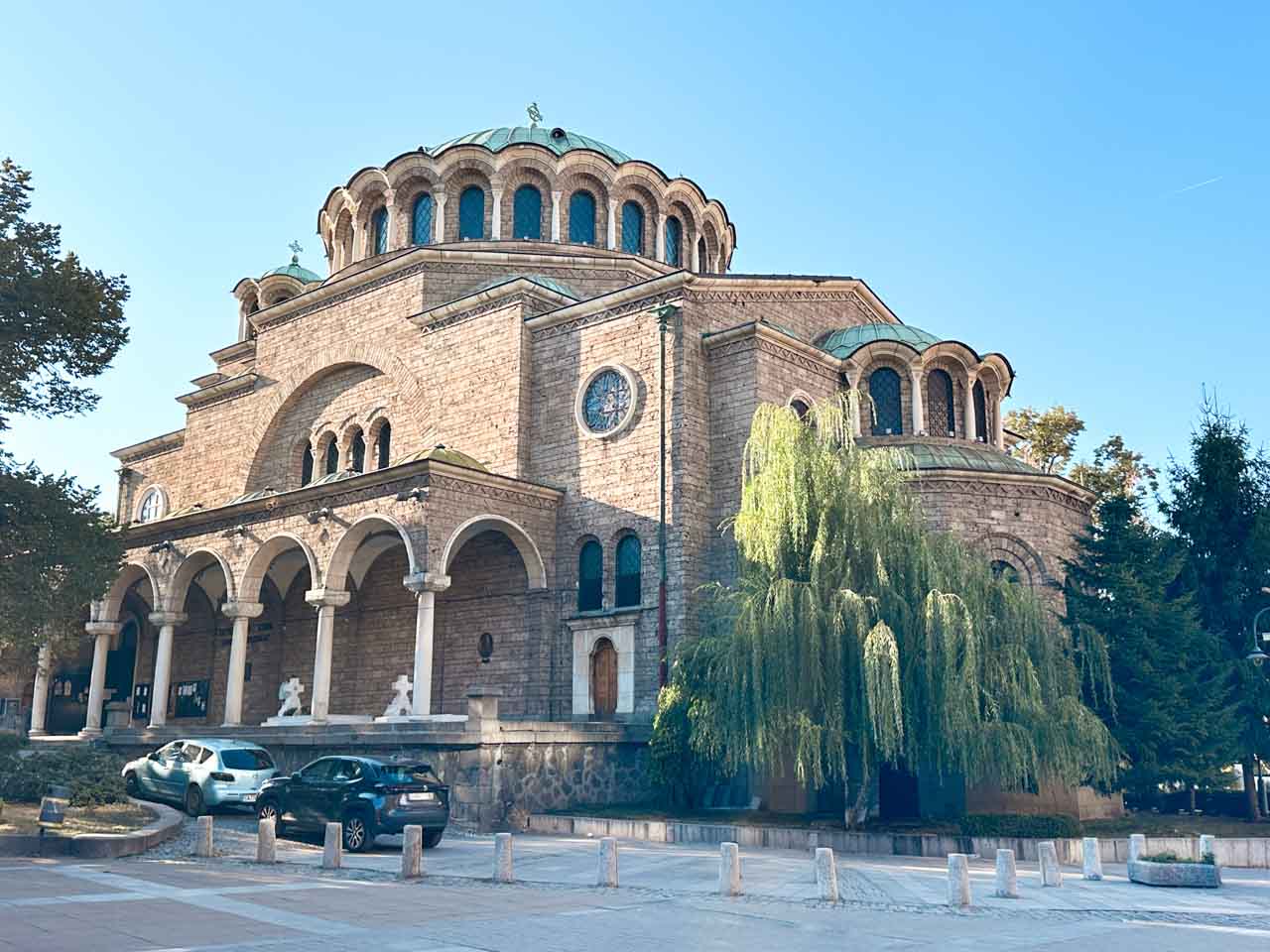
The attack was carefully planned. It started with the assassination of a Bulgarian general, knowing that the country’s political and military leaders would gather in one place for his funeral. Before the service, members of the Bulgarian Communist Party hid 25 kilos of explosives in the cathedral’s roof.
When they detonated the bomb during the funeral, the cathedral’s dome came crashing down, killing more than 150 people and injuring around 500.
Interestingly enough, one of the main targets was Tsar Boris III, who survived… because he was late to the service. I’m always early for everything because I absolutely hate being late, but I can’t deny that in his case, being late quite literally saved his life. 😉
The cathedral was rebuilt after the attack and is still an active Orthodox church today. You can go inside for free and only have to pay a small fee if you want to take photos. When we visited, it was €2.50, although we decided not to.
9. Walk around Sofia’s Square of Tolerance
The Square of Tolerance isn’t actually an official square. It’s just the name people use for this part of central Sofia because four different places of worship are all within a few minutes’ walk of each other.
You’ve got St Nedelya Orthodox Church, St Joseph Catholic Church, the Banya Bashi Mosque, and the Sofia Synagogue. It’s pretty unusual to find an Orthodox church, a Catholic church, a mosque, and a synagogue so close together, especially right in the centre of a capital city. They’re all active places of worship too.
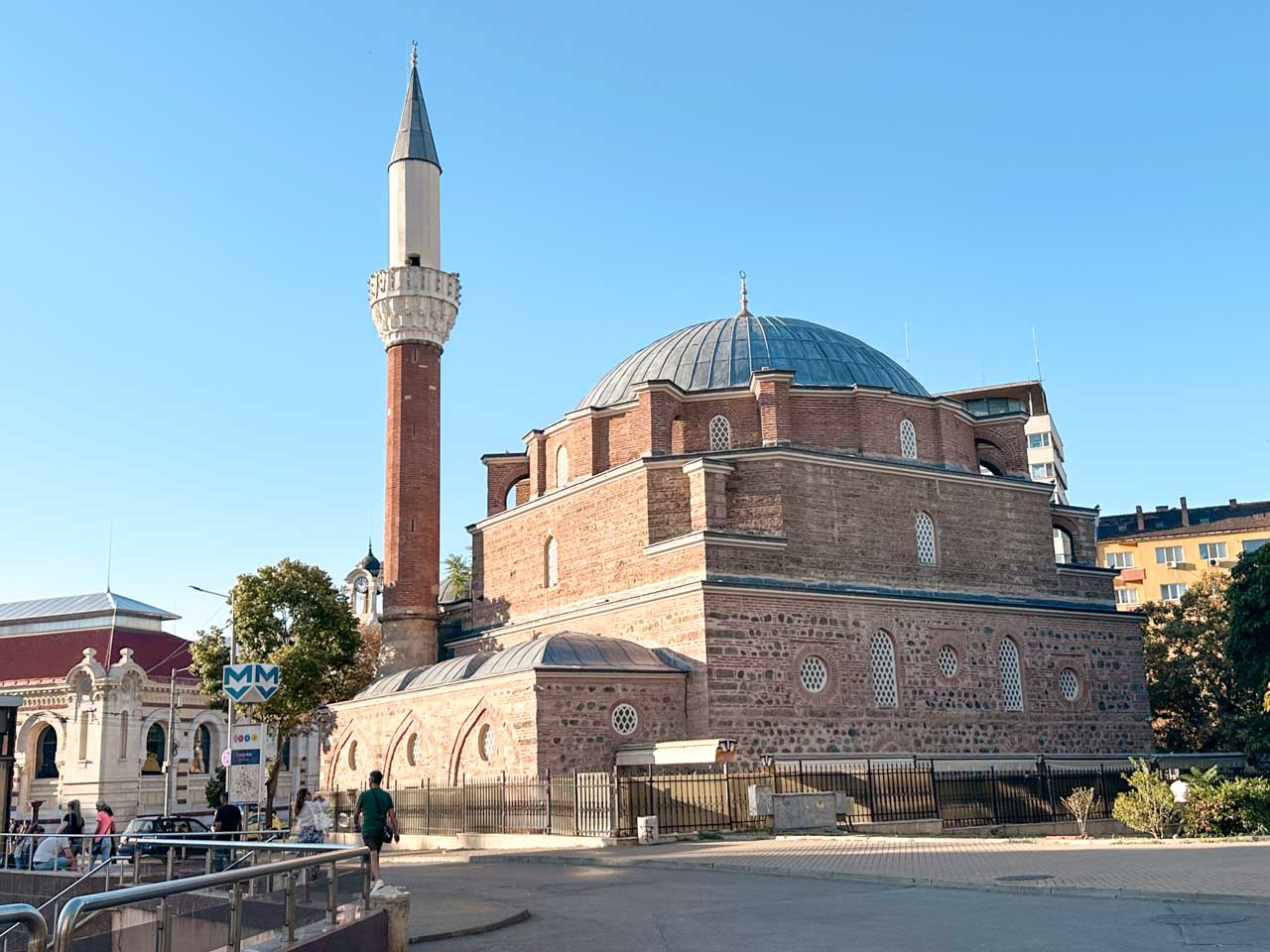
It’s a nice reminder that Sofia has been home to different religious communities for centuries, and you can easily walk between all four. You can go inside them too, just keep in mind that the Sofia Synagogue charges an entry fee.
10. Watch the changing of the guards
If you want to see the changing of the guards in front of the Presidential Palace, it happens every hour, starting 5 minutes before the full hour.
And if you happen to be here on the first Wednesday of the month at exactly 12 noon, you can watch the official Changing of the Guard ceremony, complete with a military band, ceremonial commands, and weapon brandishing.
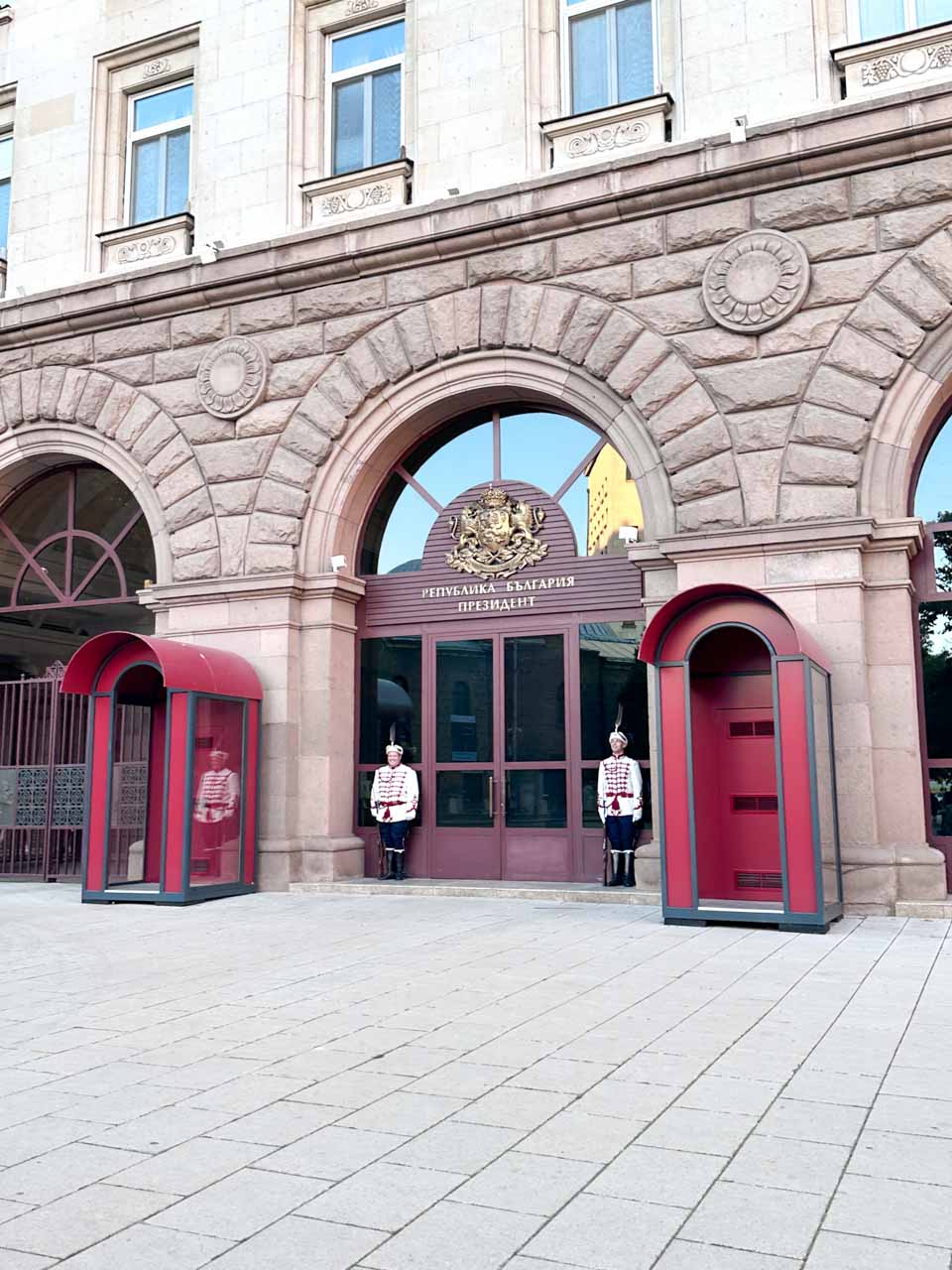
We were already leaving Sofia on the first Wednesday of the month, so we had to settle for the regular version, but we still really enjoyed it.
I can safely say it was the first changing of the guards I’ve been to where, instead of standing completely still and keeping a straight face, one of the guards couldn’t hold in his laughter.
Of course, that made me and some other people watching start laughing too, which only made him laugh even more. It made the whole thing so much more memorable and genuine!
11. See inside the Rotunda Church of St. George
The courtyard behind the Presidential Palace also holds one of the most important buildings in Sofia, though it may be easy to miss.
The Rotunda Church of St. George dates all the way back to the early 4th century, when it was built by the Romans as part of a larger complex that included baths. It’s the oldest preserved building in Sofia!
It then became a Christian church within the walls of ancient Serdica, was later converted into a mosque during the Ottoman period, and eventually became an Orthodox church.
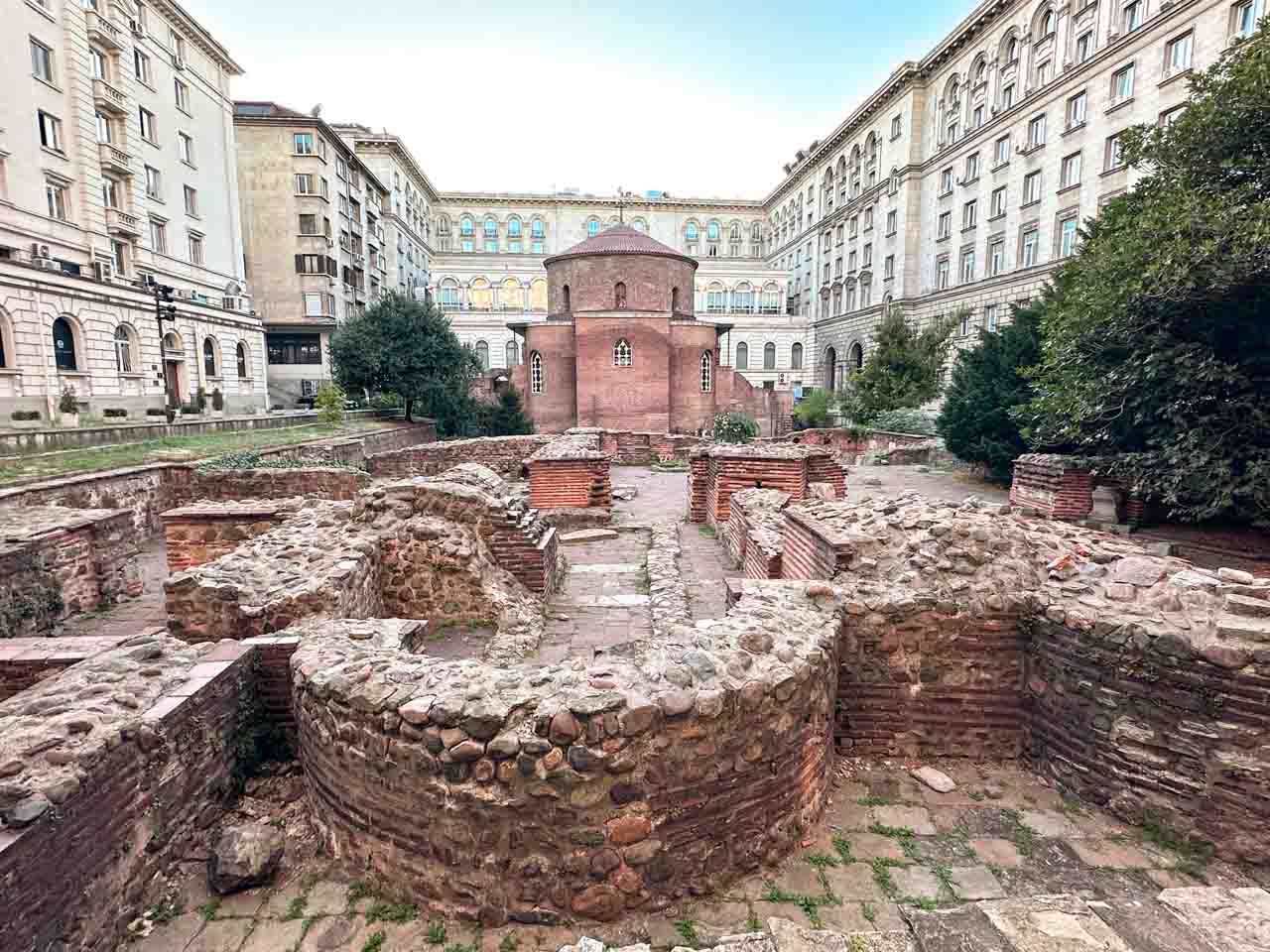
When it was a mosque, the Ottomans covered the old frescoes with plaster. During restoration works in the 20th century, they uncovered several layers underneath, so you can now see frescoes from different periods.
Interestingly, it’s still an active place of worship, so you can visit for free when there’s no service taking place, but you cannot take any pictures inside.
If you visit, please also make sure to cover your shoulders and knees. I had a maxi dress with short sleeves on, and the lady still made me cover my shoulders with a scarf. Thank goodness I try to always bring one with me to Orthodox churches and mosques just in case!
12. Visit the National Archaeological Museum
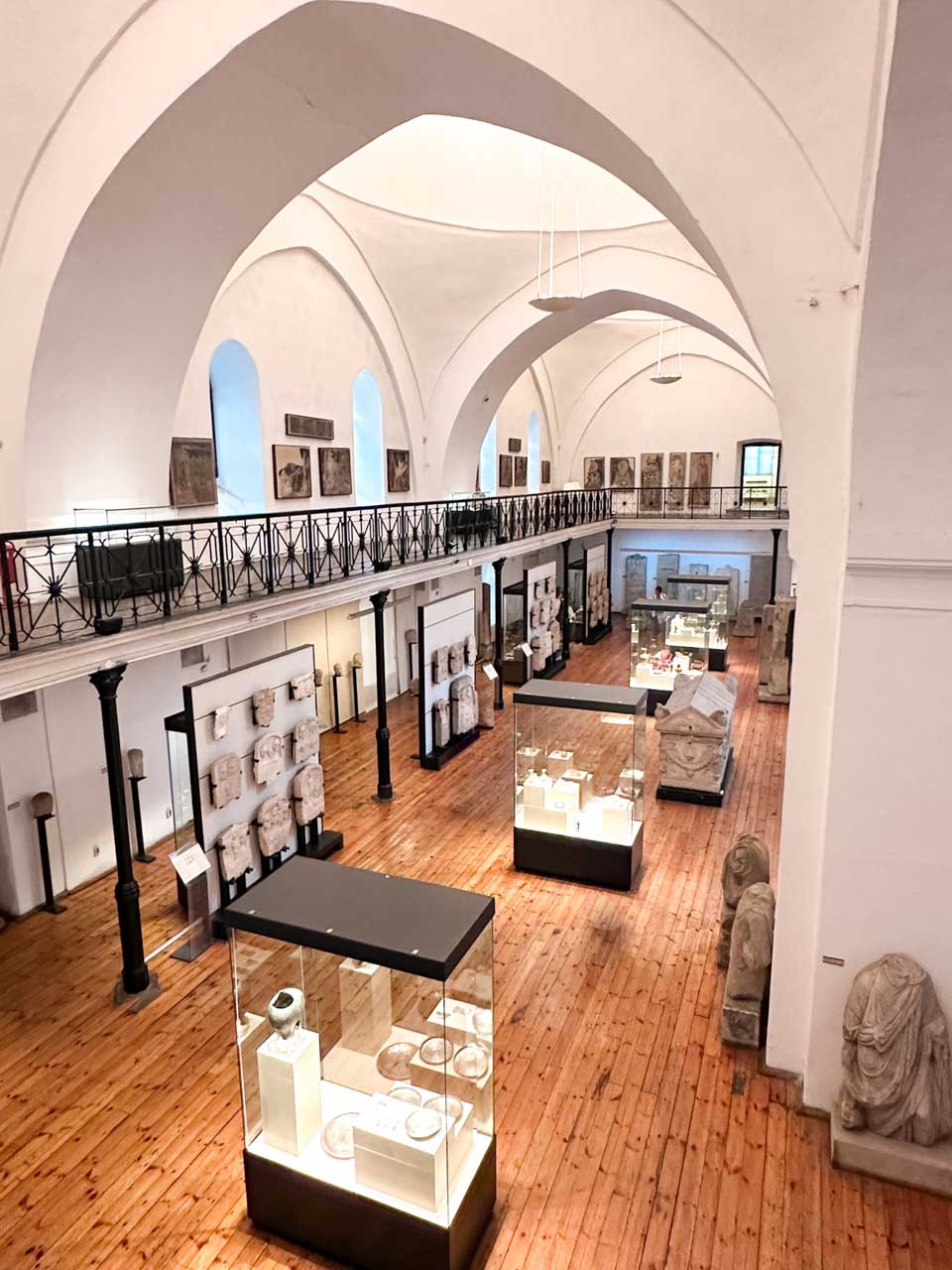
Facing the Presidential Palace, you’ll find the National Archaeological Museum of Sofia. It’s free to visit on the last Sunday of each month, so that’s when we went. Otherwise, it costs €6, with discounts for families with children and students.
The museum isn’t too big, so you can easily go through the whole thing in under 2 hours. I’m not a massive fan of those huge, overwhelming museums where you’d need an entire day to stop by every exhibit and read all the descriptions, and thankfully, this wasn’t like that.
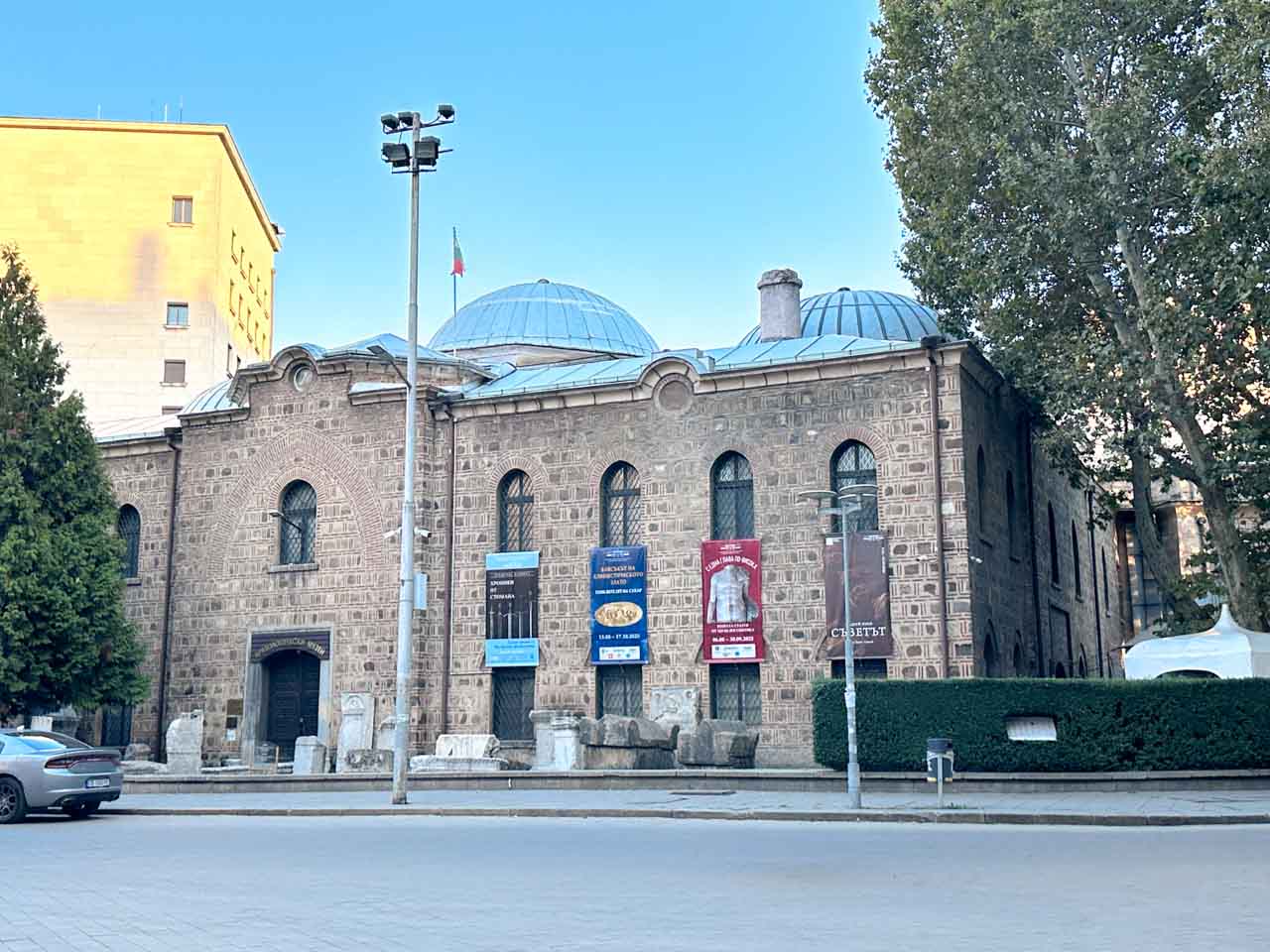
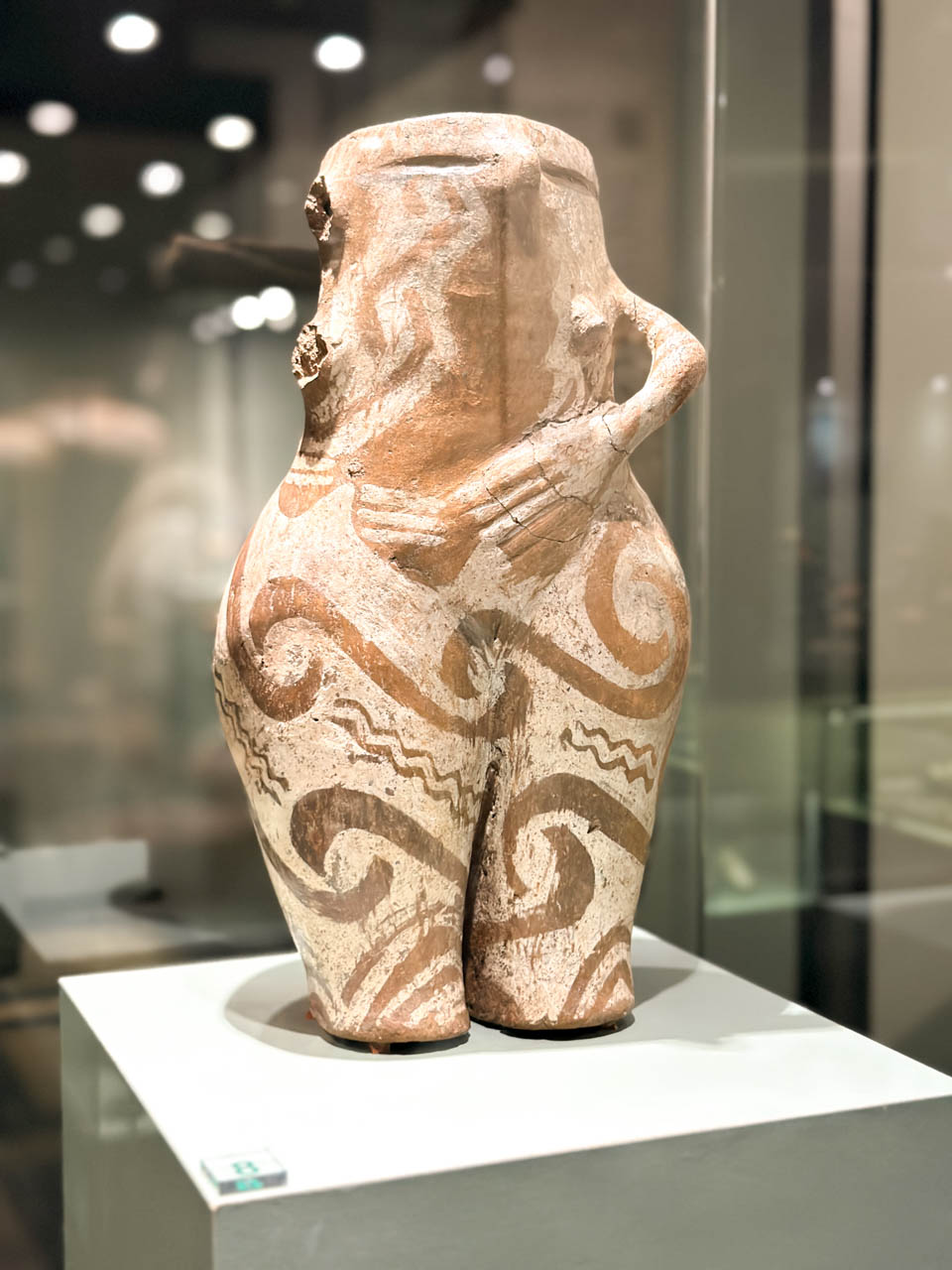
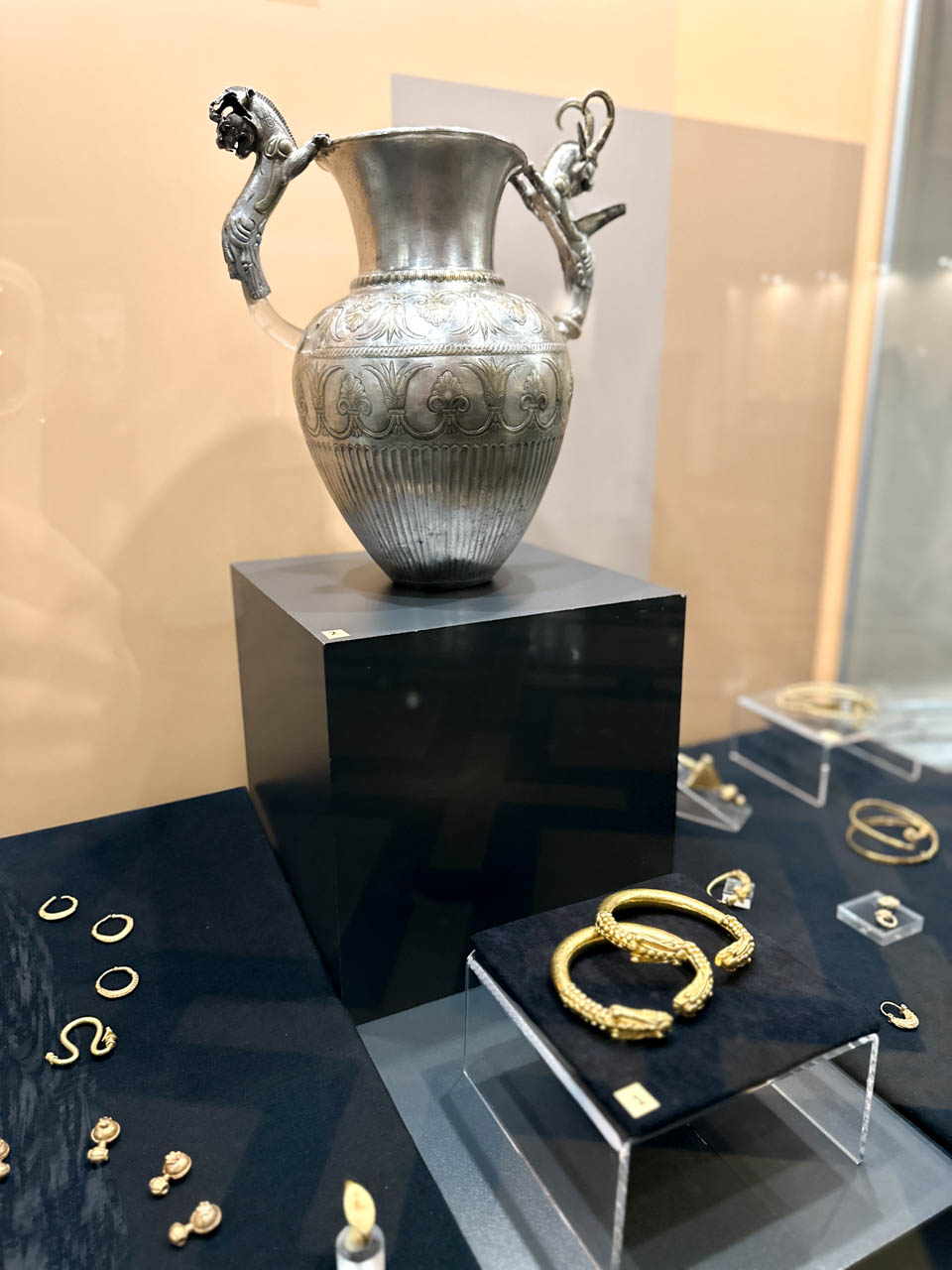
One thing I find absolutely fascinating is seeing prehistoric artefacts on display. It always blows my mind how durable things used to be, and equally makes me a little sad when I think about how we don’t really make things to last anymore.
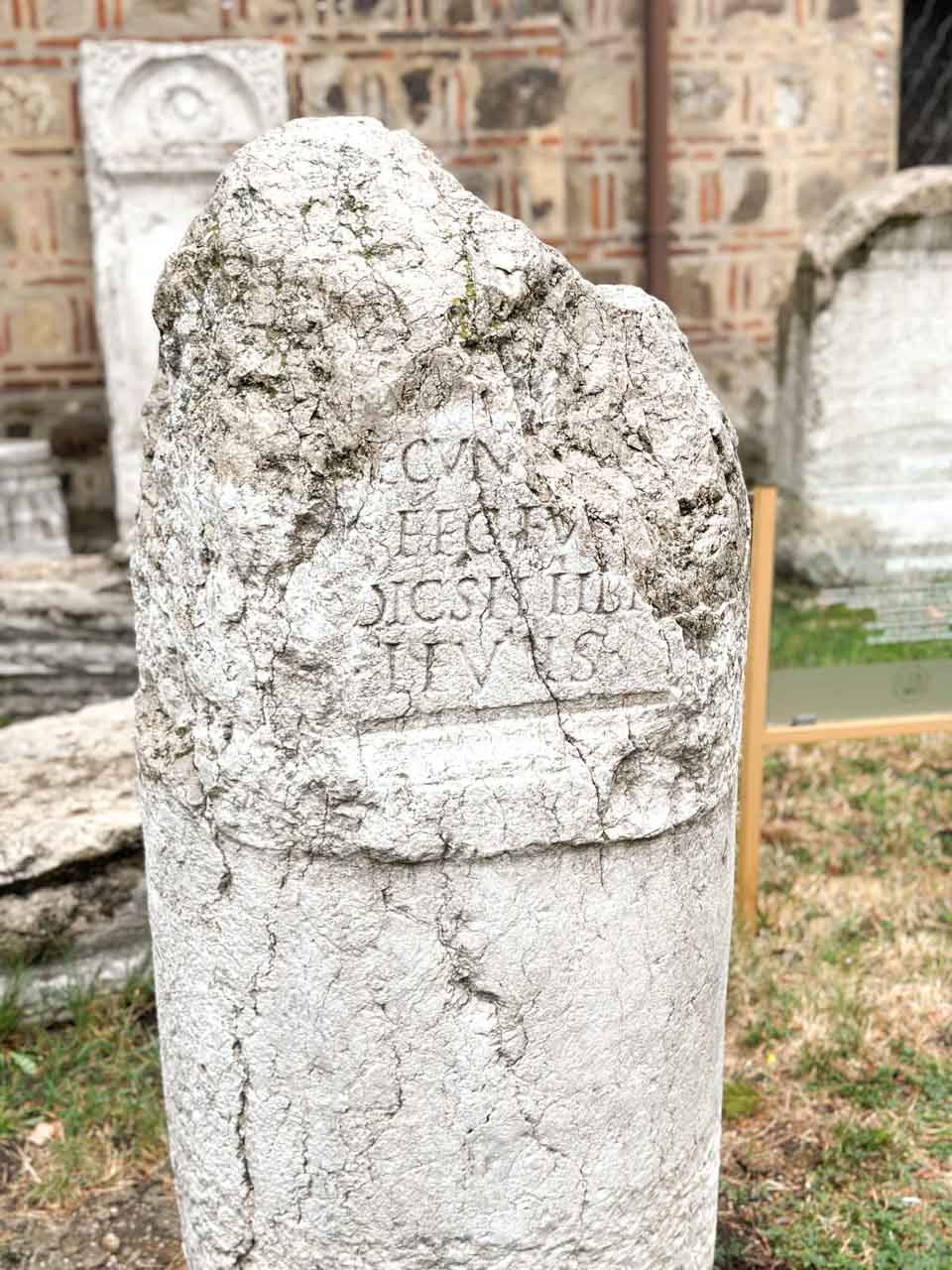
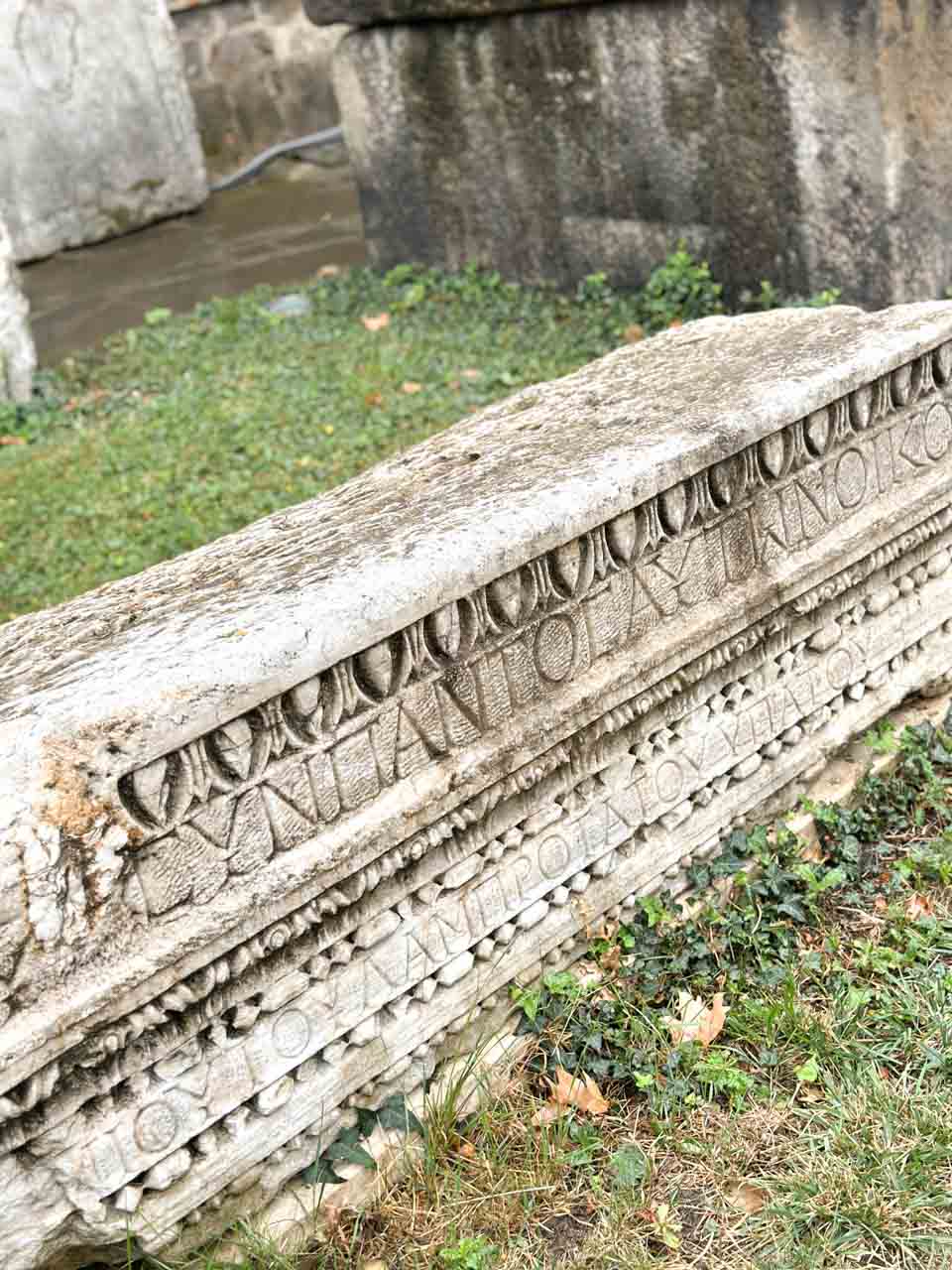
Even before we entered the museum, it had already impressed me with the stone slabs covered in Roman inscriptions in the front garden.
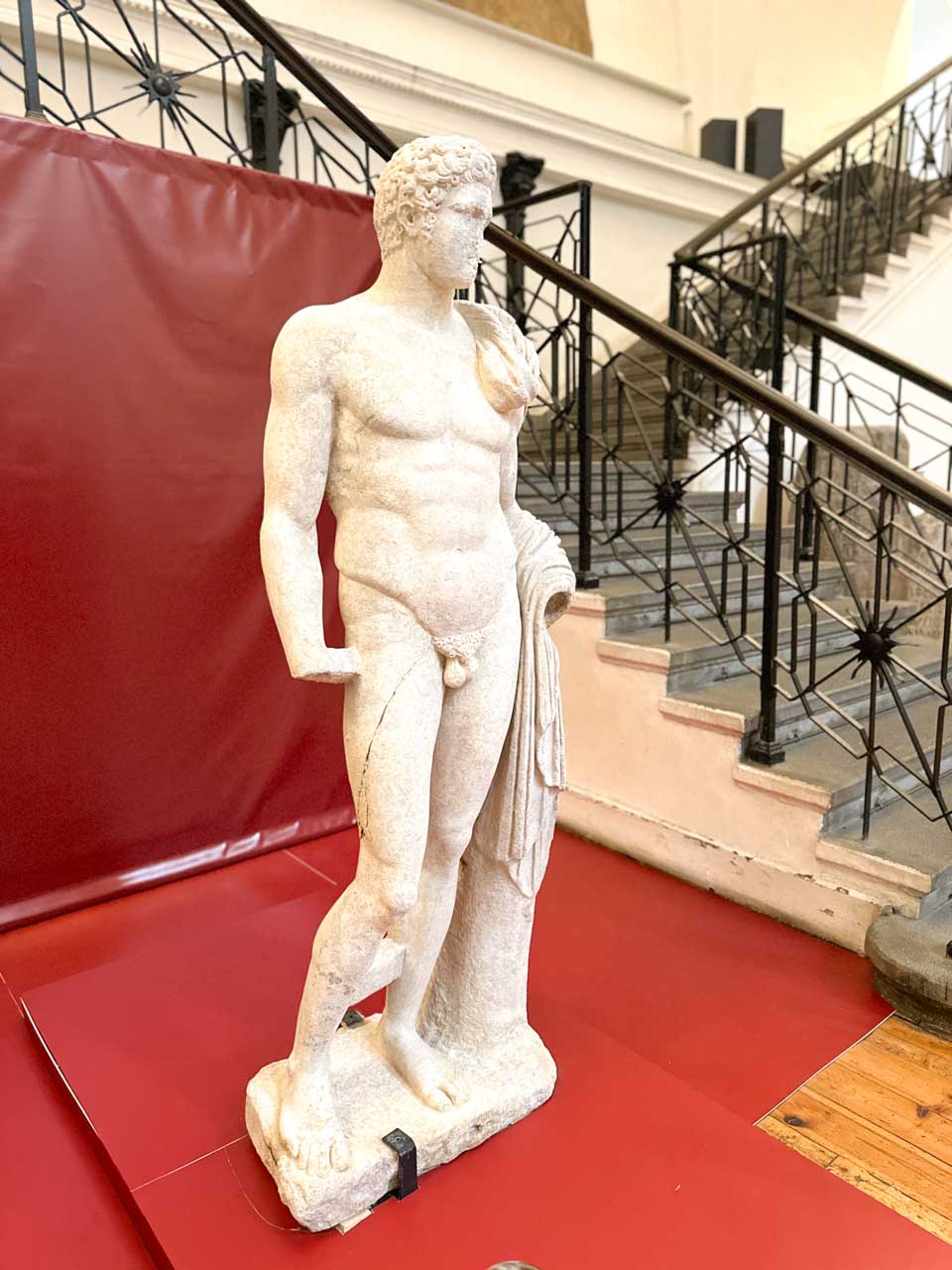
Inside, you’ll see an ancient statue believed to be around 1,600 years old that was discovered in 2024. We visited just one month after they completed the restoration works, which was really cool!

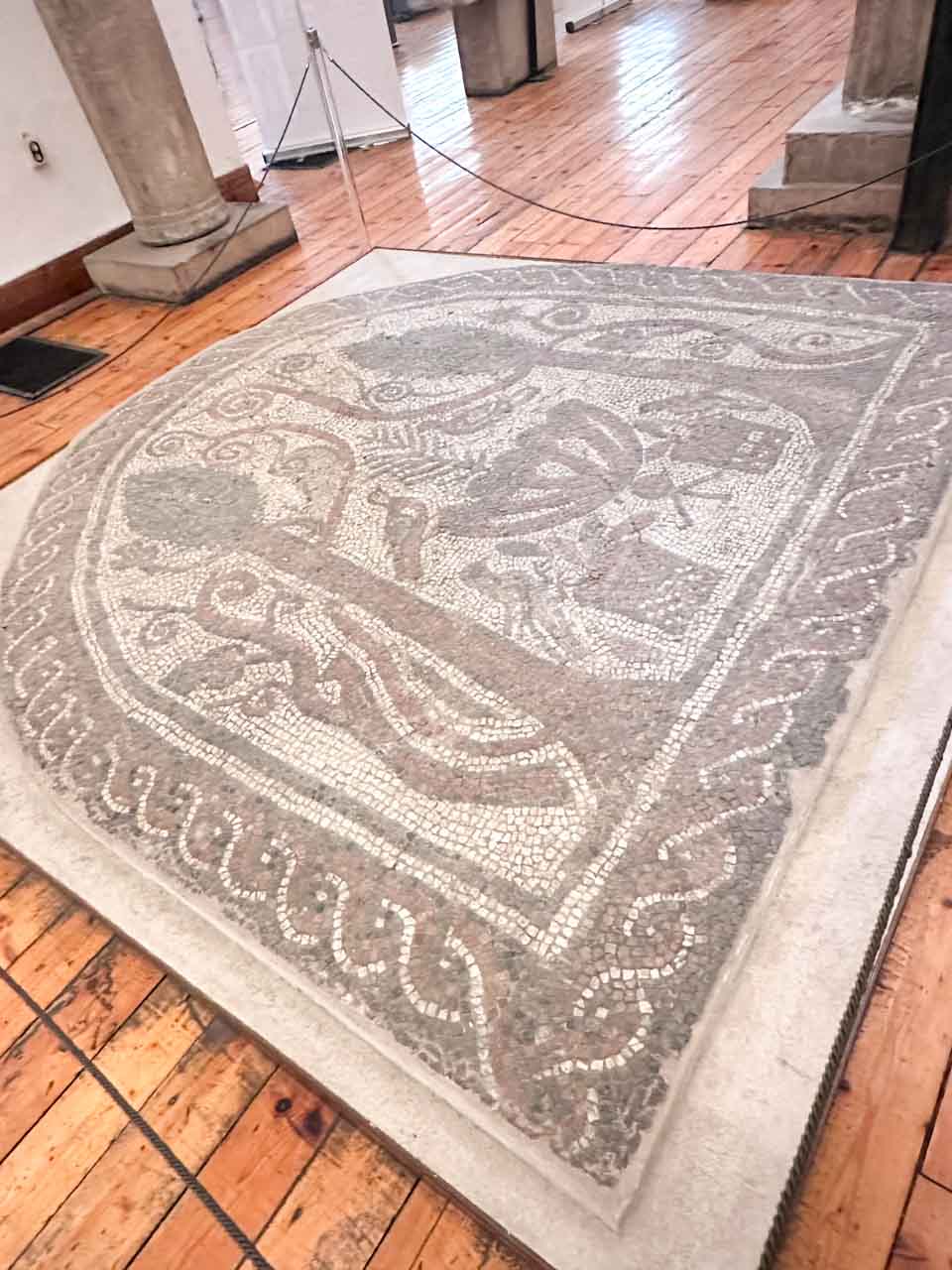
There’s also the original mosaic floor from the Basilica of Saint Sophia from the 4th century AD, along with plenty of other interesting exhibits.
But what I really loved was one of the rooms upstairs. It looked so unassuming, but had some absolute treasures inside – including teeth from a mammoth, an elk, and a sabre-toothed cat dating back anywhere from 250,000 to 1.5 million years!
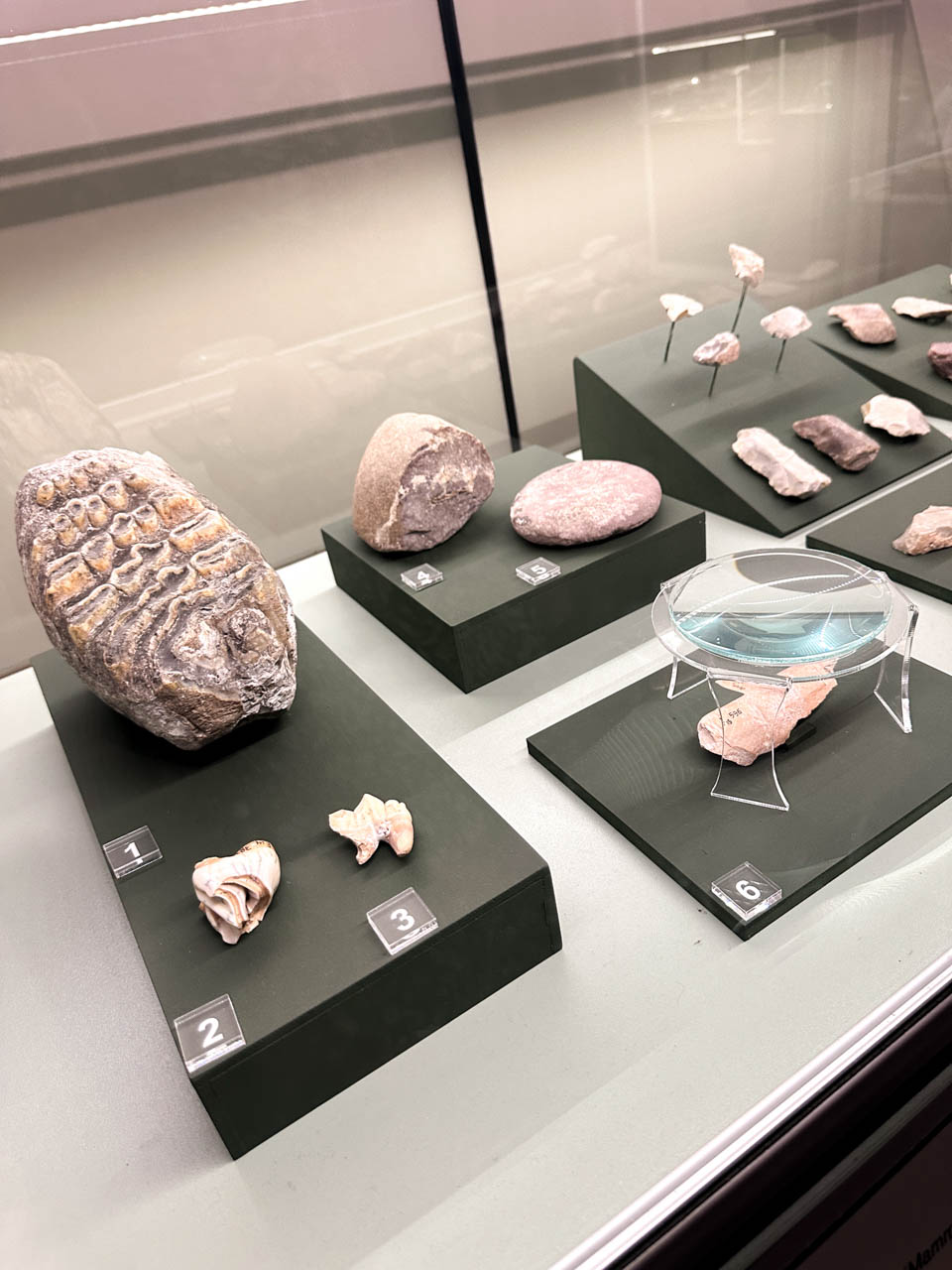
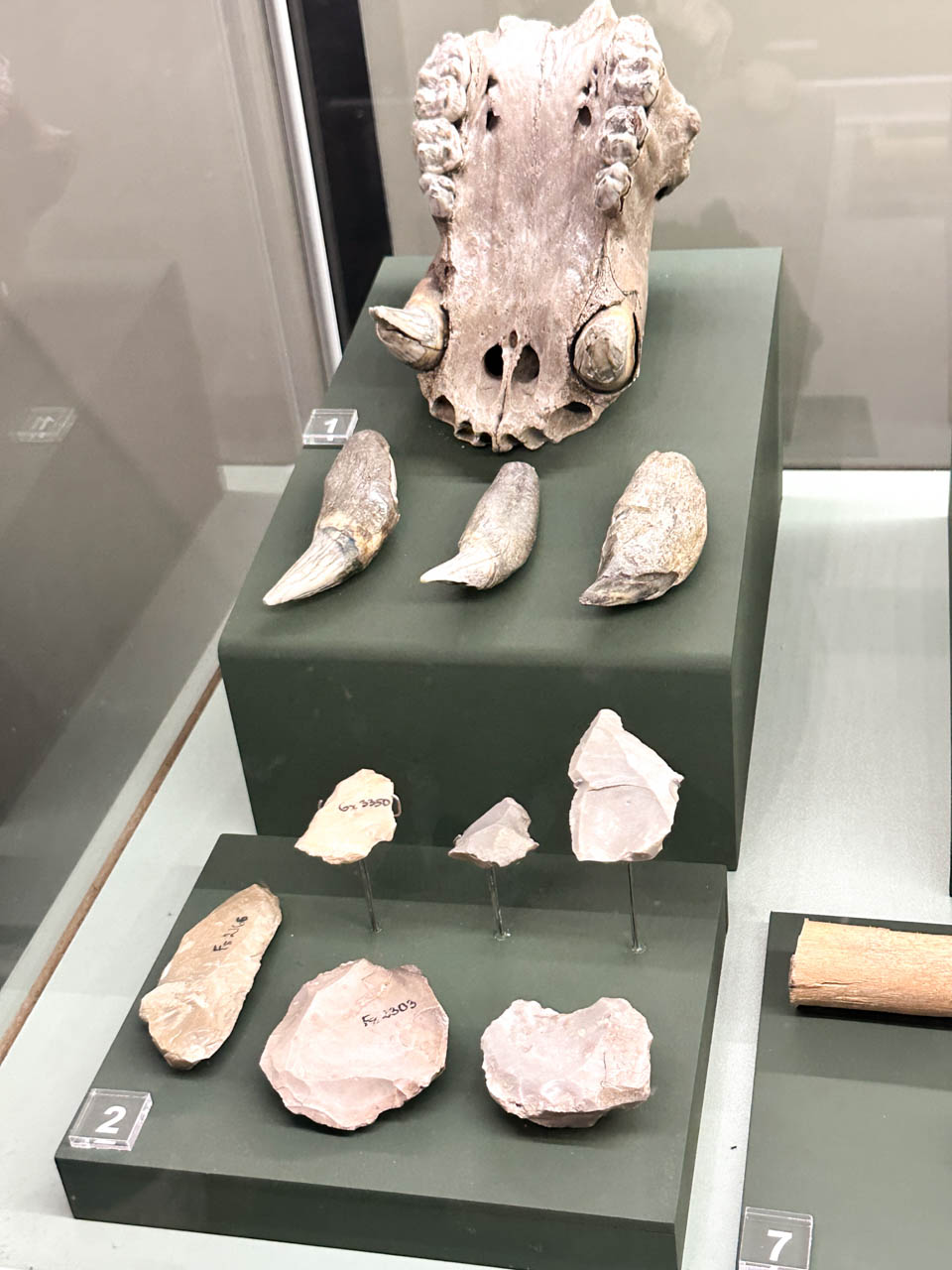
I just couldn’t get over the fact that something could survive for that long and then end up right there in front of us. If you’re into history or archaeology, I’d totally recommend this museum!
13. Explore Sofia’s socialist architecture
After the Second World War, Bulgaria became part of the Eastern Bloc (but remember, it was NEVER part of the Soviet Union!). So, over the next four decades, the Communist government left its mark on Sofia with huge government buildings, broad boulevards, and bold concrete architecture.


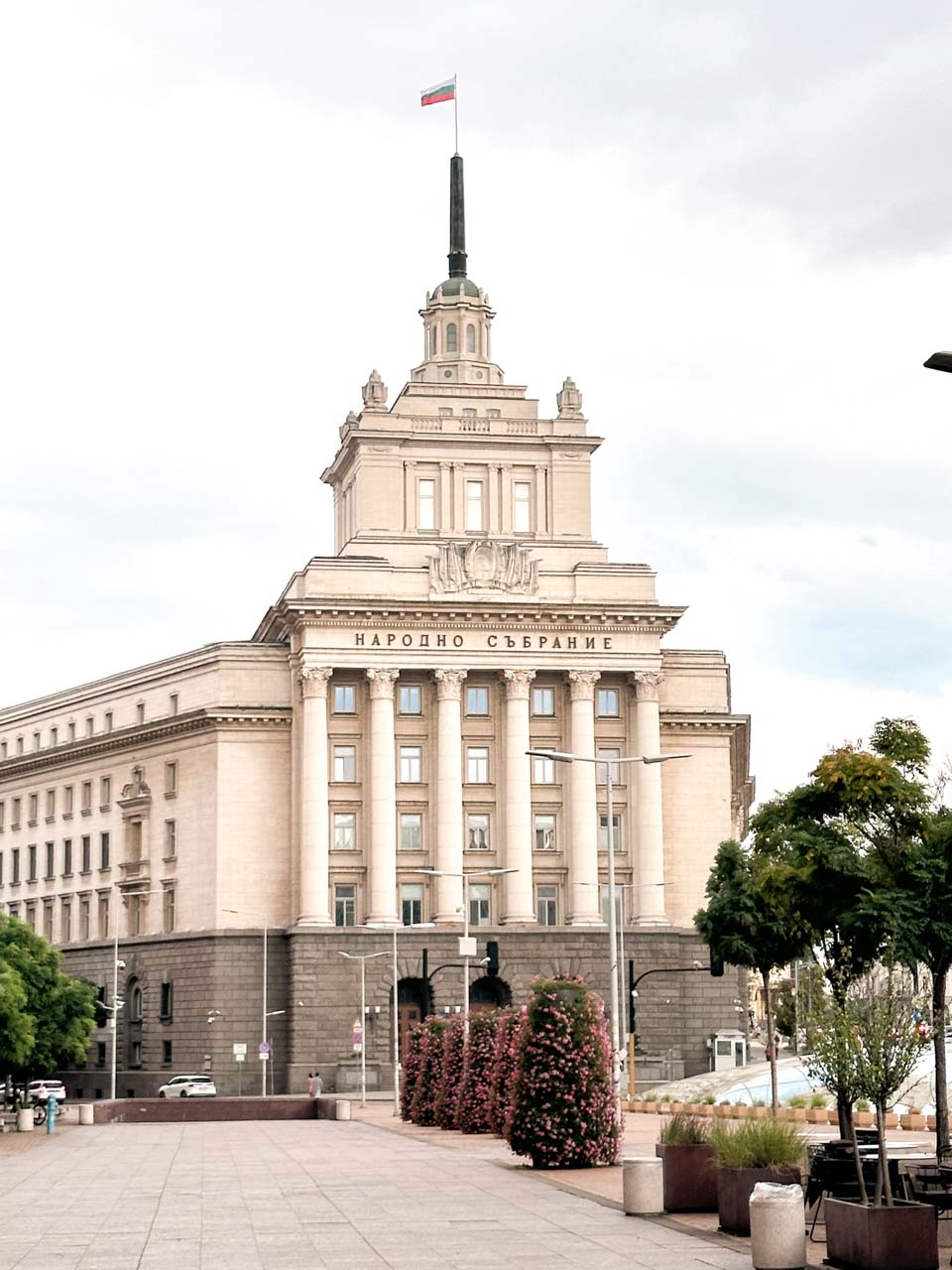
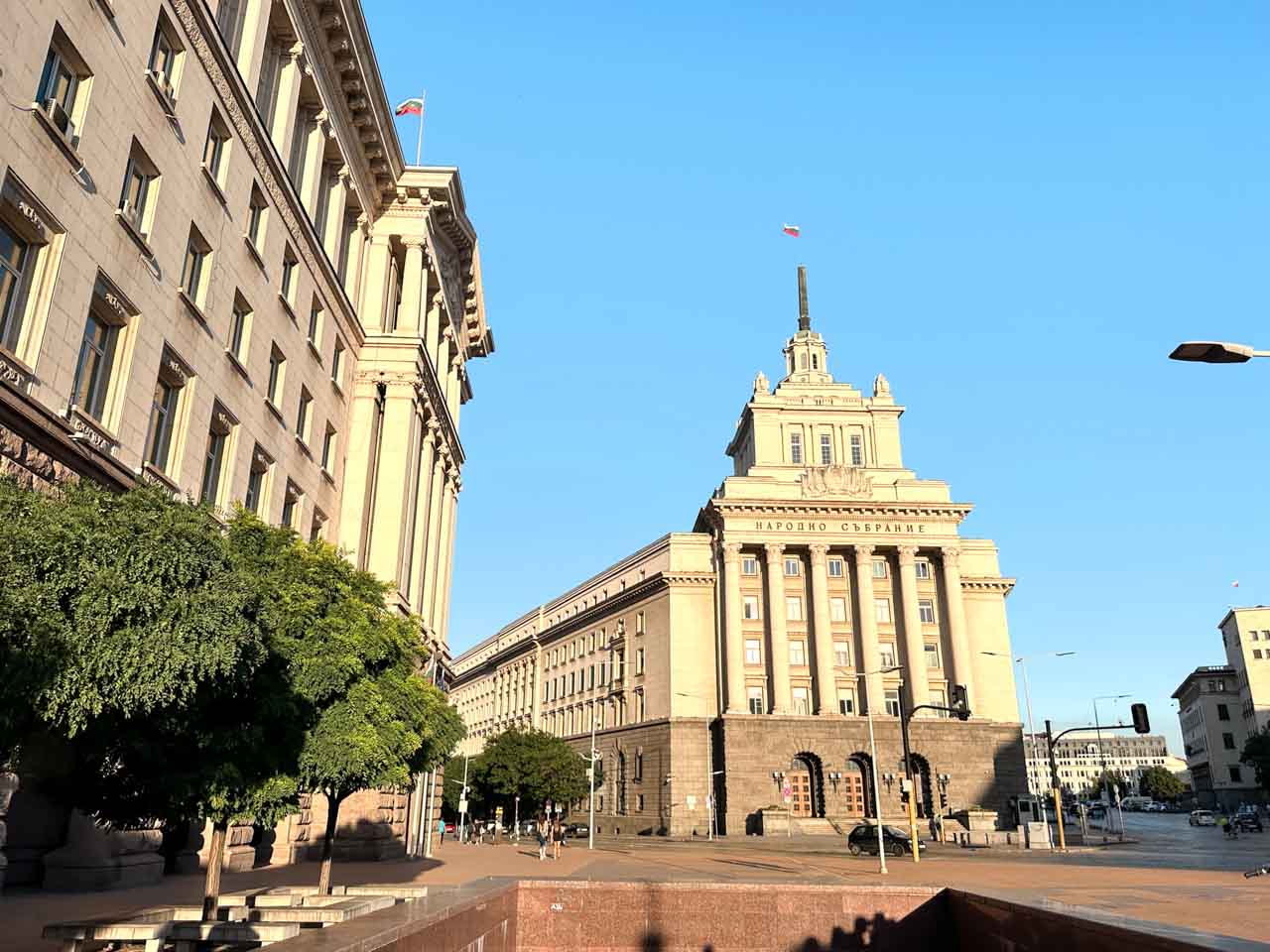
If you’re a fan of this type of architecture, the best place to start is Nezavisimost Square. It’s surrounded by three huge government buildings: the former Communist Party headquarters (now home to the National Assembly), the Council of Ministers, and the Presidency. Together, they’re one of the best examples of Socialist Classicism in Eastern Europe.
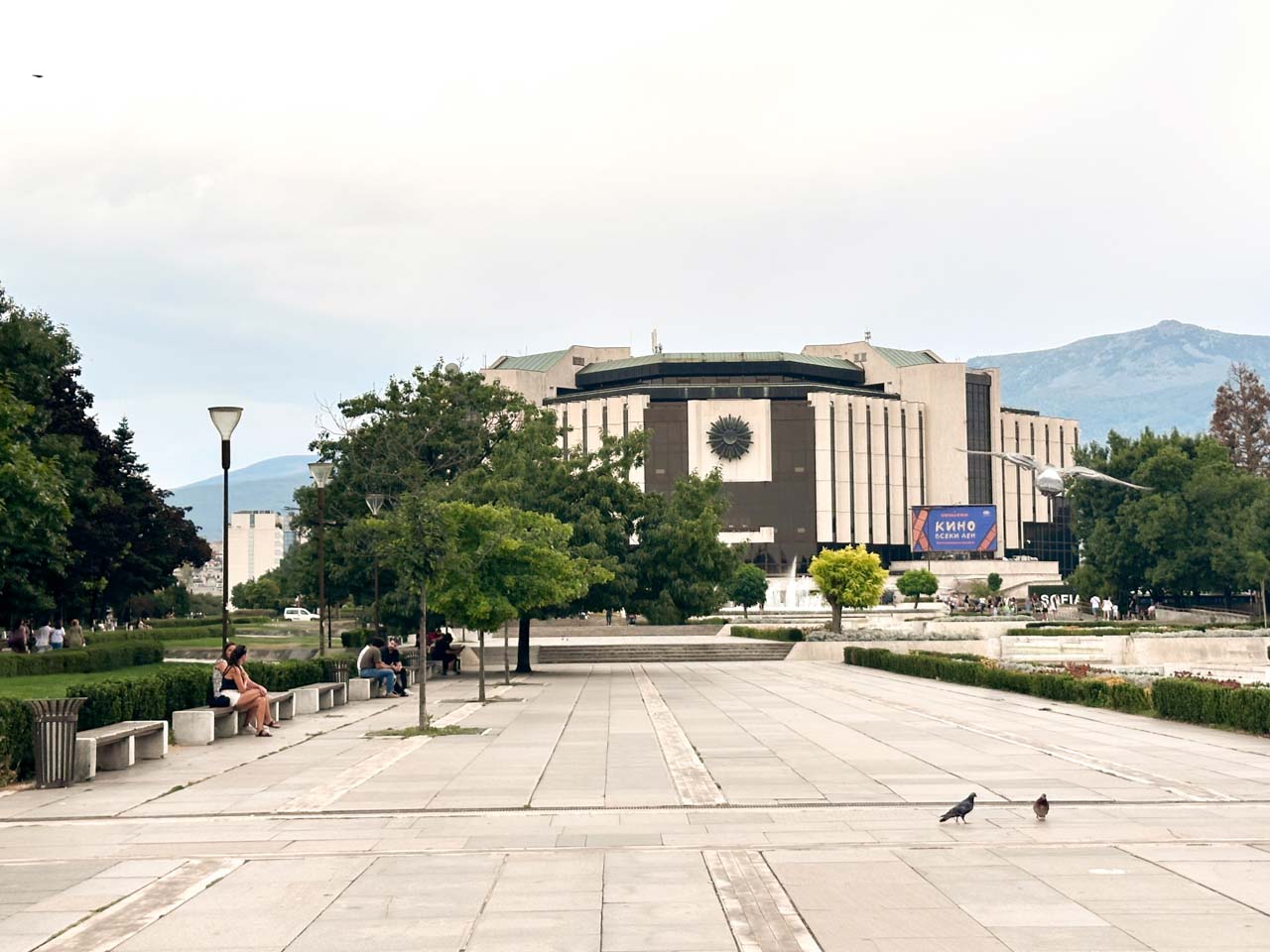
From there, you can head to the National Palace of Culture (NDK), another building that’s pretty hard to miss. It opened in 1981 to celebrate Bulgaria’s 1,300th anniversary and is one of the largest conference and cultural centres in the Balkans.
One of our favourite things was simply walking around the city and seeing what we’d find.
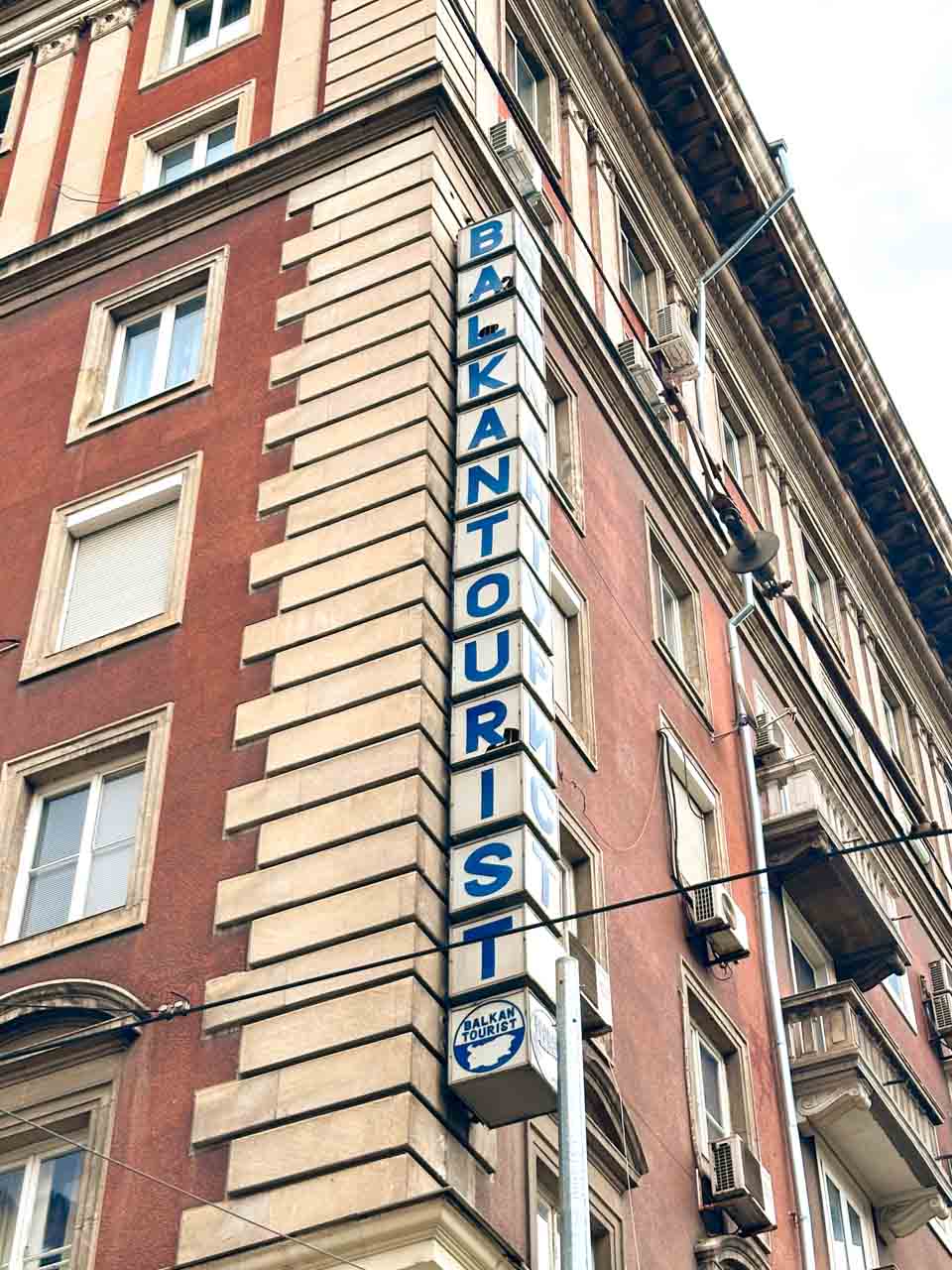
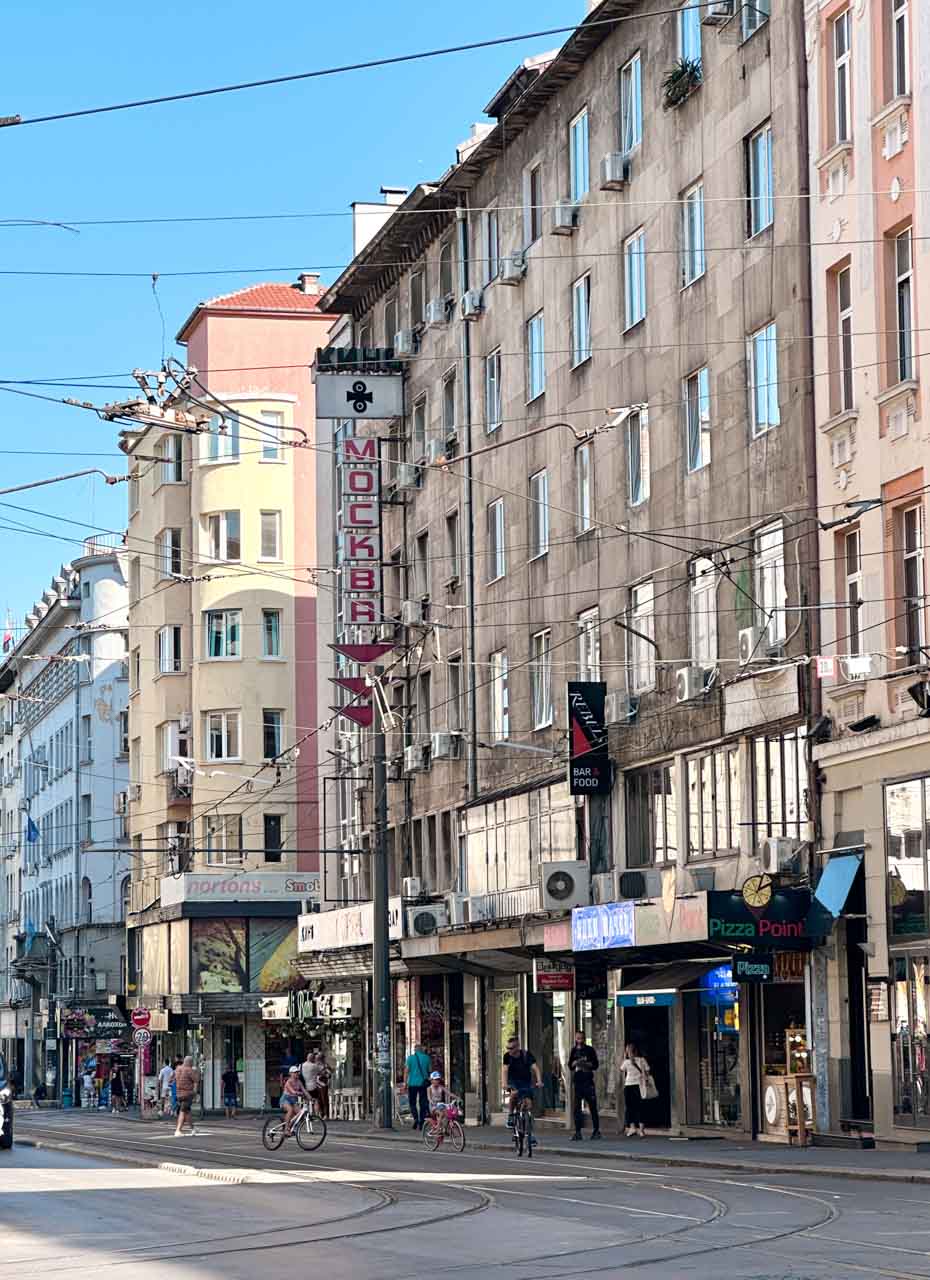
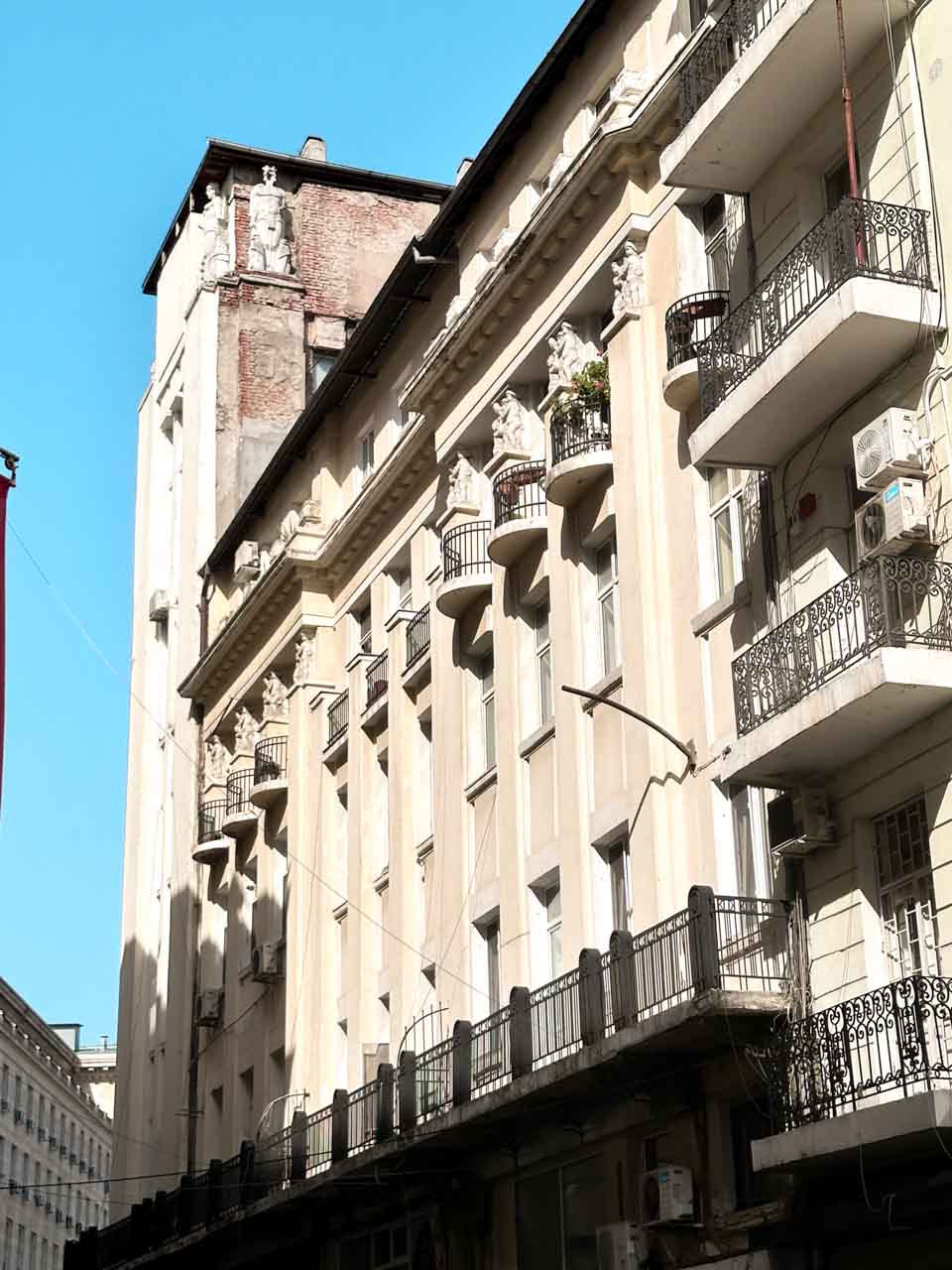
Every few streets, we’d spot another interesting building, whether it was a block of flats with sculptures carved into its façade, a monumental archway, or something else entirely.
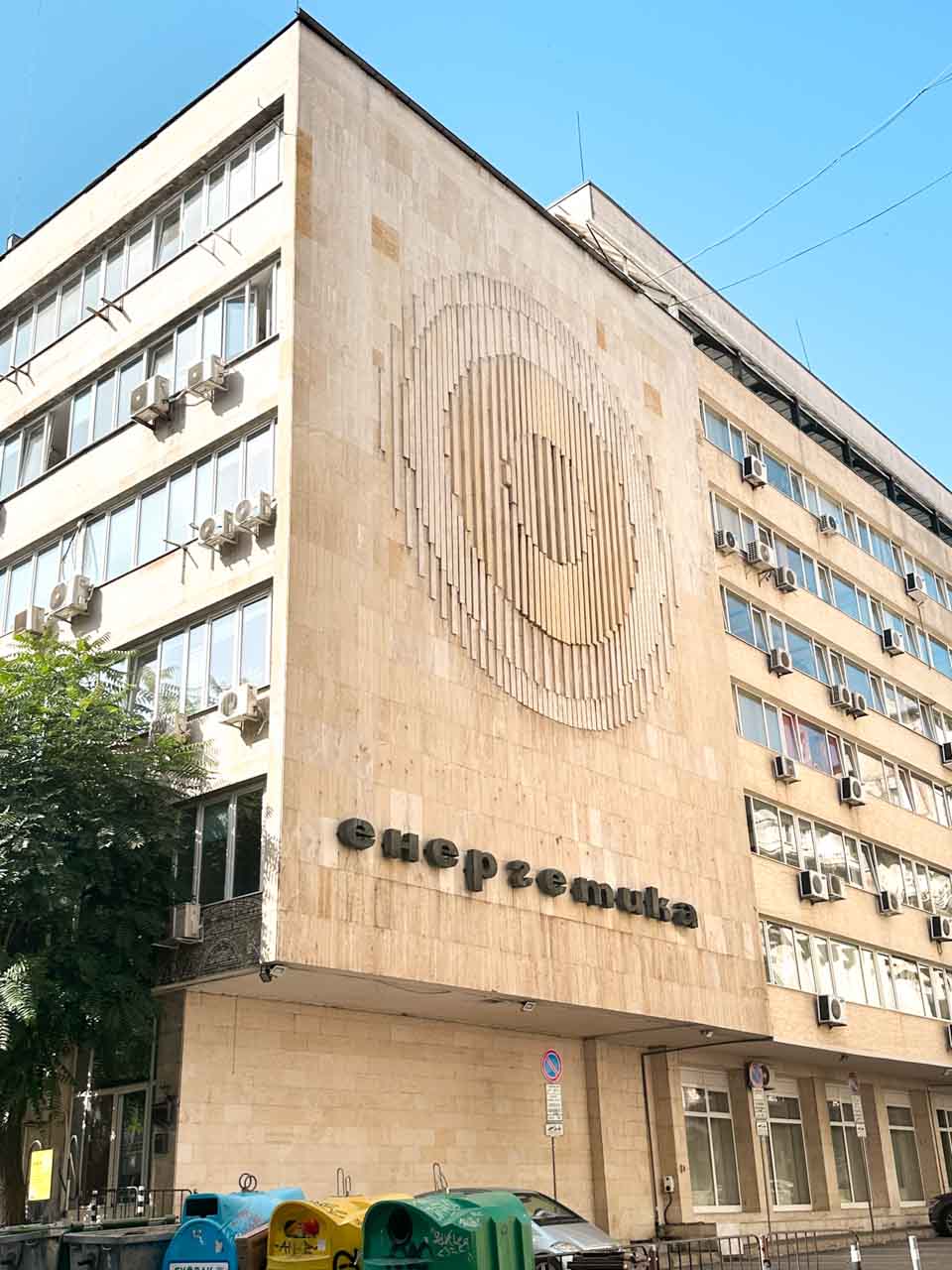
But if you want to learn more about this part of Sofia’s history, there’s also a Communist Sofia walking tour you can book:
14. Stop by the Central Market Hall
If you’re in the area, you’ve got to stop by the Central Market Hall. It’s no longer a market hall in the traditional sense, where people would go to buy fruit, veggies, and other produce, but it’s still worth a visit.
The building itself dates back to 1911, but after years of wear, the market closed for a major restoration and reopened in 2024.
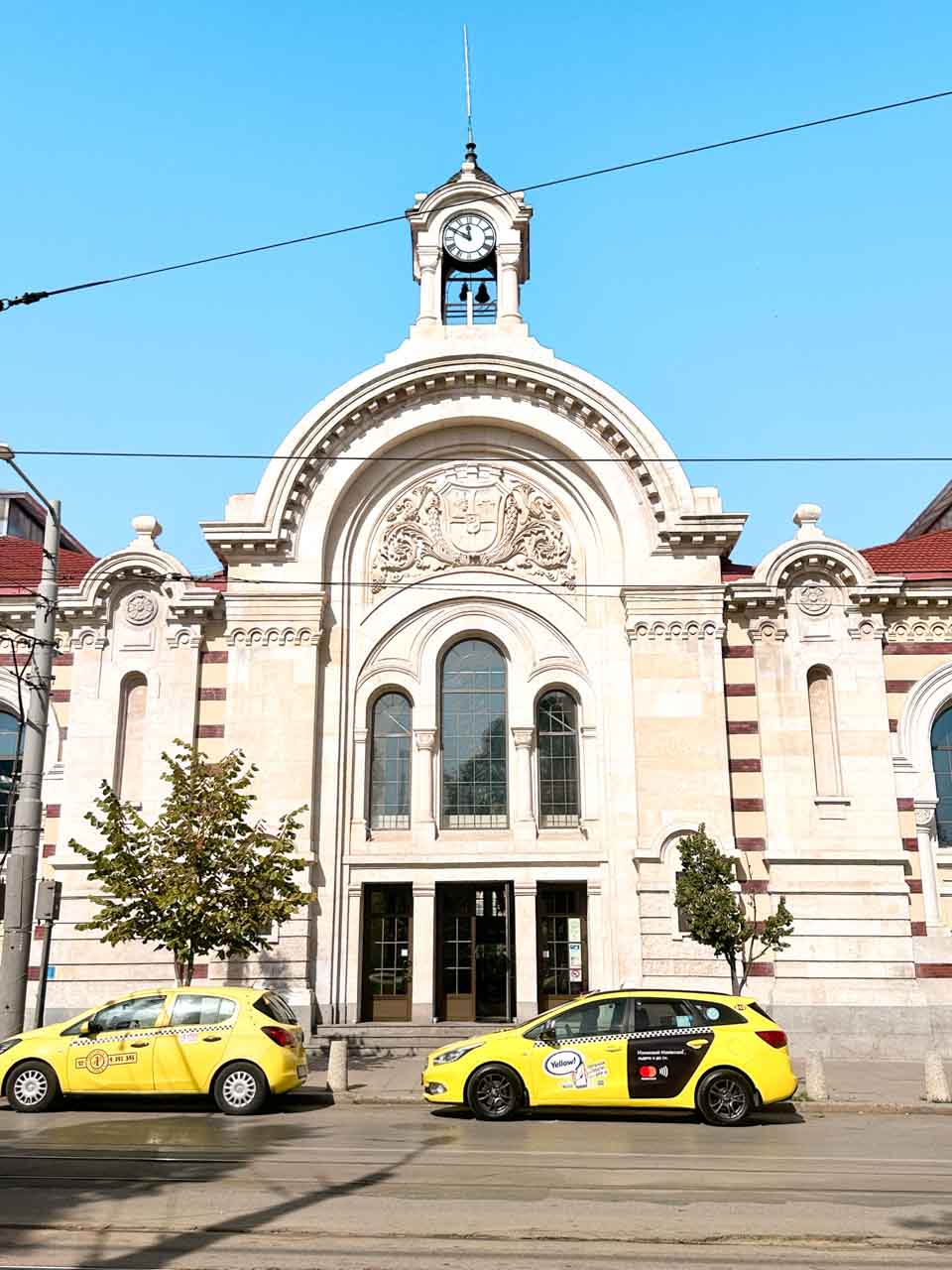
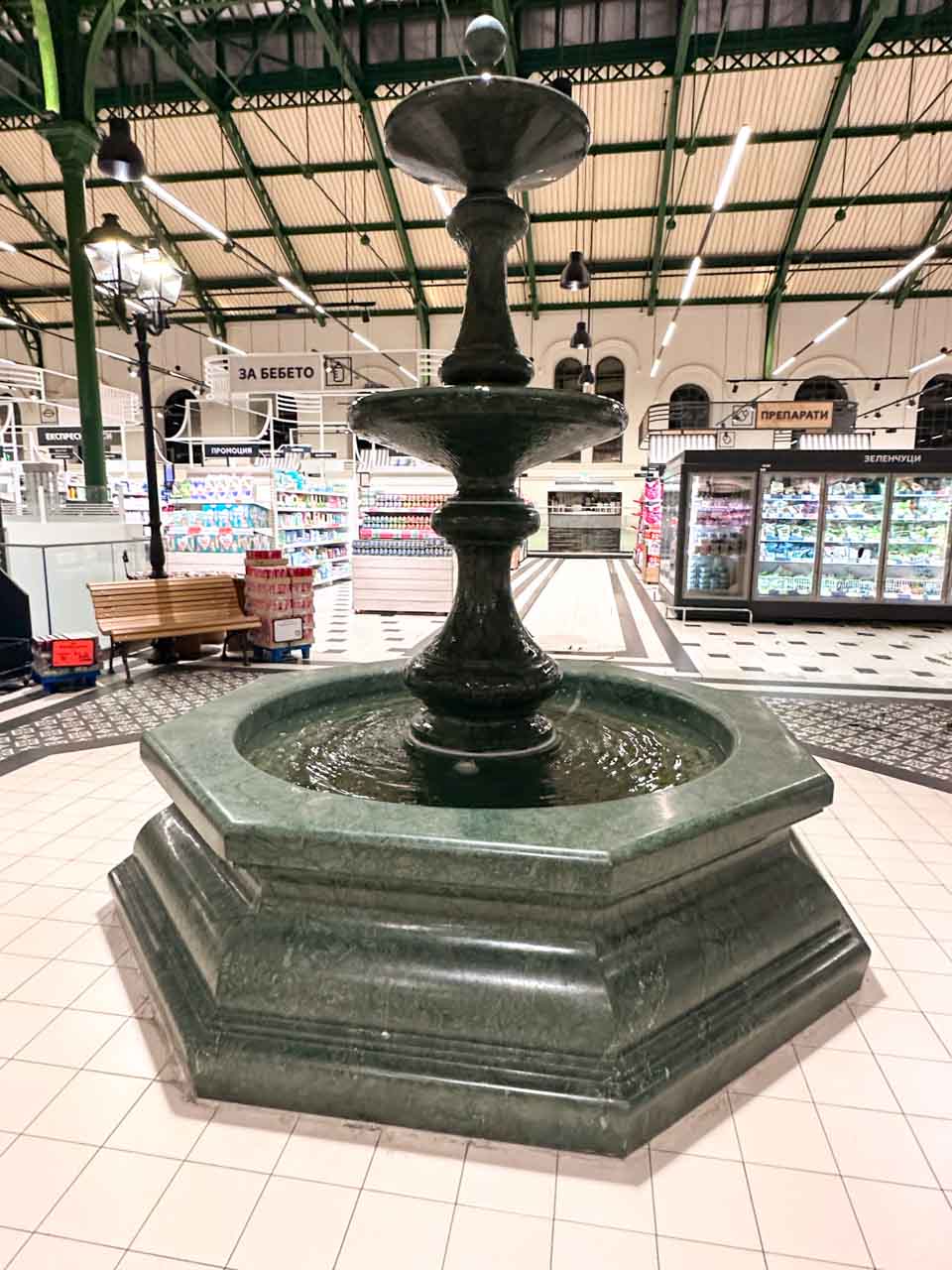
It now houses a Kaufland supermarket, along with a few restaurants and a bakery on the top floor. It’s got to be the prettiest supermarket I’ve ever been to, with a stunning fountain in the middle, beautiful tiling, and natural light pouring through the windows.
If you’re not familiar with Kaufland, I’d recommend it for grocery shopping in Sofia anyway, as it has a great selection and reasonable prices.
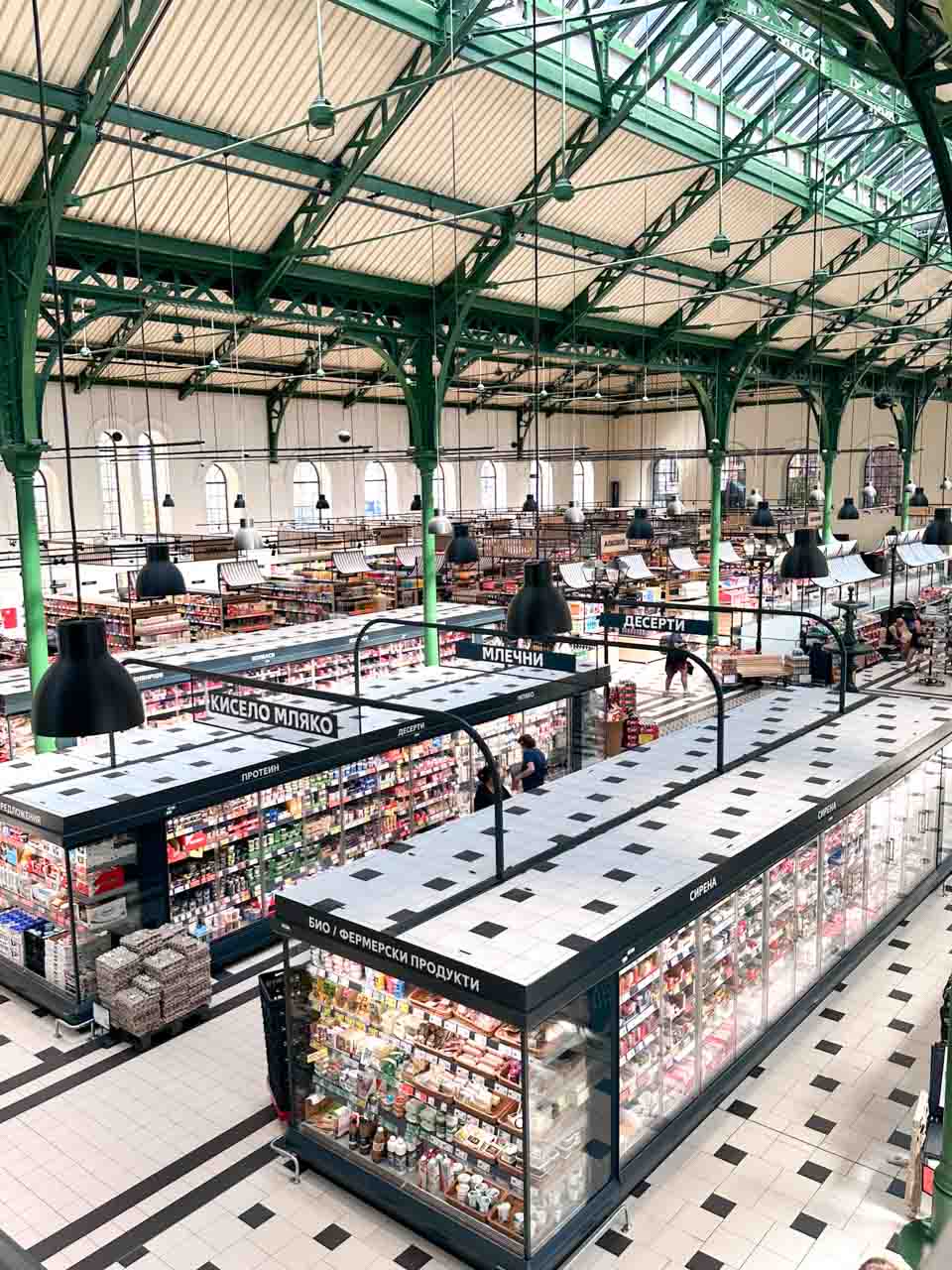
I also saw some locals recommending the Nedelya bakery on the top floor, but we didn’t get a chance to try it this time!
15. Step inside a retro tram
Right opposite the Central Market Hall, you can spot retro tram number 83. It was restored and has been operating as a tourist information centre since December 2024. It’s a great chance to see the inside of a vintage tram, grab some leaflets, or snap a photo with the Banya Bashi Mosque in the background.
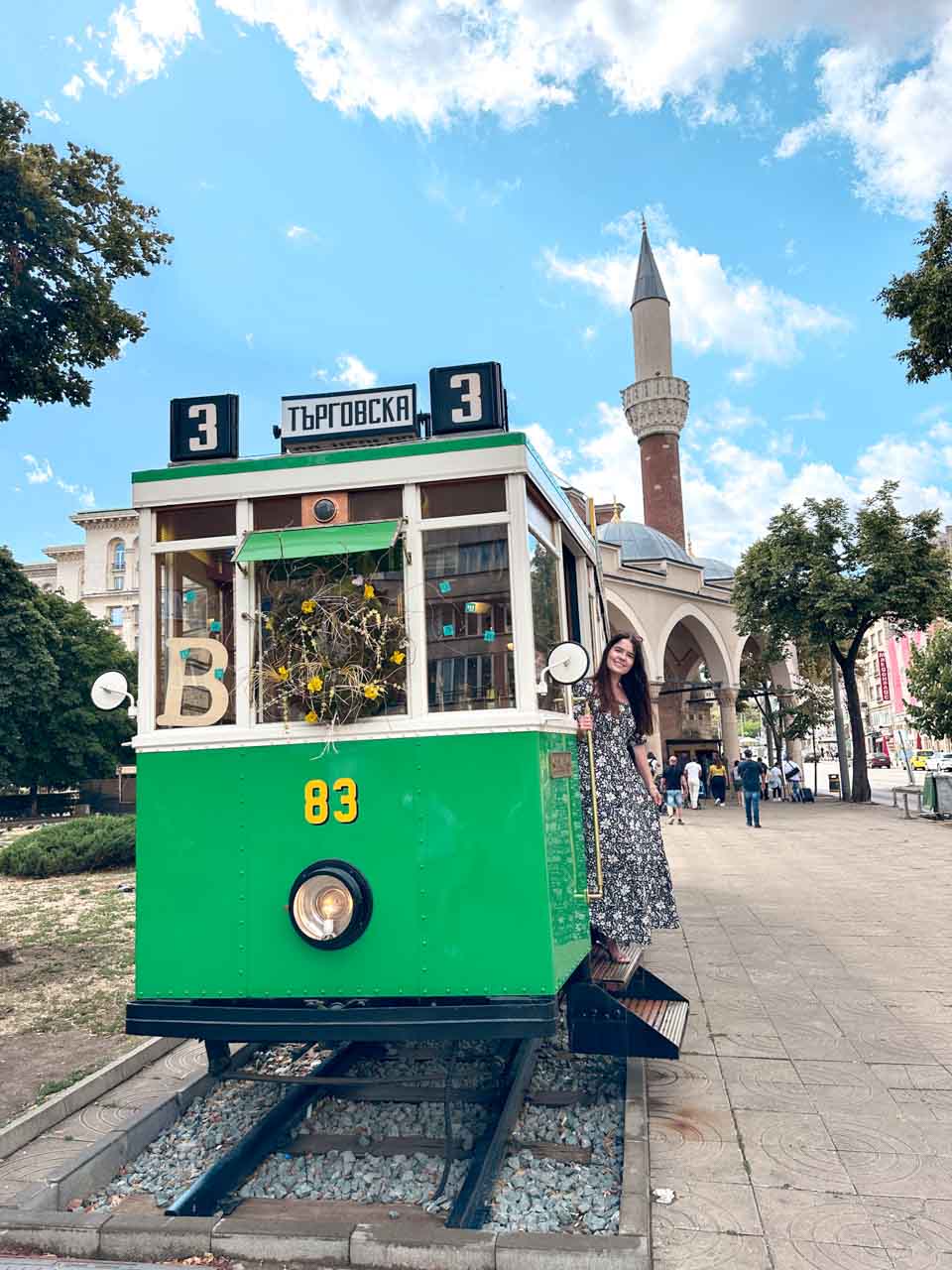
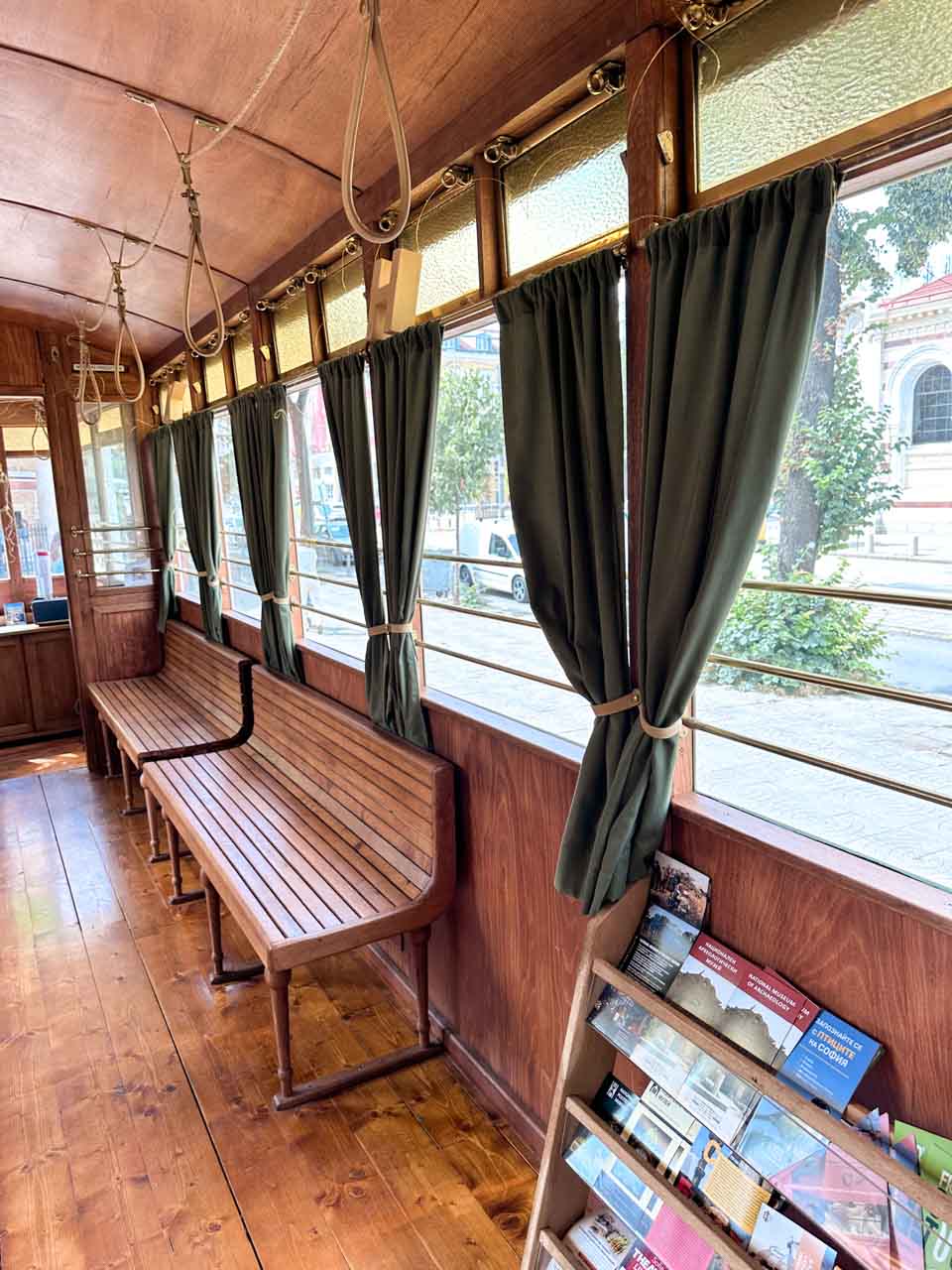
Unfortunately, you can no longer take a ride on this one, but I found a different retro tram in Sofia that you actually can ride:
16. Learn about Sofia’s history at the Regional History Museum
Just behind the retro tram, you’ll find the Regional History Museum of Sofia.
The museum is inside the stunning Vienna Secession-style building of the former Central Mineral Baths. They first opened in 1913 and closed down in 1986. We were curious why, unlike Budapest, Sofia didn’t try to turn its famous bathhouses into a public attraction, and what our guide told us was super interesting.
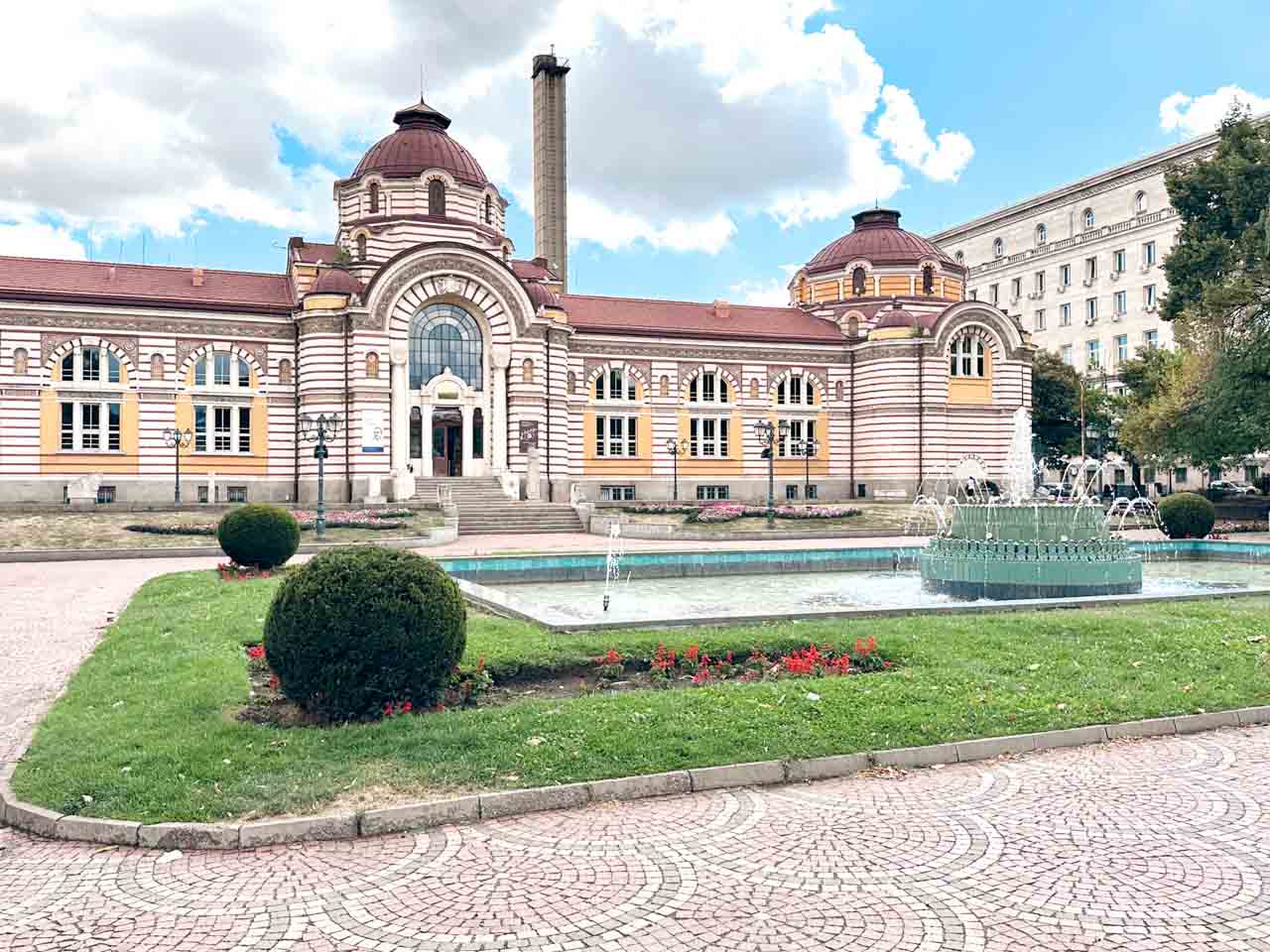

According to him, during Communist times, the mineral baths were an easy place to spy on people, as they were relaxed and didn’t expect anyone to be listening in. Because of that, he said older generations had negative associations with the baths, and when the building started deteriorating, it ended up sitting empty for almost 30 years.
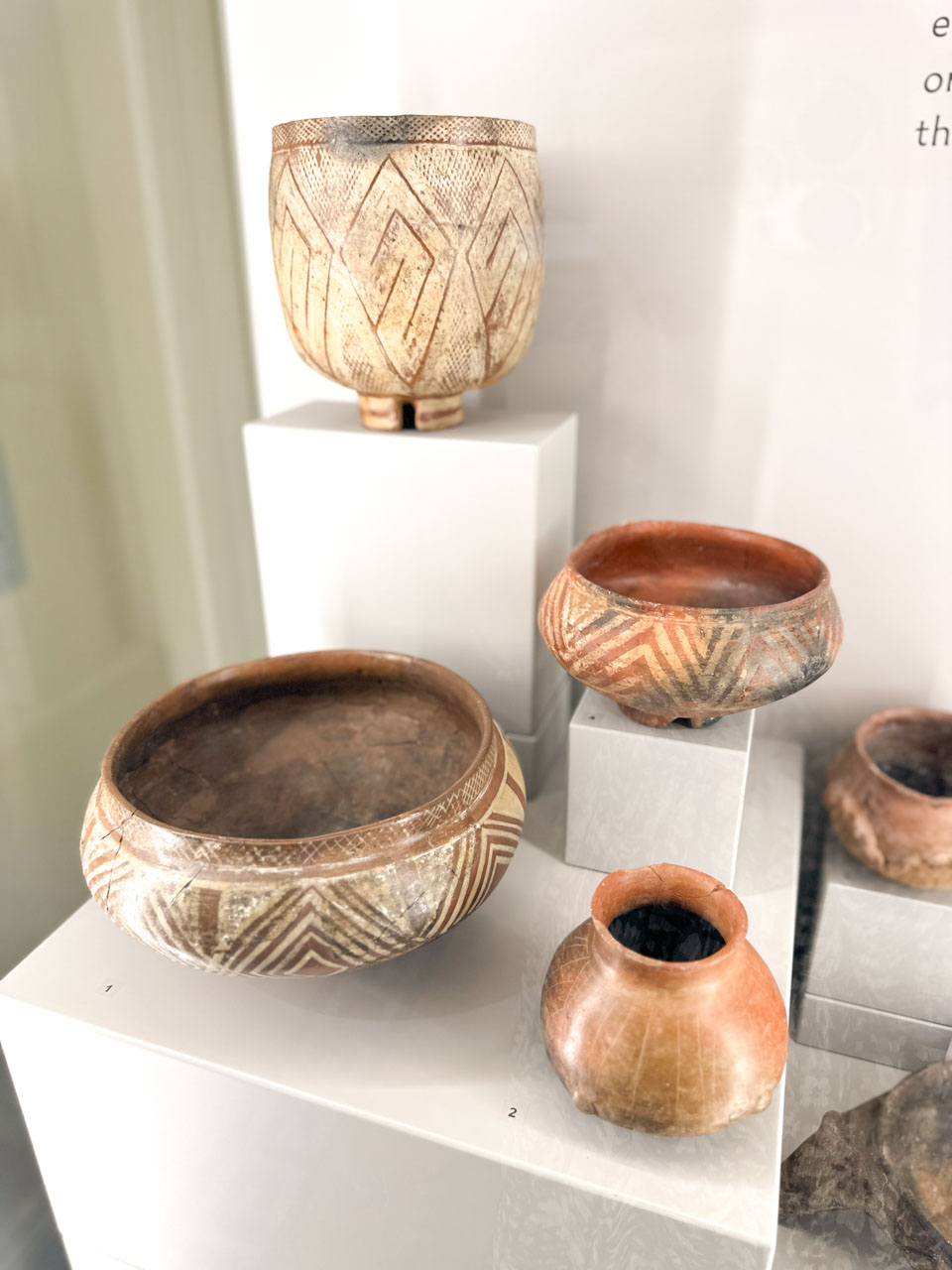

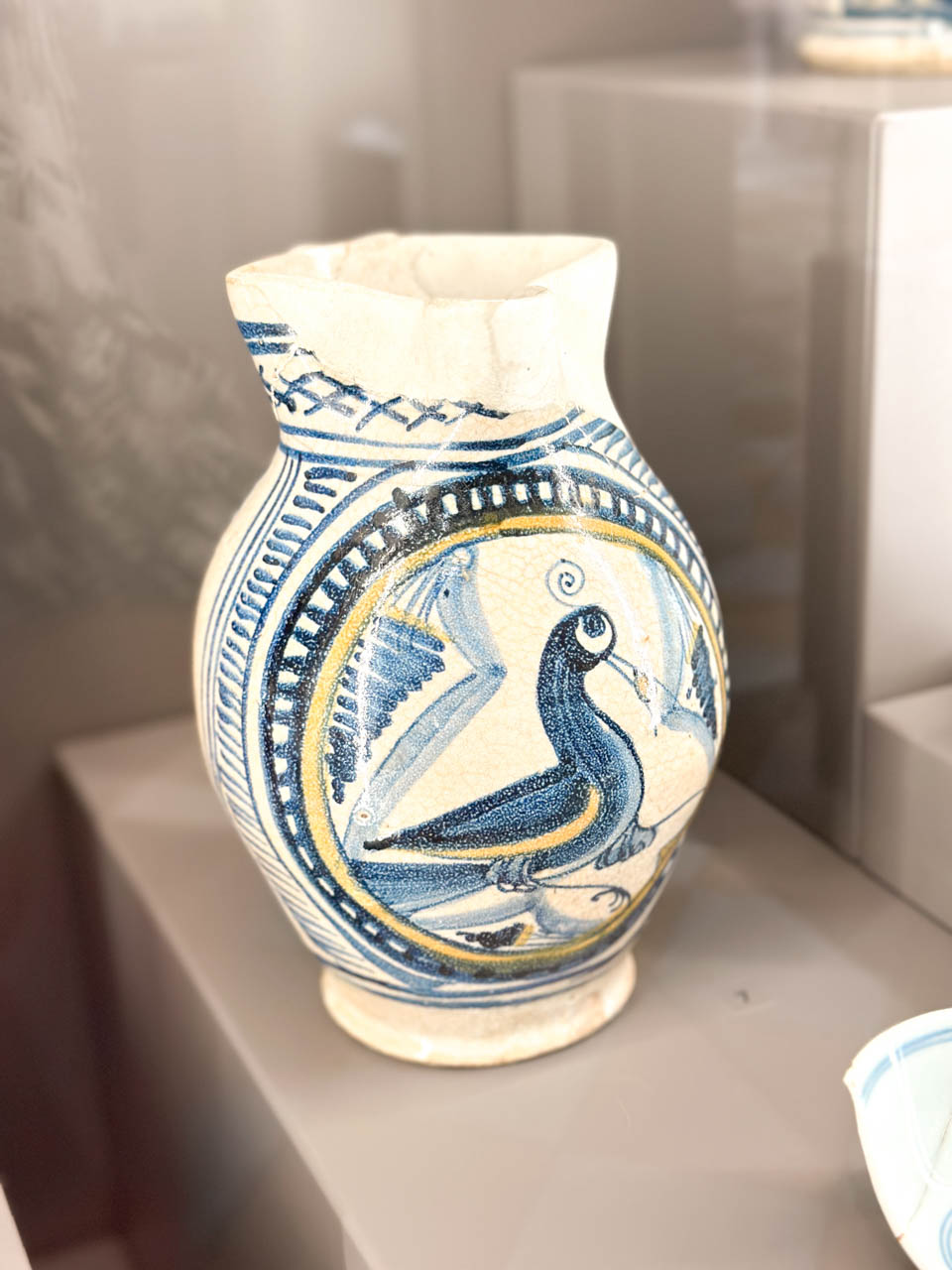
Entry to the museum costs €5, and if you know you want to visit a few other places, you can also get a combined ticket that includes the Ancient Serdica Archaeological Complex, the Triangular Tower of Serdica, and the archaeological level beneath the Basilica of Saint Sophia.
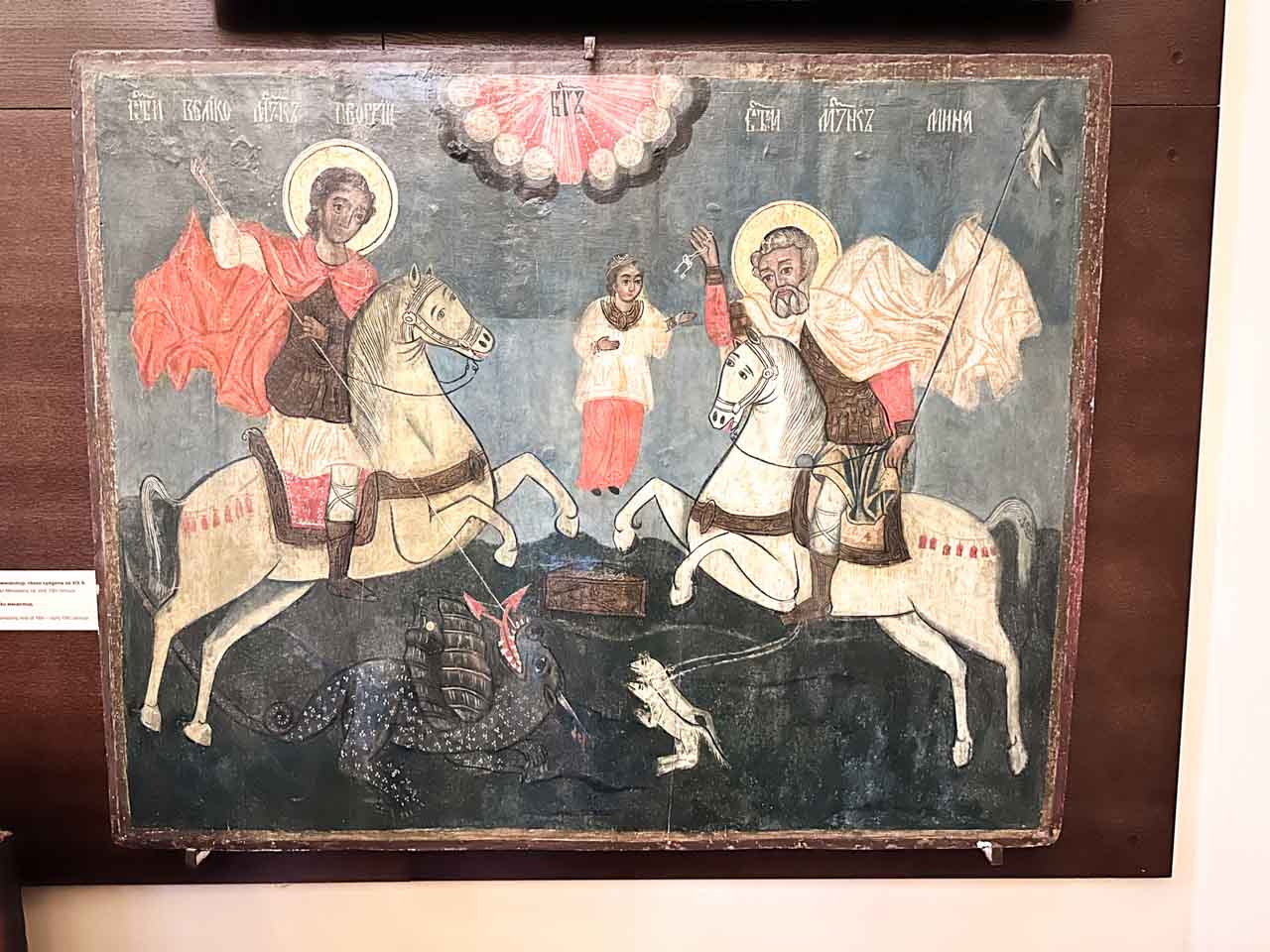
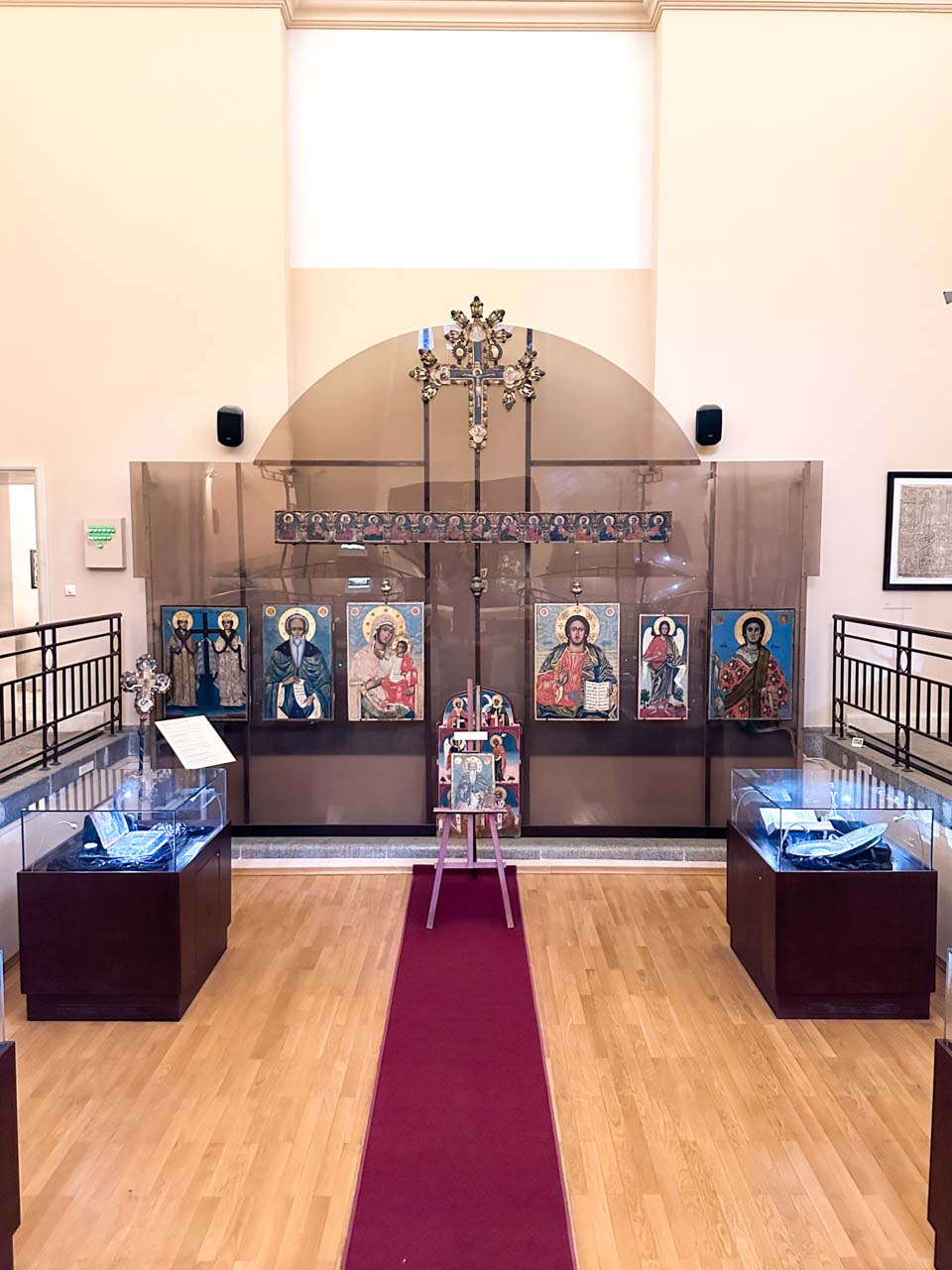
Inside, you can learn about Sofia’s history, from Roman Serdica and the Middle Ages all the way to life under Communism. My favourite exhibit was definitely an actual carriage from the Palace of Versailles!
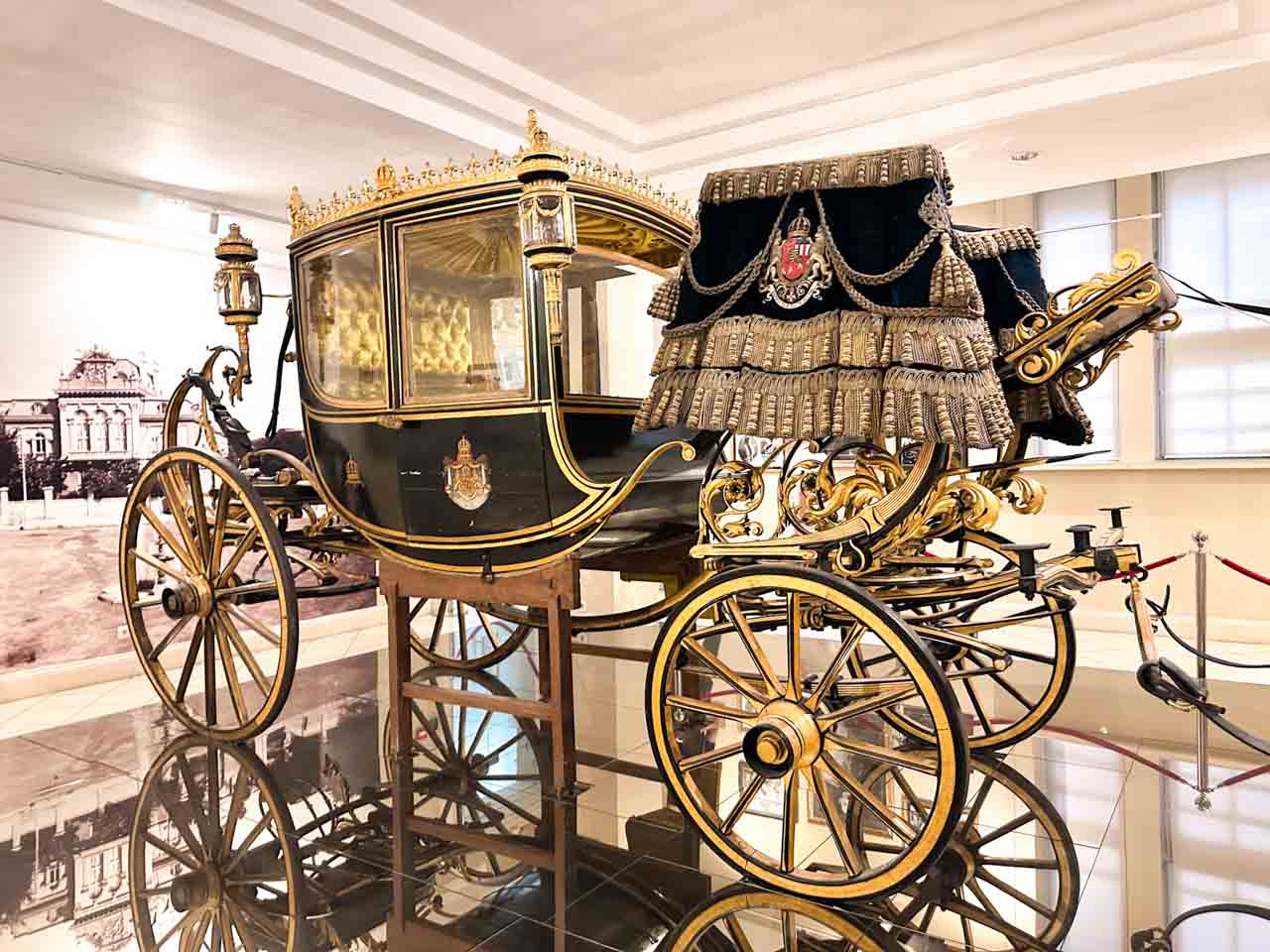
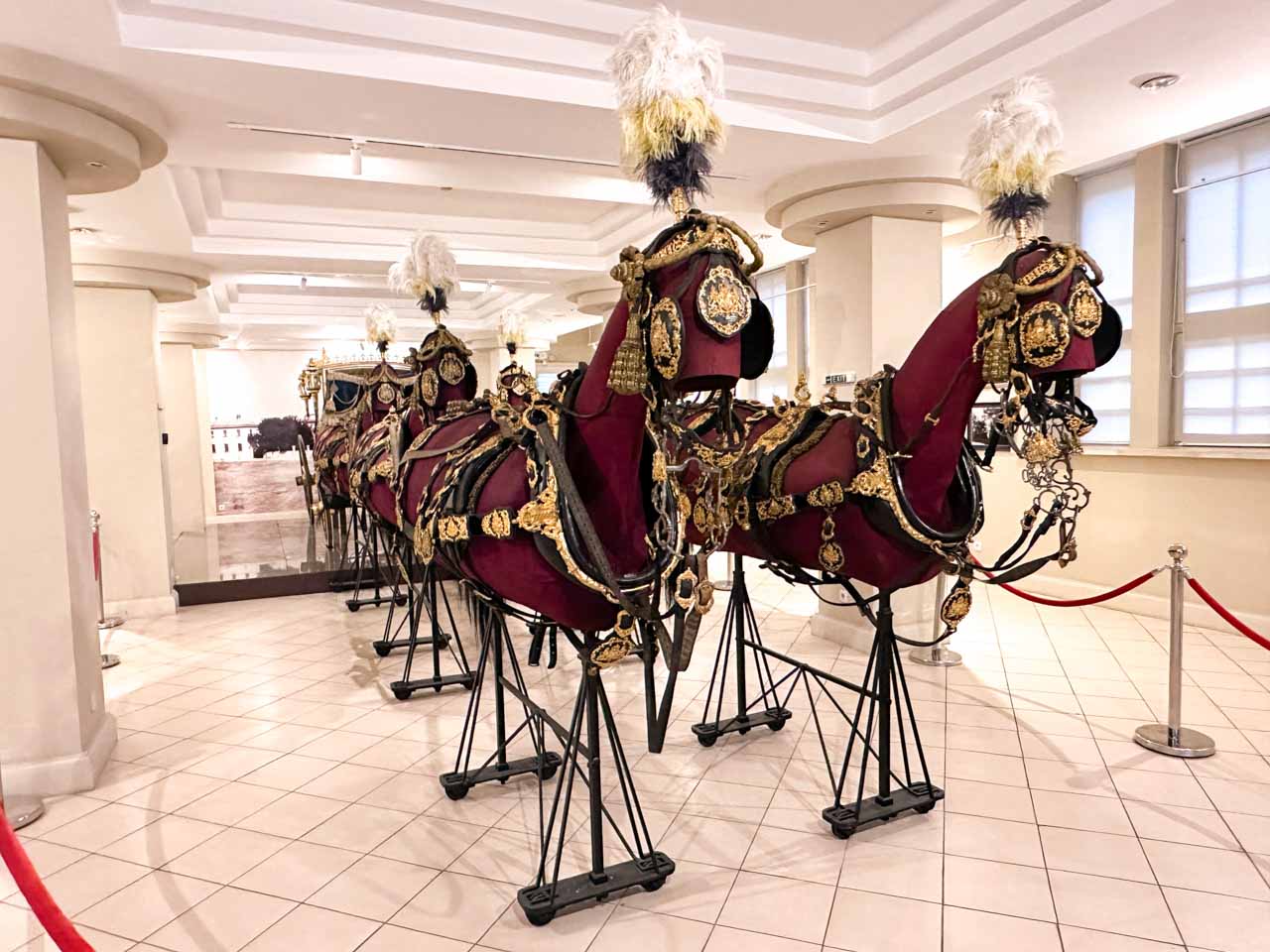
Originally built for Queen Marie Antoinette, it was brought to Bulgaria in 1893 as a wedding gift for Prince Ferdinand and Princess Marie Louise, and they used it during their royal wedding procession.
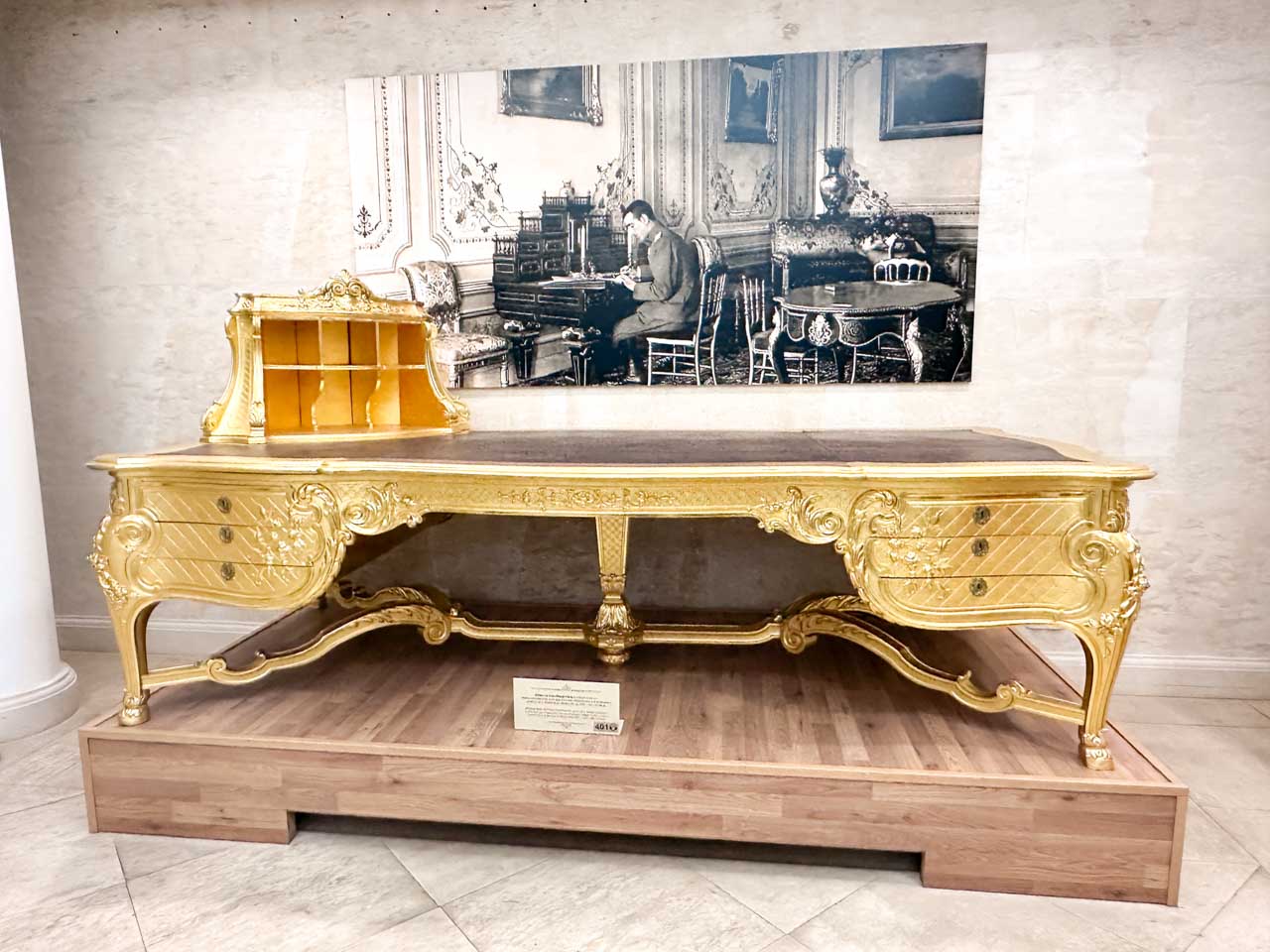
And although you can no longer bathe here, the mineral springs haven’t gone anywhere. Just outside the museum, you’ll find several public fountains where locals still come every day to fill their bottles with mineral water. It’s perfectly safe to drink, although it’s naturally warm and has quite a strong mineral taste, so it might not be for everyone!
17. Shop at Zhenski Pazar – Women’s Market
Zhenski Pazar, or Women’s Market, is the oldest open-air market in Sofia. The name comes from the Ottoman period, when this was the only place where women were allowed to shop.
These days, anyone is welcome, and the best thing about it is that not a lot of tourists come here, so it still has a very local feel.
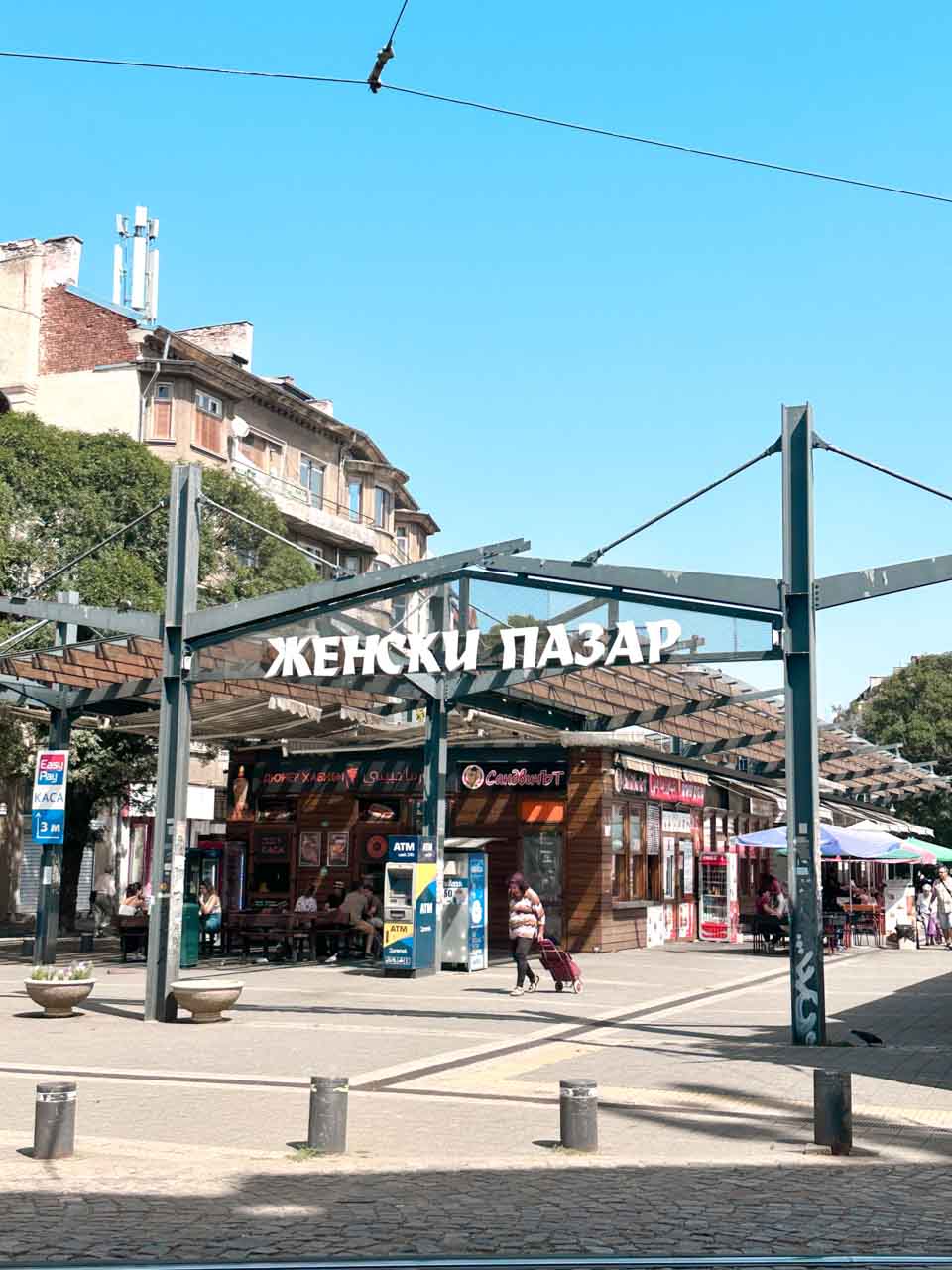
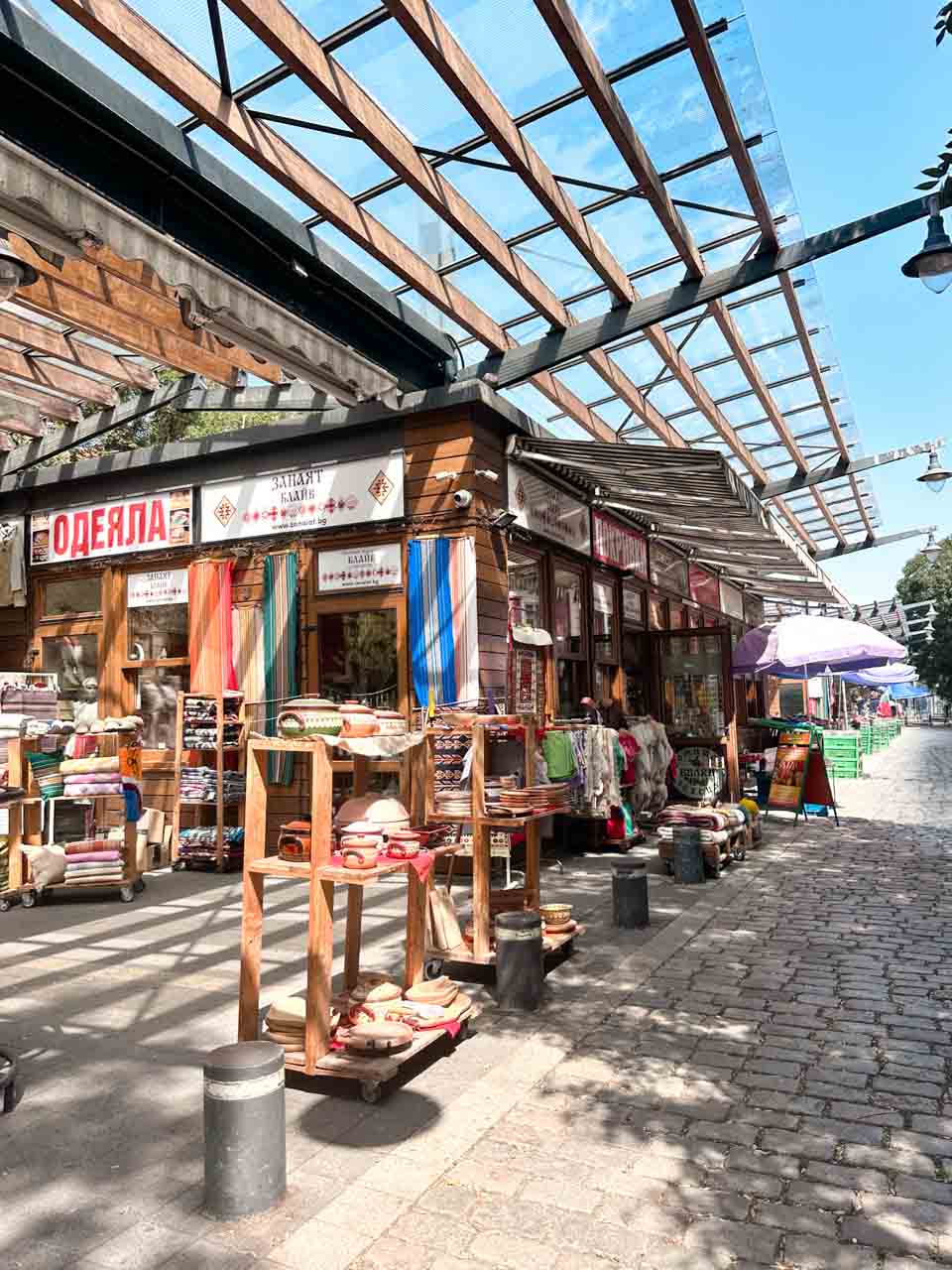
It’s the kind of place where locals come to buy fresh fruit and veggies, herbs, spices, cheese, olives, nuts, wine, and other groceries. But you’ll also find clothes, pots and pans, ceramics, some affordable souvenirs, and a bunch of food stalls.
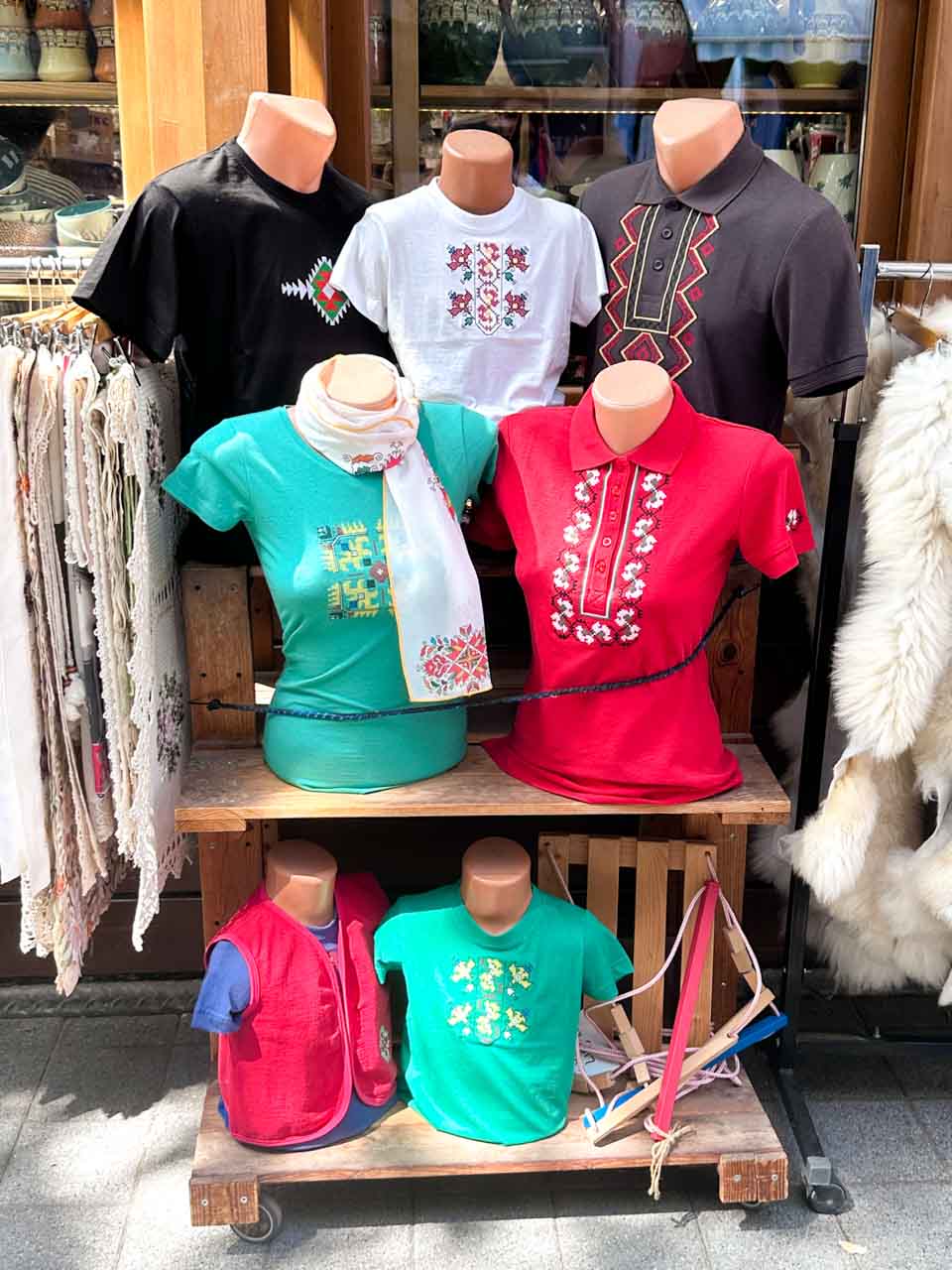
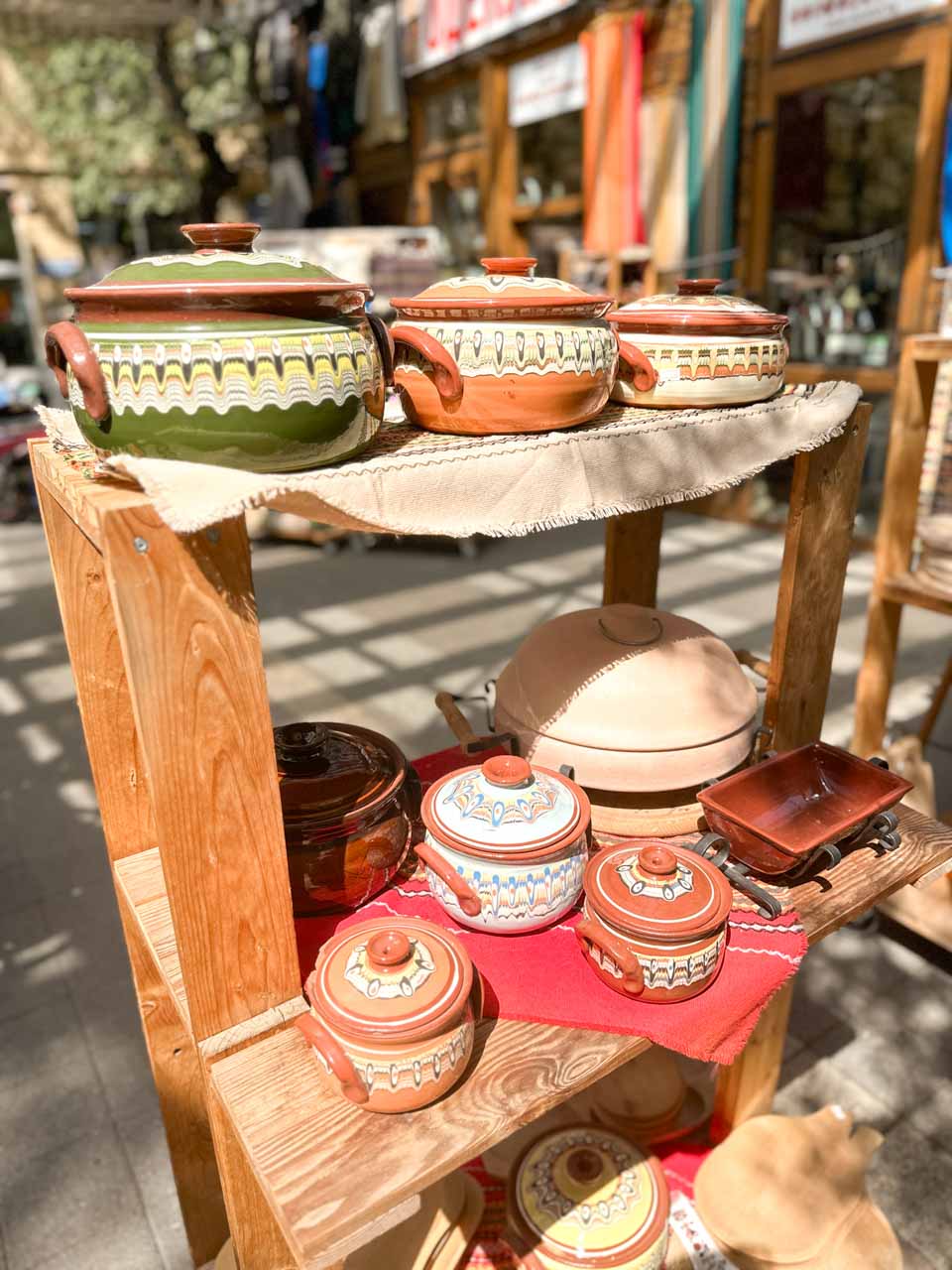
It’s a brilliant place to pick up edible souvenirs too. Look out for chubritsa, a Bulgarian herb with a slightly peppery, thyme-like flavour that’s used on everything from potatoes and beans to meat and vegetables.
You’ll also see sharena sol (“colourful salt”), a mix of salt, paprika, herbs, and spices that’s great on bread, eggs, cheese, or roasted vegetables.
And definitely grab a jar of lyutenitsa, a red pepper and tomato spread.
They’re all super cheap and make lovely gifts, especially if you want to bring home something you’ll actually use!
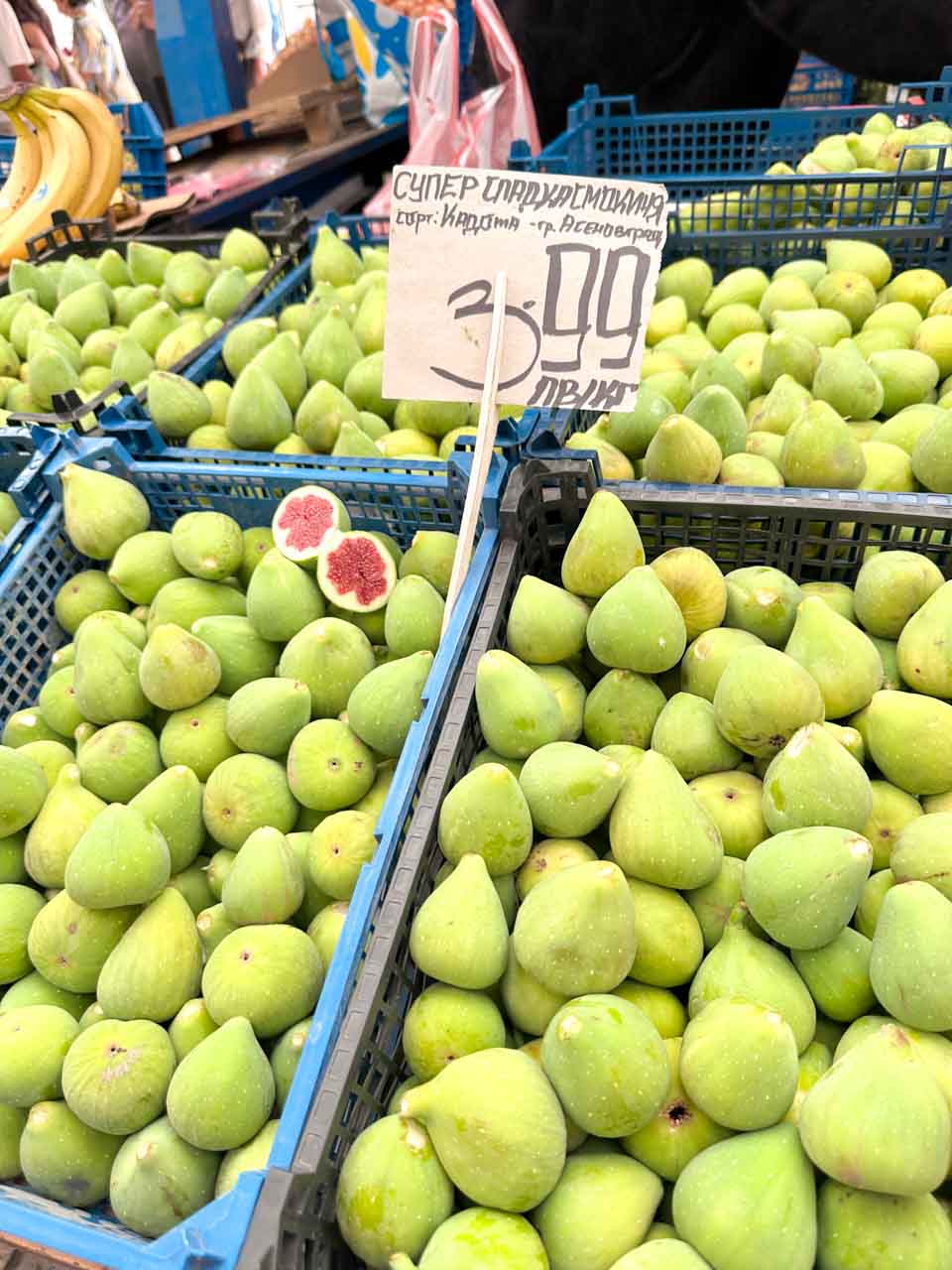

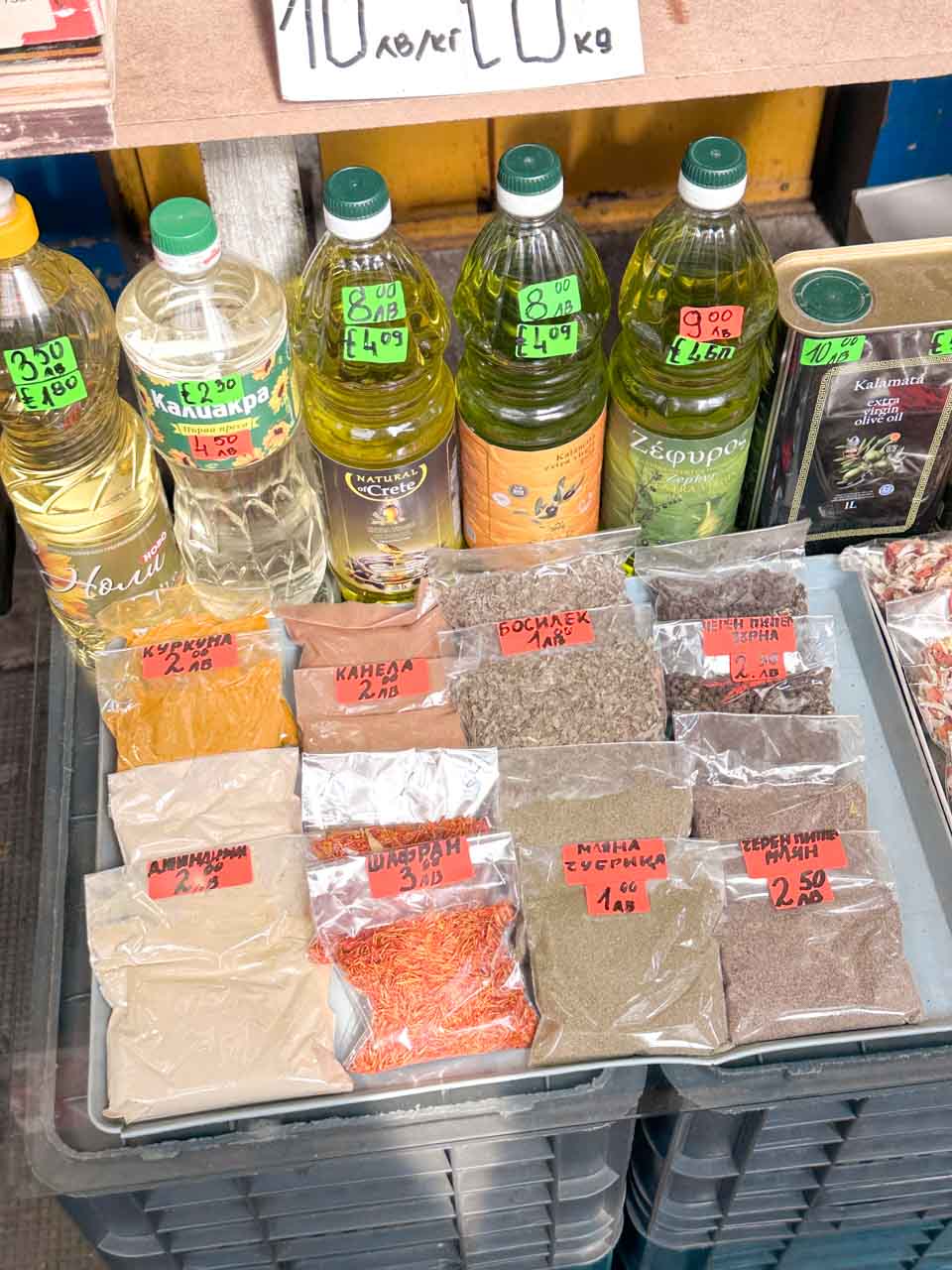
I had to triple-check the prices because I couldn’t believe how cheap saffron was too! I also loved that you could buy homemade wine in refillable bottles for as little as €2.50.
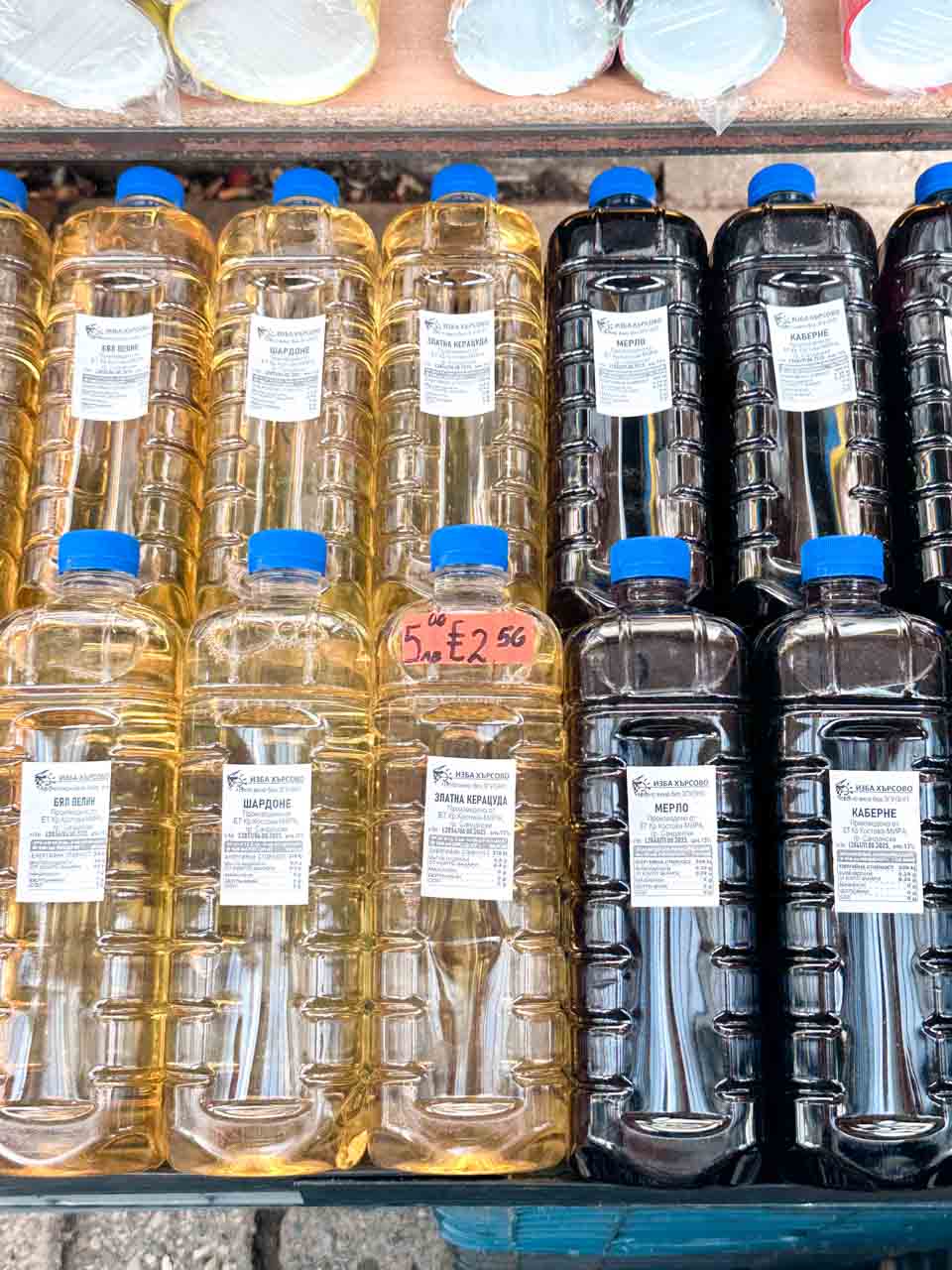
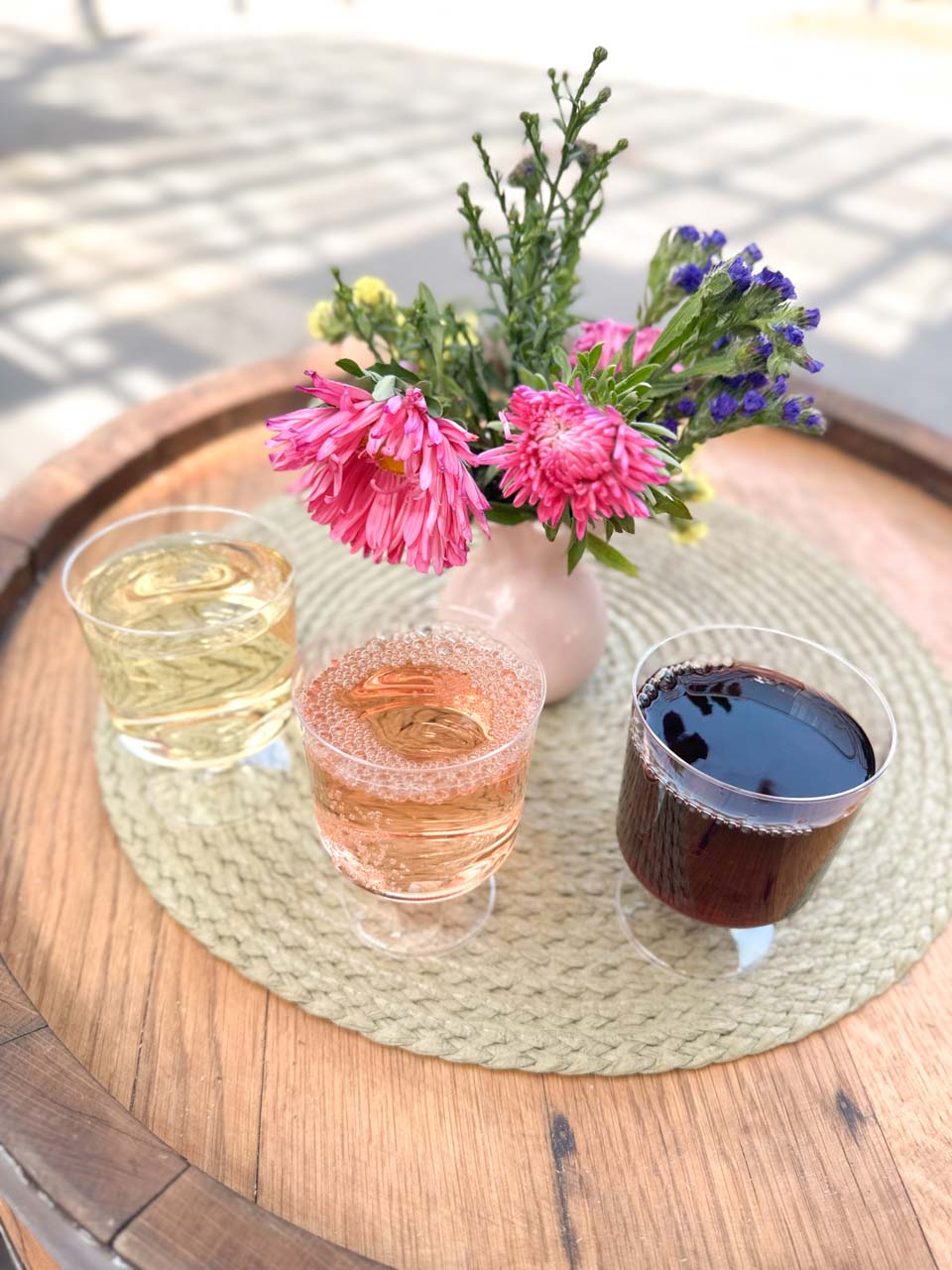
Or, if you’d rather try some Bulgarian wine there and then, there’s a little stall where you can buy it by the glass for €3. I’m pretty sure I saw her pour ours from a carton, but for a stall in the middle of a market, we weren’t exactly expecting anything fancy!
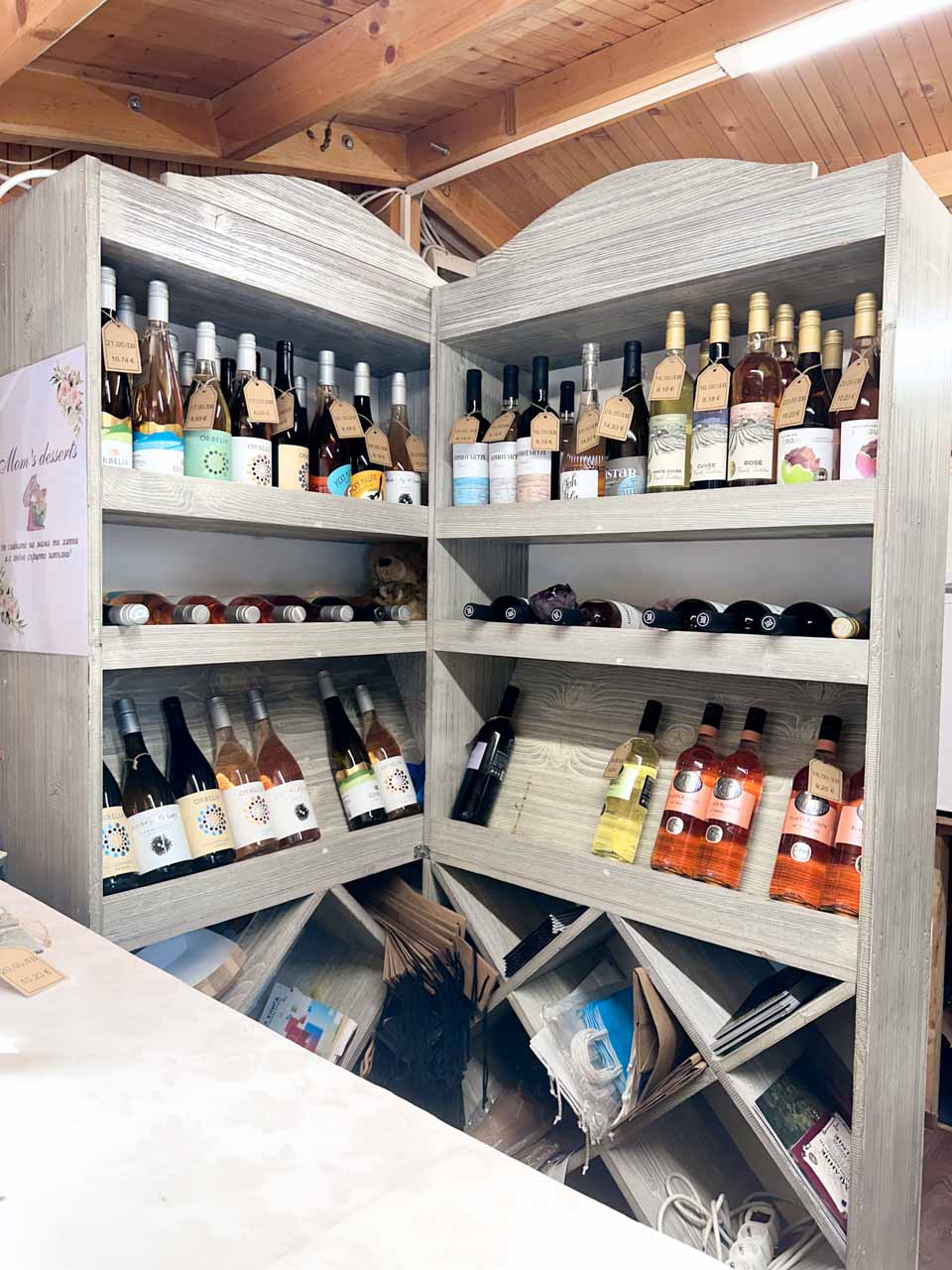
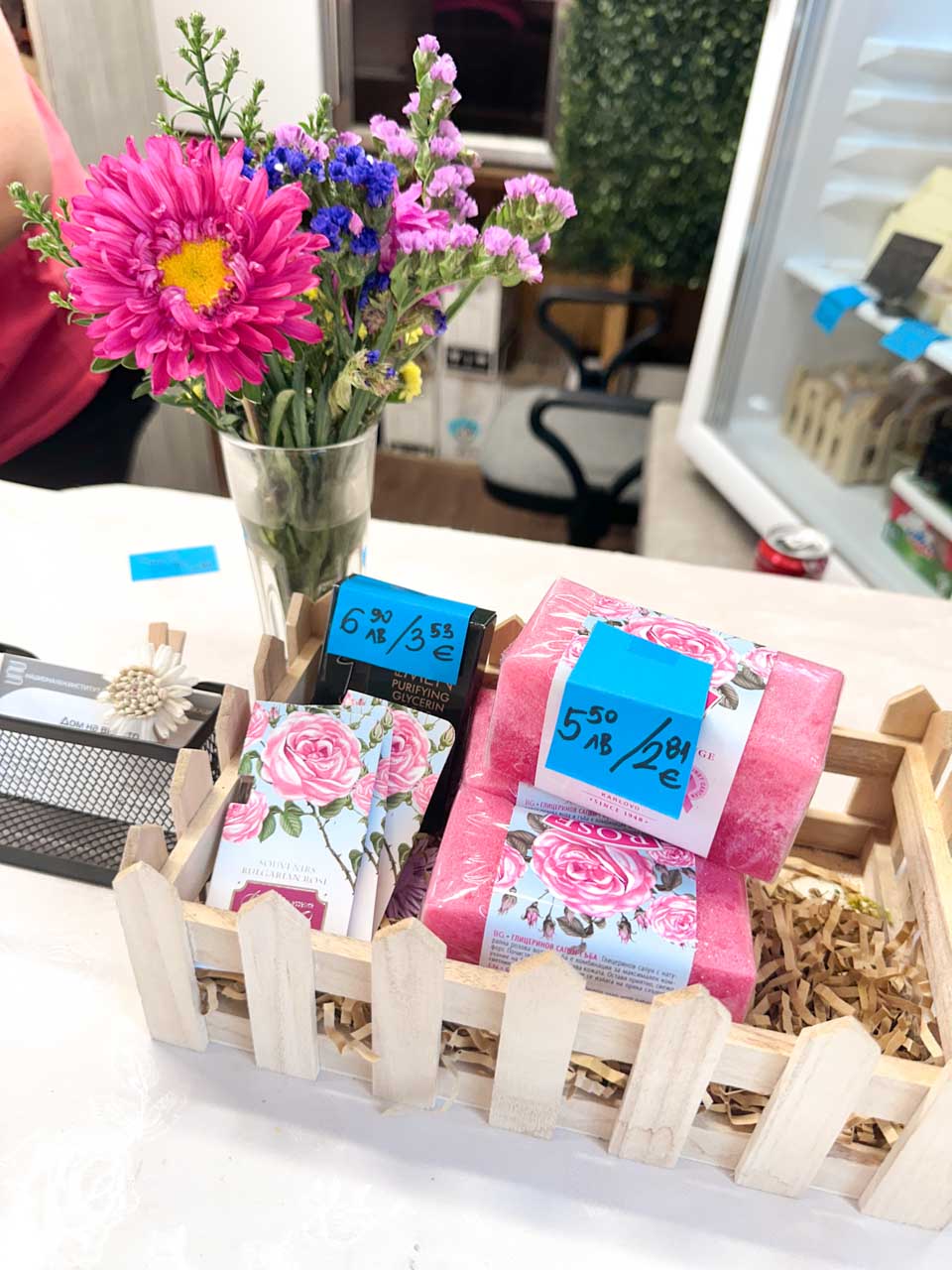
They also sold Villa Melnik wines for €8, which were recommended to us as some of the best wines to try in Bulgaria.

18. Look for street art
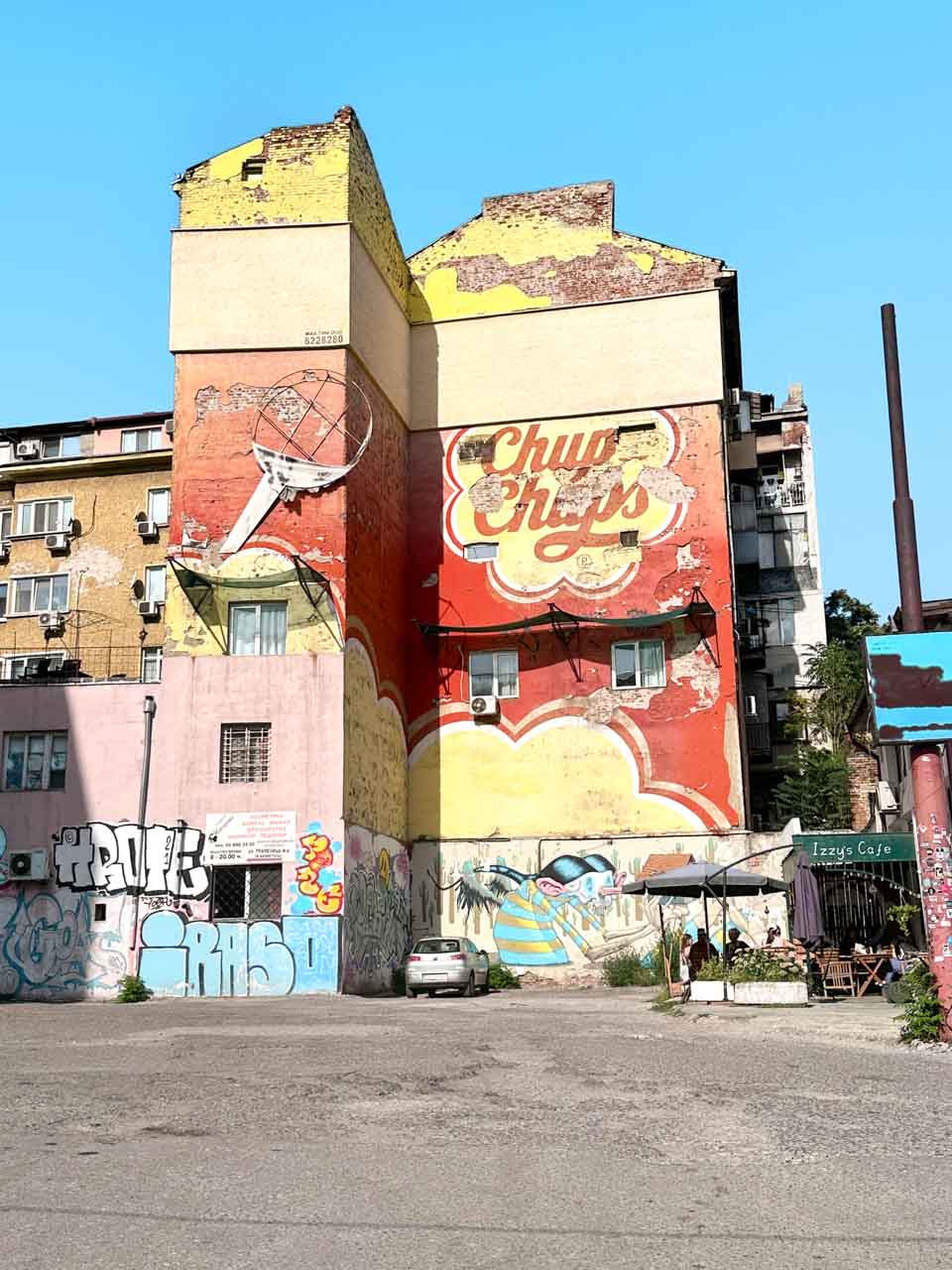
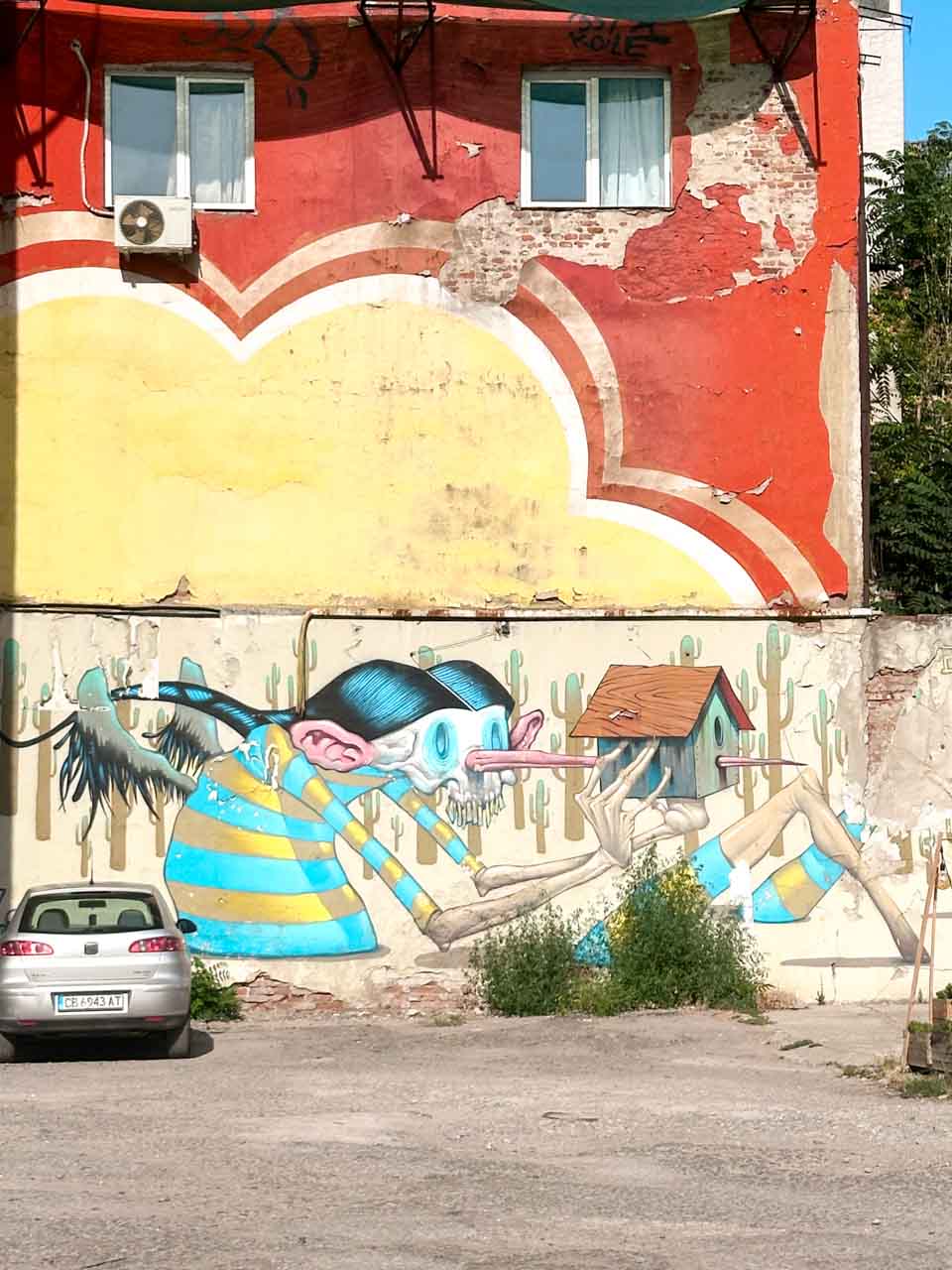
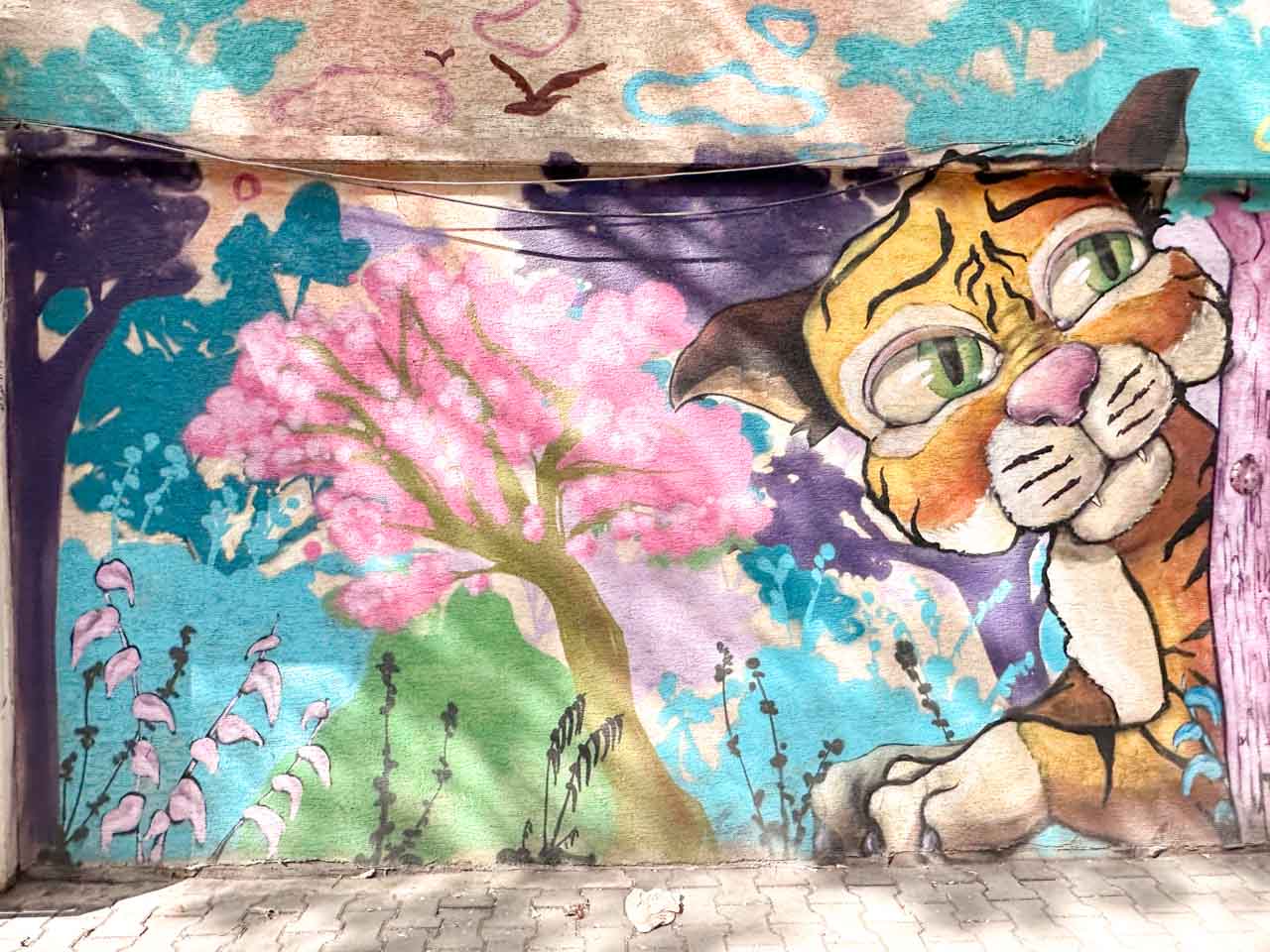
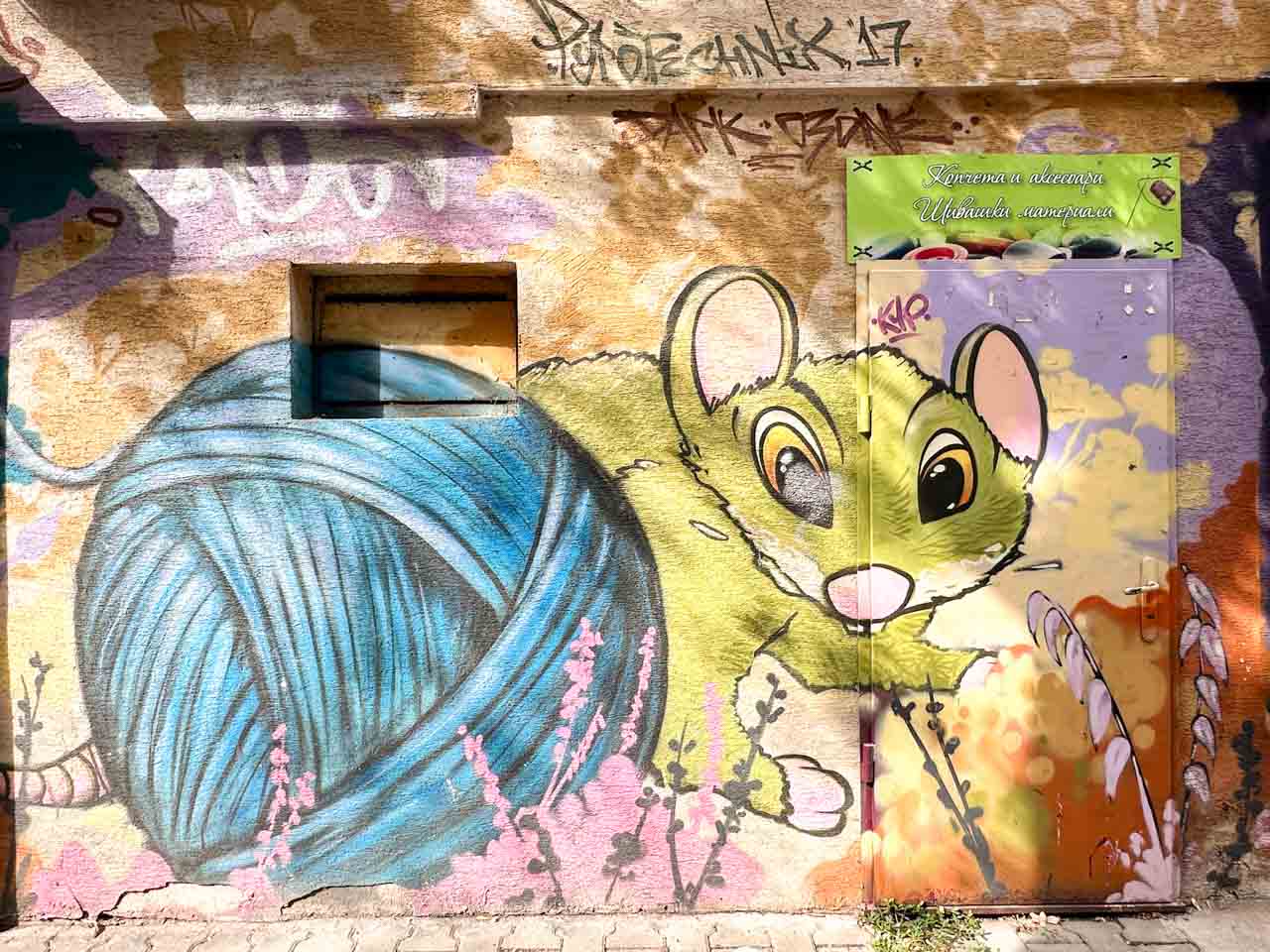
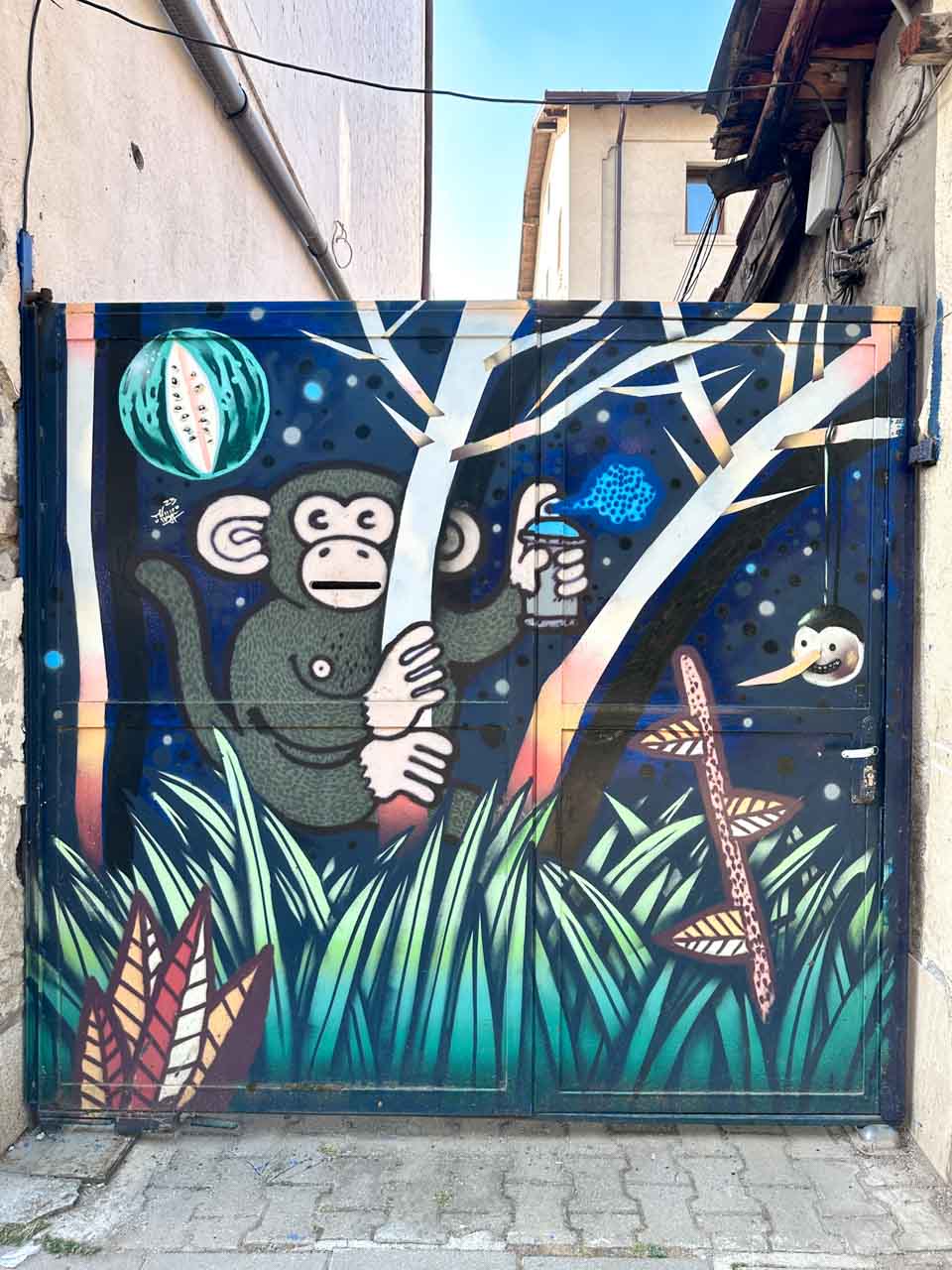
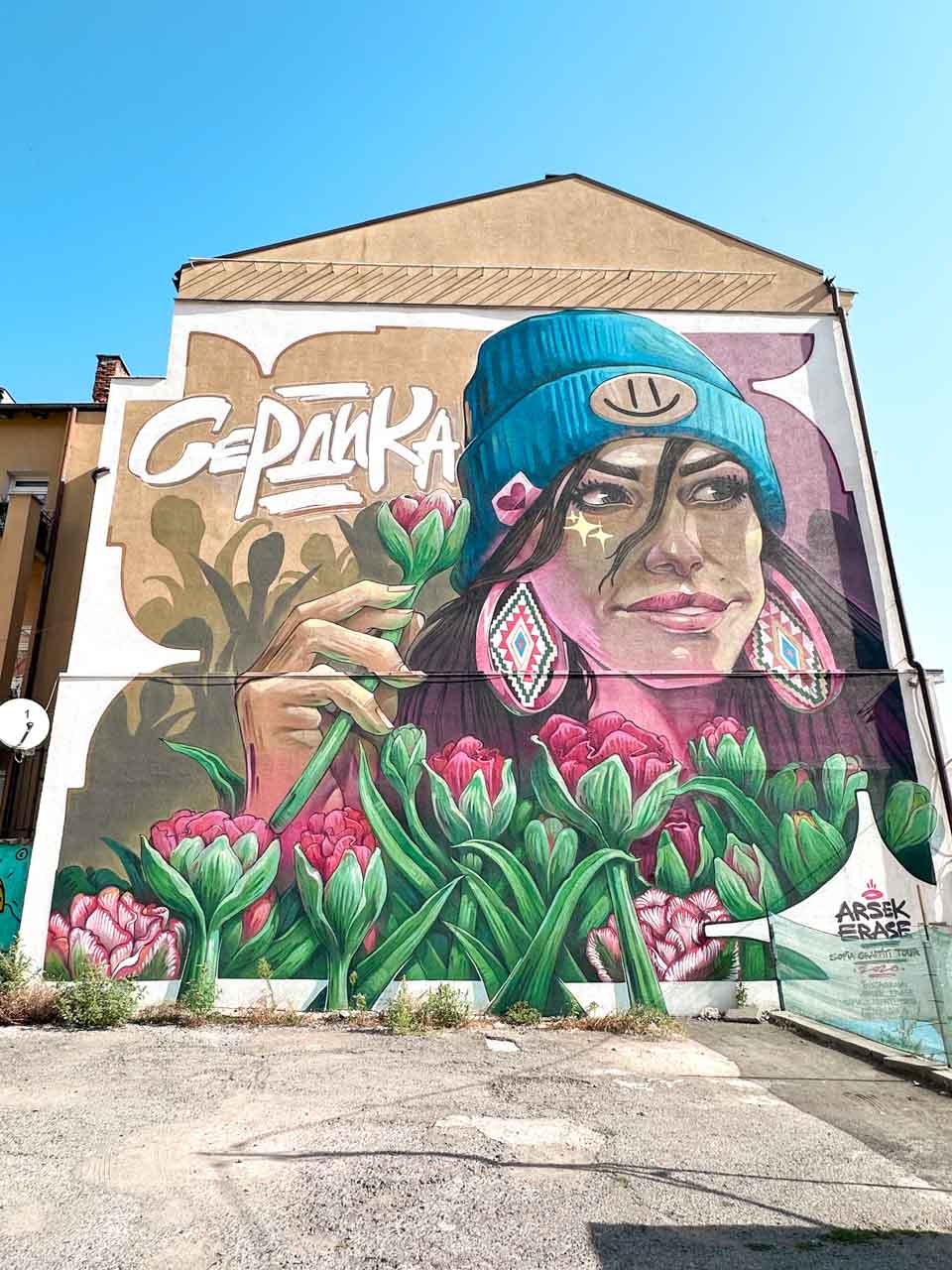
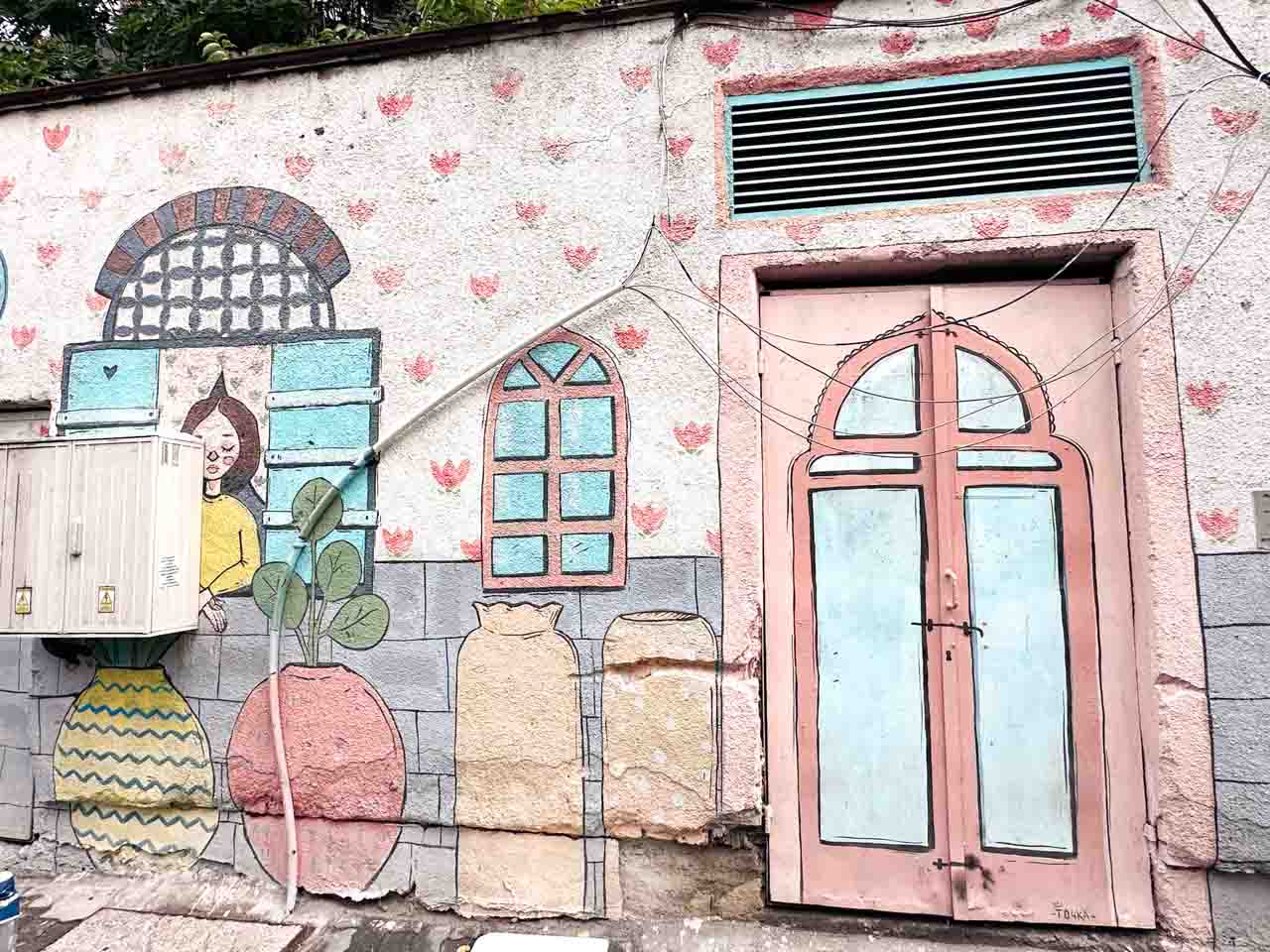
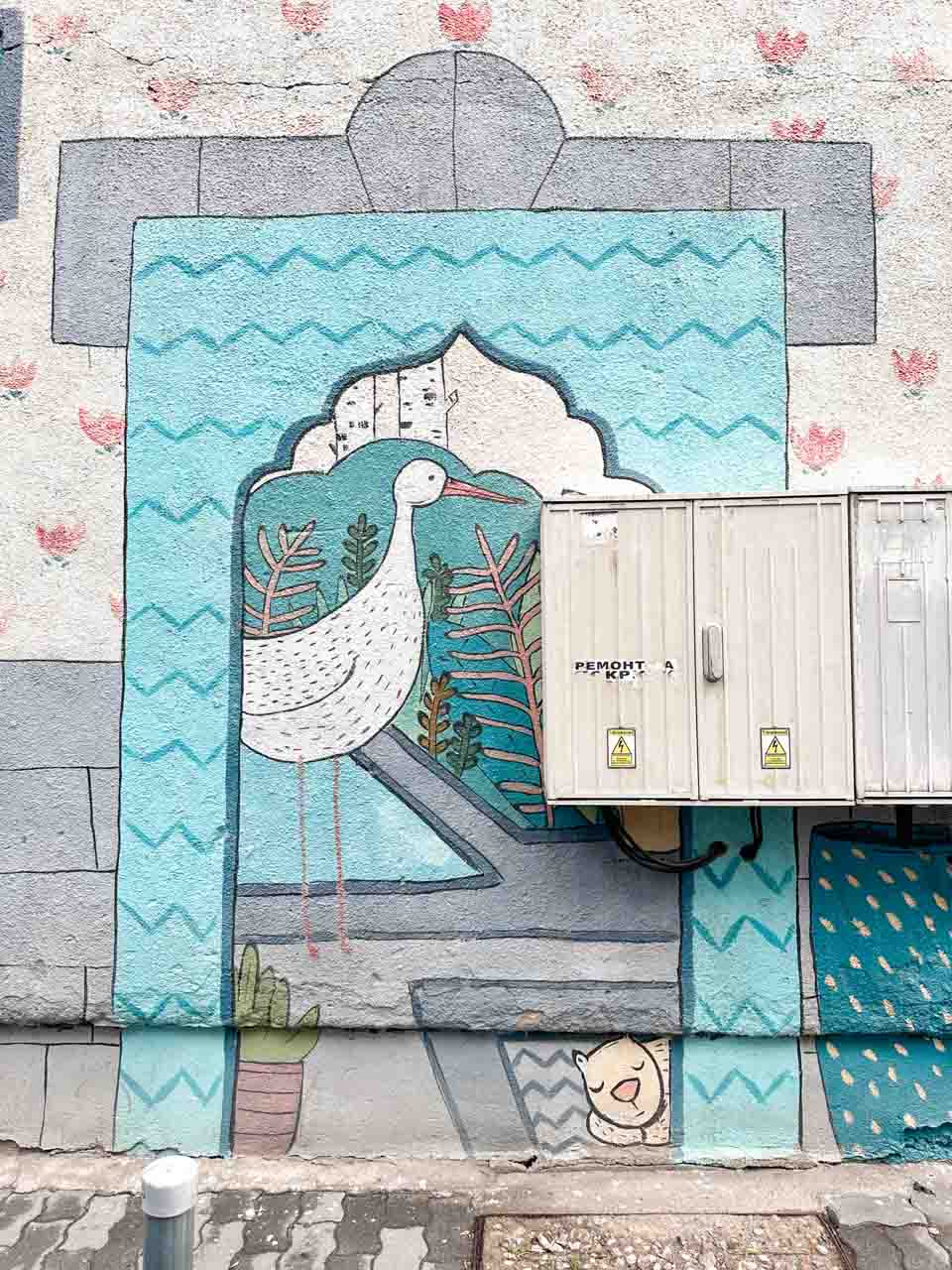
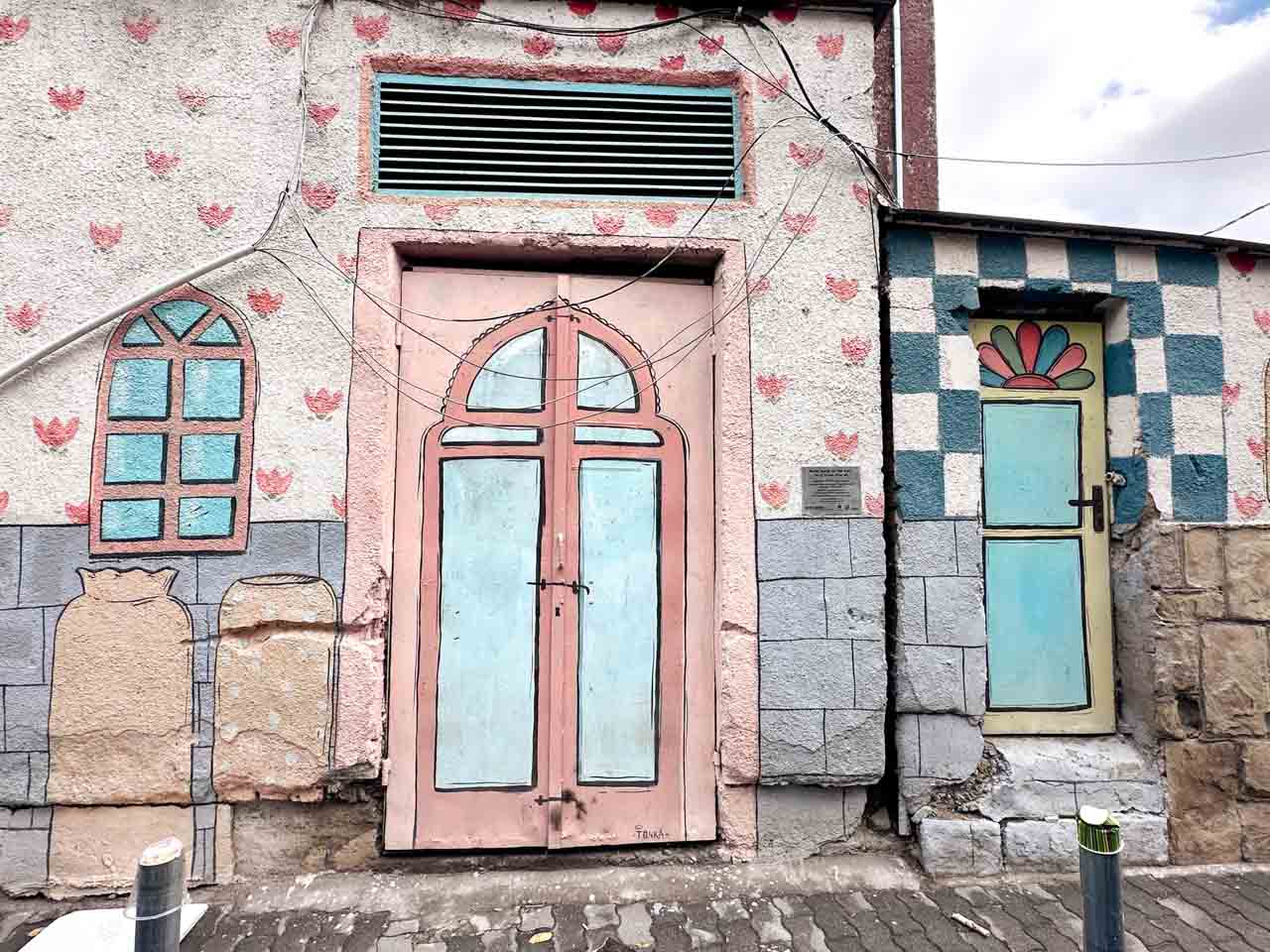
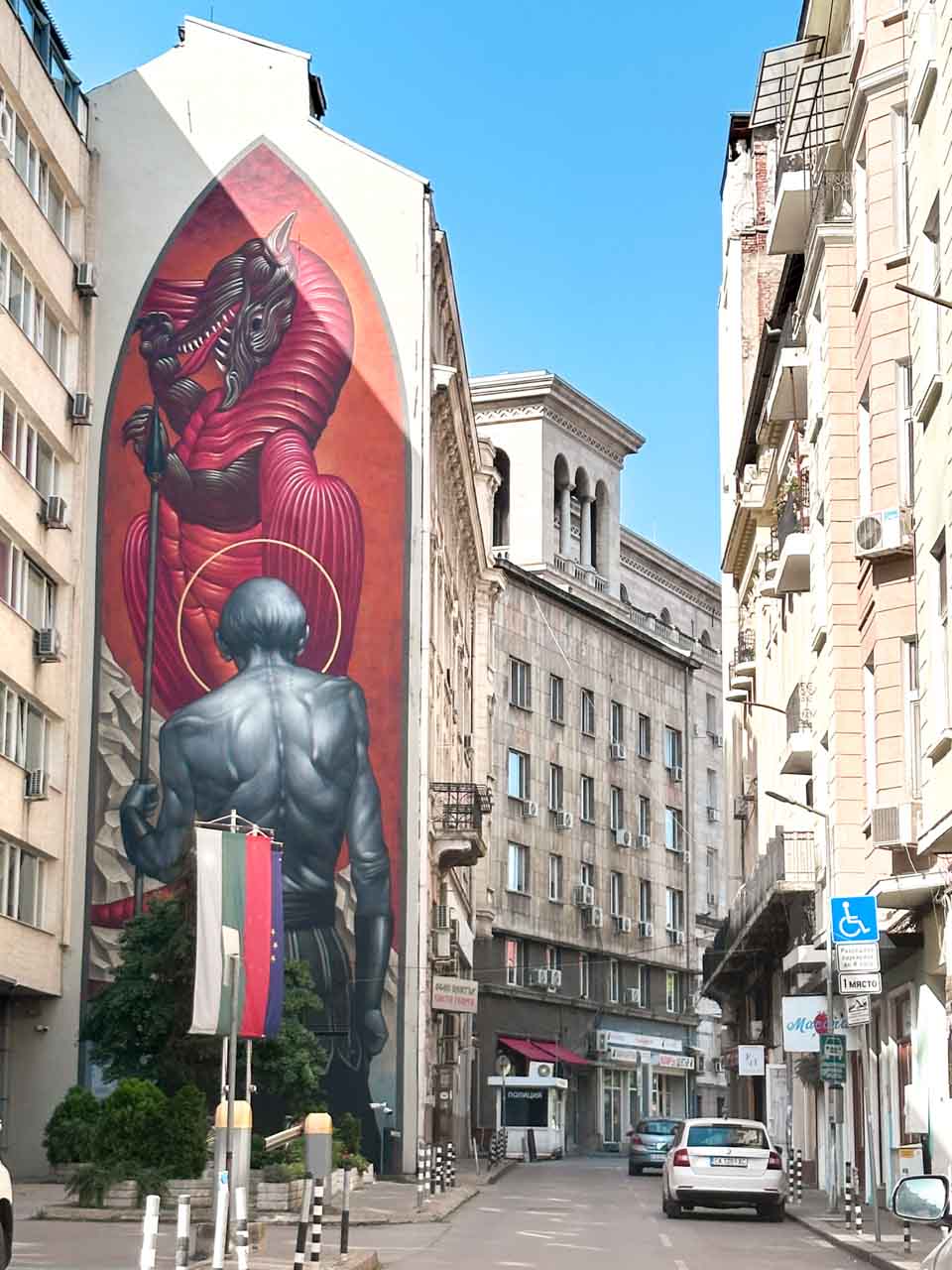
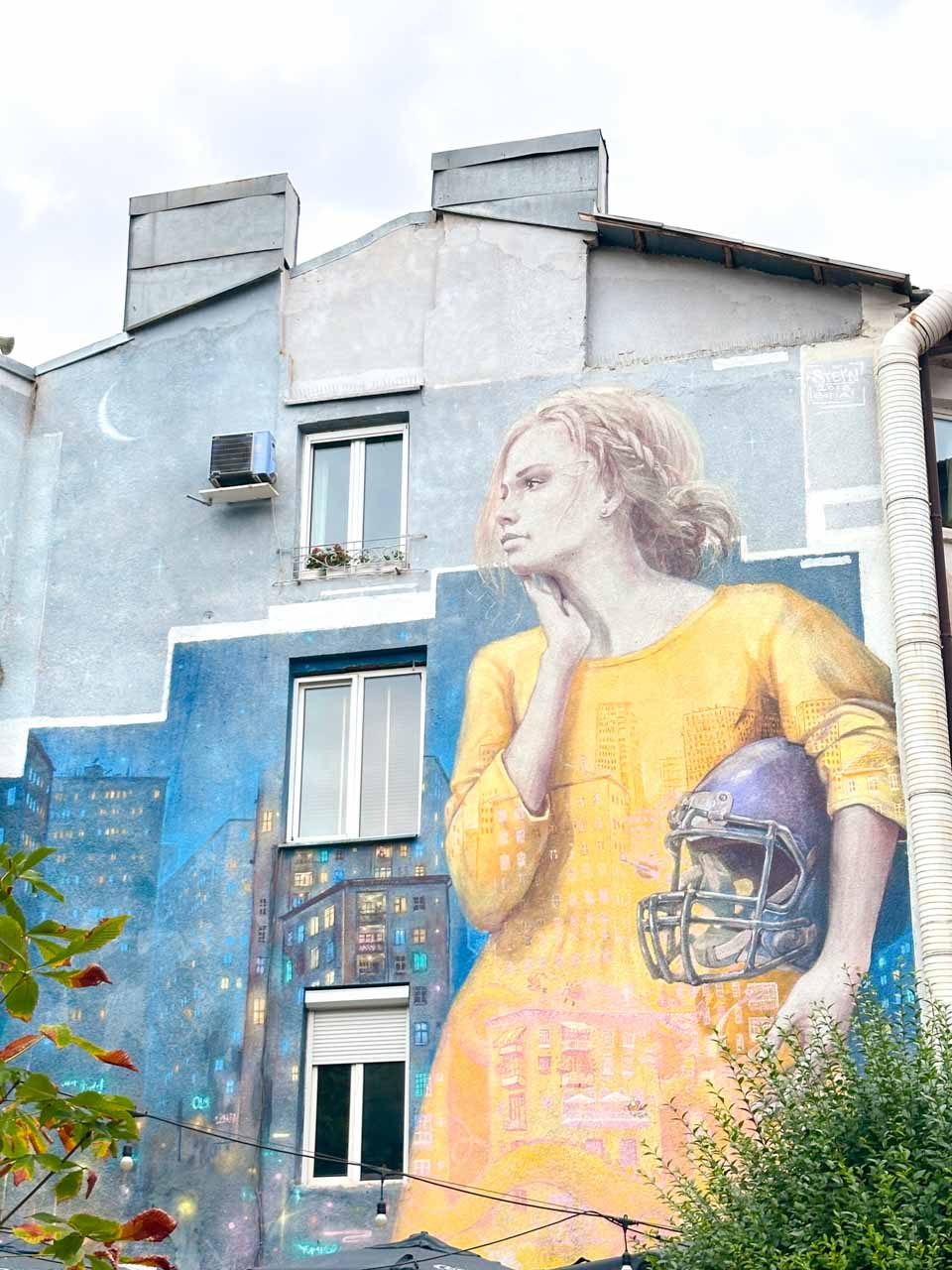
Sofia has a brilliant street art and graffiti scene that’s been growing since the mid-90s. You’ll find everything from huge murals covering entire buildings to smaller pieces hidden down side streets, so it’s worth keeping your eyes open as you walk around.
If you want someone to show you around, Sofia Graffiti Tour runs a free walking tour that takes you to some of the most popular pieces around the city. I also found this street art and graffiti tour on GetYourGuide:
If you’d rather explore on your own, or the free tour isn’t running while you’re there, the same company sells two self-guided guides for around €10 each – one covering Sofia City Centre and another taking you through the northern districts.
There’s also a free map created in collaboration with Sofia Graffiti Tour. It’s from 2022 and doesn’t have as much detail as the paid guides, but it’s still a good starting point. You can see the front and back of the map online, although the English version is a little blurry. Apparently, you can also pick up a printed copy from the Tourist Information Centres.
We ended up exploring on our own using the free information we could find online. Here are some of my favourite murals and where we found them:





19. Learn what life was like behind the Iron Curtain
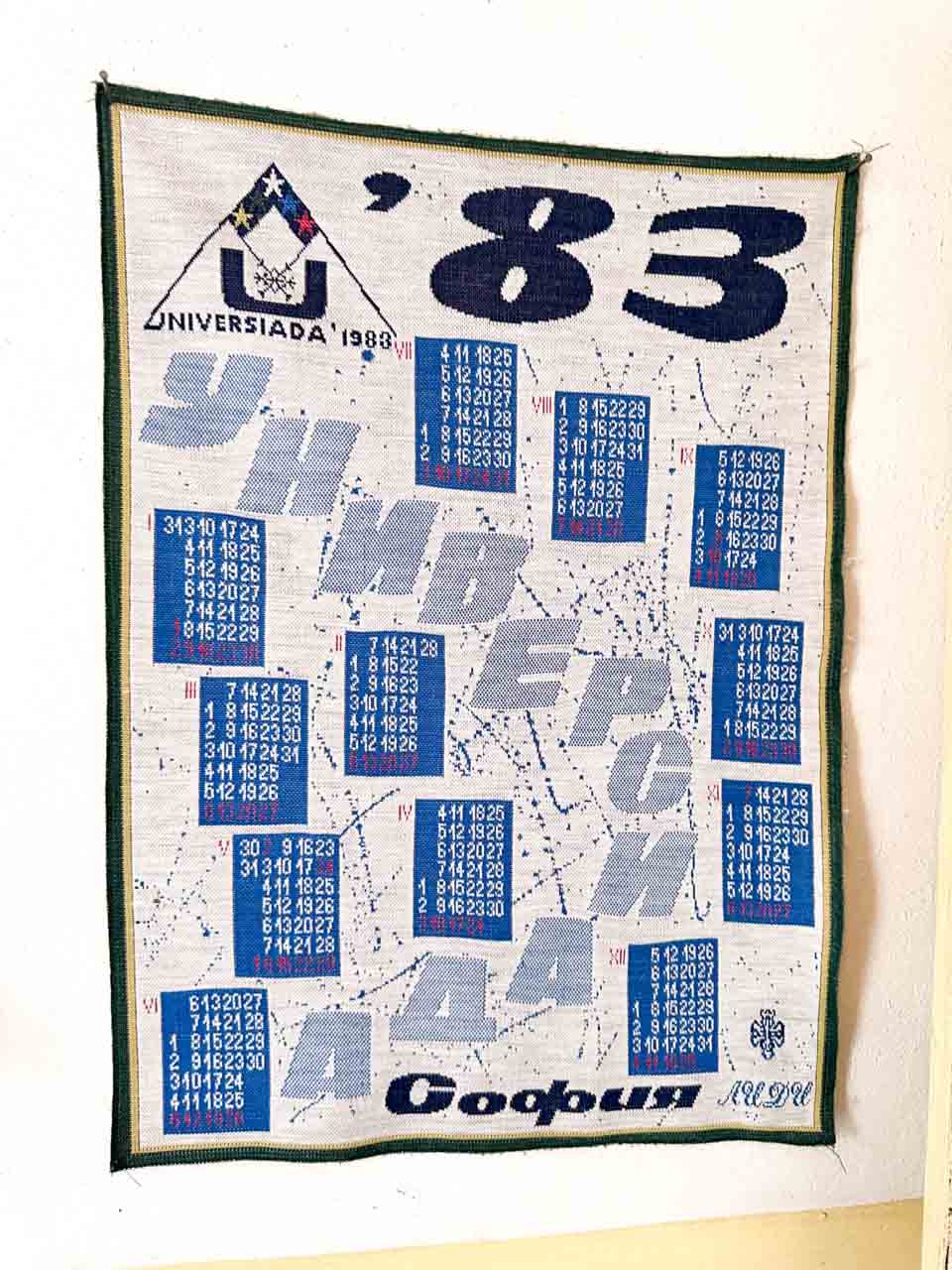
If you’d like to see what daily life in Bulgaria was like behind the Iron Curtain, The Red Flat is a great place to do so.
I’ll admit, as a Polish person, it wasn’t exactly groundbreaking and felt a bit like visiting your grandparents’ place, as a lot of the furniture looked pretty similar. But what I really liked was getting all the social and political context behind the things you see, as well as the format of the museum itself.
If you want to get a ticket, head to the Gifted shop, which is also a great place to pick up some unique souvenirs, or pre-book online. It currently costs €9.20 and comes with an audioguide. They then give you the address of The Red Flat, and from that point, it kind of feels like you’re visiting an ordinary Bulgarian family.


You have to ring the doorbell, and once they let you in, you can go through the flat room by room.


You explore at your own pace and everything is interactive, so you can sit down, touch pretty much anything you want, open the cupboards, and look through the items on the shelves.


In the kitchen, there was even a box of traditional Bulgarian chocolates you could try!


I also liked that it wasn’t so much about giving you another history lesson, but showing you what all of it actually meant for ordinary people – how politics affected their daily routines, jobs, family life, holidays, and the struggles they faced under the Communist regime.


Depending on how much time you want to spend looking through everything, it can take anywhere from 60 to 90 minutes. I’d really recommend it, especially if you’re not that familiar with what everyday life was like in the Eastern Bloc.

20. Buy some Bulgarian rose cosmetics
Bulgaria is one of the world’s biggest producers of rose oil, which comes from the Damask rose – a type of rose grown for its incredibly strong scent. The oil is used in luxury perfumes and is so valuable that people often call it “liquid gold”.
Most of Bulgaria’s Damask roses grow in the Rose Valley, but even if you don’t make it there, you’ll see rose products everywhere – from perfumes and skincare to chocolates, jams, sweets, and even rose liqueur.


They make such a good souvenir to bring home, and if you’re planning to do some shopping in Sofia, I highly recommend the One Bulgarian Rose shop just off Vitosha Boulevard, on 39 Petar Parchevich Street.
The lady who works there was really sweet and knew her stuff. I wanted to get something for my mum who has rosacea, and she really took the time to talk me through what might be suitable and what to avoid. If you want a gift set but don’t like the ready-made options, she’ll also happily put one together for you, as long as everything fits into one of their boxes.


It was genuinely such a nice shopping experience, and everything was surprisingly affordable too.
She also runs rose product tastings, which sound really fun. You can check the current time slots on the One Bulgarian Rose website. It costs just €16 for a group of up to 12 people, and you get to smell rose oil in different forms, learn more about how the roses are picked and distilled, and try things like rose tea, rose water, and rose delights. We didn’t do it this time, but for that price, I’d definitely consider it on a future visit.


21. Shop for natural cosmetics at Uhaya
If you like natural cosmetics, Uhaya is another little shop I’d recommend checking out. It’s family-owned and a great place to pick up some gifts while supporting a local business.
I usually stick to cosmetic brands I already know and love, but everything here looked so good that I ended up leaving with a few bits myself.

They stock organic cosmetics from different Bulgarian brands, along with beautiful natural soaps, handmade candles, essential oils, incense, and more.

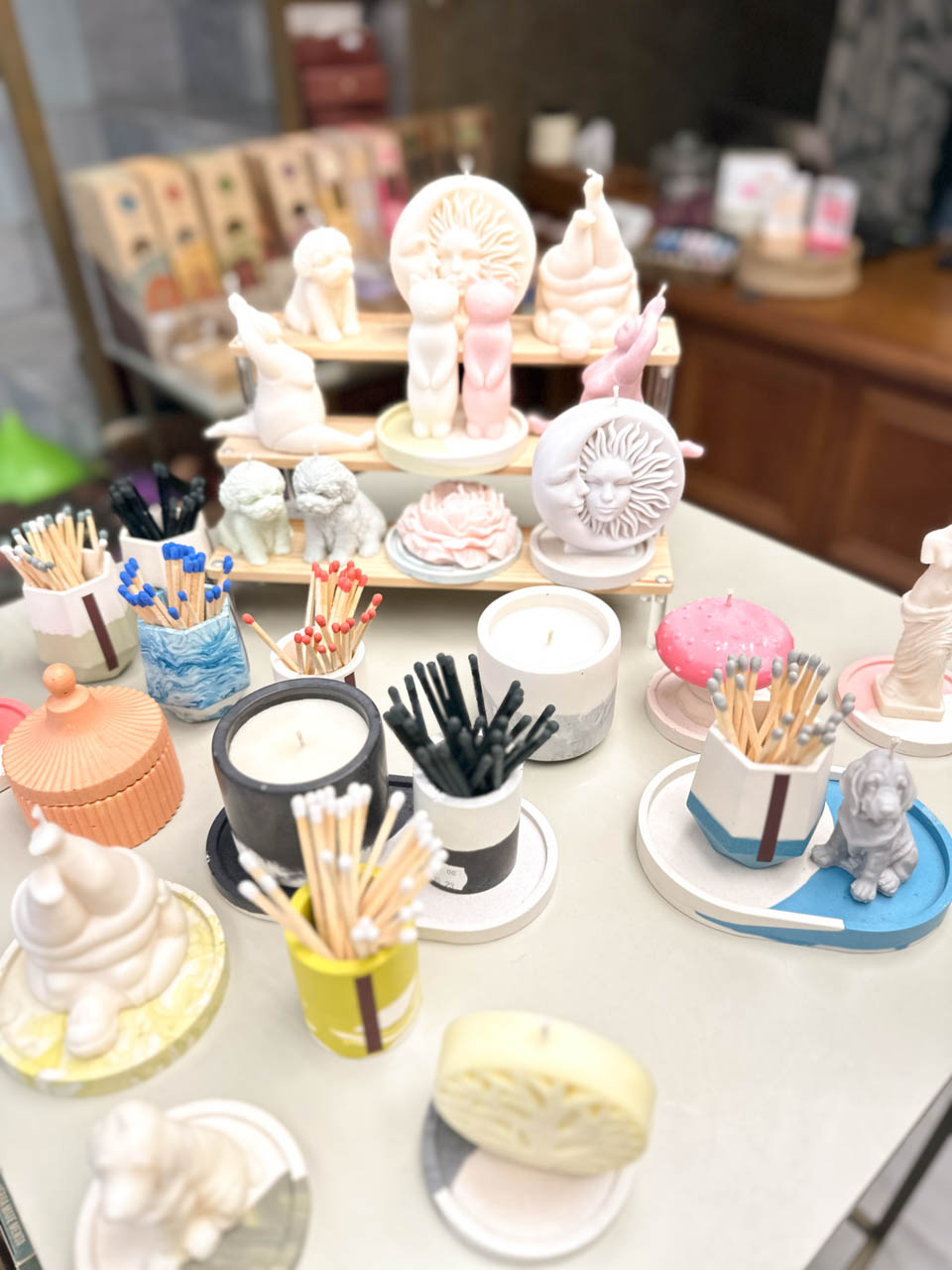
It’s one of those shops where you go in for a quick look and suddenly want half the things on the shelves. Even if you don’t end up buying anything, it’s still worth having a browse!
22. Go thrift shopping at Thrift’N’Sip
Not too far from Uhaya, there’s also a really cool thrift shop. First, you can grab a coffee upstairs before heading down to hunt for some treasures. And second, there’s a resident cat you might spot lounging around if you’re lucky.


The shop itself is pretty small, and we didn’t find any gems this time around, but I think you could definitely snag some unique pieces there! And even if you don’t, getting to see the kitty is worth the trip alone. 😉


23. Browse the shelves at Elephant Bookstore
Elephant Bookstore is one of those places in Sofia that’s worth popping into even if you’re not planning to buy a book.
You’ll find it on Tsar Shishman Street, one of the nicest streets in the city centre for independent shops, cafés, and restaurants.


What really makes Elephant special is its huge selection of English-language books – they have thousands of them, from modern fiction and poetry to sci-fi and pretty much anything else you can think of. You’ll also find vintage Bulgarian posters and ads, old magazines, comics, memorabilia, and some unique souvenirs.
There’s also a big Harry Potter section, including officially licensed merchandise and replica wands, so it’s a fun place to browse if you’re a fan.


My personal favourites were the notebooks, as I’ve loved buying stationery ever since I was a kid, but I somehow managed to limit myself to window shopping this time!
24. Hang out around 6th September Street
This next place on my list isn’t really a tourist attraction, but more of a cutesy little spot around 6th September Street 26, where 5 different streets meet. There are loads of cool restaurants, cafés, bars, and shops around here, so it’s a nice area to wander around and see what you find.
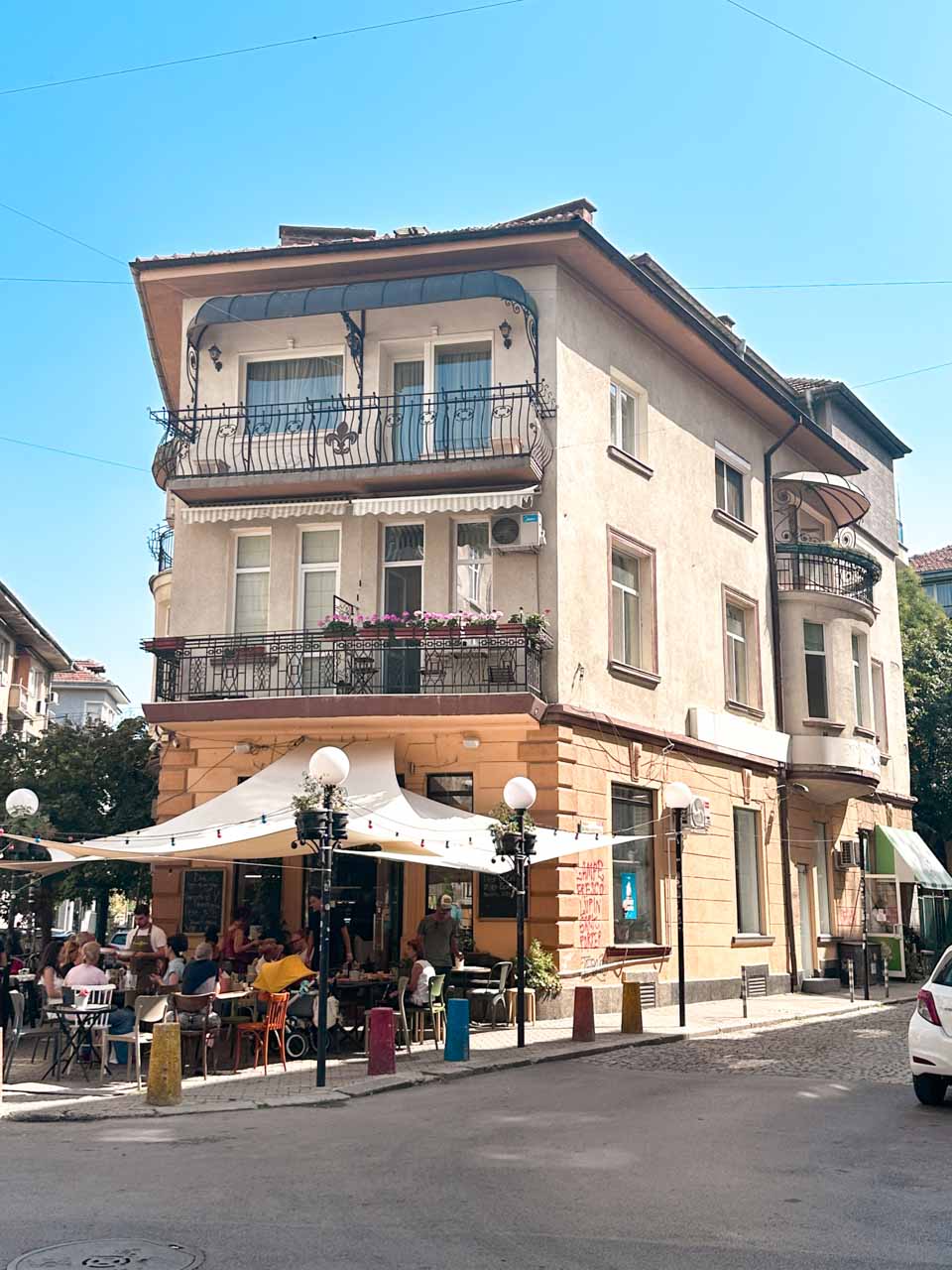
I’d recommend Zoya for natural goodies, healthy cakes, and smoothies. There’s also SunMoon for veggie food, Halbite Beer Hall for a beer, Better Specialty Coffee, Lale Gallery for shopping, and so much more. I really enjoyed this little part of Sofia and would love to stop by more places next time we’re in the city!
25. Go through the McDonald’s walk-thru
I mean, we’ve all heard of McDonald’s drive-thrus, but did you know there’s a walk-thru in Sofia?
I’m generally not a big fan of McDonald’s and only go once or twice a year when the Lumberjack Burger returns to the Polish menu (iykyk). Plus, when I’m travelling, I much prefer trying local food instead of something I can get pretty much anywhere, so I didn’t order anything.
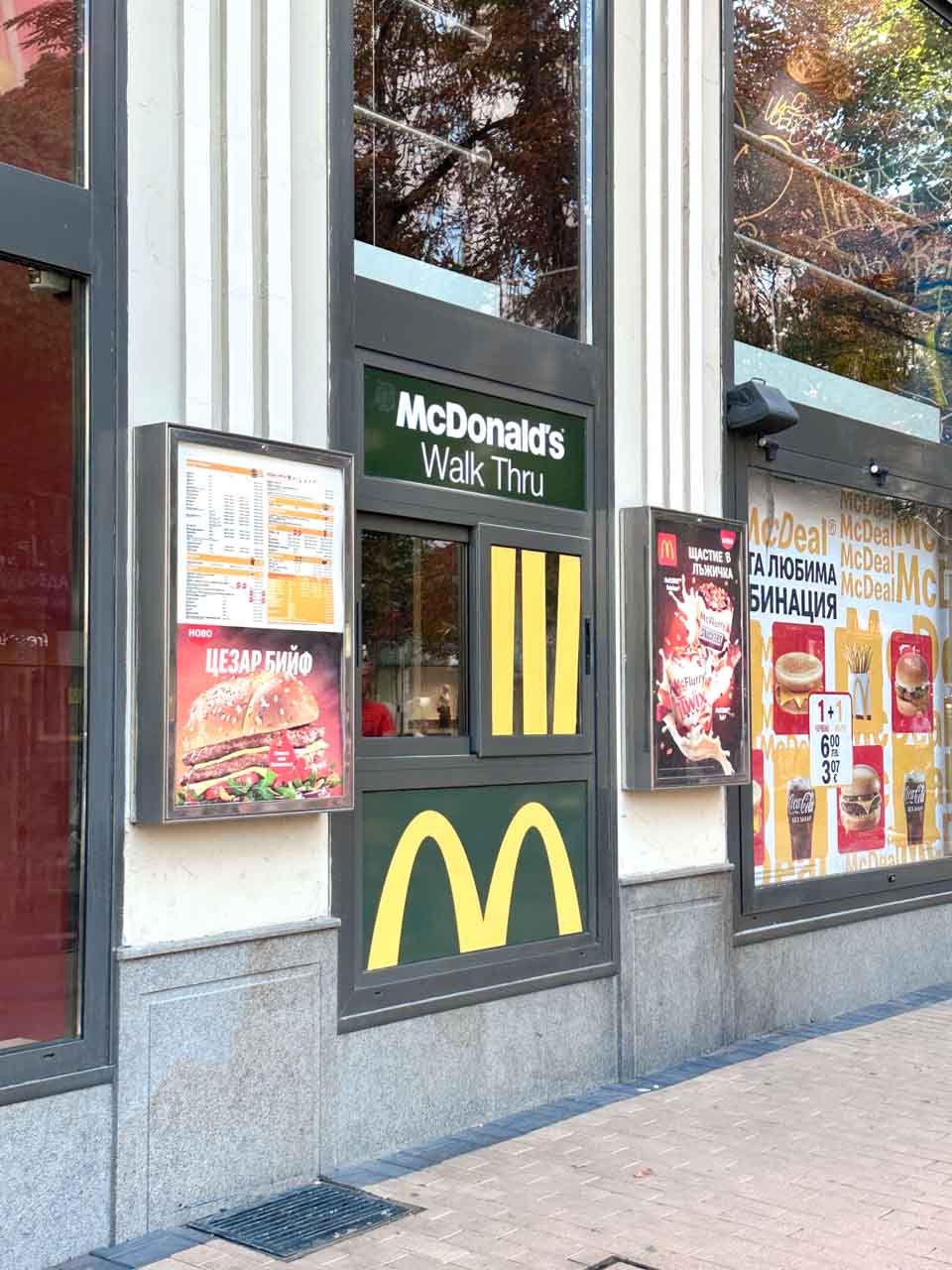
Still, I think it’s a pretty unique concept, at least here in Europe. I wouldn’t recommend going out of your way just to see it, but chances are you’ll be in the area anyway. It’s super close to the Palace of Justice, just off Vitosha Boulevard, Sofia’s main pedestrian street. The full address is 48 Alabin Street.
26. Watch a football game
My boyfriend loves watching football games in different countries, so we have this tradition of checking if there are any on whenever we’re travelling.
The football experience in Sofia was pretty old school and felt more like watching one of the lower-tier leagues, so it’s definitely not for everyone. But there wasn’t too much information online when we were looking, so I thought I’d include it in case there’s someone out there who’s curious too.
The two clubs you’ll hear about most are Levski Sofia and CSKA Sofia, whose rivalry is one of the fiercest in the country.
One thing that can get a little confusing is that there are actually two clubs with almost the same name: CSKA Sofia and CSKA 1948. After the original CSKA went bankrupt, two different clubs emerged.
CSKA Sofia took over the old club’s stadium, badge, and colours, while supporters who believed the team should start again from the bottom founded CSKA 1948. These days, they both play in Bulgaria’s top division.
The game we managed to catch was Slavia Sofia vs CSKA Sofia. You can’t buy Slavia tickets online, and there are two different ticket booths – one for home fans and another for away fans. We almost accidentally bought tickets for the away sector!

If you’re going to a Slavia game too, don’t go to the booth behind the shop when you get off the tram. Instead, head towards the stadium entrance and buy your ticket there.
The tickets were a bit pricey at 20 BGN (€10) each, considering the stadium was in pretty bad shape. However, the atmosphere in the home sector was really friendly, chill, and safe, which is definitely how I personally prefer it!
27. See the Snail House
This is definitely the weirdest tourist attraction in Sofia we’ve read about, and one of the weirdest we’ve been to in general. If you only have a day or two in Sofia, this wouldn’t be the first place I’d send you, but if you’re running out of things to do, why not?
The Snail House is exactly what it sounds like – a five-storey house shaped like a giant colourful snail. It was built using eco-friendly materials and apparently doesn’t have any sharp edges.


The whole design is very playful – it looks like you enter through the snail’s mouth, while its big red eyes are actually part of the ventilation system. There’s even a bee sitting on top, with horns that double as lights and lightning rods, plus some fun planters and animal figurines outside.
I’d love to know what it looks like inside, but as it’s a residential building, there’s no way to go in. I personally think it’d be super popular as a quirky hotel for creative souls. 😉
28. Go on a day trip to the Rila Monastery + Seven Rila Lakes
If you have enough time for just one day trip from Sofia, I’d recommend combining the Rila Monastery with the Seven Rila Lakes.
You can absolutely plan it yourself, but seeing both in one day is tricky without a car, as public transport to the Seven Rila Lakes is pretty limited.
This is the guided tour we chose*, and I’d recommend it with my whole heart:
Rila Monastery
Normally, you visit Rila Monastery once you’ve completed the hike, but we had to switch the order because of the routine morning maintenance of the chairlift leading to the Seven Rila Lakes.
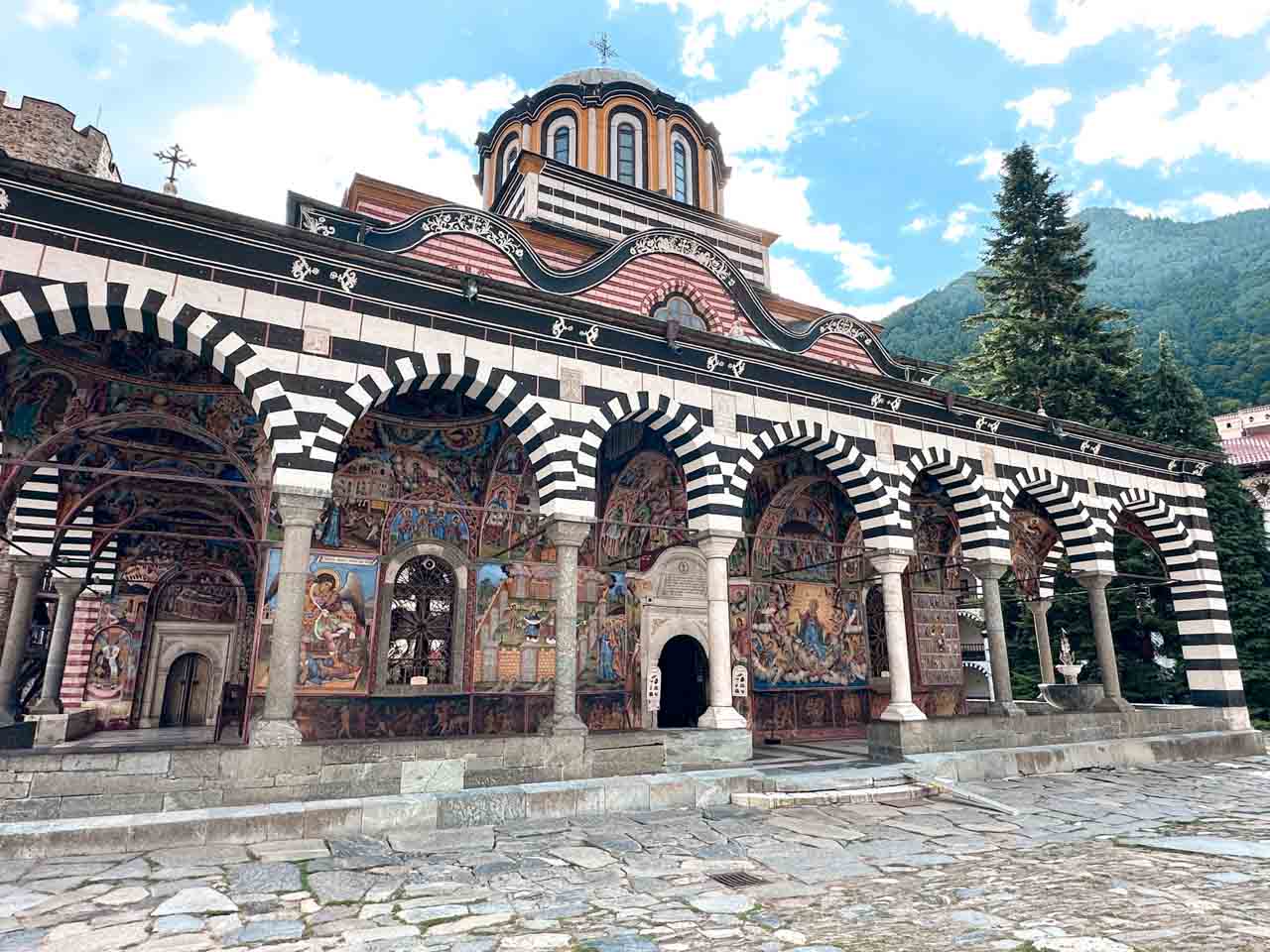
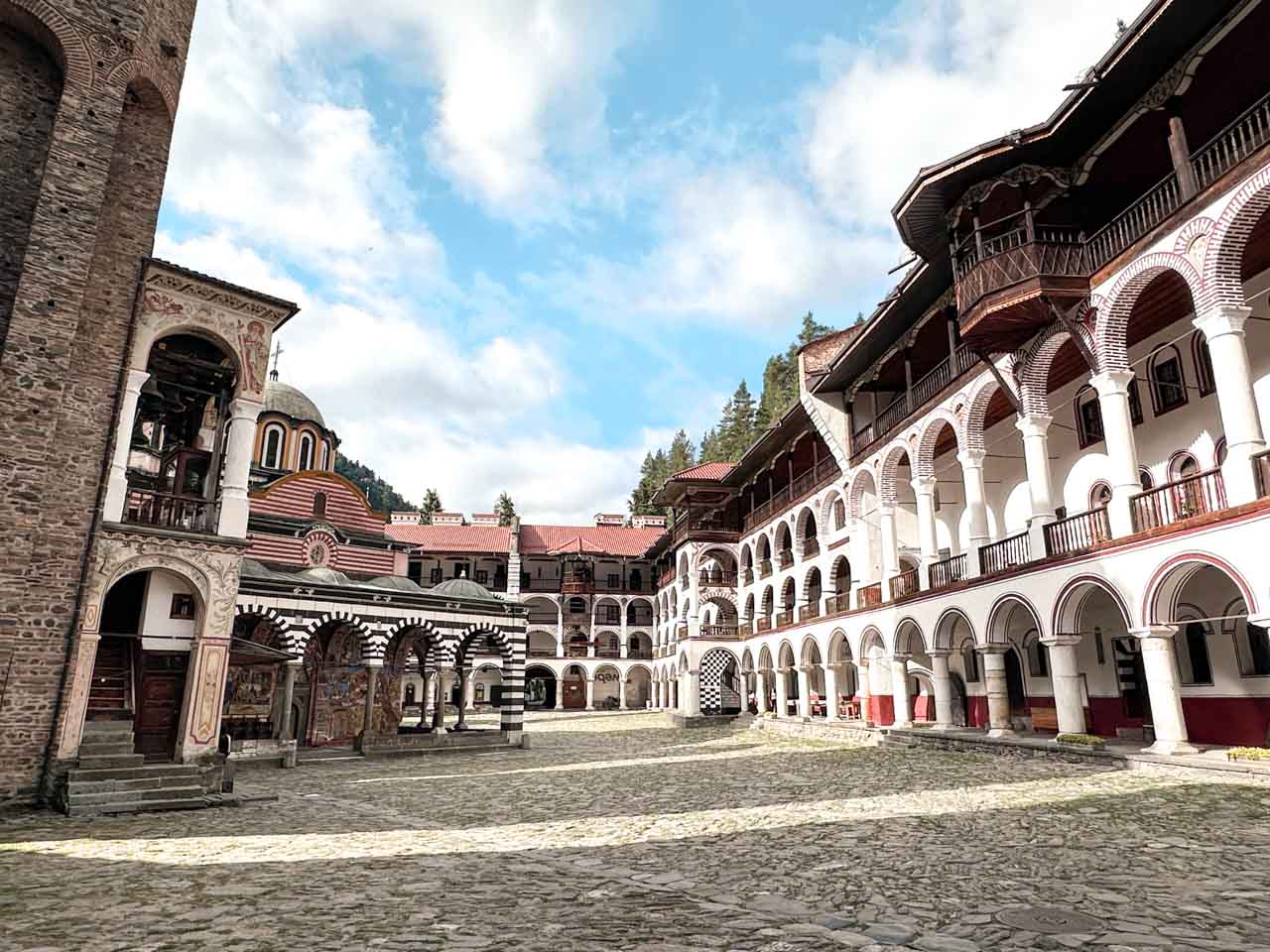
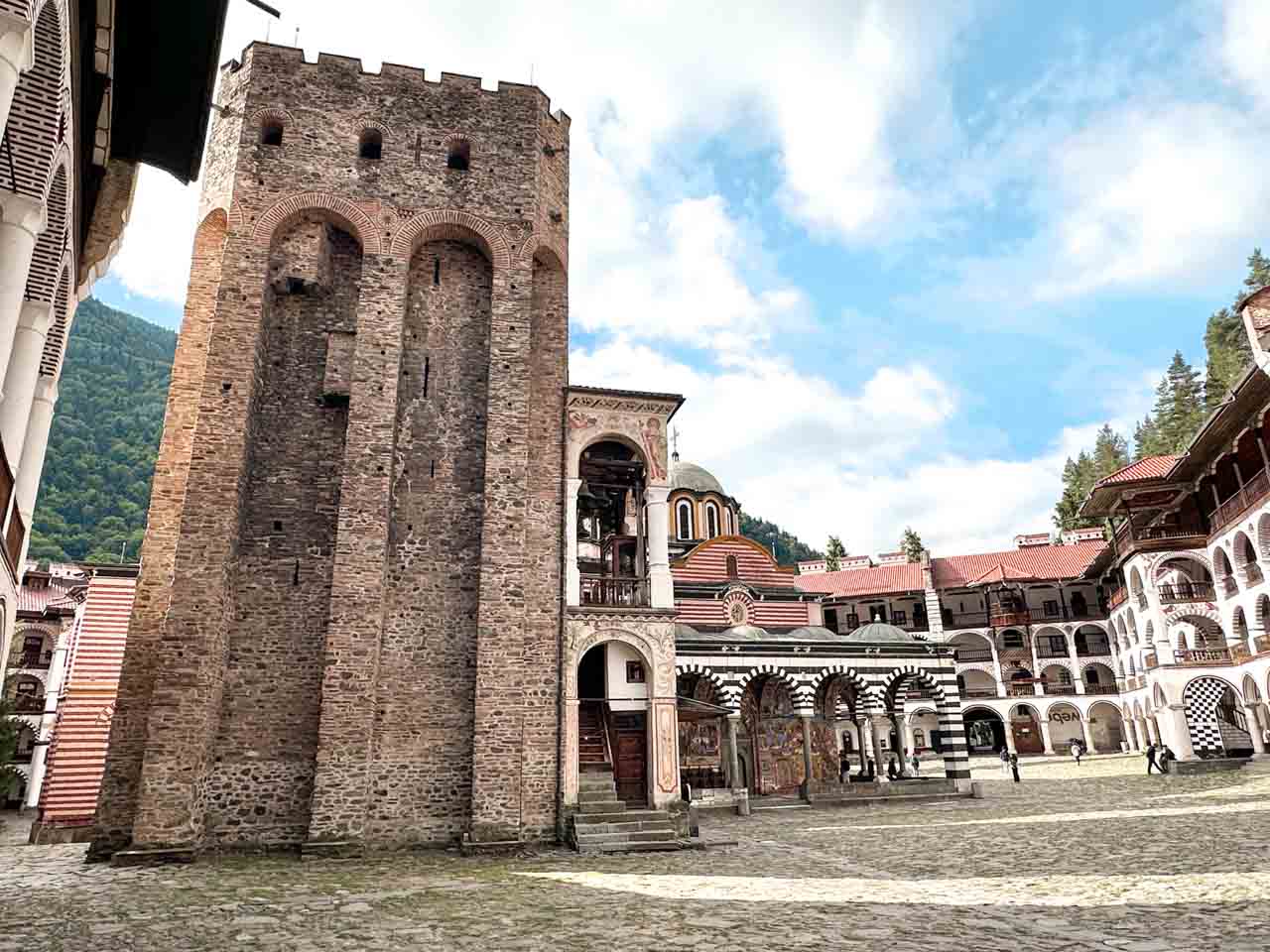
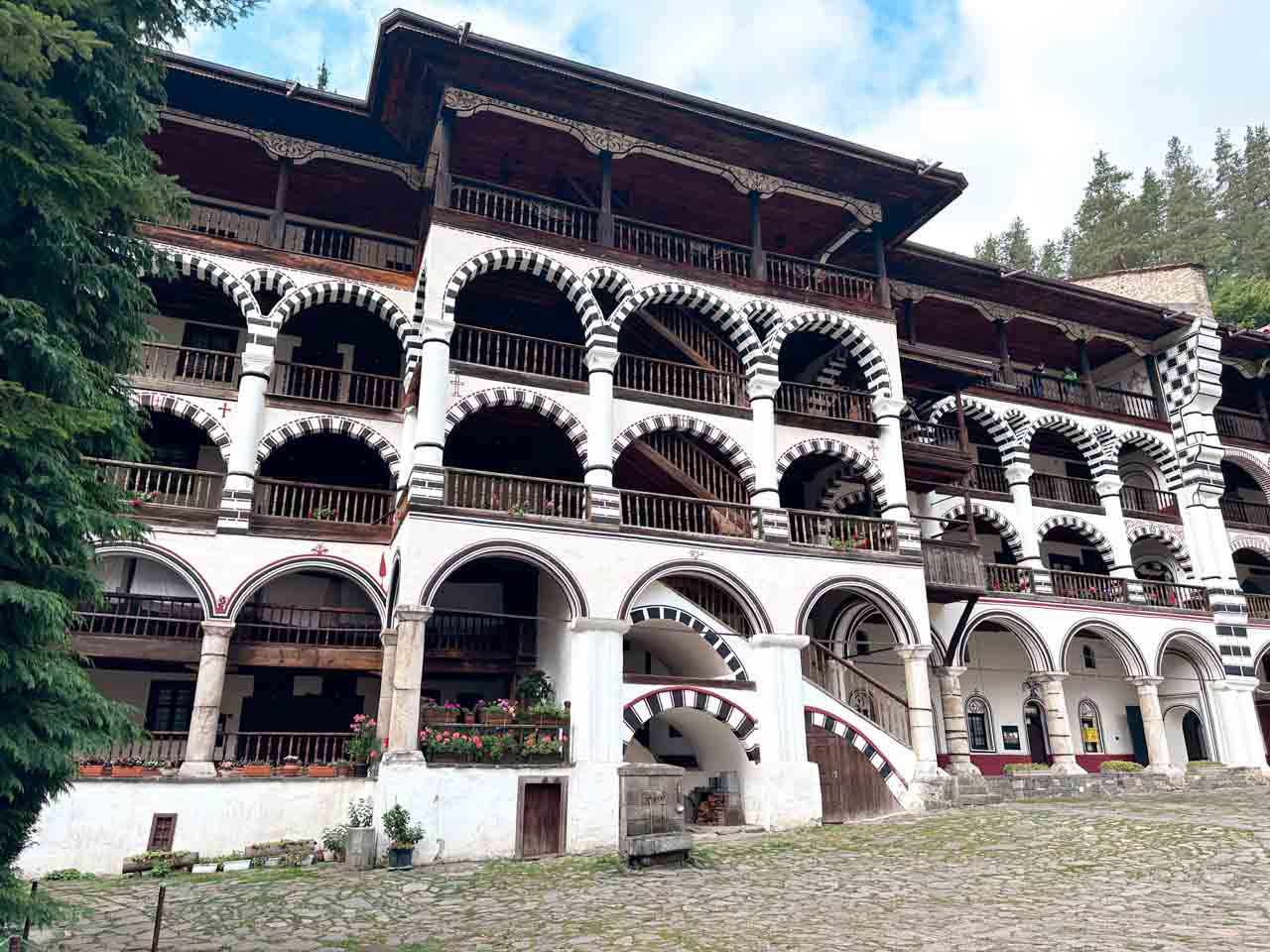
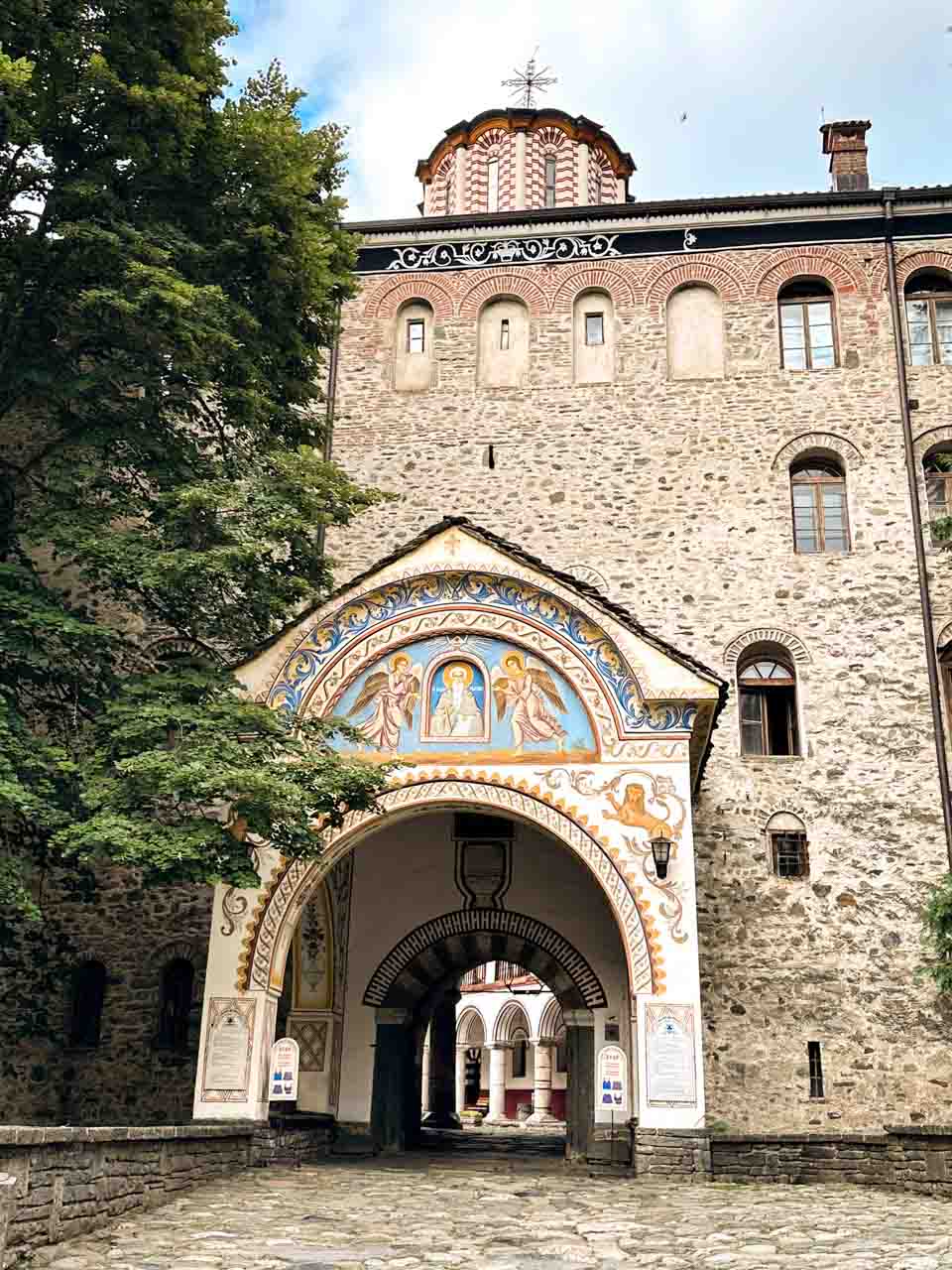
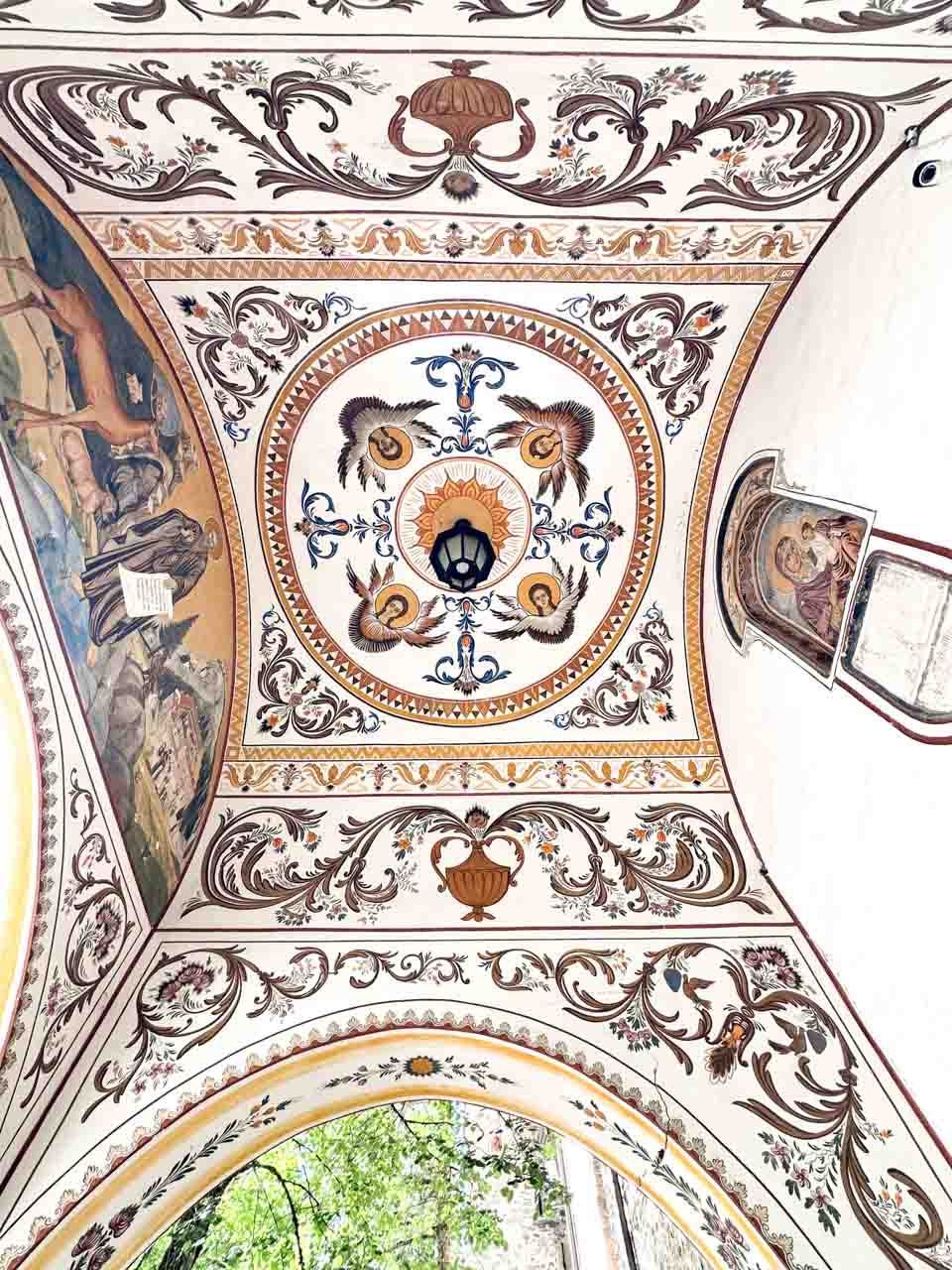
The 10th-century Rila Monastery was founded by the hermit Saint Ivan of Rila, and it’s a popular pilgrimage site for Orthodox Christians.
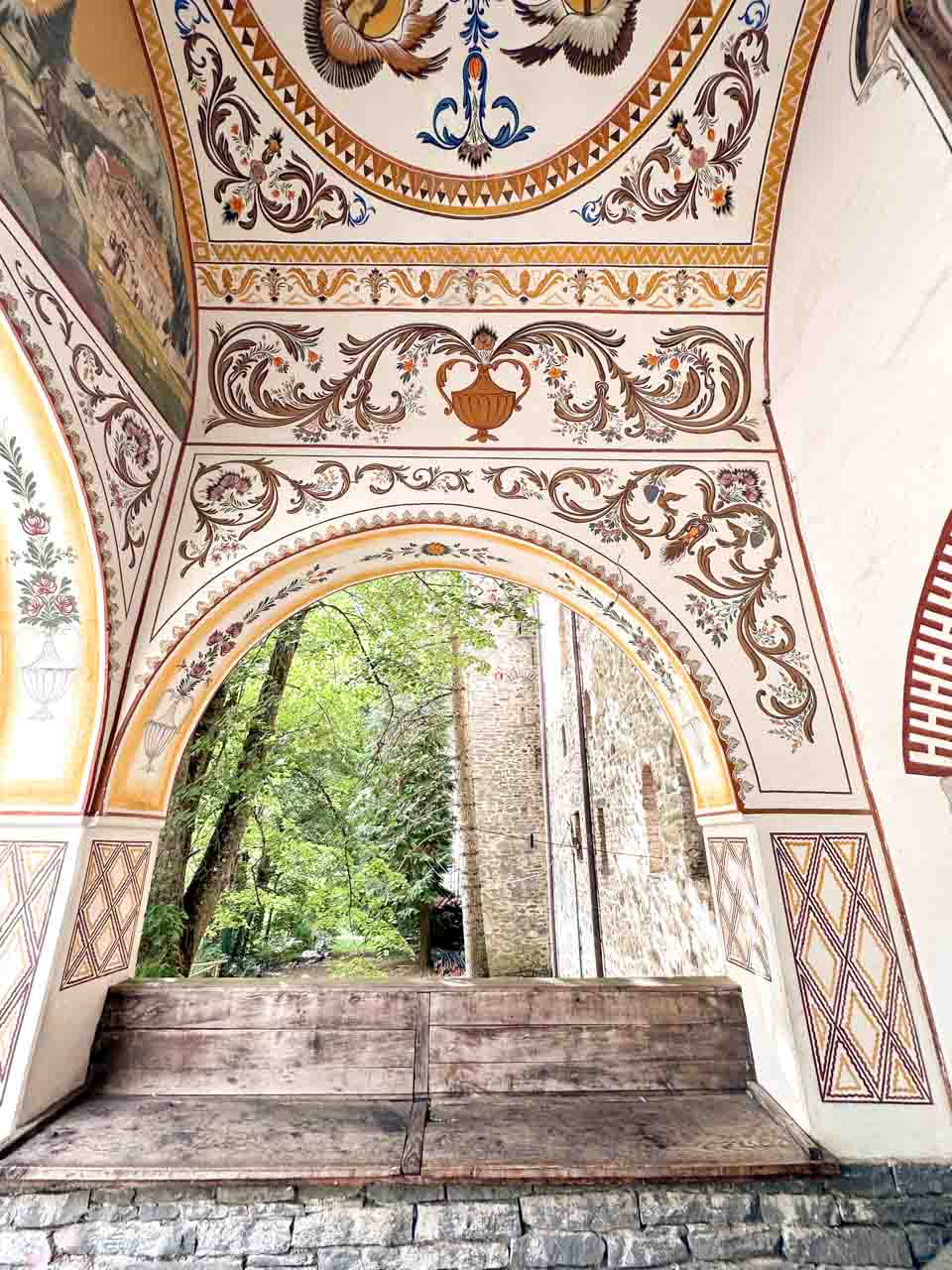
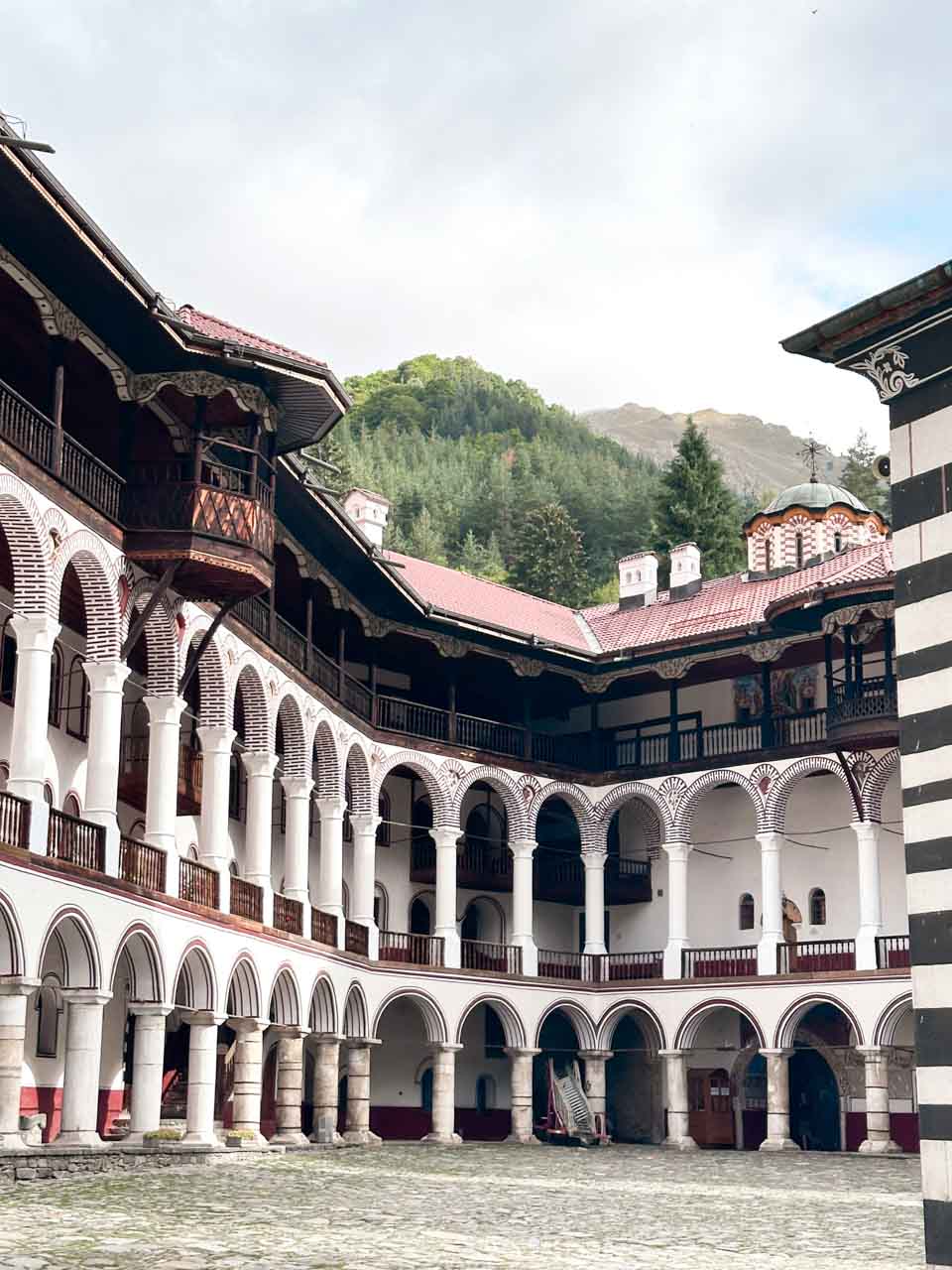
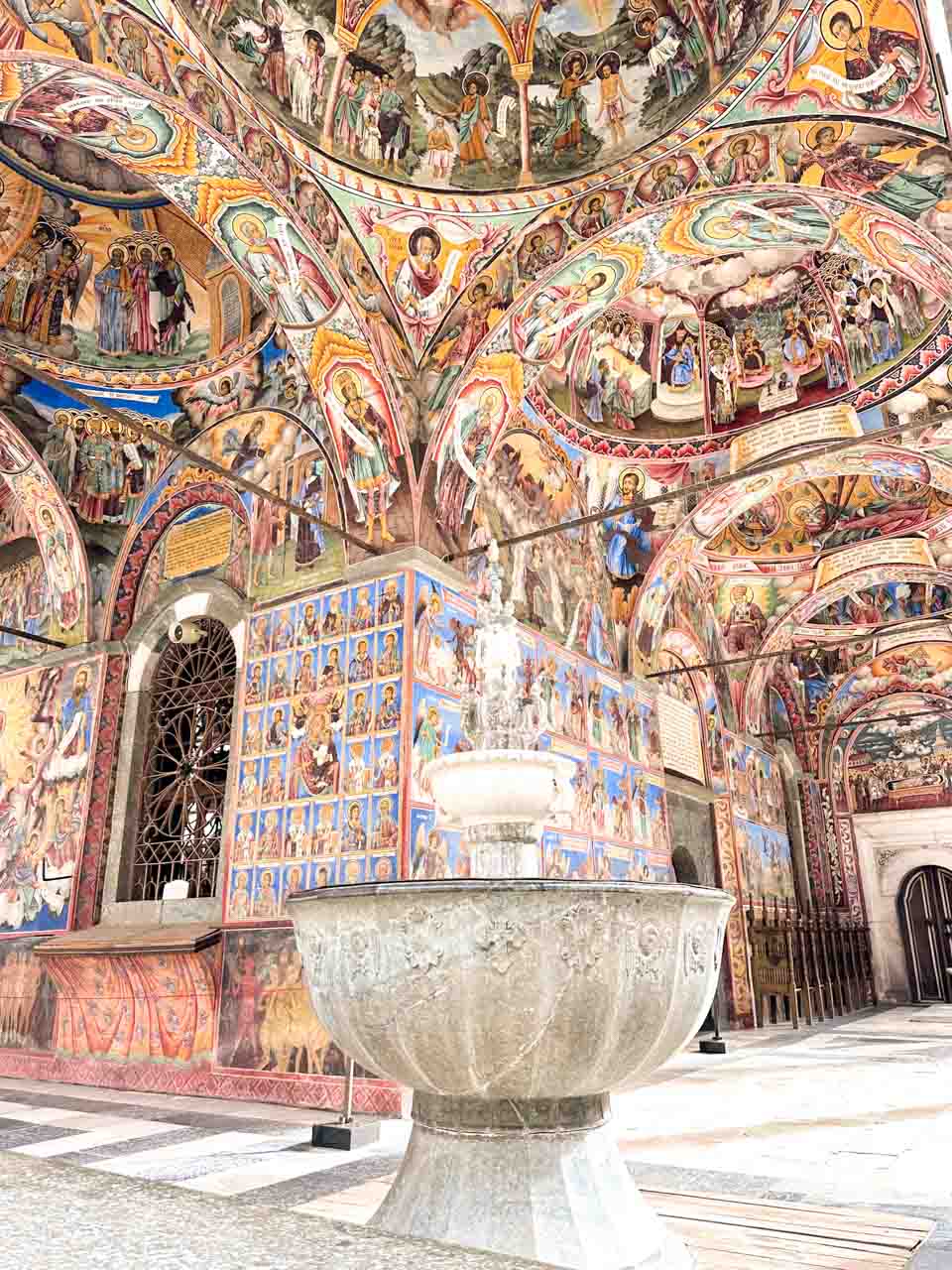
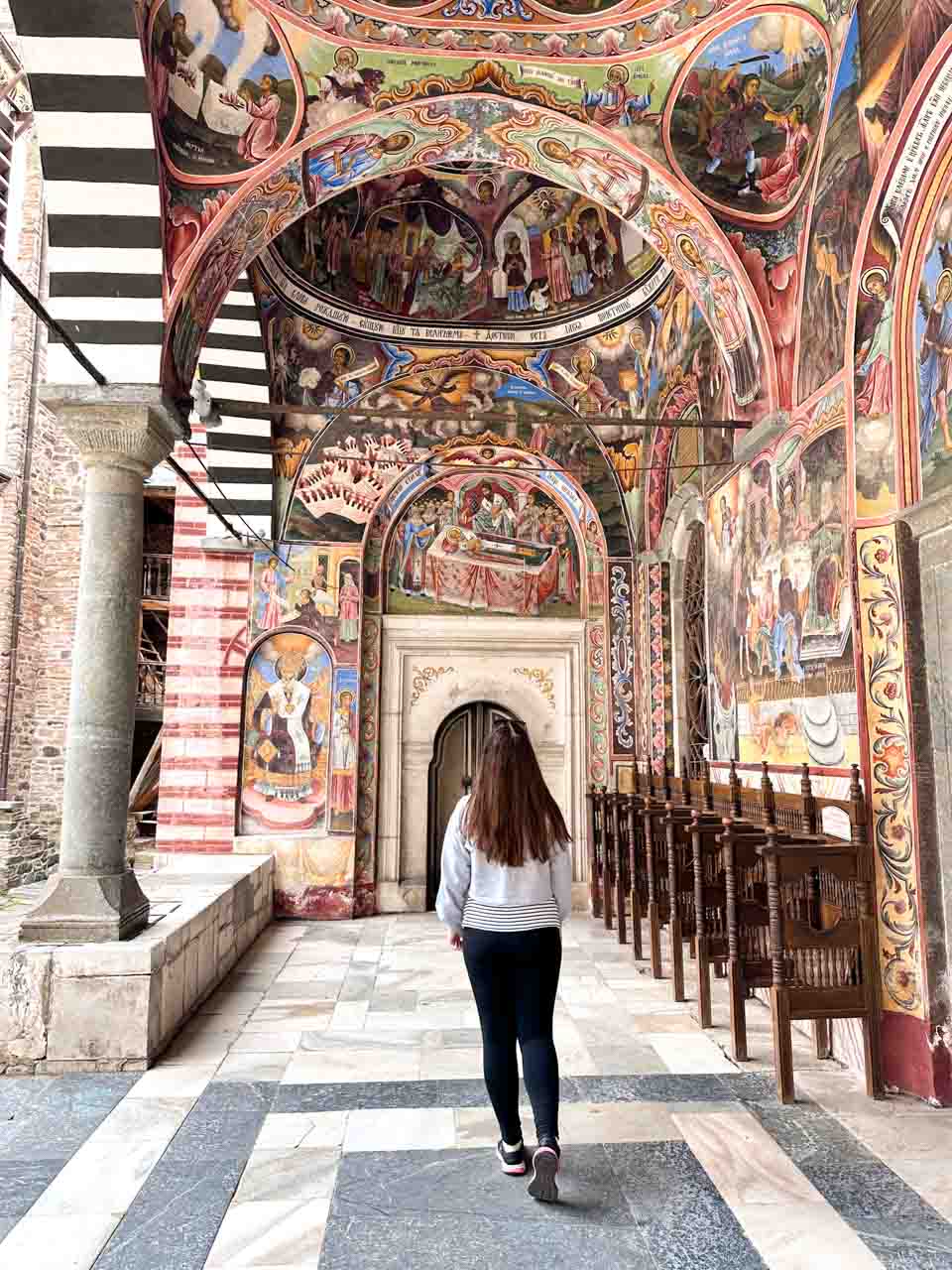
The only downside of our guided tour was that we didn’t get enough time to see everything in the Rila Monastery complex, just the church and the outer corridors with all the stunning frescoes.
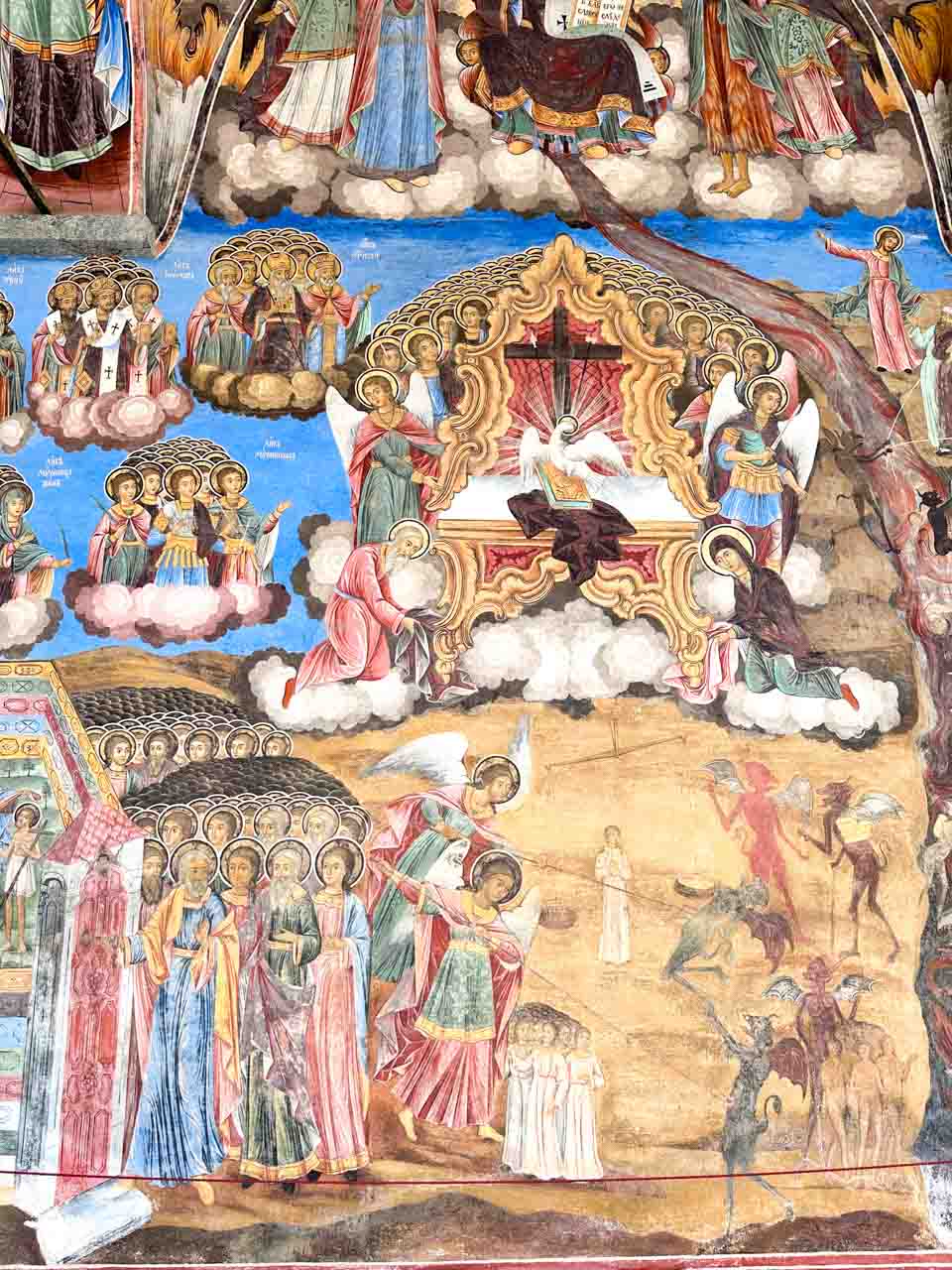
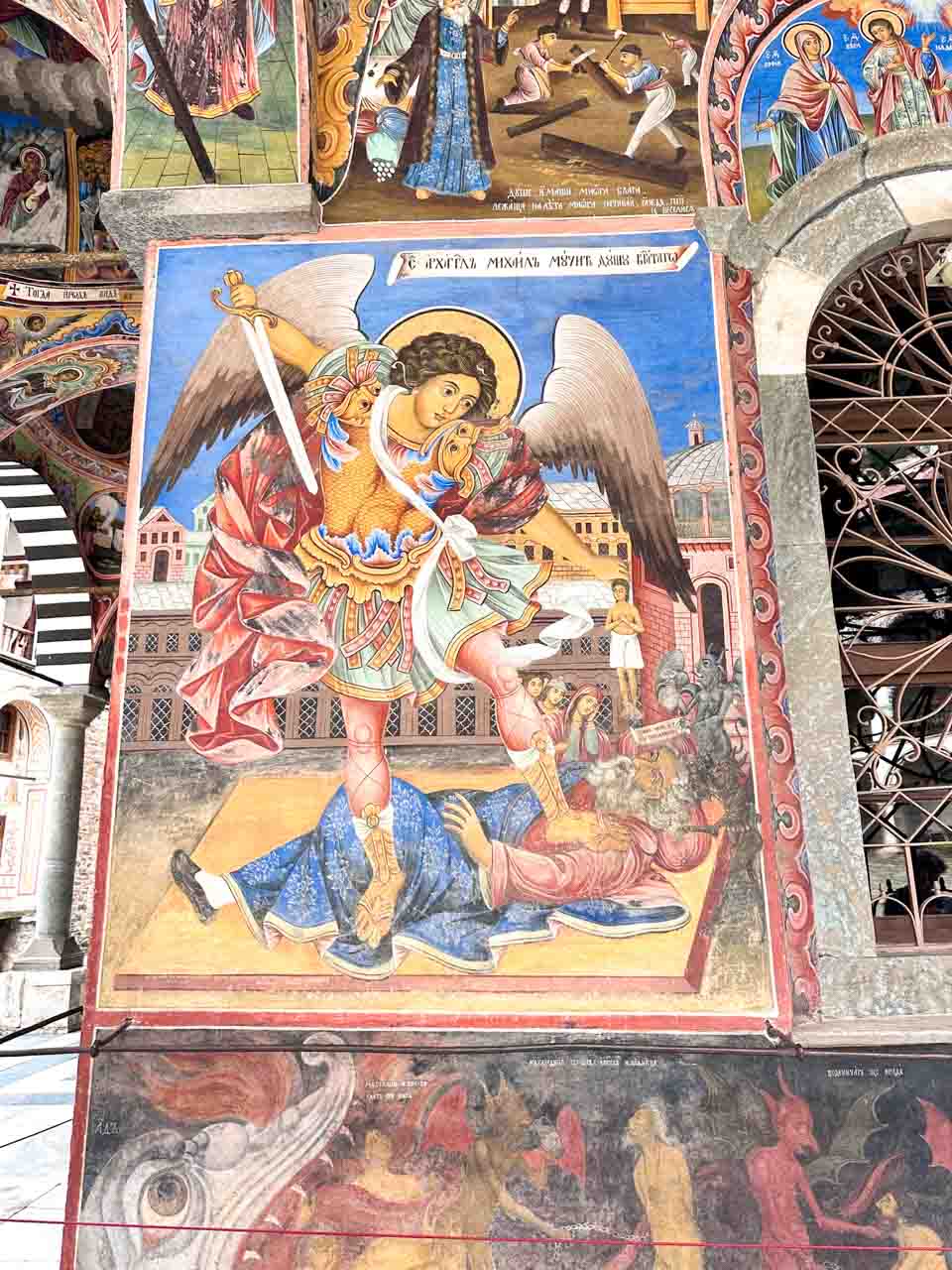
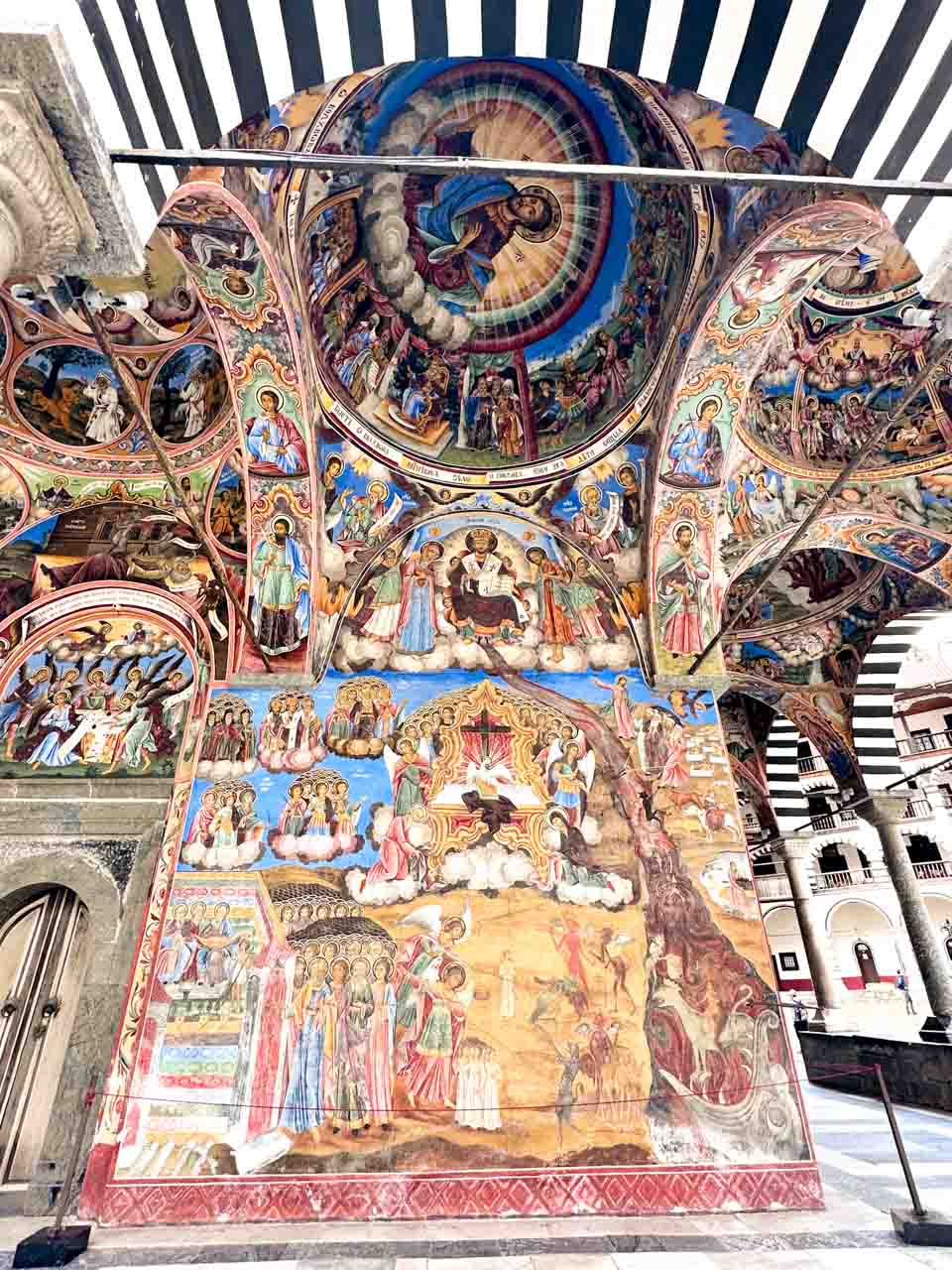
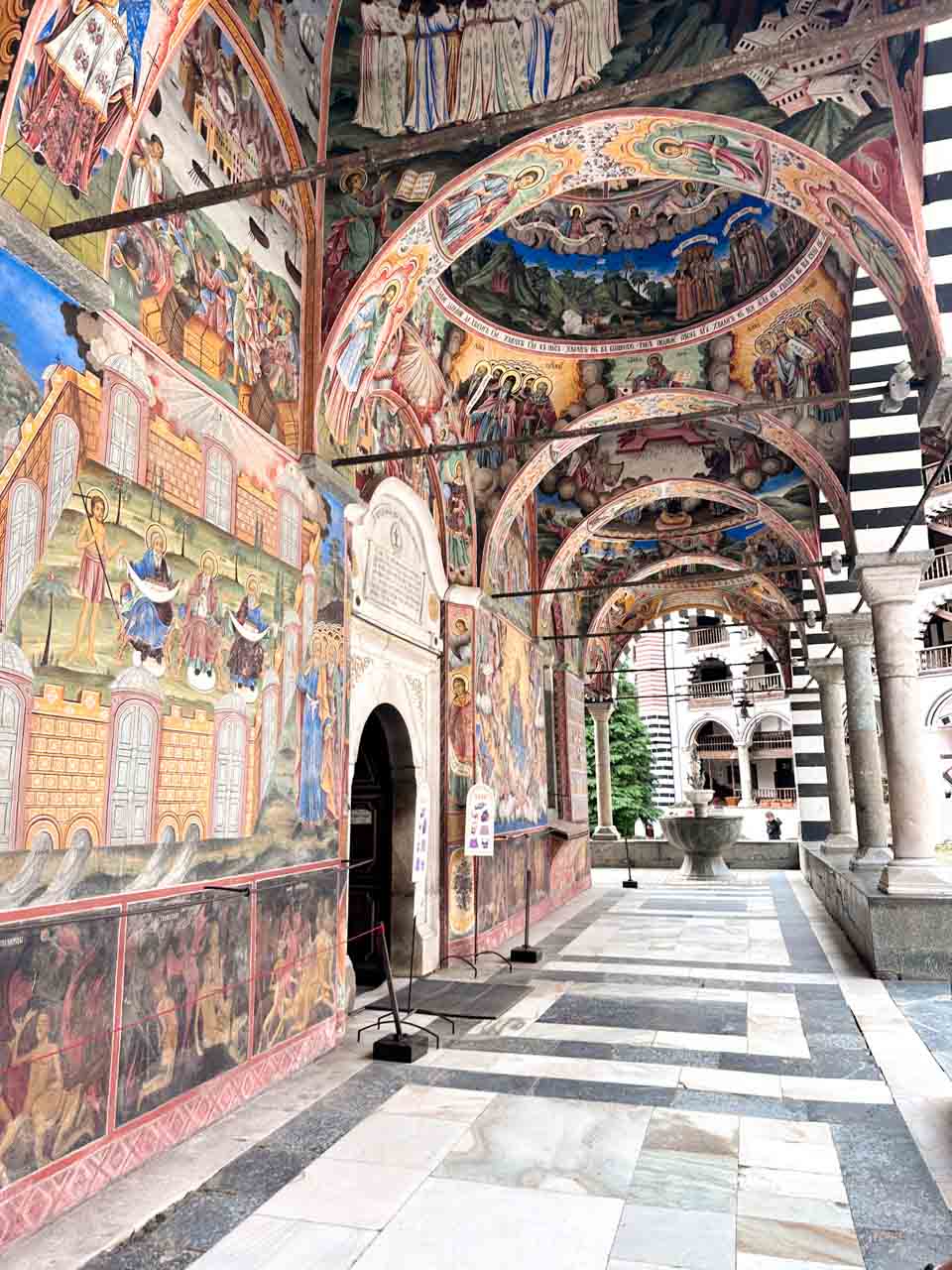
Inside the church, the main thing to look out for is the iconostasis – the huge golden wall separating the altar from the main part of the church. The wood is covered in tiny details, all carved by hand, with beautiful hand-painted icons throughout. You can also see the relics of Saint Ivan of Rila, kept inside a special shrine in the church.
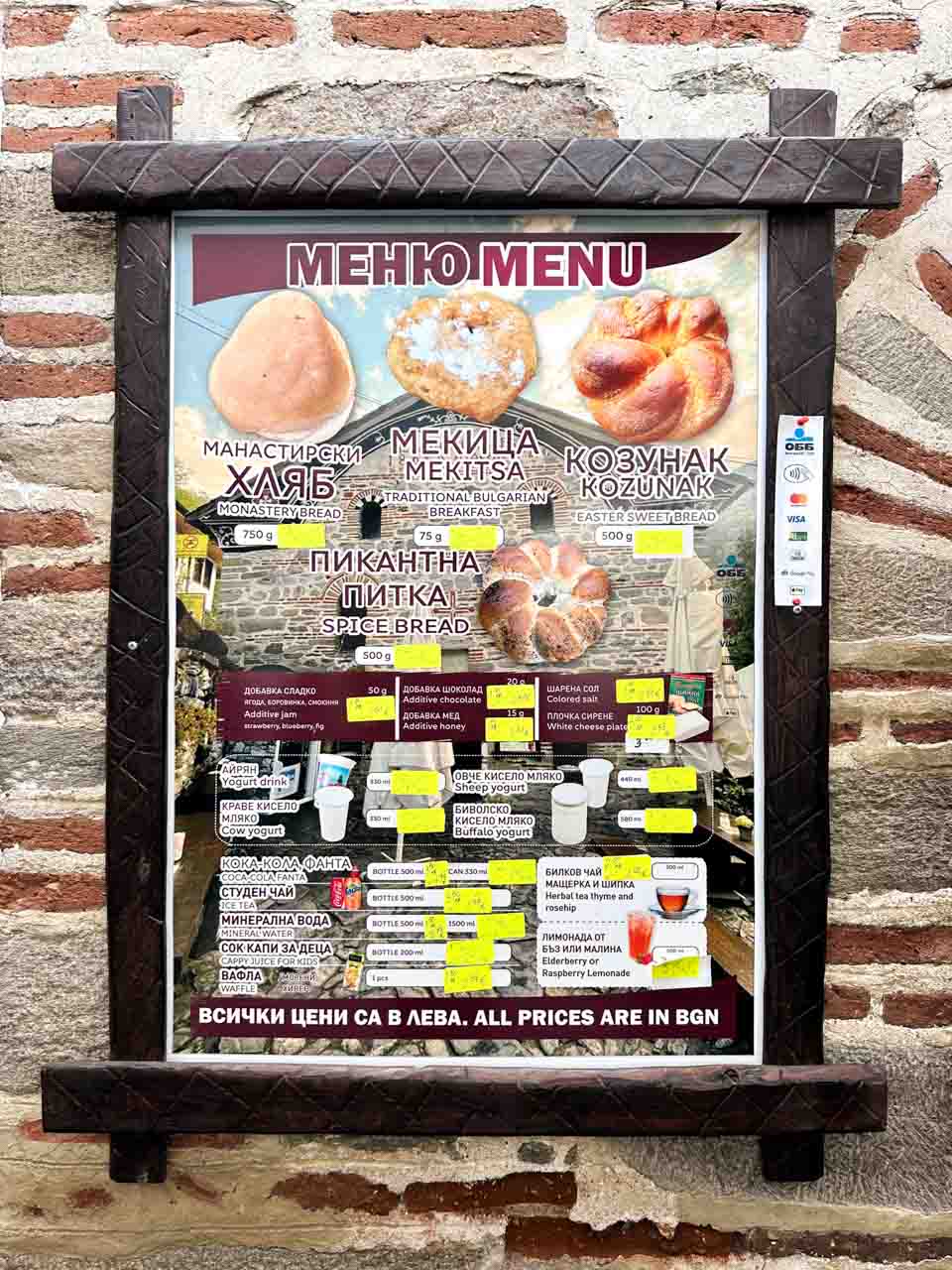
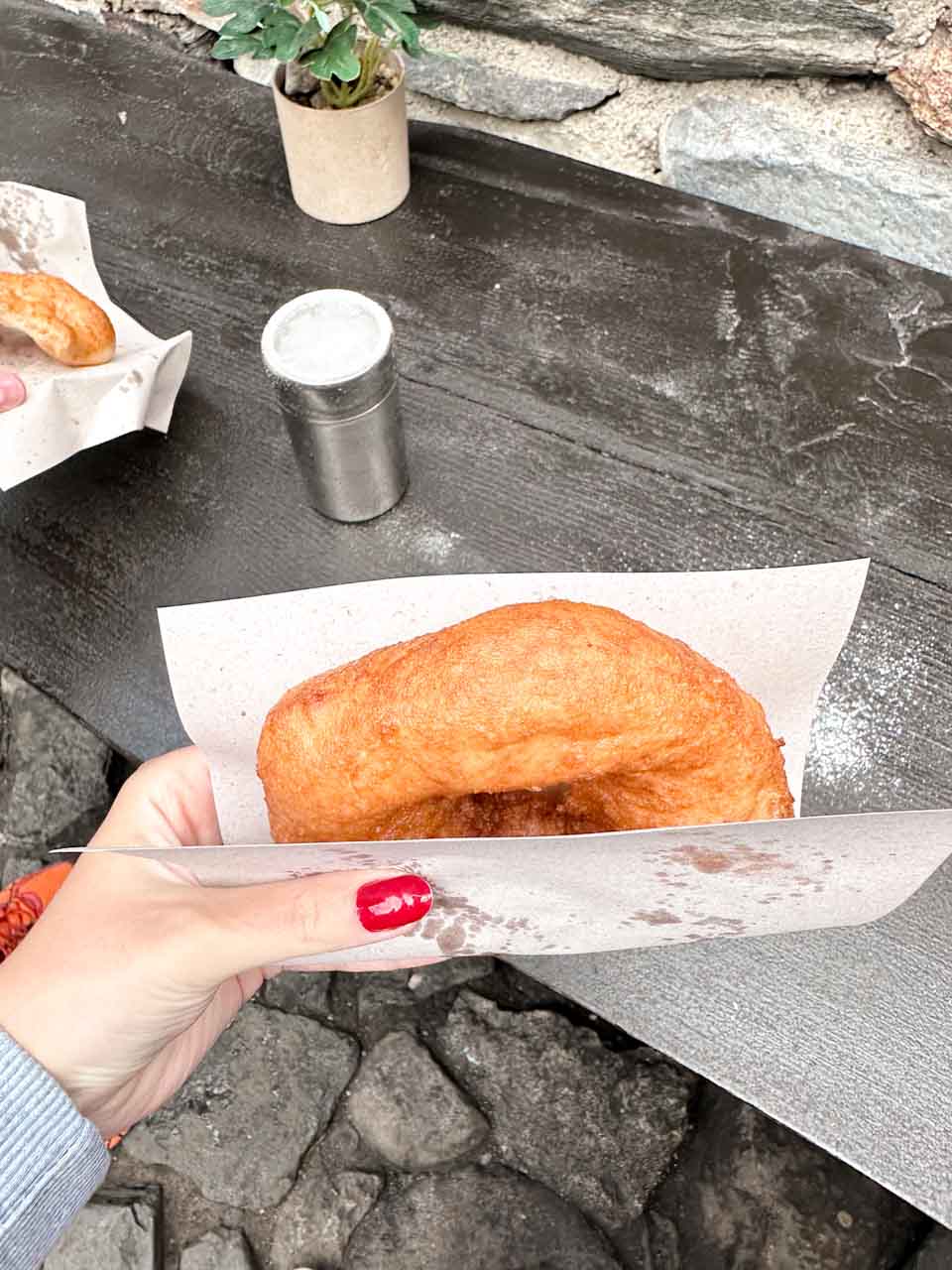
While you’re there, you absolutely have to try a mekitsa – a piece of deep-fried dough sprinkled with powdered sugar – from the bakery outside the monastery. It’s super cheap and was so delicious we ended up having two each!
The Seven Rila Lakes hike
From there, you head to the Seven Rila Lakes for the hike. When you make your booking, you have 2 choices: you can either hike on your own or pay extra to join a professional mountain guide.
To get to the starting point of the Seven Rila Lakes hike, you have to take a chairlift. A return ticket costs €16, and I’d recommend bringing cash in case there’s no reception.
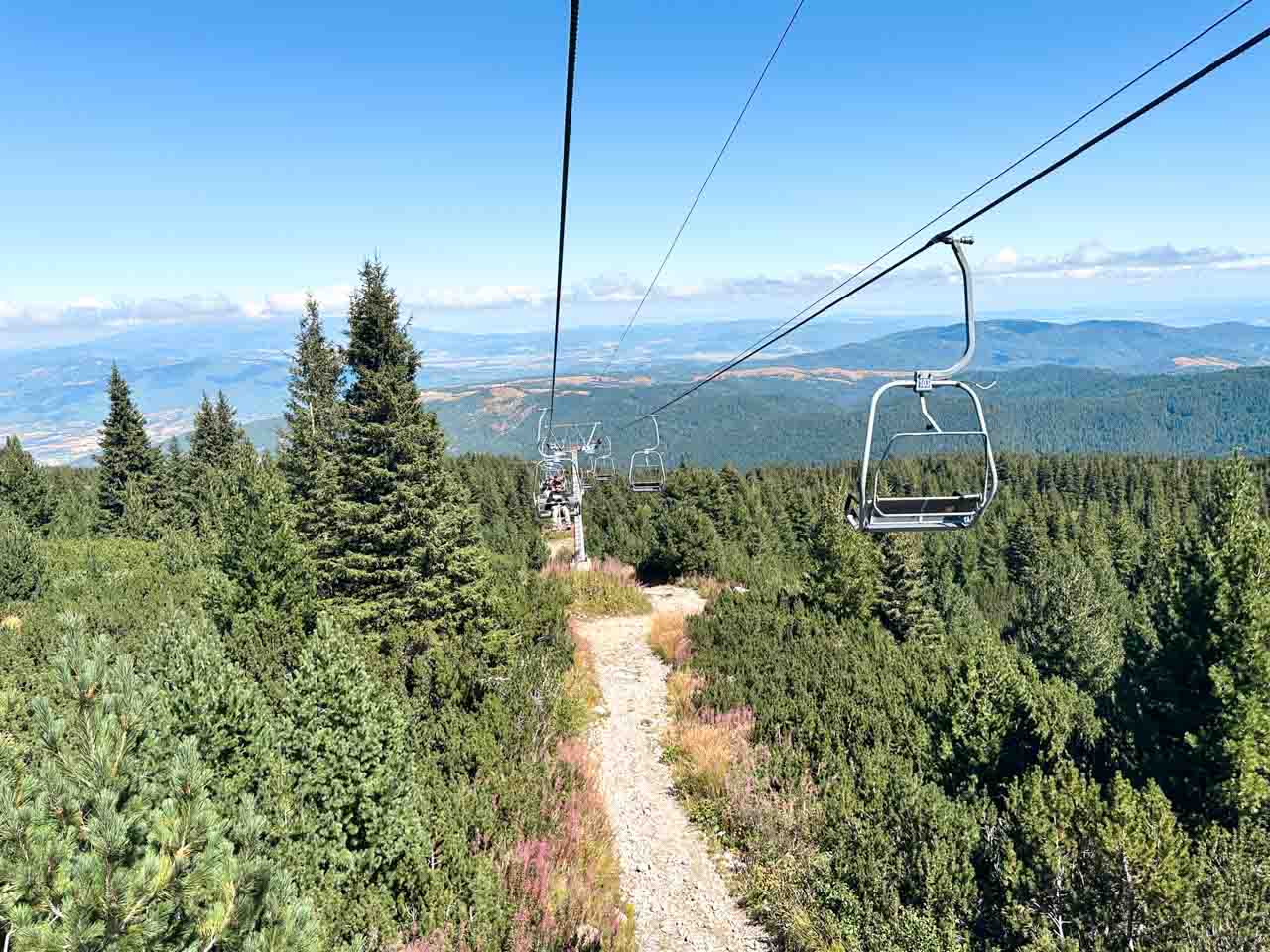
I’m not much of a hiker, so I was absolutely terrified. However, our mountain guide was incredible and really put me at ease.
Before the groups split, he gave the self-guided group some tips on which route to take, so even if you’re doing it on your own, there’s no need to worry. He also adjusted the pace to everyone’s level of fitness and was happy to answer any questions.
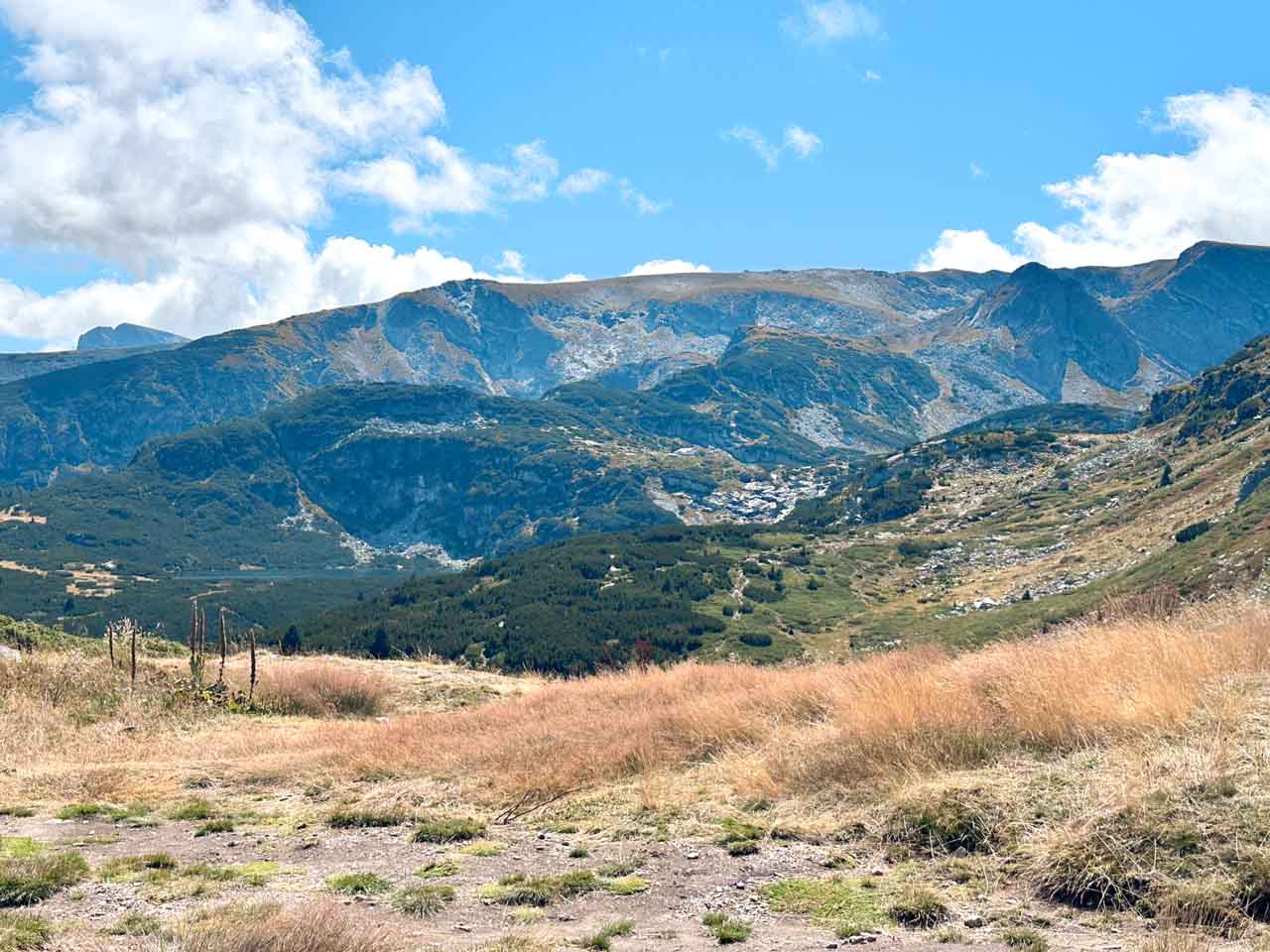
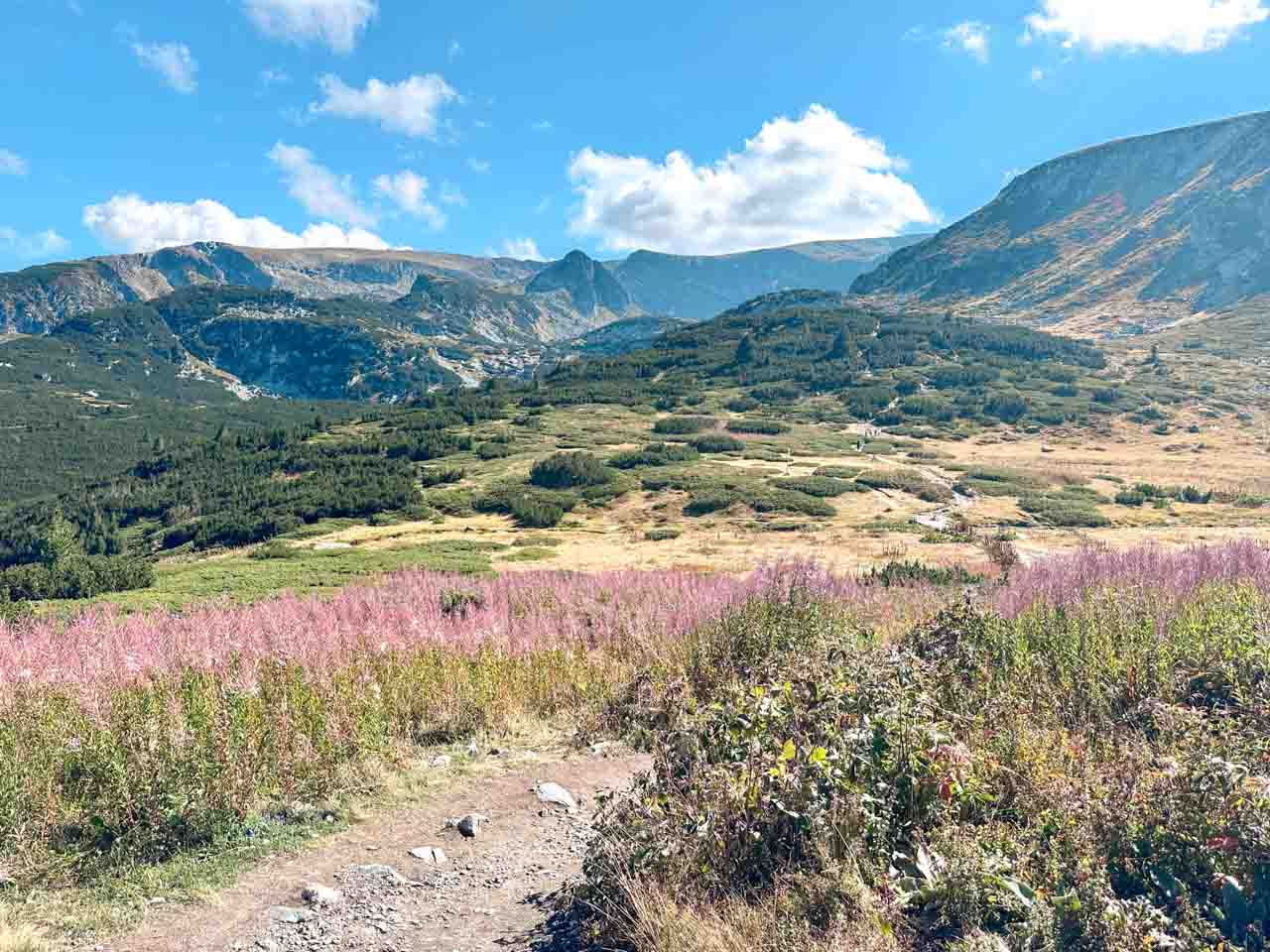
We managed to see 6 out of the 7 lakes before we had to head back down. Not sure if my gym sessions have been paying off, or I’m just delulu, but I think if we’d had more time, I could’ve easily managed the seventh one too!
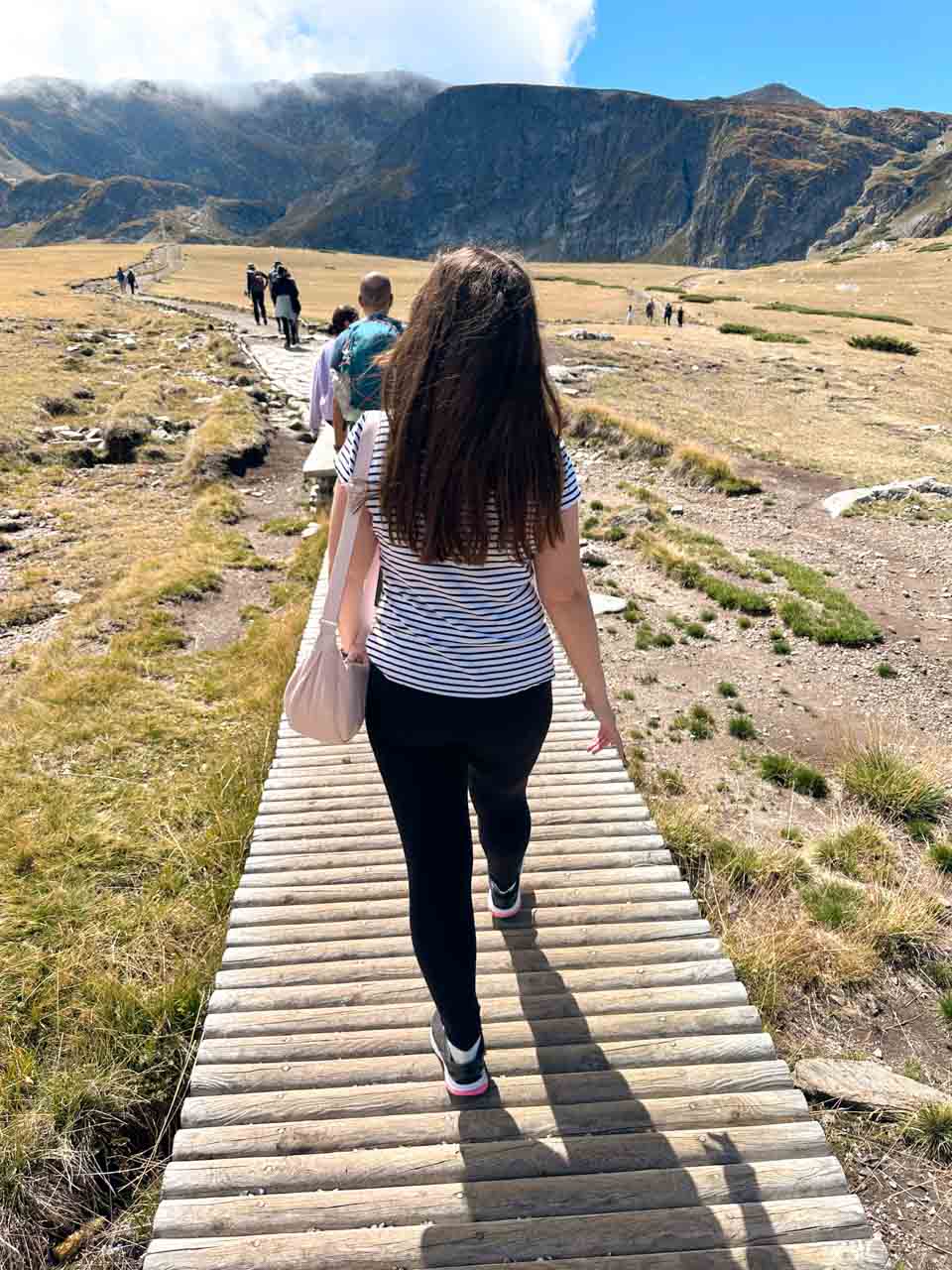
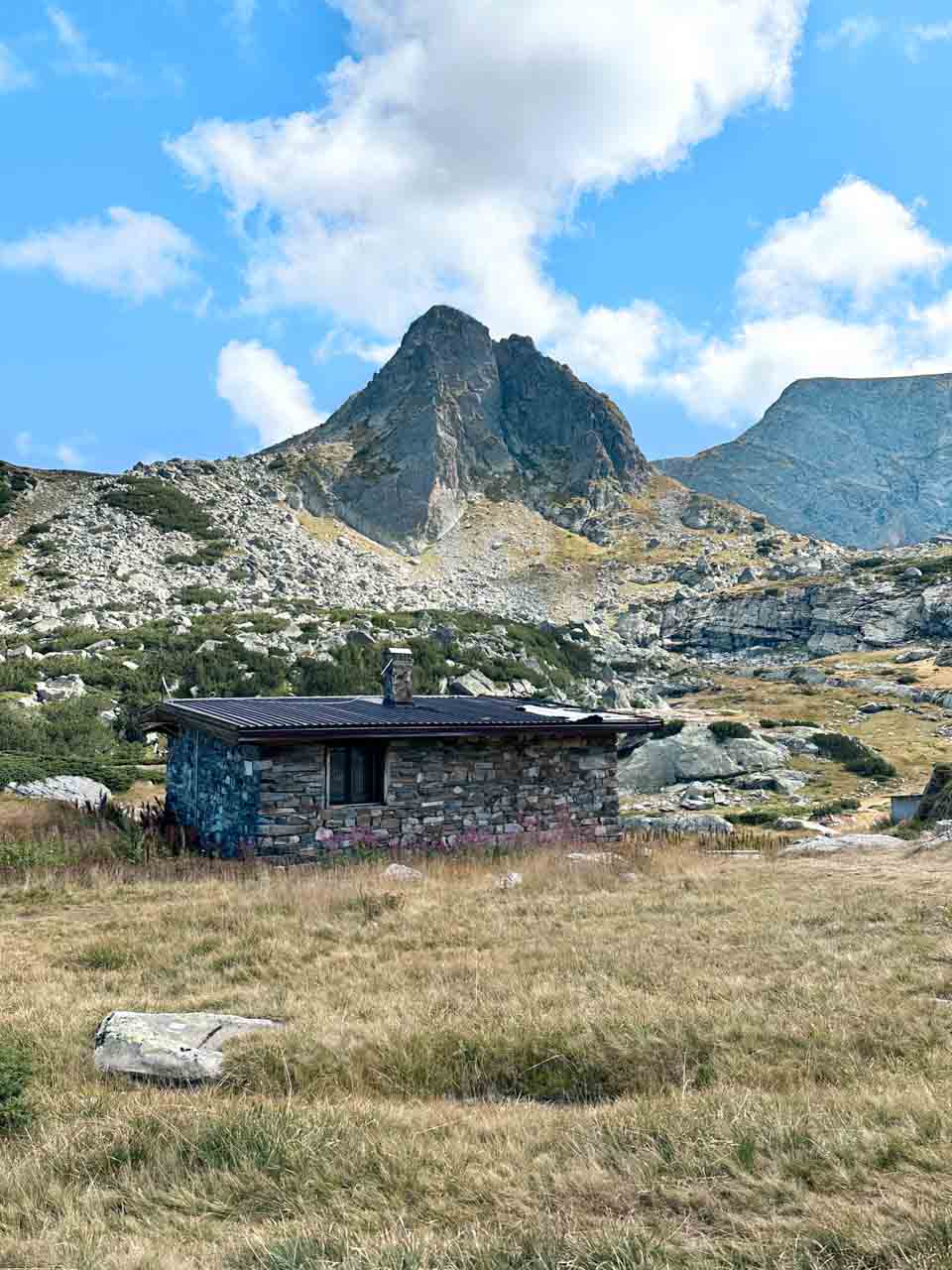
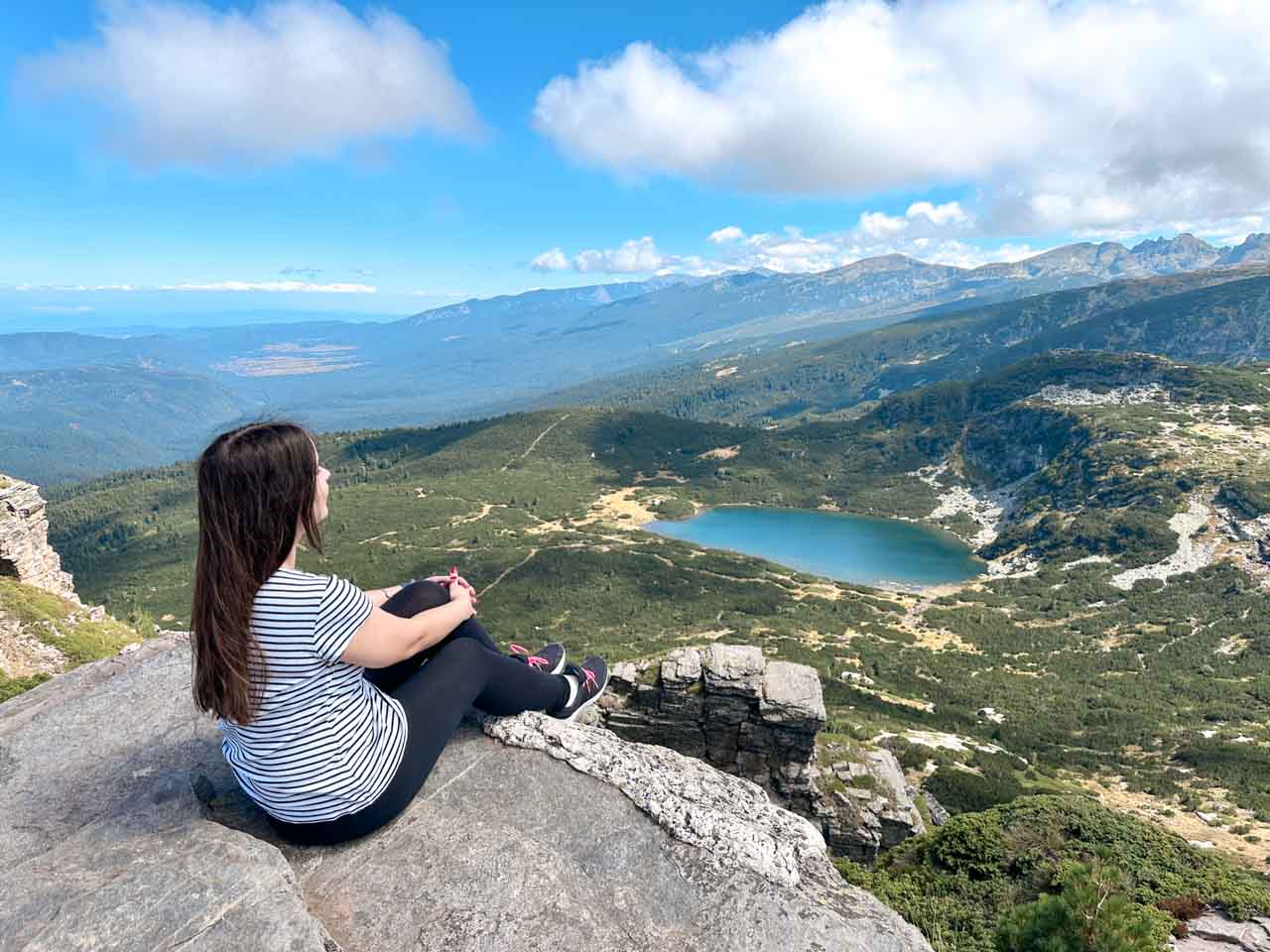
The views were absolutely unreal – some of the best I’ve seen in my entire life! When I sent some photos to people, the general response was “I had no idea Bulgaria looked like this” (and pure shock at seeing me wearing something other than a dress), which, to be fair, I didn’t either. It was breathtakingly beautiful!
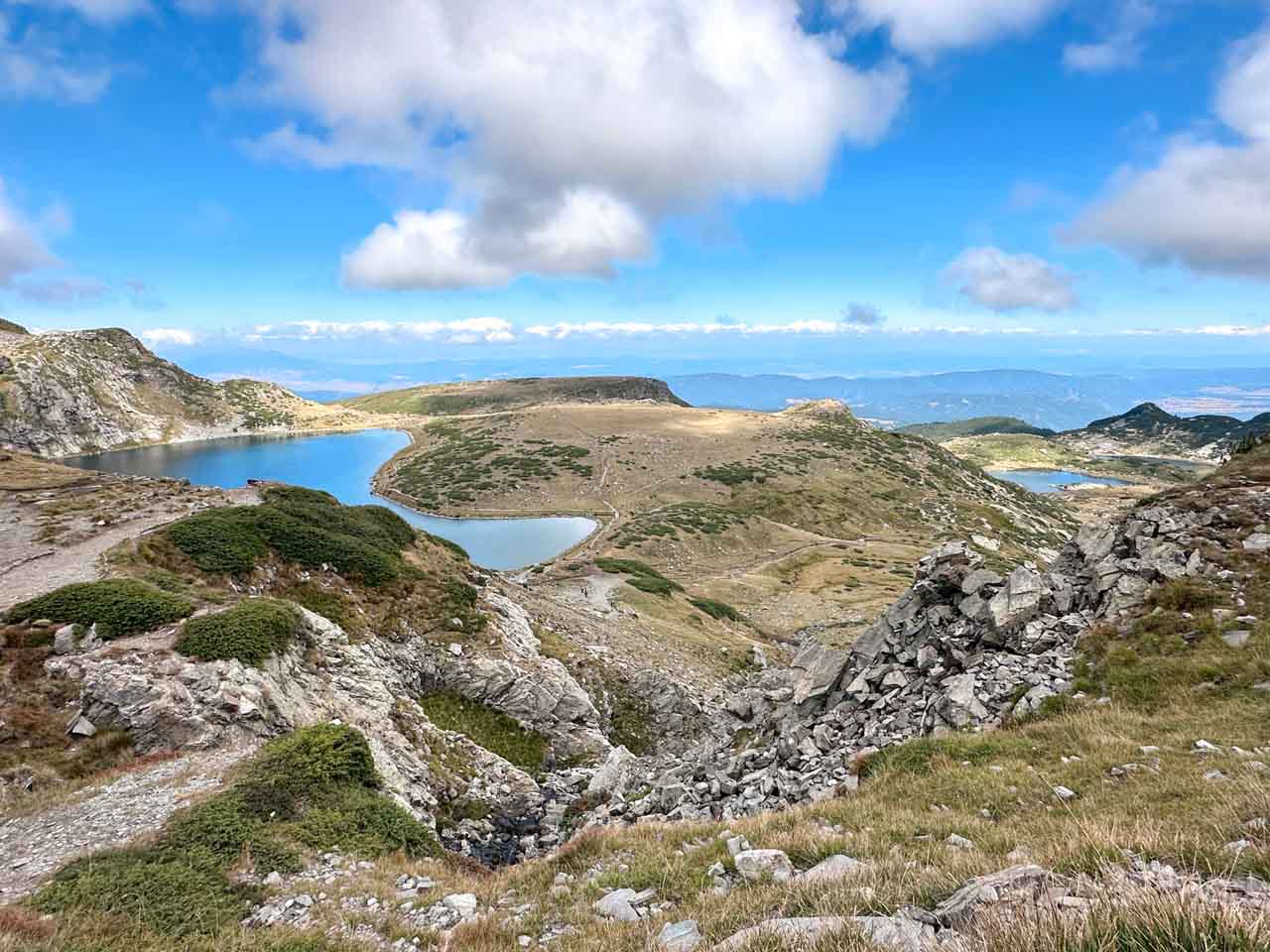
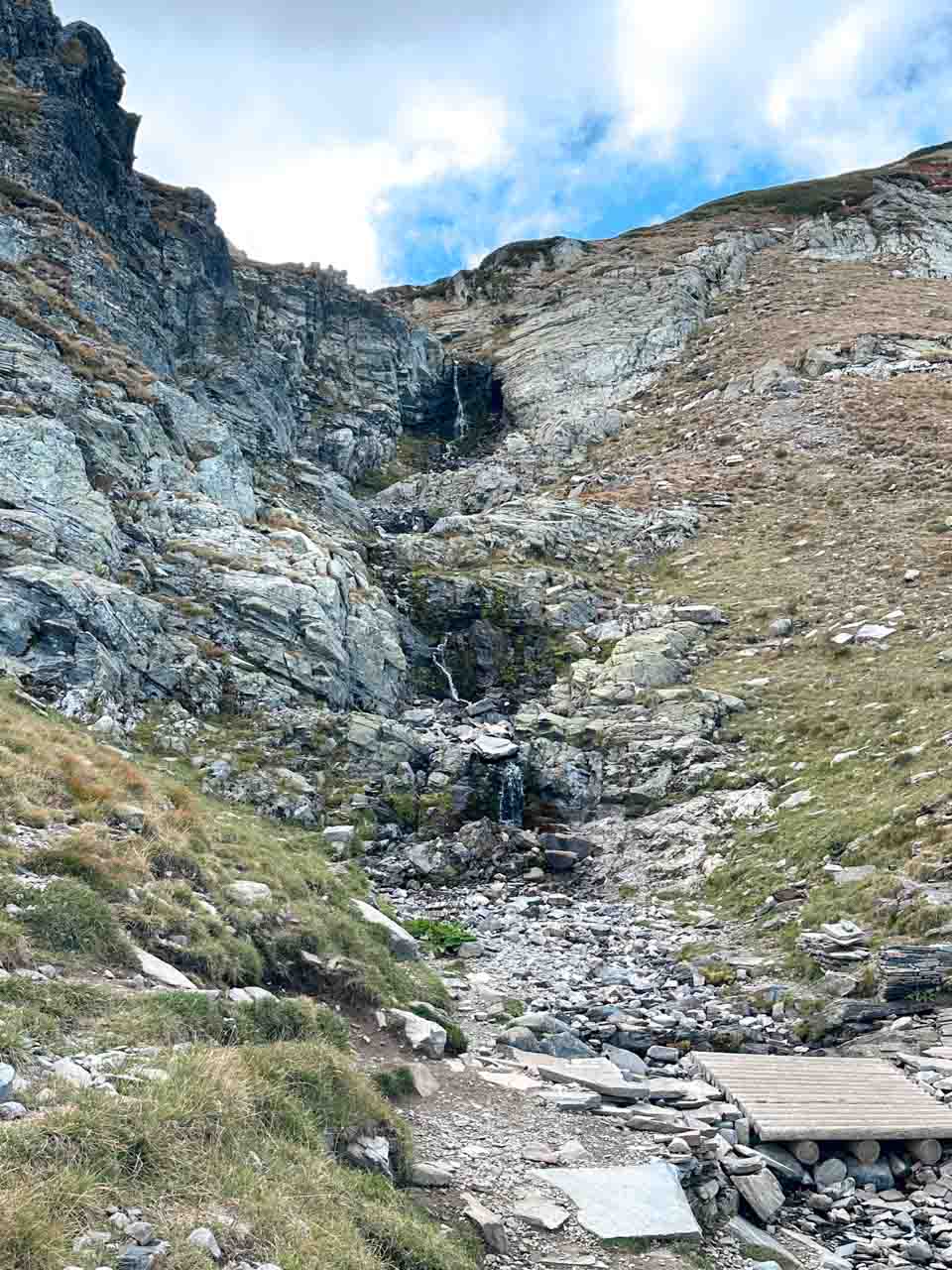
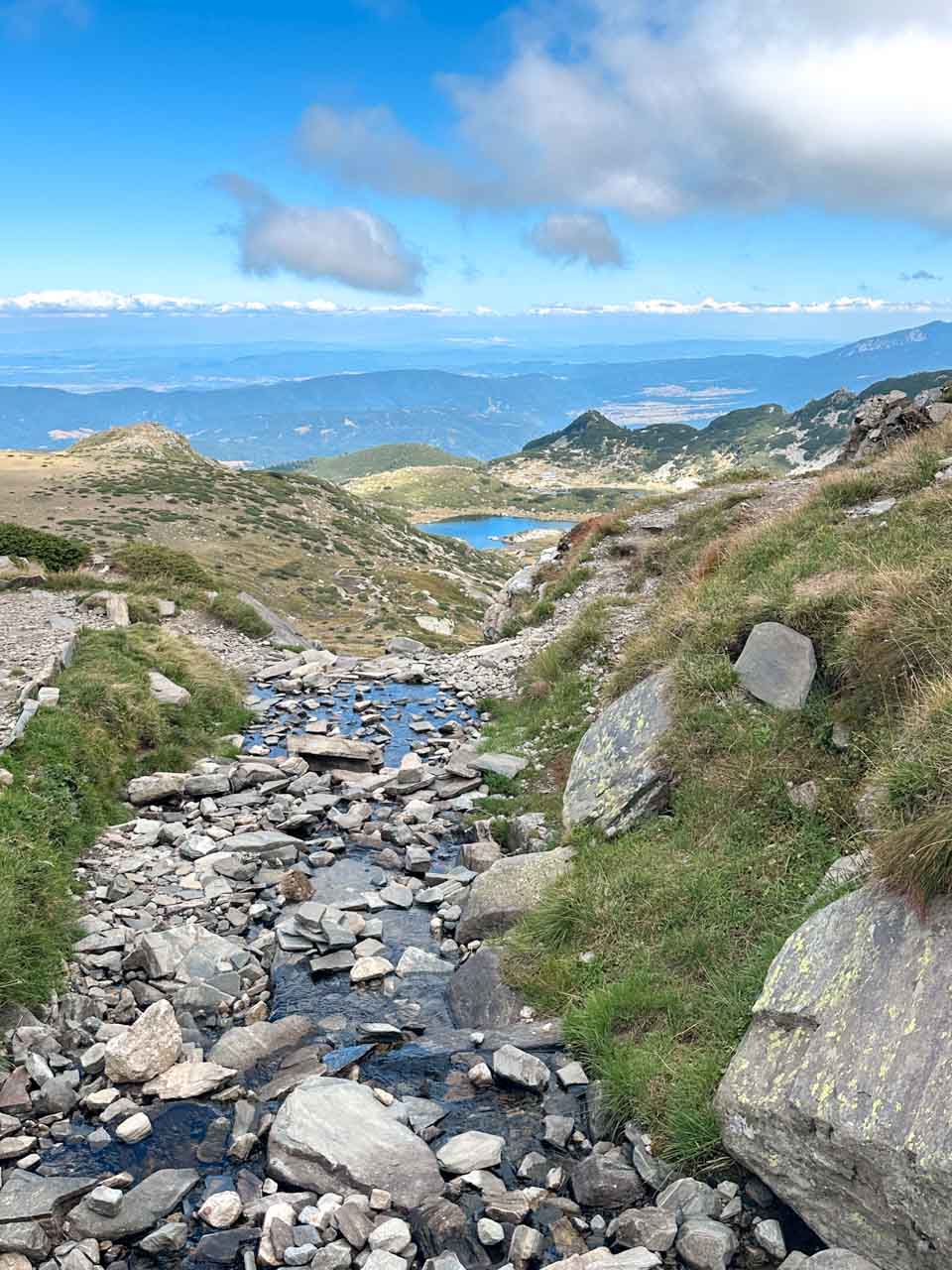
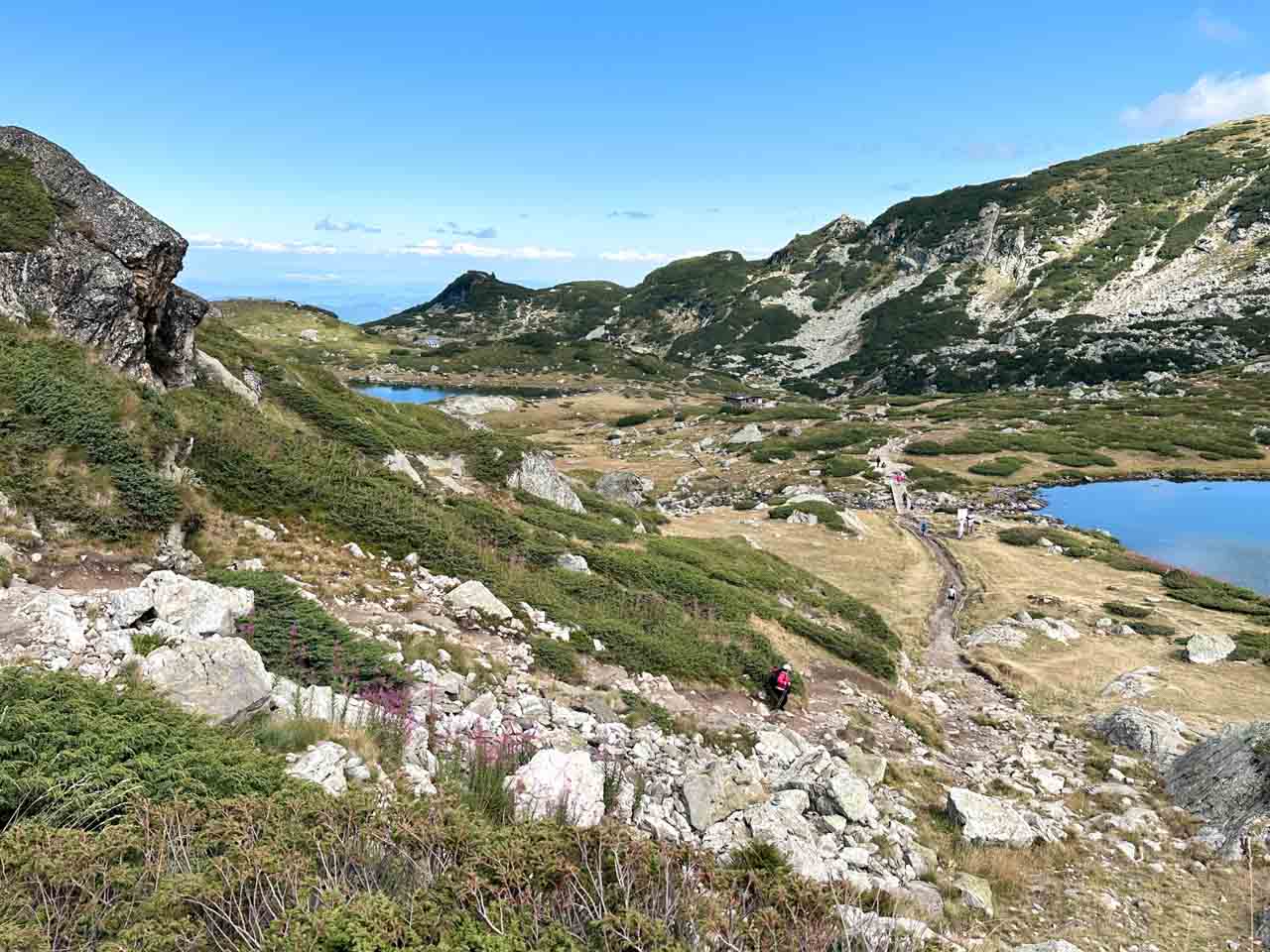
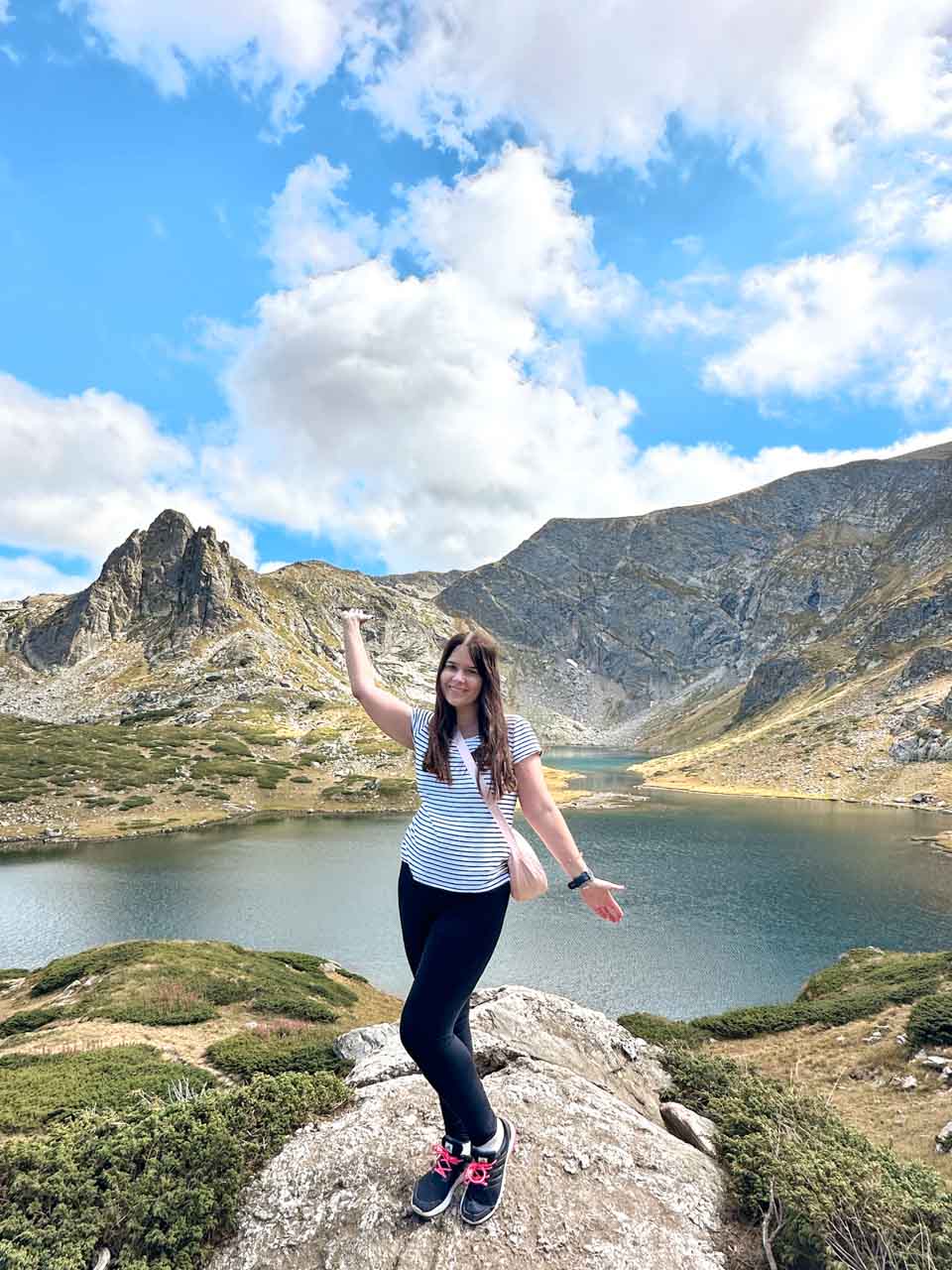
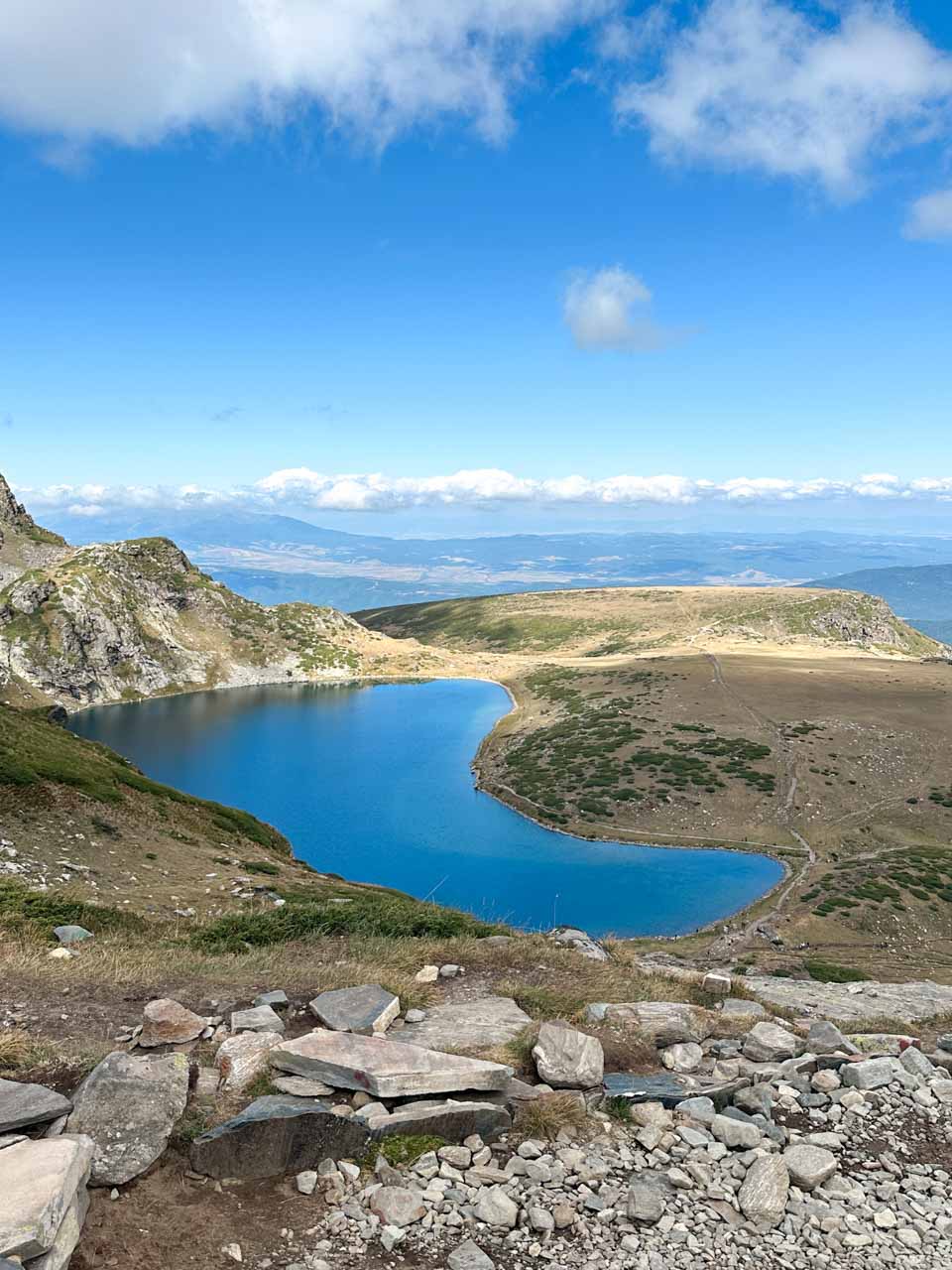
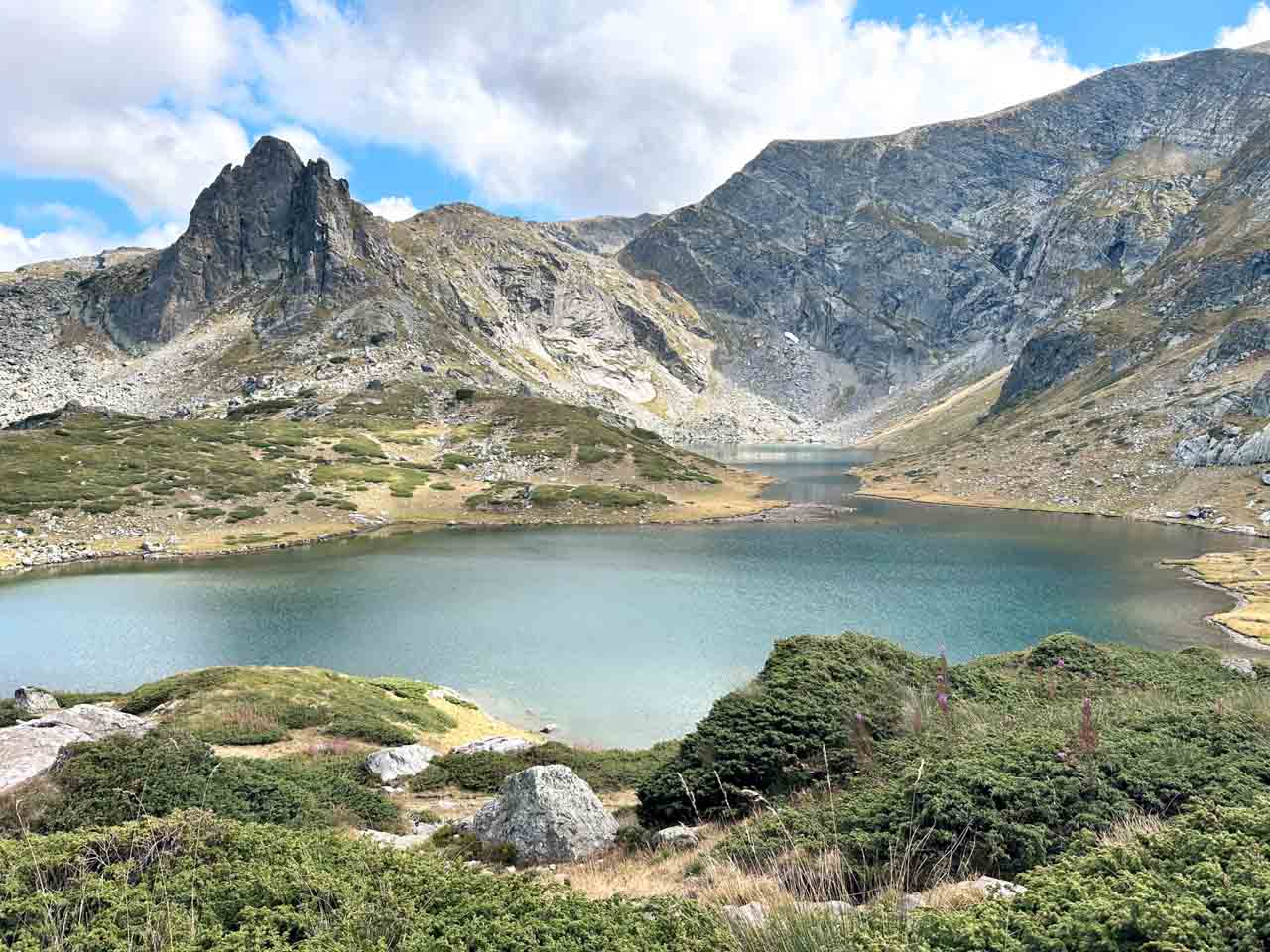
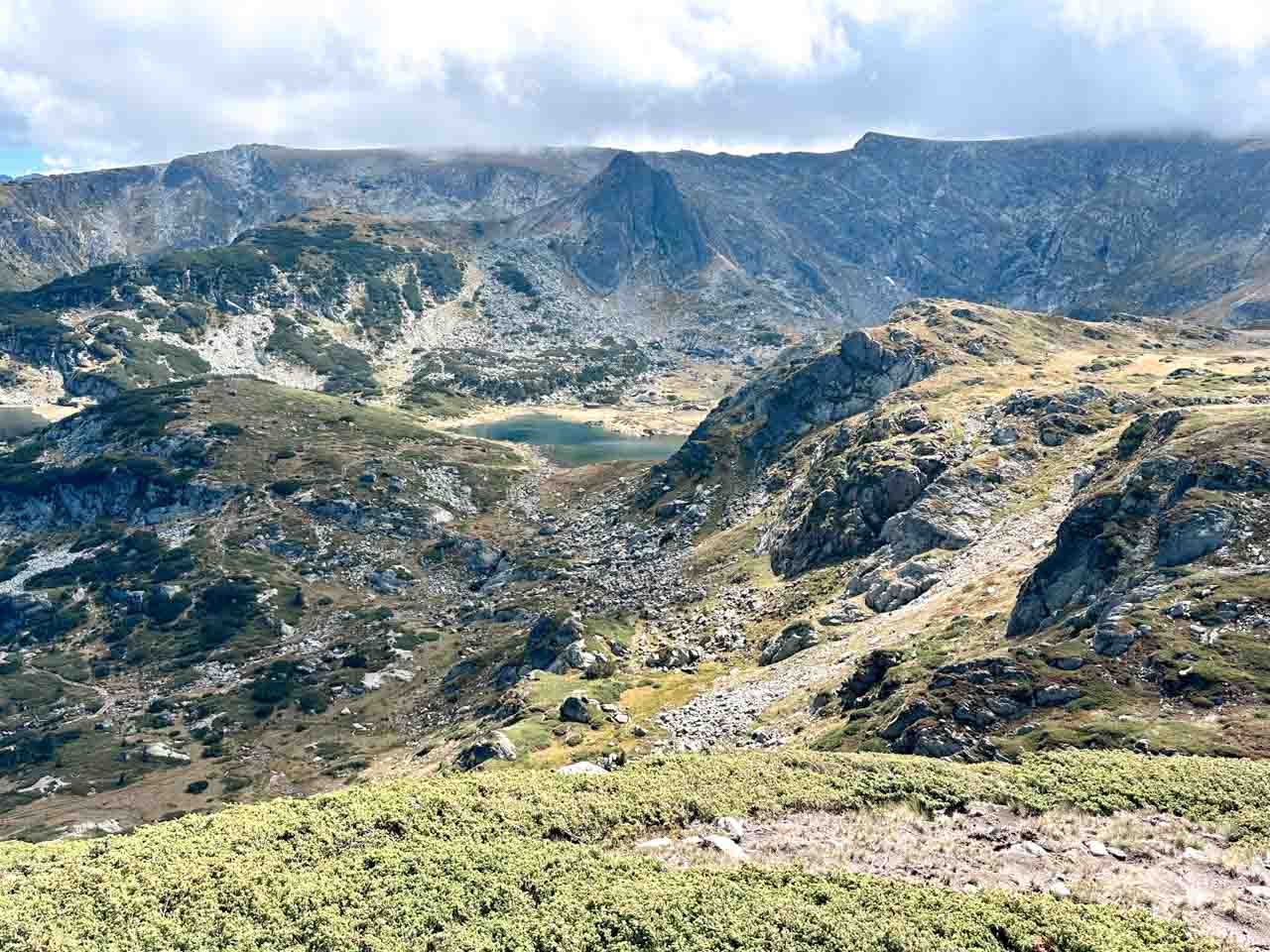
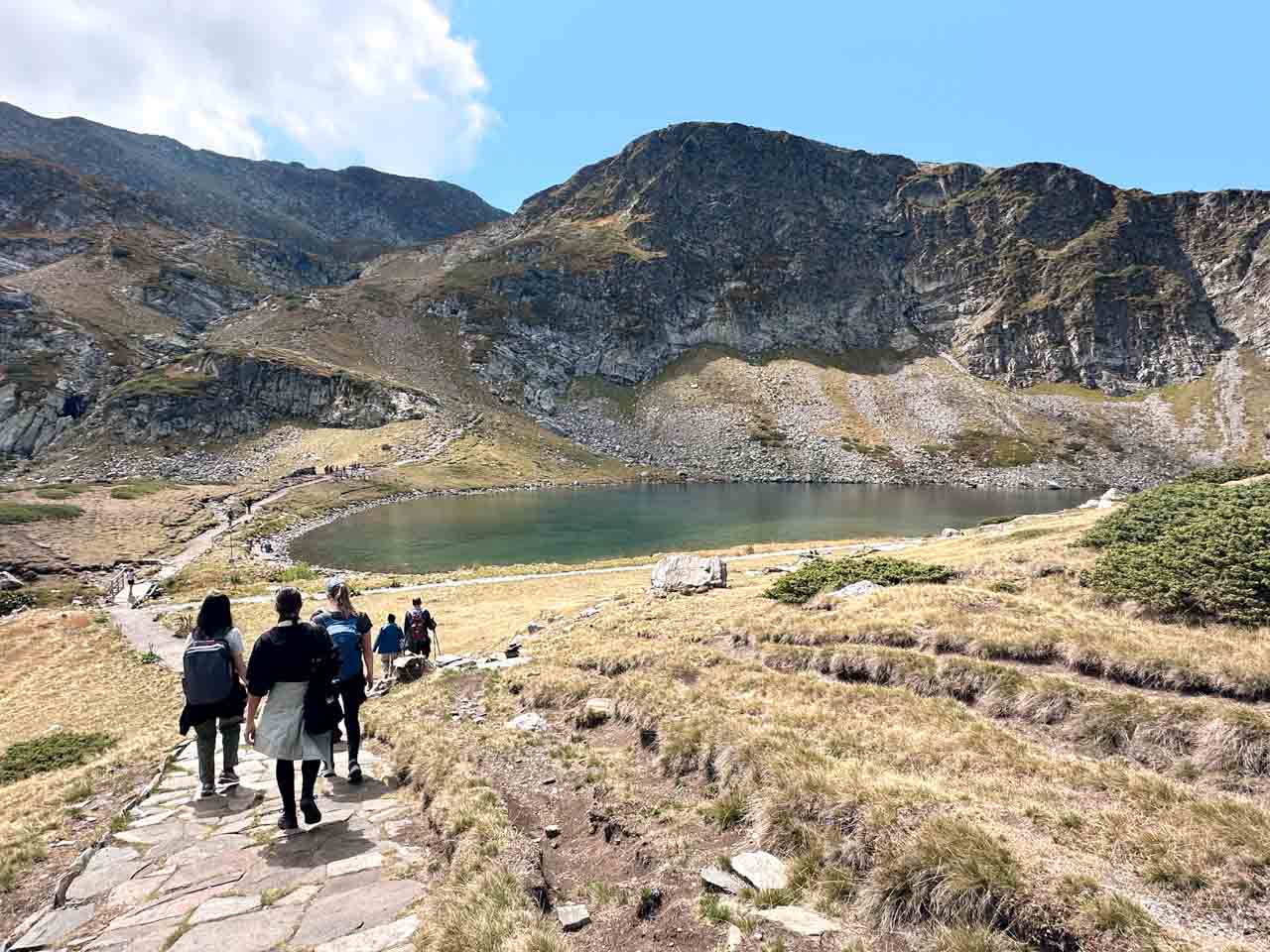
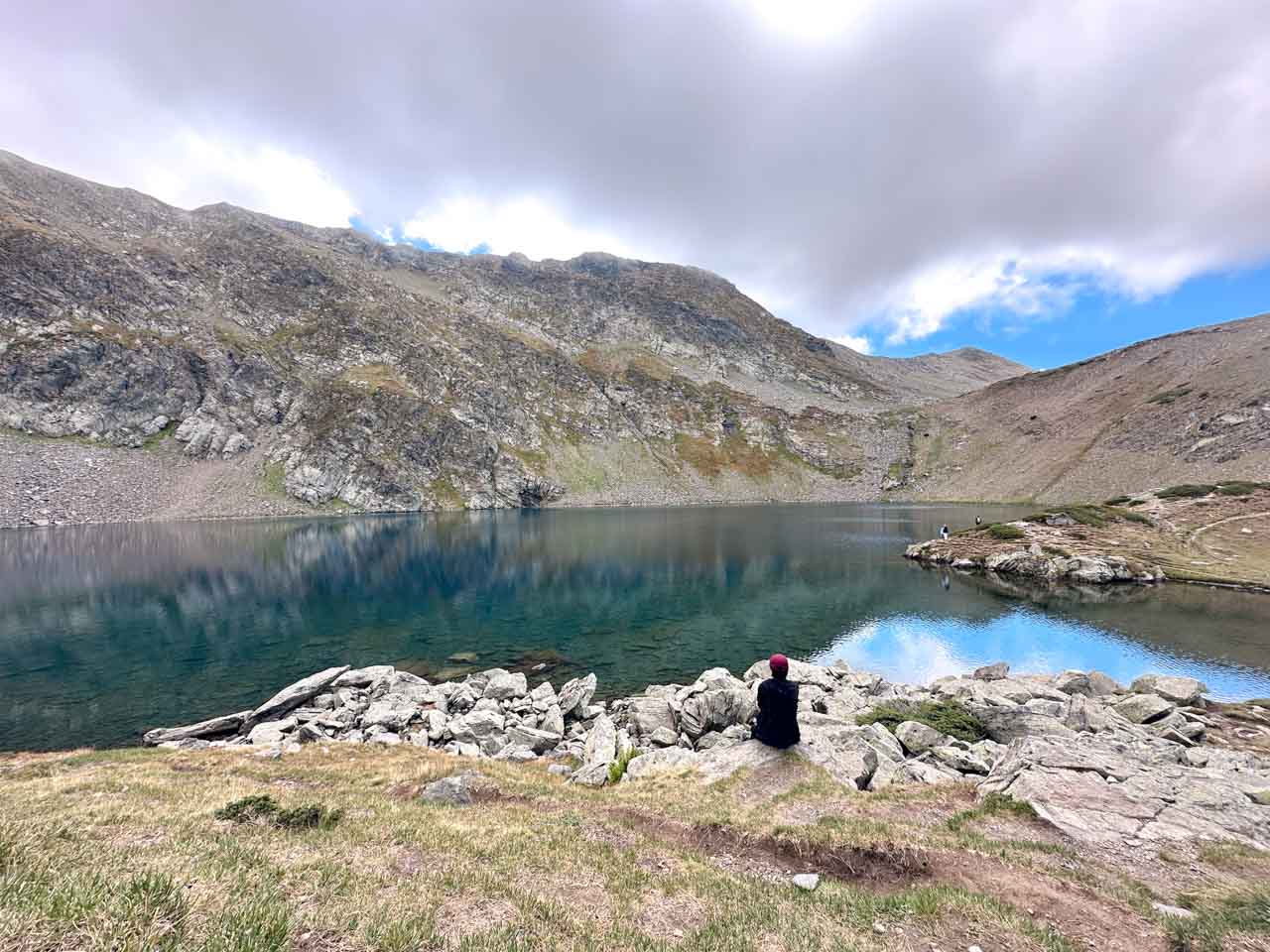
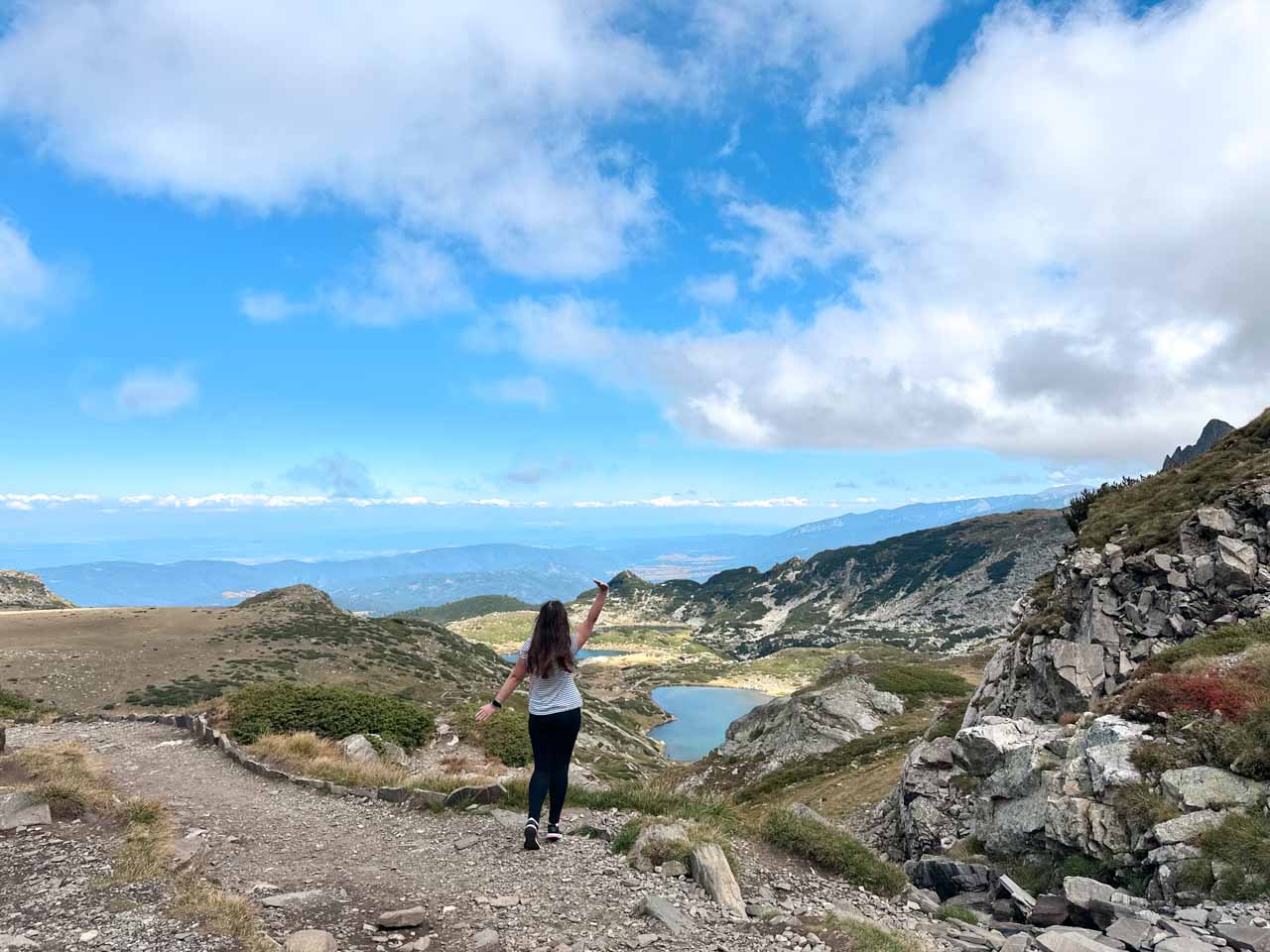
Once you finish the hike, there’s a building by the chairlift where you can use the toilet or grab a drink or snack. Overall, I wouldn’t recommend it to anyone with mobility issues or a low level of fitness, but you definitely don’t have to be an experienced hiker to complete it!
29. Hike Vitosha Mountain and visit Boyana Church
When the weather’s clear, you can see Vitosha Mountain from all over central Sofia, and you don’t have to travel far to get there. There are lots of different hiking trails, or you can simply head to one of the viewpoints for a look back over Sofia.
If you’re going to Vitosha, it also makes sense to stop at Boyana Church while you’re there. It’s at the bottom of the mountain and, although the church itself is very small, it’s one of the most important historic places in Bulgaria.
You can easily start at the church and then carry on up the mountain, and you shouldn’t need more than half a day for both. I really hope we can tick them off on our next trip to Sofia! You can get there using public transport, or if you don’t want to hike Vitosha, there are also a bunch of organised trips that combine Boyana Church with Rila Monastery.
30. Go to a rose field
If you’ve got an extra day in Sofia and you’re visiting at the right time of year, you could also head out to the Rose Valley around Kazanlak, where most of Bulgaria’s famous rose oil is produced.
One of the best-known places to visit is the Damascena Ethnographic Complex. You can walk around the rose gardens, learn how rose oil is made, and see both the traditional and modern distilleries. During rose season, you can even watch the actual distillation process.
Getting there is the slightly awkward part. From what I found, the easiest options are either hiring a car or booking a guided day tour. I couldn’t find an affordable tour from Sofia that went just to the distillery – they all seemed to combine the Rose Valley with Kazanlak or Buzludzha.
Without a car or tour, you’d need to make your own way to Kazanlak and then take a taxi to the distillery.
The other thing to keep in mind is that this is a very seasonal trip. The roses usually bloom and are harvested around May and early June, so that’s when you’ll actually get to see the fields full of flowers and the distilleries working with freshly picked roses. We were travelling between August and September, so in the end, I decided I’d rather save it for another trip and come back when there are actually roses to see!
And ideally, I’d love to time it with the Rose Festival in Kazanlak. It takes place around the rose harvest and includes rose picking, traditional rose distilling, music, folk dancing, the Rose Queen, and a big parade!
If you’d like to book a guided tour, here are some options: